Michael the Archangel carries serious visual weight in tattoo culture. The warrior saint, the dragon-slayer, the scales-of-justice figure, there is a lot to work with, and a lot that can go wrong if you do not think through the design. You might be drawn to the protection angle, the classical art references, or simply want a commanding figure with a sword. Here is how to get a Michael tattoo that holds up over time and actually means something to you.
Size and Scale
This figure demands space. Michael’s traditional attributes, sword, scales, armor, often a defeated demon or dragon beneath his feet, need room to breathe. A postage-stamp Michael becomes a blob of gray faster than you would think.
Small vs. Large Placements
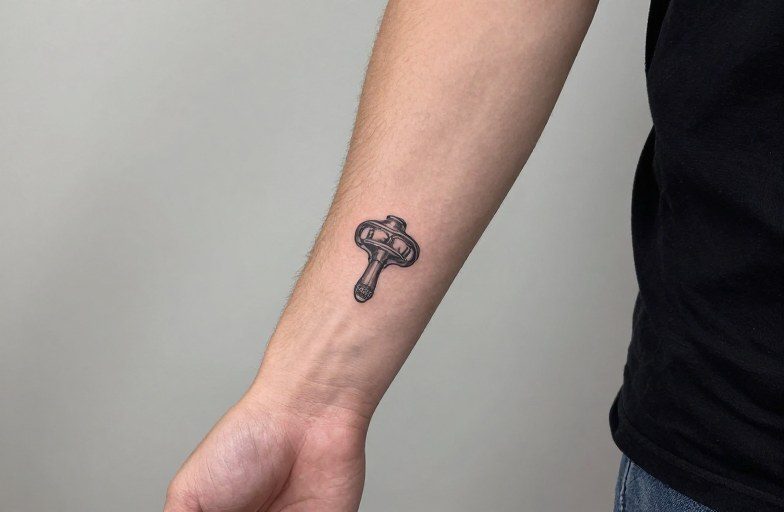
Under three inches, you are looking at a silhouette or a very simplified helmet-and-wings icon. That works for a wrist or behind-the-ear placement, but recognize what you give up: no scales, no narrative detail, no facial expression. At four to six inches, you can get a solid half-body or portrait with some background. At eight-plus inches, full back, thigh, ribs, or full sleeve, you can build a scene: the weighing of souls, the spear thrust, the fallen figure writhing below.
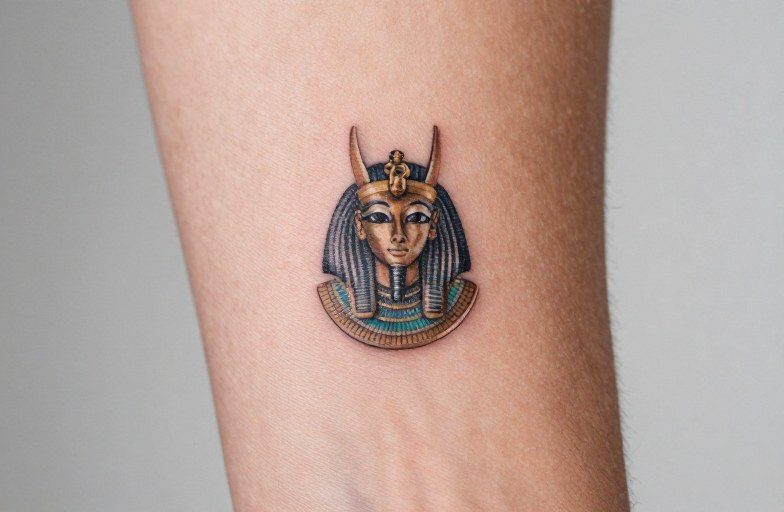
Related reading: Michael Archangel tattoo designs | religious tattoo designs | Christian tattoo ideas | eye of Horus tattoo design
Forearms and calves split the difference nicely. They are flat, stable surfaces that age predictably, and six inches there reads clearly from conversational distance. The chest over the heart is classic for protective imagery, but curves distort straight swords. Your artist needs to design for the anatomy, not just place a rectangle on skin.
Scaling the Details
Armor texture, chain mail, wing feathers, this material shrinks badly. Lines that read as texture at five inches become muddy gray at three. If you are committed to a smaller piece, ask your artist for bolder simplification: smooth armor plates instead of mail, stylized wings instead of individual feather barbs. Better a clean graphic symbol than a failed attempt at photorealism in the wrong scale.
Color Choices
Michael tattoos run the full spectrum, but certain approaches have proven staying power while others fade fast.
Black and Gray Realism
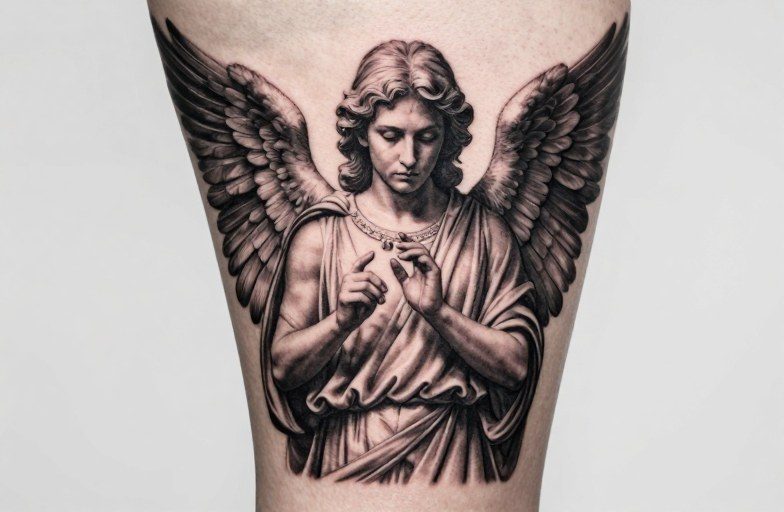
The dominant approach for good reason. Skin tones, armor metallics, atmospheric clouds, all translate beautifully through black ink diluted to gray washes. This style ages gracefully; there is no bright color to shift or disappear. The downside: it can look like every other dark tattoo in a crowd. Your artist needs strong contrast separation, deep blacks in the shadows, bright skin-tone highlights left open, to prevent the whole piece from flattening into one mid-tone after a few years.
Strategic Color Accents
Some of the most striking Michael pieces use limited color for maximum impact: a red cloak lining against gray armor, gold on the scales, blue-white lightning around the sword. These accents draw the eye and create hierarchy in the composition. The key is restraint, three colors maximum, applied where they will stay readable. Red generally holds better than yellows or light greens, which often fade or shift toward skin tone over time.
- Black and gray: safest long-term, relies on technical shading skill
- Full color: high initial impact, requires more touch-ups over time
- Single accent color: best balance of visual punch and longevity
How to Personalize It
Michael iconography is centuries old. Without thought, you end up with the same image everyone else has pulled from search results.
Attributes and Symbols
The scales are often linked to the weighing of souls, but they can hold whatever matters to you: two conflicting paths, a personal burden against mercy, even something abstract like time against eternity. The sword can be a specific type: Roman gladius, medieval longsword, or something more personal if your artist can make it coherent. Some people incorporate a name, date, or small secondary symbol worked into the armor decoration or the base of the scales.
Background and Context
Instead of floating on skin, ground your Michael. Clouds and heavenly light are standard but effective. A specific landscape, mountains you grew up near, city skyline, ocean, can root the piece in your actual life. The defeated figure beneath his feet, often a demon or dragon in traditional depictions, can be abstracted into something representing a specific struggle: addiction, grief, a past version of yourself. This is where good custom work separates from flash.
Popular Styles
Michael translates across tattoo traditions better than most religious figures. Each style carries different expectations and aging patterns.
Neo-Traditional and American Traditional
Bold outlines, limited but saturated color palettes, simplified forms. Traditional Michael pieces often show him in profile or three-quarter view, sword raised, wings spread in that distinctive heraldic pose. These age excellently, the heavy black lines hold, the simple color shapes stay readable. The tradeoff is less nuance; you are getting icon, not individual portrait.
Realism and Photorealism
Based on Renaissance paintings, versions by Raphael are common reference points, or contemporary fantasy illustration. Stunning when fresh, demanding of the artist, and vulnerable to aging. Fine lines in facial features, subtle skin-tone transitions, and detailed metal reflections all soften over time. You should expect to need a touch-up to maintain the impact. This style works best at larger sizes with an experienced specialist.
- Neo-traditional: bold, readable, lower maintenance
- Realism: high detail, higher commitment to upkeep
- Blackwork/etching style: graphic, modern, excellent longevity
- Orthodox icon style: gold leaf effects, stylized proportions, deeply traditional
For First-Timers
Michael as a first tattoo is ambitious but doable if you are smart about it.
Pain and Placement Reality
The ribs, where many people want this protective image, are notoriously painful. Constant bone vibration, thin skin, difficult healing. If you have not been tattooed before, consider the outer upper arm or calf instead. More muscle padding, easier to keep clean during healing, and you can build around it later if you want to expand. The chest over the sternum is similarly intense; the pectoral muscle area is more manageable.
Healing Considerations
Large pieces with heavy black fill take longer to heal and require more disciplined aftercare. You will have weeping plasma and ink for several days, tightness for two weeks, itching that can last a month. Plan your timing. Do not get a huge back piece right before a beach vacation or physically demanding work period. The sword hilt, wing tips, and any fine-line details are most vulnerable to scabbing damage; these need extra care and no picking.
Standout Design Approaches
Looking past the obvious, here are directions that separate memorable pieces from forgettable ones.
Dynamic Action Pose
Michael mid-combat, sword connecting with the serpent, body twisted in effort. This requires a skilled artist who understands anatomy in motion, but avoids the static standing pose that makes so many religious tattoos feel lifeless.
Partial Figure Emerging From Darkness
Just the armored torso, sword, and one wing breaking through black fog or storm clouds. Creates mystery and focuses the composition without needing to resolve full legs or background.
The Moment Before Judgment
Scales empty and balanced, Michael’s hand hovering, expression contemplative rather than triumphant. Subtler narrative, more psychological weight.
Architectural Frame
Michael contained within a Gothic arch, mandorla, or stained-glass window border. The frame contains the complexity and gives the tattoo a finished, deliberate quality that standalone figures sometimes lack.
What to Remember
A Michael archangel tattoo succeeds when the design matches your body, your pain tolerance, your maintenance commitment, and your actual visual taste, not just the abstract idea of protection or strength. Be honest about scale. Choose an artist whose specific style examples you love, not just someone who claims they can do anything. And build in personal elements that make this particular Michael yours, not a reproduction of a reproduction. The best religious tattoos do not preach; they sit on your skin like they have always belonged there, quietly specific to who you are.
Frequently Asked Questions
How much does a detailed Michael archangel tattoo typically cost?
A small simple design might run $200 to $400, while a detailed half-sleeve or back piece from an experienced artist can reach $1,500 to $3,000 or more. Complex realism takes more time and commands higher rates. Always consult directly with artists for accurate quotes, as pricing varies by region and reputation.
How do I find an artist who specializes in religious or archangel tattoos?
Look for portfolios with completed Michael or saint pieces, not just general realism or traditional work. Ask to see healed photos from a year or more out. Religious iconography requires specific understanding of proportion, symbolism, and how sacred figures read on skin. An artist who regularly paints or draws figurative work outside tattooing often brings deeper visual literacy to the subject.
Is a Michael tattoo appropriate if I am not religious?
Many people approach Michael as an archetype of protection, justice, or inner struggle rather than strict devotion. The key is respect for the imagery and its origins. Avoid trivializing the symbol, and work with your artist to find an approach that honors the figure while expressing your personal meaning. Cultural appropriation is less the issue here than shallow or ironic treatment of something many people hold sacred.
How long should I expect a large Michael piece to take?
A detailed forearm piece might take one longer session or two shorter ones. A full back piece with scene and background can take fifteen to twenty-five hours across multiple sessions, sometimes more. Your skin needs recovery time between sessions, usually two to three weeks minimum. Plan the timeline with your artist before starting.