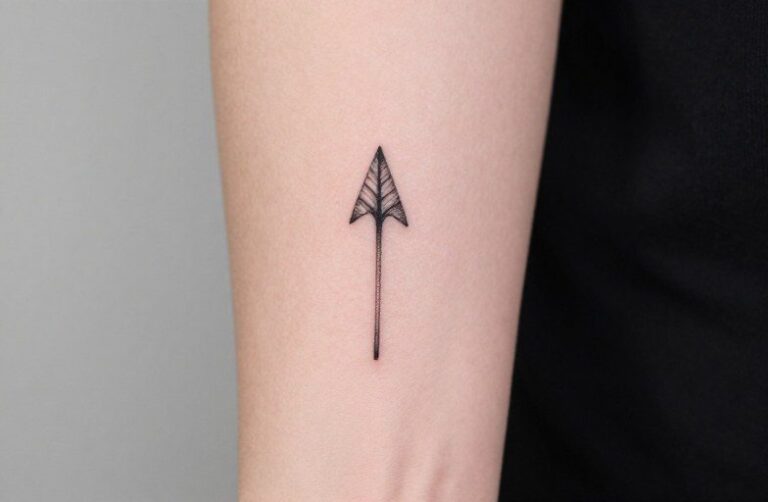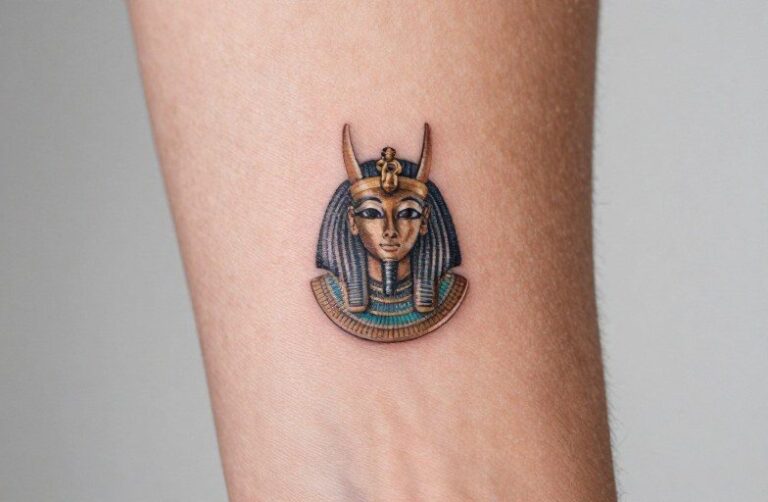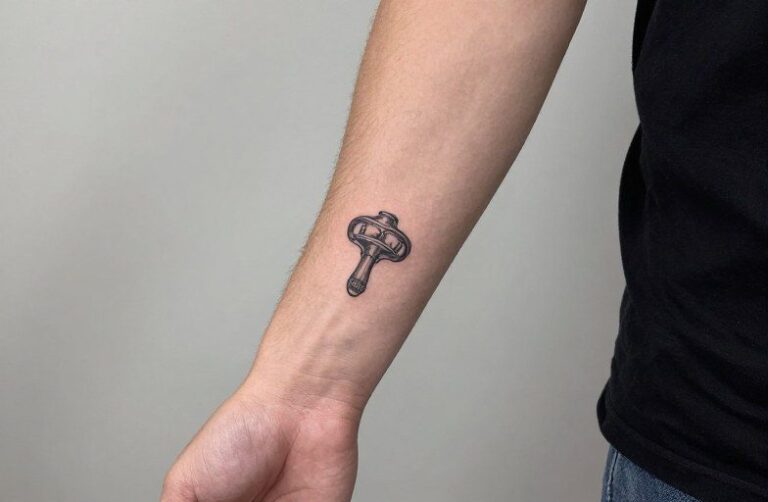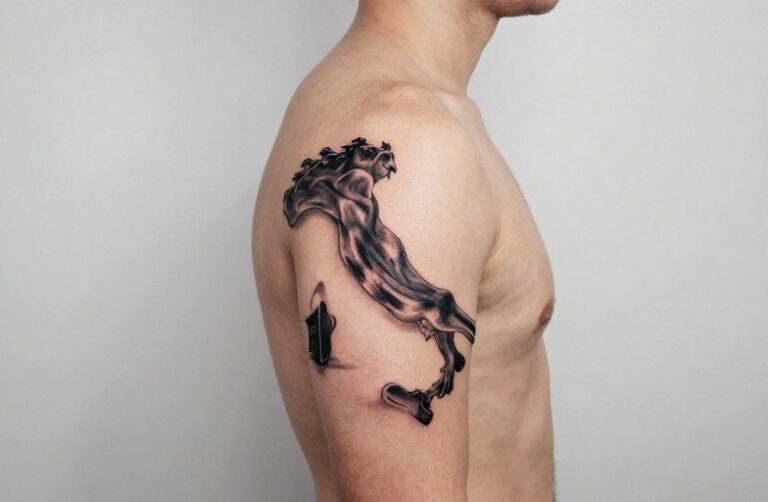
The Eye of Horus, or Wedjat, has been a staple in tattoo shops for as long as most artists can remember. Its strength as a design is practical before it is mystical: the curves are bold, the negative space is generous, and the silhouette reads clearly from across a room. That same structure makes it forgiving of scale and adaptable to almost any style. What follows is what I have observed works, what fails, and how to place it so the tattoo still looks like itself in ten years.
Design Fundamentals
Line Weight and Scale
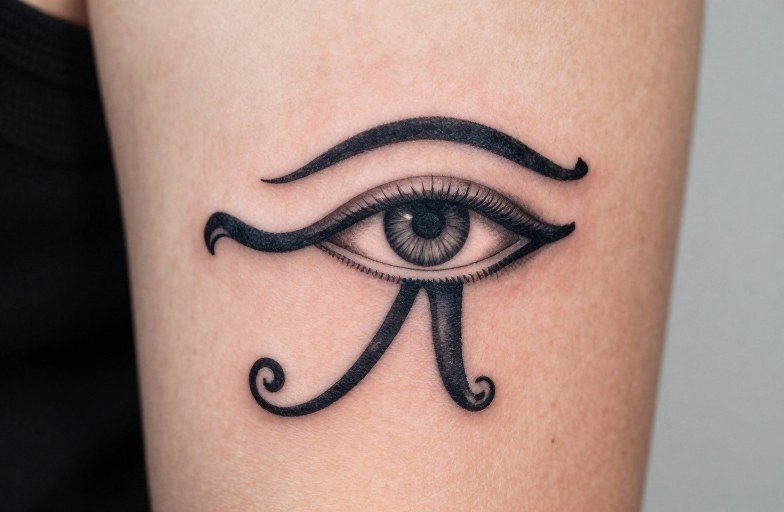
The Eye of Horus contains three elements that are easy to destroy: the teardrop curl beneath the eye, the spiral tail, and the fine line that separates the brow from the pupil. At sizes under two inches, interior detail becomes your enemy. Hatch marks and texture that look crisp on paper will blur into gray smudges as the tattoo settles. The teardrop should be no thinner than a single needle width at healed size; any finer and it closes up within two years. The brow line needs enough weight to stay distinct from whatever sits inside the eye shape. For pieces under an inch, I have seen the cleanest long-term results from stripped-down versions: outline, pupil dot, teardrop, done. The symbol is strong enough to survive the reduction.
Color Decisions
Traditional Egyptian palettes, lapis blue, gold, carnelian red, can be striking but they come with maintenance costs. Blue pigments, particularly the lighter synthetic blues, fade fastest in sun-exposed skin. Yellows and golds can turn muddy on darker skin tones if not carefully selected. Black and grey offers the most predictable aging and preserves the graphic punch that makes this symbol work. If you want color, use it at larger sizes where the pigment has room to breathe, or restrict it to accents: a single gold line along the brow, a red point inside the teardrop. These touches read as intentional rather than decorative overload.
- Small designs: bold black lines, minimal interior detail, no fine texture
- Medium to large: color accents or full traditional palette become viable
- Skin tone matters: gold and white ink behave differently across skin types; ask your artist specifically about what holds on yours, not generically
Working Styles
Neo-Traditional and Illustrative
This is where the Eye of Horus gains dimension without losing its identity. Artists build the falcon’s eye with weighted black outlines, add jewel-tone fills, and use whip shading to suggest depth while keeping the symbol’s flat graphic quality intact. The brow can extend into a feathered wing; the teardrop can become a gem. These treatments need three inches or more to resolve properly. Smaller than that and the shading stacks into indistinguishable gray.
Geometric and Dotwork
Breaking the Wedjat into measured triangles, mandala extensions, or stippled backgrounds is a contemporary approach that keeps the symbol recognizable. The critical step is anchoring the eye itself in clean lines before building pattern around it. Dotwork backgrounds age well when density is consistent; patchy stippling looks like accidental fading within a few years. I have seen strong results where the geometric elements frame rather than intrude upon the eye, the symbol remains central, the mathematics serve it.
- Blackwork: solid black fills, high contrast, legible at distance, ages gracefully
- Single needle or fine line: delicate, current, requires earlier touch-ups than bolder approaches
- Realism with Egyptian elements: the eye rendered as actual falcon anatomy, sometimes paired with stone texture or gold leaf effects in ink
What First-Timers Should Know
The Design’s Demands
The Eye of Horus is often recommended for first tattoos because it is compact and symmetrical. Those same qualities make it unforgiving. The curves are continuous; any wobble in the teardrop or unevenness in the brow line shows immediately. The symbol contains no hard corners to hide mistakes behind. If your prospective artist’s portfolio lacks clean circles and consistent line weight, choose a different design or a different artist. This is not a shape that tolerates approximation.
Pain and Healing
Sessions are typically short, often under an hour for a standalone piece. Pain depends on placement more than design. Ribs, sternum, and inner bicep sting more than outer forearm or calf. Healing is straightforward: keep it clean, do not pick at the teardrop curl, it scabs easily because of its thin shape, and expect the lines to look slightly thicker and darker at two weeks than they will at two months. The apparent darkening is normal; it is not the tattoo getting worse.
- Budget for quality: small does not mean cheap if you want it to last
- Bring reference, but trust your artist’s redraw; the symbol needs tailoring to your specific body curvature
- Fine line work often needs a touch-up between six and twelve months; plan for this
Placement Logic
High-Visibility Spots
Wrist, forearm inner or outer, and side of the neck treat the Eye of Horus as something you see and others notice. On the wrist, orient the brow toward the elbow or the hand, never sideways, which distorts the symbol’s natural sweep and makes it look like a mistake in composition. The forearm offers more canvas for detail and pairs well with band-style extensions or complementary Egyptian motifs if you plan to build a larger piece later.
Hidden or Intimate Areas
Behind the ear, the nape of the neck, and the ribcage side panel suit people who want the design personal rather than public. These spots also protect the tattoo from sun exposure, which matters for longevity. The ribcage allows for larger, more elaborate work but moves with breathing, so the artist must account for skin stretch in the stencil. I have seen beautiful ribcage pieces that distort into unrecognizable shapes when the person inhales deeply; the good ones were planned with movement in mind.
- Small: wrist, ankle, behind ear, finger (finger tattoos fade fast; expect to refresh every two to three years)
- Medium: forearm, calf, shoulder cap, sternum center
- Large: full chest piece, thigh panel, back piece with landscape or architectural integration
Designs That Extend the Symbol
Recontextualizing the Wedjat
The most memorable pieces do not simply replicate. One approach: split the design so the eye remains intact but surrounding lines fracture into desert dunes, constellation maps, or papyrus texture. Another: pair the Wedjat with the Eye of Ra, the right eye, solar, often depicted more aggressively, in a mirrored composition that plays the two symbols against each other. This pairing is often linked to ancient Egyptian concepts of duality, though modern interpretations vary widely.
Mixed Symbol Systems
Combining Egyptian and non-Egyptian elements works when there is visual logic holding the piece together. The Eye of Horus with geometric patterns creates a bridge between ancient and contemporary aesthetics. With lotus, specifically Egyptian in origin, the symbol softens without losing weight. Ankh integration is common but can feel cluttered unless the two symbols share a continuous line flow. The eye can also frame a scene: pyramids, night sky, scarab detail visible through the pupil as if through a window.
- Stone texture fill: the symbol carved as if into granite or limestone
- Negative space: the eye cut out from a blackwork sleeve, letting skin tone form the pupil
- Gold leaf accent: actual gold leaf applied post-healing for select highlights; this is not ink and requires a different practitioner, but it is a permanent body art addition some pursue
- Hieroglyphic integration: dates or initials rendered in authentic numerals, placed where they do not distort the core proportions
Personalization Without Distortion
Respecting the Core Geometry
The Eye of Horus has a specific structure: the brow, the pupil, the teardrop, the spiral tail. Alter these too much and it becomes unrecognizable. Personalization works best in surrounding space, line style, and context rather than in the core form itself. The spiral tail can extend into a date in hieroglyphic numerals, or the teardrop can contain a tiny constellation corresponding to a birth month. These additions must respect the symbol’s proportions; a bloated teardrop throws off the entire balance. Work with an artist who understands negative space and can embed personal detail inside the existing architecture.
Placement as Meaning
The same design reads differently on a collarbone, visible and declarative, than on a hip, private and held. Some choose the Eye of Horus after loss or recovery; the symbol’s modern association with protection and restoration can be acknowledged without explaining it to strangers. Your personalization can also be purely aesthetic: aggressive blackwork, whisper-thin single needle, ornamental filigree. The style is the statement.
- Line style as voice: how the lines are made matters as much as what they depict
- Hidden detail: initials or dates worked into the spiral tail or teardrop, visible only to those who know to look
- Contextual pairings: scarab, lotus, or geometric frame that extends the symbol without replacing it
What to Remember
The Eye of Horus endures because its shape is structurally excellent for tattooing: bold curves, clear negative space, instant recognition. To get one that lasts, prioritize clean linework over excessive detail at small sizes, choose placement with sun exposure and aging in mind, and personalize through context and style rather than distorting the core symbol. Black and grey offers the safest longevity; color demands more space and commitment. Find an artist whose portfolio shows they can handle continuous curves; this design punishes shaky hands. Whether you want a quiet wrist piece or a chest-spanning composition, the Wedjat adapts. The quality of that adaptation depends on the decisions you make before the needle touches skin.
Frequently Asked Questions
How well does an Eye of Horus tattoo age over time?
The bold curves and graphic structure age better than fine illustrative work. The teardrop and spiral tail are vulnerable to blur if drawn too thin; prioritize consistent line weight and avoid overcrowded interior detail at small sizes. Black and grey ages most predictably. Sun protection significantly extends readability.
Is the Eye of Horus culturally appropriate for non-Egyptian people to wear?
The Eye of Horus is widely used across global tattoo culture, but its origins are specific. Approach it with respect for its historical context rather than purely aesthetic appreciation. Avoid combining it with unrelated spiritual systems in ways that flatten its meaning. If uncertain, consult with your artist about intent and placement.
Can the Eye of Horus be covered up or modified later?
Its compact shape and strong outline make it adaptable for cover-ups with larger pieces, though the dark pupil and teardrop can be challenging to fully obscure without significant size increase. For modification, the surrounding space offers more flexibility than the core symbol itself.
What is the difference between the Eye of Horus and the Eye of Ra?
The Eye of Horus, or Wedjat, is generally associated with the left eye, lunar, and restoration. The Eye of Ra is the right eye, solar, and often depicted with more aggressive or protective qualities in modern interpretation. These associations are often linked to ancient Egyptian belief but are simplified in contemporary usage. Visually, the Eye of Ra sometimes includes a more pronounced flame or serpent element.