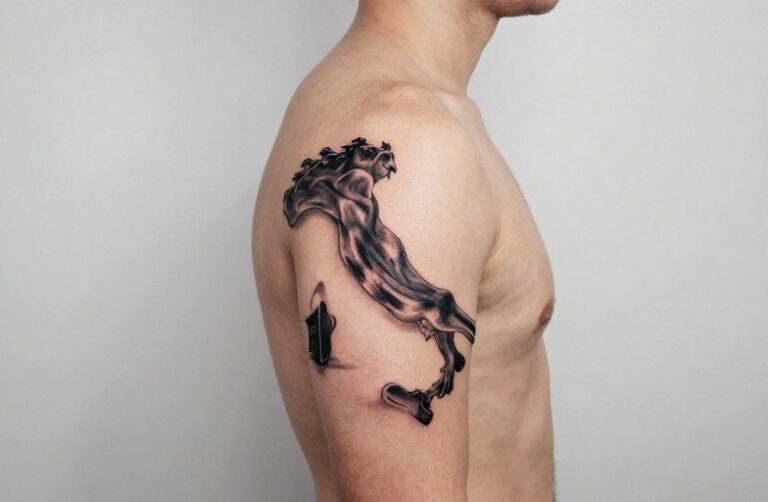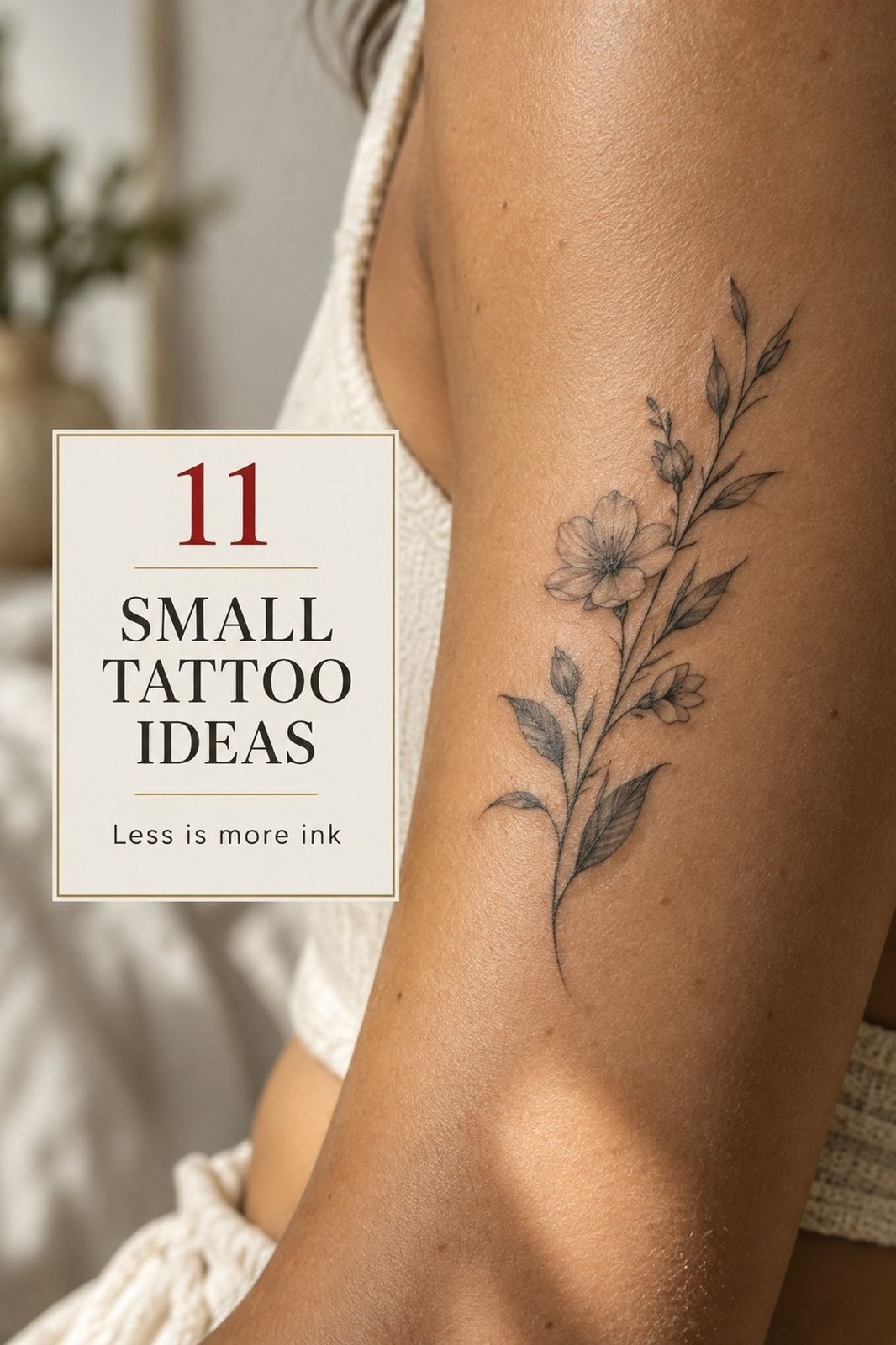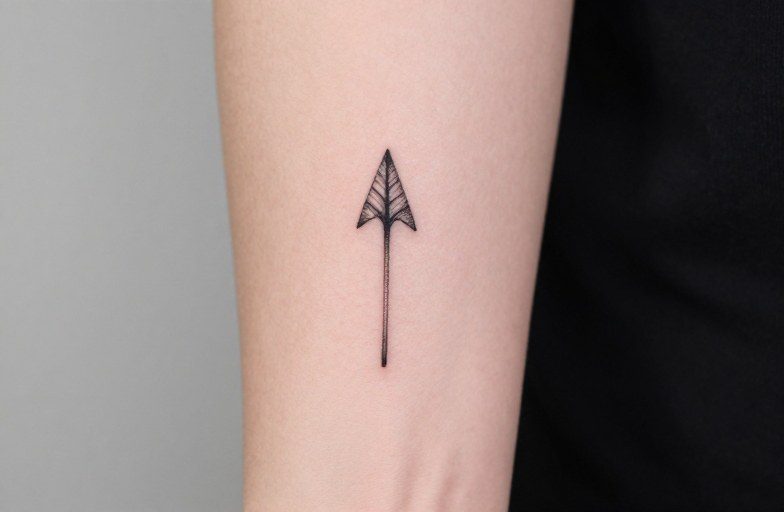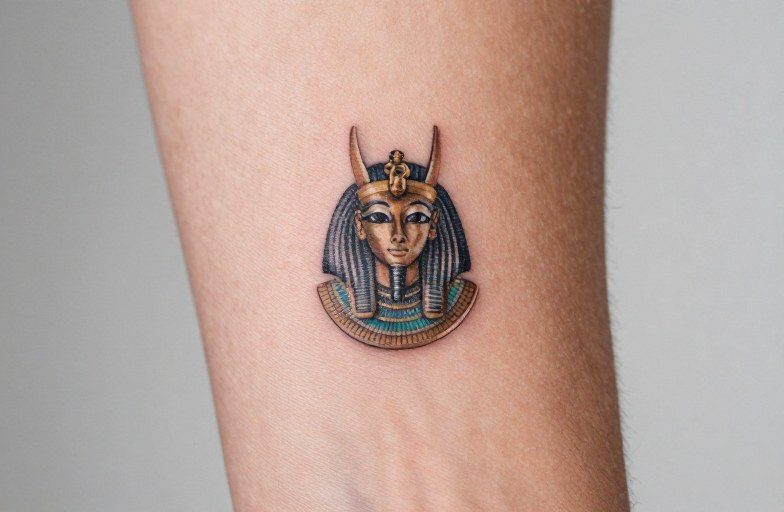
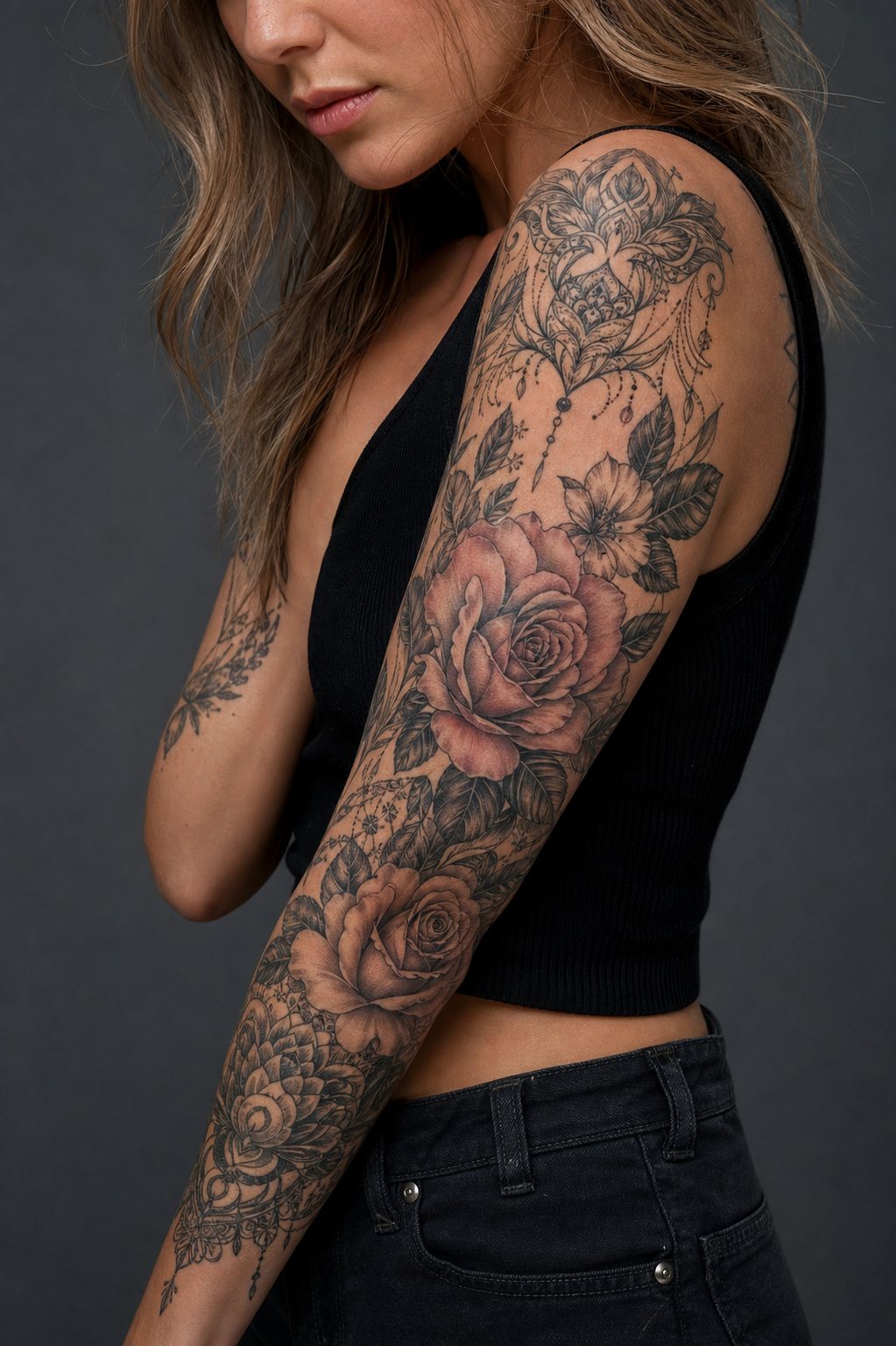
An arm sleeve tattoo on a female arm signals commitment, transformation, and the willingness to occupy space visibly. Unlike smaller, hidden pieces, a sleeve demands attention and announces that the wearer has integrated body art into her identity rather than treating it as an accessory. The meaning shifts dramatically based on content, floral sleeves read differently than geometric or bio-mechanical ones, but the common thread is intentional, long-term self-definition.
Personal & Modern Meanings
Contemporary sleeve choices often map life phases rather than single events. A sleeve built over years of sessions can function as visual autobiography, though the specific symbols matter more than the format itself.
Reclamation and Control
For many women, the arm sleeve represents reclamation of body autonomy. The forearm and upper arm are socially visible; covering them with chosen imagery contrasts with historical pressures around female appearance. This isn’t universal, some clients simply love the aesthetic, but the pattern of women returning after difficult life transitions to start sleeves is noticeable in most shops. The act of sitting through 15-40 hours of needlework itself becomes part of the meaning: endurance, patience, investment in self.
Professional and Social Navigation
Reality check: a full sleeve still closes certain doors in conservative fields. Many women opt for three-quarter sleeves (ending above the wrist) or designs that read softer from distance, botanical work, watercolor backgrounds, specifically to modulate visibility. The meaning here becomes strategic identity management, not pure self-expression. Others go full wrist-to-shoulder precisely to filter environments where they’d be uncomfortable anyway.
History & Cultural Roots
Full arm coverage has deep roots in several traditions, though the female-specific history differs from male warrior associations.
Japanese Irezumi
Traditional Japanese bodysuit tattooing included women, particularly in the yujo (courtesan) class and later working-class women. The arm sleeve as a standalone format is more modern, but the visual language, waves, cherry blossoms, koi, often traces directly to this lineage. When you see a woman with a Japanese-inspired sleeve, she’s often engaging with a tradition that was historically gendered but not exclusively male. The meaning connects to perseverance (gambaru), natural cycles, and protection.
Polynesian and Pacific Influences
Arm tattooing in Polynesian cultures (ta moko, tatau) carried genealogical and status information. Female arm pieces existed but followed different pattern rules than male work. Modern Polynesian-style sleeves on women are frequently worn by those with actual heritage as reclamation, or by others drawn to the visual grammar without full cultural context, a distinction that matters significantly in meaning. The pattern density, placement, and specific motifs carry language-like precision that casual adoption misses.
Symbolism & Core Meaning
Beyond personal narrative, certain visual categories carry established symbolic weight in sleeve format specifically.
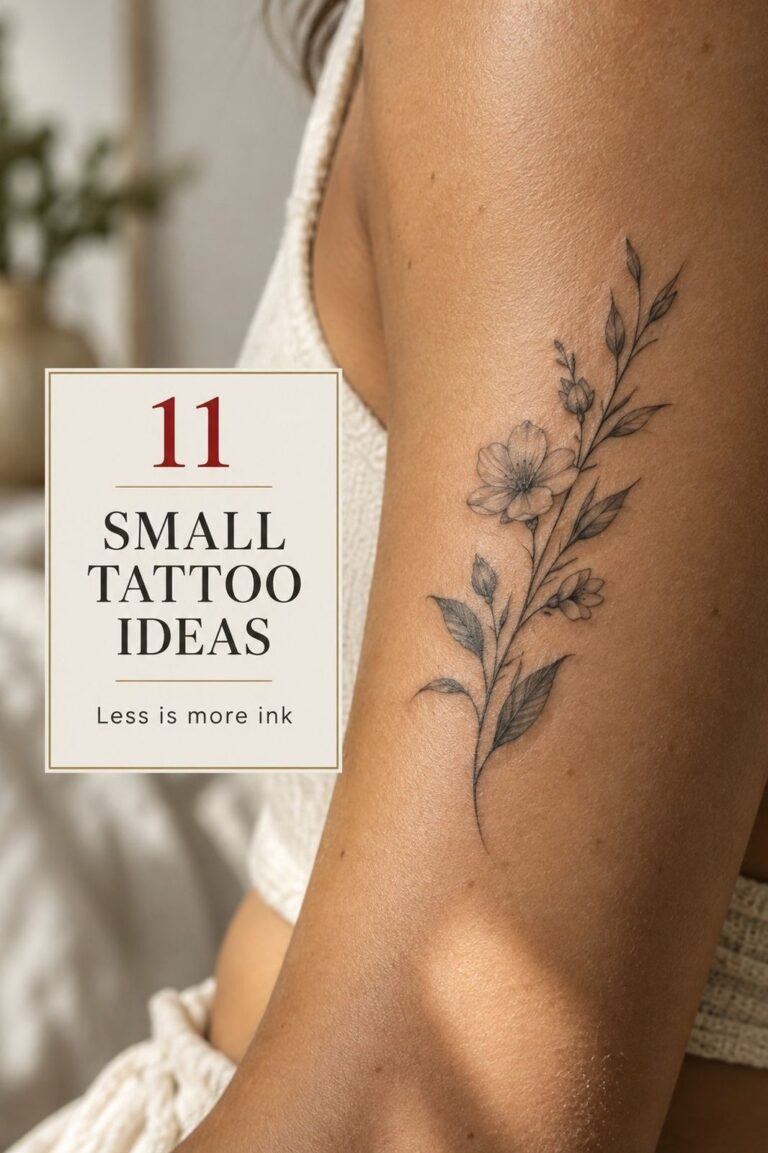
- Floral and botanical: Growth, decay, renewal. Peonies (Japanese tradition) mean wealth and risk; roses carry layered Western symbolism; cherry blossoms emphasize impermanence. Full sleeves allow seasonal progression, bud to bloom to fall, which smaller pieces can’t stage.
- Animals: Predators (wolves, big cats) signal strength; prey animals (deer, rabbits) often carry vulnerability-as-virtue meaning; snakes specifically reference transformation through shedding. Sleeve scale allows narrative sequences, hunt, capture, consumption, rebirth.
- Abstract/geometric: Sacred geometry references cosmic order; dotwork mandalas suggest meditation and centering; blackout or heavy blackwork can signal grief processing, boundary-setting, or aesthetic minimalism pushed to extreme.
- Portraiture and realism: Memorial work, ancestor connection, or idealized self-image. The sleeve format permits environmental context, family members in meaningful settings, that single portraits lack.
Composition matters enormously. A sleeve with disconnected flash-style pieces reads as collection rather than statement; unified flow with background elements (smoke, water, wind bars) creates coherent symbolic environment. The negative space between elements carries as much meaning as the imagery itself.
Color vs Black and Grey
The technical choice shapes meaning through longevity and visual impact.
Color Dynamics
Bright color sleeves, neo-traditional, Japanese, illustrative, project energy and openness. They age faster: yellows and light greens fade to muddy within 5-10 years without touchups, reds and blues hold better. The commitment to maintenance becomes part of the meaning, ongoing care, visible investment. Color also permits symbolic precision: specific flower species, accurate skin tones in portraits, seasonal accuracy.
Black and Grey Weight
Black and grey reads more serious, more timeless, more integrated with shadow. It ages more gracefully overall, though solid black areas can blur and soften at edges. The restricted palette forces symbolic communication through value contrast and texture rather than hue association. Many women choose black and grey for professional environments where color would be more confrontational, or for subject matter, memorial, spiritual, that feels mismatched with brightness.
Line-only work (no shading) exists but is rare for full sleeves; it reads as preliminary, unfinished, or deliberately stark depending on execution quality.
Religious & Spiritual Angles
Sleeve scale permits complex spiritual iconography that smaller pieces simplify too much.
Christian and Abrahamic Imagery
Crosses, praying hands, scripture verses, and saint imagery appear regularly. The sleeve allows narrative biblical scenes, Job’s suffering, Ruth’s loyalty, Mary’s assumption, rather than isolated symbols. Some denominations still view extensive tattooing as problematic, so the sleeve can signal departure from religious upbringing or confident integration of body art with faith, depending on the wearer.
Eastern and Indigenous Traditions
Buddhist sleeves featuring lotus, mandala, or deity imagery (Tara, Kannon) are common, though wearing sacred figures below the waist is traditionally avoided, upper arm placement respects this. Hindu goddesses, Native American imagery (contentious when worn by non-Natives), and Afro-diasporic symbols (Yoruba orishas, Adinkra) each carry specific spiritual obligations and potential appropriation concerns that affect meaning.
The spiritual sleeve often functions as portable altar, visible reminder of practice, protection, or lineage that travels with the body.
Who Chooses This Tattoo
Demographics are shifting. Where sleeves were once concentrated in specific subcultures, they’re now mainstream across ages and professions, though patterns differ.
- Age of initiation: Most women starting sleeves are 25-40, old enough to afford multiple sessions ($1,500-$5,000+ for quality work) and certain enough about career trajectory to accept visibility consequences.
- Prior tattoo experience: Rarely a first tattoo. The sleeve usually follows several smaller pieces that tested pain tolerance, artist relationships, and personal commitment to the form.
- Motivation clusters: Post-divorce transformation, post-illness reclamation, career achievement marking, artistic identity consolidation, spiritual path documentation. Often multiple motivations layered.
- Artist gender preference: Many women specifically seek female tattooers for sleeve work, particularly for torso-adjacent areas or intimate imagery, though this varies by individual comfort and regional artist availability.
The “type” of woman who gets a sleeve is increasingly “any type”, the visible commitment matters more than demographic category.
Before You Decide
A sleeve is not a large small tattoo. The commitment is different in kind, not just degree.
Consider the long arc: skin changes, weight fluctuation, sun exposure, and gravity affect arm tattooing predictably. Inner bicep and elbow ditch (inner elbow) fade fastest and hurt most. The “sweet spot”, outer upper arm, outer forearm, holds ink best and ages most gracefully. Plan for 8-15 sessions minimum for full coverage, spaced 3-6 weeks apart for healing. Budget for touchups at 5 and 10 years.
Artist selection is critical. Sleeve work requires consistency across dozens of hours; switching artists mid-project usually shows. Look for healed photos, not fresh work. Black and grey specialists differ from color specialists; Japanese-trained artists differ from illustrative generalists. The style you choose determines the symbolic vocabulary available.
Most importantly: live with the design concept mentally before committing. A sleeve changes how you see your own arm in mirrors, how you dress, how you’re perceived. The meaning isn’t just in the imagery, it’s in the daily fact of wearing it.
Frequently Asked Questions
Will an arm sleeve tattoo stretch if I gain or lose muscle?
Moderate changes generally don’t distort well-executed sleeve work, but significant muscle gain or loss (bodybuilding, pregnancy, major weight fluctuation) can alter proportions. The outer arm is more forgiving than inner bicep or elbow areas.
How do I choose between a half sleeve and full sleeve?
Half sleeves (shoulder to elbow or elbow to wrist) offer easier concealment and lower cost, but can look unfinished if not designed with a natural stopping point. Full sleeves provide visual flow and complete commitment, choose based on your professional environment and budget.
Can I cover old tattoos with a new sleeve design?
Yes, but coverage requires larger, darker elements and limits your design options. Laser lightening before cover-up often yields better results than direct coverage, giving the new artist more tonal range to work with.
Do arm sleeves hurt more on certain body types?
Pain varies more by specific placement than body type. The elbow ditch, inner bicep near the armpit, and wrist bone are consistently most intense. Subcutaneous fat doesn’t significantly cushion nerve endings in these thin-skinned areas.