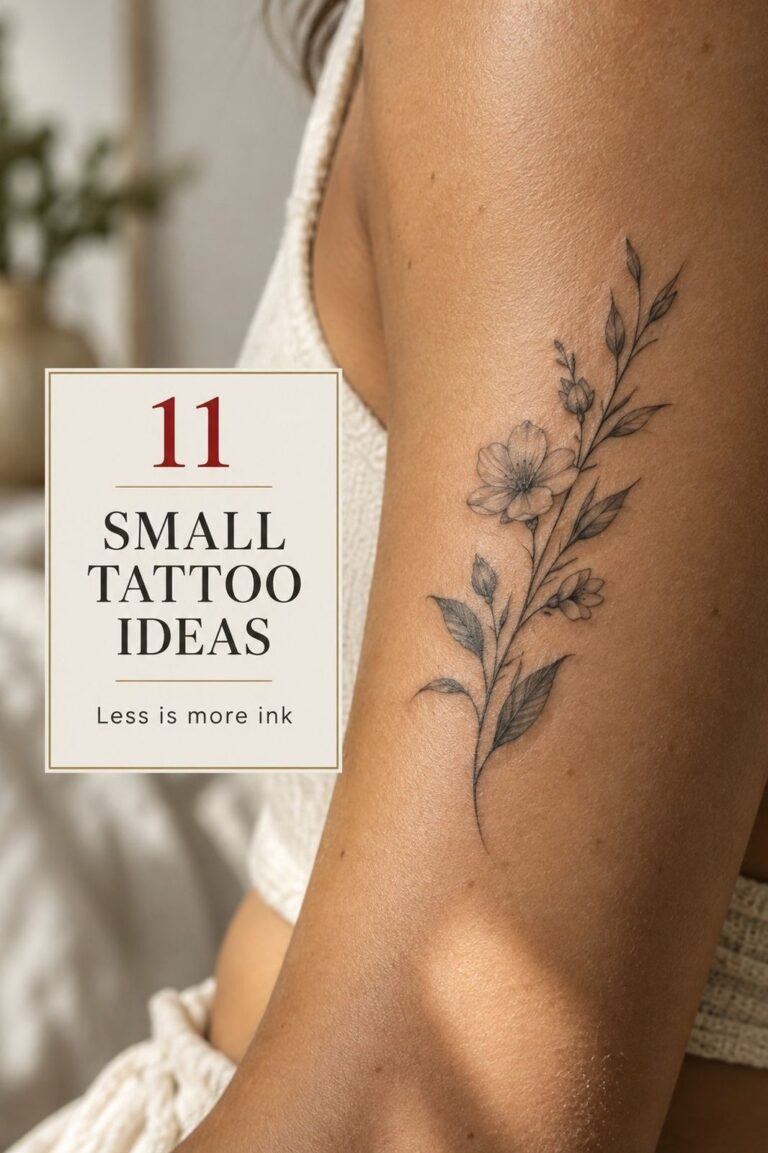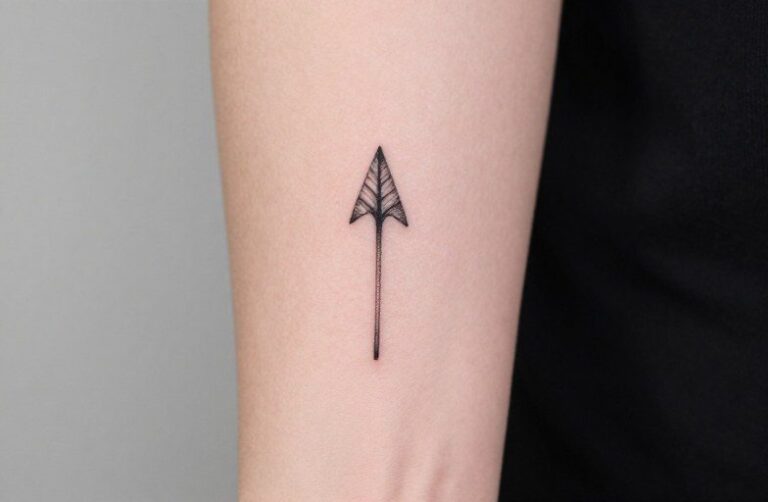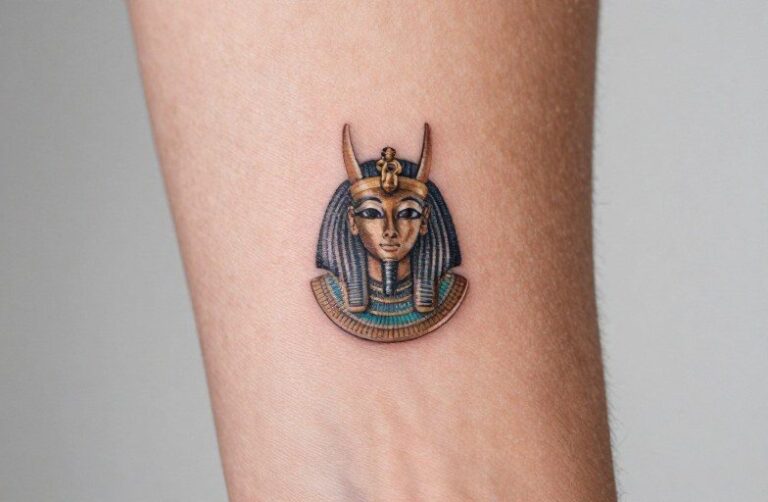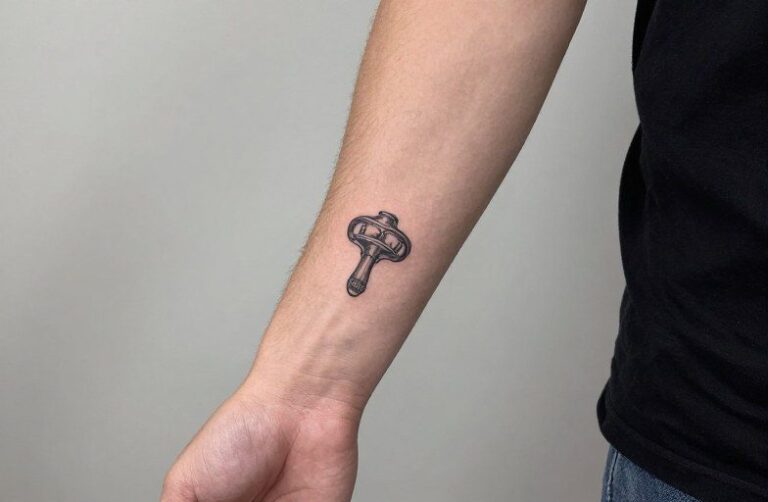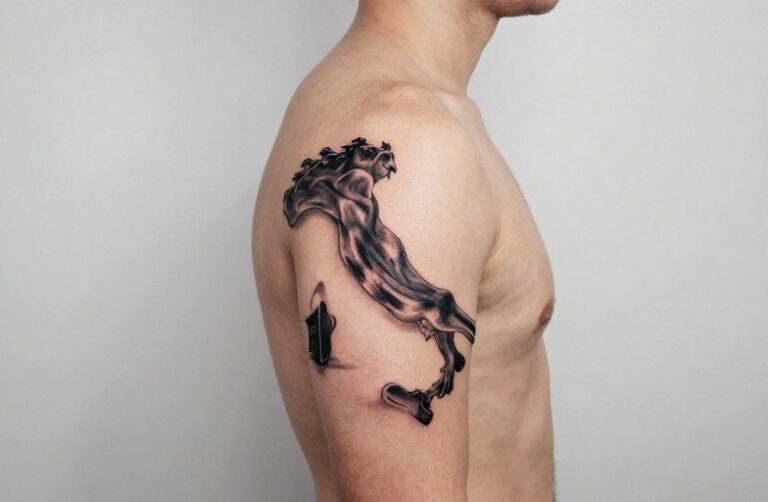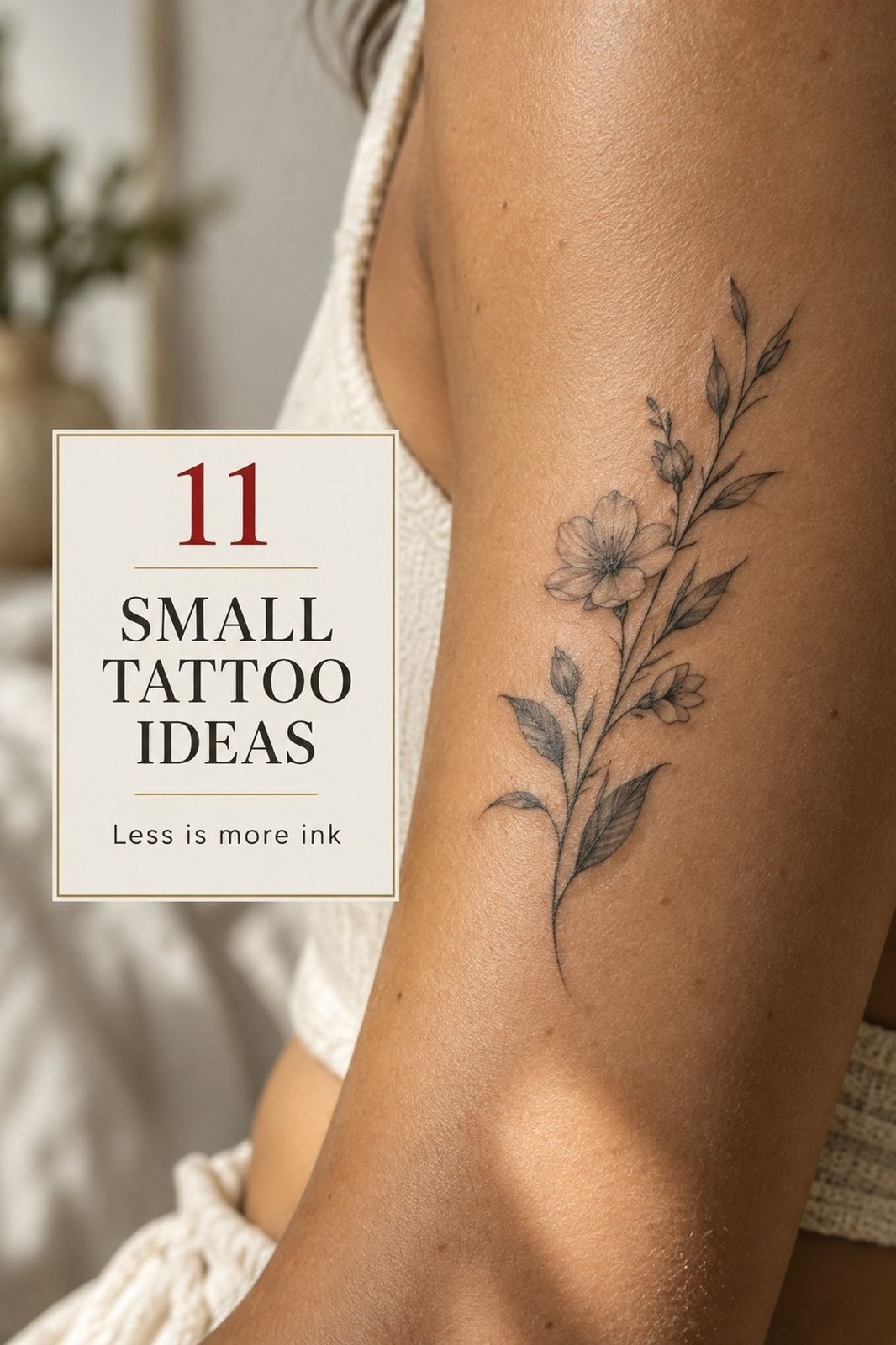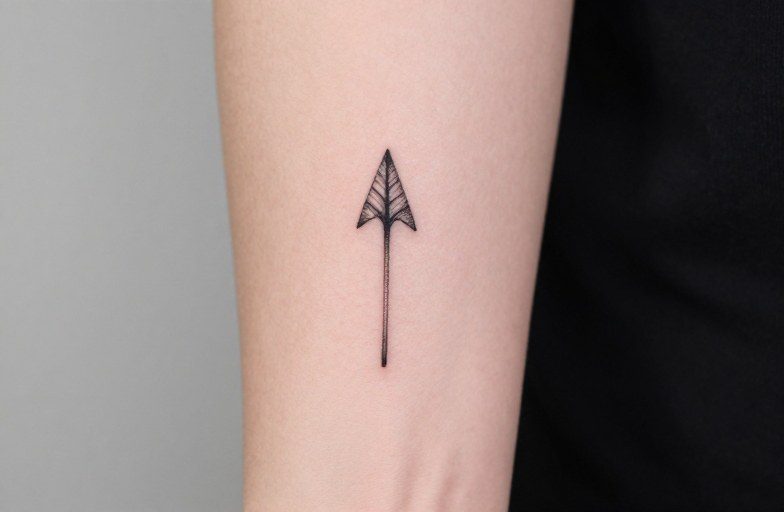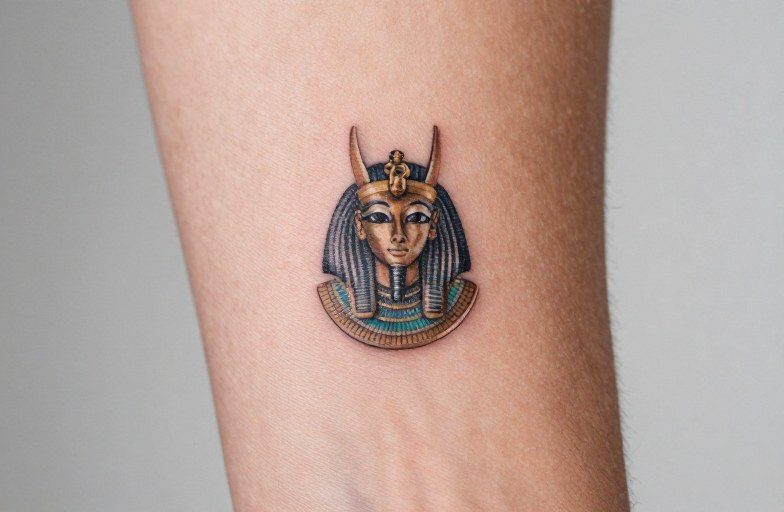
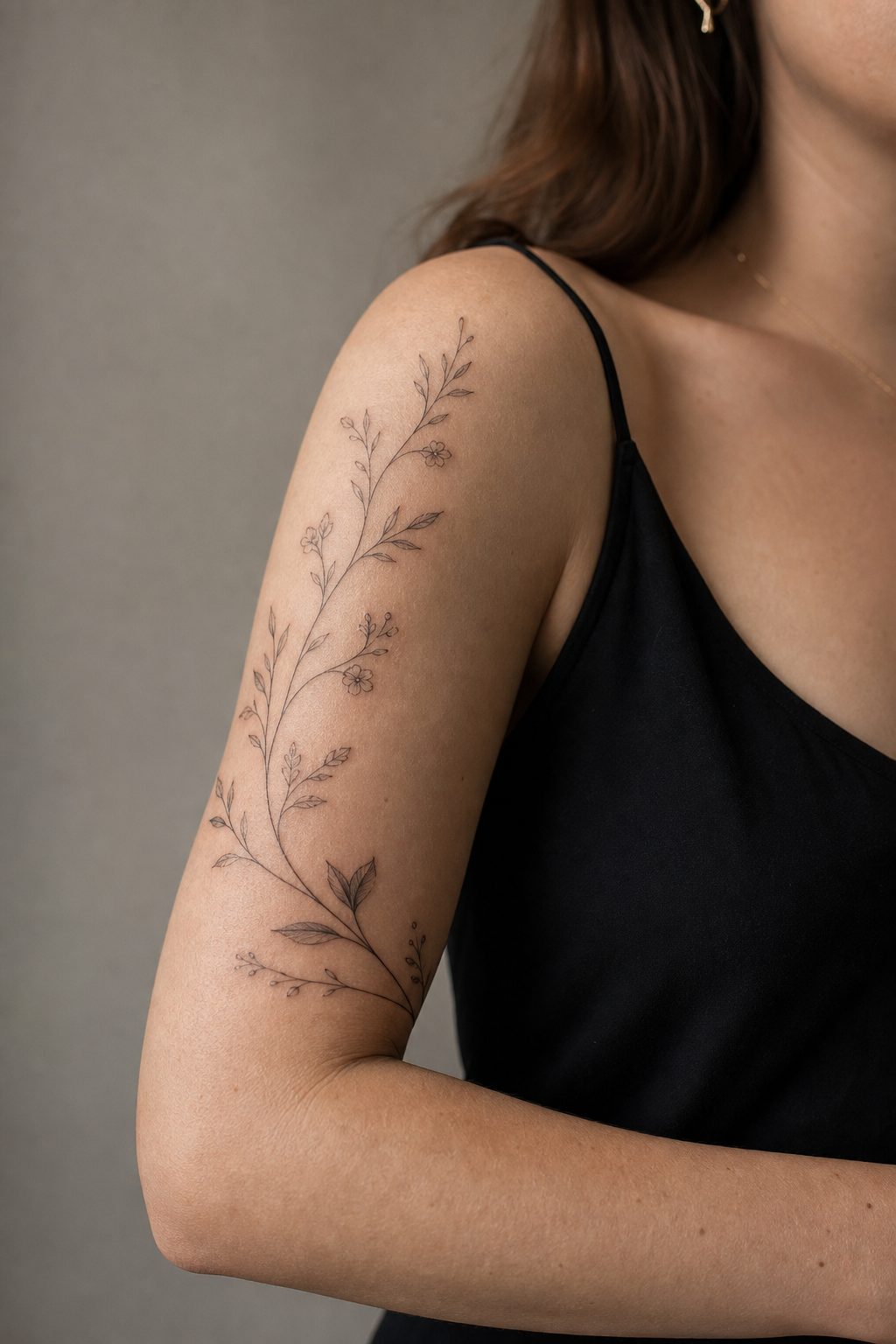
An arm tattoo on a woman typically signals self-determination, visibility on her own terms, and a chosen balance between public statement and personal significance. The arm offers unique control: easy to show, easy to cover, and the placement itself, upper, lower, inner, or outer, shifts how the design reads to others and feels to the wearer. Unlike more hidden spots, the arm says you’re willing to be seen, but the specific location fine-tunes that openness.
Similar & Related Symbols
Arm tattoos for women share DNA with several symbolic traditions that also emphasize protection, display, and transformation.
Bracelets and Armbands
Permanent armbands echo metal and woven arm rings from countless cultures, Celtic torcs, Maori ta moko spirals, South Asian bangles. These wrap the limb in a continuous circuit, suggesting containment of strength or marking of status. On a woman’s arm, a solid band can read as armor; a broken or dotted band suggests something more permeable, a boundary you set yourself.
Flowers and Botanicals
Floral arm pieces often climb from wrist to shoulder or cluster at the deltoid. The same rose that means romance on a ribcage reads as growth and endurance on an arm, something that moves, works, reaches. Vines wrapping the forearm specifically reference connection and continuity without the permanence-lock of a full band.
- Snakes coiling the arm: transformation, cyclical renewal, guarded sensuality
- Feathers and birds: freedom, aspiration, the act of reaching outward
- Script and lettering: declaration, ownership of words, memorial
- Mandalas and geometric patterns: focus, meditation, structural beauty
Mythology & Folklore
Arms carry mythic weight across traditions, often as the limb of action and agency.
The Daughters of the Air
In Hans Christian Andersen’s original “Little Mermaid,” merfolk who fail to win human love dissolve into sea foam but may earn souls by doing good for three hundred years as “daughters of the air.” Victorian women sometimes wore airy, flowing arm pieces, swallows, feathers, misty waves, as quiet reference to this liminal redemption, neither fully one thing nor another. A woman’s arm tattoo with similar imagery can still channel that in-between power.
Amaterasu’s Weaving
Japan’s sun goddess Amaterasu retreated to a cave, plunging the world into darkness, until the goddess Ame-no-Uzume danced on an overturned tub with arms bared and swaying, drawing the other gods’ laughter and Amaterasu’s curiosity. Exposed arms here were lure, disruption, and finally restoration. Arm tattoos drawing on Japanese imagery, waves, cherry blossoms, sun discs, sometimes reference this narrative of female agency through display.
How It Ages on Skin
The arm ages relatively well for tattoos, but each zone behaves differently.
Upper Arm vs. Forearm
The outer upper arm has thicker skin and less sun exposure if you wear sleeves, so ink stays crisper longer. The inner upper arm, soft, mobile, often paler, blurs faster and hurts more during application. Forearms take constant sun and movement; lines soften, colors mute, and the wrist flex zone can distort small details over years. Designs that rely on hair-thin lines won’t survive here as well as bolder work.
Elbow and Inner Bend
The ditch (inner elbow crease) and the elbow itself are notorious. Skin stretches constantly, heals thick, and holds ink unevenly. Solid black survives best; gradients and fine shading often patch out. Many artists won’t place intricate work here unless you’re prepared for touch-ups.
- Outer forearm: good visibility, moderate aging, easy to show/hide
- Inner forearm: more painful, more personal, fades faster with sun
- Shoulder cap: excellent longevity, bold designs read well
- Full sleeve: requires planning for cohesive aging, not piecemeal collection
Color vs. Black and Grey
Color choices on a woman’s arm carry practical and symbolic weight.
Black and Grey Realism
Black and grey ages into a softer, more unified look. On lighter skin tones, it mimics shadow and sculpture, giving depth without shouting. The style often reads as serious, timeless, slightly melancholic. Portraits, religious imagery, and natural forms (skulls, animals, trees) dominate this palette. Touch-ups are simpler, just more black, no color matching.
Color Saturation
Bright color on an arm demands attention and maintenance. Reds and oranges fade to pink or peach; blues and greens hold longer but can muddy. Yellow and white nearly disappear on pale skin, leaving ghostly texture. Watercolor-style pieces without black outlines blur fastest of all, sometimes within five to seven years. If you want color that lasts, build it around a black structural skeleton.
Skin tone matters specifically for color: darker skin carries jewel tones (deep purple, emerald, sapphire) more vibrantly than pastels, which can read as ashy. A skilled artist adjusts saturation and contrast rather than forcing the same palette on everyone.
History & Cultural Roots
Women’s arm tattoos have specific historical footprints, not universal ones.
Circus and Sideshow Traditions
In the late 19th and early 20th centuries, tattooed women in American and European sideshows often displayed full coverage including arms. These performers, some genuinely collected, some painted on, were marketed as exotic primitives or noble savages. The arm, fully visible in short sleeves or rolled-up circus costumes, became the primary site of this spectacle. Modern women reclaiming full arm coverage sometimes knowingly echo this visibility while rejecting the exploitation.
Working-Class Markers
In British and Australian contexts, women’s arm tattoos were often linked to specific trades and ports, fishwives, dock workers, military wives. These weren’t decorative but identificatory: names of husbands at sea, religious protection, symbols of local loyalty. The arm’s visibility meant these marks were public property, read by community members before the wearer spoke.
Contemporary arm tattoos for women often blend these histories: the deliberate visibility of the sideshow performer, the identificatory function of the working-class marker, but chosen rather than imposed.
Personal & Modern Meanings
Today’s arm tattoos for women cluster around specific personal narratives that transcend generic “empowerment.”
Reclamation After Control
Women who’ve experienced body-related control, medical trauma, religious restriction, abusive relationships, sometimes choose the arm as their first visible tattoo specifically because it’s hard to ignore. The act of deciding what appears on this exposed limb, after having appearance dictated, carries specific weight. The design matters less than the location’s defiance.
Professional Navigation
The arm allows strategic management: covered in formal settings, visible in casual ones. Women in fields with appearance codes often choose the upper arm for this toggle capability. The tattoo becomes a private signal to peers, invisible to hierarchy, rather than a blanket statement. This isn’t hiding; it’s calibrated communication.
- Matching or sister tattoos on forearms: chosen family, public commitment
- Single large piece vs. collected smaller ones: planned identity vs. accumulated self
- Placement facing wearer vs. facing viewer: self-reminder vs. outward message
- Scar coverage: transformation of marked skin into chosen mark
The Bottom Line
A woman’s arm tattoo means what the placement, design, and context make it mean, but the arm itself always adds something: visibility with control, work with display, strength with reach. The upper arm protects and proclaims; the forearm communicates and gestures; the inner arm keeps secrets in plain sight. Choose based on how you move through spaces, who sees what when, and whether you want the tattoo to speak before you do or wait for your invitation. The arm’s symbolism is ultimately about agency, having it, showing it, and sometimes strategically withholding it.
Frequently Asked Questions
Does an arm tattoo hurt more on the inner or outer arm?
The inner arm generally hurts more, especially the inner bicep and ditch near the elbow, where skin is thinner and nerve endings cluster. The outer upper arm is usually the most tolerable spot.
Will an arm tattoo stretch if I build muscle?
Moderate muscle gain won’t ruin a tattoo, but dramatic size changes can distort details. The upper arm changes more than the forearm with muscle growth.
How do I choose between a half sleeve and full sleeve?
Start with placement that matters to you, not coverage goals. Half sleeves stop at elbow or shoulder and allow easier hiding; full sleeves require more planning for cohesive flow.
Can I get an arm tattoo if I need to hide it for work?
Yes, the upper arm covers easily with short sleeves or cardigans. Forearm pieces need long sleeves or makeup, so consider your typical work wardrobe before committing.