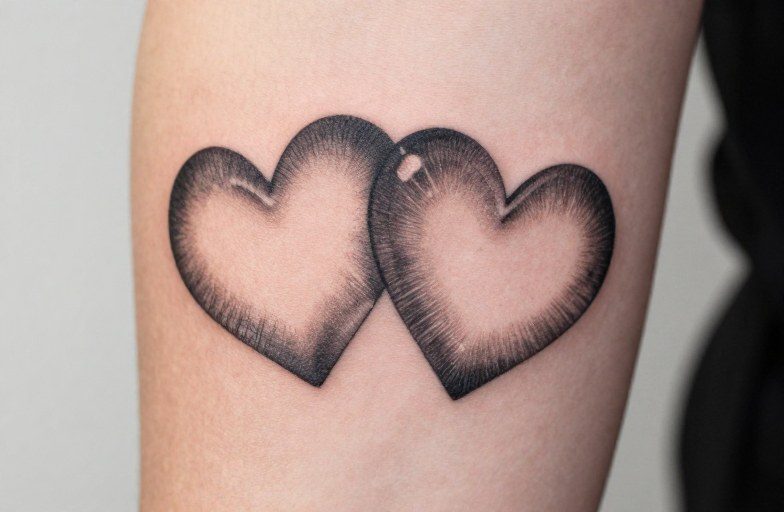
Matching hearts tattoos most commonly signal romantic commitment, deep friendship, or familial bond between two people. The paired design creates a visual contract: two separate bodies carrying halves or mirrors of the same image. Beyond the obvious love symbolism, the heart shape carries millennia of layered meaning that shifts depending on placement, style, and what sits alongside it.
Mythology & Folklore
The heart symbol’s origins are murkier than most people assume. The shape we tattoo today bears little resemblance to an anatomical heart, and its path to meaning is scattered across centuries.
From Ancient Silphium to Courtly Love
Some trace the heart shape to the seed pod of silphium, a now-extinct plant used in ancient Cyrene as contraception and currency. The plant’s heart-shaped seed appeared on coins, and the symbol became linked to love and sexuality through association rather than direct representation. By the medieval period, the heart iconography had migrated into European courtly love traditions, where it appeared in manuscripts and heraldry as a stand-in for devotion and romantic sacrifice.
Matching hearts specifically tap into the concept of cor separatum, the divided heart that finds completion in another. This shows up in everything from Aristophanes’ speech in Plato’s Symposium about split souls seeking their other half, to the European tradition of lovers exchanging heart-shaped lockets containing painted portraits. The tattooed version strips away the metal and miniature painting, leaving only the permanent commitment.
Folk Beliefs About the Physical Heart
Pre-modern medicine located emotion, memory, and moral character in the physical heart. This belief system lingers in phrases like “heartbroken” and “know it by heart.” Matching heart tattoos unconsciously invoke this older framework: the idea that two people share not just affection but something located physically, permanently, in the body’s core. The tattoo makes metaphor concrete by literally embedding the symbol in skin.
Design Tips & Pairings
How you execute matching hearts changes everything about how the tattoo reads and lasts. Two identical outlines read differently than interlocking anatomical hearts, and placement affects both symbolism and longevity.
Placement and Scale
- Wrist or forearm: Visible, declarative. Easy to align when holding hands. Fades faster due to sun exposure and movement.
- Ribcage or sternum: Private, visceral. Connects to the actual heartbeat. Painful placement limits impulse decisions.
- Behind the ear or ankle: Subtle, almost secret. Works for family bonds or friendships where public declaration feels excessive.
- Finger: Direct ring-adjacent symbolism. Extremely high fade rate; plan on regular touch-ups or accept the worn look.
Scale matters for longevity. Tiny matching hearts, under an inch, tend to blur within five to seven years as ink spreads slightly under the skin. Lines lose crispness; solid black becomes gray. If you want the tattoo to read clearly at distance for decades, aim for at least two inches in the longest dimension, with lines no thinner than a standard needle grouping can produce cleanly.
What to Pair With the Heart
Adding elements shifts the meaning without abandoning the core symbol:
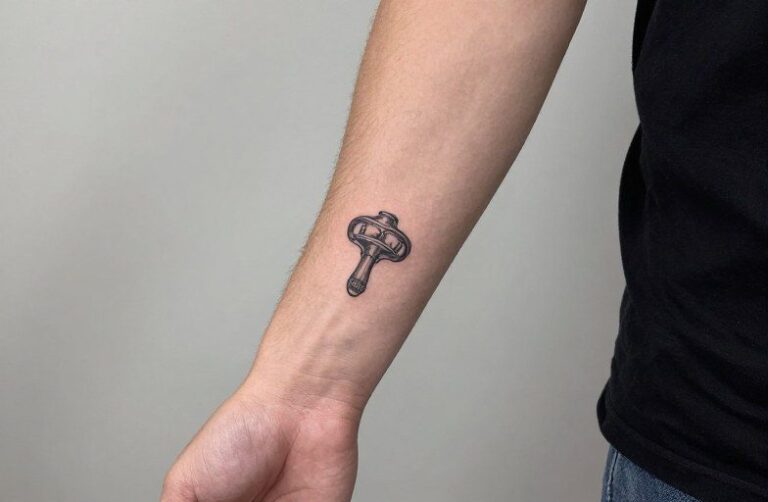
- Lock and key: One partner carries the lock, the other the key. Effective but risks cliché; better execution uses antique skeleton key designs rather than cartoonish versions.
- Coordinates or dates: Grounds the emotional symbol in specific time and place. Works well in small lettering beneath or inside the heart outline.
- Floral elements: Roses traditionally accompany hearts in sailor and military tattooing, adding layers of beauty and pain. Peonies or chrysanthemums bring different cultural associations.
- Anatomical accuracy: Switching from the iconic shape to realistic cardiac anatomy changes the tone from romantic to mortal, from sweet to visceral.
Who Chooses This Tattoo
Demographics here are broader than the stereotype suggests. Yes, romantic couples dominate, but the matching heart format extends to siblings commemorating a parent’s death, best friends marking a shared survival, or military buddies with identical designs from the same deployment.
What unites these groups is the desire for mutual rather than individual symbolism. A single heart tattoo says something about the wearer. Matching hearts say something about a relationship that exists outside either person. The tattoo becomes a third entity, carried in duplicate.
Age and relationship longevity matter for practical reasons. Matching tattoos between people who’ve known each other less than two years carry higher regret rates. The design itself doesn’t change, but the context around it does. Some shops quietly decline same-day matching heart requests, not out of judgment but because they’ve watched too many cover-up conversations happen six months later.
Common Variations & Styles
The heart shape adapts to nearly every tattoo tradition, and the style choice carries as much meaning as the symbol itself.
Traditional American
Bold black outlines, limited color palette, often with a banner reading a name. This style ages well due to heavy line weight and high contrast. The traditional format also carries working-class and military associations, which may or may not fit the wearer’s background.
Blackwork and Fine Line
Blackwork hearts use solid fill or dense patterning. Fine line versions use single-needle or tight grouping for delicate outlines. The latter looks elegant fresh but degrades faster; single-needle lines spread more readily than traditional bold outlines. If choosing fine line for matching hearts, accept that the tattoo will soften significantly within a decade, and design accordingly with slightly thicker minimum line weights.
Other viable approaches include watercolor (color-driven, minimal outline, higher fade risk), geometric (heart constructed from triangles or polygons, appeals to engineering-minded wearers), and negative space (heart revealed by the skin showing through surrounding ink).
Similar & Related Symbols
Matching hearts sit within a broader family of paired commitment tattoos. Understanding the alternatives clarifies why someone might choose hearts over these options.
- Infinity symbols: Similar romantic intent, but more abstract. Less visceral, more conceptual. Often combined with names or dates inside the loops.
- Puzzle pieces: Explicitly states “we complete each other.” Can read as infantilizing or codependent depending on execution.
- Anchor and ship: Traditional nautical pairing where one partner is “grounded” and the other “free.” Gendered history that some modern wearers reclaim, others reject.
- Lock and key (standalone): More possessive than matching hearts. The heart version softens the ownership implication.
- Coordinates or matching maps: Location-based rather than symbol-based. More specific, less universally legible.
Hearts win out for immediate legibility. No one puzzles over what two matching hearts mean. That transparency is either a feature or a limitation, depending on the wearer’s intent.
How It Ages on Skin
Heart shapes, especially the classic rounded outline, face specific aging challenges. The upper lobes and pointed bottom create thin areas of ink surrounded by skin. Over years, as ink migrates slightly within the dermis, these points can lose definition.
Color choice affects longevity predictably. Solid black lasts longest. Red, the most common heart color, fades faster than black due to pigment particle size and how the immune system processes it. Bright reds become pinkish; deep burgundens shift brown. Touch-ups restore saturation but never perfectly match the original fresh brightness.
Skin type matters. Oilier skin tends to spread ink more readily. Areas with frequent stretching, stomach, upper arm during muscle growth, distort symmetrical shapes more than organic, flowing designs. Hearts, being geometrically regular, show distortion clearly. A circle becoming slightly oval looks natural; a heart becoming lopsided looks like a mistake.
Sun exposure remains the single biggest factor in premature aging. Matching hearts on visible locations like wrists or forearms need consistent SPF application if the wearer wants crisp lines past the first decade. This is boring practical advice that gets ignored, then regretted when the tattoo softens to a grayish blur.
Final Thoughts
Matching hearts tattoos work because they’re immediately understood, technically straightforward, and carry genuine historical weight beneath their surface simplicity. The risk lies in their very accessibility: easy to choose impulsively, easy to regret when the relationship shifts. The symbol itself remains sound; what surrounds it, placement, scale, style, and the human context, determines whether it becomes a lasting marker of connection or a reminder of change.
If you’re considering one, the design conversation should take longer than the relationship conversation. Know why the heart specifically, why matching specifically, and why permanent specifically. The tattoo will outlast the initial emotion that prompted it. Plan for the version of yourself that carries it ten years forward, not just the one sitting in the chair today.
Frequently Asked Questions
Do matching heart tattoos have to be identical between partners?
No. Some of the most effective designs use complementary rather than identical imagery, one heart whole, the other broken and mended, or anatomical versus iconic shapes. The matching element comes from shared concept, not visual duplication.
How much should matching heart tattoos cost?
Expect $80-200 per person for simple outlines, scaling up for color, detail, or artist reputation. Extremely low prices often indicate rushed work or inexperienced hands. Budget for touch-ups, especially with color or fine line approaches.
What happens if the relationship ends after getting matching hearts?
Cover-ups, laser removal, or redesign incorporation are all options. The heart’s simple shape actually makes it easier to transform than complex designs. Many people choose to keep the tattoo as a marker of who they were, regardless of current relationship status.
Are matching hearts considered tacky or unoriginal in tattoo culture?
The design’s commonness is real, but execution determines respect. A well-done traditional heart with solid technical craft earns more regard than a poorly rendered custom piece. Cliché lives in lazy execution, not in the symbol itself.