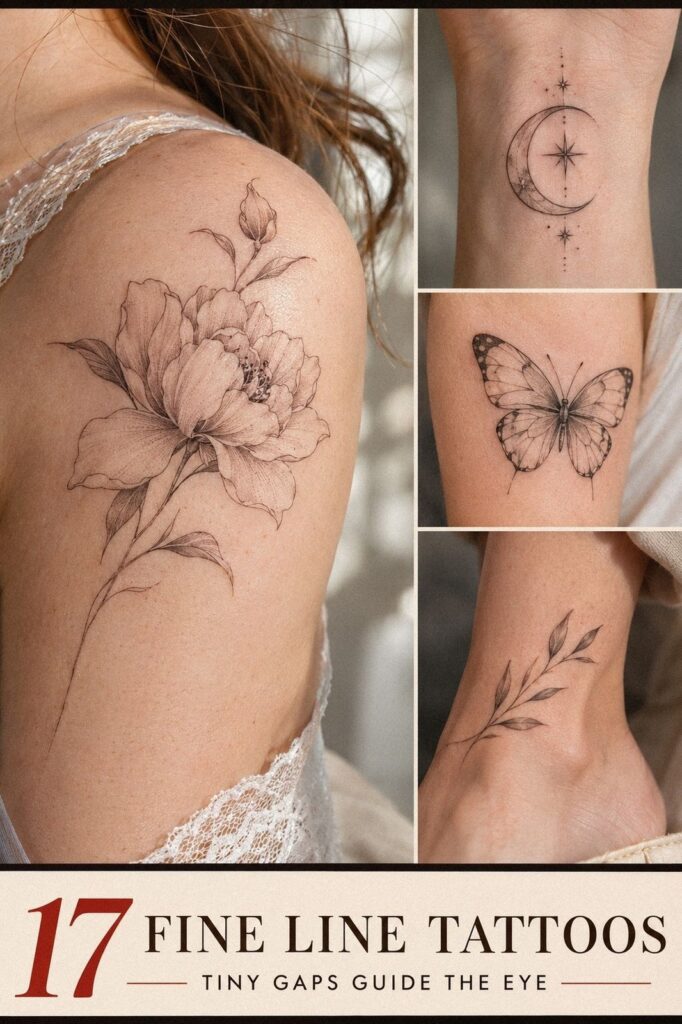
Fine line tattoo designs can stay discreet without feeling forgettable. I once chose a tiny piece that blurred because I ignored placement and sun exposure. Now I look for crisp linework, sensible scale, and skin movement first. These ideas will help you choose something personal, polished, and easy to cover. That matters!
Small Fine Line Tattoo Designs for Wrists
A small wrist tattoo works best when the shape is simple enough to read from a distance. Single-needle linework can create a crisp leaf, tiny initial, or narrow symbol without taking over your skin. If you want privacy, place it on the inner wrist, where a watch or sleeve can cover it.
I’d choose terracotta ink over pale gray here. Terracotta can look elegant at first, but it may fade into fair skin faster, especially if your wrist sees daily sunlight. Your artist should keep the shape open, with clear skin between each mark.
Your undertone matters, too. Terracotta tattoo ink should be tested against your skin rather than copied from a filtered reference. A sharp line can look understated on one person and surprisingly bold on another.
Try the wrist crease only if you’re comfortable with faster wear. Movement and friction can soften tiny details, and you don’t want a meaningful symbol turning into a vague smudge. I’d skip crowded lettering there because it won’t age as cleanly.
For more placement ideas, compare this with a fine line minimal tattoo guide. You’re looking for a personal mark, not the smallest possible mark, and that distinction matters when you’re planning something you’ll keep private. Inner wrist placement gives you useful control over visibility.
Botanical Fine Line Tattoo Designs on Ribs
A botanical rib tattoo gives you space for a flowing shape while staying easy to conceal. Fine line botanical work can follow the curve of your body, especially when the stem travels slightly upward instead of sitting stiffly across the ribs.
Vary the spacing between leaves so the sprig doesn’t become one dark stripe after healing. An intricate design can still feel delicate when every leaf has a clear edge. Leaf spacing is what keeps the composition graceful.
Ribs are a more sensitive placement because the skin sits close to bone. You’ll want to discuss breaks during the appointment, especially if your design has several fine branches. Clay botanical ink can echo a warm palette while keeping the stem distinct from your skin.
I made the mistake of choosing a rib design with too many tiny petals. It looked romantic on paper, but the details crowded together on skin. A simpler wildflower stem would’ve been more graceful and easier for you to cover.
If you’re comparing vertical placements, browse these small fine line spine tattoo ideas. Your ribs can carry more movement than a wrist, but you’ll still want one clear focal shape instead of ten competing details. Vertical placement can make that focal shape easier to follow.
Unique Fine Line Tattoo Designs with Stars
Small stars work beautifully on the sternum when you let the sizes change naturally. Larger points balanced by tiny marks create an expressive rhythm instead of a stamped pattern.
Sternum placement makes the design feel especially private. Absolutely!
Use negative space as part of the design. Your artist shouldn’t fill every gap, because the skin between the stars is what keeps the composition crisp. I’d choose three or four shapes over a dense galaxy cluster.
The sternum can be a painful area, particularly where the skin is close to bone. You’ll want to tell your artist if the vibration feels sharp. Plum star points will read more clearly than pale gray dots once the skin settles.
This is where a bold idea can stay visually quiet. A few stars look symbolic and personal, while a full constellation may feel more obvious.
If you want privacy, keep the pattern beneath a shirt neckline and avoid extending it too far toward the collarbone. A celestial symbol can stay mysterious without becoming obvious.
Would you rather have a celestial symbol that everyone recognizes, or one that only you understand? I’d pick the second. A fine line geometric tattoo guide can help you compare spacing, symmetry, and scale before you commit.
Fine Line Animal Tattoo Designs for Ankles
An ankle animal tattoo can be fierce without becoming heavy. Fine line animal art works best when the profile has one strong gesture and enough skin showing through the design.
Choose an animal with a clear silhouette. A fox ear, swallow wing, cat profile, or small moth can stay readable, but a highly detailed face may lose expression at a tiny scale.
Your artist should simplify the features before the stencil reaches your skin. Clear animal silhouette matters more than extra facial detail.
The ankle moves constantly and rubs against socks or shoes. You’ll want to consider the exact side of the ankle, not just the general placement. Navy outline ink usually gives the cleanest result, especially when the design has delicate legs or whiskers.
I’d avoid placing a fragile animal directly over the most prominent ankle bone. It can look striking in a photo, but the area may be uncomfortable and harder to keep protected during healing. Ankle bone placement deserves a realistic conversation before booking.
Keep the design personal rather than chasing the most popular animal online. A delicate fine line spine tattoo collection shows how a simple silhouette can still feel meaningful when the placement has intention.
Minimal Fine Line Tattoo Designs on Fingers
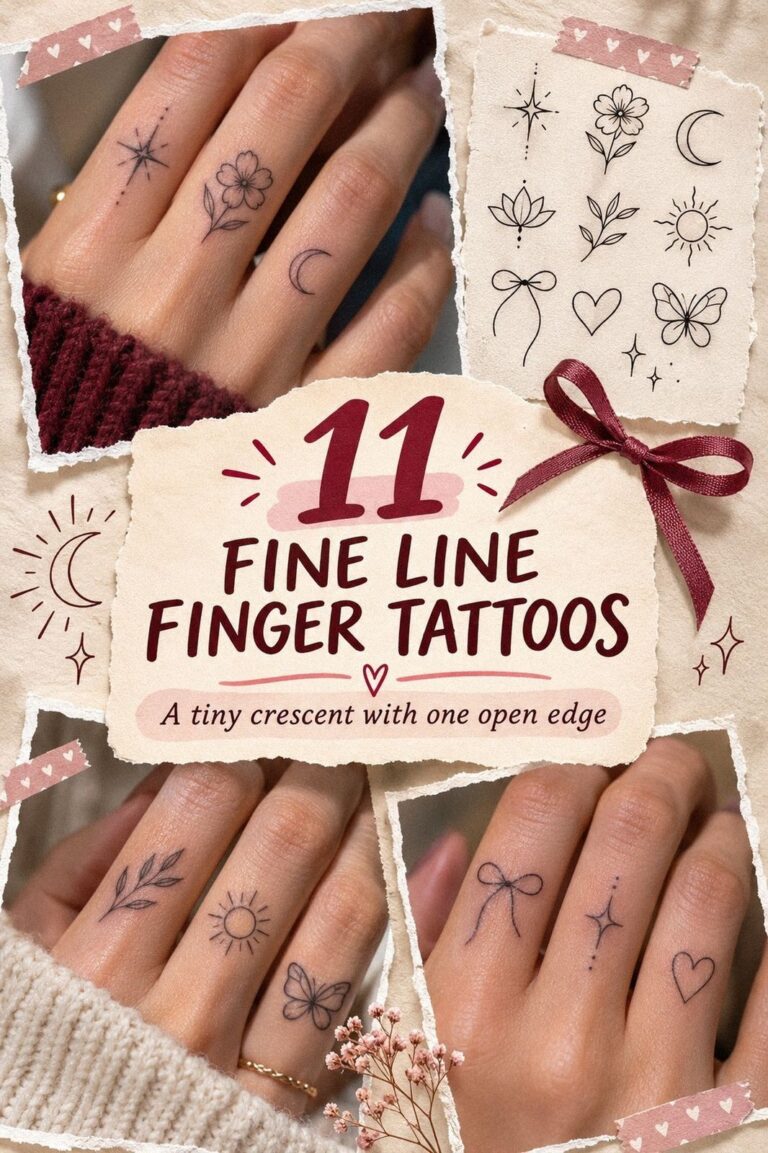
Finger tattoos need a realistic plan because the skin gets washed, rubbed, and exposed constantly. A tiny crescent, narrow heart, or botanical mark can look dainty, but details packed into a finger may fade or spread. Finger tattoo design should survive simplification.
Choose a symbol that survives simplification. You’ll want your artist to show you the smallest version they’d confidently tattoo. Finger placement can be empowering, but it’s not the most predictable location.
I’d circle two or three favorites, then ask how each one might change on your finger rather than choosing only by the drawing. Emerald flash ink makes the designs easy to compare before you commit.
Your hands face frequent friction, sunlight, and washing. If privacy matters, the side of a finger may be easier to cover than the top, although side-finger placement can still wear faster.
But don’t choose a finger simply because the tattoo looks tiny on paper. Your skin is the final canvas, and a fine line minimal tattoo reference will help you judge whether the idea remains crisp when reduced.
Fine Line Portrait Tattoo Designs with Shading
Portrait tattoos demand more planning than a simple outline. Fine portrait linework should preserve the face’s main expression without crowding the features.
Ask to see healed examples on skin tones similar to yours. A design that looks delicate in a fresh photograph may lose contrast after the surface settles. Your artist should explain how forest green and rust shading will be balanced for your complexion.
I’d avoid shrinking a portrait just to keep it discreet. Eyes, noses, and mouths need enough space to remain expressive, and you’ll want the face to age gracefully.
A slightly larger calf piece may serve you better than a tiny portrait that becomes unclear. Portrait scale is part of the meaning.
The calf is usually more tolerable than the ribs, sternum, or feet, though everyone’s experience differs. You’ll still want to plan clothing that won’t rub the area during early healing. Unretouched skin photos are more useful than polished studio images.
A portrait can feel haunting, romantic, or deeply personal, but it shouldn’t be chosen casually. If you’re not ready to show the reference image to your artist and explain why it matters, wait. The women’s shoulder tattoo designs collection can give you a gentler way to study portrait scale and placement.
Fine Line Tattoo Designs Inspired by Constellations
Constellation tattoos suit the inner forearm because the long, visible strip supports a clean line of stars. Constellation linework can stay understated when the connecting lines are thinner than the stars.
Your artist should avoid making every point identical. Different star sizes create a more organic rhythm, while a perfectly even pattern can look mechanical.
I’d keep the connecting lines sparse and let the skin do most of the visual work. Star spacing creates the rhythm.
The inner forearm is generally more tolerable than ribs, feet, hands, or the sternum. You’ll want to think about visibility, though.
A tattoo there can be private under long sleeves but obvious during warmer months. Charcoal constellation ink keeps the design sharp without extra color.
Try using a real constellation only if its meaning matters to you. Otherwise, an invented star map may feel more personal and less predictable.
That choice can make the design symbolic, mysterious, and quietly powerful. Inner forearm placement gives the pattern a natural vertical direction.
And if you’re tempted to add moons, planets, and text, pause before the stencil is made. One clear celestial idea usually ages better than a crowded collection. You can compare more vertical compositions in this minimalist fine line spine tattoo guide.
Fine Line Floral Tattoo Designs Behind Ears
A floral tattoo behind the ear is often chosen for privacy. Wildflower sprig design can work there when the stem stays narrow and the bloom remains recognizable.
The placement behind the ear gives you a discreet, feminine option, while the thigh gives the stem more space to flow. You’ll want to decide whether the tattoo should be discovered only when your hair moves or shown more easily in summer clothing. Behind-ear placement changes how private the design feels.
Use a narrow stem and a few open petals. Hair-thin black linework can make the flower feel graceful, but too many leaves may merge after healing. I’d choose one recognizable bloom instead of a bouquet squeezed into a small area.
Behind the ear can be more sensitive than people expect, and the area may be difficult to protect from hair products. Your artist should explain aftercare clearly.
The thigh is usually easier to protect and may be more tolerable for a first tattoo. Open petal shape helps the flower stay readable.
This design feels romantic without becoming sugary. If you want to compare another floral direction, browse the watercolour tattoo designs collection, then ask your artist to translate the color idea into crisp black linework.
Fine Line Tattoo Designs with Meaningful Symbols
Meaningful symbols work best when they’re specific to your story. Personal symbol linework can be minimal and still carry serious emotional weight.
Choose an object you’d recognize without a caption. A key, small wave, initial, or simplified sun may feel more personal than a generic symbol selected from a trend board.
You’ll want to explain the memory behind it so your artist can preserve the right detail. Symbolic object choice gives the design its emotional center.
The thigh is a practical placement because it offers coverage and usually tolerates longer sessions better than hands or ribs. Midnight blue symbolic ink will give the cleanest foundation, especially if your design includes a narrow outline or small interior mark.
I’d skip symbols that are meaningful only because everyone else is using them. A popular sign isn’t automatically wrong, but your tattoo should still feel personal after the trend moves on. That’s where a crisp, understated design can become timeless.
Thigh placement keeps the idea easy to cover.
Here are the planning numbers I’d keep nearby:
Prices vary by artist and region, so you’ll want a direct quote before booking. For more shape-based ideas, revisit this fine line geometric tattoo guide.
Geometric Fine Line Tattoo Designs on Forearms
A geometric forearm tattoo lets you compare a fresh stencil with a healed result. Geometric fine line structure depends on clean spacing, consistent angles, and a design that still reads when the skin changes.
Your artist should show you the stencil before starting. Look at the shape while your arm is relaxed, then bend your wrist and rotate your forearm.
A design that looks balanced in one position may feel crooked when your arm moves. Forearm stencil checks catch that problem early.
The healed side matters more than the fresh side. Healed sage linework can soften slightly, and fine lines may widen over time. I’d keep the geometry bold enough to survive that change rather than choosing an ultra-thin pattern for a sharper first-day photograph.
Forearms are usually more tolerable than the sternum, feet, hands, or ribs. You’ll still need to consider visibility at work and in daily life.
A lower inner forearm can be covered more easily than a design running toward the wrist. Geometric spacing should follow the body rather than fight it.
But symmetry isn’t always the goal. A slightly irregular shape can feel more expressive and personal than a perfect grid. Study this small fine line spine tattoo reference if you want to see how alignment can follow the body without becoming rigid.
Fine Line Tattoo Designs with Delicate Script
The word “breath” works well as a private script tattoo because it carries meaning without requiring a long quote. Fine script tattoo lettering needs enough space between letters to remain readable, especially when the phrase is placed on the thigh or another area that moves.
Ask your artist to show you the word in several weights. A line that looks romantic and elegant on paper may be too thin for long-term clarity.
You’ll want a lettering style that feels personal but still has strong, readable shapes. Script lettering needs structure as well as delicacy.
The terracotta script should contrast clearly without relying on heavy shading. Terracotta lettering ink can create a crisp result, but your artist should discuss how the design may soften as it heals. Tiny loops and flourishes are the first details I’d question.
I’d choose one meaningful word instead of a full quote. A single word gives you privacy and makes the tattoo easier to place discreetly.
“Breath” is expressive, but its power comes from the skin around it, not extra decoration. Meaningful word keeps the design focused.
Keep the lettering short, check the spelling twice, and read it from several angles. You’re the person who’ll live with the choice. This delicate fine line spine tattoo collection can help you compare vertical script with a more compact thigh placement.
Compare Fine Line Tattoo Designs by Visibility
Start with the level of privacy you actually need. Private tattoo placement could mean the ribs beneath a shirt, the thigh beneath clothing, or the inner wrist beneath a watch.
A discreet design doesn’t have to be invisible every day. Sometimes it only needs to disappear during work, family events, or formal occasions. That’s a more realistic discreet tattoo goal than chasing a microscopic tattoo.
For maximum control, compare three options before booking:
– Hidden most of the time: ribs, upper thigh, or behind the ear. – Easy to cover: inner forearm, ankle, or side finger. – Usually visible: outer forearm, wrist top, or collarbone.
This comparison can save you from paying the cost of changing a design later. The best value often comes from choosing a placement choice you’ll still enjoy when your clothing, job, or routine changes.
Black Ink or Gray Ink? Fine Line Tradeoffs
Black and gray ink create different moods, but neither is automatically better. Black tattoo pigment usually gives stronger contrast, while gray can create an ethereal, understated effect.
Gray may look soft and stylish when fresh, especially on lighter skin. It can also become harder to read if the design is tiny or frequently exposed to sunlight.
Your artist should explain how the shade interacts with your complexion. Gray tattoo ink needs realistic expectations.
I’d be cautious with pale gray lettering, miniature portraits, and thin geometric marks. Those designs need dependable contrast. Gray wash shading can work beautifully when the artist leaves enough separation between values.
If you want a bold, crisp mark that holds attention, black is usually worth it. If your priority is a softer, more delicate result, gray may offer better visual value. Ask to see healed ink samples, not only fresh work!
Artemis, Atlas, and Aster: Symbolic Fine Line Directions
Names can become powerful tattoo symbols when they connect to a private story. Artemis symbolism might suggest independence, while Atlas can represent endurance and Aster can point toward stars or a favorite flower.
You don’t need to copy a myth literally. A tiny bow, globe, constellation, or star-shaped bloom can carry the reference without making the meaning obvious to everyone else. Reference symbol lets you keep the idea subtle.
I’d choose the symbol that still feels personal without an explanation. That’s what makes a discreet tattoo meaningful, expressive, and timeless. Private meaning matters more than recognizability.
What Makes a Fine Line Tattoo Artist Worth Booking?
Look for healed work first. Healed portfolio photos reveal whether lines stay legible, whether spacing survives, and whether the artist knows when a design is too small.
Ask about skin tones similar to yours, placement-specific experience, hygiene, and realistic line weight. A stylish portfolio is useful, but clear communication is part of the value you’re paying for. Skin-tone examples can make the comparison more honest.
A good artist won’t agree to every idea. If the concept needs more scale, fewer details, or a different placement, you should hear that before the appointment.
That honest answer can be worth the cost. Artist consultation is part of the work.
Spend Your Tattoo Budget on Readability
A limited tattoo budget shouldn’t force you into the smallest possible design. It’s usually smarter to simplify the shape than to compress too many details into a tiny area. Tattoo design scale protects readability.
Before booking, ask what the quote includes:
– Consultation time – Stencil adjustments – Minimum charge – Touch-up policy – Aftercare guidance
A clear estimate helps you compare value between artists without choosing by hourly rate alone. The cheapest option may not be the best bargain if the design needs an early correction. Ask for a booking estimate in writing.
If you’re deciding between two concepts, spend the budget on clean spacing, sensible scale, and an artist who shows healed work. Those choices will matter longer than an ornate detail nobody can read. Line readability is the lasting value.
Fine Line Tattoos at Work: Private Versus Visible
Workplace privacy depends on more than size. Coverable tattoo placement gives you flexibility when sleeves, trousers, socks, or hair can conceal the design.
An inner forearm tattoo may disappear beneath a long sleeve but show during warm weather. A thigh tattoo can stay completely private for most people, while a behind-the-ear design depends on hairstyle and workplace rules. Workplace visibility varies by routine.
Ask yourself what “private” means in practice. Do you want nobody to know, or do you only want control over when people see it?
That distinction can change the best placement and the overall cost. Privacy goal should guide the decision.
Why Does Fine Line Placement Matter More Than Size?
I’ve learned that discreet doesn’t mean microscopic. My earliest fine line tattoo was smaller than it should’ve been, and the artist had to compress details that needed room. The result looked crisp at first, but it didn’t have enough separation to stay readable.
Now I’d rather choose a slightly larger symbol in a private placement than force a tiny design into a difficult area. Discreet tattoo scale is a smarter target.
Your body changes the design before healing even begins. Ribs curve, wrists fold, ankles move, and thighs stretch when you sit.
A graceful mark on paper may become awkward when it crosses a crease. I always ask to see the stencil from several angles, and I take a quick photo before agreeing.
That pause has saved me more than once! Body movement should shape the design.
I’m also skeptical of the idea that every fine line tattoo should be whisper-thin. Crisp black ink often ages more confidently than pale gray, especially when the placement is protected from regular sun. Your artist should explain whether the line weight suits your skin, the design, and the expected movement of the area.
The practical choice depends on what you want to hide. Private placement may mean the inner wrist beneath a watch, the thigh beneath clothing, the ribs beneath a shirt, or the upper forearm under a sleeve.
There isn’t one universally best location. What matters is whether you’ll protect it during healing and accept how visible it’ll be later.
Fine line work can be delicate, but it isn’t automatically fragile. With sensible scale, careful aftercare, and realistic expectations, your tattoo can remain personal without looking unfinished.
You’ll want healed portfolio photos, clear hygiene standards, and an artist who’s willing to tell you when an idea is too small. Healed tattoo care supports the final result.
The Questions Worth Answering First
How much does a fine line tattoo design usually cost?
A fine line tattoo usually costs about $50 to $100 at a boutique minimum or $100 to $250 per hour in the US. Your final quote depends on size, placement, artist, and region. A written tattoo quote helps you plan your budget without guessing.
Are fine line tattoo designs a good idea for a first tattoo?
Yes, fine line tattoos can be a good first choice when you select a sensible placement and readable scale. A manageable tattoo design may feel less intimidating than a large piece. You’ll still want to avoid difficult areas if you’re especially sensitive to discomfort.
– Inner forearm or thigh: generally more tolerable – Ribs, feet, hands, and sternum: often more sensitive – Simple black linework: easier to assess before booking
How do I choose a tattoo artist for fine line tattoo designs?
Choose an artist with healed examples, clean linework, and a portfolio that includes skin tones like yours. Artist hygiene standards matter as much as style. You’ll also want to confirm consultation details and experience with your chosen placement.
How much do fine line tattoo designs hurt?
Pain varies, but ribs, feet, hands, and sternum are often more painful than the forearm, thigh, or shoulder. Placement and skin movement change the experience more than the phrase “fine line” suggests. You can ask for breaks, and you don’t need to prove anything by staying silent.
How long does a fine line tattoo design take to heal?
The surface usually heals in about 2 to 3 weeks, while complete healing can take about 2 to 3 months. Gentle tattoo aftercare means washing carefully, moisturizing as directed, and avoiding sun and swimming during the early stage.
What’s the best placement for fine line tattoo designs?
The best placement depends on privacy, pain tolerance, movement, and sun exposure. An inner forearm or upper thigh can offer a practical balance of visibility and protection. You’ll want to ask how the design may age before choosing a location.
Where I’d Start First
If I had to pick one, I’d start with the meaningful symbol on the thigh. It gives your artist space for crisp spacing, stays private under clothing, and won’t force the design into a cramped shape. Pin that meaningful thigh tattoo idea for later and compare it with this fine line minimal tattoo guide before booking.
Trust that instinct!