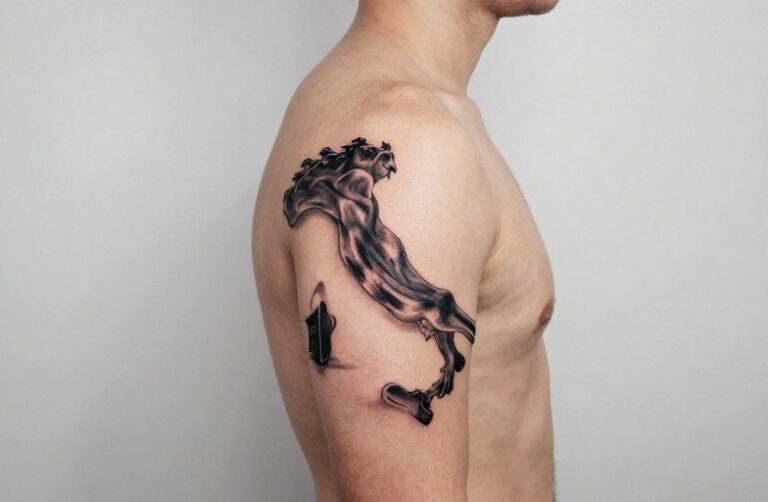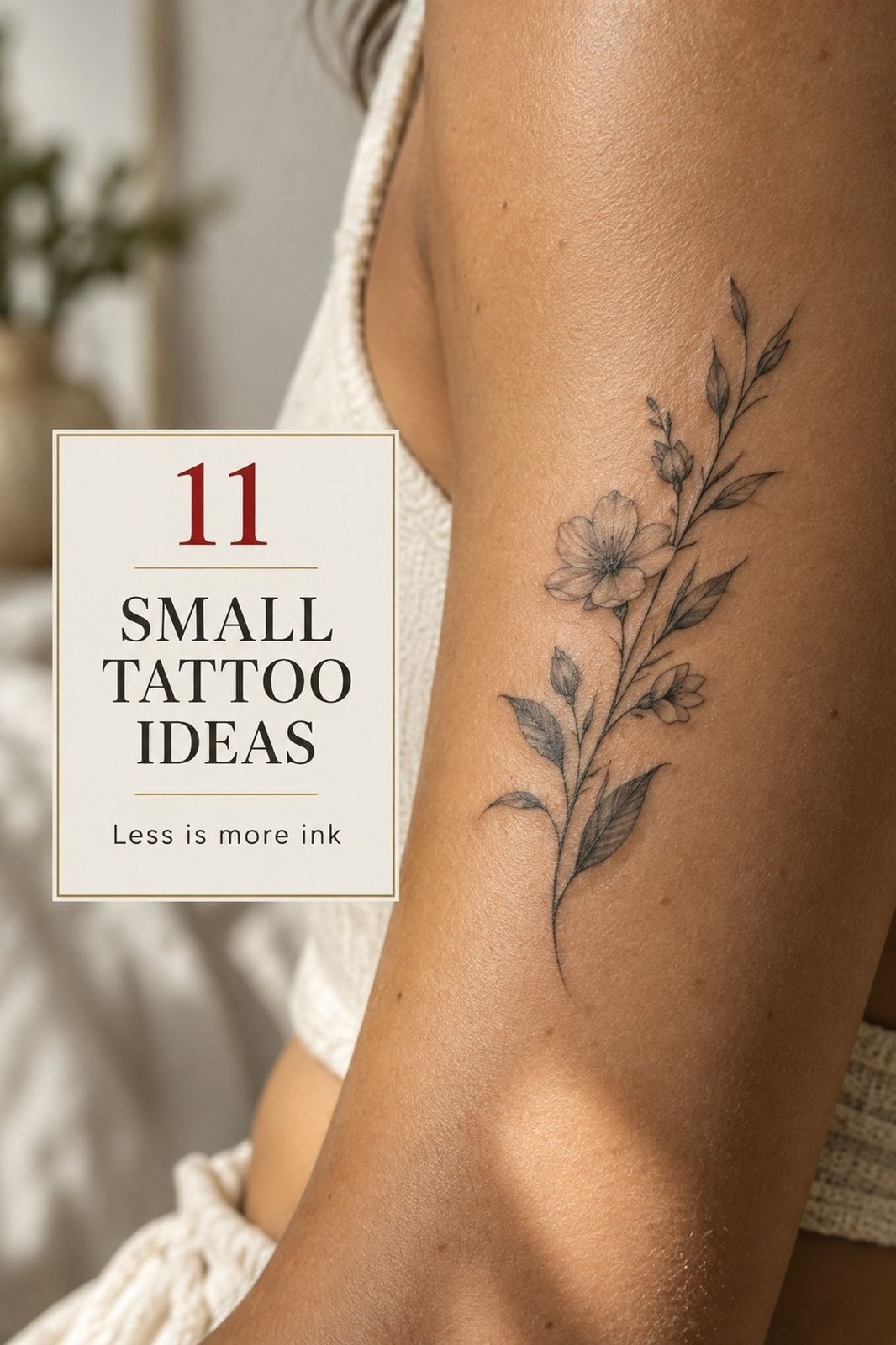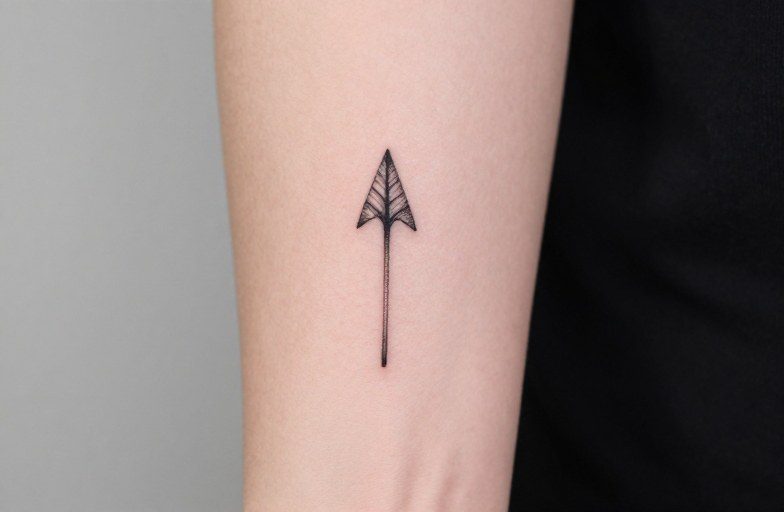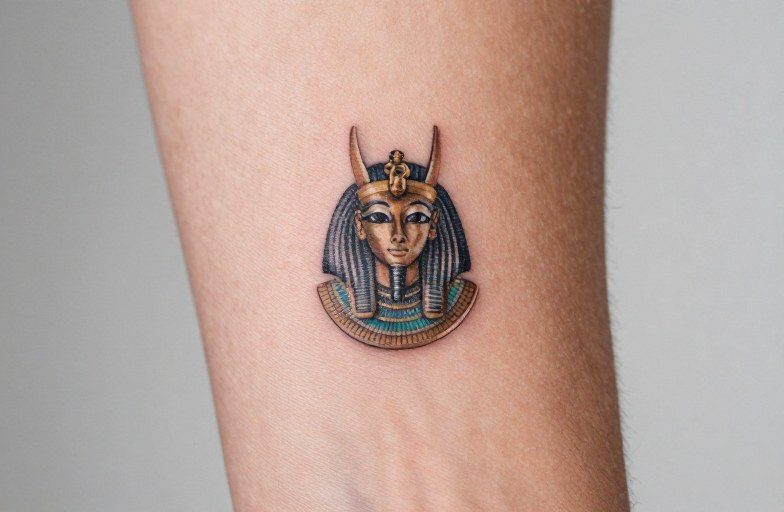
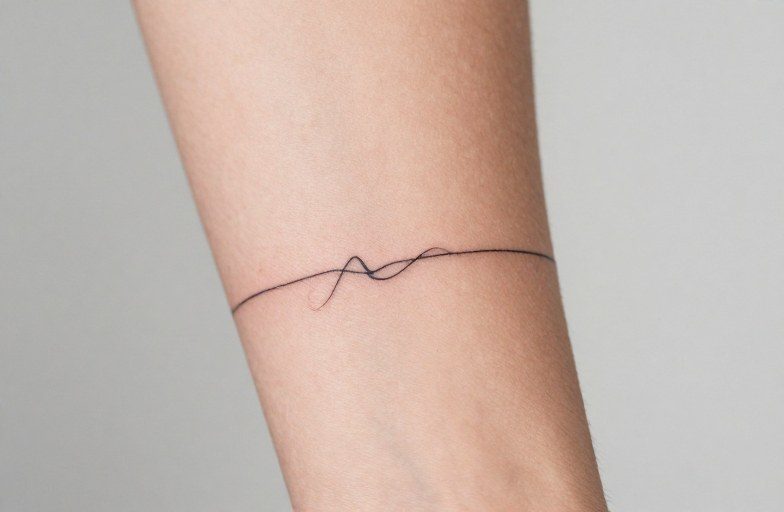
Minimal tattoos strip everything down to the essential line or shape. That spareness makes every choice matter more: a wobble in a single needle line can’t hide behind shading, and a design that looks clean on paper might blur into nothing on skin. The best minimal work understands how ink settles, how skin moves, and how a tiny mark will read from three feet away versus three inches.
Standout Design Ideas
Certain motifs translate naturally to minimal execution without losing their punch. The key is finding imagery that carries weight through silhouette alone.
Line-Based Symbols
- Single continuous lines: A face or figure drawn without lifting the needle, looks effortless, demands serious technical control from the artist
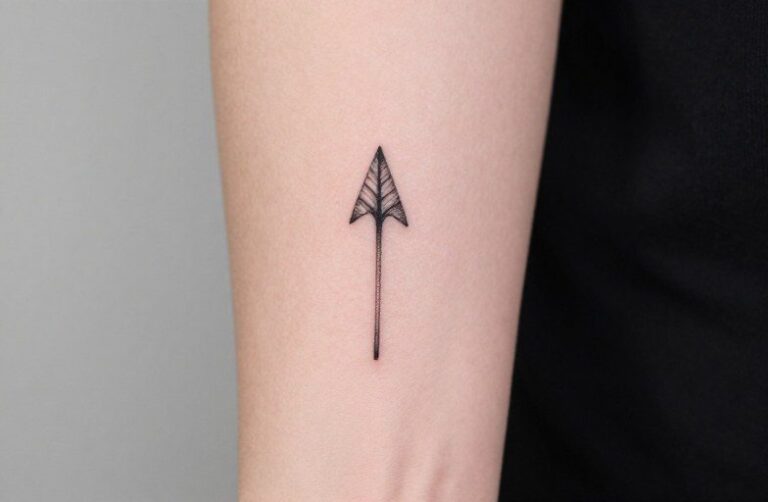
- Geometric fragments: Partial triangles, interrupted circles, or asymmetric dashes that suggest completion without spelling it out
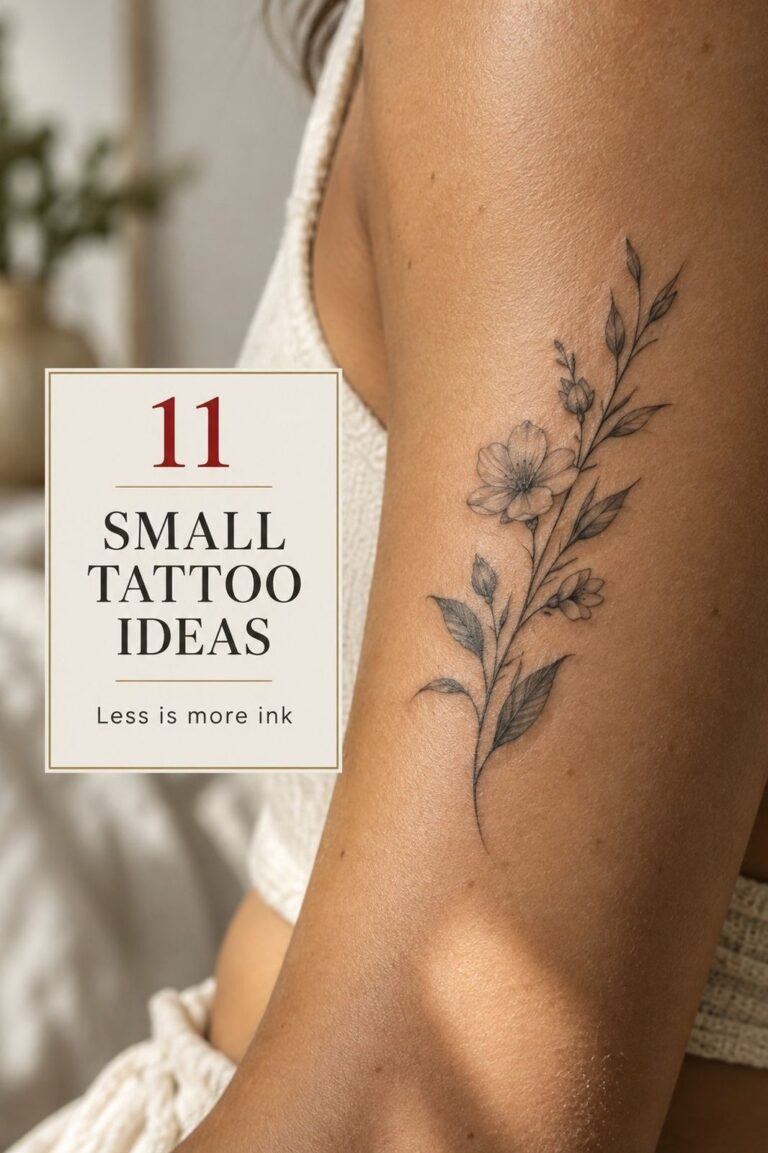
- Botanical silhouettes: One stem with two leaves, a seed pod, a bare branch, nature forms that read instantly at small scale
- Abstract punctuation: A well-placed comma, an ellipsis, or a single bracket that functions as personal code
Negative Space Tricks
Some of the most striking minimal work uses the skin itself as part of the design. A mountain range formed by the gap between three horizontal lines. A moon that exists only as the un-inked circle inside a black rectangle. These pieces age interestingly, the ink spreads slightly, but the untouched skin stays crisp, creating a shifting contrast over time.
For First-Timers
Minimal designs attract a lot of first-timers for obvious reasons: lower cost, shorter sitting, easier to hide or explain. But the small scale creates specific pitfalls for the uninitiated.
What Actually Hurts Less
Shorter sessions mean less cumulative trauma, but minimal work often uses single needles or tight groupings that feel more intense than a bold shader. The wrist, ankle, and ribs, common minimal placements, happen to be some of the more sensitive spots. A twenty-minute finger tattoo can feel longer than a two-hour thigh piece because the artist is working right on bone or nerve bundles.
The Commitment Is Still Real
Minimal doesn’t mean temporary. These marks are as permanent as any sleeve. The difference is in removal difficulty: laser works best on dense, dark ink. A faint gray line might be harder to target and require more sessions. Think of minimal as harder to undo, not easier to live with.
Tips for Choosing
Selection criteria for minimal work differ from traditional tattoo shopping. You’re evaluating precision, not flash sheets.
- Check the artist’s healed photos: Fresh minimal tattoos look flawless; the test is one year later. Ask to see aged work specifically
- Line weight matters enormously: Too thin and it disappears; too bold and it loses the minimal quality. 3RL to 5RL range is typical, but skin type affects what holds
- Avoid parallel lines too close together: They’ll bleed together over time. Minimum gap should be roughly the width of the lines themselves
- Consider the artist’s non-tattoo art: Minimal work draws heavily from illustration, graphic design, and drafting skills. Someone with a clean drawing practice often translates better than a traditional-only painter
How to Personalize It
The spareness of minimal design can feel impersonal if you’re not careful. Personalization comes from specificity, not decoration.
Coordinates and Data
A single number in a typeface you designed or modified. The exact angle of a slope you once climbed. A frequency in hertz that maps to a specific memory. These carry private meaning without requiring explanatory text. The tattoo becomes a reference you decode, not a statement others read.
Material References
Some people bring in the actual material they want translated: a wire bent into a shape, a thread pulled from a meaningful garment, a handwritten mark enlarged and simplified. The artist traces or interprets the physical object rather than working from a digital file. This introduces slight imperfections that keep the piece from feeling stock.
Size & Scale
Minimal tattoos push against physical limits. There’s a floor below which detail becomes unreliable.
Finger tattoos smaller than a dime rarely hold crisp edges; the skin there sheds and regenerates too aggressively. Behind-the-ear pieces can work at 2-3 centimeters because the skin is thin and stable, but the proximity to hairline means fading from sun and product exposure. Rib pieces can be slightly larger without losing the minimal aesthetic because the canvas allows breathing room.
Scale also affects how the piece ages visually. A 4-inch minimal design on a forearm will look smaller relative to the body as years pass, skin stretches, muscle changes, the frame shifts. What felt bold at twenty-five can look stranded at forty-five. Planning for this means either accepting the shift or placing where proportional change is minimal (inner arm, collarbone, spine).
Best Placements
Certain locations reward minimal treatment specifically; others fight against it.
Where Minimal Work Excels
- Side of the finger: Vertical lines, small symbols, text at minimal scale, visible when gesturing, hidden at rest
- Inner bicep: Protected from sun, stable skin, enough flat area for a clean geometric piece
- Behind the ear: The natural hairline frames the work; even a tiny mark reads as intentional placement
- Along the spine: Vertical compositions follow the body’s architecture; a single line down the vertebrae uses the skeleton as compositional guide
Placement Cautions
The outer forearm gets constant sun exposure and frequent abrasion from sleeves and surfaces. A minimal piece there fades faster and looks more compromised than a bold traditional design would. The foot and ankle suffer similar wear from shoes and friction. If you want minimal work in high-contact zones, plan for more frequent touch-ups or accept the weathered quality as part of the piece.
The Takeaway
Minimal tattoo design succeeds when restraint serves precision, not when it masks laziness. The best pieces result from asking what can be removed while keeping the idea intact, then trusting the artist to execute with technical discipline. Choose someone whose healed work you can examine, place the piece where skin behavior supports the design, and accept that the minimal aesthetic includes the mark’s eventual softening. The goal isn’t permanence of appearance but permanence of intention, a small, clear signal that holds its frequency over time.
Frequently Asked Questions
How long does a minimal tattoo session usually take?
Most minimal pieces run 30 minutes to two hours, depending on complexity and placement. A single fine-line symbol might take 20 minutes; a detailed continuous-line portrait could stretch to three hours. The setup and stencil time often exceeds the actual tattooing.
Do minimal tattoos fade faster than bold traditional ones?
Fine lines and light gray wash do tend to soften more quickly than dense black packing. Sun exposure, skin type, and placement affect this significantly. Minimal pieces on protected areas like the inner arm can hold for years; finger or foot placements may need refresh within 2-5 years.
Can any tattoo artist do minimal work well?
Not necessarily. Minimal tattooing requires different skills than traditional shading and color packing: steady single-needle control, understanding of how sparse ink settles, and often a background in illustration or graphic design. Ask to see healed photos specifically, not just fresh work.
What’s the difference between minimal and micro-realism?
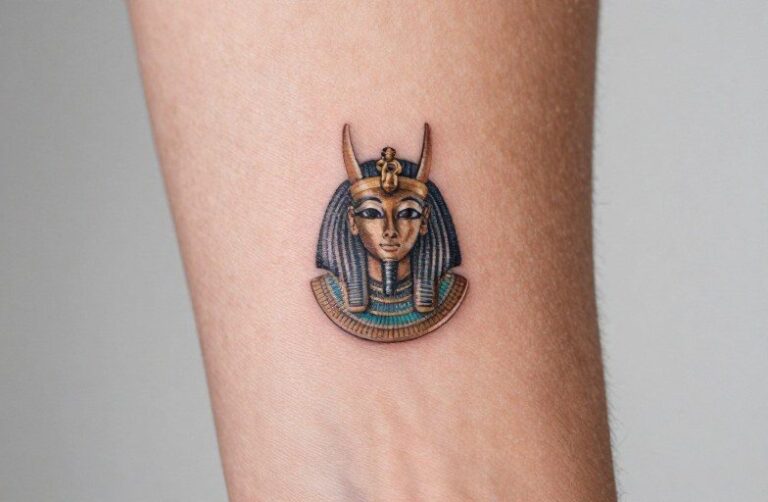
Minimal design reduces forms to essential lines or shapes, often abstracting the subject. Micro-realism attempts photographic detail at tiny scale, using multiple needles and dense ink saturation. They share small size but differ radically in technique, aging behavior, and visual intent.