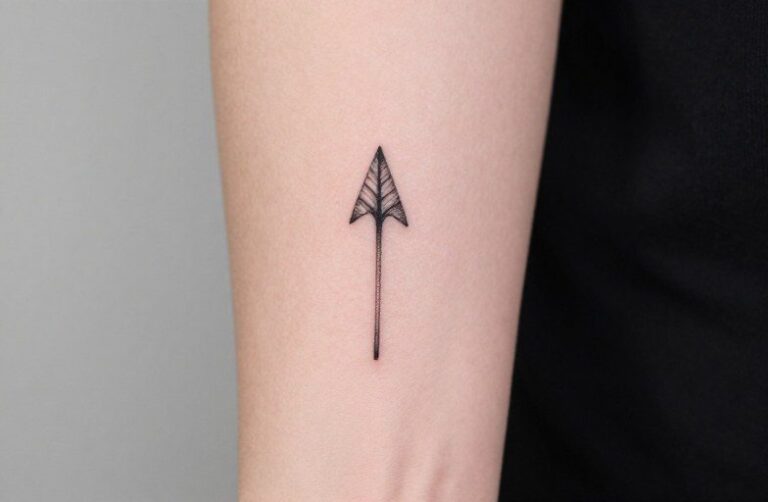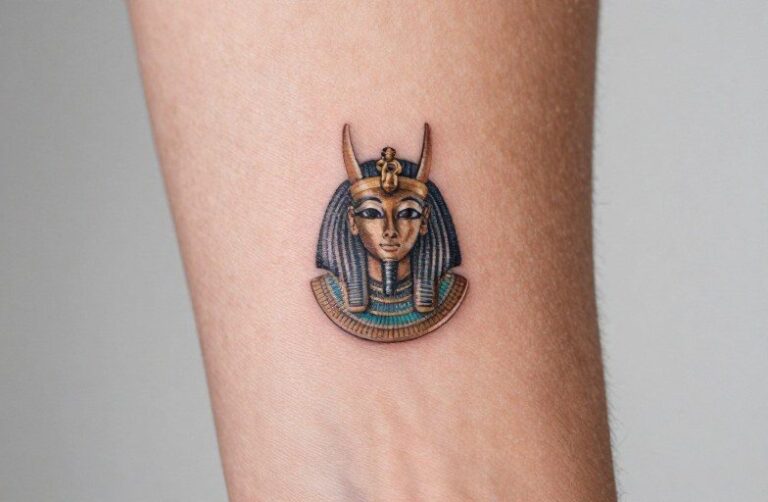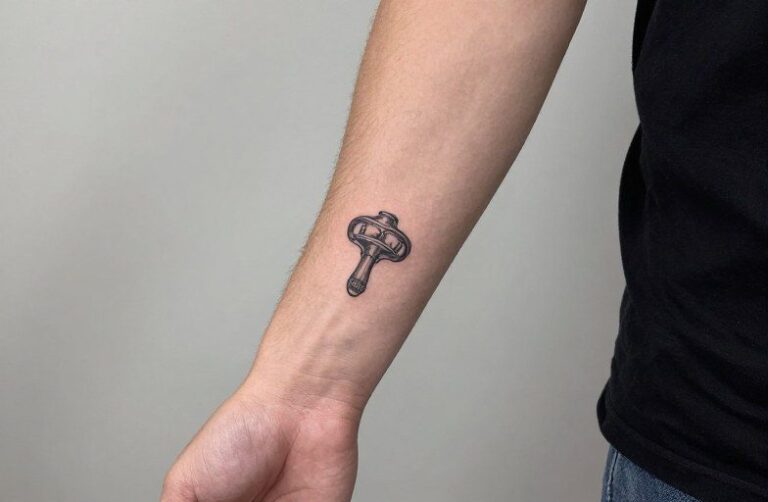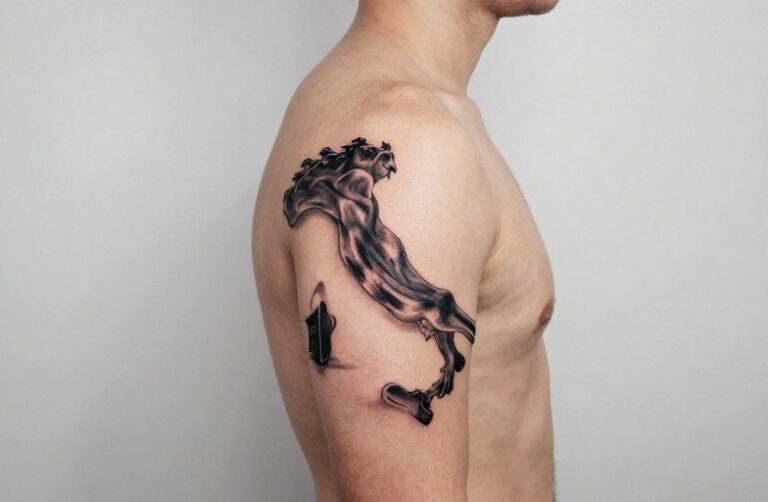
Small tattoos work best when they’re doing something specific, marking coordinates you actually care about, hiding a date only you recognize, or carrying a symbol that reads one way to strangers and another to you. The constraint of size forces clarity. You can’t hide bad ideas behind detail, and you can’t rely on scale to impress anyone. What remains has to be sharp, intentional, and built to last.
Best Placements
Where you put a small tattoo changes how it ages, how visible it is, and how much it hurts. These three factors matter more than most people expect.
High-Movement vs. Low-Movement Skin
Fingers, hands, wrists, and elbows see constant flexing and sun exposure. Ink there blurs faster, lines soften, blacks go gray, colors fade unevenly. That doesn’t mean avoid them. It means choose bolder designs for these spots: solid black symbols, thick lines, high contrast. Save fine detail for the inner bicep, the side of the ribcage, the upper chest, or behind the ear where skin stays relatively stable.
The Visibility Calculation
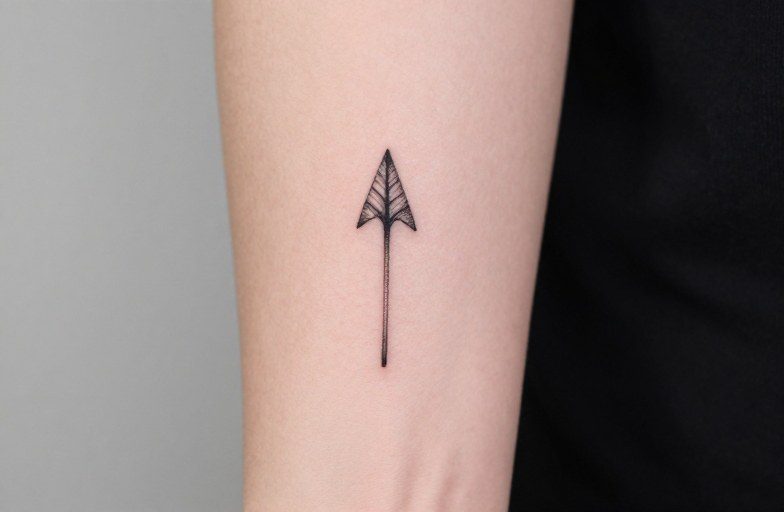
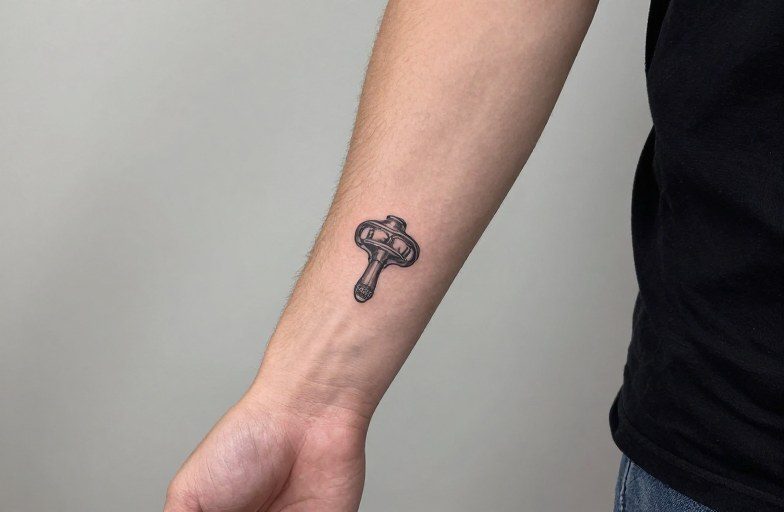
Behind the ear reads private. Forearm reads public. Side of the neck reads loud even when the design itself whispers. For a first small piece, the inner forearm offers compromise: easy to show, easy to cover, skin that holds detail reasonably well. The pectoral muscle, just inside the shoulder line, ages gracefully and stays flat. The ankle and calf work for vertical designs, arrows, script, narrow symbols, but avoid horizontal layouts that wrap and distort.
Popular Styles
Not every style shrinks well. Some techniques that look stunning at palm-size turn to mush when reduced to two inches.
What Survives at Small Scale
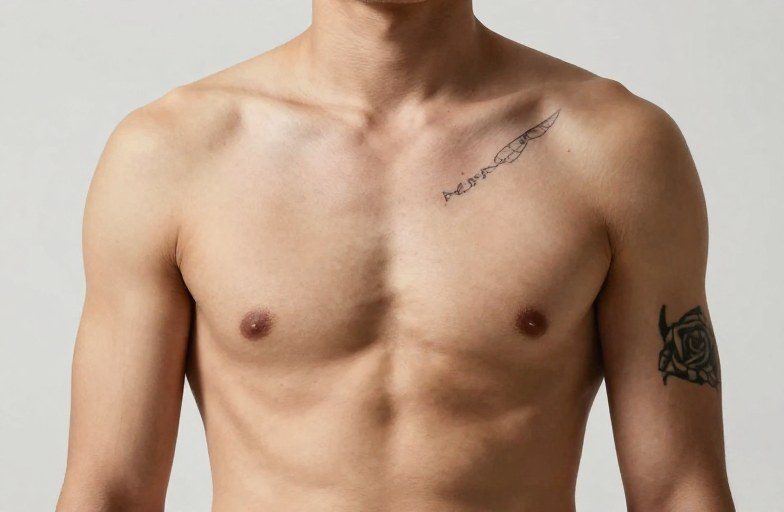
- Single needle or fine line: Delicate but requires perfect aftercare and touch-ups within a few years. Best for inner arm, chest, areas protected from sun.
- Bold traditional (American or Japanese): Heavy black outlines, limited color palette, readable from across a room. Ages better than anything else small.
- Blackwork/dotwork: Solid blacks or stippled gradients. No color to fade, clear shapes, strong contrast. Ideal for geometric or symbolic pieces.
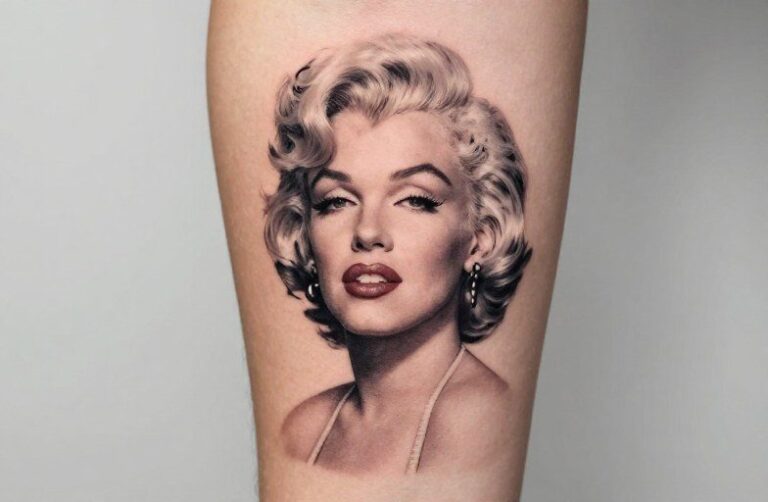
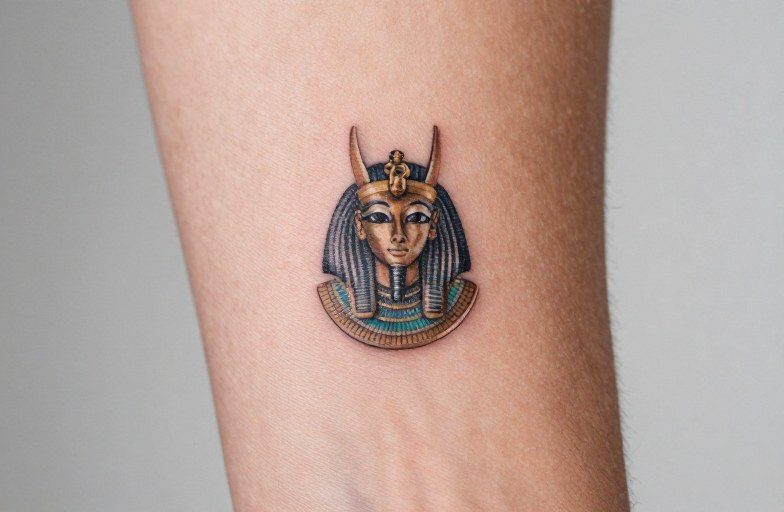
- Micro-realism: Technically possible now with modern equipment. Extremely high maintenance, needs expert artist, often blurs within 5-10 years.
Style Matching to Subject
A birth year in Gothic block letters wants traditional weight. A constellation wants fine dots and thin lines. A dog tag silhouette wants blackwork solidity. The style should serve the meaning, not the other way around.
Standout Design Ideas
Specific subjects that carry weight without needing explanation, and how to execute them well.
Coordinates and Dates
Latitude and longitude of a childhood home, a first meeting, a loss. Numbers tattooed in a clean sans-serif or typewriter font, small enough to hide, specific enough to matter. Avoid cursive for numbers, it blurs faster and reads less clearly. Place vertically along the inner bicep or horizontally across the collarbone line. Dates work same way: military-style 6-digit (YYMMDD) or full year. The compression itself becomes part of the privacy.
Minimal Symbols With Loaded History
- The ouroboros: Snake eating its tail, often linked to cyclical renewal, sometimes traced to ancient Egyptian iconography. Works as a simple circle or with minimal detail.
- The anchor: Beyond naval connection, commonly associated with stability and hope. A clean, heavy outline holds forever.
- The broken chain: Specific, personal, readable at small scale. Two or three links separated, black and simple.
- Morse code: Dots and dashes spelling a name or word. Requires absolute precision in spacing, one slip changes the letter. Verify with the artist, then verify again.
Flora and Fauna With Actual Significance
A single pine tree for resilience. A crow for memory, often linked to Norse and Celtic tradition. A specific flower, not “whatever looks cool” but the one that grew at a gravesite, that your grandmother grew, that you saw on a specific day. One accurate species, rendered simply, beats a generic rose that means nothing.
For First-Timers
Small first tattoos carry disproportionate pressure. They’re tests, of pain tolerance, of commitment, of whether you can live with permanence.
Start With Black, Start With Flat
Color requires more sessions, more money, more maintenance. Black ink on light skin shows the design clearly even as it ages slightly. Flat designs (no shading, no gradient) heal more predictably and cost less. A solid black symbol, 2-3 inches, one session, done. You can always add color later. Removing or covering color is harder.
The Artist Conversation
Bring reference images of the specific style you want, not the subject. Say “I want this level of boldness, this line weight, this level of detail” rather than “I want something like this but different.” Ask to see healed photos, not fresh work. Every tattoo looks good at day three. Ask how they’ve handled this specific placement before. A good artist will tell you if your idea won’t work at the size you want.
Size & Scale
There’s small, and then there’s too small.
Lines have a minimum width to hold. Below roughly 0.5mm, tattoo ink struggles to settle stably in skin. Below 1 inch total dimension, complex designs lose all readability. A realistic eye becomes a gray blob. A word with descenders (g, j, p, y) becomes illegible. The gap between letters in script needs to be wider than you’d think, ink spreads slightly during healing.
As a practical rule: if you can’t draw the design clearly with a fine-tipped pen in the actual size on your actual body, don’t tattoo it. Test with a marker. Live with it for a week. Small tattoos are permanent; temporary regret is cheap.
Trending Variations
Current directions that avoid the obvious pitfalls.
Abstracted Maps and Topography
A single contour line from a meaningful location, lake shore, mountain ridge, coastline. Reduced to pure geometry. Readable as abstract pattern to others, specific as memory to you. Works beautifully in dotwork or single continuous line.
Negative Space Designs
Using skin tone as the image, black ink as the background. A silhouette cut out of black. A word formed by the absence of ink. Technically demanding, visually striking, but requires enough surrounding black to maintain contrast as it ages. Best at slightly larger small sizes, 3 inches minimum for clarity.
Red Ink Only
Moving away from black entirely. Higher visibility on darker skin tones, softer aesthetic, but red fades faster and some people react to red pigment more frequently. Research your artist’s experience with red-heavy pieces specifically.
What to Remember
Small tattoos with meaning succeed on specificity and execution, not on the depth of the meaning itself. A generic infinity symbol with a word inside it means nothing because it tries to mean everything. A set of coordinates from a day that changed your life means everything because it’s indecipherable without context.
Choose placement based on how you actually live, sleeves down at work, shirt off at the gym, hands in pockets when nervous. Choose style based on how long you actually want it to look good, not how it photographs fresh. Choose the artist based on healed results in their portfolio, not Instagram flash.
The best small tattoo is one you forget about sometimes and rediscover with satisfaction. Not a billboard. A private mark, well-made, holding steady as years pass.
Frequently Asked Questions
How small can a word tattoo be before it becomes unreadable?
Most script needs to be at least 1.5 inches tall to maintain legibility long-term, with letter spacing wider than you’d expect. Descenders on letters like g and y need extra room or they blur together.
Do small tattoos hurt less than large ones?
Pain depends on placement, not size. A small tattoo on the ribcage hurts more than a large one on the upper arm. Duration matters too, small pieces finish faster, which some people find easier.
How much should I expect to pay for a quality small tattoo?
Good artists often charge minimum rates ($100-250) regardless of size because setup and sterilization take the same time. Extremely detailed micro-work may cost more per hour due to the skill required.
Can I get a small tattoo covered up if I change my mind?
Small black tattoos are easier to cover than small colorful ones, but very small tattoos limit coverup options because there’s little surrounding skin to work with. Laser removal first often opens better coverup possibilities.