Film tattoos walk a tricky line. The image has to survive outside the theater, without the score, the editing, the context of the full story. Some designs collapse into generic pop culture clutter; others distill a whole mood into something that reads clearly on skin decades later. The difference usually comes down to what you choose, how it’s rendered, and where it sits on the body.
How to Personalize It
Direct frame grabs rarely make strong tattoos. A screenshot flattened into skin loses the motion that made it matter. Better approaches pull from the film’s visual language rather than its literal content.
Extract the Symbol, Not the Scene
A single object can carry more weight than a character portrait. The spinning top from Inception, the red balloon from Le Ballon Rouge, the owl from Blade Runner, these function as shorthand. They invite recognition without demanding it. Someone who knows the film catches the reference; someone who doesn’t still sees a well-designed image.
Consider what element stuck with you personally. Was it a color palette? A repeated shape? A line of dialogue that restructured how you thought about something? That specific fixation becomes your starting point, not the poster art.
Reinterpret Through Another Genre
Transforming a sci-fi image into traditional Americana, or a horror still into Japanese woodblock styling, forces the design to stand on formal merits. The film reference becomes a hidden layer. A Star Wars helmet rendered as a 19th-century military portrait hits differently than a straight reproduction. This demands a tattooer who understands both source and destination styles, not every shop will comfortably execute this.
Tips for Choosing
Longevity concerns separate film tattoos from other subject matter. Fandom cools. Tastes shift. The film you obsessed over at nineteen might embarrass you at thirty, or simply stop being part of your mental furniture.
- Avoid release-date hype. Wait two years minimum after a film moves you. If the impulse survives, it’s worth considering permanently.
- Test against time. Rewatch the film after six months. Does the same frame still arrest you? Same line? Same visual?
- Consider the film’s own aging. Effects-heavy blockbusters often look dated quickly; practical cinematography tends to stay visually coherent. A tattoo based on Mad Max: Fury Road‘s practical stunts will likely outlast one tied to Avatar‘s CGI innovations.
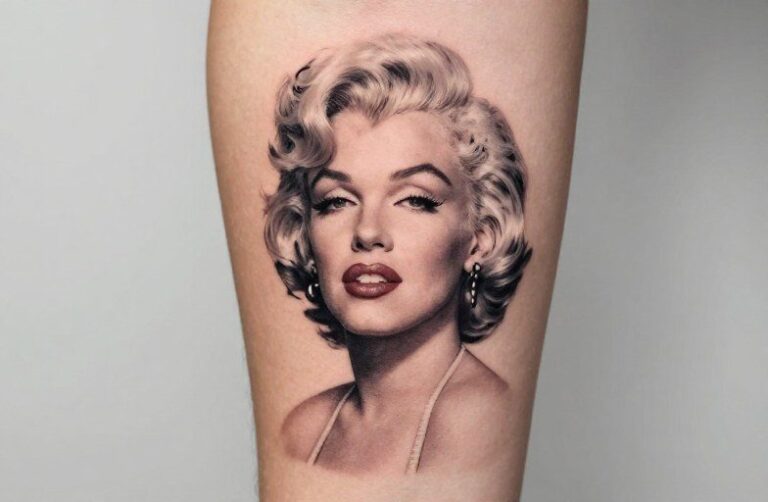
- Abstract the character. Actor portraits are notoriously difficult to execute well and age poorly. A silhouette, a costume detail, or a prop carries the reference without the uncanny-valley risk of a face that slowly becomes unrecognizable as the actor changes or memory fades.
Matching & Pairing Ideas
Film tattoos gain dimension when paired with complementary work, whether on the same body or across two people.
Within Your Own Collection
A film piece can anchor a larger thematic sleeve. Someone building a “time” sleeve might pair Interstellar‘s tesseract imagery with a pocket watch, an hourglass, astronomical charts. The film element doesn’t dominate; it converses. Placement matters here, upper arm and outer thigh offer enough real estate for this kind of visual dialogue. A single film icon stranded on a calf among unrelated flash reads as isolated, possibly accidental.
Couple and Friendship Pairings
Matching film tattoos work when the reference carries mutual weight and the design splits naturally. Eternal Sunshine‘s Clementine and Joel as separate but complementary portraits. The two masks from Black Swan. The train platform number from Harry Potter paired with the stag patronus. The danger is asymmetry in commitment, one person moves on from the film, the other doesn’t. Abstract symbols weather this better than character names or direct quotes.
Popular Styles
Not every tattoo style translates film well. Some reliably succeed; others require exceptional execution to avoid muddiness.
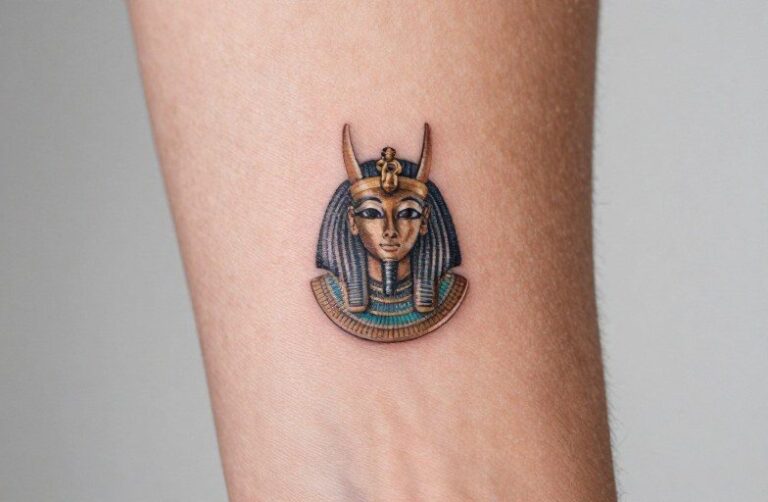
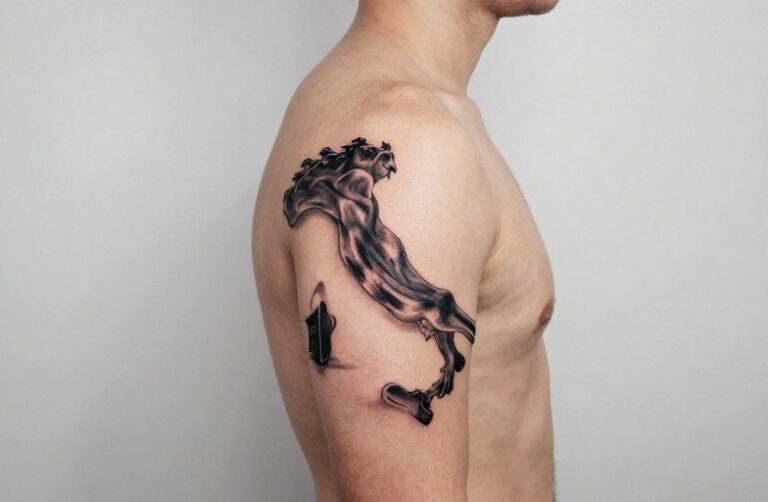
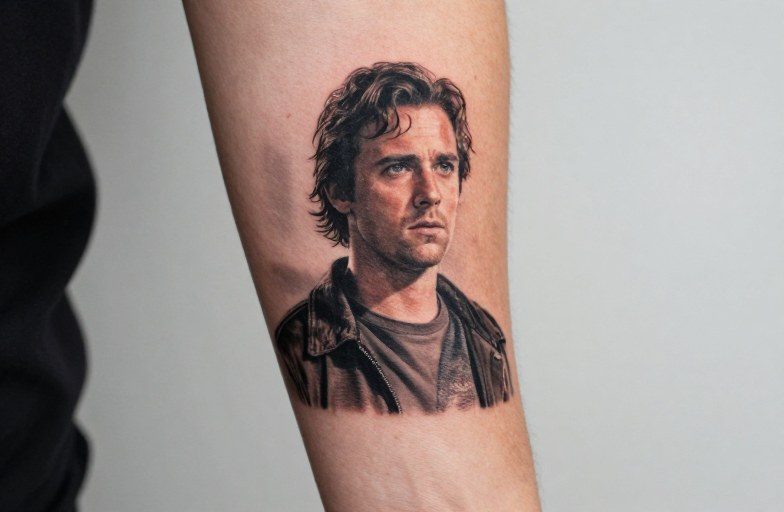
Black and grey realism dominates film portraiture for good reason. It handles the tonal range of cinematic lighting, chiaroscuro, noir shadows, the desaturated look of contemporary prestige television. Healing tends to soften contrast; experienced black and grey artists compensate by packing darker blacks than the reference suggests, knowing they’ll settle. This style demands large scale. A thumbnail-sized realistic portrait becomes mud in five years.
Traditional and neo-traditional suit film work when the imagery simplifies boldly. Think Jaws poster reimagined as a sailor tattoo, or The Shining‘s axe through a door as a traditional dagger-through-heart composition. The limited palette and bold outlines age predictably. These work at smaller sizes and on high-movement areas like hands and knees where realism struggles.
Linework and etching styles excel at architectural or mechanical film subjects, Metropolis, 2001: A Space Odyssey, Blade Runner‘s cityscapes. Fine lines blur over time on areas like inner bicep or ribs where skin stretches and compresses. Plan for touch-ups or accept the softening as atmospheric.
Watercolor and painterly approaches remain risky. The technique mimics film’s color grading beautifully when fresh. The problem is longevity: unoutlined color fields migrate and fade unevenly. If committed to this, choose a tattooer with a documented track record of healed watercolor pieces, not just fresh photography.
Size & Scale
Film tattoos face particular scaling challenges because source material was designed for screens, not skin.
Small but Legible
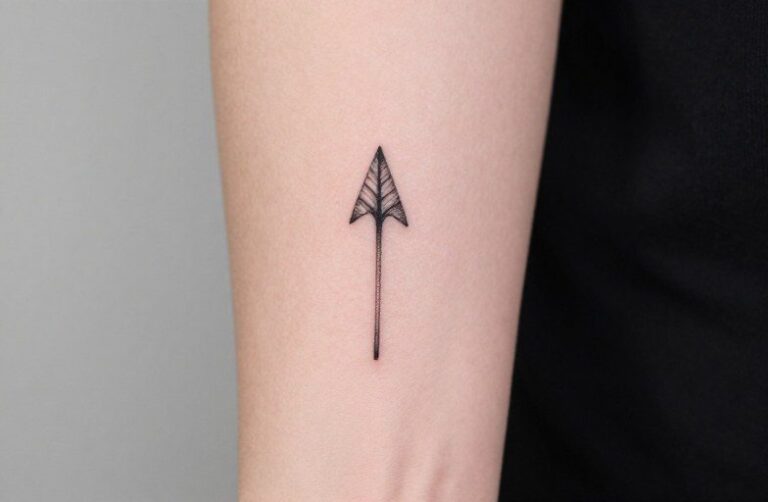
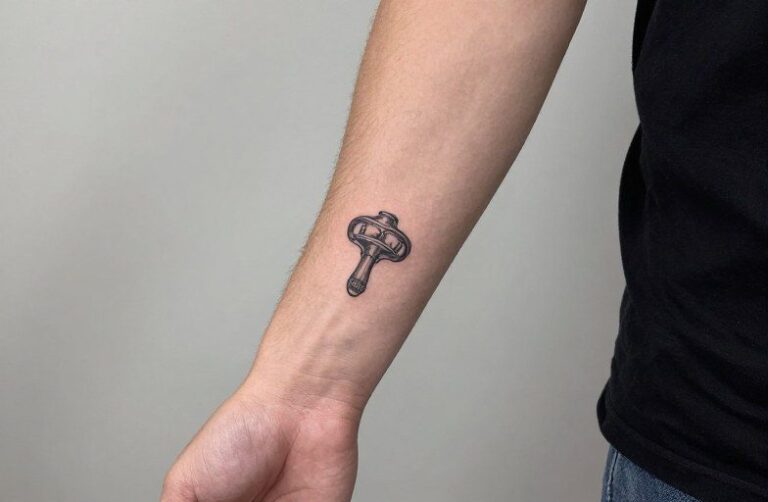
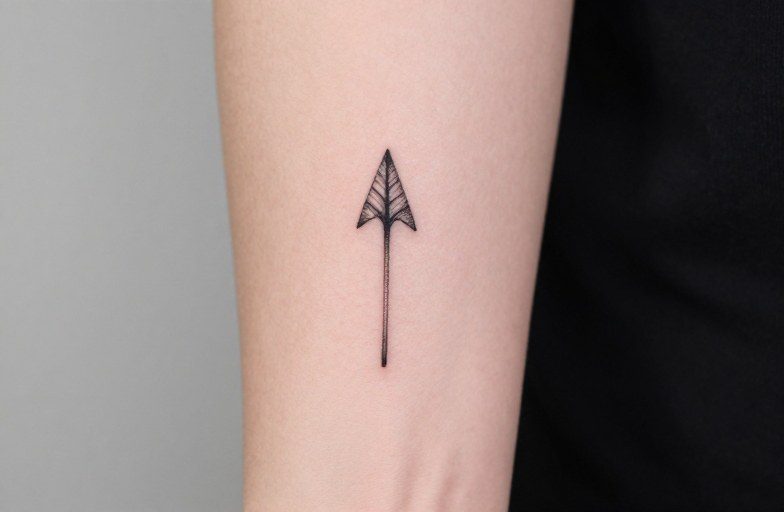
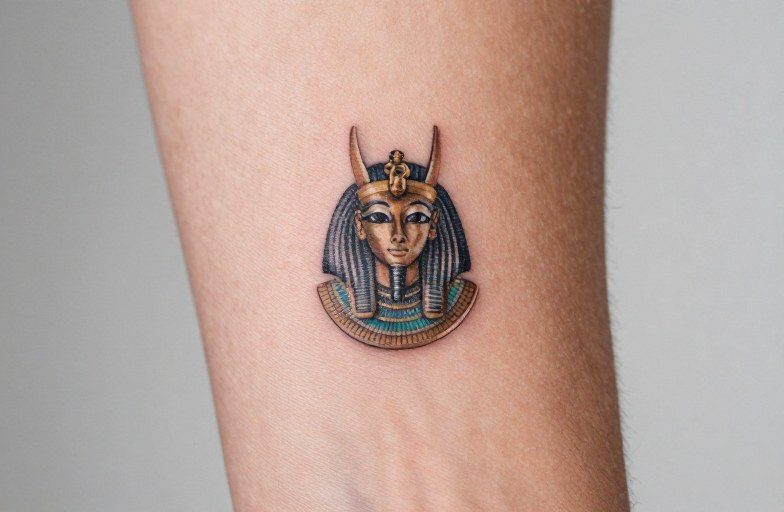
Minimal film references can work at 2-3 inches if they’re already simple. The Pulp Fiction briefcase lock combination. The Silence of the Lambs moth. The Truman Show moon. These succeed because they were already graphic design elements within the film. Complex screenshots shrunk to this size lose all definition. Fingers, behind the ear, and the wrist bone are common placements; all see heavy wear and require thicker lines than the design might suggest.
Large Format Commitments
Full sleeves or back pieces based on film demand narrative coherence. A Godfather back piece incorporating the puppet strings, the orange, the door closing on Diane Keaton, this works as a composed image. Randomly assembled “greatest hits” from a franchise reads as Pinterest board, not tattoo. Large-scale film work should be planned with a tattooer who understands composition at this scale, often someone with mural or painting background. Expect multiple sessions and substantial investment.
Trending Variations
Current approaches show interesting evolution from the straightforward portrait era of the early 2010s.
End-credit sequences as design source: the typographic and abstract animation that closes many contemporary films provides ready-made tattoo material. The Hereditary miniatures, the Soul cosmic sequences, the Grand Budapest Hotel color-blocked chapters. These translate naturally to skin because they were already designed as flat graphic elements.
Film stock and technical artifacts: sprocket holes, leader tape countdowns, lens flare abstractions, VHS tracking errors. These reference cinema as medium rather than specific content. They age well because they’re already nostalgic; they were “dated” when created. Placement on the forearm or calf allows the linear format to follow the limb’s natural geometry.
Subtitles and intertitles: isolated text frames from foreign films or silent cinema. The limitation here is language, text tattoos in languages you don’t read invite misinterpretation, and even English lines can blur if font choice prioritizes style over legibility. Bold sans-serif survives better than ornate display type.
Final Word
Film tattoos work when they escape the gravity of mere reference. The best ones function first as good tattoos, balanced composition, appropriate scale, technically sound execution, and second as film callbacks. Prioritize the craft; the fandom will take care of itself. Choose a tattooer whose healed work you’ve seen, not just fresh Instagram posts. And give the impulse time. The films that matter enough to wear usually don’t diminish with waiting.
Frequently Asked Questions
Will a detailed movie portrait tattoo still look good in ten years?
Probably not if it’s small. Realistic portraits need significant size to hold detail, think palm-sized minimum for a face, larger for full figures. Black and grey ages more predictably than color. Expect softening around eyes and mouth regardless; a good artist builds in extra contrast knowing it’ll settle.
Is it better to get a quote or an image from a movie?
Images generally age better. Text tattoos blur and can become difficult to read, especially script fonts or long passages. If you want words, keep it short, three to five words maximum, and choose a bold, simple typeface. Pair text with a visual element rather than letting it stand alone.
Can I get a tattoo of a movie character in a different art style?
Yes, and it’s often more successful than direct reproduction. A traditional tattoo version of Darth Vader or a Japanese-style Alien can be striking. This requires finding an artist fluent in both the reference and the destination style. Ask to see their previous stylized portrait or pop-culture work.
What placement works best for a movie scene tattoo?
Flat, broad areas suit complex scenes: outer thigh, upper back, outer upper arm. These give the artist space to establish depth and keep elements readable. Avoid wrapping detailed scenes around cylindrical areas like wrists or ankles where the image distorts and details compress.