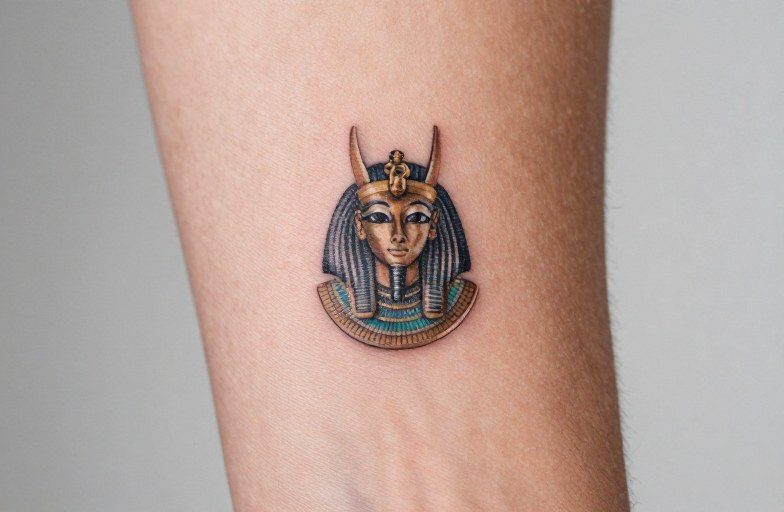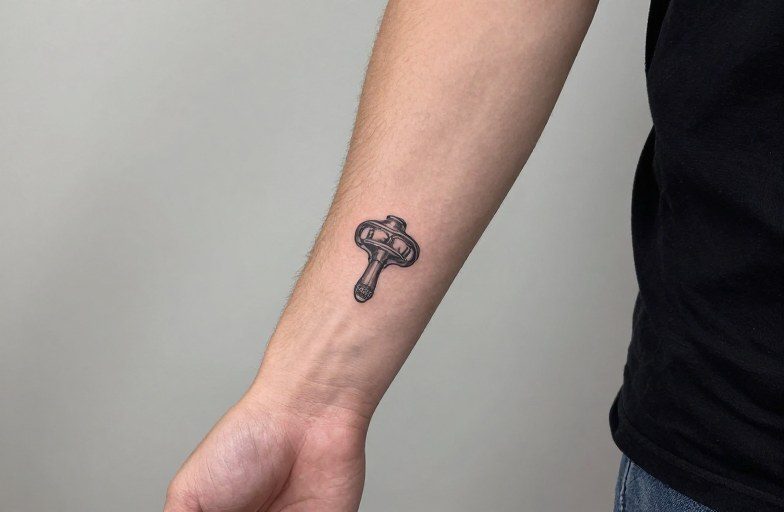
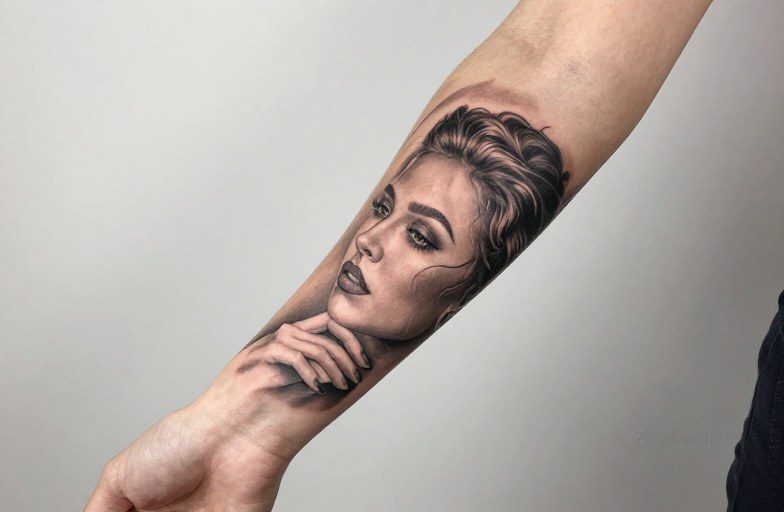
An arm sleeve tattoo on a woman typically signals transformation, resilience, and deliberate ownership of visible body space. Unlike smaller hidden pieces, the full sleeve is a commitment you carry openly. It has become one of the most powerful statements of creative autonomy in contemporary tattooing. The meaning layers over time as the skin and ink age together, making it a living record rather than a static symbol.
How Sleeve Work Ages on Skin
Sleeves age differently than scattered smaller tattoos because they function as a unified visual field. The eye reads them as one composition, which means aging happens as a collective experience rather than isolated blurring.
Line Work Longevity
Bold lines hold their structure longer on the outer arm where sun exposure is heaviest. Inner bicep lines stay crisper because that skin sees less UV and stretches differently, though weight fluctuation can soften details there. Fine-line florals or geometric patterns near the elbow crease will spread faster than the same work placed on the flat plane of the forearm.
Related reading: arm sleeve tattoo womens | forearm sleeve tattoo female | half sleeves on females | womens forearm sleeve tattoo
Shading and Saturation Shifts
- Black and grey sleeves develop a blue-green cast as carbon-based pigments oxidize; this happens evenly and can look intentional if the original contrast was strong
- Color sleeves lose intensity in the red and yellow spectrum first, while blues and greens hold longer
- White ink highlights often disappear entirely within three to five years, becoming skin-tone texture rather than visible pigment
- Areas over the deltoid and outer forearm fade fastest due to constant sun exposure; many collectors plan touch-ups specifically for these zones
The sleeve format actually helps aging look graceful. Where a single small tattoo might blur into surrounding blank skin, a full sleeve’s density creates visual continuity. The eye fills in gaps; the overall composition survives even when individual elements soften.
Symbolism and Core Meaning
Full arm coverage carried different weight across cultures, though specific meanings are often linked to particular communities rather than universal. Japanese irezumi sleeves are often linked to social outsider status historically, with later associations to organized crime; women wearing them now rarely reference that lineage directly. Polynesian and Māori arm bands and sleeve patterns remain culturally specific, with those outside these communities sometimes adopting stylized versions that strip original meaning.
Contemporary Western Symbolism
Today’s sleeves in American and European shops most commonly symbolize:
- Reclamation after trauma: Covering scars from self-harm, surgery, or abuse with something chosen and beautiful
- Career transition: The sleeve as a marker of entering creative fields or leaving conservative workplaces
- Milestone embodiment: Completing the sleeve over years to mark survival, sobriety, or major life restructuring
The commitment itself means something. A sleeve requires fifteen to forty hours of needle time, multiple healing cycles, and significant cost. That investment broadcasts priority. This matters enough to endure for.
Personal and Modern Meanings
Sleeve content has shifted dramatically. Where nautical, military, and biker imagery dominated historically, botanical realism, abstract watercolor, ornamental patterning, and mixed figurative work now lead. The meaning often lives in the approach, the aesthetic, rather than a single emblem.
Visibility as Statement
A bare arm in professional or formal settings is expected. Covering it permanently with art disrupts that neutrality. Some choose this specifically for the friction it creates, refusing to be blank canvas for others’ projections. Others build sleeves that harmonize with wardrobes, treating the arm as an accessory that never comes off.
Collaborative vs. Single-Artist Pieces
Meaning shifts based on creation method. A single-artist sleeve built from one concept carries unified intention. A patchwork sleeve assembled from multiple artists over years becomes a timeline of taste evolution, the body a record of changing relationships with different creative voices. Neither approach is more valid; they read differently to observers who know tattoo culture.
Color vs. Black and Grey
This choice fundamentally alters how the sleeve communicates.
Black and Grey
Reads as serious, timeless, graphically bold. Photographic realism works better in this palette, skin tone becomes part of the image. The contrast between packed black and negative space creates immediate visual impact even from distance. On darker skin tones, black and grey can be adapted with higher contrast and less mid-tone wash, though many artists still underserve this technical need.
Color
Demands attention differently. Bright palettes read as joyful, defiant, or fantastical depending on content. The technical reality: color requires more sessions, more saturation passes, and more diligent aftercare. Healed color never looks like fresh color. Expect significant vibrancy loss in the first year. Those choosing color sleeves often commit to a periodic refresh cycle to maintain impact.
Skin undertone matters practically. Cool undertones make reds pop but can muddy warm oranges. Warm undertones do the reverse. Experienced artists adjust pigment mixing accordingly; this is technical craft, not intuition.
Related Formats and Styles
Understanding adjacent formats clarifies what the full sleeve specifically offers.
- Half sleeve: Elbow to shoulder or elbow to wrist, less commitment, easier to conceal, but breaks composition at the joint
- Quarter sleeve: Shoulder cap to mid-bicep; historically more accepted in conservative settings, now often a stepping stone to full coverage
- Full leg sleeve: Similar commitment and visibility when wearing shorts or dresses; carries parallel symbolism but with different cultural baggage
- Bodysuit: Torso and arms connected; the ultimate in coverage commitment, still rare outside dedicated tattoo communities
- Japanese munewari: Chest and arms connected with a gap down the sternum; specific cultural form that some adopt for its visual drama
The full arm sleeve occupies a sweet spot: visible enough to be unignorable, complete enough to feel finished, modular enough to extend later into chest or back if desired.
Who Chooses This Tattoo
Demographics have broadened. Early sleeve collectors were often linked to military, trade, or working-class backgrounds, though precise documentation is scarce. That pattern no longer holds. Sleeve collectors now span professions, ages, and backgrounds with no single unifying profile.
Practical Considerations
Certain physical realities affect who persists through the process. Sleeve work hurts most at the inner elbow, the ditch (inner wrist crease), and the armpit-adjacent upper inner arm. People with low pain tolerance or certain nerve conditions sometimes opt for shorter sessions over more months. The time commitment, often six to eighteen months from first outline to final heal, filters out the casually interested.
Career flexibility matters. While workplace acceptance has grown, visible sleeves still limit options in law, finance, medicine, and client-facing corporate roles. Those choosing sleeves now often work in tech, creative fields, education, healthcare support roles, or self-employment where personal presentation carries less institutional penalty.
What to Remember
A women’s arm sleeve tattoo means commitment: to the process, to visibility, to carrying something permanent through changing circumstances. The symbolism is not fixed in the imagery alone; it builds through the act of choosing, sitting, healing, and living with the result. Technical quality matters enormously. Research artists whose healed work you can see, not just fresh photos. Plan for aging, not only the initial reveal. The meaning you assign on day one will layer and shift as the ink settles into skin for the decades ahead.
Frequently Asked Questions
How much does a women’s arm sleeve typically cost?
Quality sleeve work runs roughly $2,000 to $8,000 or more depending on the artist’s rate, geographic location, and complexity. Sessions are usually priced hourly or by full-day blocks. Budget for touch-ups separately.
Can you build a sleeve gradually or does it need to be planned all at once?
Both approaches work. Some artists prefer a unified concept from the start; others specialize in integrating new pieces into existing work. Patchwork sleeves carry different meaning than single-vision pieces, but both can succeed with the right artist.
How do I choose between color and black and grey?
Consider your pain tolerance, budget, and maintenance willingness. Black and grey ages more predictably and requires fewer sessions. Color demands more saturation passes and more frequent refresh work, but offers expressive range that monochrome cannot match. Your skin undertone also affects how specific pigments will read once healed.