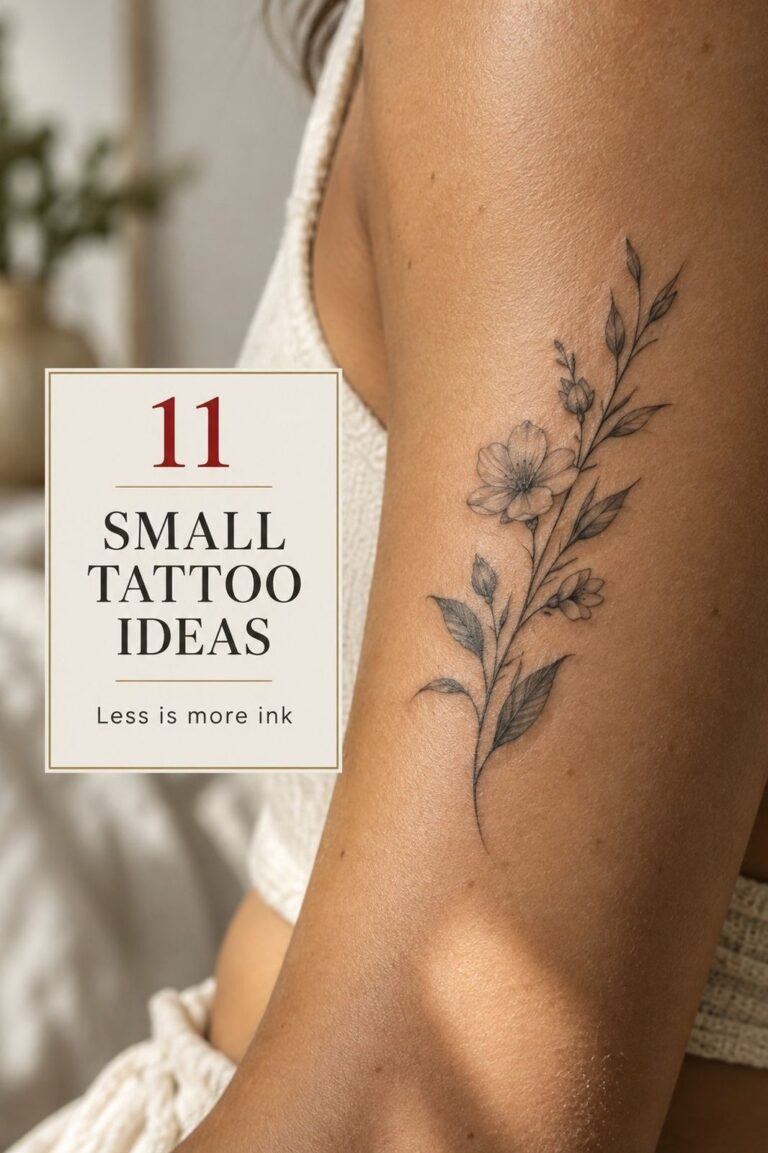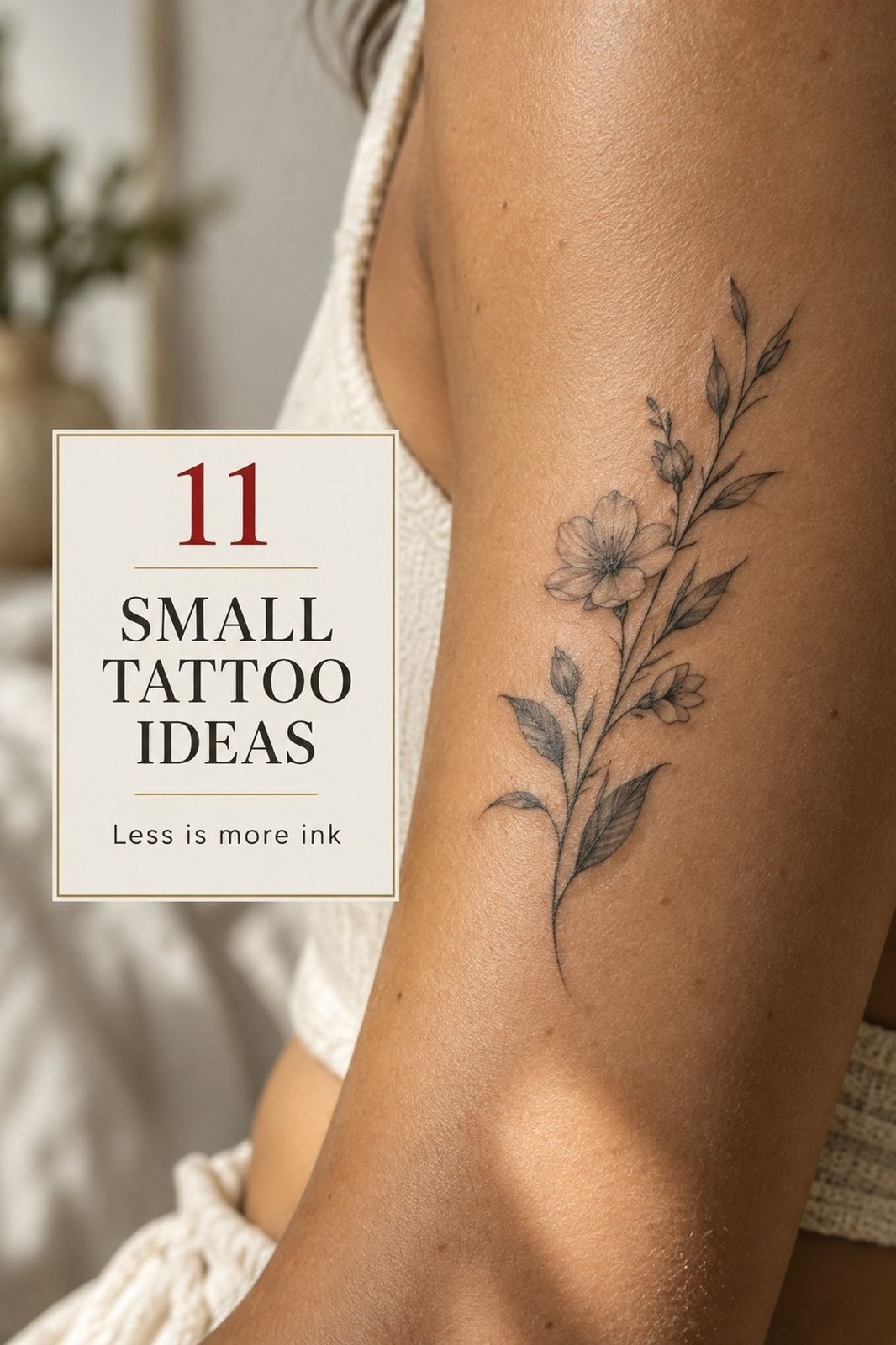

Half sleeves on women typically signal intentional self-authorship. Unlike smaller, hidden pieces, this placement demands visibility and commitment. The meaning layers personal narrative with cultural resonance: many women choose half sleeves to mark survival, transformation, or simply aesthetic preference. The upper arm location offers enough canvas for complex imagery while remaining coverable under professional sleeves when needed.
What the Placement Means
The half sleeve occupies a symbolic middle ground. Full sleeves read as total immersion; single motifs as whispered secrets. Half sleeves split the difference, deliberate but not absolute, visible on the wearer’s terms.
The Visibility Choice
Upper arm placement means showing or hiding becomes a daily decision. Tank top, visible. Blazer sleeve, gone. This control matters. For many women, especially those navigating conservative workplaces or family dynamics, the half sleeve represents negotiated autonomy, present when chosen, absent when necessary.
Completion as Process
Unlike one-session pieces, half sleeves usually build over months or years. Each session adds layer and meaning. The tattoo becomes a record of patience, of returning to discomfort voluntarily, of building something that outlasts impulse. This process symbolism often outweighs any single image’s content.
How Placement Shapes the Work
“Half sleeve” technically means shoulder to elbow, but execution varies dramatically.
Shoulder-Cap to Mid-Bicep
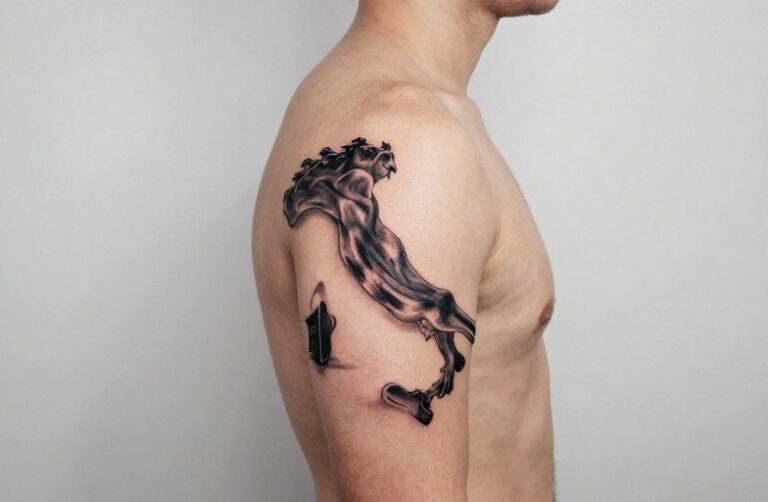
Shorter coverage, sometimes called a “mini half sleeve.” Easier to hide under short sleeves. Works well for floral arrangements, animal portraits, or geometric bands. The shoulder cap provides natural framing; designs here often radiate downward like spilled ink.
Full Shoulder-to-Elbow
Traditional half sleeve length. Maximum canvas for narrative flow. Wraparound designs, continuing onto the inner arm, create 360-degree viewing. Inner arm skin differs from outer: thinner, more sensitive, ink settles differently. Experienced artists plan for this, designing outer-arm focal points with inner-arm supporting elements.
- Outer bicep: best for bold imagery, handles aging well
- Inner bicep: softer subjects, fades faster due to friction and sun exposure
- Elbow ditch: painful, tricky to heal, often avoided or used for transitional patterns
- Shoulder front versus back: front faces the viewer; back faces the wearer in mirrors
Personal and Modern Meanings
Contemporary interpretations diverge from historical masculine associations. Where arm tattoos once signaled military service or subcultural membership, women’s half sleeves now carry individualized significance.
Reclamation Narratives
Some women build half sleeves incorporating scar coverage, including post-mastectomy work. Others who have experienced trauma use the visible, permanent marking to assert bodily ownership. The meaning may not be the imagery itself, roses, snakes, abstract patterns, but the act of choosing adornment after violation or medical intervention.
Milestone Marking
Significant birthdays, career achievements, or endings, divorce, relocation, sobriety, get commemorated. The half sleeve’s scale suits major life punctuation without the lifetime commitment of full coverage. Some women add segments episodically, creating visual autobiography.
Modern meaning often clusters around:
- Agency: my body, my permanent decoration
- Resilience: I withstood the process, I will withstand life
- Community: recognition signals among tattooed women in professional spaces
- Aesthetic priority: sometimes the meaning is simply “I wanted beautiful art”
Related Placements and Influences
Half sleeves do not exist in isolation. Related placements carry distinct connotations.
Full Sleeves
Complete commitment, often associated with tattoo culture immersion rather than casual adoption. The jump from half to full represents escalation in dedication, time, and social visibility.
Quarter Sleeves and Patches
Shoulder cap alone, or scattered upper-arm pieces without integration. Read as collection rather than composition. Less unified narrative, more eclectic accumulation.
Symbolic cousins include:
- Back pieces: private, revealed selectively; more intimate than arm display
- Thigh tattoos: similarly concealable, but gendered differently in visibility
- Forearm “half sleeves”: technically different placement, often read as more aggressive or public due to handshake-level visibility
Japanese irezumi traditions influence Western half sleeve aesthetics, particularly flowing compositions with background elements, wind, waves, smoke, unifying disparate images. This approach, often linked to organized crime in its original context, has been widely adopted by Western tattooers without those associations, though the cultural borrowing deserves acknowledgment.
Color versus Black and Grey
Technical choices carry symbolic weight.
Black and Grey
Photographic realism, softer aging, classic gravitas. Often chosen for memorial pieces, religious imagery, or timeless aesthetic preferences. Heals more predictably; less risk of muddying over decades. On diverse skin tones, black and grey provides reliable contrast without color-shift concerns.
Color Work
Jewel tones, emerald, sapphire, ruby, appear frequently in women’s half sleeves, though trends shift by region and year. Color demands more sessions, more expense, more maintenance. Fades faster, especially reds and yellows. The choice signals willingness to accept impermanence and upkeep, symbolically, perhaps, an embrace of flux over fixed statement.
Practical considerations affecting meaning:
- Color tattoos require touch-ups; the commitment extends beyond initial completion
- Black and grey reads as serious, artistic, “fine art” to some observers
- Color palette choices carry cultural associations: pastel femininity, bold primaries, muted earth tones
- Skin undertone affects color vibrancy; consultation with experienced artists prevents disappointment
Who Chooses This Tattoo
Demographics have shifted. Where arm tattoos on women were once restricted to specific subcultures, half sleeves now appear across professions, ages, and backgrounds.
Professional Contexts
Teachers, nurses, attorneys, executives: visibility tolerance varies by workplace, not field. The half sleeve’s coverability enables adoption by women in appearance-conscious industries. Some time the reveal strategically, others maintain consistent concealment. Neither choice diminishes the personal meaning.
Age and Timing
First tattoos at 35, 45, 55, increasingly common in Western tattoo studios. Women who delayed visible work until career establishment or parental independence often choose half sleeves as liberation gesture. Conversely, younger adoptees may accumulate meaning over years, starting with shoulder pieces that expand into half sleeves organically.
Common profiles include:
- Previously tattooed women scaling up from smaller pieces
- First-timers making deliberate, researched plunge into visible work
- Those completing collections with cohesive upper-arm design
- Clients seeking scar camouflage or asymmetry correction
What to Remember
Half sleeves on women resist single-definition summary. The placement enables visibility control; the scale permits complexity; the process requires sustained commitment. Meaning emerges from interaction between imagery, placement, personal context, and social reception.
What reads as rebellion in one family reads as conformity in tattoo communities. What signifies professional risk in one decade becomes unremarkable in the next. The half sleeve’s symbolism lives in this fluidity: permanent mark, shifting interpretation, worn through changing life stages with accumulating personal significance.
Technical quality matters more than symbolic content. Poorly executed half sleeves, regardless of noble intention, communicate neglect. Well-crafted work, even purely decorative, carries implicit statements about self-worth and attention to lasting decisions. The meaning, ultimately, is whatever the wearer builds into it, and whatever observers project onto her visible skin.
Before committing, research artists thoroughly. Half sleeves require planning, skin knowledge, and compositional skill not all tattooers possess. The best work results from collaboration between client vision and artist expertise, with patience for the process that the placement itself symbolizes.
Frequently Asked Questions
Will a half sleeve affect job prospects for women?
Depends entirely on industry and location. Creative fields rarely care. Conservative sectors may require coverage. The half sleeve’s advantage is concealability under professional sleeves. Research your specific workplace culture before committing.
How much does a female half sleeve typically cost?
Quality half sleeves require multiple sessions, usually $1,500 to $4,000 or more depending on artist reputation, geographic location, and complexity. Color work adds expense. Budget for touch-ups. Avoid bargain hunting; this is permanent work on highly visible skin.
How long does a half sleeve take to complete?
Typically 15 to 40 hours over months or years. Healing between sessions, usually 4 to 6 weeks, extends the timeline. Rushing compromises results. The extended process is part of the commitment.
Does upper arm tattooing hurt more than other placements?
The outer bicep is generally tolerable. The inner bicep and elbow ditch rank among the more painful areas due to thin skin and nerve proximity. Pain is temporary; poor placement decisions last forever.
Can I start with a small piece and expand into a half sleeve later?
Yes, but planning helps. Experienced artists can design initial pieces with expansion in mind. Retrofitting unrelated tattoos into a cohesive half sleeve is possible but more challenging and sometimes less successful than planned composition.