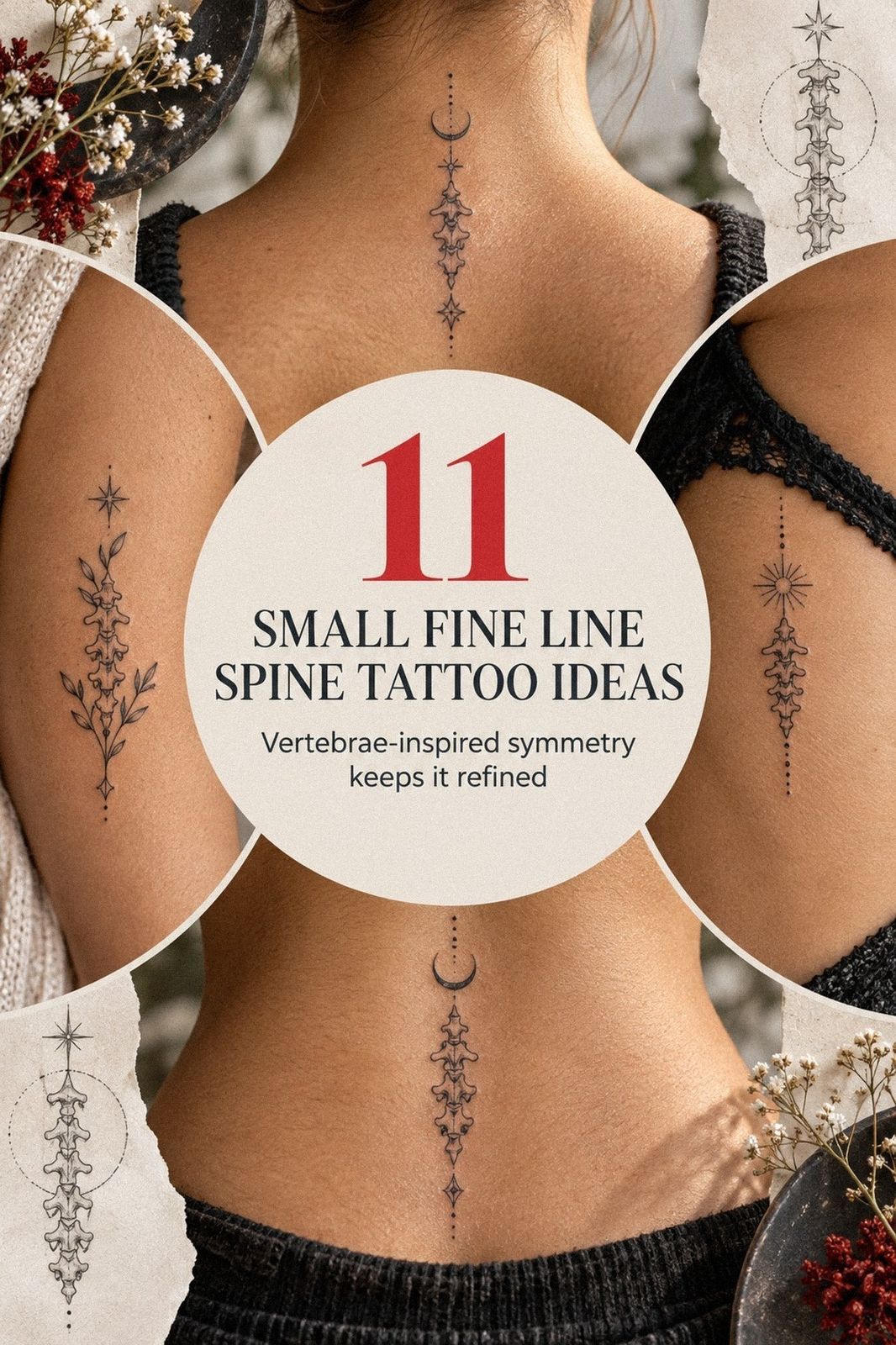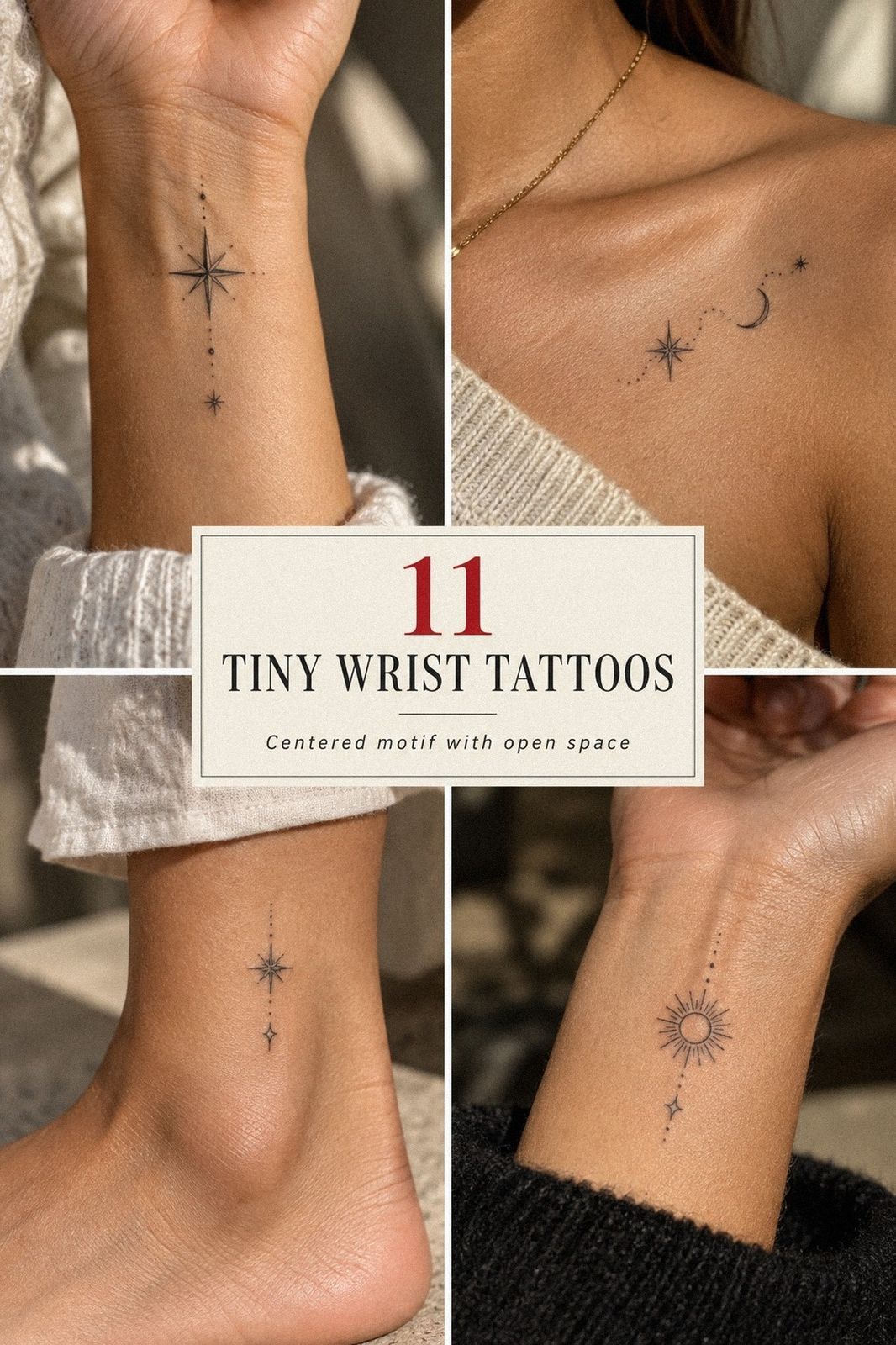
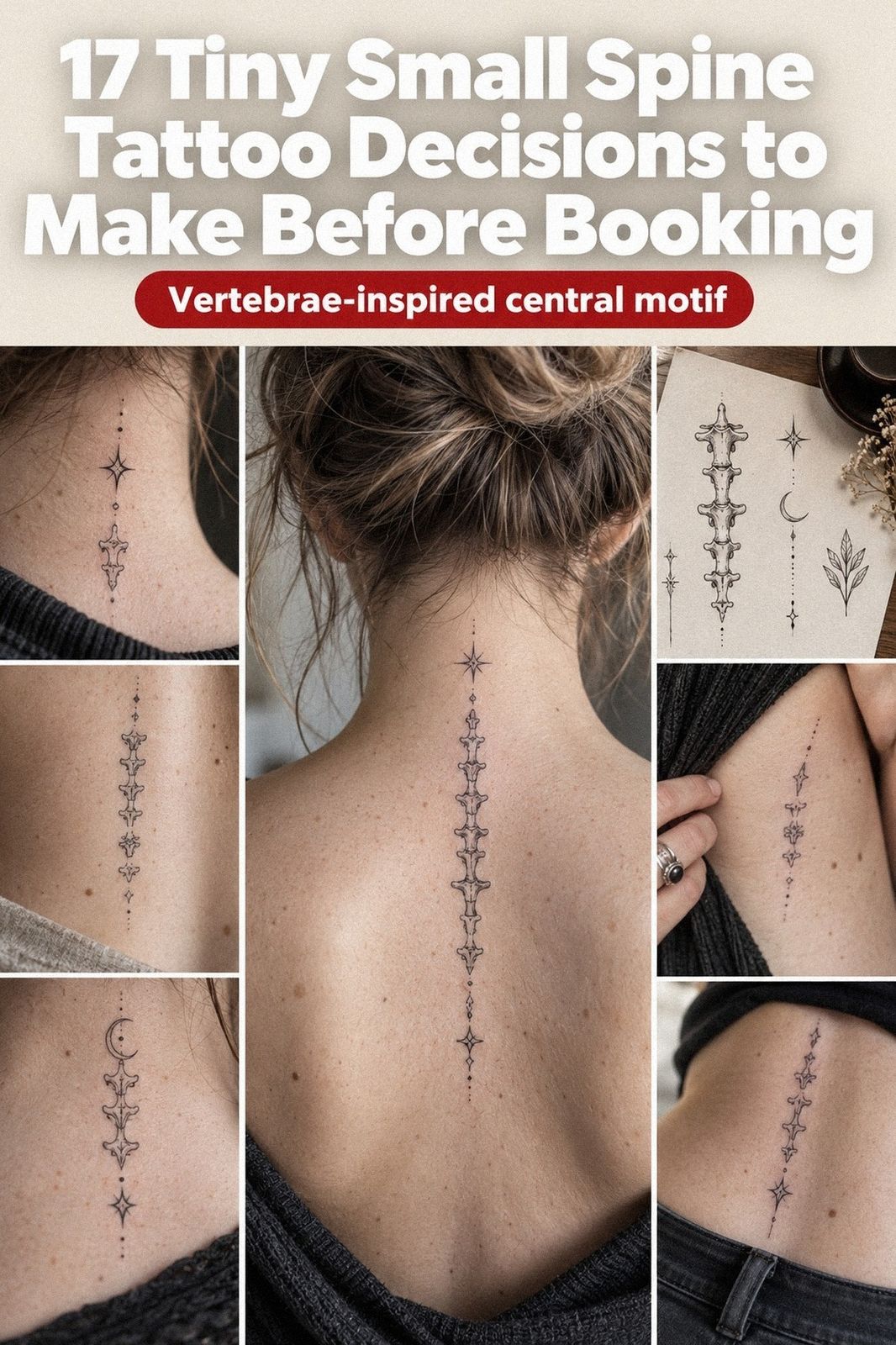
You want tiny small spine tattoos that still read clean after the novelty fades. I learned that a delicate idea needs stronger planning than a larger piece, especially along a bony, mobile placement. These 11 designs can still be worth it when the scale, spacing, and artist are chosen carefully!
Tiny Small Spine Tattoos With Fine Line Florals
A wildflower sprig can follow the spine without looking stiff. On fair cool-pink skin, the fine stem and tiny petals create a delicate line that feels graceful and personal rather than overly ornamental. If you’re choosing this idea, ask your artist to leave clear skin between each bloom so the design won’t blur into one dark mark.
Fine line tattoo ink can look crisp at first, but very thin lines may soften as skin changes. I’d choose three or four flowers instead of an entire bouquet because a crowded stem loses its rhythm.
You can make the design symbolic without adding clutter. A forget-me-not, poppy, or tiny daisy might represent a person, a season, or a private promise. Your artist can vary petal shape while keeping the composition understated.
Think about the center line of your back before you approve the stencil. A carbon transfer stencil should sit straight from the upper spine toward the waist, with enough margin that clothing won’t constantly rub the lowest bloom. A pretty design can still cost more if it needs an early touch-up.
If you’re comparing placements, browse these tiny small wrist tattoos for scale ideas. The wrist examples can help you judge whether your floral concept should stay dainty or become slightly bolder. For your spine, I’d skip heavy shading because open skin is what keeps this sprig crisp.
Tiny Small Spine Tattoos Inspired By Constellations
Constellations suit a vertical placement because your eye naturally travels from star to star. The fine dots and selective lines create an ethereal design that still feels meaningful and sharp from a distance. A constellation can be especially good value when you want symbolism without a large session.
Ask your artist to use fewer stars than your reference shows. Black tattoo ink is enough for the main points, while tiny connecting lines can stay light and selective. If you’re copying a real constellation, check its shape carefully before your appointment so the design carries the personal detail you want.
The strongest version has one visual anchor. Polaris, a crescent, or one slightly larger star can give your back a clear stopping point. Your design doesn’t need every astronomical detail to feel symbolic, and I’d avoid filling every gap with dots because that can make a small tattoo look dusty.
A constellation can mark a date, location, or relationship without spelling anything out. Stencil transfer paper helps your artist test the vertical spacing while you stand naturally. You should bend, twist, and look over your shoulder before approving the placement!
If you’re gathering references, save this small tattoos meaning guide before you settle on the stars. A crisp constellation depends on breathing room more than complexity. Your best result will look intentional from three feet away, not merely impressive under a phone flash.
Tiny Small Spine Tattoos With Vertical Script
Vertical script can feel fierce and intimate when the lettering follows the spine. A restrained black line keeps the design sleek, especially when the phrase is short enough to remain readable. If you’re choosing words, pick something you’d still claim if nobody else could translate it.
Single-needle lettering may look expressive in a drawing, yet letters packed too closely can merge as they age. I’d choose one word, a short date, or two stacked initials instead of a full sentence. Your artist should show you the design at its actual size, not only enlarged on a screen.
Ask about the letterform’s smallest details. A thin serif, a looped lowercase character, or a narrow script stroke can disappear if it falls below the artist’s workable scale. You don’t need dramatic flourishes for the tattoo to feel expressive; clean spacing will do more for you.
Before the stencil goes on, read the phrase while standing normally. Black letterform ink should follow the body’s vertical flow without leaning noticeably toward one shoulder. If your skin folds when you sit, your artist can shift the lowest letters slightly so the piece remains balanced in everyday movement.
For less exposed wording ideas, look through small tiny hand tattoos and notice how short phrases are edited down. You can borrow that discipline for your spine. I made the mistake of loving a long quote once, and cutting it to three words made the design far stronger for the budget.
Tiny Small Spine Tattoos Featuring Tiny Butterflies
Tiny butterflies bring movement to the spine without requiring a dense composition. Their hair-thin wings and small gaps create a playful effect. If you’re planning several butterflies, stagger them naturally instead of placing them like identical stickers down the center.
Fine black linework defines the wings, while untouched skin supplies the contrast. I’d avoid filling every wing with solid color because a small butterfly needs open space to remain recognizable after the skin settles.
You can make the idea personal through timing or direction. One butterfly might represent change, while three could mark a family connection or a series of moves. Your artist can vary the wings without making the design look random, and your placement can keep the lowest butterfly above the waistband.
Ask to see the stencil while you move your shoulders. Stencil paper shows whether the spacing feels natural when you stand, sit, and turn. A design that looks centered in one posture may drift visually once your back curves, so your approval should happen in more than one position!
Butterflies are useful if you want a tattoo that feels feminine without becoming overly ornate. For alternate miniature motifs, compare these small simple hand tattoos with your saved references. You don’t need color to make the idea striking, and black linework will usually give you the clearest long-term read.
Tiny Small Spine Tattoos With Sacred Symbols
A sacred symbol can carry more weight than a decorative image, so keep the layout respectful and considered. A compact icon can feel powerful without taking over the entire placement.
Black flash linework can include a small sun, protective eye, cross, crescent, or geometric emblem. If you’re adapting a traditional mark, ask the artist about its cultural context before simplifying it for a narrow spine placement.
The best flash-inspired tattoo usually keeps one central shape. Aged paper texture belongs to the reference sheet, not the skin, so your final stencil should reduce the image to clean outlines and deliberate negative space. I’d skip tiny borders if they make the symbol harder for you to recognize.
You can ask for a slightly bolder outline around the central icon and thinner lines for surrounding details. Your artist should explain how the design will settle, especially if your skin tone or texture affects contrast. A personal tattoo doesn’t need to be visually loud to feel powerful.
If you’re comparing symbol meanings, use the small hand wrist tattoo collection to see how compact icons stay readable. Save the reference, then bring a short note explaining what you want preserved. Your artist can make a more personal design when you describe the meaning, not only the picture.
Tiny Small Spine Tattoos In Delicate Blackwork
Delicate blackwork gives you a stronger visual anchor than barely-there grey lines. Solid saturated marks create a bold, polished contrast while preserving a small overall footprint. If you’re considering this style, ask to see healed work on a similar skin tone.
Saturated black tattoo ink can age more decisively than whisper-thin grey, but packed areas still need enough space to remain readable. I’d choose one blackwork motif with open edges instead of a tiny scene filled with competing details.
Your artist may suggest a slightly larger scale than you first imagined. That isn’t a failure of the tiny concept; it’s a way to protect the silhouette. A fierce symbol measuring a little over an inch can hold its shape better than a miniature version with cramped corners.
Look closely at the stencil before the session begins. Solid black fill should sit evenly without swallowing the surrounding skin breaks. You can ask for a test drawing on transfer paper and view it in natural light, since bright studio lights can make narrow gaps seem wider than they are.
For other high-contrast placement ideas, save these small side hand tattoos and compare their line weights. You don’t have to choose the darkest design available. A polished blackwork mark with one strong silhouette will stay more expressive than a busy patch of ink.
Tiny Small Spine Tattoos With Flowing Vines
Flowing vines are a natural match for the body’s central curve. A narrow vine with delicate leaves creates a flowing rhythm without forcing every leaf into a rigid vertical column. If you’re drawn to this idea, let the stem follow your spine.
Fine botanical linework makes the vine feel organic, but too many leaves can close the negative spaces. I’d leave small pauses between clusters so the design continues to read as a vine after the lines soften.
A flowing design can also hide a slight placement adjustment. Your artist may bend the stem a little to suit your posture, and that usually makes the tattoo look more natural. You won’t notice the change in the final result, but you’ll notice if the piece fights your body’s curve.
Ask whether the lower end should taper or finish with one clear leaf. Matte black ink keeps the line crisp without adding visual glare in photos. Your artist can use a slightly thicker stem and finer leaves, giving your eye a clear hierarchy.
If you’re searching for more botanical references, explore small inside finger tattoos for examples of narrow compositions. You can borrow the spacing, not the exact placement. If you’re tempted to add flowers, choose one focal bloom rather than turning the vine into a crowded bouquet.
Tiny Small Spine Tattoos Inspired By Ocean Waves
An ocean wave gives the spine a sense of motion without needing a large scene. A curling line can feel raw and daring when the crest stays open and the lower curve remains clean. If you’re choosing this design, decide whether the wave represents calm, survival, travel, or change.
Hair-thin wave linework can show the crest, foam, and retreating water with only a few strokes. I’d avoid adding a full horizon, boat, sun, and moon because your spine doesn’t need an entire seascape to carry the ocean reference.
A single curl can feel peaceful depending on its angle. Your artist may make the wave slightly asymmetrical so it doesn’t look like a logo. That small irregularity gives the design character, and it keeps the result from feeling copied.
Consider how the tattoo will move when you bend. Black contour ink should sit where the spine’s central line remains visually stable, while the outer foam strokes can curve outward. You can ask to see the stencil from behind and in a mirror before committing to the final direction.
For other fluid concepts, compare your notes with the tiny small wrist tattoo gallery. The wrist references can show how a single wave reads at a glance. Your spine version should stay crisp because the main curve is memorable, not because every tiny foam mark survives forever.
Tiny Small Spine Tattoos With Meaningful Birthmarks
A birthmark-inspired tattoo can turn a private visual detail into a symbolic spine design. The restrained shape can feel understated while still carrying a deeply personal story. If you’re working from your own birthmark, bring a clear photograph and explain which shape or memory matters to you.
You don’t have to outline the birthmark exactly. Fine black contour ink can echo one edge, add a star, or connect the form to a small botanical symbol. I’d avoid pretending the tattoo can replace medical observation; any changing birthmark should be checked by a qualified clinician before you plan decorative work nearby.
The strongest version often looks simple at first. Your artist can keep the mark personal while adding one crisp detail that only you understand. A tiny crescent, initial, or short line may be enough to separate your design from a generic motif.
Ask about placement if the area has uneven texture or frequent friction. Stencil transfer film lets you test whether the composition follows the spine without crossing the birthmark awkwardly. You should be able to explain the design in one sentence, because that clarity will help your artist protect the important part.
If your idea needs more symbolism, read the small tattoos meaning guide before you finalize it. You can keep the visual language personal and still choose a crisp shape. A meaningful tattoo doesn’t need to announce its story to everyone who sees it.
Tiny Small Spine Tattoos Using Geometric Linework
Geometric linework gives you a crisp, modern route into spine tattoos. Triangles, arcs, and linked diamonds can look minimal when the spacing is intentional. If you’re considering one, study how much the healed lines have softened.
Geometric stencil lines reveal the planned angles, while healed work shows the design’s real visual weight. I’d choose a simple repeated shape rather than a dense mandala if your priority is low maintenance and long-term clarity.
Symmetry matters, but perfect measurement isn’t the whole story. Your spine may curve, and your shoulders may sit at slightly different heights. An experienced artist can adjust the spacing so the tattoo looks balanced on your body instead of mathematically rigid on paper.
Ask how the design will be scaled before the appointment. Black geometric ink needs enough separation between parallel lines, especially near the lower back where movement and clothing create friction. You can approve the concept at actual size and photograph the stencil from several angles.
For smaller geometric references, browse small side finger tattoos and notice which shapes remain readable without heavy fill. Your spine gives you more vertical space, but you still shouldn’t spend it on unnecessary detail. Crisp beats complicated here!
Tiny Small Spine Tattoos With Playful Celestial Icons
Playful celestial icons can combine a moon, star, tiny planet, or smiling sun in a compact vertical path. The arrangement can feel whimsical without becoming childish, especially when each symbol has enough breathing room.
Fine celestial linework can outline a crescent while two smaller stars create movement underneath. If you’re adding a face to the moon, keep the expression simple; a few precise marks will age more clearly than miniature eyelashes and elaborate features.
Your color decision matters. Black ink is the safest choice for a crisp, low-maintenance result, while soft grey may look subtle at first but can lose contrast sooner. I’d skip several pastel colors in a tiny spine design unless your artist has strong healed examples in the same skin tone.
Ask whether the symbols should face upward or follow the curve. Black tattoo pigment can make the moon and stars feel iconic without requiring thick outlines. You can also leave generous skin between the icons, which keeps the design playful instead of crowded.
For alternate placements, save these small simple hand tattoos and compare how tiny celestial marks behave at different scales. Your spine design can stay personal, stylish, and lighthearted. If you’re unsure, choose the moon first, then let the stars earn their place!
Let the Design Stay Minimal
A minimal spine tattoo works best when every mark has a job. One symbol, one line, or one short word can create an elegant result when the silhouette is easy to recognize. If you’re tempted to add another detail, wait until you’ve tested the design at its final size.
Actual-size stencil paper is more useful than a large digital preview. A design that looks sparse on a phone may look balanced on skin, while a packed reference can become muddy once the lines settle.
Think about the tattoo’s long-term value. More detail doesn’t automatically create a better result, and a smaller number of deliberate marks can reduce the chance of an expensive touch-up. Your artist should explain what can realistically fit.
Ask yourself whether the design still works from several feet away. If the answer is no, remove one tiny feature before adding another. The most memorable small tattoos often rely on restraint.
The Polaris Test for Vertical Balance
Polaris is a useful reference point for any vertical design because it gives the eye a clear anchor. A single Polaris-inspired star can make a constellation feel intentional instead of scattered. The same principle works for script, vines, and stacked symbols.
Vertical placement marks should follow your body’s natural center rather than an imaginary ruler. Your artist can shift a symbol slightly to account for posture, shoulder height, or the curve of your lower back.
Stand normally during the stencil check. Look straight ahead, turn halfway, sit down, and bend gently. If the composition still feels balanced in motion, you’ve found stronger value than a design that only works while perfectly still.
A vertical tattoo doesn’t have to be perfectly symmetrical to look polished. Slight adjustment can make it feel natural and timeless on your body. Ask for an honest opinion before the stencil is finalized!
Bold or Delicate: Which Scale Wins?
The choice between bold and delicate linework depends on what you want to preserve. Bold black linework usually holds its silhouette more confidently, while fine lines can feel more discreet and romantic when they have enough room.
Your artist may recommend scaling a tiny idea up by a few millimeters. That change can protect the smallest openings, especially in letters, petals, wings, and geometric shapes. It doesn’t erase the original concept.
Consider your skin tone, texture, placement, and lifestyle together. The right design isn’t the one that looks most dramatic on a screen; it’s the one that remains readable after normal movement and sun exposure.
If you love the delicate version, ask what can be removed rather than what can be squeezed in. A romantic line can stay personal without becoming fragile. The best scale is the one your artist can execute confidently.
The Value of a Healed Portfolio
A healed portfolio is one of the strongest buying signals when you’re deciding whether a tattoo is worth paying for. Fresh work can look vibrant and polished, but healed examples reveal how the lines actually settle.
Healed tattoo photographs should show several skin tones, placements, and design sizes when possible. Look for readable lettering, stable outlines, and negative space that hasn’t disappeared.
Ask how old each example is and whether a touch-up was required. An honest artist won’t promise that every line will look unchanged for years, but they can explain likely softening and maintenance.
The cheapest quote isn’t always the best value. A skilled artist who protects spacing may save you from a cover-up, redesign, or repeated touch-up later. Compare judgment, healed work, and communication alongside the price.
A Consultation Worth Paying For
A consultation can be a meaningful part of the process when the artist uses it to test scale, placement, and longevity. You should leave understanding what will fit, what may soften, and what the appointment includes.
Studio consultation time may be included in the booking fee or charged separately. Ask about the policy before you pay a deposit, especially if you’re comparing several artists.
Bring your reference, the intended wording, and any concerns about visibility or clothing friction. Your artist can suggest a stronger composition when they know which element matters most.
A good consultation feels collaborative rather than rushed. If an artist dismisses your questions about healed results, hygiene, or aftercare, that isn’t an investment I’d make.
Can You Keep the Budget Low?
You can keep the budget controlled by choosing one motif, limiting color, and bringing a clear concept. A simple spine tattoo may be more affordable than a detailed custom composition, but studio minimums still apply.
Tattoo studio pricing often depends on location, artist experience, design complexity, and appointment length. Ask for a written estimate rather than assuming a tiny size guarantees a low bill.
Don’t cut costs by choosing an artist whose healed work you haven’t seen. A small tattoo still requires precision, and correcting blurred lettering or crowded linework can cost more than the original session.
If the quote is beyond your budget, simplify the design or wait. Saving for the right artist is usually wiser than rushing into a compromise you’ll see every day.
Black Ink vs. Soft Grey: Pick the Stronger Anchor
Black and soft grey create different aging expectations on the spine. Black tattoo pigment usually gives a clearer anchor, while grey can look gentler at first and lose contrast sooner.
Ask your artist to compare both options at the final size. Grey may suit a restrained botanical sprig, but black often protects the silhouette in tiny lettering, stars, and geometric marks. The choice should follow the design, not a trend.
If you want the most low-maintenance result, keep the palette simple and preserve open skin between marks. A small amount of contrast can do more than extra detail, especially where clothing and movement create regular friction.
Protect the Silhouette First
Protecting the silhouette is the simplest rule I use for low-maintenance spine tattoos. Black tattoo ink generally gives a clear anchor, while ultra-fine lines may spread or fade with time. Your placement matters too, since friction, sun exposure, and movement can change how crisp a design looks.
Study healed work before booking. Fresh ink can look sharp, polished, and intensely dark, but a healed portfolio tells you much more. Ask for photographs taken after several months and look for line spacing and edge clarity.
A surface layer usually settles in about 2 to 3 weeks, while complete healing can take roughly 2 to 3 months. Fragrance-free aftercare balm may support the process when used as directed by your artist, but you should keep the area clean, avoid picking, and protect it from sun and swimming during early healing.
What good is a tiny tattoo if you choose the style before checking the artist’s healed results? If you’re still comparing options, browse small hand wrist tattoos for scale references, then return to your spine sketch with a stricter eye. Your best design may be the one that leaves more skin untouched.
What I’ve Learned About Tiny Spine Tattoos That Age Well
I used to think the smallest possible tattoo would be the easiest choice. It isn’t. A tiny spine tattoo still needs a workable scale, clean spacing, and an artist who understands how fine lines settle on moving skin.
I’ve seen delicate ideas become more striking after one detail was removed, not added.
The first rule I use is simple: protect the silhouette. Your placement matters too, since constant sun exposure, friction, and body movement can change how crisp a design looks.
The second rule is to study healed work. Fresh ink can look sharp, polished, and intensely dark, but a healed portfolio tells you much more. Ask your artist for photographs taken after several months, and look for line spacing, edge clarity, and whether small shapes still read as the intended object.
A surface layer usually settles in about 2 to 3 weeks, while complete healing can take roughly 2 to 3 months. Follow your artist’s instructions, wash gently, moisturize as directed, avoid picking, and keep the tattoo away from strong sun and pools during early healing.
A Few Things Worth Answering
How much do tiny small spine tattoos usually cost?
A typical US price is about $100 to $300 for a small spine tattoo, though a studio minimum may run around $50 to $100 and hourly rates often fall near $100 to $250. Your artist, region, detail, and session length all affect the final tattoo quote.
Are tiny small spine tattoos a good idea for a first tattoo?
Yes, they can be a personal first tattoo if you choose a realistic scale and an artist with clean healed work. The spine has bony areas that may feel sharper, but the placement is discreet. Your first design should be simple enough to stay readable and meaningful enough that you won’t tire of it.
How do I choose a tattoo artist for tiny small spine tattoos?
Choose an artist whose portfolio shows crisp linework, healed photographs, and work on skin tones similar to yours. Check studio hygiene, licensing requirements in your area, and the artist’s specialty. You should feel comfortable asking about needle groupings, placement, aftercare, and whether the design needs to be scaled up.
How much do tiny small spine tattoos hurt?
Pain varies, but the spine can feel more intense over bony areas than a fleshy placement. Ribs, feet, hands, and sternum are often more sensitive, while the outer forearm, thigh, and shoulder tend to be more tolerable. Your session may feel easier if you eat, hydrate, and rest beforehand.
How long do tiny small spine tattoos take to heal?
The surface usually heals in about 2 to 3 weeks, while complete healing can take roughly 2 to 3 months. Follow your artist’s instructions, wash gently, moisturize as directed, avoid picking, and keep the tattoo away from strong sun and pools during early healing.
What’s the best placement for tiny small spine tattoos?
The upper or mid-spine can offer a stable vertical canvas and easy concealment, while the lower spine gives you more room for a longer design. Your pain level, clothing friction, sun exposure, and desired visibility should guide the choice. Ask your artist to test the placement stencil while you stand and move.
Where I’d Start First
If I had to pick one, I’d start with the fine line floral sprig. Its open spacing gives your artist room to protect the silhouette, and the design still reads when a few hair-thin details soften. Pin the floral idea for later and compare it with your artist’s healed portfolio before booking.