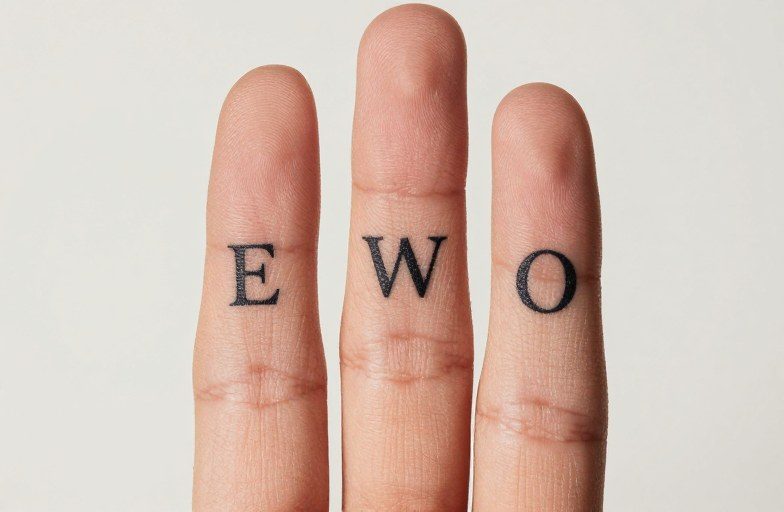
Words tattooed on fingers function as permanent, unavoidable statements. Unlike a sleeve or back piece you can cover, finger ink sits at the end of every gesture, every handshake, every text typed. The meaning hinges on visibility: these are words you choose to confront constantly, and that others cannot help but notice. They range from names and dates to single defiant verbs, each carrying the weight of a promise made to the self.
Symbolism & Core Meaning
The Unfiltered Self
Finger word tattoos strip away the luxury of privacy. “Love” on a knuckle isn’t a quiet affirmation, it’s a broadcast. “Stay” or “Breathe” function as emergency instructions you read dozens of times daily. The symbolism centers on accountability: you cannot forget a word you literally point at. This placement rejects the idea of tattoos as hidden personal archives. Instead, it demands integration into daily action.
Commitment Beyond Romance
Names across fingers often signal permanence more than portrait-style tributes elsewhere. The choice to tattoo a partner’s name on a hand, knowing the social stigma, knowing cover-up difficulty, becomes part of the gesture itself. Some choose children’s names, rendering the hand a walking birth record. Others ink their own surname or a lineage marker, claiming identity in a space where documents and bloodlines usually do the talking.
Mythology & Folklore
Sailor Traditions and Superstition
Knuckle tattoos hold documented maritime history. Sailors inked “HOLD FAST” across eight fingers, a charm against falling from rigging. The words weren’t decorative, they were spoken as incantation while gripping rope in storms. This tradition, often linked to 19th-century British and American naval practice, treated the tattoo as functional magic: the body as talisman, the word as spell.
Modern Folk Practices
Contemporary knuckle sets inherit this ritual quality. “LOVE HATE” and its variants operate as moral balancing acts, visual arguments the wearer perpetually re-enacts. Prison and street traditions developed their own lexicon: geographic codes, gang affiliations, earned ranks. These aren’t merely “meanings” in the decorative sense; they’re social passports, readable by those in the know, opaque to outsiders. The folklore lives in who can read it, not just what it says.
Religious & Spiritual Angles
Sacred Text at the Extremities
Religious finger words carry particular intensity. “Faith” on a dominant hand transforms work into worship. Some trace the practice to medieval pilgrims who marked themselves at journey’s end, though historical evidence remains scattered. Modern practitioners often choose scripture fragments, “Grace,” “Mercy,” “Fear Not”, scaled to fit between creases. The small size forces selection: one word must carry entire theological frameworks.
Mantra and Meditation
Buddhist practitioners have experimented with Sanskrit or Pali characters on fingers, though this remains less common than neck or forearm placement. The finger’s constant motion, gesturing, touching, working, turns the word into kinetic prayer. Each movement becomes potential reminder. This differs from static meditation objects; the tattooed finger moves through the world, carrying the mantra into profane space.
Best Placements
Knuckles vs. Sides vs. Fingers
Knuckles offer the most aggressive visibility. A word here reads across both hands, requiring the viewer to see the set. Eight-letter phrases dominate: LOVE HATE, STAY TRUE, GAME OVER. The skin is thick but mobile, and ink often spreads as collagen breaks down. Touch-ups within two years are standard, not exceptional.
Side-of-finger placement hides in palm-facing position. Words here serve the wearer more than the audience, readable while typing, holding a phone, driving. The skin is thinner, closer to bone, and notoriously difficult to saturate. Artists often refuse single-needle work here; the needle must deposit enough ink to hold without blowing out. Results vary heavily by individual skin texture and oil production.
- Index finger: most visible in handshakes, pointing, gesturing
- Middle finger: maximum social provocation potential
- Ring finger: often reserved for partner names, ironically competing with wedding bands
- Pinky: smallest canvas, best for single characters or minimal words
- Thumb: unusual placement, high movement, unpredictable aging
Inside the Finger
The webbing between thumb and index finger accommodates small words but fades fastest. Constant friction from grip, sweat accumulation, and thin skin make this a high-risk zone. Most artists warn clients: expect significant fading within twelve months, possibly requiring annual refresh.
Color vs Black and Grey
Black Ink Reality
Black remains the practical standard for finger words. The high contrast against skin tone ensures readability even as pigment diffuses. Solid black lettering, bold, traditional, or script, holds better than greywash or fine-line work. The finger’s rapid cell turnover and constant abrasion punish subtlety. A greywash “shadow” effect that looks elegant on a forearm becomes muddy blur within months on a knuckle.
Color Options and Limitations
Red enjoys some popularity for its urgency, “LOVE” in crimson, “WAR” in blood tone. White ink on fingers is generally inadvisable: it yellows unpredictably and becomes invisible on many skin tones. Blues and greens can work for specific symbolic purposes (“WATER,” “TRUTH”) but require heavier saturation than black, increasing blowout risk. UV-reactive inks have no reliable track record for longevity here; most experienced artists decline to use them on fingers.
Similar & Related Symbols
Numeric and Alphabetic Systems
Roman numerals on fingers carry similar declarative weight but add historical gravitas. Dates rendered as VII-XV-MMXX read as code to the uninformed, private data to the informed. Single letters, initials, runes, Greek characters, function as condensed words, requiring viewer knowledge to unpack. The ASL finger alphabet has inspired some deaf and hearing communities to tattoo signed names or meaningful handshapes.
Non-Textual Equivalents
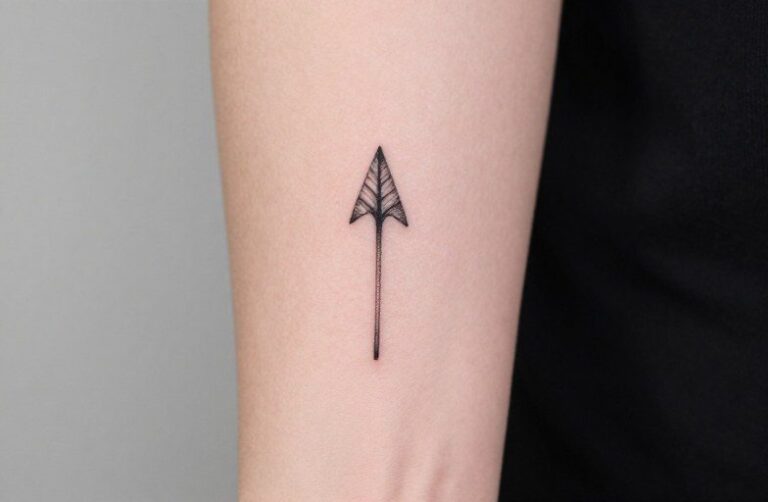
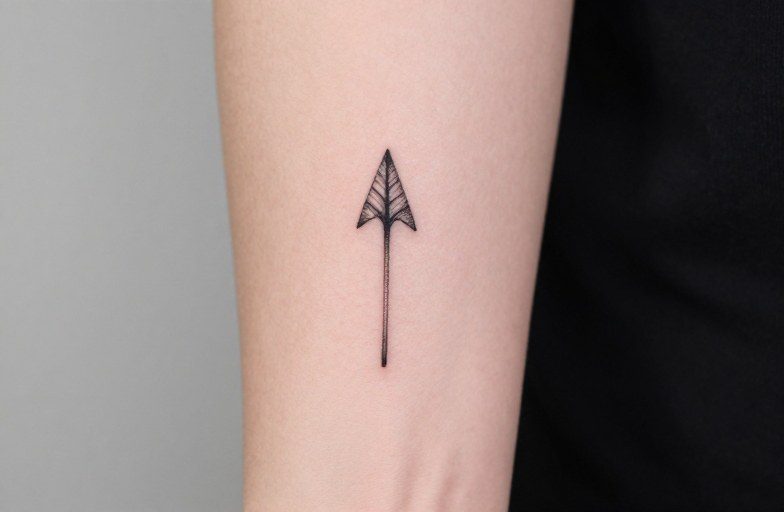
Small symbols on fingers operate in parallel: coffins, crosses, eyes, arrows. These carry word-like specificity without language barrier. A coffin on the middle finger communicates differently than the word “DEATH”, more visual, less confrontational. Arrows on fingers can indicate direction, action, or reference archery’s historical connection to focus and release. The choice between word and image on fingers often comes down to whether the wearer wants immediate legibility or layered interpretation.
Final Word
Finger word tattoos commit you to daily confrontation with your chosen language. The placement refuses nostalgia, you cannot glance at it selectively, cannot frame it for others. It simply exists, moving through every interaction, wearing down, requiring maintenance, demanding the decision be re-made with each touch-up appointment. The meaning isn’t in the word itself but in the choice to make it unhideable, to let it interrupt, to trust that repetition won’t hollow it out but might, instead, deepen its hold. What starts as statement becomes, through sheer exposure, environment. You stop reading it and start living inside it. That’s the particular power of words at the body’s edges: they don’t decorate. They condition.
Frequently Asked Questions
Do finger word tattoos hurt more than other placements?
Yes, generally. The skin is thin with bone directly underneath, and the nerve density is high. Most people describe it as sharp, immediate discomfort rather than the dull ache of fleshier areas. Sessions are usually short, which helps.
How fast do finger tattoos fade compared to other spots?
Significantly faster. Constant use, washing, sun exposure, and the skin’s natural shedding cycle all work against longevity. Plan for touch-ups every 1-3 years, with some fading visible within months depending on your skin and aftercare.
Can any font work for finger words, or are some better?
Bold, simple fonts hold up best. Intricate scripts with thin lines blur quickly. Traditional bold lettering, block caps, or clean sans-serif styles maintain readability longest. Your artist should scale the design specifically for finger dimensions, not shrink a larger piece.
Will a finger word tattoo affect job prospects?
Potentially, yes. Unlike covered placements, fingers are visible in most professional settings. Some fields are more accepting than others, creative industries, trades, and some service jobs may not care. Corporate, medical, and client-facing roles often still have visible tattoo policies. Consider your career trajectory before committing.