Warrior imagery runs through tattooing like a spine through a body: armor, weapons, fighters from history and myth, the stripped-down symbols of struggle and survival. People come to these designs seeking something weightier than decoration. The trick is translating that impulse into ink that won’t flatten into generic clip art after a few years. Here’s how to think through the real options, from style to placement to the specifics that separate a lasting piece from something you’ll want covered.
Popular Styles
Not every style handles warrior subject matter equally well. Some amplify the aggression; others drain it into soft focus. Your choice here determines whether the tattoo reads as powerful or merely pretty.
Black and Gray Realism
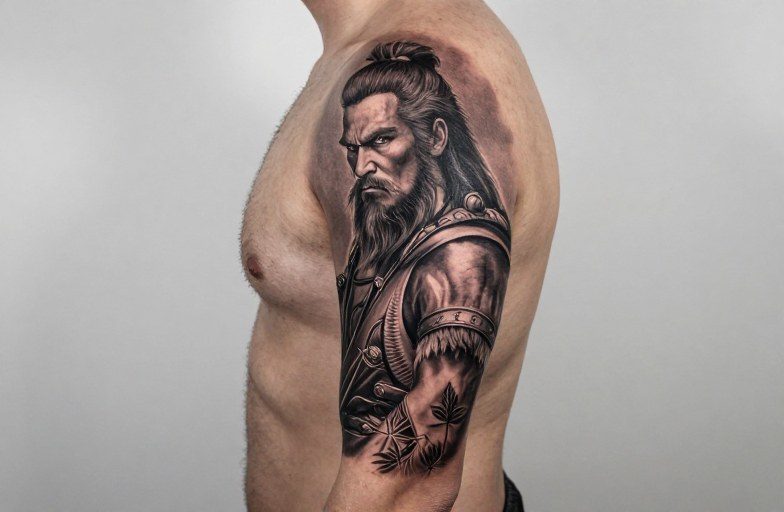
Portraits of historical warriors, Spartan helmets, samurai in profile, Viking faces half-shadowed, thrive in this style when executed by someone who understands anatomy beneath the armor. The limitation: realism demands large scale to hold detail. A photorealistic hoplite crammed into four inches becomes mud within five years as the gray wash settles and edges blur. For longevity, keep realistic warrior portraits at palm-size minimum, with strong black anchors in the eyes, helmet rim, or weapon edge to maintain structure.
Neo-Traditional and American Traditional
These styles solve the aging problem through bold outlines and limited, saturated color palettes. A traditional dagger through a helmet, a banner reading “Death Before Dishonor,” a simplified Spartan shield, the graphic clarity survives decades of sun and skin change. The trade-off is specificity. Neo-traditional allows more ornamental detail: decorative filigree around a katana, jewel-toned color in a samurai’s armor. Either way, the image stays readable from across a room, which matters more than most first-timers expect.
Blackwork and Tribal Fusion
Polynesian and Filipino tribal patterns, when done with actual cultural knowledge rather than random geometric filler, encode warrior status through specific motifs: the enata figure for warriors, the shark teeth for adaptability in battle. Modern blackwork adapts these structures into contemporary compositions, full sleeves of interlocking patterns that suggest armor, chest pieces that follow pectoral muscle flow like ancient breastplates. The ink density here is brutal on skin during healing, but the payoff is visual permanence; solid black doesn’t fade, it settles.
Trending Variations
Current directions in warrior tattoos reflect broader shifts in tattoo culture: more ambiguity, more hybrid imagery, more personal mythology.
The Wounded Warrior
Broken helmets, swords snapped at the hilt, figures with visible scars or missing limbs, this variation rejects triumphalism for something more psychologically complex. Often rendered in etching or engraving style, with fine crosshatching that mimics old woodcuts. The aesthetic suits people who connect to struggle more than victory. Healing note: fine line work in this style requires extremely careful aftersun protection; those delicate hatch lines disappear fast under UV exposure.
Warrior-Woman Specific Imagery
Amazons, shieldmaidens, onna-bugeisha, modern female soldiers, demand for these designs has grown substantially, and the best versions avoid the common failure of simply swapping a male face onto a sexualized body. Strong reference material helps: actual historical depictions, not fantasy art. Compositionally, these pieces often emphasize the weapon’s relationship to the body differently than male warrior portraits, with more dynamic angles and less static front-facing poses.
Animal Warrior Hybrids
Wolves in samurai armor, bears wielding axes, ravens with Viking shields, animal symbolism layered with human warrior culture. These work best when the animal choice connects to specific tradition (Norse berserkers and bears, for instance) rather than random cool-factor assembly. The technical challenge: animal fur texture plus metal armor texture demands an artist comfortable with both organic and hard-surface rendering.
For First-Timers
Warrior imagery carries inherent intensity that can overwhelm a first tattoo if you don’t calibrate properly. The most common regret isn’t the subject, it’s the scale and placement chosen without understanding how tattooing actually feels and heals.
Start with a design that doesn’t require a marathon session. A single Spartan lambda symbol, a small Roman gladius, a simplified knight’s helmet, these carry warrior resonance without demanding four hours of needle time. Black and gray heals more predictably than color for beginners; your aftercare routine is simpler, and touch-ups are less likely.
Placement matters enormously for first pieces. The outer upper arm, the calf, the shoulder blade, these areas have enough muscle padding to reduce pain, enough flat surface for clean application, and enough visibility that you can actually see and enjoy the result. Avoid ribs, feet, and hands for warrior first-timers; the pain is sharper, the healing more finicky, and the imagery deserves better conditions to settle properly.
Size & Scale
Warrior tattoos fail most often through misjudged scale. The subject matter tempts people toward epic size, but epic size without epic composition becomes a muddy commitment.
Small and Medium
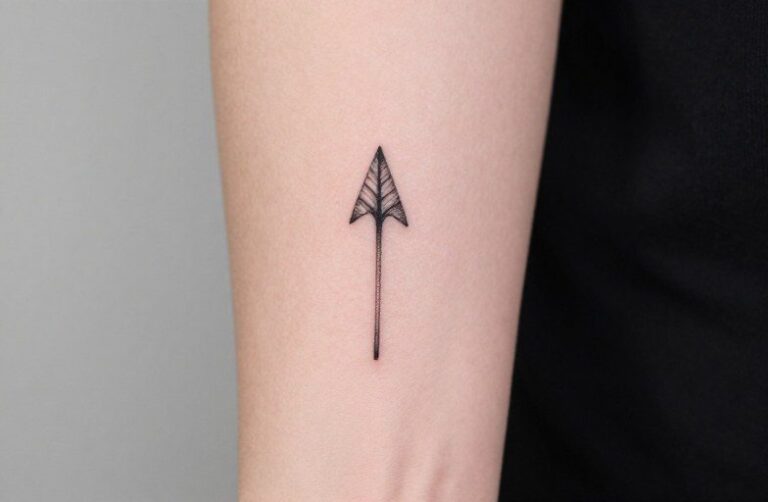
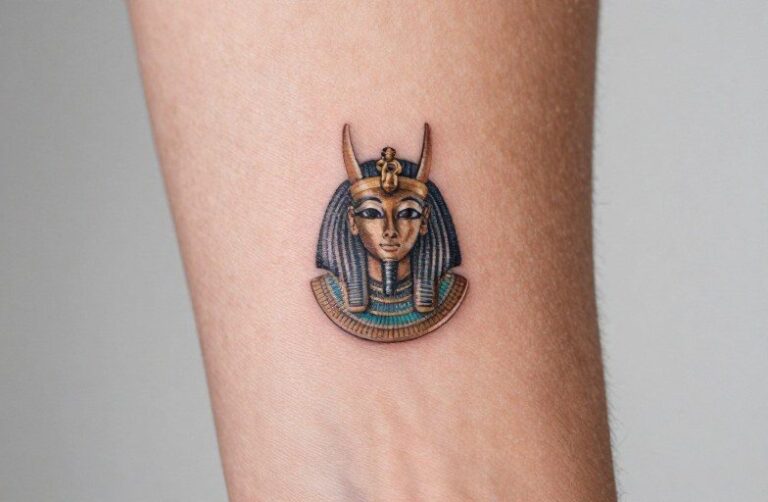
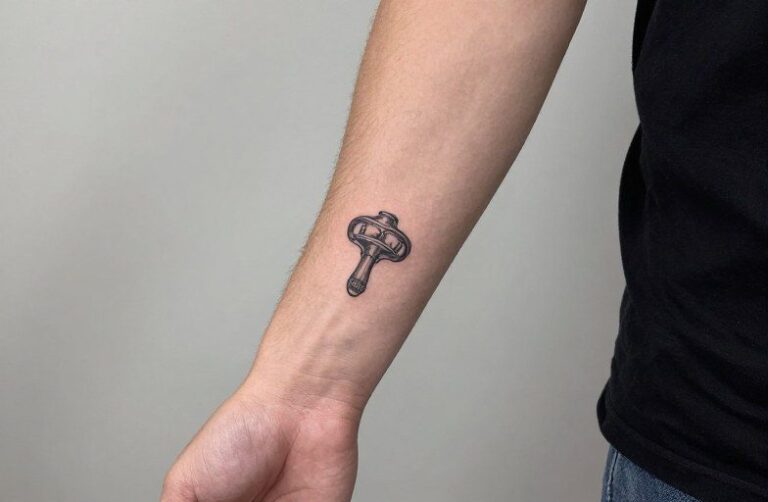
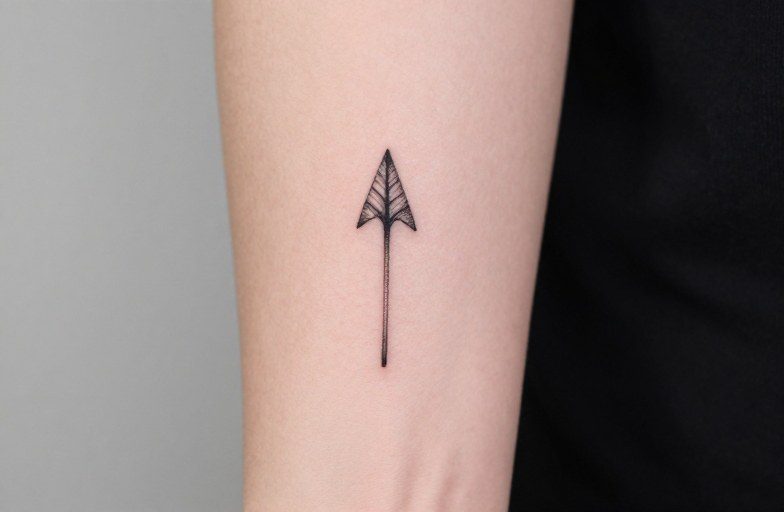
Under three inches, warrior imagery must simplify radically. A helmet silhouette. A single weapon. A small shield with minimal interior detail. These work best as black silhouettes or bold-line icons. The advantage: clean aging, easy placement options, lower cost. The risk: choosing something so generic it becomes meaningless. Solve this through specific cultural reference rather than generic “warrior” signifiers.
Large and Sleeve
Full sleeves or back pieces allow narrative complexity: battle scenes, multiple figures, landscape elements. The technical reality: large warrior compositions require planning for how the image moves with the body. A charging knight across your forearm becomes a contorted mess when you bend your elbow. Good large-scale warrior work flows with muscle structure, using the body’s geometry as compositional architecture rather than fighting it.
Black and gray large pieces age more gracefully than color, but if you want color in a warrior piece, concentrate it: a single red element in an otherwise monochrome composition, the way a blood-red sash on a gray samurai draws the eye and holds its saturation better than scattered color throughout.
How to Personalize It
Avoiding the warrior-tattoo cliché means moving past Google Image results into something that actually connects to your specific life.
Consider your actual ancestry or cultural background. Celtic warrior knots, Maori ta moko patterns, Japanese irezumi traditions, each carries specific visual language that connects to real lineage rather than borrowed aesthetics. If you have no such connection, consider your actual struggles rather than symbolic ones. A warrior tattoo for someone who survived illness or abuse might incorporate specific dates, medical imagery transformed into armor, or references to actual battles fought rather than mythological ones.
Another path: the warrior’s equipment rather than the warrior. The broken sword that kept you alive. The shield with your actual family crest. The helmet modified with symbols from your profession or passion. These objects carry the same weight without requiring a human figure that never quite looks like you anyway.
Best Placements
Warrior imagery has traditional strongholds, but the best placement depends on what you want the tattoo to do visually and socially.
Visible Power Placements
- Outer forearm: The modern equivalent of the samurai’s sleeve display. Shows in short sleeves, frames naturally when you gesture. Best for medium-scale single images: weapons, helmets, shields.
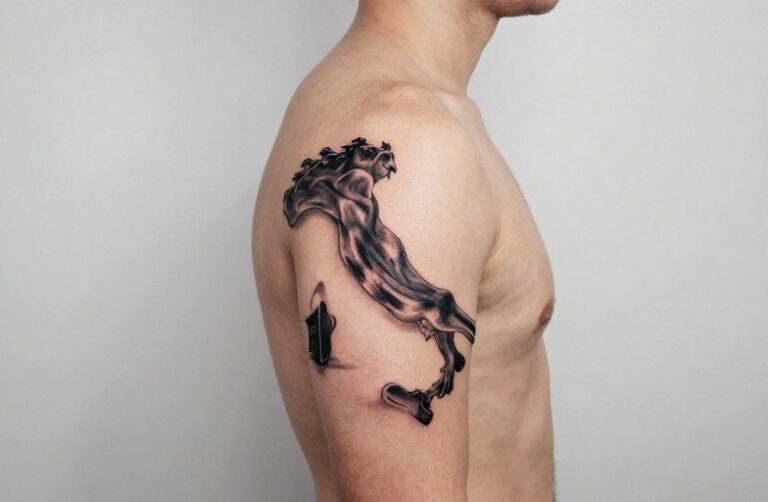
- Upper arm/shoulder: Classic for good reason. Muscle structure supports rounded compositions, and the canvas ages well. Traditional placement for military warrior tributes.
- Chest: Centered chest pieces read as armor literally laid over the heart. Symmetrical compositions thrive here. Pain is significant; commitment is total.
Private or Contained Placements
- Thigh: Large, relatively low-pain canvas that hides under professional clothing. Permits complex scenes without public exposure.
- Back: The largest uninterrupted canvas. Full back pieces of warrior scenes require enormous trust in your artist and years to complete, but the result is unmatched in impact.
- Ribcage: Painful, slow to heal, but the vertical format suits standing warrior figures. Consider carefully; this placement is notorious for first-timer regret.
Hand, neck, and face placements for warrior imagery carry significant social weight. These are not first-timer placements, and the warrior subject matter amplifies the aggression signal in ways that affect employment and social perception disproportionately.
Final Thoughts
Warrior tattoos endure because the underlying need endures: marking oneself as someone who has faced or will face difficulty, who claims some relationship to courage and endurance. The best versions don’t borrow generic thunderbolts and dragons. They find the specific visual language, cultural, personal, or symbolic, that carries that claim without collapsing into empty posture. Work with an artist who has done substantial figurative or historical work. Bring reference that matters to you, not just Pinterest popularity. And commit to the scale and placement that lets the design actually function as a tattoo, not just an image, through the decades when you’ll need it most.
Frequently Asked Questions
How do warrior tattoos age compared to other black and gray designs?
Warrior imagery with heavy black elements like armor and weapons ages exceptionally well because solid black holds its value. Fine detail in faces or distant battle scenes tends to blur first, so prioritize strong black anchors in the primary subject. Plan for a touch-up around year five to refresh gray wash contrast.
Is it disrespectful to get a samurai or Spartan tattoo without that ancestry?
Cultural borrowing concerns vary. Samurai imagery in Japanese tattoo tradition (irezumi) is typically done by trained practitioners within specific cultural context. Spartan and Roman warrior imagery, as classical Western symbols, carry less direct cultural continuity but still benefit from actual historical research rather than Hollywood reference.
What’s the most painful placement for a large warrior back piece?
The lower back and kidney areas near the spine register highest pain for back work, while the upper back over the trapezius muscles is more manageable. The spine itself, with bone proximity and nerve clusters, creates sharp, intermittent pain that many find harder to endure than steady muscle-area sensation.
Can I combine warrior imagery with religious or spiritual symbols?
Many historical warrior traditions were inseparable from spiritual practice, Vikings and Norse cosmology, samurai and Zen Buddhism, medieval knights and Christian iconography. The combination is historically authentic when researched properly. Modern mixing requires similar care to avoid visual or conceptual incoherence.