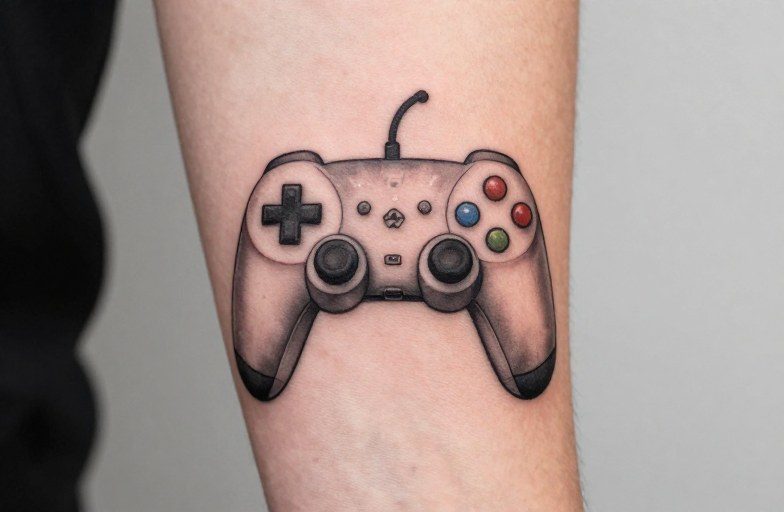
Video games leave marks. Hours logged, worlds explored, characters who felt like friends during late nights and hard years. Translating that into skin means choosing what actually stuck with you, not just what looked cool on a loading screen. The best gaming tattoos work because they pull from specific visual language: the blocky sincerity of 8-bit sprites, the moody palette of a particular level, the exact pose of a character at a pivotal moment. This guide covers what actually works, where it goes, and how to keep it yours.
Standout Design Ideas
Character Moments Over Character Portraits
A full-face portrait of Link or Kratos can look stunning fresh, but faces are unforgiving. Skin shifts, ink spreads, and the likeness you paid for softens into something generic. Better: isolate a defining gesture. The Master Sword raised against sky. The Terran Marine’s rifle angle. The Hollow Knight’s nail poised mid-strike. These read instantly without demanding perfect facial fidelity. Single-character compositions also age cleaner than group shots, too many figures at small scale become muddy brown blobs within five years.
Environmental Shorthand
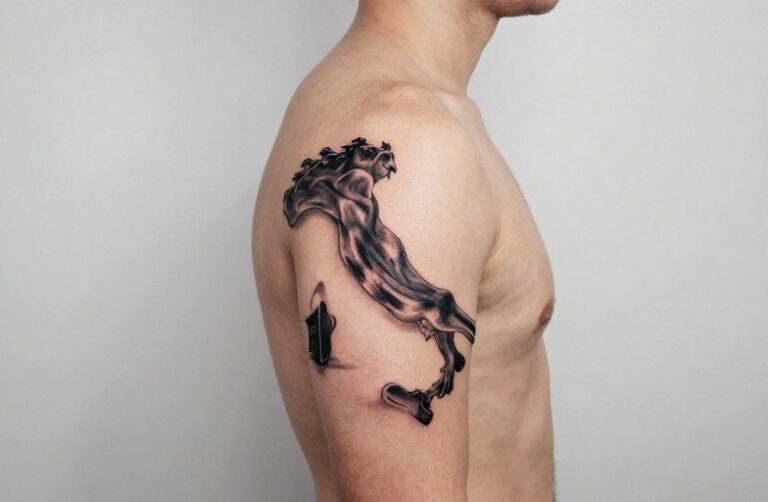
Some games are place more than person. The blood-red sky of Doom’s hellscape. The golden wheat field from Journey’s final climb. The neon-drenched alley from Cyberpunk 2077’s menu screen. These work as background tattoos, thigh pieces, or rib panels where gradient and atmosphere matter more than line precision. A good artist can render atmospheric perspective with limited color, distant spires in blue-grey, foreground detail in warm saturation. Ask to see healed photos of their landscape work; fresh color always looks more vivid than it stays.
- Inventory icons and HUD elements: small, readable, instantly recognizable
- Game over screens and continue prompts: ironic, nostalgic, graphically bold
- Enemy silhouettes: the colossi from Shadow of the Colossus, Dark Souls bosses
- Map fragments and fast-travel points: abstract enough to blend with other tattoos
Matching & Pairing Ideas
Co-op tattoos fail when they require both people present to make sense. The strongest pairs function independently and resonate together. Think Player 1/Player 2 controller ports, simple numerals in the game’s font, placed on matching wrists or ankles. Companion cube and Weighted Companion Cube from Portal, one on each partner, same location. The sun and moon sigils from Dark Souls, split between two people. These don’t need explanation to strangers but light up with meaning when you’re together.
Sibling sets work differently. Same game, different eras: one sibling gets the original Metroid sprite, another gets Samus from Dread. Parent-child: the parent chooses a mentor figure (Aerith, Solaire), the child gets the protagonist they guided. Avoid direct replication, two identical tattoos age identically but lack the conversational tension that makes paired work interesting.
Popular Styles
Pixel and Neo-Traditional Fusion
Pure pixel tattoos look correct only at exact size, blow up a 16×16 sprite and the block edges blur. Skilled artists solve this by reinterpreting pixel boundaries as hard black lines, adding neo-traditional shading between color fields. The result reads as “pixel art” from five feet away but holds detail up close. This demands an artist comfortable with both disciplines; portfolio review is essential. Ask specifically about healed results, fresh pixel work looks crisp, but without proper line weight, those hard edges feather into indistinct fuzz.
Blackwork and Negative Space
Triforce geometry, Tetris block arrangements, the spatial puzzles of The Witness, these translate naturally to black ink. Negative space becomes the active element: skin showing through as light, blocks as dark. This style ages exceptionally well; black ink holds contrast longer than color, and geometric shapes don’t depend on fine detail. The trade-off is limited tonal range, if your game reference relies on specific color mood (the green-black of BioShock’s Rapture, the saturated coral of ABZÛ), blackwork flattens that emotional register.
Best Placements
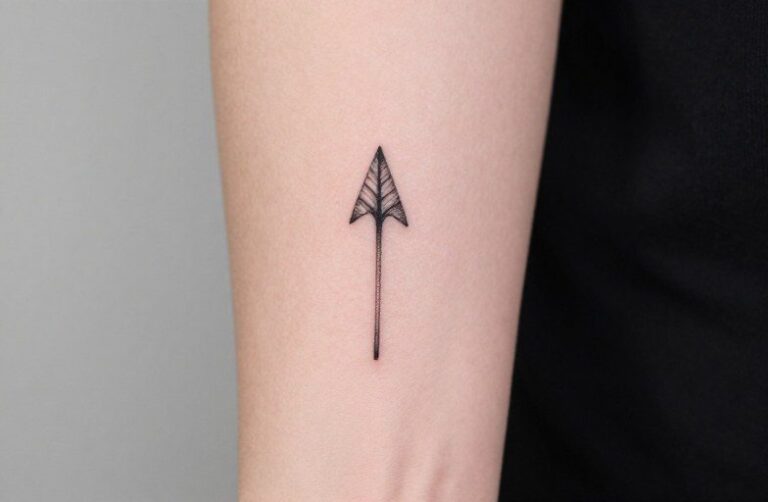
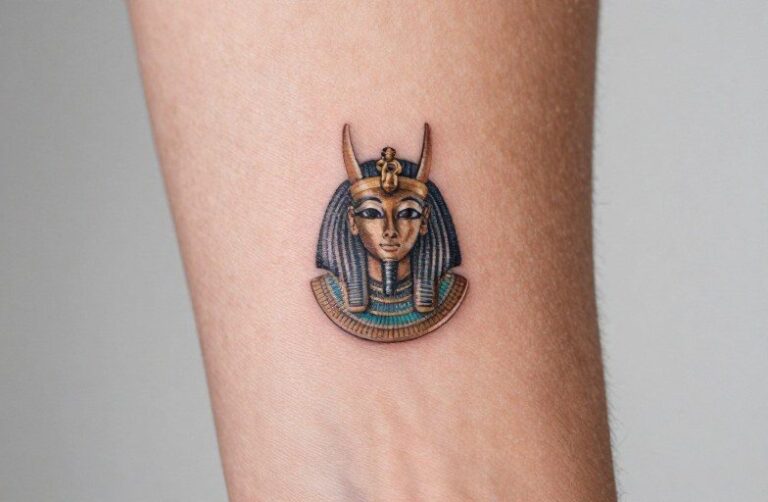
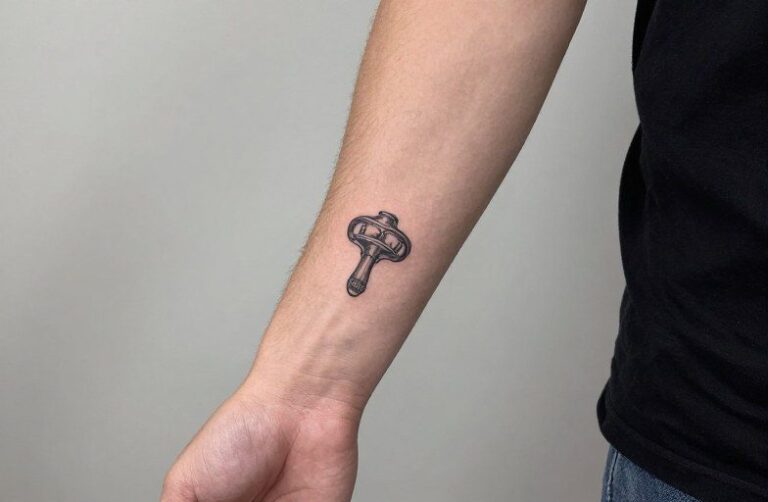
Forearms carry gaming tattoos well because they’re visible during play, your own reminder, not performance for others. The inner forearm offers flatter skin for detailed sprites; the outer takes bolder, simpler graphics that read from across a room. Ribs and thighs accommodate landscape pieces, the vertical or horizontal real estate matching cinematic aspect ratios. Hands and fingers are poor choices for anything complex; even simple controller button layouts blur within months from constant flexing and sun exposure.
One overlooked spot: the calf’s lateral side. Flat enough for detail, usually covered by pants, large enough for a full scene. The healing is straightforward, no joint movement to crack scabs, minimal contact with clothing. For pieces you want to show selectively, this is practical territory.
Size & Scale
Minimum Viable Detail
Every pixel-art tattoo faces the same math: how many pixels can you actually render before they become unrecognizable dots? At two inches square, you’re limited to about 8-bit era simplicity. At four inches, 16-bit becomes possible. Beyond that, the “pixel” conceit starts to dissolve, why render photorealistic detail as fake blocks? Be honest about the source material’s native resolution. A Minecraft dirt block works tiny. A Final Fantasy VII summon sequence does not.
Scaling for Aging
Line weight must increase with size, but not proportionally. A half-inch sprite needs lines that would look brutally thick on a four-inch version. The standard rule: minimum line weight of 0.5mm for pieces under two inches, scaling to 1.5-2mm for palm-sized work. Shading should be bolder than you’d expect, subtle greywash in a fresh tattoo heals to near-invisibility. Ask your artist to show you healed photos at the scale you’re considering, not just fresh work.
How to Personalize It
Direct reproduction of official art is technically copyright infringement and spiritually empty. The tattoos that endure combine game reference with personal symbol. Your first completion date in the game’s font, hidden in a corner. A character’s weapon modified with your actual gear, your real headphones on a DJ Hero deck, your pet’s markings on a companion creature. The color palette shifted to match your existing tattoos or your actual room where you played.
Some artists specialize in this synthesis, taking your screenshots and sketching interpretive versions. Others prefer you bring loose reference and trust their redesign. Know which you need before booking. If you’re precious about specific proportions, find an artist who works tight to reference. If you want something that feels like your game but looks like art, seek the interpreters.
What to Remember
Video game tattoos carry a particular risk: the game changes. Sequels rewrite characters. Developers make choices you hate. Online communities turn toxic around properties you loved. The tattoo remains. Choose visual moments that stand alone, scenes that made you feel something before you knew any lore, before you read any wiki. The first time you emerged from the Great Plateau in Breath of the Wild. The quiet after a boss finally fell. The save point where you paused to breathe.
Healing is undramatic but non-negotiable. Two weeks of careful washing, no picking, no swimming, no direct sun. Color tattoos in this genre often need touch-ups; the bright primaries of game palettes (pure red, electric blue, hot yellow) fade fastest. Plan for a refresh at 12-18 months, especially on high-exposure placements. Black and grey versions last longer but sacrifice the immediate recognition that makes gaming tattoos satisfying.
Most importantly: the best reference is your own memory. Screenshot the moment that mattered. Crop it to its essential geometry. Bring that, not a Google image search result, to your consultation. The difference between a tattoo that looks like a game and one that feels like yours starts there.
Frequently Asked Questions
Will a pixel art tattoo look blurry after healing?
It depends on execution. Pure pixel tattoos need precise line weight and adequate size, too small and the blocks merge. Ask your artist for healed photos of similar work, and plan for at least 2-3 inches for 8-bit style sprites.
Can I get a tattoo of a character from a game I don’t own?
Legally, tattoo artists operate in a gray area with copyrighted characters. Practically, most shops won’t reproduce official promotional art exactly. Bring personal screenshots or ask for an interpretive version that captures the feeling without copying the asset.
Do colorful video game tattoos fade faster than other color tattoos?
Bright primaries, pure reds, electric blues, hot yellows, are common in game art and do fade faster than earth tones. Plan for a touch-up within 18 months, especially on sun-exposed skin, and use SPF consistently after healing.
What’s the best placement for a co-op matching tattoo?
Wrists, inner forearms, and ankles work well because they’re easy to align for photos but don’t require being together to make sense. Avoid hands and fingers where detail blurs quickly from constant use.