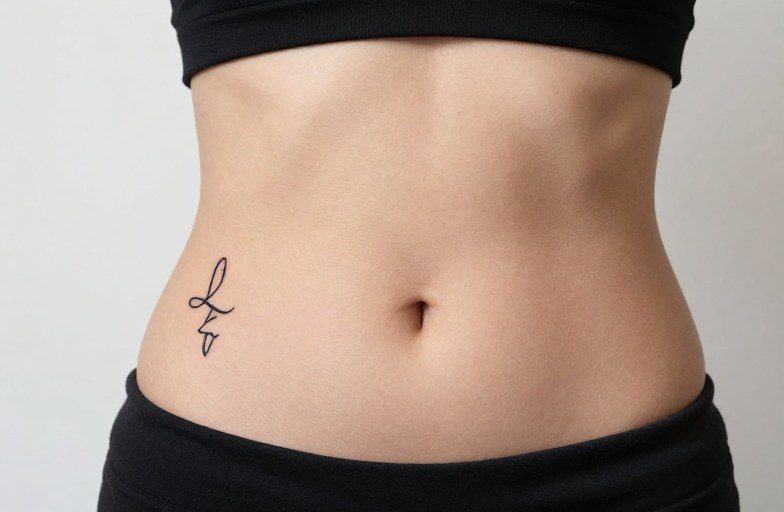
Stomach tattoos carry a reputation for intensity, both in pain and visual impact. The abdominal canvas stretches from the lower ribs to the hip bones, wrapping around the navel and dipping toward the pelvis. Skin here moves constantly with breathing, digestion, and posture shifts. That mobility, combined with the area’s tendency to change with weight fluctuation, makes abdominal work a distinct discipline. Done right, a stomach piece can frame the torso’s natural architecture. Done without planning, it can blur, distort, or age poorly. Here’s what actually matters when you’re considering ink across your midsection.
Tips for Choosing
Start with your body’s geometry. The stomach isn’t flat, ribs angle down, the navel creates a natural focal point, and the hip bones form hard landmarks. A design that ignores these contours will always look slightly off, like a sticker rather than integrated work.
Working With Body Contours
Curved compositions tend to settle better than rigid geometric shapes. Mandalas, organic florals, and flowing script can follow the stomach’s natural topography. Straight lines, barbed wire bands, text banners, rigid geometric frames, age poorly here because they can’t hide slight distortion. The skin between the navel and sternum stretches most dramatically; designs in this zone need extra flexibility built in.
Considering Future Changes
Abdominal skin is elastic and responsive. Pregnancy, weight shifts, and aging all affect this area more than, say, a forearm. Large solid black areas can crack or lighten unevenly if the skin stretches significantly. Fineline work above the navel often holds better than equivalent detail below it, where compression from sitting and waistbands causes more abrasion during healing.
- Place detailed focal points away from the navel’s direct center, healing there is notoriously difficult
- Avoid designs that depend on perfect symmetry; slight natural asymmetry in the torso will throw them off
- Consider how the piece reads when seated, not just standing, stomach skin compresses and folds
Matching & Pairing Ideas
Stomach tattoos rarely exist in isolation. They connect to chest pieces, rib work, hip tattoos, or full torso suits. Thinking about these relationships early prevents the “floating design” problem where a stomach piece looks disconnected from everything around it.
Connecting to Chest and Rib Work
The sternum and lower chest form a natural ceiling for abdominal designs. A stomach piece that stops abruptly at the rib cage’s bottom edge can look truncated. Better approaches let the design breathe into the lower ribs or use the rib cage’s curve as a deliberate boundary. Japanese bodysuit tradition handles this masterfully, background waves or wind bars flow continuously across the transition. For smaller pieces, a central stomach design with rib accents on either side creates balance without demanding full coverage.
Pairing With Hip and Pelvic Tattoos
The iliac crests (hip bones) offer hard anchors that contrast with the stomach’s soft tissue. Designs that incorporate these bones, wrapping vines, geometric points, or animal heads facing outward, gain structural stability. Be cautious about extending too far into the inguinal crease where thigh meets torso; that skin folds heavily and heals poorly for detailed work.
Size & Scale
Scale on the stomach follows different rules than limbs. A “medium” stomach tattoo often reads as small because the canvas is so broad. Conversely, a piece that would dominate a shoulder can look stranded in the center of a stomach.
Small and Focused Options
Small stomach work demands precision placement. A single image tucked to one side of the navel, a small script below the sternum, or a minimal design on the lower abdomen can work if they respect negative space. The mistake is centering a tiny design in a vast field of skin, it looks lost and accidental. Small pieces also age faster here due to the area’s movement and friction from clothing.
Full Coverage and Large Pieces
Large stomach tattoos, full fronts, Japanese-style panels, or extensive ornamental work, allow the artist to build proper composition with foreground, middle ground, and background elements. The navel becomes a natural center point or gets incorporated as a design element (a flower center, an eye, a portal). Large work also distributes the trauma of tattooing across multiple sessions, which matters because stomach skin reacts more dramatically to heavy saturation than tougher areas like the back or outer arm.
- Plan for 2-4 sessions for substantial stomach work, rushing causes excessive trauma and poor healing
- Leave breathing room around the navel itself; tattooing directly on or immediately adjacent to it extends healing dramatically
- Large pieces should extend onto at least one adjacent area (ribs, hips, lower chest) to avoid the “island” effect
Color Choices
Color behaves differently on stomach skin than on more stable surfaces. The constant flexing and the area’s relatively thin subcutaneous fat layer affect both application and longevity.
Black and Grey Durability
Black and grey stomach tattoos generally age more predictably than color. The contrast holds through weight changes, and touch-ups are straightforward. Heavy black backgrounds, common in Polynesian, blackwork, and ornamental styles, can look striking but require careful application. Too much saturation in one session causes the skin to reject ink or heal with patchy spots. Experienced artists build black backgrounds in layers across multiple sessions.
Color Saturation Realities
Bright colors, reds, yellows, oranges, can look stunning fresh but fade faster on the stomach than on the upper back or outer thigh. The reasons are mechanical: waistbands rub, the area sweats heavily, and the skin’s constant movement breaks down pigment particles faster. Blues and greens tend to hold better than warm colors. White ink is particularly risky here; it yellows or disappears entirely within a few years on high-movement areas.
Trending Variations
Stomach tattoo styles cycle through popularity, but certain approaches have proven staying power beyond trend status.
Ornamental and Sacred Geometry
Ornamental stomach work, mandala derivatives, geometric patterns, dotwork, has dominated for good reason. These designs embrace the area’s curves rather than fighting them. The navel becomes a natural center point. Dotwork and stippling techniques avoid the heavy saturation that causes healing problems, though they require artists with specific technical control. The downside: ornamental work without strong personal significance can feel decorative rather than meaningful, which matters for a placement this visible and permanent.
Floral and Organic Forms
Flowers, snakes, and organic forms follow the body’s lines naturally. A snake coiling around the navel, peonies spreading from the lower ribs, or a lotus rising from the pelvis all use the stomach’s shape as part of the composition. These designs age well because slight distortion over time mimics natural organic variation, slightly asymmetrical petals or a curved stem look intentional, not like mistakes.
For First-Timers
The stomach is not most people’s first tattoo for valid reasons. The pain ranks high, the healing is finicky, and the placement demands confidence. But if you’re committed, preparation makes the difference between a traumatic experience and a manageable one.
Pain Expectations and Session Planning
Pain varies by exact placement. The area directly over the sternum’s bottom edge and the navel itself are typically most intense. The softer sides, away from the midline, are more tolerable. The lower abdomen near the pelvis registers deeply due to nerve density. Plan shorter sessions, two to three hours maximum, until you understand your own tolerance. Dehydration and low blood sugar amplify stomach tattoo pain significantly; eat solid food beforehand and stay hydrated.
Healing Challenges Specific to This Area
Stomach tattoos face unique healing obstacles. Waistbands rub directly across fresh work. Sitting compresses lower abdominal tattoos. Sleeping on your back is unavoidable for some, but pressure on healing stomach ink causes patchy healing. Plan to wear loose, high-waisted clothing or dresses that don’t contact the tattoo directly. The navel area requires special care, folding and moisture accumulation make it prone to irritation. Most artists recommend keeping the area dry and avoiding heavy bending or core exercises for two weeks minimum.
- Schedule around your menstrual cycle if applicable, stomach skin is more sensitive and swollen during menstruation
- Bring a stress ball or breathing technique; the stomach’s proximity to the diaphragm means tension affects breathing
- Arrange transportation, adrenaline crash after stomach sessions can be more severe than for smaller placements
Before You Decide
A stomach tattoo is a commitment to maintenance. The skin here changes more than almost anywhere else on the body, and that change will affect your ink over decades. Choose an artist with specific stomach experience in their portfolio, not just one who says they can do it. Ask to see healed photos, not just fresh work. Discuss explicitly how the design adapts to sitting, breathing, and potential body changes. The best stomach tattoos result from honest conversations about limitations, not just ambitious artistic visions. If you’re uncertain about the placement, consider starting with a design that could extend to the stomach later, or work with temporary markers and henna to test how a composition feels across your specific torso. The stomach offers dramatic potential, but it rewards patience and planning more than impulse.
Frequently Asked Questions
How much does a stomach tattoo typically cost compared to other placements?
Stomach tattoos usually cost more than equivalent-sized arm or leg pieces because they’re harder to stretch and tattoo, take longer due to the artist working around body contours, and often require more sessions. Expect to pay a premium for an experienced artist who regularly works this area.
Will a stomach tattoo stretch completely if I get pregnant or gain weight?
Some stretching is inevitable, but well-placed designs with organic shapes and proper spacing handle change better than rigid geometric work or heavy solid black. The skin’s elasticity varies individually, and touch-ups after major body changes are common and usually effective.
Can I work out during stomach tattoo healing?
Avoid core exercises, heavy lifting, and anything that causes significant stomach flexing or sweating for at least two weeks. Light walking is fine, but the mechanical stress of crunches, planks, or heavy squats will irritate fresh work and can push out ink.
Is the stomach really one of the most painful tattoo spots?
For most people, yes, it’s consistently rated among the more painful placements, especially near the sternum, navel, and hip bones where there’s less muscle padding and more nerve density. Pain tolerance varies individually, but plan for intensity comparable to ribs or spine work.