Thighs offer one of the most forgiving and flexible canvases on the body. Muscle and fat distribution here means designs can stretch and settle without the distortion that plagues bonier spots. For women, this translates to room for detail, the option to hide or show, and a pain level that tends toward manageable rather than brutal. The key is matching your design to the specific thigh zone, front, outer, inner, or back, and understanding how each area ages differently.
Matching & Pairing Ideas
Dual Thigh Compositions
Matching pieces on both thighs create deliberate symmetry without the rigid mirror-image effect of sleeves. Think botanical stems that start at the hip and flow downward, or celestial motifs, moons on one side, suns on the other, that read as connected but not identical. The gap between thighs becomes part of the design; standing with feet apart completes the visual circuit.
Asymmetrical pairs work harder than perfect matches. A large snake wrapping the left outer thigh paired with a smaller shed skin motif on the right inner thigh tells a contiguous story without forcing identical sizing. This approach respects that most bodies aren’t perfectly symmetrical, and aging will treat each side slightly differently.
Connecting to Hip or Knee
Thigh tattoos that extend toward the hip bone or drift down toward the knee require planning for how the design terminates. Hard stops, thick borders, geometric frames, look intentional. Fading out into scattered dots or fine lines can read as unfinished unless executed with serious precision. Vines, draped fabric, and flowing water motifs transition naturally into these adjacent zones.
Standout Design Ideas
What Works With Thigh Curvature
Organic shapes cooperate with thigh contours better than rigid geometry. A mandala centered on the outer thigh fights the muscle curve; the same mandala adapted with elongated petals that follow the leg’s axis harmonizes with it. Portrait orientation designs, tall flowers, cascading hair, vertical script, utilize the thigh’s length rather than working against it.
- Japanese-inspired waves and wind bars: wrap beautifully, age well with bold lines
- Moths and butterflies: wingspan aligns with thigh width, detail holds in upper thigh zones
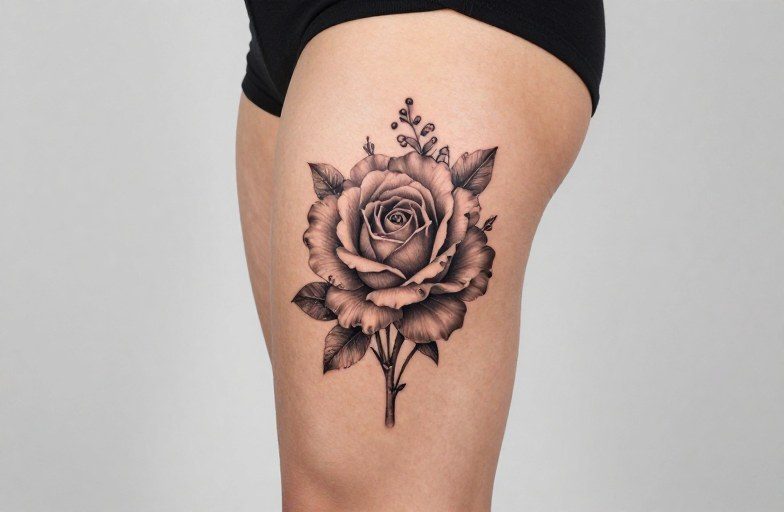
- Botanical bundles: peonies, poppies, and wildflowers with stems that guide the eye upward
- Fine-line figurative work: faces and hands possible on outer thigh where skin is most stable
- Ornamental lace and filigree: fills space elegantly, forgiving of minor stretch over time
Inner Thigh Specifics
The inner thigh presents unique considerations. Skin here is softer, more prone to friction, and heals with more moisture exposure. Designs need bolder lines than you’d get away with on the outer thigh. Delicate single-needle work often blows out or falls out here. Words and script particularly suffer, lettering needs significant weight to survive. Popular choices include solid black silhouettes, thick traditional imagery, and designs that incorporate the natural crease where thigh meets groin as a compositional element.
Tips for Choosing
Your lifestyle and wardrobe habits should drive placement more than trend. If you wear shorts and swimwear regularly, the outer thigh becomes semi-public space, choose accordingly. Office environments with business attire make the upper thigh genuinely private, expanding options for personal or provocative imagery.
Consider your body’s specific topography. Cellulite, stretch marks, and skin texture variations are normal and don’t prevent tattooing, but they influence how a design gets mapped. A good artist will work with these features, not pretend they don’t exist. Ask to see healed photos of thighs they’ve tattooed on bodies similar to yours, not just fresh work.
Color choice matters for longevity on this high-friction area. Black and grey hold crisp edges longer. Color saturation, especially reds and yellows, can require touch-ups sooner on inner and back of thigh where clothing contact is constant. If you want color, commit to the maintenance schedule.
Size & Scale
Small Accents That Hold
Not every thigh piece needs to dominate. Small designs, single flowers, compact symbols, minimal line work, work best on the outer thigh front, where skin is most stable. The back of thigh, with its softer tissue and more movement, demands slightly larger scale to avoid looking like a stamp that wandered. A palm-sized piece on the outer front thigh reads as intentional; the same size on the back of thigh can look lost.
Large-Scale Commitments
Full outer thigh pieces, hip-to-knee compositions, and wraparound designs require multiple sessions and serious planning. The payoff is a tattoo that moves with your body as a cohesive unit rather than an applied image. These work best when the design has a clear top and bottom, a visual hierarchy that guides the eye. A large cat portrait with the face at hip level and tail curling toward the knee uses the space; scattered unrelated elements across the same area waste it.
Session length on large thigh work typically runs shorter than back or chest pieces because the area can be worked from multiple angles without constant repositioning. Most artists can sustain quality line work for 3-4 hours before skin response degrades.
Popular Styles
Traditional and neo-traditional styles thrive on thighs. The bold outlines and limited color palettes are legible at distance, hold up to aging, and cover well if needed. The curved composition of traditional Japanese work, dragons, koi, cherry blossoms, naturally follows thigh musculature.
Fine-line and single-needle styles have surged in popularity, but application matters enormously. On the outer thigh, experienced artists can achieve hair-thin detail that lasts. On inner thigh or back of thigh, the same approach often heals patchy. The style isn’t unsuitable for thighs generally, it’s unsuitable for specific thigh zones.
Blackwork and ornamental styles solve the aging problem by embracing it. Heavy black areas, dotwork, and geometric patterns that rely on contrast rather than fine detail look substantially similar at five years and fifteen. This isn’t conservative choice; it’s realistic planning for a body area that sees significant use.
Realism on thighs demands the right reference and the right artist. Skin texture here can obscure subtle greyscale transitions. Photorealistic portraits often work better as stylized realism, preserving likeness but with slightly exaggerated contrast to ensure the image reads through skin’s natural variation.
For First-Timers
Pain Expectations
The thigh ranks among the more tolerable placements, but it’s not painless. Outer thigh front: moderate, muscle-distributed sensation. Inner thigh: sharper, more nerve-dense. Back of thigh: odd combination of dull and stingy. Hip crease area where tattoo meets torso: genuinely uncomfortable. Most people handle thigh sessions without numbing cream, but there’s no shame in using it for inner thigh or extended work.
Healing Reality
Thigh tattoos face unique healing challenges. Clothing friction is constant, underwear bands, pants seams, thigh rub. Plan for loose, breathable bottoms for two weeks. The inner thigh stays moist; powdering carefully with fragrance-free cornstarch helps, but don’t overdo it. Sleeping on your side can mean pressure on one thigh; back sleeping is ideal but unrealistic for many. A clean, soft pillowcase changed frequently matters more than expensive aftercare products.
Exercise timing: walking is fine immediately, but running, cycling, and leg-heavy workouts should wait until surface healing completes, typically 10-14 days. Sweat introduces bacteria and friction simultaneously. Swimming pools and hot tubs are genuinely risky for fresh thigh work.
Artist Selection
Look for portfolios with healed thigh work, not just fresh. Ask specifically about how their designs adapt to different body types. An artist who only shows thigh tattoos on one body type may not have the experience to adapt to yours. The consultation should include them touching and moving your thigh to assess skin texture and muscle movement, this is normal professional practice, not overstepping.
The Bottom Line
Thigh tattoos reward thoughtful placement and honest assessment of how you actually live in your body. The canvas is generous, the pain manageable, and the concealment options real, but only if you match design to specific zone, style to skin behavior, and size to your commitment level. Start with what you want to see daily, work backward to what will heal well, and find an artist whose healed work on thighs matches your body type. The best thigh tattoo isn’t the most impressive fresh photo; it’s the one that still looks intentional a decade later.
Frequently Asked Questions
How much does a thigh tattoo typically cost?
Small simple designs run $150-400, while full outer thigh pieces with color or heavy detail often reach $800-1,500+. Large custom work from established artists can exceed $2,000. Most artists price by the session or project rather than hourly for thigh work.
Will a thigh tattoo stretch if I gain or lose weight?
Moderate weight fluctuations usually don’t distort thigh tattoos dramatically because the area distributes change across muscle and fat. Significant muscle building or major weight loss can alter appearance, but thighs are more stable than stomach or upper arms for most women.
Can I get a thigh tattoo while pregnant or breastfeeding?
Most reputable artists won’t tattoo pregnant clients due to infection risk and stress on the body. Breastfeeding is generally considered safe for established tattoos, but getting fresh work involves ink particles entering bloodstream, many artists and clients prefer to wait until finished nursing.
How do thigh tattoos look after pregnancy specifically?
Stretch marks can develop on thighs during pregnancy and may intersect with existing tattoos. The degree of visual impact depends on tattoo style, bold traditional work tolerates this better than fine-line pieces. Some women choose to wait until after having children for large thigh commitments.