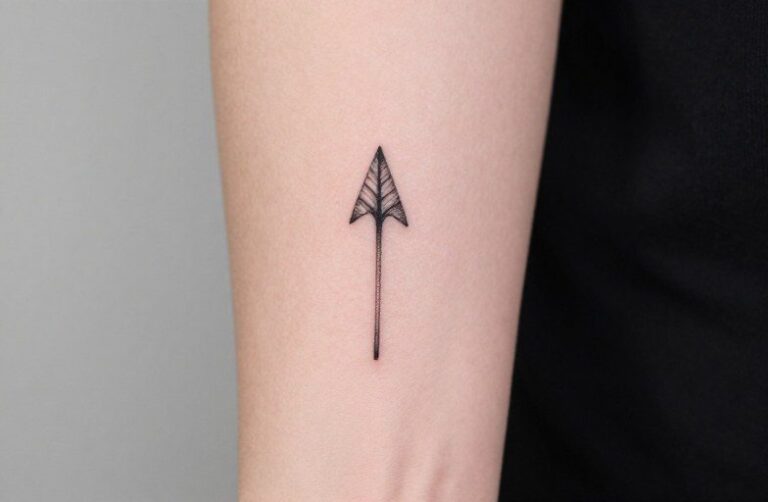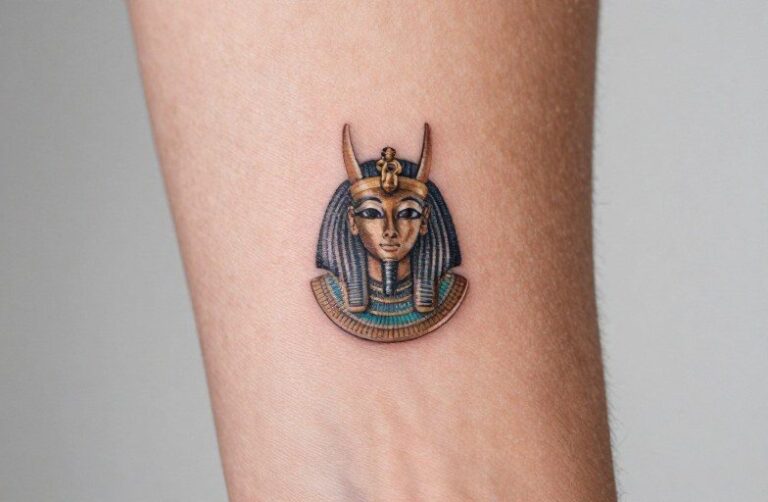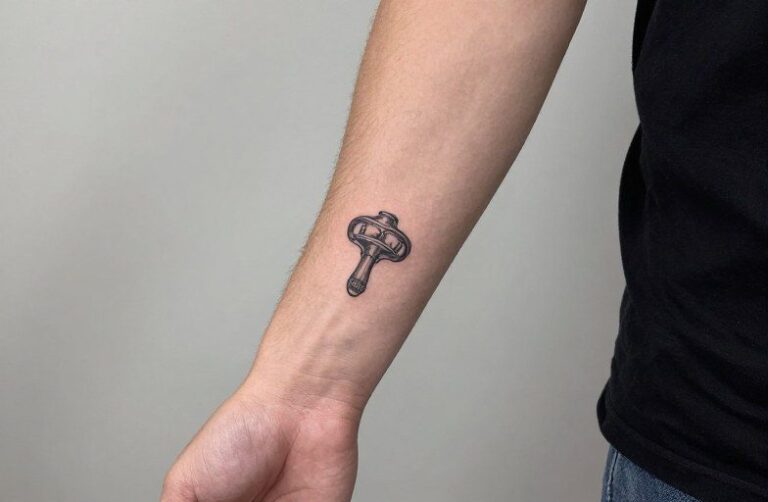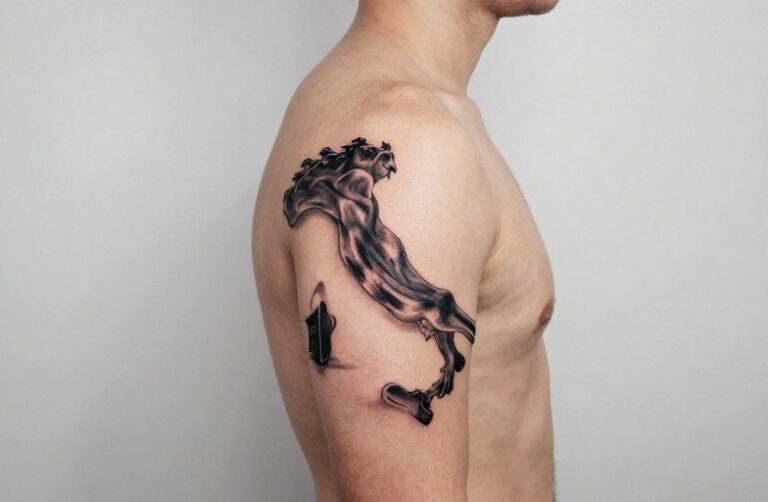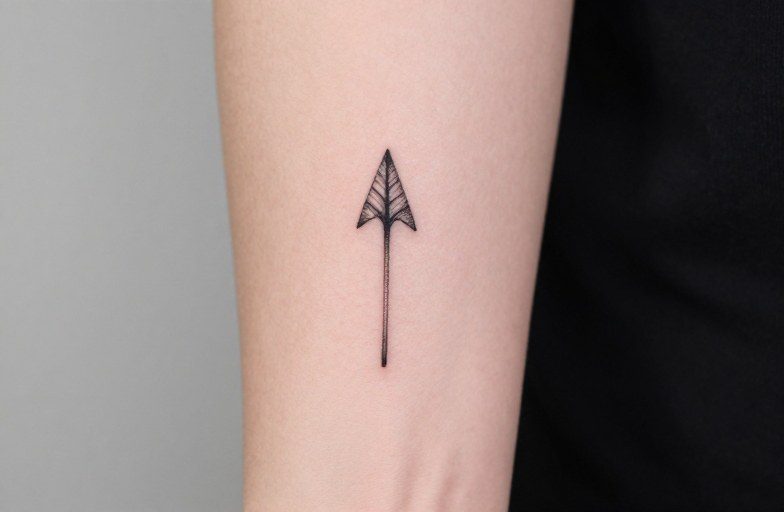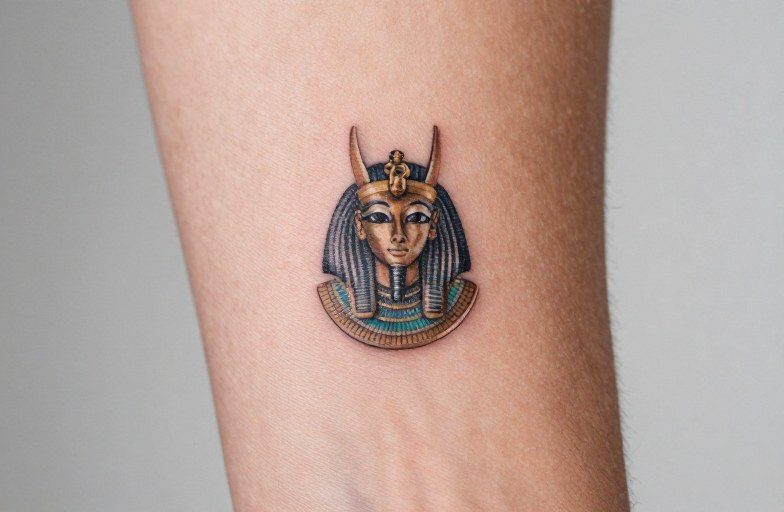
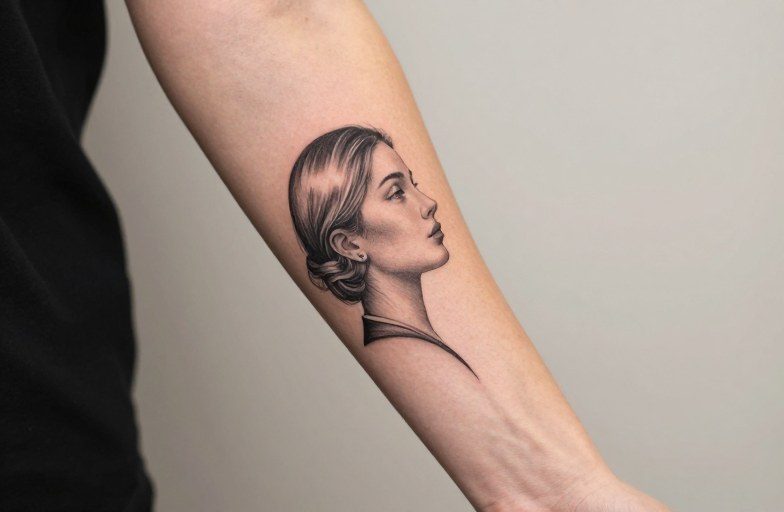
An uncommon female meaningful forearm tattoo typically signifies deliberate self-expression placed on a highly visible canvas, chosen by women who want their symbolism seen, not hidden. The forearm’s constant visibility makes it a statement of ownership over one’s narrative, while “uncommon” designs reject default imagery in favor of personal or culturally specific symbols that require explanation rather than instant recognition.
How It Ages on Skin
Line Work vs. Shading Longevity
Forearm skin sees sun, friction, and movement daily. Fine lines blur faster here than on the upper arm or thigh. Bold linework, think 3-5 needle groupings, holds crisper edges over decades. Dense black shading, however, tends to spread slightly into surrounding skin after 8-12 years, creating a softer, more atmospheric look that some prefer and others touch up.
Color saturation faces its own challenges. Reds and oranges fade fastest with UV exposure. Blues and greens settle into the skin more stubbornly. For uncommon designs, perhaps botanical specimens, abstract geometry, or lesser-known mythological figures, consider how the image reads when colors mute. A detailed linework mandrake root stays legible longer than a watercolor-style field of uncommon wildflowers.
Placement-Specific Wear
The outer forearm (radial side) tans and burns more readily than the inner surface. Tattoos here lighten noticeably without sunscreen. The inner wrist-to-forearm transition creases with age; designs crossing this boundary distort gradually. Many women place meaningful symbols on the inner forearm, visible to the wearer herself, private significance in a public location.
- Outer forearm: Higher sun exposure, plan for color maintenance
- Inner forearm: More protected, better for fine detail, but watch the wrist crease zone
- Forearm “canvas” overall: Flat, stable, heals relatively predictably compared to elbows or hands
Personal & Modern Meanings
Reclaiming Visibility
Women choosing uncommon forearm motifs often reject the traditional “hidden tattoo” expectation. The forearm cannot be concealed in a short-sleeve workplace. This placement signals that the symbol matters enough to be seen, by strangers, by family, by the wearer herself throughout the day. Uncommon imagery (a specific extinct species, a grandmother’s handwritten word, a coded reference to a niche text) creates conversational friction; it demands inquiry rather than offering immediate legibility.
Contemporary Symbolic Choices
Modern uncommon selections include: scientific illustrations of female anatomical structures recontextualized as strength symbols, coordinates of places with personal rather than travel-trophy significance, extinct or endangered species representing lost or threatened aspects of self, and constructed languages or private alphabets. These choices function as identity markers within subcultures while remaining opaque to mainstream interpretation.
- Botanical: Poison plants, medicinal herbs, or invasive species rather than roses or lotuses
- Fauna: Deep-sea creatures, nocturnal birds, or megafauna rather than butterflies or wolves
- Text: Untranslated passages, invented scripts, or words in endangered languages
- Abstract: Topographic maps of meaningful locations, sound waveforms of voices
Who Chooses This Tattoo
The demographic spans age and profession more than stereotypes suggest. Younger women often select forearm placement for their first visible piece, treating it as a threshold ritual. Older women frequently return to tattooing after years of hidden pieces, choosing the forearm for a symbol that accumulated meaning over time rather than impulse.
Professional context matters less than it once did, but placement intentionality remains consistent. Women in client-facing roles report selecting uncommon imagery precisely because it prompts conversation they control, directing attention to chosen symbolism rather than default assumptions about their personality or politics. The uncommon element filters out lazy interpretation; only those willing to ask learn the meaning.
Symbolism & Core Meaning
The Forearm as Interface
The forearm occupies a symbolic threshold: extended toward others in greeting, held across the body in protection, raised in oath or surrender. Tattooing here inserts permanent symbolism into these universal gestures. A meaningful uncommon design becomes physically integrated into how the wearer moves through social space, visible during handshake, coffee handoff, gesture while speaking.
Specific Symbolic Categories
Protection symbols on the forearm function as both shield and warning, visible to approaching others, guarding the vulnerable inner wrist. Commemorative dates or names placed here resist the privacy of memorial; they insist on public acknowledgment of loss or love. Transformation symbols (metamorphosis imagery, alchemical notation) gain kinetic energy from the forearm’s role in physical change and action.
- Protective: Hamsa variations, specific cultural guardian figures, personal sigils
- Commemorative: Exact timestamps, handwriting reproductions, object portraits
- Powerful: Ouroboros variants, phase-change imagery, threshold guardians
Mythology & Folklore
Lesser-Known Feminine Symbols
Beyond the widely circulated Greek and Norse pantheons, uncommon forearm tattoos draw from specific traditions. The Japanese ama divers, female free-divers who harvested pearl and seaweed, appear in coastal tattoo collections, representing endurance and matrilineal knowledge. The rusalka of Slavic folklore, often mischaracterized as simple mermaids, carry complex symbolism of drowned women who retain agency; their imagery suits forearm placement for the water-death-rebirth cycle.
West African Mami Wata traditions, syncretic and geographically variable, offer serpent-human hybrid imagery associated with wealth, danger, and spiritual possession, far less common than Egyptian motifs but increasingly referenced in diasporic tattooing. The forearm’s visibility honors these figures’ public, performative aspects in ritual contexts.
Regional Protective Traditions
Thai sak yant yantra designs, traditionally administered by monks, occasionally appear in adapted form on forearms of women outside that religious context, controversial within traditional practice, but chosen for perceived protective function. Berber fibula patterns and Amazigh facial tattoo motifs migrate to forearm placement as diasporic reclamation, visible where facial application is no longer practiced or permitted.
History & Cultural Roots
Women’s Visible Tattooing Precedents
Historical female forearm tattooing appears in scattered records with specific social functions. In some Balkan communities, Catholic women received forearm crosses as pilgrimage markers, visible proof of completed journeys. Polynesian women’s tattooing, often concentrated on hands and arms, encoded genealogical information; the forearm specifically carried status markers visible during food preparation and gift exchange.
19th-century European and American working-class women occasionally tattooed forearms with sailor-style imagery, crossed anchors, hearts, names, participating in maritime tattoo culture despite shore-based lives. These challenged period gender norms through visibility rather than imagery choice.
Modern Forearm Normalization
Forearm tattooing for women expanded dramatically in the 1990s-2000s with sleeve development on female bodies in rock and alternative music subcultures. The “patchwork” forearm, accumulated individual pieces rather than planned sleeve, became common, with each tattoo carrying discrete meaning. This precedent established the forearm as acceptable female canvas before mainstream workplace acceptance, creating the conditions for current uncommon meaningful choices.
Key Takeaways
The uncommon female meaningful forearm tattoo combines deliberate visibility with symbolic specificity. Aging considerations favor bold linework and protected inner placement. Personal meaning resists default imagery through scientific, literary, or culturally particular choices. The forearm’s physical role in social interaction integrates tattoo symbolism into daily gesture and self-presentation. Historical precedents for women’s visible arm tattooing exist across cultures, though contemporary practice emphasizes individual narrative over group identification. Choosing uncommon imagery filters interpretation, demanding engagement rather than assumption, perhaps the most meaningful function of all.
Frequently Asked Questions
How painful is a forearm tattoo compared to other placements?
The forearm ranks moderate on pain scales, more bone contact near the wrist and elbow, softer tissue in the central area. Most people find it manageable for sessions under three hours. Inner forearm skin is thinner and slightly more sensitive than the outer surface.
Will an uncommon design look dated faster than traditional imagery?
Unconventional choices actually age better aesthetically because they weren’t trend-driven to begin with. A personal symbol or specific reference maintains relevance to the wearer regardless of tattoo fashion cycles. The risk is misinterpretation, not datedness.
How do I choose between inner and outer forearm placement?
Inner forearm offers more privacy, you see it, others don’t unless you show them. Outer forearm makes a public statement. Consider your professional environment, sun exposure habits, and whether you want the symbol primarily for personal reminder or external communication.
Can fine detail work well on forearm skin?
Fine detail is possible but requires planning. Lines spread slightly over time; work with an artist who understands how much detail will hold at your chosen size. The inner forearm’s flatter, more stable skin preserves detail better than areas near joints.