The word “tuff” rendered on the wrist means exactly what it looks like: a declaration of toughness, endurance, and the ability to take hits without folding. The deliberate misspelling softens the edges, making the concept approachable rather than aggressive. It’s a working-class badge of persistence, often chosen by people who’ve weathered something specific and don’t need elaborate imagery to say so.
Symbolism & Core Meaning
The Misspelling as Statement
Dropping the extra letters isn’t ignorance, it’s aesthetic and cultural shorthand. “Tuff” carries punk, skate, and street associations that “tough” doesn’t. The simplified spelling reads as unpretentious, a little rebellious, and distinctly American. It signals that the wearer values substance over polish, resilience that doesn’t need to dress up for company.
What It Doesn’t Mean
This isn’t a warrior code or gang marking. The word’s too generic, too widely circulated in music and sports culture to carry exclusive affiliation. What gives it personal weight is placement and context: the wrist is visible, impossible to hide in a handshake or wave, so the commitment to the word becomes part of daily presentation. Someone who puts it there wants to be reminded of their own endurance, and doesn’t mind who notices.
Best Placements
Wrist Specifics
The inner wrist offers flat, relatively predictable skin that heals reasonably well, though it’s prone to sun exposure and friction from watches, bracelets, and desk edges. Outer wrist placement reads more publicly; inner wrist feels more personal, glimpsed by the wearer themselves throughout the day. Either way, the limited real estate demands brevity, “tuff” fits where longer words would require smaller lettering that blurs faster.
Nearby Alternatives
Forearm extension lets you pair “tuff” with a date, small image, or secondary word. The side of the hand (between thumb and wrist) puts the word in motion, visible during activity. Finger placement above the knuckles is possible but rare for this word; the letters would need to be tiny and face rapid fading from constant use and washing.
- Inner wrist: best longevity, easiest to cover if needed
- Outer wrist: most visible, more social signaling
- Forearm continuation: allows expansion without reworking
- Avoid: directly over prominent veins or tendons that shift with movement
Design Tips & Pairings
Lettering Choices
Block letters hold up better than scripts on the wrist. Thin, swirling fonts will bleed and blur within a few years; bold, slightly spaced characters maintain readability. American traditional lettering, clean, heavy outlines, minimal flourish, ages exceptionally well here. Consider the negative space between letters: too tight, and they merge; too loose, and the word fragments visually.
Common Pairings
Small hearts, brass knuckles, or roses often flank the word, though many keep it standalone. A banner or ribbon wrapping can add context without crowding. Color is uncommon; black or near-black saturates most reliably in wrist skin. Red ink as an accent draws attention but fades faster and can look muddy as it ages.
- Outline weight: 3-5 needle grouping for crisp edges
- Size minimum: roughly 1.5 inches wide to prevent letter collapse
- Healing challenge: wrist flexion during sleep can crack scabs
- Touch-up reality: expect one refresh within 5-8 years
Religious & Spiritual Angles
Secular by Default
“Tuff” carries no inherent religious significance. For some wearers, though, resilience connects to faith-tested endurance, Job’s patience, Buddhist equanimity, the Christian concept of perseverance. The word becomes a vessel if the wearer chooses to fill it that way. Crosses, praying hands, or small biblical verse references sometimes accompany the word in these cases, though the pairing is less common than with explicitly spiritual tattoo choices.
Recovery Contexts
People marking sobriety, mental health struggles, or physical rehabilitation sometimes select “tuff” as a non-clinical alternative to awareness ribbons or semicolons. The word’s street-level connotation can feel more authentic than institutional symbolism, particularly for those whose communities don’t traditionally engage with therapeutic language. This usage is personal, not universal, there’s no organized “tuff” recovery movement.
Similar & Related Symbols
Direct Alternatives
“Stay strong,” “hold fast,” and “persist” occupy similar territory but read more explicitly motivational. “Thug life” (often abbreviated T.L.) shares phonetic and cultural DNA but carries heavier, sometimes contested, associations. “Resilient” or “survivor” state the same concept formally; “tuff” implies you already know and don’t need to explain.
Visual Equivalents
Traditional imagery of endurance, anchors, ships, oak trees, conveys the same concept through symbol rather than text. The word’s advantage is immediacy: no interpretation required. Its disadvantage is literalness; it cannot be read as anything else, whereas an anchor might suggest stability, hope, or nautical identity depending on context.
- “Bruised but not broken”: more narrative, less compact
- Broken chains: liberation emphasis rather than endurance
- Phoenix imagery: rebirth rather than ongoing persistence
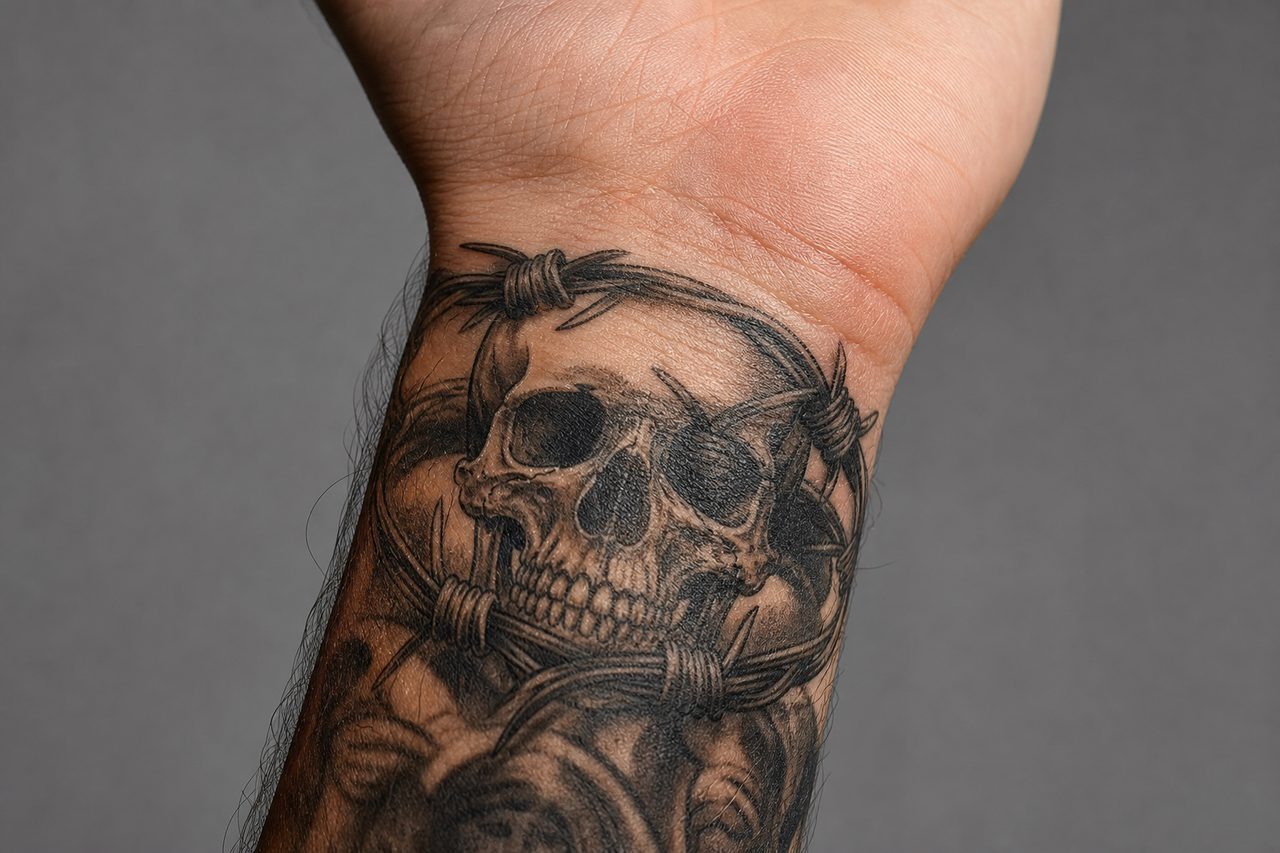
- Barbed wire: harder edge, more incarceration/military association
Who Chooses This Tattoo
Demographic Patterns
The choice skews younger and male, though not exclusively. Construction workers, mechanics, and tradespeople often favor the straightforward declaration. Athletes in contact sports, boxing, football, MMA, sometimes adopt it as psychological armor. Women who choose the word often pair it with softer visual elements or place it more discreetly, though this is trend rather than rule.
Motivation Categories
Some get it preemptively, claiming toughness they aspire to. Others get it retrospectively, marking a survived ordeal. A third group treats it as identity marker, not event commemoration, they’ve always been the person who doesn’t quit, and the tattoo simply externalizes what they believe to be true. The distinction matters for design: retrospective pieces often include dates or companion imagery; identity pieces tend toward stark simplicity.
The Bottom Line
The tuff wrist tattoo succeeds because it does one thing without apology. It doesn’t ask for interpretation, doesn’t require artistic complexity, and doesn’t pretend to be anything other than what it spells out. The wrist placement makes it a constant presence, checked during difficulty, noticed during ordinary moments, a small private anchor in visible skin. If you’re considering it, prioritize letter clarity over flashiness, accept that you’ll likely need a touch-up years down the line, and understand that the word’s power comes from your history with it, not the dictionary definition. Choose a artist who shows you healed photos of their lettering work, not just fresh tattoos. Fresh ink lies; healed skin tells the truth about whether they understand how ink settles in mobile, thin wrist tissue.
Frequently Asked Questions
Does the misspelling “tuff” look unprofessional to employers?
Most modern workplaces accept visible wrist tattoos, but conservative fields may still react negatively. The casual spelling can read as youthful or informal, which is either authentic to your presentation or a liability depending on your career. Consider inner wrist placement for easier coverage during interviews.
How much does a tuff wrist tattoo typically cost?
Simple word tattoos in black ink generally fall into most shops’ minimum pricing, which varies by region and artist reputation. Expect to pay for quality lettering; this is not a design to bargain-shop, as poor line work blurs fastest on wrist skin.
How painful is the wrist compared to other tattoo locations?
The wrist ranks moderate to high on pain scales due to thin skin, proximity to bone, and nerve density. The inner wrist tends to hurt less than the outer wrist where the bone sits closer to the surface. Sessions are short for a single word, making the discomfort brief.
Can I add to a tuff wrist tattoo later without ruining the design?
Yes, if the initial placement and sizing leave room. Forearm extension works well; adding above or below the wrist bone is harder without awkward spacing. Plan with your artist for potential future expansion, even if you don’t intend it immediately.