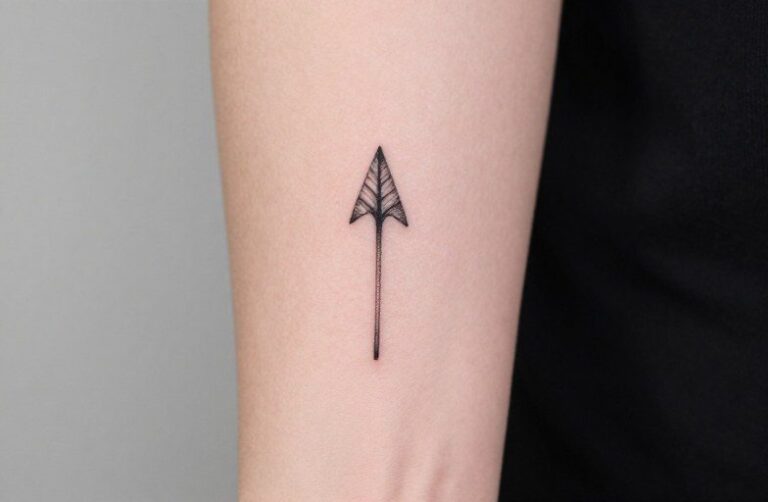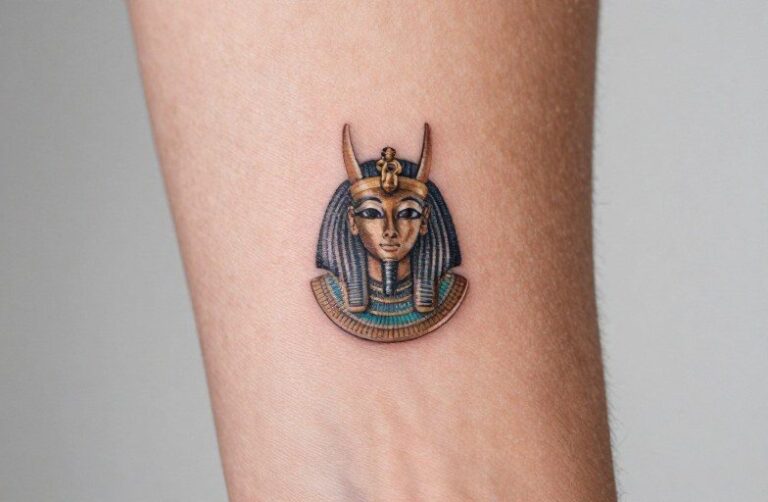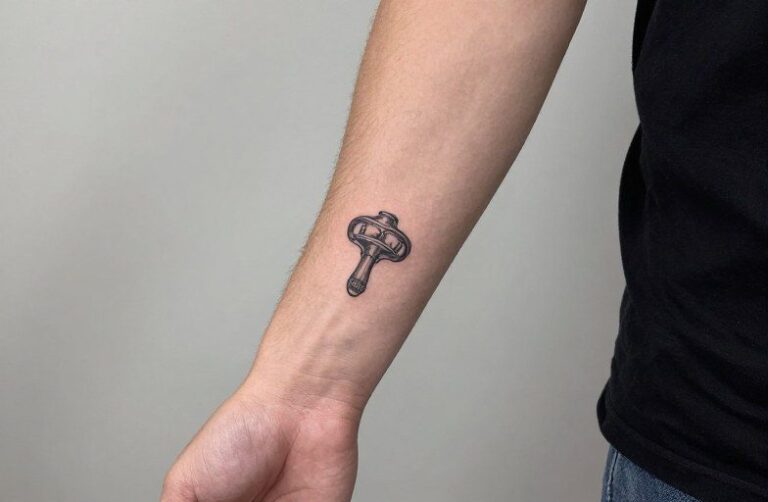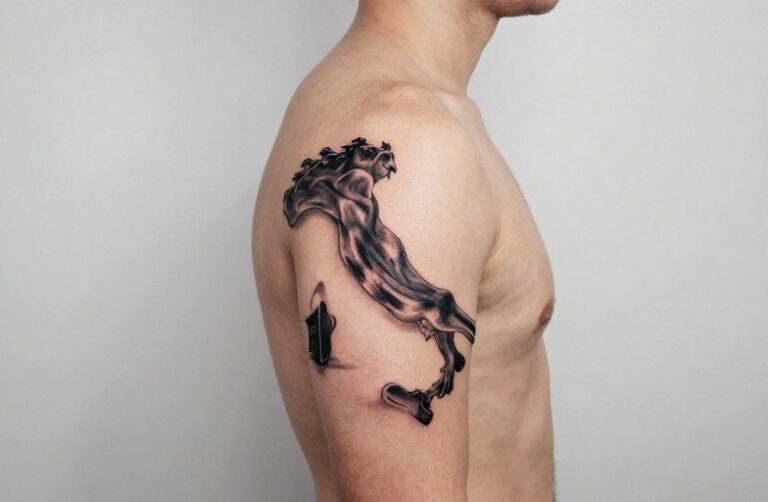
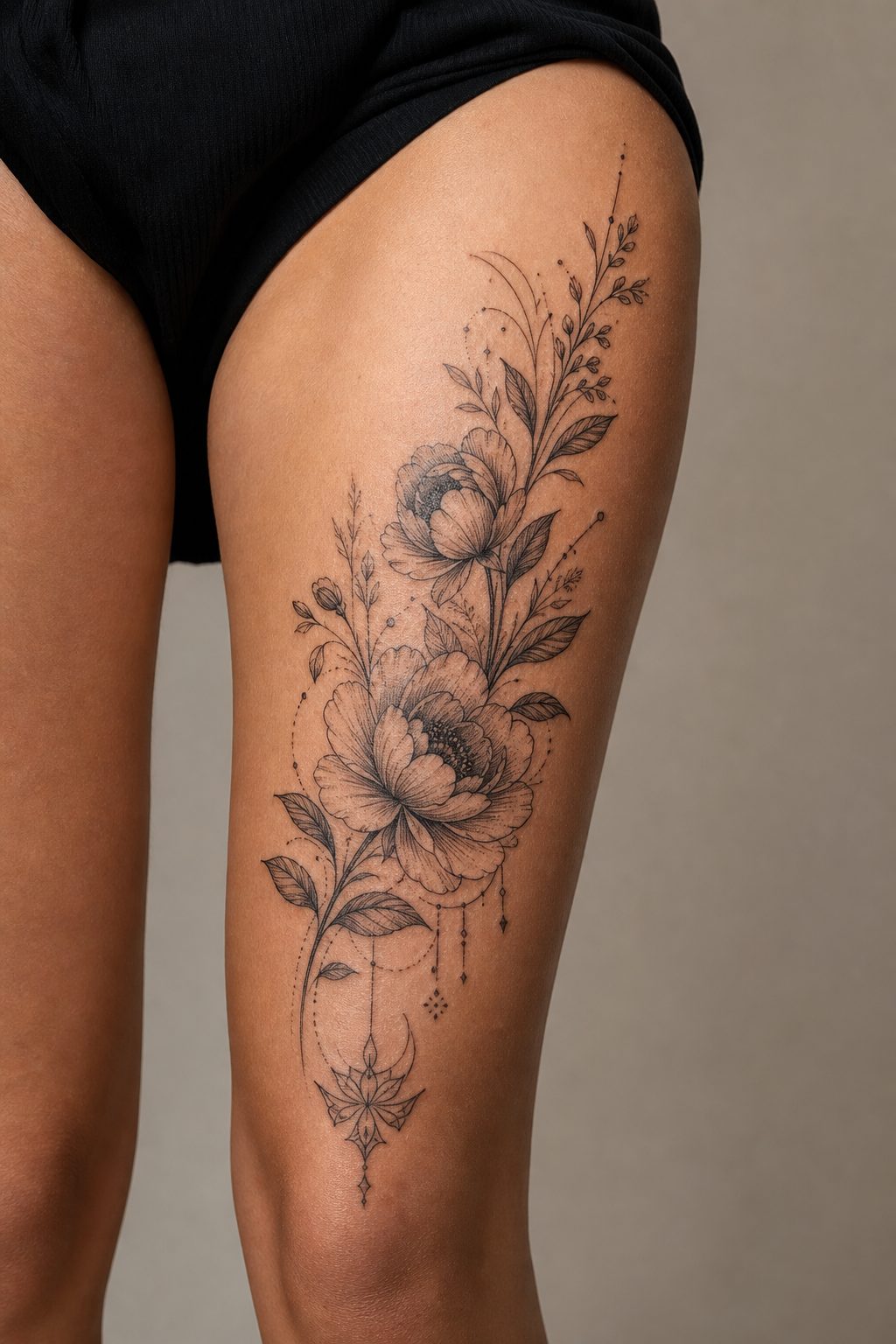
A thigh tattoo sits on the body’s largest muscle group, a placement that naturally evokes power, movement, and groundedness. The meaning shifts with exact location, outer thigh reads as outward-facing confidence, inner thigh as intimacy and hidden narrative. Unlike more visible placements, the thigh offers the wearer control over revelation, making it a site for personal symbolism rather than public performance.
Who Chooses This Tattoo
The thigh attracts people who want substantial canvas without constant visibility. Athletes often gravitate here, the imagery resonating with the muscle beneath. People who’ve undergone physical transformation, weight change, muscle building, recovery, sometimes choose the thigh to mark a body they’ve reclaimed.
Gender and the Thigh Canvas
Historically coded feminine in Western tattoo culture, the thigh has broadened considerably. Men now regularly choose front thigh placements for large-scale Japanese work, biomechanical pieces, or traditional Americana. The outer thigh in particular carries neutral ground, readable across gender presentation. Inner thigh remains more commonly chosen by women, though that pattern loosens yearly.
First Timers vs. Collectors
The thigh’s meaty tissue makes it forgiving for first tattoos, less nerve-dense than ribs, easier healing than feet. Seasoned collectors use thighs for cohesive large pieces or to balance existing arm/back work. A single thigh piece can anchor a growing collection, giving the body a visual center of gravity.
Mythology & Folklore
Thighs carry symbolic weight in several traditions. Greek mythology placed the birth of Dionysus from Zeus’s thigh, linking the site to divine generation and transformation. Some trace Samson’s strength to Nazarite vows, the thigh as seat of consecrated power. Norse tradition sometimes associated the upper leg with oaths and binding commitments.
Serpent and Thigh Imagery
The serpent coiled on the thigh appears across cultures, often linked to protection, fertility, or forbidden knowledge. In some Mediterranean folk practices, a snake on the thigh was believed to guard against specific harms. Contemporary tattooing revives these motifs through neo-traditional and blackwork lenses, stripped of literal belief but retaining symbolic charge.
Common Variations & Styles
Thigh geometry demands specific design thinking. The cylindrical surface curves in two directions, distorting flat images when viewed straight-on. Good thigh work accounts for this, wrapping elements to follow muscle flow rather than fighting it.
- Japanese bodysuit extensions: Dragon or koi flowing from hip to knee, following the thigh’s length
- Neo-traditional floral: Peonies, chrysanthemums, or roses that use the curve as compositional advantage
- Blackwork ornamental: Lace or geometric patterns that wrap the circumference
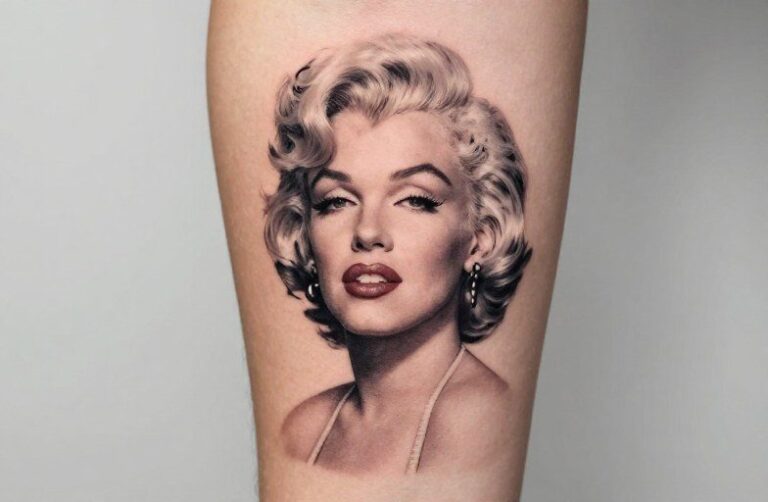
- Realistic portraiture: Faces or animals oriented to read when the wearer stands
- Script and lettering: Best placed on the relatively flat inner or front thigh
Line Weight and Shading Considerations
Thigh skin varies dramatically by zone. Outer thigh takes bold lines and saturated color well, the dermis is stable, movement is minimal. Inner thigh skin is thinner, more prone to blowout, and stretches with walking and sitting. Fine linework here requires experienced hands and realistic expectations about crispness over time. Shading on the inner thigh also softens faster than outer thigh work.
Religious & Spiritual Angles
Specific traditions mark the thigh with sacred intent. Some Hindu practitioners associate the upper leg with Muladhara, the root chakra, grounding, survival, physical identity. Tattooing here can symbolize intentional rooting or material-world engagement rather than transcendence.
Christian and Abrahamic Threads
The thigh appears in biblical text, Jacob’s wrestling injury, the “thigh of his hand” in some translations. Medieval pilgrims sometimes received marks near the thigh. Contemporary Christian imagery here tends toward crosses integrated with larger compositions, or verses following the leg’s length. The placement avoids the performative piety of visible neck or hand crosses.
Buddhist and Protective Motifs
Sak Yant and similar Southeast Asian traditions sometimes place yantra designs on the thigh for specific protective functions. These aren’t decorative choices but ritually empowered marks, requiring proper ceremony. Western adoption of these forms without cultural context remains controversial within traditional communities.
How It Ages on Skin
The thigh ages better than most placements, but not uniformly. Outer thigh ink, protected from sun, stable against stretching, minimal friction, can remain crisp for decades. Inner thigh faces constant rubbing (walking, clothing, skin-on-skin contact) that accelerates fading and blur. Color saturation drops faster here than on the outer thigh.
Weight Fluctuation Reality
The thigh stores fat and builds muscle readily. Significant change distorts tattoo geometry, sleeve work on a shrinking thigh can develop loose skin pockets that wrinkle the image. Muscle growth stretches designs outward, sometimes favorably, sometimes not. The front thigh, over the quadriceps, shows the most dramatic shape change with training. Outer thigh is more stable.
Healing Specifics
Thigh tattoos heal during constant motion. Walking flexes fresh ink, sleeping positions press against new work. Loose, breathable clothing becomes essential, tight jeans or leggings over a healing thigh tattoo cause friction and moisture buildup. The inner thigh especially stays warm and damp, creating conditions where plasma can pool and scab thickly.
History & Cultural Roots
Thigh tattooing has deep but uneven documentation. Polynesian traditions included thigh marking as part of comprehensive bodysuit work, with specific patterns indicating status and lineage. The placement carried precise social meaning within these systems. Japanese tattoo history shows thigh work as part of full coverage, the imagery chosen by the wearer within established conventions.
Western Working-Class Traditions
In 20th-century Euro-American tattooing, the thigh was often reserved for women, sailor’s girlfriend pin-ups, cosmetic markings, or boudoir-style imagery. This gendered history lingers in some cultural memory, though contemporary practice has largely dissolved it. The thigh’s emergence as a unisex canvas for serious art reflects broader tattoo democratization since the 1990s.
Contemporary Global Practice
Today’s thigh tattooing draws from multiple lineages simultaneously. A single piece might combine Japanese compositional flow, Polynesian patterning influence, and Western realism techniques. This hybridity is the modern norm, though respectful practitioners acknowledge source traditions rather than treating them as raw material.
Final Thoughts
The thigh offers rare combination: substantial space for complex work, relative pain tolerance, controlled visibility, and genuine symbolic resonance tied to the body’s engine of movement. Meaning here is placement-specific in ways that arm or back work isn’t, the same image on shoulder versus thigh carries different weight. Choose the thigh for imagery that serves you in motion, that rewards the reveal, that grounds your personal symbolism in physical strength rather than display.
Frequently Asked Questions
Does a thigh tattoo hurt more than an arm tattoo?
Generally less. The thigh has substantial muscle and fat padding, especially the outer thigh. Inner thigh approaches ribs or sternum sensitivity. Front thigh falls between. Pain varies by individual nerve density and tattoo duration.
How long does a full thigh piece take to complete?
A palm-sized design might finish in one session. Full wraparound coverage typically requires 15-30 hours across multiple sessions, depending on complexity, color saturation, and the artist’s pace. Large Japanese or neo-traditional work spans months.
Will my thigh tattoo stretch if I build muscle?
Moderate muscle gain rarely ruins well-placed work. Dramatic bodybuilding can distort front thigh designs significantly. Outer thigh is more stable. Discuss your fitness plans with your artist during design phase, they can orient imagery to accommodate likely change.
What’s the best thigh placement for a first tattoo?
Outer thigh offers the easiest introduction: less pain, stable skin, simple aftercare, and excellent aging. Avoid inner thigh for first pieces unless you specifically want that location and understand the healing challenges.