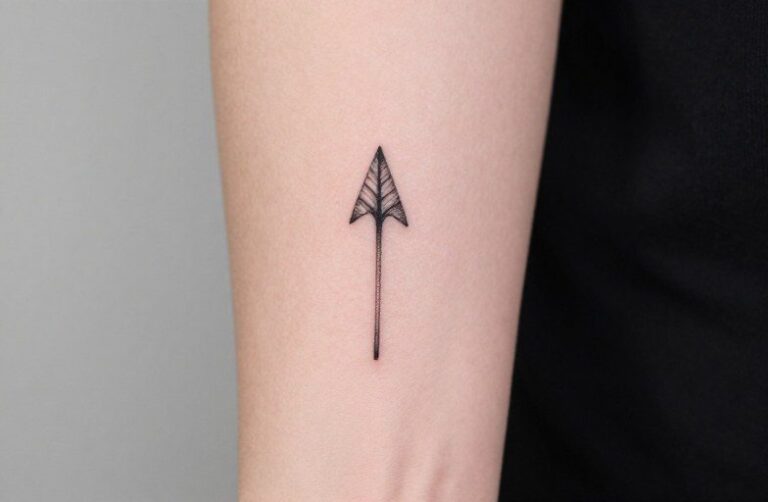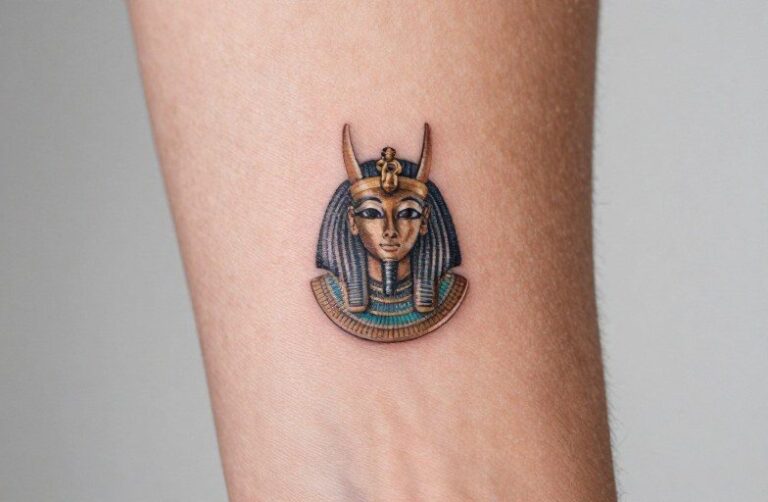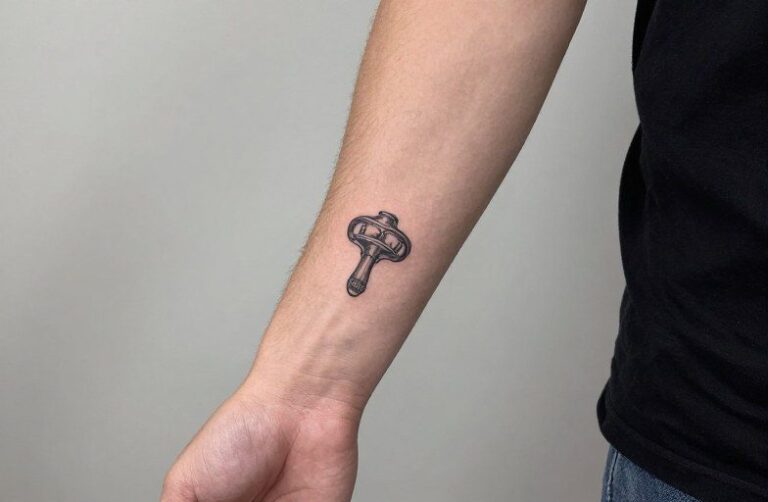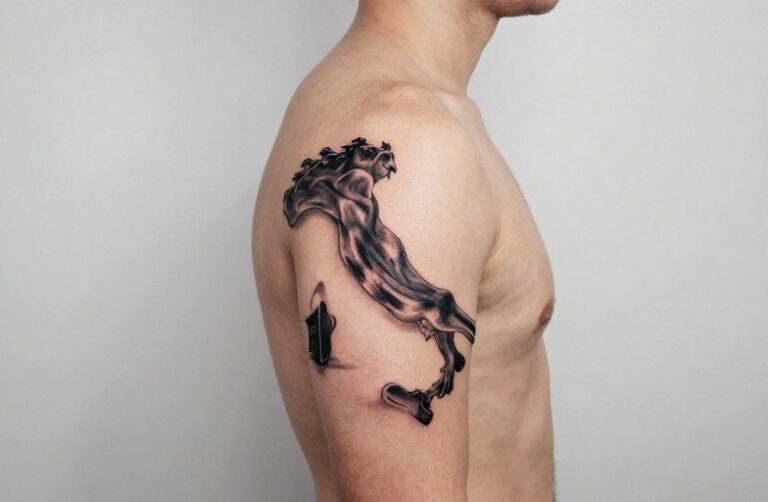
Game of Thrones tattoos walk a tricky line. The show’s imagery is instantly recognizable, but you want something that won’t feel dated or cringe-worthy in ten years. The best designs pull from the books’ deeper symbolism, the show’s striking visual language, or the constructed languages that only true fans fully appreciate. Here’s how to get a piece that works as tattoo art first, fan tribute second.
Color Choices
Stark Contrast vs. Targaryen Fire
House Stark’s grey and white palette translates exceptionally well to black-and-grey tattooing. The direwolf sigil, the weirwood trees, the frozen landscapes, all of it reads clearly without color because the source material was already desaturated. Black ink holds its value here; the design won’t muddy as it ages.
Targaryen reds and oranges demand more commitment. Bright vermillion fades fastest on skin, shifting toward pink or salmon within a few years. If you want dragon fire that stays legible, push toward deeper crimson or burgundy, or use red as sparse accent against heavy black linework. The three-headed dragon sigil works better in black with red eyes than in full flame color.
The Lannister Gold Problem
Yellow and gold inks are notoriously temperamental. They heal patchy, fade unevenly, and can turn greenish on certain skin tones. A Lannister piece that relies on “hear me roar” gold lettering often looks better as black script with a single gold accent, or reinterpreted through black-and-grey lion imagery. If you’re set on the lion rampant, consider a black lion on a textured background rather than attempting the full yellow-and-crimson heraldry.
Size & Scale
Where Detail Lives and Dies
The Iron Throne is a popular request that fails at small sizes. All those swords merge into grey mush below about four inches. If you want the throne, commit to a larger placement, outer thigh, back piece, or upper arm with room to breathe. Alternatively, isolate a single sword from the throne and treat it as a standalone object; a well-rendered blade with a dragonbone hilt reads instantly without needing the full chair.
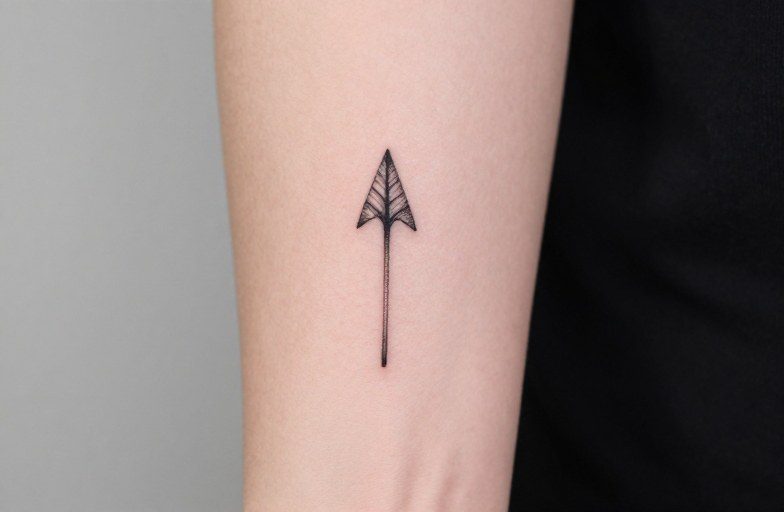
Valyrian steel daggers work beautifully at small scale. Needle, Longclaw, Oathkeeper, each has distinctive hilt geometry that identifies it even at two inches. These fit forearms, ribs, behind the ear. The key is capturing the blade’s characteristic rippled pattern, which your artist can render through fine line variation rather than actual color shift.
Full-Sleeve House Declarations
A full house sigil sleeve requires serious planning. The sigil itself, direwolf, lion, dragon, stag, needs to anchor the composition, usually at the shoulder or outer upper arm. Banner scrolls, house words, and supporting imagery fill the remaining space. Work from a single reference era; mixing book illustrations with show screenshots creates visual dissonance that undermines the whole piece.
Standout Design Ideas
Constructed Language Tattoos
High Valyrian and Dothraki tattoos separate the committed from the casual. “Valar morghulis” / “Valar dohaeris” in David J. Peterson’s actual constructed script carries weight that English translations lack. The Valyrian glyph system has enough visual complexity to stand alone as abstract patterning, readable only to those who’ve studied it. Placement on ribs, spine, or inner bicep keeps it personal rather than performative.
Weirwood and Greenseeing Imagery
The carved faces of weirwood trees offer organic, non-literal imagery that works even for viewers who never watched the show. The white bark, red “tears,” and ancient face patterns translate to striking black-and-grey with selective red. These pieces age well because the subject matter, old trees, weathered wood, natural forms, already fits tattooing’s visual vocabulary. A weirwood on a calf or side panel connects to Norse and Celtic tree traditions without being derivative.
- Three-eyed raven: works as silhouette, detailed realism, or geometric abstraction
- Dragon eggs in basket: compact, textural, immediately recognizable
- Map elements: Braavos canals, King’s Landing skyline, the Wall as horizon line
- House words in original English: “Winter is Coming” as weathered stone carving
- White Walker ice crystal patterns: geometric, scalable, visually arresting
Popular Styles
Neo-Traditional Heraldry
The house sigils were designed for banners and shields, which makes them natural fits for neo-traditional tattooing. Bold black outlines, limited but saturated color palettes, decorative background elements. A Baratheon stag surrounded by thorned roses, a Greyjoy kraken against storm waves, these compositions already exist in the visual language of medieval heraldry, which neo-traditional deliberately echoes. The style’s inherent stylization handles aging better than photorealistic attempts at the same subjects.
Blackwork and Dotwork Maps
Westeros and Essos maps translate to stunning blackwork pieces. The coastlines, mountain ranges, and city markers become abstract patterning when simplified. Dotwork handles the fine detail of older maps; stippled forests and hatched elevation lines create texture without requiring color. These work best as larger back pieces or thigh panels where the geography reads at scale. Consider highlighting a single location with a small red dot, your personal “you are here.”
Matching & Pairing Ideas
Sibling or couple tattoos from this universe work when they reference relationship dynamics from the source material, not just matching imagery. Jaime’s golden hand and Brienne’s sword Oathkeeper pair as complementary forearm pieces, his failure, her honor, both objects of consequence. Arya’s needle and Sansa’s embroidery needle: identical objects, divergent paths. Jon’s Longclaw and Sam’s Heartsbane: swords that passed between brothers.
Avoid the obvious pairing of house sigils for couples (his stag, her direwolf). It reads as brand loyalty rather than personal connection. Better: matching “Valar morghulis” / “Valar dohaeris” in complementary placements, one person’s ribs, the other’s inner arm, visible only in private moments.
House Words as Counterweights
The house mottos themselves pair well across two bodies or two limbs. “We Do Not Sow” with “Growing Strong”, the harsh and the humble. “Fire and Blood” with “Winter is Coming”, the elemental opposites that drive the narrative. These work as vertical script pieces, matching in typeface but opposed in placement.
Trending Variations
Prequel and Spin-Off References
House of the Dragon has opened new visual territory. The older Targaryen sigil with four heads instead of three, the Valyrian steel crown of Viserys, the painted table of Dragonstone. These reference the same world without being overplayed show imagery. The older aesthetic, more medieval, less polished, actually suits tattooing’s traditional strengths better than some of the show’s later CGI-heavy visuals.
Deconstructed and Abstracted
Current tattoo trends favor breaking recognizable imagery into component parts. A dragon reduced to wing silhouette and flame trail. The Iron Throne as negative space within a field of sword outlines. House colors as color-field blocks with minimal line work. These approaches age better than literal reproductions and read as sophisticated to viewers who recognize the reference, intriguing to those who don’t.
What to Remember
Game of Thrones imagery will always carry the show’s cultural baggage, the controversial final seasons, the mainstream oversaturation, the inevitable “still watching?” comments. The tattoos that hold up are those that function as good tattoos regardless of their reference. A well-rendered wolf is a well-rendered wolf. A beautiful script in an invented language is beautiful script. A map is a map.
Choose placement based on your comfort with explanation. A forearm three-eyed raven invites conversation. A ribcage Valyrian phrase keeps the reference private. Neither is better; they’re different relationships to the same material.
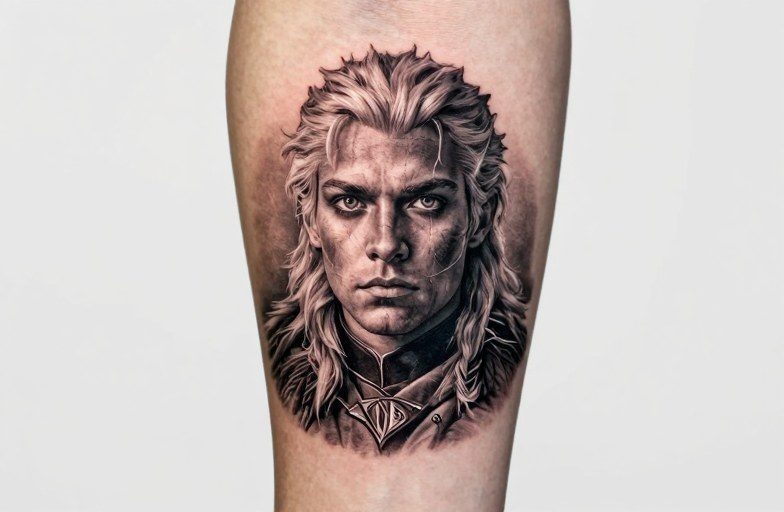
Most importantly, work with an artist who understands the difference between fan art and tattoo art. The best Game of Thrones pieces don’t reproduce screenshots, they translate the world’s visual language into something permanent, personal, and technically sound. Bring reference, but trust the translation.
Frequently Asked Questions
Does Valyrian script tattoo well at small sizes?
The constructed glyphs hold up better than English at small sizes because the characters are designed for visual density rather than legibility. Still, go no smaller than 2-3 inches to prevent blurring over time.
Will a color Targaryen dragon fade badly?
Red and orange inks fade fastest in sunlight. If you want a colored dragon, plan for touch-ups every 3-5 years, or choose black-and-grey with minimal red accent for longevity.
Are house sigil tattoos too common to be unique?
The sigils themselves are ubiquitous, but composition, style, and personalization create distinction. A Stark direwolf in Japanese woodblock style versus photorealism versus geometric abstraction are three completely different tattoos.
What’s the best placement for a map of Westeros?
Thigh panels and full back pieces provide the flat surface and scale needed for geographic detail to read. Arms work only if you simplify heavily to coastline silhouette rather than attempting full map fidelity.