Soccer tattoos carry the weight of decades spent on pitches, in stands, watching grainy replays at odd hours. The best ones don’t just shout “I like football”, they encode specific loyalty, a particular moment, or the geometry of the game itself. Here’s how to get it right without defaulting to a generic ball with wings.
Trending Variations
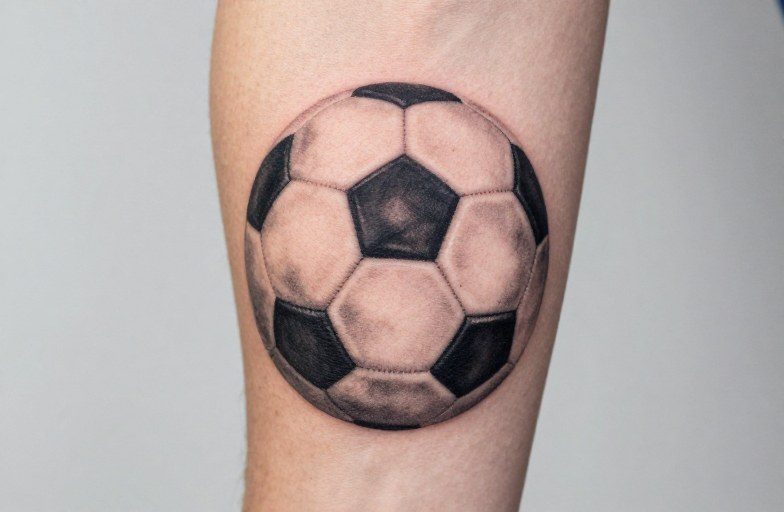
The current wave leans toward deconstruction. Rather than whole scenes, artists are isolating fragments: the hexagonal pattern of a classic panel ball, the corner flag silhouette, the negative space where a goalkeeper’s gloves would grip. These partial images read instantly to anyone who knows the sport while staying visually subtle to outsiders.
Match Data and Typography
Scorelines, match dates in old stadium clock fonts, and minute-markers (87′, 90+3) tattooed in typewriter or letterpress styles. The restraint is the point. A single line, “Munich, 1999” or “2-1, 122′”, carries more weight than a crowded action scene. Placement matters here: inner forearm, ribcage running vertically, or tucked behind the ear for the truly minimal.
Boot and Equipment Studies
Detailed studies of worn leather boots, laces mid-tie, studs caked with mud. These work exceptionally well in black and grey, where texture becomes the entire subject. The creases in old kangaroo leather, the fraying where the toe meets the ball, skilled shading makes these feel archaeological rather than nostalgic.
Popular Styles
Black and grey realism dominates for equipment and portrait work, but the sport’s graphic history opens other doors. Soviet-era football posters, South American fan banners, English matchday programs, all offer existing visual languages to borrow from.
- Traditional/Americana: Bold lines, limited palettes, banners with club names. Holds up for decades; the style was built for sailor-era fading.
- Japanese influence: Waves reworked as stadium crowds, koi swimming through ball panels. Requires an artist with actual irezumi training, not just someone who owns a dragon stencil.
- Linework/etching: Crosshatched stadium architecture, pitch diagrams from above. Demands perfect execution, wobbly lines here look like mistakes, not style.
- Trash polka: Splattered red and black over greyscale action shots. High contrast, high maintenance; the red fades fastest and needs touch-ups.
Stadium Architecture
Specific stands, specific angles. The Kop from the pitch, La Bombonera’s steep verticality, the Maracanã’s bowl curve. These read as abstract geometry to most viewers, pure recognition to those who’ve stood there. Best rendered large: thigh, back piece, or outer calf where the vertical space matches the stands.
Matching & Pairing Ideas
Soccer imagery pairs naturally with certain secondary elements. National flags work when integrated into the design rather than plastered alongside, stitching from a flag into a ball panel, or the color palette informing the entire piece without literal flag depiction.
Family connections: initials in the style of vintage squad numbers, children’s birth years as match dates. The key is using football’s existing visual systems rather than grafting generic heart-and-banner sentiment onto them.
Club and Country Combinations
The tension between club loyalty and national team is its own story. Some resolve this with separate pieces on different limbs, others integrate both into a single timeline or map. A common approach: the club crest in its actual colors on one arm, the national team in black and grey on the other, creating visual dialogue through contrast rather than combination.
Color Choices
Club colors age differently depending on the pigments. Reds, especially bright scarlets, tend to pinken or grey out within five to seven years. Deep blues and greens hold longer. Gold and yellow require the most maintenance; what reads as metallic brilliance fresh often settles into mustard or beige.
Black and grey offers the safest longevity for detailed work. When color is essential, consider strategic placement: the most fade-prone areas (hands, feet, inner arms) stay monochrome, while upper arms, thighs, and back carry the color load.
Green Pitches
That particular grass green is notoriously difficult. Too yellow and it looks sickly; too blue and it reads as artificial turf. Experienced artists mix custom batches, often leaning slightly darker than the reference image knowing sun exposure will lighten it. Expect touch-ups every few years if the green is central to the design.
How to Personalize It
Avoid the obvious. The club crest straight from Google Images, the player portrait that every shop has done fifty times, these flatten your specific relationship into generic fandom. Better approaches:
- Your own position’s equipment: goalkeeper gloves with your actual wear patterns, the specific boot model you saved for
- Local pitch details: the bent corner post, the particular slope where water pooled, the tree line behind the goal
- Commentary phrases in the original language: “Il calcio è il cuore” not because it’s profound but because that’s what your grandfather shouted
- Ticket stubs, match programs, handwritten scores from youth leagues
The personalization lives in specificity of reference, not intensity of feeling.
Negative Space Techniques
Some of the most effective soccer tattoos use the skin itself as the ball’s white panel, the pitch’s chalk line, the goalkeeper’s unpainted jersey. This requires planning for how your natural skin tone will age alongside the ink. What reads as brilliant contrast on pale skin may disappear on darker tones or vice versa, discuss this explicitly with your artist during design.
Best Placements
Calves and thighs offer the flat planes that ball geometry and pitch diagrams need. The outer calf in particular accommodates vertical stadium compositions and handles the single-needle detail that linework styles demand.
Forearms work well for typographic pieces and smaller equipment studies. The inner forearm’s sensitivity to sun means colors fade faster here, choose accordingly. Ribs and side torso suit vertical compositions: corner flags, standing figures, scoreboard-style stacking. These areas hurt more and heal with more movement friction, so plan for a longer, more careful aftercare period.
Hands and feet are traditional for footballers themselves, knuckle letters, webbing studs, but these placements blur fastest and face professional visibility questions. Feet also heal poorly due to constant flexing and shoe contact.
Size and Detail Ratios
A regulation ball’s panel geometry collapses into unreadable mush below three inches diameter. Stadium architecture needs at least six inches vertical to distinguish stands from sky. Typography has its own minimums: most legible fonts need half-inch letter height for longevity. Bring reference images sized to your actual body, not viewed on screen.
The Bottom Line
Soccer tattoos succeed when they treat the sport as a visual culture with its own graphic history, not just a subject to illustrate. The hexagonal ball pattern, the specific green of a remembered pitch, the typography of a 1970s match program, these carry more weight than literal depictions of action. Work with an artist who understands that football’s aesthetic language runs through Soviet posters, Brazilian fan banners, English punk flyers, and contemporary kit design. The result should feel like it emerged from that tradition rather than being stamped on top of it. And like any tattoo, it’ll age with you, the ink settling, the lines softening, the colors shifting, so design for that future version too, not just the excitement of the day you walk out of the shop.
Frequently Asked Questions
How do soccer tattoos hold up over time with all those geometric lines?
The hexagonal ball panels and straight stadium lines are actually forgiving, they blur predictably rather than turning to mush. The bigger risk is small text fading to illegibility. Go slightly larger than you think on lettering, and expect the sharpest edges to soften after five years.
Can I get a tattoo of my favorite player’s face?
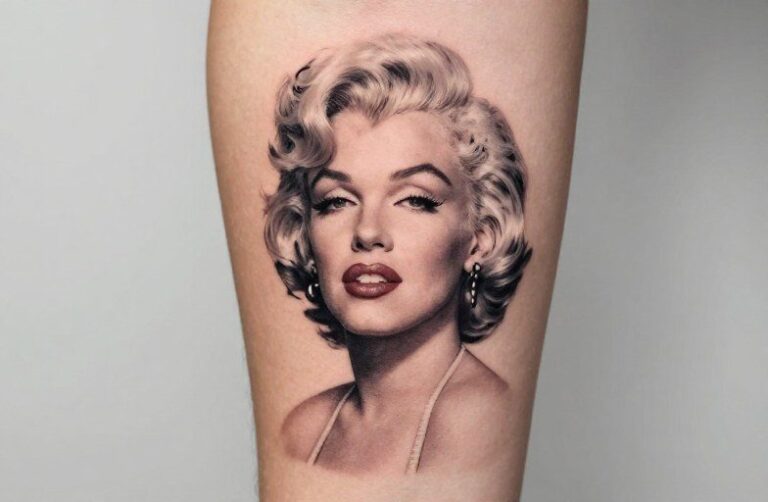
Portrait tattoos are notoriously difficult and player likenesses carry extra risk, transfers, retirements, controversies. Consider instead their iconic celebration silhouette, their squad number in the club’s vintage font, or equipment associated with them. These age better and carry less baggage if public opinion shifts.
What’s the best way to combine club colors without them clashing?
Use one club’s colors as the full palette and the other’s as accent, or render one in black and grey while the other carries color. Another approach: integrate both into a single timeline or map piece where geographic or chronological separation justifies the visual shift.
Do hand or foot tattoos work for actual soccer players?
They work but demand serious trade-offs. Feet heal poorly due to boot friction and constant flexing; hands face visibility limits and faster fading. Many players choose upper arm or rib placements that stay hidden under kits but remain personally significant.