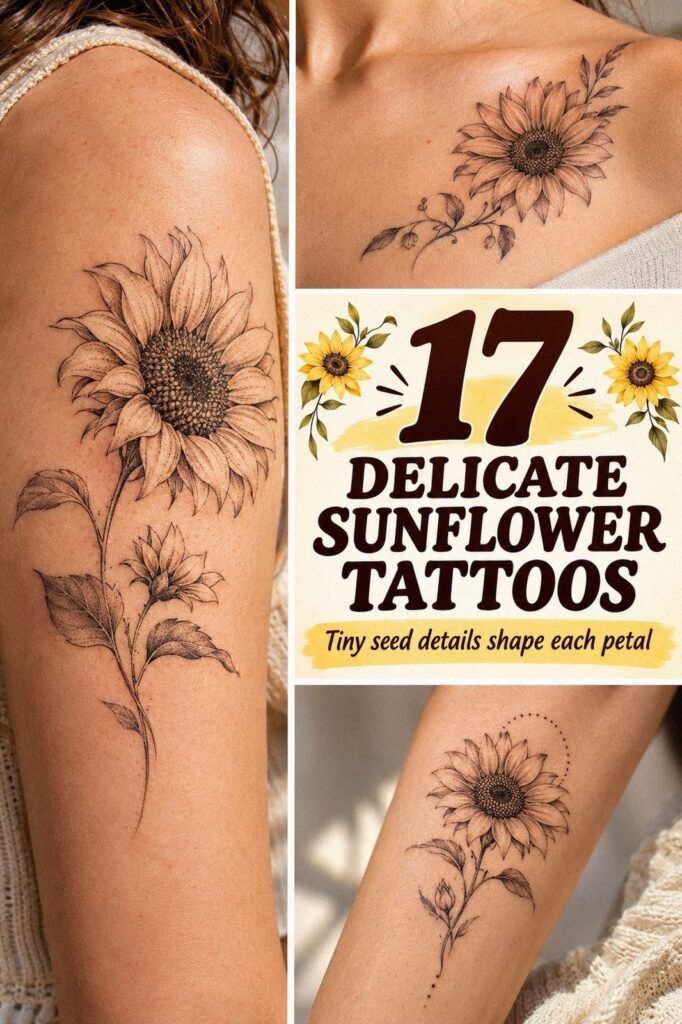
Delicate sunflower tattoos can stay crisp when the design, placement, and healing plan work together. I learned that after choosing a fine black line piece with a single stem and enough open skin around every petal. I wanted something personal, but I didn’t want a blurry flower six months later.
Here’s what it looked like before:
Before the appointment, I had a patch of blank skin I’d been saving for the right idea. It was untouched, pale, and oddly intimidating. You can scroll through hundreds of sunflower tattoo references, but your own skin still makes the decision feel more serious.
I kept changing the scale on my phone. A bold flower looked striking, while the smaller version felt more delicate and personal. I didn’t want a crowded design, and I wasn’t ready for heavy shading.
The blank area gave me time to think, which is something you’ll want before booking anything. The minimalist sunflower tattoos gallery helped me compare how much detail different scales could hold.
A clear silhouette mattered more to me than a dramatic first impression. I wanted the flower to feel expressive, timeless, and easy to recognize without loading it with extra marks.
J’ai choisi une fine fleur de tournesol
I chose a fine sunflower because its shape could look expressive without becoming ornate. The first sketch had a round center, narrow petals, and a stem that curved slightly toward my wrist. It felt symbolic without explaining my whole life to everyone who saw it.
The artist showed me how a botanical sunflower stencil would sit on my inner forearm. I liked that the flower could read clearly from a few feet away, yet still reward a closer look. If you’re comparing scale, the small sunflower tattoos gallery helped me see how much negative space a delicate design needs.
I almost picked a larger bloom. But a larger design would’ve needed more shading to keep the center from looking empty, and I wanted crisp lines more than visual drama. The smaller flower felt understated, graceful, and easier for you to wear every day.
My artist also marked the stem with a thin transfer line before starting. That tiny pause mattered. You’ll want to check the angle while your arm is relaxed, because the same flower can look sleek when standing and strangely crooked when your wrist turns.
I’m glad I waited!
J’ai comparé plusieurs petits motifs délicats
I compared several small motifs before choosing the final sunflower. One had a closed bud, one showed two leaves, and another used a side-facing bloom. Each looked delicate on paper, but they didn’t all suit my body or the way I wanted you to read the design.
The most convincing option used single-needle black ink around the petals and a slightly denser center. That contrast gave the flower a crisp focal point without making the rest of it look heavy. You can study minimalist sunflower tattoos when you’re deciding whether your design needs leaves, shading, or only a clean outline.
I rejected the version with three flowers. It was charming in the sketch, but it would’ve made my forearm feel busy, especially once the lines softened with age.
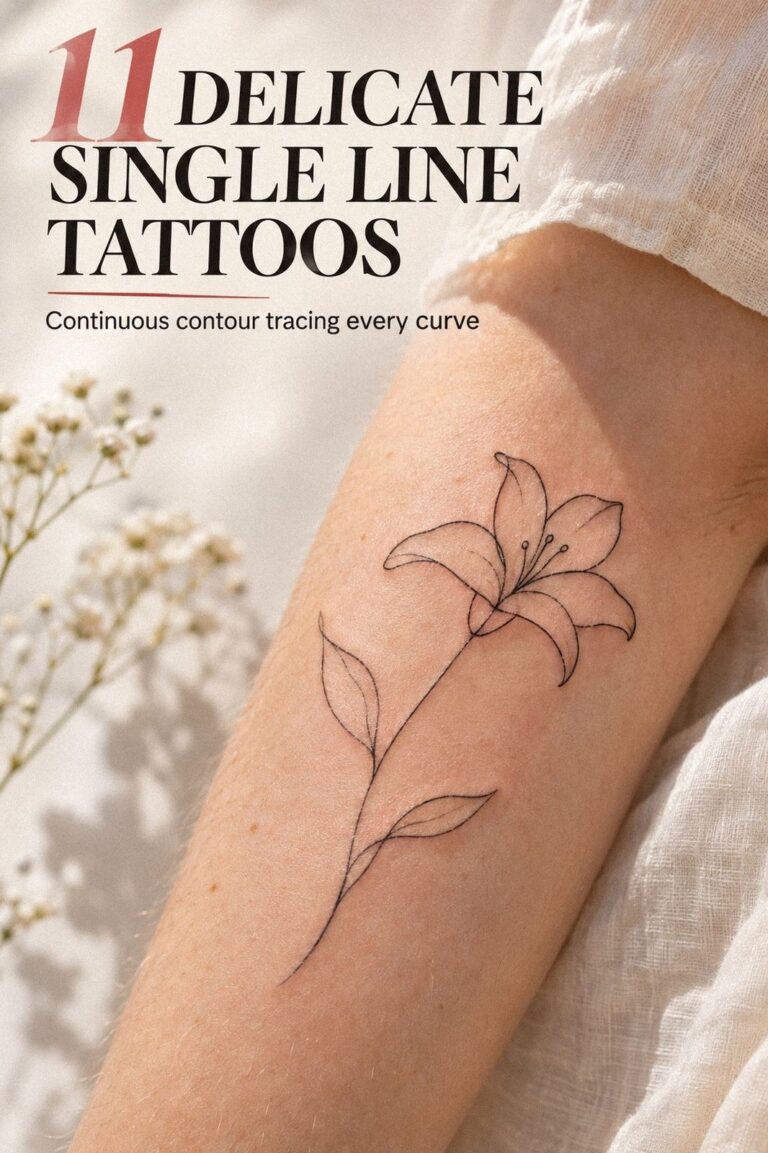
One flower gave me a more timeless and meaningful result. The delicate single line tattoos examples also showed me how restraint can make one subject feel stronger.
And I checked the motif from different distances. Up close, I wanted intricate details. From several steps away, I wanted a clear silhouette.
If you’re choosing between two delicate sunflower tattoos, ask which one still reads as a flower when you step back.
J’ai ajouté des pétales légèrement asymétriques
Perfect symmetry looked polished, but it didn’t feel alive. I asked for a few petals to lean at different angles, with one slightly overlapping the lower edge of the bloom. That made the sunflower feel organic rather than stamped onto my skin.
The artist drew each asymmetrical petal outline by hand over the stencil. I watched the flower become more expressive with every small change. You don’t need every petal to match, especially if you want a personal botanical design instead of a symbol copied from a flash sheet.
I did worry that asymmetry might make the flower look messy. It didn’t.
The uneven edges gave it a raw, graceful quality, while the center kept the whole image grounded. I’d skip exaggerated distortion, though, because too much irregularity can make a small sunflower lose its identity.
The final stencil used fewer lines than I expected. That restraint was important.
You’ll want enough detail to show the petal rhythm, but not so much that the ink has nowhere to settle as your skin changes. I left the studio with a design that felt gentle and bold at the same time.
J’ai sélectionné un linework précis et minimal
I wanted precise linework, but I didn’t want the tattoo to look fragile. Those goals can coexist when the artist understands spacing, needle choice, and how black ink behaves on your skin. The design needed a crisp outline with tiny variations in pressure.
My artist used a fine-line tattoo needle for the petals and a slightly stronger pass for the center. You can ask about the artist’s healed portfolio, not only fresh work. Fresh ink often looks sharp and vibrant, while healed work tells you whether the linework stayed readable.
I looked closely at healed examples during the consultation. One had softened beautifully, while another had lost several interior lines.
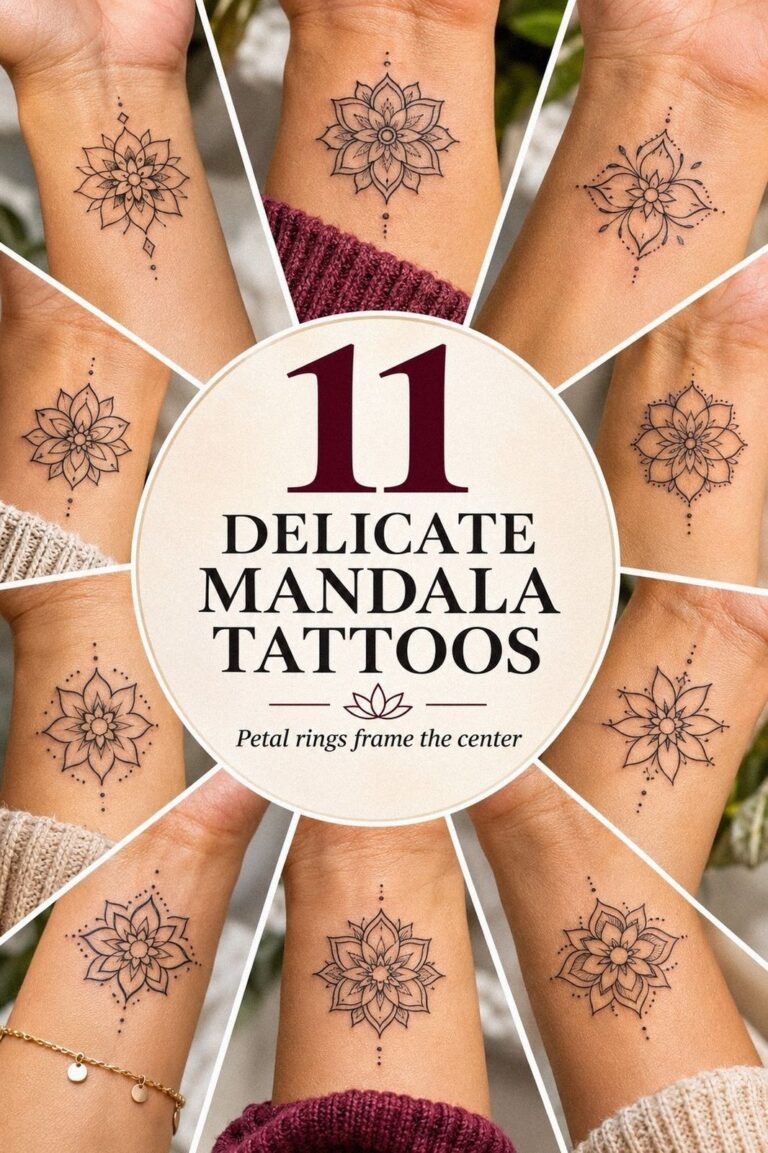
That comparison made me choose a simpler flower. If you’re collecting references, the delicate single line tattoos page is useful for seeing how minimal marks can carry an entire image.
But I didn’t want every line to be identical. A handmade line has a little movement, and that movement makes the flower feel personal.
The result was sleek, understated, and crisp without looking sterile. You’ll notice that difference most when the design is only a few inches tall.
J’ai placé le tatouage sur mon avant-bras
I placed the tattoo on my inner forearm because I wanted to see it without using a mirror. That mattered more than I expected. The flower sits where I can glance down while reading, driving, or waiting for coffee, and the placement still feels private when my arm turns inward.
The artist tested the position with a transfer-paper sunflower stencil before the session began. We shifted it slightly so the stem followed my arm instead of pointing straight toward my elbow. You can test a similar placement with a temporary marker, but keep your arm relaxed while you look at it from several angles.
I considered my wrist and ribs, too. The wrist would’ve been more visible, but the constant movement and exposure didn’t feel right for my first small piece.
The ribs looked fierce and intimate, yet that zone is usually less tolerable than the forearm. The delicate small wrist tattoos examples helped me compare visibility before I committed.
Your placement affects how you experience the tattoo every day. I’d choose the forearm over the hand for a first delicate sunflower because it offers a clearer surface and fewer daily knocks.
It’s still visible, but you can cover it when you need to. That daily friction question is worth asking before you book.
J’ai testé une composition avec tige courbée
A curved stem gave the flower a more flowing direction. Instead of ending in a stiff vertical line, it followed the natural slope of my arm and made the bloom seem like it had just turned toward light. That small adjustment made the whole piece feel more graceful.
The artist used a curved botanical stem with one narrow leaf, rather than adding several leaves for balance. You’ll want to watch how the stem travels across your skin, especially if you’re placing it near a joint. A curve can look elegant when relaxed and compressed when your arm bends.
I tested three versions on transfer-paper options. The straight stem was crisp but severe.
The dramatic curve was expressive but took attention away from the flower. The middle option won because it had movement without becoming whimsical.
And I left a clean gap between the stem and the petal cluster. That open skin keeps the design readable as it heals. If you’re considering a longer silhouette, browse delicate small spine tattoos for examples of how a single line can guide the eye without filling every inch.
J’ai intégré une abeille minuscule au motif
I added a tiny bee only after the sunflower itself felt finished. I didn’t want the extra shape to compete with the bloom, so the bee sits near the upper side of the stem, with enough empty space around it to remain legible.
The artist drew a miniature bee outline with two wings, a dark body, and no interior texture. That was the right call. A detailed bee would’ve become a dark speck as the tattoo aged, while this version stays symbolic and sharp.
You might wonder whether a second subject makes a small tattoo too busy. It can, especially when the first design already includes leaves, text, or heavy shading.
I kept the bee small, simple, and slightly offset. The result felt meaningful rather than ornamental. The delicate tiny hand tattoos gallery gave me ideas for keeping miniature symbols clean.
I also asked for the bee to face the flower. That visual relationship creates a quiet connection between the two shapes. If you’re planning a personal motif, delicate tiny hand tattoos can give you ideas for keeping miniature symbols clean, though I’d avoid placing this much detail directly on the fingers.
J’ai choisi une signification personnelle et symbolique
The sunflower means persistence to me, but I didn’t want a generic explanation printed beneath the design. I chose it because I kept returning to the image during a difficult year, when moving forward felt less dramatic than simply continuing. That personal meaning mattered more than making the symbol impressive.
The artist used a black botanical flower design so the meaning would come from the shape, not bright color. That choice feels timeless on my skin.
You can choose a sunflower for optimism, family, memory, or plain affection for the flower itself. Your reason doesn’t need to sound impressive to anyone else.
I wrote one sentence about the tattoo before booking. That exercise helped me separate what I truly wanted from what looked popular online. I rejected a quote, a date, and two extra symbols because they made the piece feel less personal.
But symbolism doesn’t require a complicated design. A single stem can carry a powerful memory when you know why it’s there. Mine feels intimate and quietly empowering, and I’m glad the meaning isn’t obvious from several steps away.
J’ai préparé ma peau avant la séance
I prepared my skin by keeping it moisturized in the days before the appointment, without applying lotion immediately before I arrived. I also ate beforehand and brought water. Those appointment basics sound simple, but you’ll feel more steady when you’re not rushing in hungry or dehydrated.
The artist inspected my clean forearm skin before applying the stencil. I didn’t shave at home because I didn’t want to irritate the surface. Your artist can handle that step with fresh supplies, and they’ll know whether the skin is calm enough to tattoo.
I wore a loose sleeve that wouldn’t rub against the new piece on the way home. The session took less than an hour for my small design, though timing varies with placement, breaks, and the artist’s pace. If you’re comparing studios, hygiene should matter more than a polished social feed.
And I asked every aftercare question before the needle started. I wanted clear instructions about washing, moisturizing, sunlight, and exercise. The appointment felt less intimidating once I knew what I’d need to do afterward.
That preparation made the experience feel controlled, gentle, and surprisingly calm.
J’ai suivi les étapes délicates de cicatrisation
The first evening, my tattoo looked darker and sharper than it would later. I followed the artist’s instructions, washed it gently, and avoided rubbing the surface. You’ll want clean hands before touching a fresh tattoo, even if the area seems fine.
The artist gave me a thin protective tattoo film and explained when to remove it. After that, I used a small amount of plain moisturizer rather than covering the flower in a thick layer. Too much product can leave the skin damp and uncomfortable.
Surface healing usually takes about 2 to 3 weeks, while complete healing can take about 2 to 3 months. I avoided direct sun and swimming during the early stage. Your artist’s instructions should lead, because products and coverings vary between studios.
The design looked slightly dull during the peeling stage, which worried me for a day. That change was normal. I didn’t pick at the flakes, and I didn’t judge the final linework until the skin settled.
The contrast between the first evening and the settled result made that process easy to understand.
J’ai admiré mon tournesol unique après guérison
After healing, the sunflower looked softer but still crisp. The center stayed dark, the petals remained open, and the curved stem still followed my arm. I was relieved because the design had kept its identity without needing dense black shading.
The healed fine-line sunflower tattoo has a quiet contrast against my skin. Some lines softened, as expected, but none spread into a visible blowout. You’ll want to remember that delicate lines can widen over time, especially with repeated UV exposure, so sunscreen matters once the skin has fully healed.
I compared the result with the original stencil. The flower wasn’t identical, and that’s fine. Skin has texture, movement, and its own undertone.
The final piece looked more personal than the temporary transfer ever could.
I’d still choose black ink over a pale color wash for this design. Solid black generally holds its shape better, while very fine colored lines can fade more quickly. If you’re planning another small botanical piece, delicate simple hand tattoos and delicate side hand tattoos show why placement should be part of the design from the beginning.
What I Checked in the Healed Portfolio
Before I booked, I studied healed portfolio work instead of judging an artist by fresh tattoos alone. I looked for even spacing, readable petals, and lines that stayed intentional after the skin settled. That gave me more useful information than a dramatic social-media post.
I also compared minimal sunflower tattoos with fuller botanical pieces. The value wasn’t in choosing the most detailed option. It was in finding an artist whose healed work matched the exact level of restraint I wanted.
A portfolio can look stylish and still fail your priorities. Ask how the artist handles small centers, open skin, and fine stems. If the healed examples remain sharp and expressive, the appointment is more likely to feel worth it.
Those artist priorities should matter more than follower counts.
Inner Forearm or Wrist?
I considered the wrist because it would’ve made the sunflower more visible. The tradeoff was daily movement, friction, and more exposure to sunlight. The forearm gave me a better balance between visibility and protection, which mattered more than having the most noticeable placement.
The delicate small wrist tattoos examples helped me compare the two areas. I also looked at delicate simple hand tattoos before deciding that I didn’t want the flower directly on a high-contact area.
If you’re weighing the price of a touch-up against a more forgiving placement, I’d think about your routine first. A slightly less visible position can offer better long-term value when it protects the design from constant rubbing.
Van Gogh’s Sunflower?
I briefly considered borrowing the mood of Van Gogh’s sunflower paintings. The reference felt iconic, vibrant, and instantly recognizable, but copying that visual language would’ve made my tattoo less personal.
Instead, I kept the idea of a bright, persistent flower and translated it into a minimal black outline. That gave me a meaningful connection without turning the design into a direct reproduction. I wanted the symbolism to come from my experience, not only from an established name.
If you love a famous artwork, bring it as a mood reference rather than an exact template. A thoughtful artist can preserve the emotional quality while creating a more personal and wearable result. Good call!
I wanted the finished tattoo to feel expressive without looking like the first sunflower on a flash sheet. The curved stem, uneven petals, and tiny bee gave it an individual identity.
That distinction matters when you’re comparing the cost of custom work with a quick appointment. Custom design can be worth the extra budget when the artist is solving placement, spacing, and aging concerns for your skin. The small sunflower tattoos gallery helped me see how different one thoughtful variation can feel.
I’d still keep the core shape simple. Too many symbols can weaken the strongest idea. One flower, one stem, and one meaningful detail gave me a sharper result than a crowded collection of references.
How much it cost
For a small delicate sunflower tattoo in the United States, a typical boutique minimum may sit around $50 to $100, while hourly rates often fall around $100 to $250. Your artist, city, demand, size, and placement can move the final cost, so I treated those figures as planning references rather than a promise.
My design was small, but I didn’t choose an artist based on the lowest number. I set aside about $300 as my planning budget so I could cover a boutique minimum or an hourly session without rushing the decision. You’ll get a more useful estimate by sending the artist the placement, approximate size, and reference style.
I also asked whether the consultation and stencil work were included. Some artists quote by piece, and others use an hourly rate. That difference can change the final number even when two designs look similar.
The money was worth it to me because the artist showed healed linework and took time with placement. I’d rather save longer for a precise, hygienic session than pay less for a rushed design.
That choice felt empowering, not extravagant. I’d make that trade again!
The Single-Stem Rule I’d Use Again
I used to think a delicate tattoo needed more detail to feel finished. After watching my sunflower heal, I changed my mind. The strongest part is the open composition, the small shift in the petals, and the restrained center.
Everything has a job, and nothing is there just to fill space.
That’s why I’d use the single-stem rule for anyone planning a small botanical tattoo. Choose one clear subject, one direction, and one detail that carries your meaning. You can make the design bold through shape, not by adding every leaf, insect, date, and word you like.
I also learned that crispness begins before the appointment. Your artist’s healed portfolio, your placement, the scale, and your aftercare all affect the result.
A striking sketch can still become muddy if it’s too crowded for the area. A minimal sketch can feel iconic when the proportions are right.
And I don’t think delicate means weak. My tattoo is dainty in size, but it still has a sharp silhouette and a meaningful presence.
If you’re deciding between a complicated design and a cleaner one, I’d choose the cleaner one when the flower itself is already expressive. It’ll give your skin more room to age with the image.
A Few Things Worth Answering
How much does a delicate sunflower tattoo usually cost?
A delicate sunflower tattoo typically costs about $100 to $300 in the United States, depending on size, placement, artist, and region. Some studios start around a $50 to $100 minimum, while hourly rates may run $100 to $250. A clear quote requires your reference, placement, and approximate size.
Are delicate sunflower tattoos a good idea for a first tattoo?
Yes, they can be a strong first tattoo when you choose a tolerable placement and a clean design. The forearm, upper arm, shoulder, and thigh are often easier zones than ribs, feet, hands, or sternum. A personal subject also makes the decision feel less temporary.
How do I choose a tattoo artist for delicate sunflower tattoos?
Review healed portfolio images and look for even lines, clean spacing, and strong hygiene practices. Make sure the artist regularly creates botanical or fine-line work. Healed examples matter because fresh ink can look sharper than the long-term result you’ll wear.
How much do delicate sunflower tattoos hurt?
Pain varies by person and placement. Ribs, feet, hands, and sternum are often more sensitive, while the forearm, thigh, and shoulder can feel more tolerable. A shorter session may also feel easier than a long appointment, especially for a first tattoo.
How long does a delicate sunflower tattoo take to heal?
Surface healing usually takes about 2 to 3 weeks, while complete healing can take about 2 to 3 months. Wash gently, moisturize as directed, and avoid direct sun and swimming during early healing. Patient aftercare gives the lines the best chance to settle cleanly.
What’s the best placement for delicate sunflower tattoos?
The forearm, upper arm, shoulder, and thigh are practical choices because they offer readable skin and are often more tolerable than bony areas. I chose my inner forearm because I can see the flower easily. Your lifestyle should guide visibility and daily friction.
Where I’d Start First
If I had to pick one, I’d start with the inner forearm. You can watch the design heal, the surface gives fine lines room to read, and the area is easier to protect from rubbing than a hand or foot. Pin this idea for later, then bring your artist one clear flower reference.