Delicate fine line tattoos are easiest to hide when you choose placement before the design, not after. I learned that a crisp, personal symbol can disappear beneath the right sleeve while still feeling expressive when you see it. This guide walks through the decision in order. No guesswork.
Before You Start: The Two-Scale Rule
Think about your tattoo at two scales: how it looks from a few inches away and how it reads from a distance. A 1 to 2 inch symbol may look intricate on your phone, but tiny interior details can soften as your skin changes. You’ll want one strong outer shape, a clear center, and enough breathing space around every line.
Your second scale is visibility. Your forearm, wrist, collarbone, ribs, and finger all hide differently.
A sleeve can cover the forearm quickly, while a wrist design may need a watch or bracelet. If you’re still learning the language of fine line, read this what is fine line tattoo guide before choosing a reference.
Your artist may prefer a different size, especially if the design has script or several marks. Don’t squeeze a meaningful symbol until it loses its shape. A slightly larger, understated design often hides more gracefully than an ultra-tiny one that blurs into a dark dot.
The cost is only one part of the decision. Ask whether the design will still offer good value after healing, and whether the placement fits your clothing, work, and daily habits.
- Start With A Small Botanical Fine Line
- Pick A Symbolic Constellation For Your Wrist
- Place Delicate Script Along Your Collarbone
- Choose An Intricate Nature Inspired Finger Tattoo
- Keep Fine Line Shapes Crisp And Minimal
- Match A Tiny Animal To Your Meaning
- Plan A Graceful Rib Tattoo With Movement
- Add Subtle Details To Your Floral Linework
- Select A Bold Symbol For Fine Ink
- Consider Skin Tone Before Choosing Ink
- Protect Your Delicate Tattoo Through Healing
1Start With A Small Botanical Fine Line
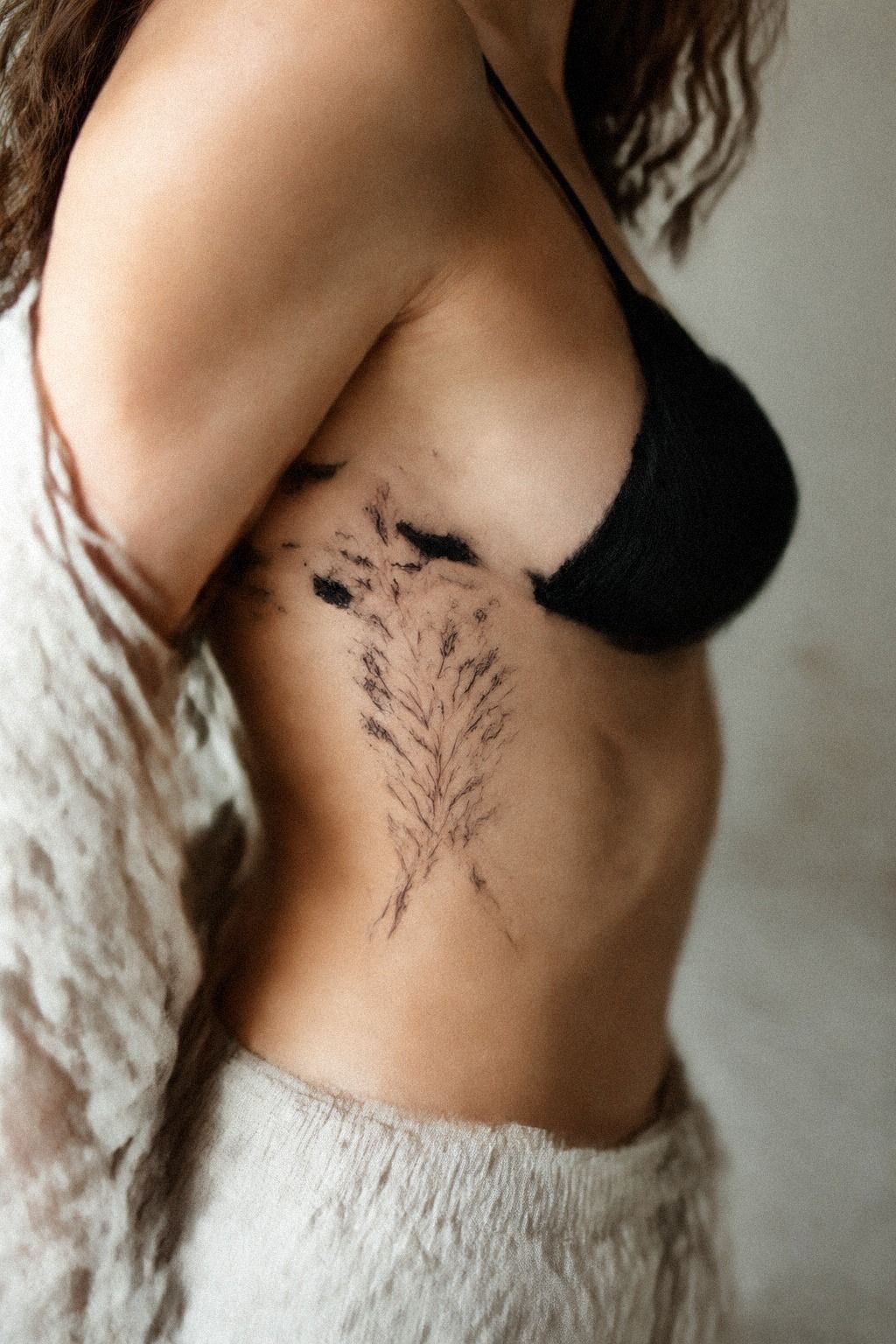
Begin with a shape that has a clean silhouette. A botanical sprig with one stem and three leaves can feel delicate without becoming anonymous.
Keep the leaves open rather than filling every space. That gives your tattoo a graceful quality without making it fragile.
If you’re hiding the tattoo at work, an inner forearm placement gives you control. Your sleeve covers it, but you can still see the design when you turn your arm.
I’d skip a dense bouquet at this scale because overlapping petals may compete after healing. A single stem, tiny star, or small crescent is more timeless.
You’ll find more clean references in these small fine line tattoos.
Choose black tattoo ink that’s crisp enough to remain readable. An open center keeps the image light. If you’re tempted by several colors, pause.
One dark line with untouched skin can look more polished than a miniature rainbow.
For your stencil, ask the artist to show the design at its actual size on your arm. Move your wrist, bend your elbow, and look at it under ordinary light. If the placement disappears naturally beneath a cuff, that’s a practical win!
Your tattoo can still feel bold to you without announcing itself to everyone else. That balance is often the best value when privacy matters.
2Pick A Symbolic Constellation For Your Wrist
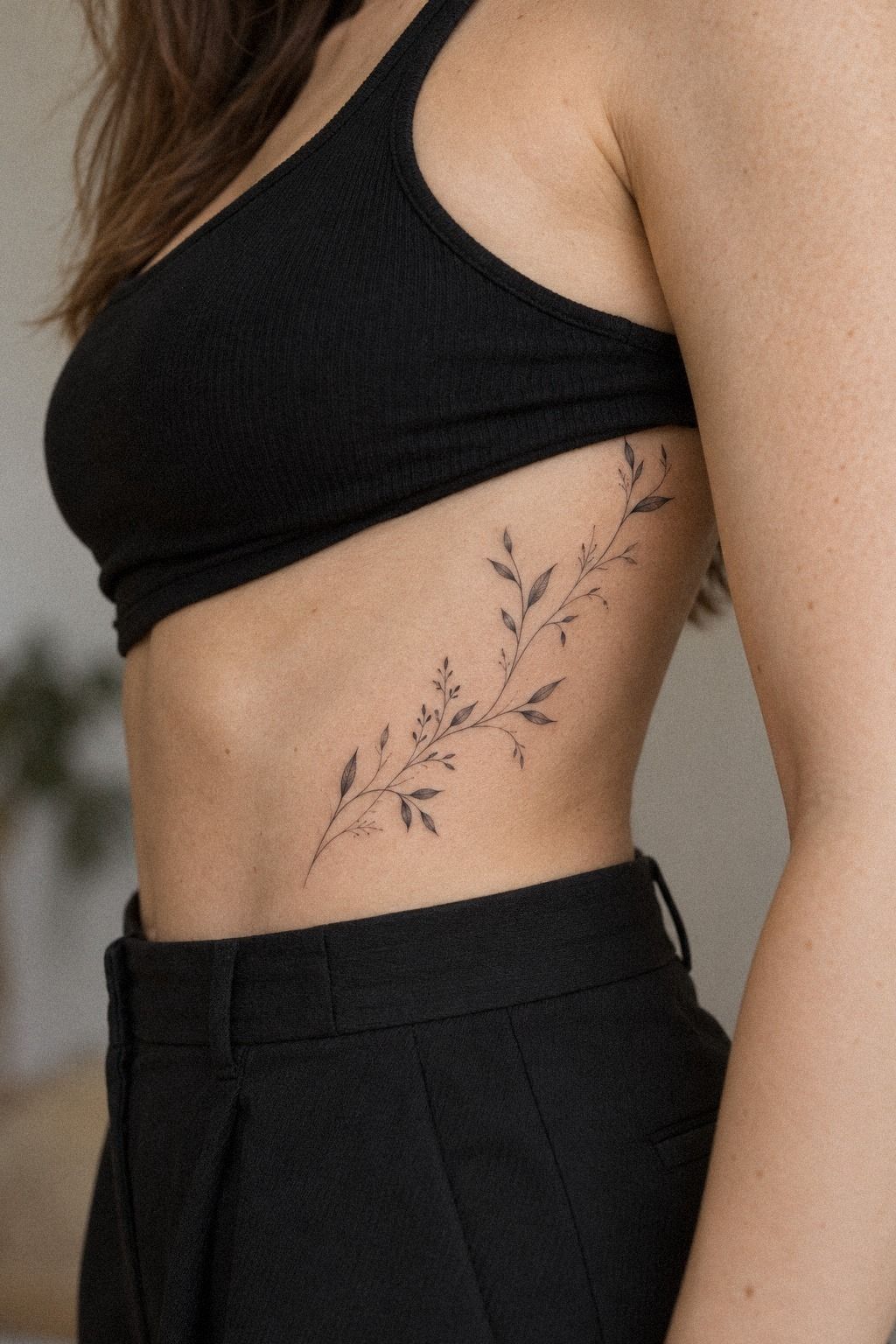
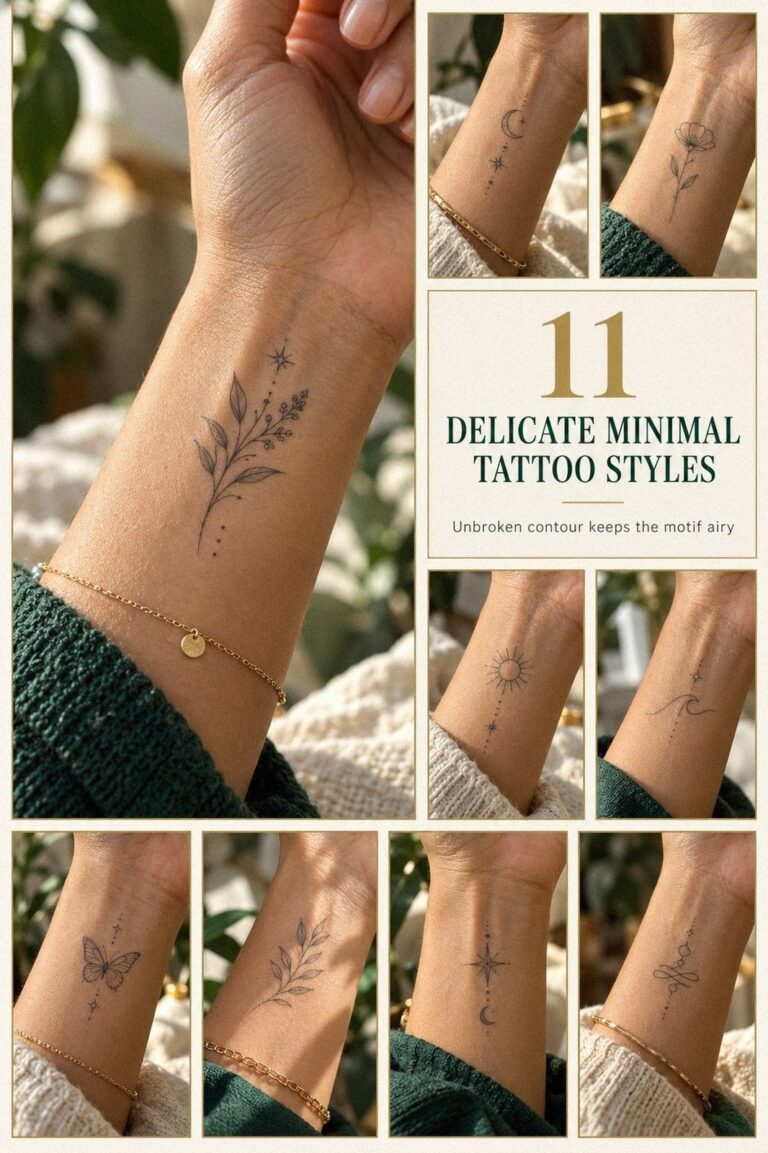
A wrist tattoo needs a compact composition because the area is narrow and constantly moving. Start with three to five points and one connecting gesture. Your constellation can represent a date, a person, or a private turning point without spelling out the entire story.
I’d choose a single-needle constellation over a crowded star map. It’s more understated, and the open skin keeps each mark readable. Your artist can place the design on the inner wrist for easier coverage or slightly toward the side for a more discreet angle.
Before booking, compare healed work, not only fresh tattoos. A fresh line can look sharp and striking, while a healed example shows how the marks settled. This small single line tattoos collection can help you study how little a design needs to say.
Your wrist moves constantly, and watches or bracelets may rub the area during healing. You’ll need to plan around that. Sterile transfer paper helps your artist test the angle, while a loose sleeve gives you a quick coverage check.
If you want the tattoo to stay private, place the brightest visual point toward the side rather than directly on top. That small change can make the difference between discreet and obvious.
3Place Delicate Script Along Your Collarbone
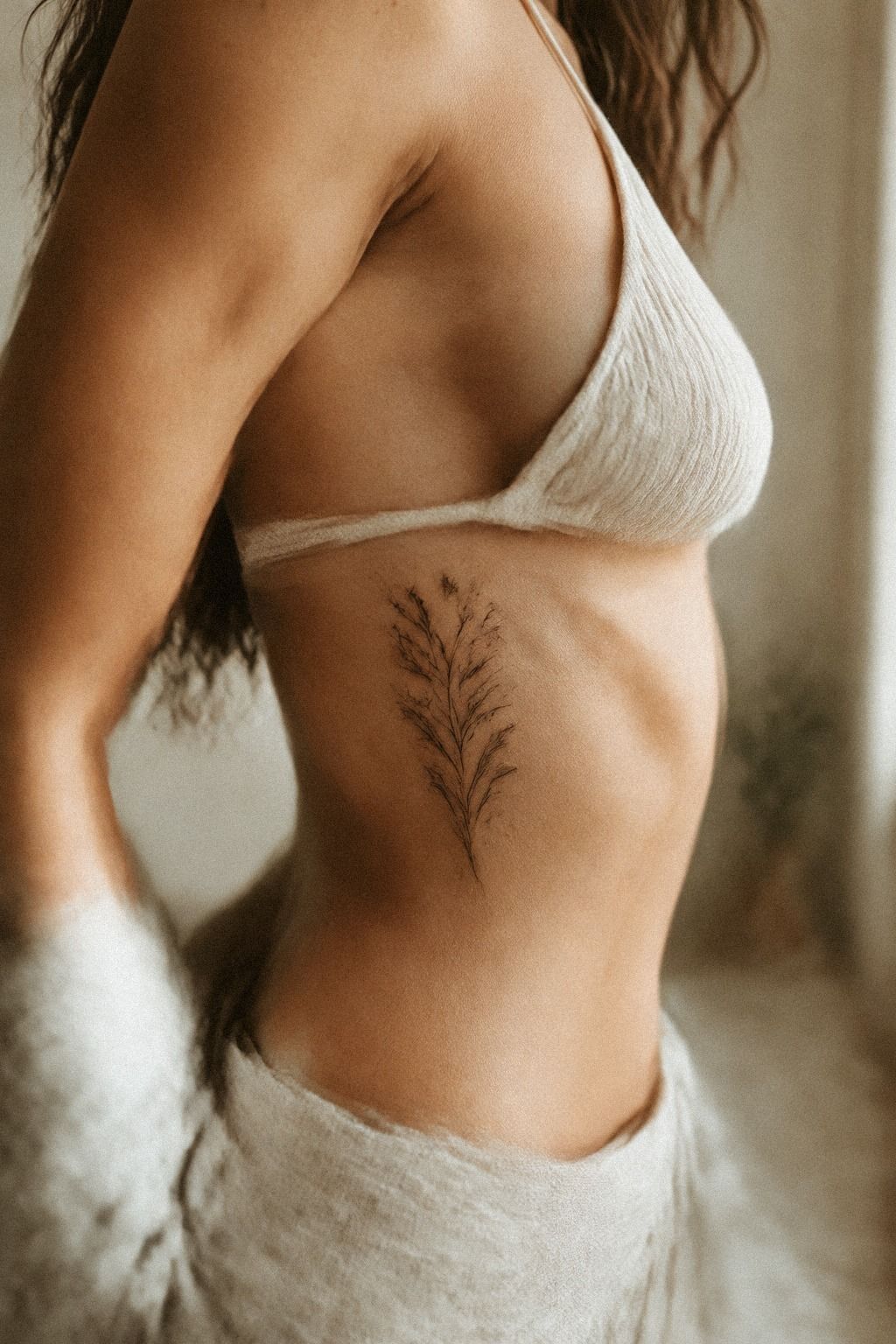
Script can be meaningful, romantic, and surprisingly easy to hide beneath a neckline. Choose a short word, two initials, or a few handwritten letters. Your phrase should remain readable without needing heavy strokes.
Ask your artist to test the lettering in several sizes. Fine line script needs enough space between letters, especially if your chosen word includes repeated strokes such as “m,” “n,” or “r.” I’d avoid a long quote here. It’ll force the letters too close together, and the design may lose its crisp rhythm once it heals.
You can place the script directly along the bone for a sleek effect or angle it slightly beneath the collarbone for easier coverage. A high-neck shirt can conceal it, while a wide neckline reveals it. For more placement references, browse this delicate fine line tattoo guide and compare lettering with symbols.
Your artist should print the phrase in the exact type style before the appointment. Read it from a mirror, then read it upside down. That sounds fussy, but it catches spacing problems before they become permanent.
Don’t choose a font only because it looks ornate on a screen. Your best option is the one that stays sharp, personal, and legible. If you’re weighing the design against your budget, a short phrase is usually better value than a cramped paragraph.
4Choose An Intricate Nature Inspired Finger Tattoo
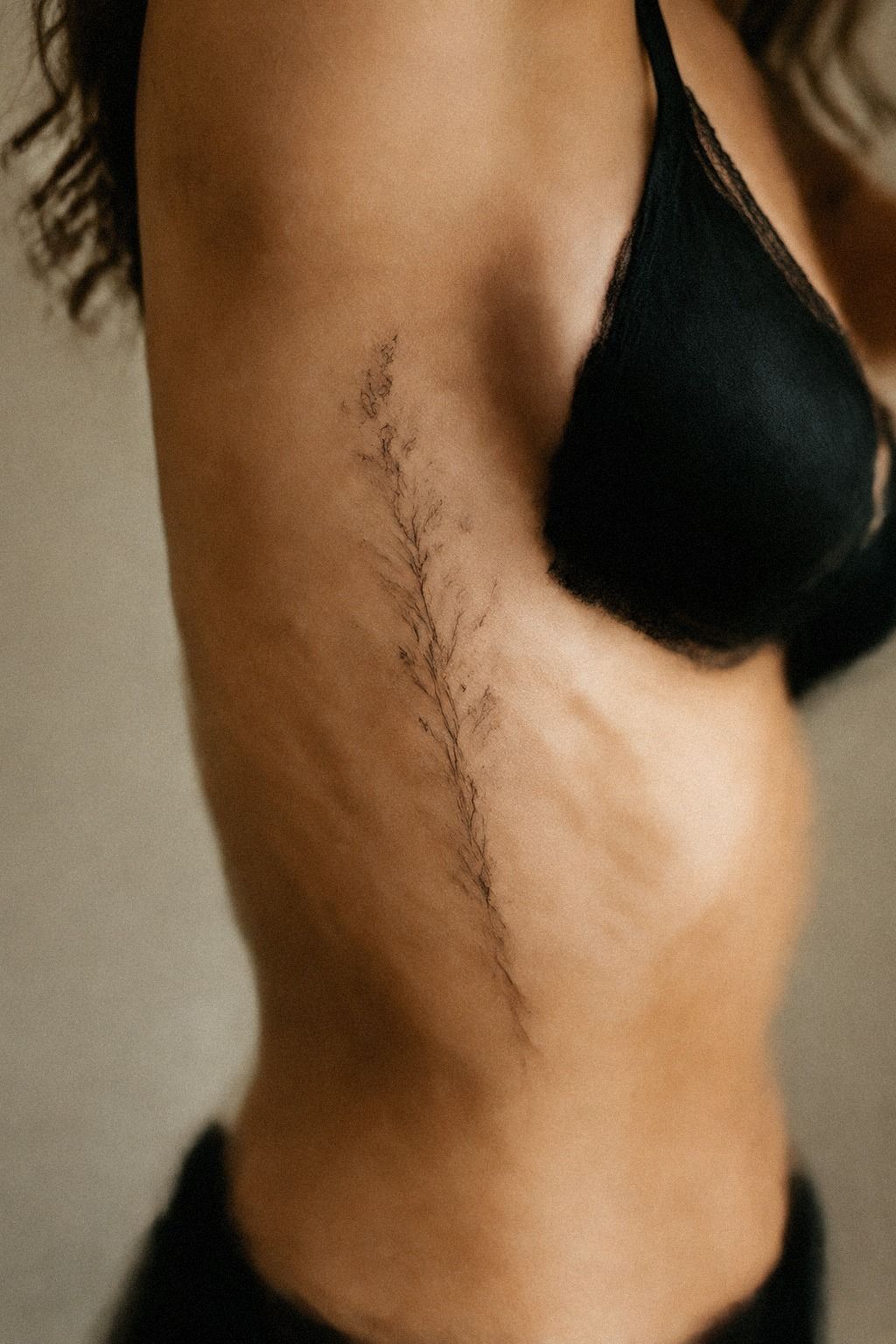
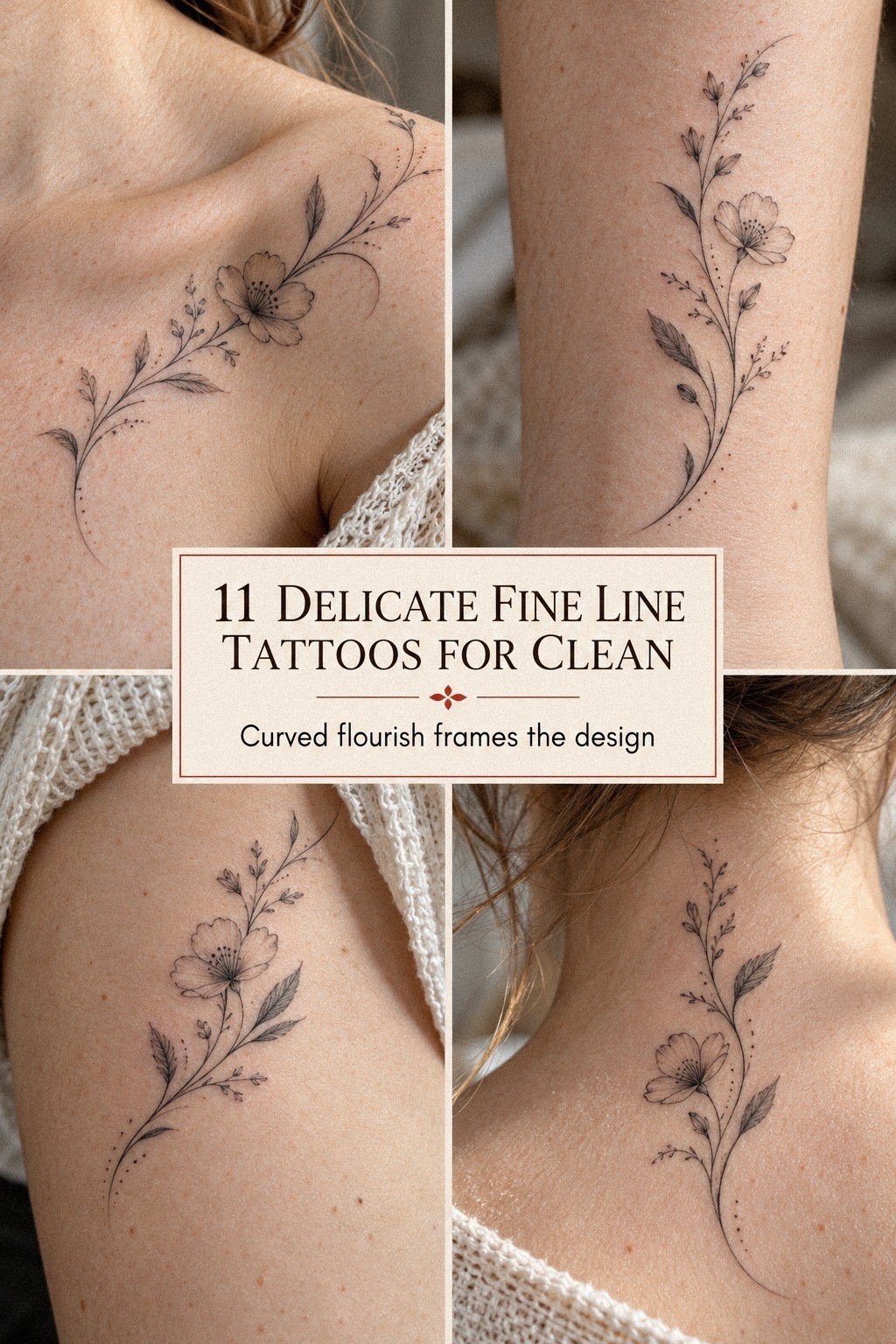
Finger tattoos are visible by default, so hiding one requires more planning than simply pulling down a sleeve. A tiny leaf, moon, or vine can work well when the outline stays simple. Your side finger offers more concealment than the top of the hand.
A fine line finger tattoo should have a strong contour and very little interior shading. I’d skip a detailed animal face here. Fingers bend, wash, grip, and meet sunlight, so dense detail may soften faster than you expect.
Ask your artist whether the chosen placement suits your skin movement. Black stencil transfer lets you check the design while your finger is relaxed and bent. You’ll want to see both positions because a symbol that looks centered straight on may twist when you make a fist.
For more examples, study these fine line finger tats.
Finger tattoos can need more patience during healing because your hands are hard to keep still. Keep the aftercare simple, follow your artist’s instructions, and don’t pick at flakes.
The appeal is the contrast: a small, bold symbol that looks almost hidden when your hand rests at your side. If you need complete discretion, choose the side rather than the knuckle.
5Keep Fine Line Shapes Crisp And Minimal
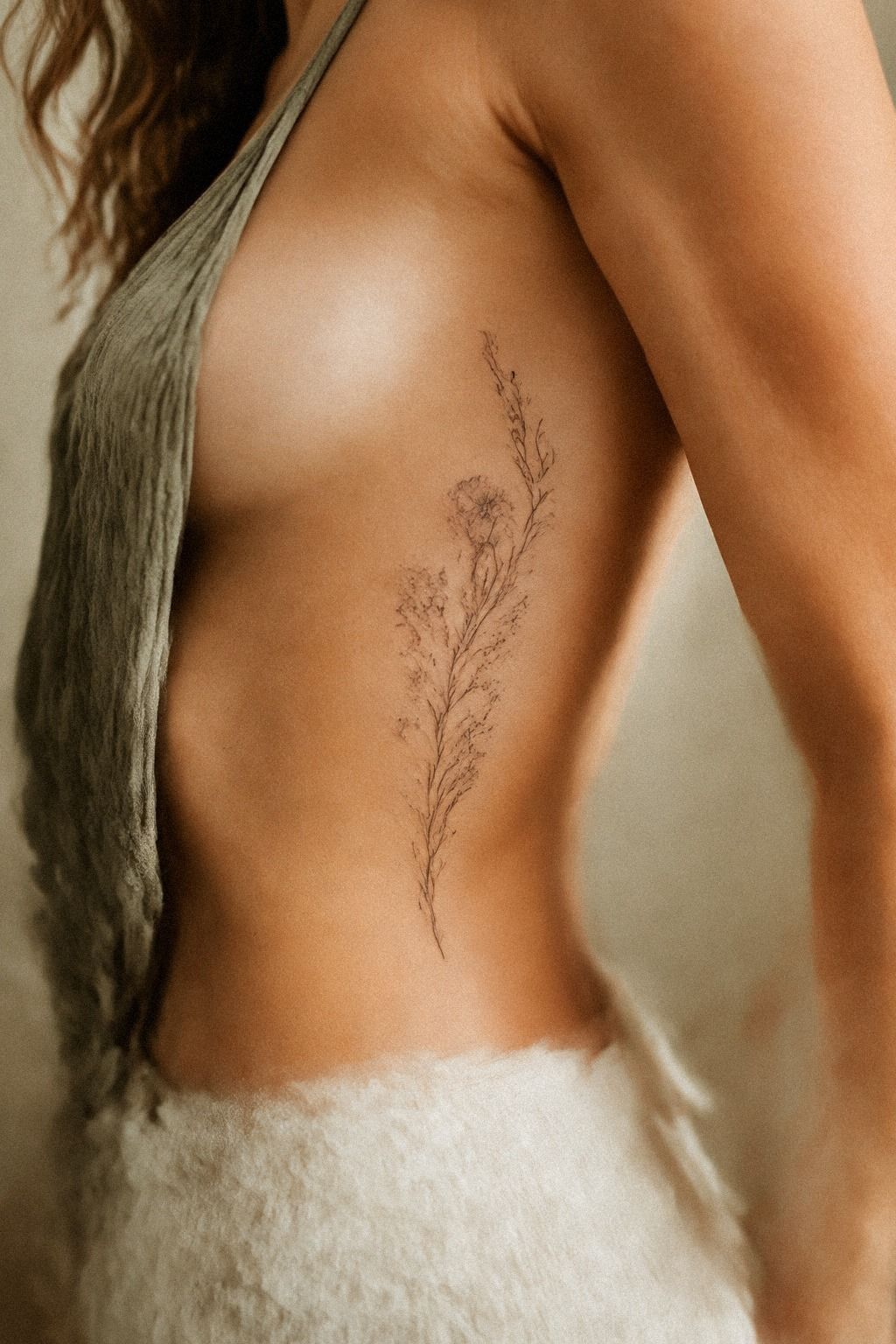
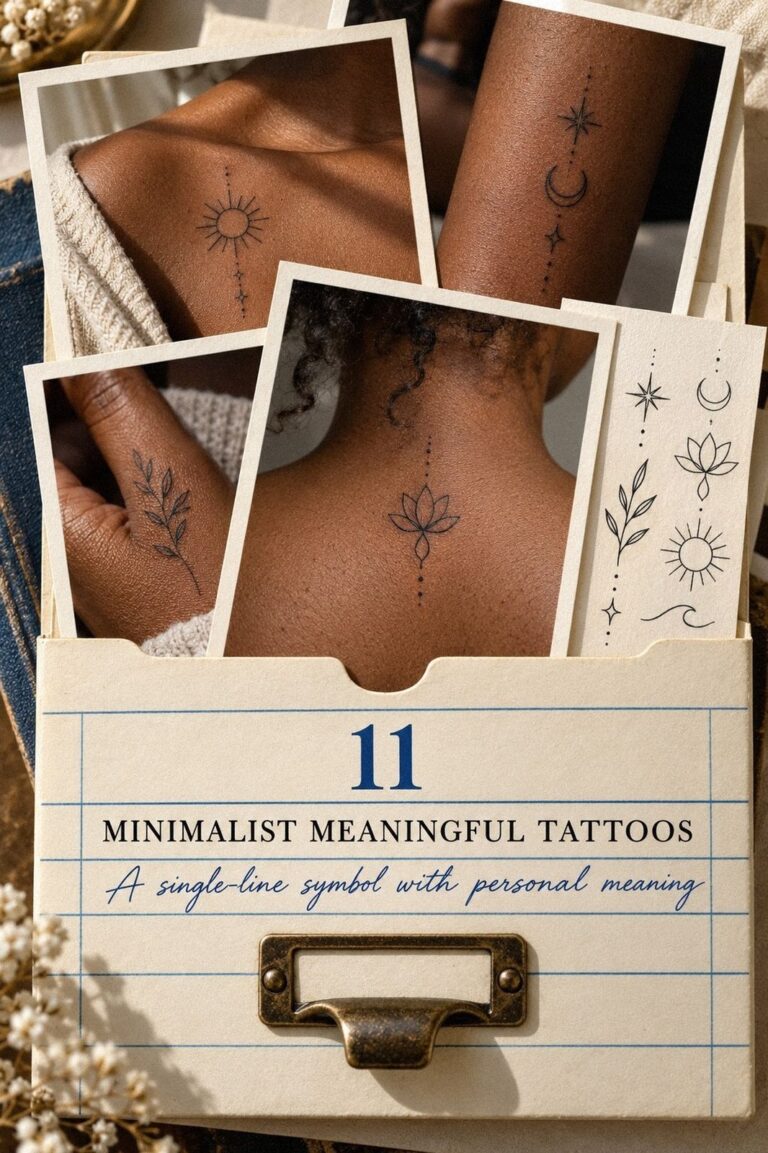
A flash sheet is useful because it lets you compare several shapes before you commit. Look for stars, leaves, moons, animals, and symbols that remain recognizable without shading. Your favorite image should still read when you cover half of it with your thumb.
Use the black linework flash sheet as a decision tool, not a menu you must copy exactly. Circle the design with the clearest outside edge, then ask your artist what needs to change for your skin and placement.
I’d choose a crisp, minimal symbol over an ornate one with five tiny interior sections. The simpler piece will be easier to hide and easier to understand later. Keep it simple!
A good stencil should show the line weight, gaps, and overall balance. Thermal stencil paper helps transfer the drawing cleanly, but it won’t solve an overcrowded design. You’ll need to judge the actual size on your body, not just the paper.
If you’re collecting references, compare these small continuous line tattoos with your flash options. Look for designs that use one flowing gesture instead of many disconnected marks.
That movement can feel playful and expressive while remaining discreet beneath a sleeve or bandage during the first day.
6Match A Tiny Animal To Your Meaning
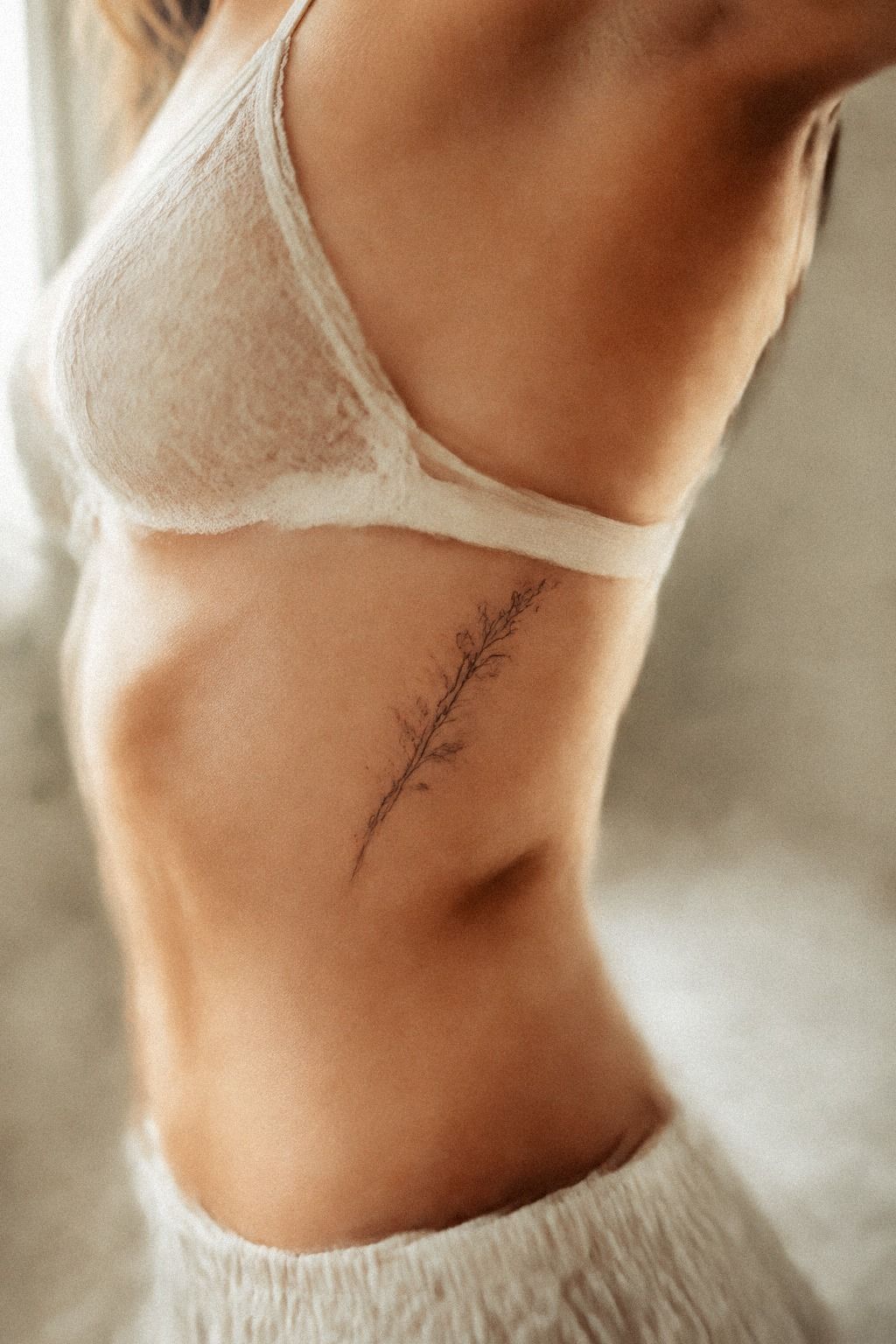
A tiny animal can carry a surprisingly powerful story.
Choose a single animal silhouette that still reads without excessive interior detail. A swallow, moth, cat, fox, or tiny bird can feel symbolic, personal, and understated when the outline does most of the work.
I’d avoid combining several animals in one small tattoo. One meaningful creature usually feels more iconic than a crowded collection of shapes.
7Plan A Graceful Rib Tattoo With Movement
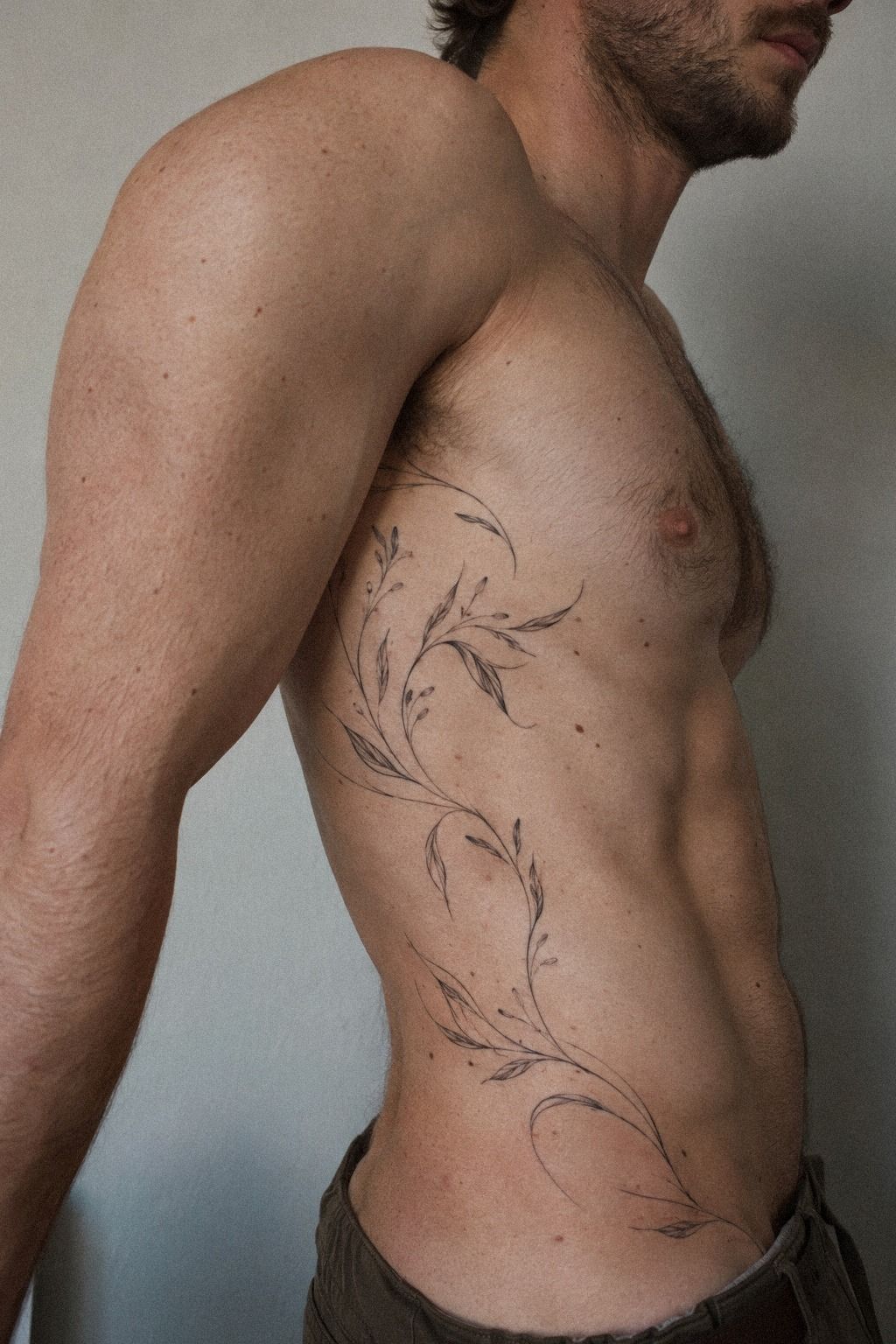
Movement keeps a rib tattoo from looking rigid on the body. Consider a flowing branch, falling stars, or a curved line that follows the ribs. Your placement can be vertical, diagonal, or gently horizontal depending on how much coverage you want.
The rib-flow method starts with the body’s natural direction. Your artist can place the longest part of the design along the rib line, then let smaller marks trail away.
I’d skip a perfectly centered badge here because it ignores the shape of the torso. A graceful curve will feel more organic and less rigid.
Ask to see the stencil while you stand normally. When you twist or lift your arm, the skin changes, and the tattoo should still look intentional. You’ll want the design to disappear beneath a fitted shirt without ending at an awkward edge.
This small fine line spine tattoo page offers useful comparisons for vertical movement.
Ribs can be a more intense placement, especially near the bone. Stencil transfer solution makes it easier to reposition before the appointment, so take your time. You don’t need a large tattoo to create motion.
A few sharp, flowing marks can feel powerful while staying completely personal. If the pain or price changes your plan, a shorter design may still deliver the same emotional effect.
8Add Subtle Details To Your Floral Linework
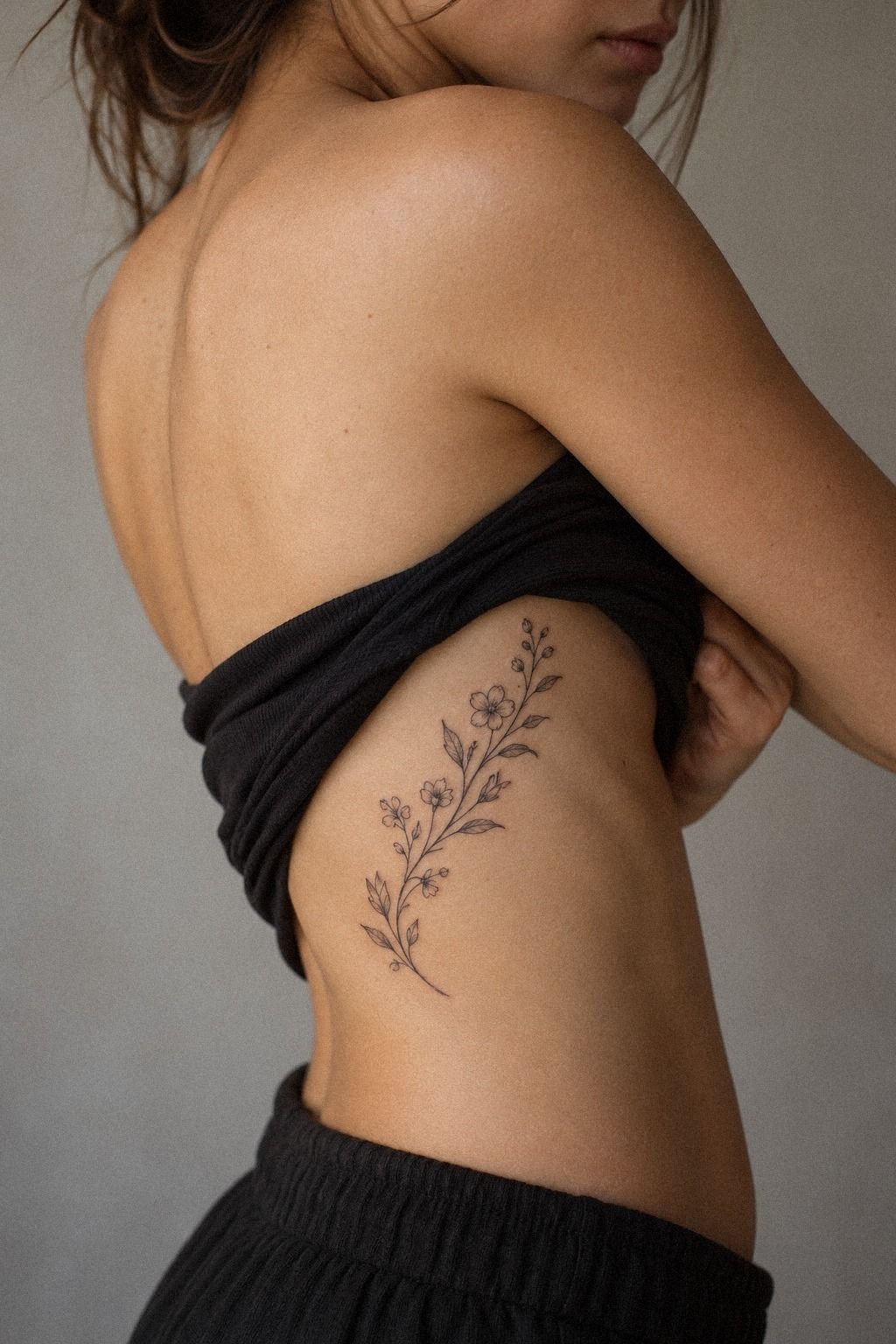
Start with one stem and decide where the leaves should open. Your goal is not to fill the entire spine. It’s to create a measured line that follows your body and can disappear beneath a shirt when you need it to.
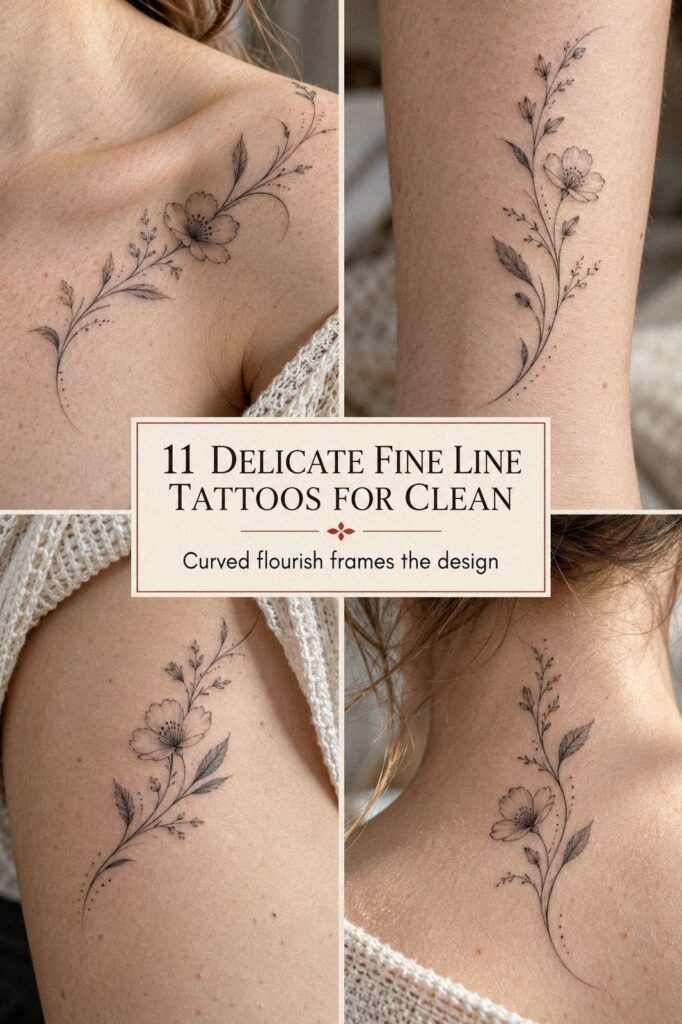
Use wildflower linework for the main gesture, then add only two or three secondary details. A tiny bud, a small thorn, or one open petal can make the piece feel expressive without turning it into a dense botanical panel.
I’d avoid copying every leaf from a reference photo. Your artist needs room to translate the shape into clean skin lines. Controlled simplicity will usually age better than decorative overload.
If you like vertical designs, compare your draft with these small fine line spine tattoo ideas. Look at spacing, not just subject matter. A narrow gap between marks can disappear once the tattoo heals, while a slightly wider gap preserves the shape.
The spine can be hidden under nearly any shirt, but you’ll need to think about clothing friction during healing. Fine line floral stencil should be checked from several angles before you commit.
Don’t let the word “delicate” push you toward an unreadably tiny design. Delicate means controlled, not disappearing.
9Select A Bold Symbol For Fine Ink
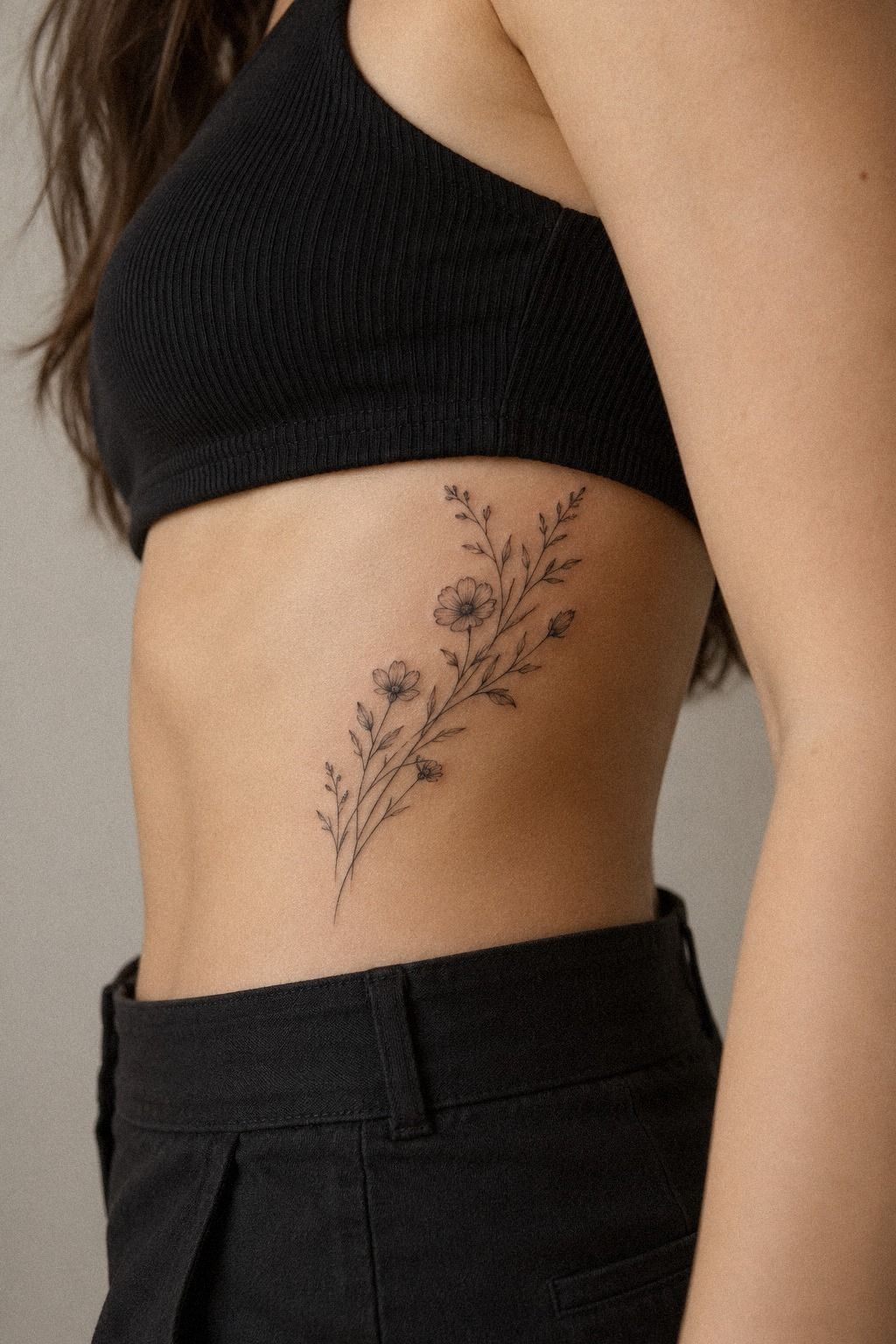
A bold symbol doesn’t need heavy shading or a large footprint. Consider a small sun, key, crescent, eye, or abstract mark with one strong central shape. Your symbol should be recognizable before anyone knows its meaning.
The single-symbol rule keeps a hidden tattoo emotionally clear. Pick one image and remove anything that doesn’t support it. I’d choose a sharp crescent over a collection of unrelated icons because the crescent has a clean outline and a strong visual memory.
Ask your artist to test the symbol beneath a shirt neckline. Blackwork accent ink can give the center enough weight without filling the entire image. If the design looks muddy at its actual size, reduce details rather than simply shrinking the stencil.
For more geometric options, compare this fine line geometric tattoo guide with your symbol. You’ll notice that the most timeless examples often use fewer marks than expected.
Is a complicated design still personal if you can’t recognize it without the reference? That question can save you money and protect the value of the final piece.
10Consider Skin Tone Before Choosing Ink
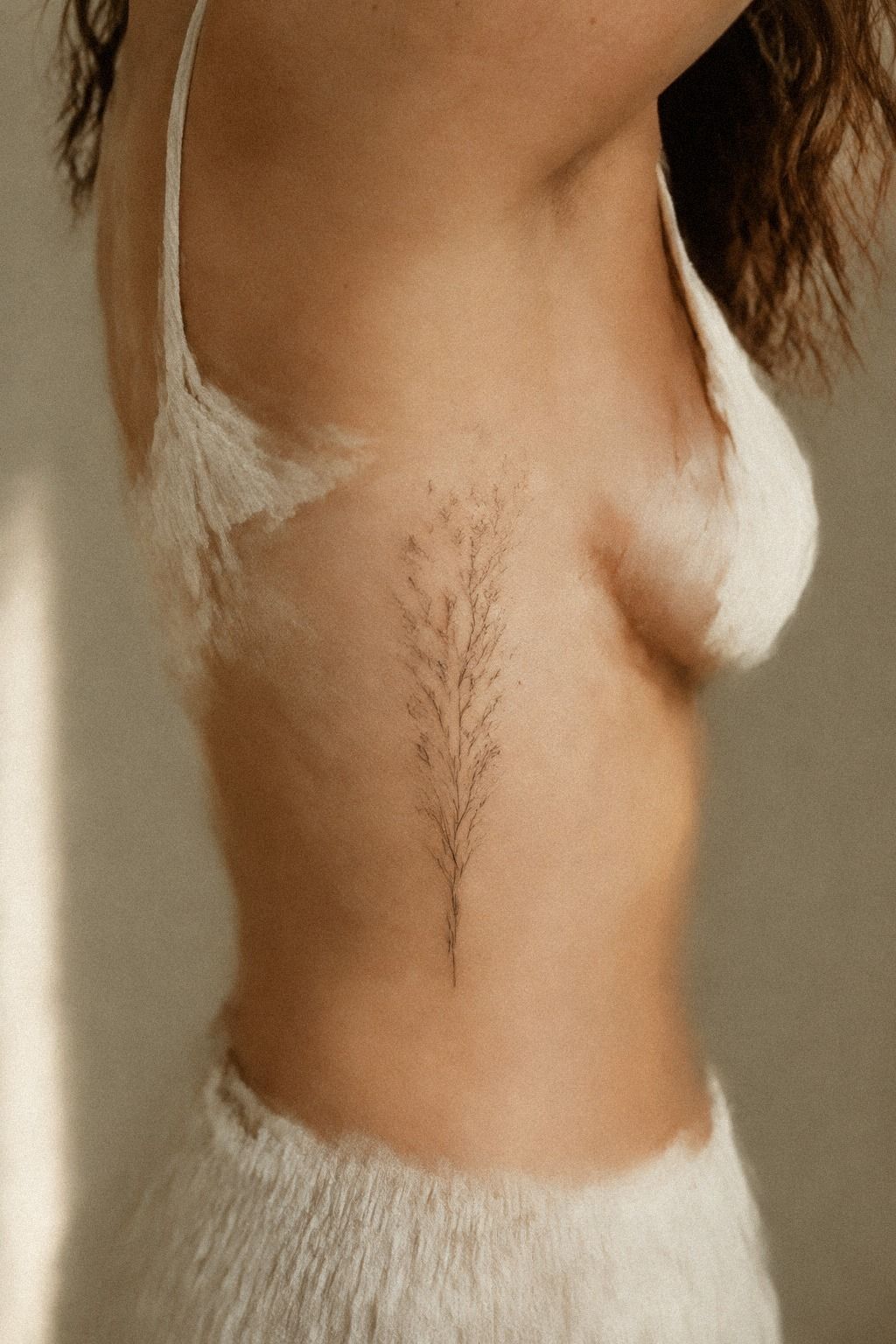
Skin tone affects contrast, healing, and how subtle a fine line tattoo appears.
Ask your artist how ink contrast may change as the tattoo settles. A vibrant color can read differently across skin tones, while black ink often gives a more predictable outline.
Your artist should show healed examples on skin tones close to yours. This is especially important when you’re considering delicate, dainty, or colorful details.
A meaningful design should remain clear without relying on extreme contrast. Choose the color and line weight that support your symbol, placement, and long-term readability.
11Protect Your Delicate Tattoo Through Healing
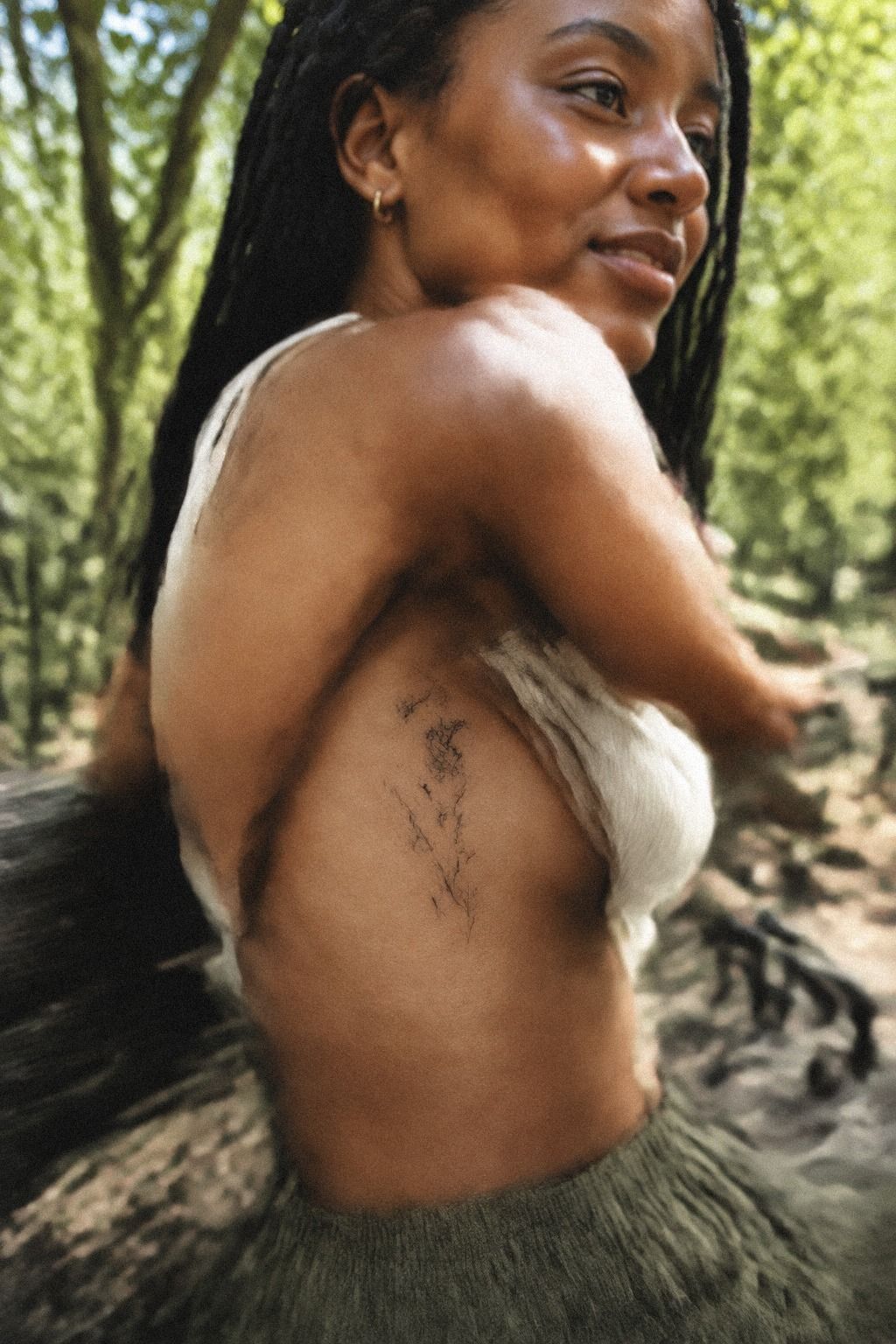
Your aftercare starts with restraint. Wash the tattoo gently according to your artist’s instructions, keep your hands clean, and avoid picking at peeling skin. The surface often heals in about 2 to 3 weeks, but complete healing can take around 2 to 3 months.
Use fragrance-free moisturizer only as directed, and keep the tattoo away from prolonged sun exposure while it settles. Pools and soaking water can interfere with healing, so plan around them.
Fine lines can spread or soften over time, especially when the design is placed where it gets repeated friction or sun. Solid black and thoughtful placement tend to age more reliably than overloaded micro-detail.
Save your healed photo and compare it with the original design after a few months. Broad-spectrum sunscreen becomes part of long-term care once the tattoo is fully healed.
If you’re planning another piece, this what is fine line tattoo guide can help you refine your next choice. But don’t rush the next appointment. Let your first design teach you how your skin responds.
Is Privacy More Important Than Visibility?
Some people want a tattoo they can see every day. Others want a private symbol that appears only when they choose.
Neither preference is more meaningful. The right placement depends on your work, clothing, relationships, and comfort with questions.
An inner placement can give you control without making the tattoo invisible to you. Ribs, spine, upper thigh, and the side of the finger offer different levels of discretion.
Think about ordinary movement, not just standing still. Sit down, reach forward, bend your arm, and put on the clothes you wear most often. A placement that passes those tests is more likely to feel worth it later.
If you want more discreet ideas, compare these small fine line tattoo designs with your own daily wardrobe. Privacy should support the design, not force you into a location you dislike.
What Does “Easy to Hide” Really Mean?
Easy to hide does not always mean completely invisible. It may mean covered during work, concealed from family, hidden beneath formal clothing, or turned away from casual attention.
A coverage test makes the phrase practical. Check the tattoo with a short sleeve, long sleeve, watch, bracelet, neckline, and the clothing you wear most frequently.
Remember that movement changes visibility. A wrist may be hidden while your hand rests at your side but visible when you reach across a table. A collarbone tattoo may disappear beneath a high neckline but show under a wide one.
That is the first privacy win! You are choosing based on real life instead of a static reference.
How Should Work Clothes Change Your Placement?
Work clothing can determine whether a tattoo feels empowering or stressful. Consider sleeves, uniforms, gloves, collars, and whether you regularly change clothes around other people.
A clothing coverage plan can help you compare the forearm, wrist, collarbone, ribs, spine, and thigh. Write down which locations stay covered during your busiest days.
Avoid choosing a spot that requires constant adjustment. If you must keep checking whether a cuff has moved, the placement may not feel discreet for long.
For a stylish but private result, pair a crisp shape with predictable coverage. You want your design to feel intentional, not like something you are trying to hide every minute.
Is A Tiny Design Worth The Cost?
A tiny tattoo can be worth the cost when the idea is strong, the placement is appropriate, and the artist has a healed portfolio that supports the technique. Small does not automatically mean inexpensive, because consultation, setup, and studio minimums still apply.
Ask what you are paying for: artist experience, hygienic preparation, design refinement, placement knowledge, and careful execution. Those factors matter more than chasing the lowest quote.
A small tattoo with excellent spacing may offer better value than a larger design packed with details. The best budget decision is the one that protects the final result.
If you are comparing options, study small single line tattoos and ask yourself whether each design would still feel personal after the first excitement fades.
What Should You Ask Before You Book?
Bring questions about healed results, touch-ups, line weight, placement, aftercare, and the artist’s minimum. Ask whether the proposed scale is realistic for the design you want.
A consultation plan keeps the conversation focused. Explain what must remain private, what you want to see yourself, and which details are emotionally important.
You can also ask whether the artist has worked with your chosen skin tone and placement. A confident consultation should leave you informed, not hurried.
If you are comparing a symbolic design with a geometric one, this fine line geometric tattoo guide may help you describe the structure more clearly. Take your time. A tattoo appointment is not a deadline.
Can Hidden Ink Still Feel Personal? The Permission Rule
I used to think a tattoo needed to be visible to feel real. That idea sounds confident, but it’s not true. Some of the most meaningful pieces I’ve seen are tucked beneath a sleeve, along the ribs, or under a collarbone.
Their value isn’t measured by how many people notice them. It comes from the private moment when you remember why you chose them.
The best hidden tattoo has a clear reason for its placement. You might choose the wrist because you want to see a constellation during a difficult day, or the ribs because the symbol belongs entirely to you.
That’s not less expressive. It’s a different kind of expressive, quieter and more deliberate.
I’m also firm about one thing: don’t choose a placement only because it’s easy to hide. If you hate the location, the tattoo won’t feel empowering when you’re alone.
Start with the meaning, then test visibility, movement, pain, clothing, and healing. Your practical needs matter, but they shouldn’t erase your taste.
My own preference is a crisp black symbol with one unexpected detail, such as a single open star inside a botanical shape. It feels personal without needing an explanation.
You’ll know you’ve found the right design when you stop collecting references and start imagining your own skin with it. That pause matters. It means the idea has become yours.
The Questions I Get Asked Most
How much does a delicate fine line tattoo usually cost?
A delicate fine line tattoo typically costs about $100 to $300 in the US, depending on size, placement, artist, and region. Boutique minimums may run about $50 to $100, while hourly rates often fall near $100 to $250. Your quote can vary even for a tiny design, so ask for the full cost before booking.
– Size and detail – Placement and session time – Artist experience – Regional studio pricing
Are delicate fine line tattoos a good idea for a first tattoo?
Yes, delicate fine line tattoos can be a good first choice because you can select a small, personal design and a placement that feels manageable. A meaningful symbol is easier to live with than a large impulse piece. Your artist should still explain pain, healing, fading, and long-term care.
– Small symbolic design – Forearm or thigh placement – Clean healed portfolio – Simple aftercare plan
How do I choose a tattoo artist for delicate fine line tattoos?
Choose an artist whose portfolio shows crisp linework and healed results, not only fresh appointments. A healed portfolio tells you more than a polished social post. Check the studio’s hygiene practices, ask about preferred placements, and make sure you feel heard during the consultation.
– Healed fine line examples – Similar skin tone references – Clear consultation answers – Clean studio practices
How much do delicate fine line tattoos hurt?
Pain varies by placement, but ribs, feet, hands, and sternum are often more uncomfortable than the forearm, thigh, or shoulder. Your placement changes the experience more than the word “delicate” does. A short session can still feel intense in a bony area.
– More sensitive: ribs, feet, hands, sternum – Often more tolerable: forearm, thigh, shoulder – Individual pain response – Shorter session for small designs
How long does a delicate fine line tattoo take to heal?
The surface usually heals in about 2 to 3 weeks, while complete healing can take around 2 to 3 months. Follow your artist’s aftercare instructions, wash gently, moisturize as directed, and avoid sun, pools, and picking while the skin settles.
– Gentle washing – Light approved moisturizer – No soaking – No direct sun during healing
What’s the best placement for delicate fine line tattoos?
The best placement depends on how much privacy, movement, and visibility you want. The inner forearm is practical because a sleeve can cover it, while ribs and spine offer more discretion. Your artist can help you balance aging, pain, clothing, and how often you want to see the design.
– Inner forearm for easy coverage – Ribs for privacy – Spine for vertical designs – Thigh for a more tolerable placement
Can I design a delicate fine line tattoo myself?
You can sketch your idea, but your artist should refine the final design for skin, scale, and healing. Your personal sketch is a starting point, not a promise that every tiny detail will translate. Bring references, explain the meaning, and let the artist protect the line spacing.
– Personal sketch – Reference images – Preferred placement – Artist-led refinement
Where I’d Start First: The Healed-Line Test
If I had to pick one step, I’d start with the healed-line test. Fresh ink can hide spacing problems, but healed photos show whether a delicate design still reads clearly.
Ask for healed examples before booking, then choose the symbol that remains crisp, personal, and easy for you to cover. Pin your favorite for later!