
Delicate hand tattoo ideas can stay readable for years, but placement matters more than tiny detail. I learned that after one little symbol softened faster than I expected. Your artist needs clean spacing, solid black ink, and a plan for sunlight, friction, and healing. These 11 designs make that decision easier!
Editor’s note: the most striking hand tattoos aren’t always the most intricate. The best ones balance a meaningful symbol, a sharp silhouette, and enough open skin to remain readable. Start with these hand tattoo ideas before you book.
- Tiny Crescent Moon Between Thumb and Index
- Fine Line Wildflower Along the Hand Edge
- Single Needle Snake Curving Across the Palm
- Minimalist Star Cluster Above the Knuckles
- Delicate Script Wrapped Around the Index Finger
- Botanical Sprig Flowing Toward the Wrist
- Tiny Eye Symbol Centered on the Palm
- Ornate Lace Pattern Across the Hand
- Matching Sun and Moon on Side Fingers
- Whimsical Butterfly Resting Beside the Thumb
- Fine Line Wave Following the Pinky Edge
1Tiny Crescent Moon Between Thumb and Index

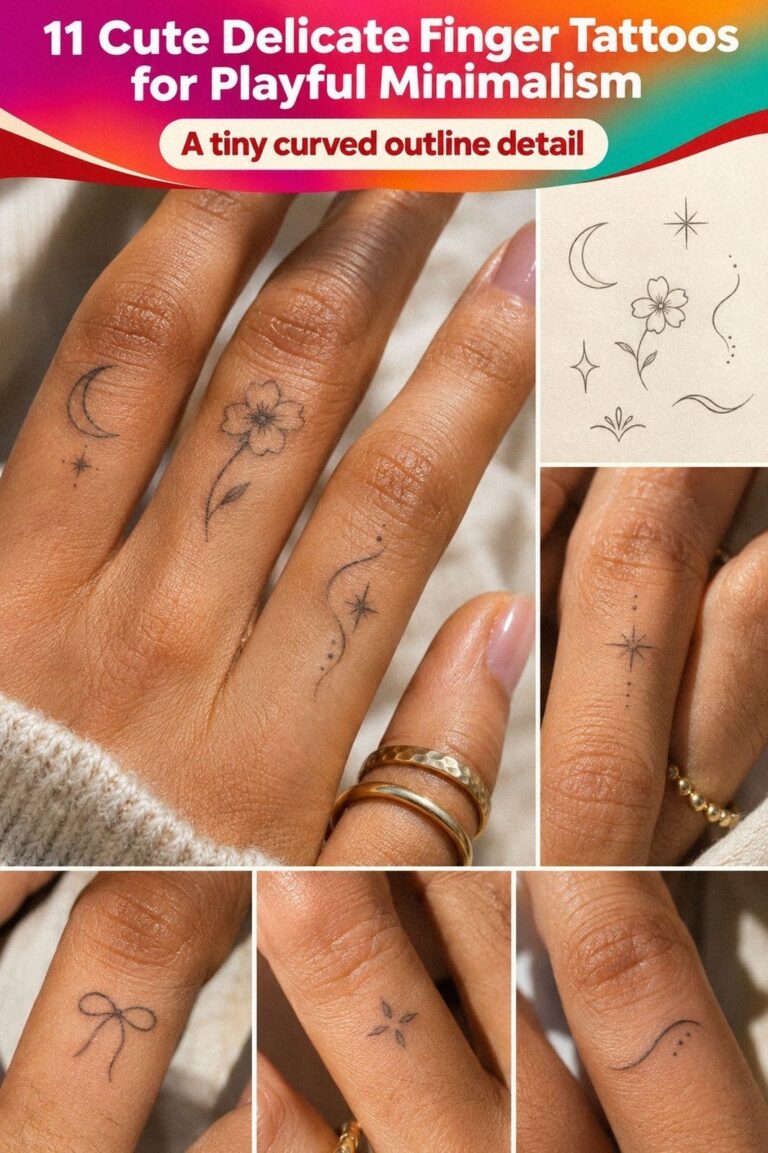
This crescent sits in the web between your thumb and index finger, where the shape can follow the natural curve of your hand. Keep the stars sparse, with one larger point and two smaller ones, so the design stays readable instead of becoming a dark speck. A warm terracotta, stone, and olive palette gives the moon gentle contrast.
Ask your artist to leave breathing room between the crescent and each star. That negative space is what keeps the composition readable when you move your hand.
I’d skip a crowded galaxy. It’s dreamy, but too many dots in a high-movement area can blur into visual noise.
Before you book, compare this placement with small hand tattoo ideas and look at healed examples, not only fresh ink. You’ll want to see how the curve behaves after the surface settles. Your artist should also show you a stencil at the actual size.
The thumb web moves constantly, so your aftercare needs to be simple. Wash gently, use a small amount of fragrance-free soap, and follow your artist’s instructions for light moisturizer. Keep it away from pools and direct sun while it heals.
That small routine protects the moon’s shape more than extra detail ever could.
Placement Before the Stencil
A stencil should be tested while your hand is relaxed, bent, open, and naturally resting. That sounds obvious, but it’s easy to approve a design while holding your fingers stiffly.
I’d ask your artist to rotate your hand through normal positions before you discuss the final price. The relaxed hand test can expose a distorted curve early.
The value of a small hand tattoo comes from how confidently it works in daily life. If the curve disappears whenever you grip a cup or close your fingers, the idea may not be worth it at that size. A slightly simpler silhouette can be a smarter budget choice when it protects the daily movement of your hand.
2Fine Line Wildflower Along the Hand Edge

A single stemmed flower looks graceful when it follows the outside edge of your hand rather than cutting across the palm. Keep the hand-edge placement narrow enough that the stem remains legible when your fingers bend.
What Does “Delicate” Really Mean?
Delicate doesn’t mean faint. It means the design has restraint, clear rhythm, and enough negative space for the main shape to remain visible. A confident line can still produce a dainty result when the composition is thoughtful.
That’s why line confidence matters more than making every mark tiny.
Some designs feel ethereal because the lines are so sparse. I’d judge the idea by its healed structure instead. The most empowering choice is often the one that still feels like you after the initial excitement fades!
3Single Needle Snake Curving Across the Palm

A slim serpent can curve across your palm like a drawn ribbon, with the head angled toward the base of your fingers. A plum, grey, and rose-gold palette gives the tattoo an edgy quality.
Keep the scale lines selective. Your snake needs a few clear marks, not a complete map of every scale detail.
The strongest version uses one clean contour, a small eye, and a controlled coil. I’d avoid heavy shading inside the body because palm skin sees friction and movement. That shading might look fierce on the day, but it can make the design harder to read as the lines soften.
If you’re comparing ideas, browse small hand tattoo ideas for other compact silhouettes. Ask your artist how the snake will sit when your palm opens fully. A curve that looks perfect while your hand is flat can feel distorted when you grip something, so you’ll want to test the stencil through several positions.
Your artist may recommend black linework with slightly stronger weight around the head and tail. That hierarchy gives your eye somewhere to land. It also keeps the snake strong without turning it into a thick black band.
The palm already supplies movement, so the drawing doesn’t need theatrical shading.
Aftercare matters here because palms get washed, rubbed, and flexed constantly. Follow the studio’s instructions, avoid picking at flakes, and don’t judge the final result during the first few days. If you’re worried about longevity, ask whether a later touch-up is common for palm placements.
That conversation is more useful than promising a line will never change.
Read Fine Lines on Moving Skin
Hand tattoos are expressive because the skin keeps participating in the design. Fingers bend, palms crease, and the side of the hand catches friction from ordinary tasks. A strong idea still needs a practical moving-skin plan.
The cost of a palm tattoo isn’t the only consideration. Ask about the artist’s experience with healed palm work, likely touch-ups, and whether the proposed scale is realistic. Good value comes from an honest consultation, not from chasing the lowest quote.
4Minimalist Star Cluster Above the Knuckles

Small stars above the knuckles create a minimalist constellation with a little more visibility than a side-hand placement. Keep the knuckle spacing generous so each point stays distinct as your fingers move.

5Delicate Script Wrapped Around the Index Finger

A short word wrapped around the index finger can feel personal and intimate, especially when the lettering follows the finger instead of running straight across it. Use emerald, gold, and cream accents only if your artist believes they’ll hold well. Your script should have a human wobble, not messy lines.
Choose a word that can survive a small scale. Long phrases force letters together, and tightly packed script can become difficult to read as the skin changes.
I’d pick one name, one short promise, or one meaningful word. The result can be romantic without looking like a slogan.
Ask your artist to place the stencil while your finger is relaxed and slightly bent. Then look at it from the palm side and the outer side.
A letter that looks lovely from one angle might disappear from another. Your artist may adjust the curve, and that’s a good sign of care.
The best black script ink has enough weight to hold the letterforms without making them look heavy. You’ll want open loops and clear gaps between strokes.
Skip decorative flourishes that cross over the knuckle crease. They’re ornate, but they can compete with the movement of your finger.
For more restrained lettering references, see minimalist hand tattoo. Your research should include lettering on fingers, not only wrists or forearms. Finger tattoos can need maintenance because of friction, washing, and daily use, so ask the studio what finger maintenance and future touch-up expectations look like.
Choose Scale Without Losing Meaning
Scale is where a meaningful idea becomes either polished or crowded. A tiny name may sound budget-friendly, but shrinking every letter until the gaps disappear can reduce its value. I’d rather spend slightly more on readable letter gaps than pay for a design that needs immediate correction.
An iconic symbol doesn’t need to be large. It needs a silhouette you can recognize quickly. A personal mark with fewer details can feel more daring than an overloaded design that tries to explain everything at once!
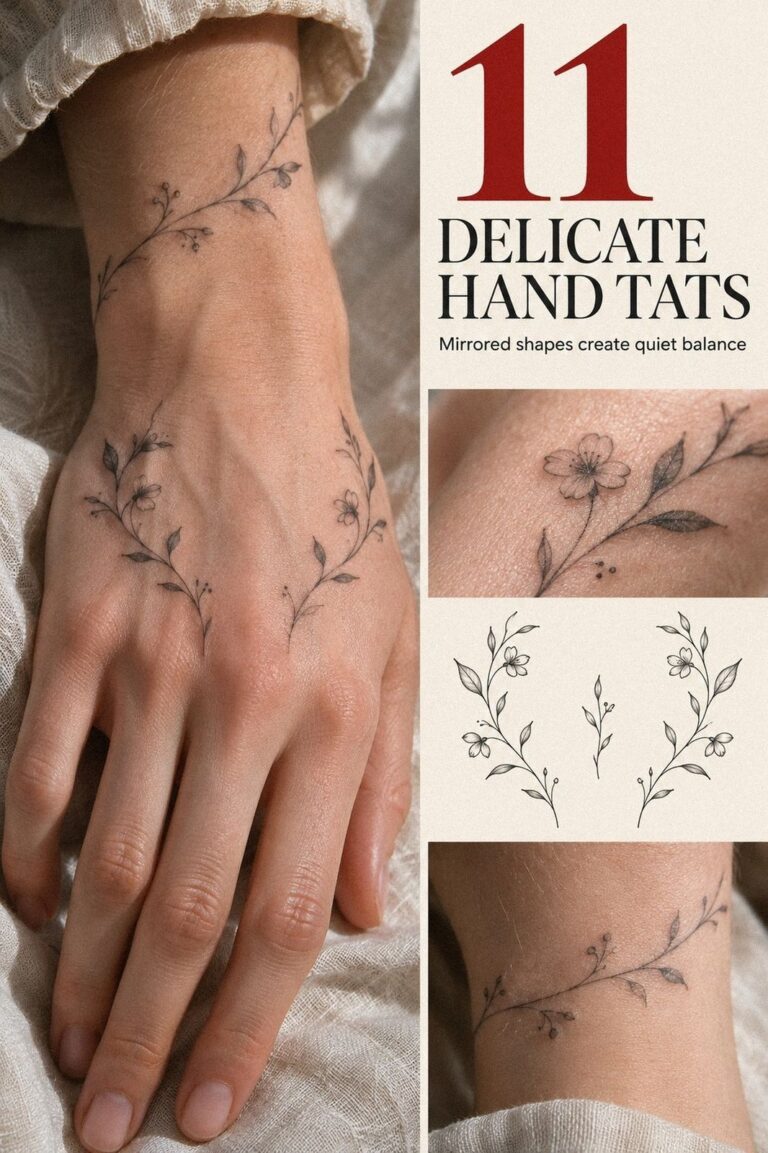
6Botanical Sprig Flowing Toward the Wrist

A fine botanical sprig can begin near the hand and travel toward the wrist in one continuous gesture. Ask for botanical spacing that lets each leaf remain separate as the wrist bends.
7Tiny Eye Symbol Centered on the Palm

A tiny eye in the center of the palm feels symbolic without needing extra decoration. A dusty-rose, charcoal, and brass palette can give the outline quiet contrast, but the design should still rely on clean proportions. Your artist can use a small iris, a calm almond shape, and minimal rays if you want a little more presence.
The palm is a demanding location because it flexes, washes, and meets surfaces all day. I’d keep the eye open and simple rather than adding dense lashes or decorative shading. Those details can look detailed at first, but a sparse design has a better chance of staying legible.
Study side hand tattoo ideas for placement ideas, then ask your artist specifically about healed palm work. You’ll want an honest conversation about how your skin behaves and whether the shop regularly tattoos this area. A portfolio full of fresh hand tattoos won’t answer that question.
Use a small black outline as the visual anchor. Your artist might strengthen the upper lid slightly, which helps the eye remain readable while the interior details soften. That balance can make the piece feel sacred and quiet instead of cartoonish.
After the session, follow the studio’s washing and moisturizing directions closely. Avoid swimming and direct sun while the surface is healing, which generally takes about 2 to 3 weeks.
Complete settling can take about 2 to 3 months. Your final eye may look different during that period, so give it time before you evaluate it.
Sunlight and friction are the opposing forces here. Frequent washing, abrasive work, and UV exposure can all affect fine lines. Ask your artist which protective products are compatible with your healing instructions.
I’d also ask what maintenance costs typically look like. A touch-up may be reasonable for a symbolic piece you love, but it should be part of your decision before you book. Knowing the long-term touch-up budget makes the experience feel less surprising.
8Ornate Lace Pattern Across the Hand

A lace pattern across the hand can look ornate while still staying delicate if the artist treats it as a repeating motif. Warm white, camel, and black accents suit fine arches, small openings, and carefully spaced loops. Your design needs a strong outer rhythm, or the lace motif will feel scattered.
I’d choose one central medallion and let the smaller details echo it. Too many different shapes make the tattoo harder to follow. Your hand already has several joints and planes, so a controlled pattern will look more polished than a collection of unrelated flourishes.
Ask for a fine lace stencil and inspect every connection before the session begins. Check how the pattern crosses knuckles, where it stops near the wrist, and whether the negative spaces are large enough to survive healing. Your artist should be willing to simplify sections that don’t have enough room.
For a softer direction, compare minimal hand tattoo references before you commit. I’d skip heavy black fill in the center. It can turn a refined lace idea into a dark patch, while open linework keeps the design elegant and readable.
The pattern should feel like it belongs to your story, not like a copied ornament. Maybe the arches echo jewelry you wear or a family textile you remember.
That personal connection gives the tattoo timeless weight. You’ll notice it more often when the detail means something beyond decoration.
The Healed-Work Test
Fresh ink is useful for judging composition, but it can’t tell you everything about longevity. I’d ask for healed examples from the same artist, especially on fingers, palms, and the side of the hand. That’s where the real evidence lives.
A reliable portfolio should show judgment, not just technical confidence. Look for spacing, line consistency, and whether the artist knows when to simplify. Those signs matter more than an immediately dramatic result.
9Matching Sun and Moon on Side Fingers

A sun and moon split across side fingers creates a private pairing that becomes visible when you bring your hands together. A midnight-blue, copper, and ivory palette can support the contrast, especially when the moon remains a clean crescent and the sun uses only a few short rays. Your pair should look related, not identical.
Place the designs where the fingers naturally meet without forcing them into a perfect mirror. I’d keep the moon slightly quieter than the sun. Matching everything exactly can feel stiff, while a small difference gives the pair a distinct relationship.
Look at simple hand tattoo ideas for examples of restrained symbols. Your artist should stencil both sides at once so the hand alignment can be judged with your hands together and apart. Side-finger placements can shift visually when the fingers bend, so check the design in both positions.
Use fine black outlines and reserve solid fill for the smallest intentional accent. The sun may need a little more visual weight, while the crescent can stay open. That balance keeps the set harmonious without flattening the contrast between day and night.
And if you’re choosing this as a shared tattoo, discuss how each symbol should stand alone. A matching idea can be meaningful, but your individual design should still work when the other hand isn’t nearby. That makes the pair feel personal, not dependent.
Matching tattoos have emotional power, but the design shouldn’t lose its identity when the other person isn’t present. I’d test each symbol alone, together, and from several angles before approving the stencil. The individual symbol should still feel complete.
The best value in a paired tattoo is emotional, not merely visual. If one symbol feels like an afterthought, spend more time refining the concept before discussing cost. A strong decision should still feel right on its own.
10Whimsical Butterfly Resting Beside the Thumb

A butterfly beside the thumb can feel whimsical and light, especially when the design is planned as healed ink rather than only fresh lines. Your artist can keep the wings open, use a few internal veins, and avoid filling every section with shading.
The strongest butterfly has a clear body and a readable wing silhouette. I’d skip hyper-realistic detail in this placement. It can look captivating on paper, but the small surface and constant hand movement favor a clean, recognizable outline.
Ask to see the stencil design beside healed work from the same artist. That lets you compare the planned shape with what remains after the surface settles. You’ll also see whether the artist’s fine lines stay even around curves, which matters more than an immediately dramatic result.
A small touch of black fill can anchor one wing, but your butterfly doesn’t need a full color treatment to feel alive. The design works because it has restraint. Your result can be light, soft, or slightly unusual depending on the wing angle and body position.
For more compact options, save these small hand tattoo ideas beside the butterfly. Keep healed work in your planning folder, not only the stencil. Fresh skin can make every line appear strong, while healed ink shows the version you’ll live with.
Fresh Ink Is Not the Final Test
The most useful tattoo result is rarely the one that looks darkest on day one. Fresh skin can make every line appear unusually sharp, while settled ink reveals the true spacing. I’d make healed work part of your research before you compare artists.
This is also where a realistic budget helps. A lower price may be appealing, but skilled placement and a thoughtful consultation can be worth the extra spend. You’re choosing something personal, not buying a disposable accessory!
11Fine Line Wave Following the Pinky Edge

A curling wave along the pinky edge gives your hand a sense of movement without taking over the whole silhouette. On a terracotta, stone, and olive palette, carefully placed black wave ink can create a strong outline with a few delicate foam marks. Your artist should let the curl follow the hand instead of forcing a flat horizontal line.
I’d choose one wave crest and one trailing curve. Multiple crests can make the side of the hand look crowded, especially when your pinky bends. The simpler design feels raw and energetic, while dense ocean detail would be harder to read.
Compare this option with side hand tattoo ideas and ask for a stencil that follows your relaxed hand. Your artist can check the wave while your fingers open, curl, and rest together. That test tells you whether the line will keep its shape during normal movement.
Use negative-space foam instead of filling the wave with gray shading. The open areas give the design a clear edge and let your skin remain part of the image. I’d also avoid placing the crest directly on a crease, where friction may soften the smallest details sooner.
And remember that hand tattoos need realistic expectations. Fine lines can spread or soften over time, and UV exposure can speed that change. A strong placement, clean black contrast, and sensible sun protection give your wave the best chance to remain lasting.
Before you approve the final design, open and close your hand several times. Check the silhouette while your fingers are relaxed, bent, and resting together. A clear concept should keep its character through all three hand positions.
I’d also compare the artist’s quoted price with the time required, the studio minimum, and any likely maintenance. The cheapest option isn’t always the best value, and the most expensive option isn’t automatically the most skilled. Ask clear questions about the maintenance estimate.
What I Learned About Delicate Hand Ink
I used to think a delicate hand tattoo was mostly a drawing problem. I was wrong.
The drawing matters, but the hand is a moving, washing, sun-exposed surface, and every placement asks the artist to negotiate with that movement. A tiny crescent between the thumb and index finger behaves differently from a star above the knuckles.
Your favorite design can still be the wrong choice if the stencil fights your anatomy.
The mistake I’d avoid now is choosing from fresh ink alone. Fresh ink looks dark, clean, and emotionally convincing. Healed work tells you whether the spacing was generous enough, whether the line weight had a real plan, and whether the artist knows how to assess skin honestly.
I’d rather choose a less detailed design from a reliable portfolio than a dramatic idea that won’t remain readable.
There’s also a difference between delicate and weak. Delicate means the design has restraint, clear rhythm, and enough open skin to let the main shape breathe.
Weak means the artist used lines so faint that the structure never had a chance. Your artist can create a dainty result with confident black contrast.
That’s the balance I’d look for.
For me, the best hand tattoos feel personal before they feel decorative. A moon, flower, eye, or wave can matter, but only if you know why that symbol belongs to you.
Give your artist room to simplify the design, protect the healing skin, and accept that fine lines may soften. The result can still be graceful, expressive, and worth keeping close for years.
Before You Book: Cost, Value, and Maintenance
A hand tattoo can cost about $100 to $300 in the United States, though the quote depends on the artist, region, size, detail, and placement. Some studios have a minimum of $50 to $100, while hourly rates may reach $250.
Ask what’s included before you compare numbers. A clear price breakdown prevents confusion.
The real value is a combination of design judgment, hygiene, stencil time, and healed results. If an artist explains what they’d simplify and why, that consultation may be worth more than a low-cost appointment. I’d rather understand the plan than guess what I’m paying for.
Maintenance should also be part of your budget. Hand tattoos may need a touch-up because of washing, friction, sunlight, or natural fading. That doesn’t make them a bad choice, but it does make an honest conversation essential!
The Questions I Get Asked Most
How much does a delicate hand tattoo usually cost?
A delicate hand tattoo in the United States often costs about $100 to $300, depending on the artist, region, size, and placement. Some studios have a minimum of about $50 to $100, while hourly rates may run about $100 to $250. Your design’s detail and session length will affect the quote.
Are delicate hand tattoos a good idea for a first tattoo?
Yes, they can be an important first tattoo if you understand the visibility and maintenance. A small design may feel manageable, but hands can be more sensitive than areas like the forearm or thigh. Choose clean linework, inspect healed fine-line work, and select a symbol you’ll still want years from now.
How do I choose a tattoo artist for delicate hand tattoos?
Choose an artist whose portfolio shows healed fine-line work, clean spacing, and consistent outlines across different placements. Ask about hygiene, stencil approval, aftercare, and hand-tattoo experience. Your best choice is someone who can explain what they’d simplify and why, not someone who promises that every line will stay unchanged forever.
How much do delicate hand tattoos hurt?
Hands, feet, ribs, and sternum are often more painful areas, while the forearm, thigh, and shoulder are generally more tolerable. Your experience will vary with placement, session length, and sensitivity. A shorter session may feel easier, but you should still plan for healing tenderness.
How long do delicate hand tattoos take to heal?
The surface usually heals in about 2 to 3 weeks, while complete settling can take about 2 to 3 months. Wash gently, moisturize as directed, and avoid pools and strong sun while the skin heals. Your tattoo may look uneven during this stage, so don’t judge the final result too early.
What’s the best placement for delicate hand tattoos?
The best placement depends on visibility, movement, and your tolerance for maintenance. The side of the hand can suit a flowing wave, while the area above the knuckles can suit small stars. Your artist should test the stencil with your hand relaxed and bent before choosing the final placement plan.
Where I’d Start First
If I had to pick one, I’d start with the tiny crescent moon between the thumb and index. Its open shape gives your eye space, and the stars can stay readable without crowding the hand. Pin that idea for later, then compare it with hand tattoo ideas before booking.
My second choice would be the botanical sprig. It’s flowing, personal, and easy to simplify if your artist finds that the original scale is too ambitious. Whatever you choose, prioritize healed evidence, clear spacing, and a personal symbol that still feels like yours after the first excitement passes.