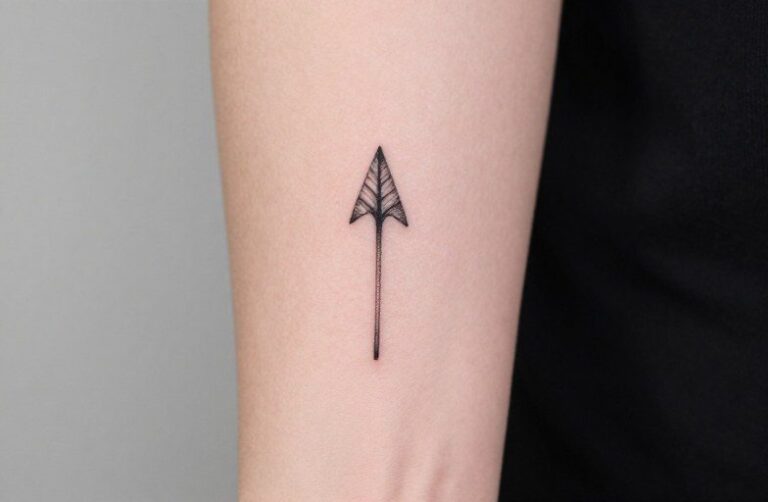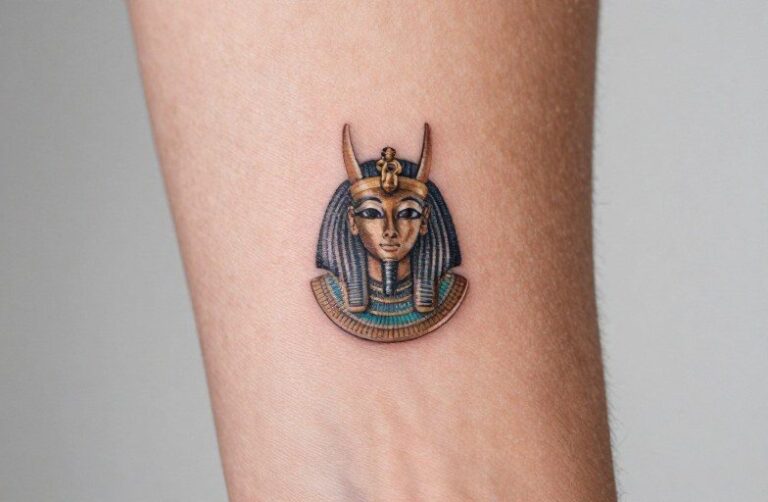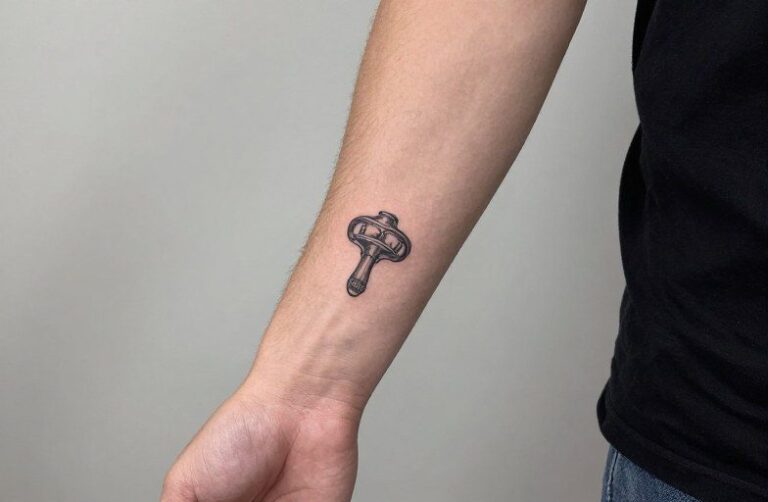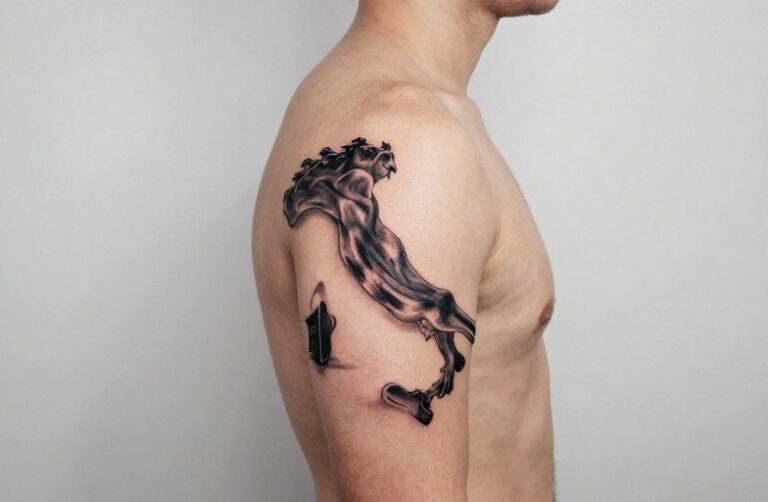
Getting tattooed with your brother is a specific kind of commitment. Not romantic like a couple’s piece, not parent-child, not a friendship that might drift. It’s blood, shared history, and usually a shared tolerance for bad decisions. The trick is finding something that honors that without turning into a matching set of regrettable clichés. Here’s what actually works, what doesn’t, and how to make sure the ink still looks right in twenty years.
Matching & Pairing Ideas
Matching tattoos get a bad rap, but the problem is usually the execution, not the concept. Two brothers with identical pieces can work when the design holds up on its own merits. The key is choosing something that doesn’t require the other half to make sense.
Identical Pieces
Classic choices that stand alone: roman numerals of a shared birth date, coordinates of a childhood home, a family crest simplified to clean linework, or a single word in a parent’s handwriting. These read as personal even without the matching context. Avoid anything too literal, two brothers with identical puzzle pieces or “brother” in block letters tends to age into something that looks like a fraternity stunt.
Complementary Designs
Split imagery works when each piece functions independently. Think two halves of a compass that each contain a full working compass, identical watches set to different meaningful times, or matching animals in different poses (one howling, one sleeping). The best split designs reward a second look: you notice the connection, but neither tattoo looks incomplete alone. This matters because life happens, distance, arguments, death. Each piece should hold its own weight.
Trending Variations
What’s popular isn’t always what lasts, but some current directions have staying power because they solve real design problems.
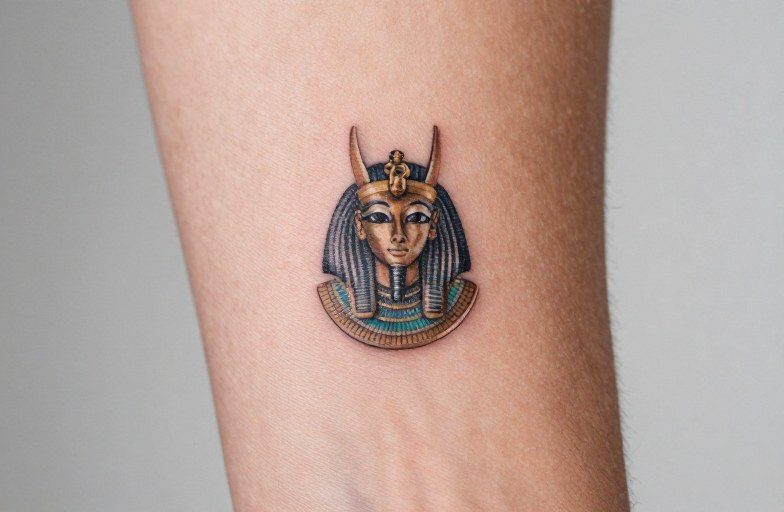
Geometric family trees using negative space have replaced the old name-banner-over-heart approach. The geometry keeps it contemporary; the negative space means less ink density, which ages cleaner. Another solid direction: micro-realism of shared objects, a pocket knife, a specific fishing lure, a model of car you rebuilt together. The specificity protects it from feeling generic.
Single-needle script of coordinates or dates is holding strong, but only in placements with minimal movement. The fine lines blur faster on ribs or inner biceps than on flatter forearm or calf skin. If you’re drawn to this style, commit to touch-ups every few years or accept the softening as part of the piece.
What to Skip
- Infinite symbols with “brother” worked in, overdone, doesn’t age well
- Matching portraits of each other, uncanny valley, emotional weight too heavy
- Anything trending on TikTok this month, trends cycle faster than ink fades
- “Blood” imagery (daggers, blood drops), reads as edge-lord by age thirty
For First-Timers
If one or both of you are new to tattooing, this changes the calculus. First tattoos shouldn’t be large, shouldn’t be in painful spots, and shouldn’t require perfect aftercare in hard-to-reach areas.
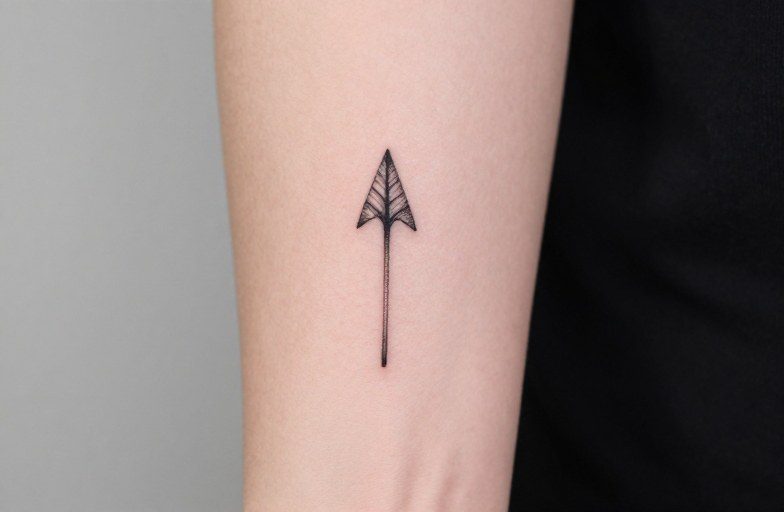
Small matching pieces on the outer forearm or calf make sense. These spots hurt less, heal predictably, and let you see the result easily. A simple line drawing, two matching birds, shared initials in a clean font, or a minimal symbol, gives you the experience without the risk. You can always add later; you can’t easily subtract.
Scheduling matters too. Don’t book the appointment as a surprise or during a reunion weekend when drinking is likely. Alcohol thins blood, complicates the session, and leads to worse decisions. Plan sober, book ahead, and treat it as the permanent choice it is.
Size & Scale
Bigger isn’t automatically better for brother pieces. The relationship is already significant; the tattoo doesn’t need to scream.
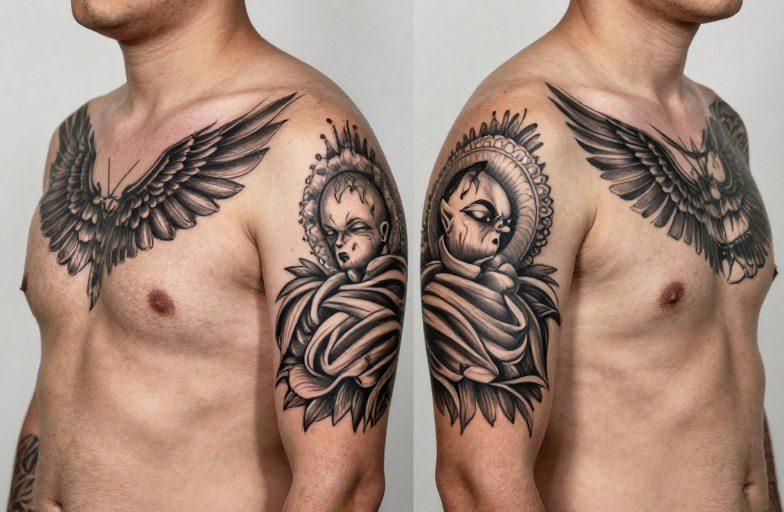
Palm-sized to hand-sized works for most matching designs. This gives the artist enough room for detail without committing to a half-sleeve you’ll need to build around later. For complementary pieces, consider asymmetry: one brother might carry the larger element (a ship) while the other carries the smaller connected piece (an anchor), with the visual weight balanced through composition rather than identical dimensions.
Line weight should scale with size. Tiny tattoos need single-needle or very fine three-round work; larger pieces can handle bolder lines and more shading. The wrong pairing, heavy lines in a small space, or hairline detail in a large piece, looks amateur immediately and ages worse.
Best Placements
Placement affects visibility, pain, aging, and how the piece reads socially. Brother tattoos carry enough sentiment without needing to be constantly visible.
Visible but Professional
Outer forearm, upper arm below a short sleeve, calf, and upper back/shoulder blade. These show when you want, hide when you need. The outer forearm is particularly popular for first brother pieces, easy to show off, easy to cover, heals well, and gives the artist a flat stable surface.
Hidden & Personal
Ribs, inner bicep, side of the torso, upper thigh. These hurt more and heal with more friction from clothing, but the privacy suits some brother dynamics. The rib placement especially works for text or narrow designs; the curve of the body can complement flowing script. Just know that rib ink spreads slightly faster due to skin movement with breathing.
Avoid hands, fingers, neck, and face for brother tattoos unless both of you are already heavily tattooed. These placements are job-limiting, socially loud, and the skin there sheds ink faster than anywhere else on the body.
Tips for Choosing
The design process matters as much as the final image. Here’s how to get it right without overthinking or underthinking.
Start with shared reference, not Pinterest boards. Photos from your actual history, childhood snapshots, handwriting from old cards, objects from shared experiences, give an artist something specific to interpret. Generic “brother tattoo” searches yield generic results.
Find an artist whose style matches your direction, not just someone available. If you want clean blackwork, don’t book with a color realism specialist hoping they’ll adapt. Their discomfort shows in the line quality. Most reputable shops have multiple artists with different strengths; ask who fits your reference.
Budget for the work, not the sentiment. Good tattoos cost what they cost. Splitting a cheap piece between two people doesn’t make it a better deal, it makes two mediocre tattoos. Save longer, book the right artist, do it once.
Finally, live with the concept separately before committing. Both of you should sit with the design for at least two weeks. If either person’s enthusiasm fades, reconsider. The tattoo will outlast the enthusiasm otherwise.
Final Thoughts
Brother tattoos work when they respect the relationship without trying to contain it. The best pieces I’ve seen, a shared coordinate pair, two matching simple line drawings of a childhood dog, complementary watch designs set to different times of day, all share something: they’d be good tattoos even without the brother context. That’s the standard. Get something that honors the connection but stands on its own, placed where it will age well, done by an artist who actually suits the style. The sentiment is already built in. Let the ink do its job.
Frequently Asked Questions
Should brothers get identical tattoos or different but related ones?
Identical works when the design stands alone, coordinates, family crests, meaningful words. Complementary pieces work better when you want something that connects without being obvious to strangers. Both approaches age fine if the individual tattoo is well-designed.
How much should two brother tattoos cost?
Expect to pay standard hourly rates for each piece separately, even if they’re matching. Most artists don’t discount for duplicates because the setup, stencil work, and execution time remain similar. Budget $150-400 per small piece, more for detail or larger work, depending on your area and artist level.
Will matching tattoos look weird if one brother gains or loses significant weight?
Placement matters more than the matching aspect. Areas with stable skin, outer forearm, calf, upper back, shift less with body changes. Stomach, inner thigh, and upper arm change more dramatically. If body changes are a concern, avoid the softer, more stretch-prone areas regardless of matching status.
What if one brother wants a tattoo and the other doesn’t?
Don’t pressure someone into permanent ink. A tattoo meant to bond becomes a resentment anchor if one person felt pushed. Consider a non-tattoo alternative, matching something else, or simply waiting until both are genuinely ready. The relationship doesn’t need ink to validate it.