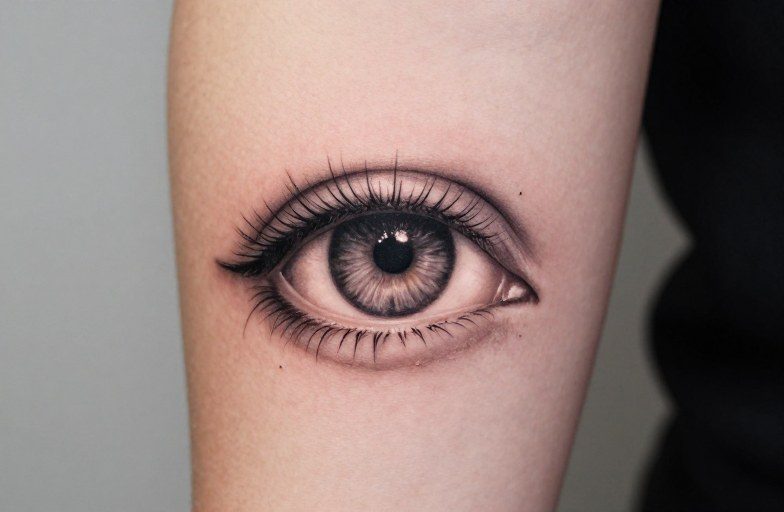
The all-seeing eye carries centuries of visual weight without needing explanation. In tattoo form, it adapts to nearly every style imaginable, fine line and ornamental, bold traditional and photorealistic, standalone symbol and sprawling backpiece centerpiece. What makes this motif worth considering isn’t just its recognizability; it’s how many genuinely different directions you can take it without losing the core impact. Here’s how artists and collectors are approaching it now, what holds up over time, and where to put it.
Standout Design Ideas
Start with the classic: the eye nested inside a triangle, often with radiating lines. This remains the most requested format because it reads instantly and tattoos cleanly. The triangle’s straight edges give the artist hard reference points for symmetry, which matters more than most people realize, an off-center eye looks wrong immediately.
Adding Atmospheric Elements
Clouds, rays, and celestial bodies frame the eye without competing. A common approach places the eye at the center of a sunburst, with each ray varying slightly in weight to create movement. Others sink the triangle into storm clouds, the eye still visible through breaks. These additions work best when they don’t touch the eye itself; let the pupil and iris stay the cleanest part of the design.
Ornamental and Sacred Geometry
Mandala patterns, dotwork halos, and geometric filigree can surround or integrate with the eye. The key restraint: the eye must remain the focal point. When ornamental work creeps across the eyelid or iris, the symbol becomes decorative wallpaper. Strong designs keep the eye anatomically simple and load detail into the surrounding field.
Trending Variations
What’s shifting now is how artists are treating the eye itself. The traditional wide-awake, forward-gazing eye is giving way to more specific expressions and states.
- Closed or sleeping eye: Suggests introspection rather than surveillance. Often paired with moon imagery or softer shading.
- Multiple eyes: Two or three eyes arranged in unexpected configurations, sometimes overlapping or nested. Riskier compositionally but striking when pulled off.
- Partial or obscured: The eye half-hidden by shadow, fabric, or architectural elements. Creates narrative tension without needing a full scene.
- Animal eye: Cat, owl, or reptile eye maintaining the triangular frame. Changes the symbolic register entirely, predatory, nocturnal, ancient.
Color is another variable. The classic palette is black and grey with limited gold or red accents. Some artists now push full color through the iris only, leaving the rest monochrome. This isolates attention exactly where it belongs.
For First-Timers
The all-seeing eye has advantages for a first tattoo. It’s compact enough for small placements, carries enough cultural familiarity that you won’t spend years explaining it, and the basic geometry translates well across skill levels. That said, not every version is beginner-friendly.
What to Avoid Early On
Highly detailed iris work with multiple color shifts demands an artist with specific experience. Photorealistic eyes in small sizes blur faster than stylized ones, those tiny highlight dots and subtle color gradations fade to mush within a few years. For a first piece, favor bold outlines, limited color, and enough scale that details won’t collapse. A clean two-inch triangle eye ages better than a hyper-detailed one-inch attempt.
Healing Considerations
Eye tattoos with heavy solid black (common in the pyramid and background areas) take longer to heal than linework-only pieces. The saturated black can scab thickly and peel unevenly. Expect two weeks of careful after minimum, with the final settled look visible around week four. Don’t judge the darkness or sharpness until then.
Best Placements
Where this design lives changes its effect significantly. The all-seeing eye has been tattooed nearly everywhere, but certain placements carry traditional associations worth knowing.
- Center chest/sternum: The most direct placement, echoing the heart and creating a confrontational forward gaze. Large pieces work here; the flat plane allows for symmetrical expansion.
- Back of neck/hairline: Literally “behind your head.” The surveillance implication is obvious, but the visibility is high, consider professional contexts.
- Inner forearm: You see it constantly; others see it when you gesture. Creates a personal reminder quality rather than a public statement.
- Hand or fingers: Bold choice with significant visibility. Small eye symbols on the web of the hand or knuckles have roots in specific subcultural traditions. Fingers heal poorly and require touch-ups; the eye’s fine details suffer more than bold shapes here.
- Thigh or calf: Ample flat space for larger, more detailed versions. Less daily visibility, which some prefer for a symbol with heavy associations.
One practical note: the triangle’s point direction matters compositionally. Point-up reads as ascent, watchfulness; point-down can feel more grounded or, in some contexts, inverted. Most traditional depictions point up.
Tips for Choosing
Between flash sheets, Pinterest references, and custom consultations, the options overwhelm quickly. Narrow down by deciding what relationship you want with the symbol: protective, challenging, decorative, or devotional.
Style Matching
Traditional American: bold black outlines, limited color palette, the eye slightly stylized rather than realistic. Holds up decades, readable from distance.
Blackwork/dotwork: the eye rendered through stippling or solid black negative space. Demands an artist with specific technical control; poorly executed dotwork in the eye area looks muddy fast.
Fine line/single needle: increasingly popular, especially for smaller placements. The risk is real, thin lines in the iris details blur and disappear. Compensate with slightly heavier line weight in the eyelid creases and pupil boundary.
Artist Selection
Look for healed photos of eye work specifically, not just fresh tattoos. The crispness of a fresh all-seeing eye is deceptive; black saturation drops, lines spread slightly, and that critical symmetry becomes more or less obvious with time. An artist’s portfolio of healed pieces reveals their actual control.
Matching & Pairing Ideas
The all-seeing eye pairs naturally with certain motifs and clashes with others. Understanding why helps build coherent larger pieces or sleeves.
Complementary elements: scales (justice/balance), keys (access, hidden knowledge), snakes (renewal, sometimes deception), celestial bodies (sun/moon cycles), and architectural elements (columns, arches, pyramids). These share the eye’s symbolic weight without competing visually.
More challenging pairings: flowers, unless specifically wilted or thorned; purely decorative elements like butterflies or hearts; cartoon or illustrative styles adjacent to serious renderings. The eye’s intensity can make lighter nearby elements feel trivial, or be undermined by them.
For couples or close friends considering matching all-seeing eye tattoos: the symbol doesn’t split well into two incomplete halves. Better approaches include matching placement and scale with individual surrounding elements, or choosing related but distinct eye variations (open/closed, sun/moon context).
Final Thoughts
The all-seeing eye endures because it functions as both symbol and pure image. Even stripped of all meaning, the disembodied eye watching from skin creates an immediate psychological effect. Your job as the collector is deciding what effect you want and finding the artist who can deliver it in a form that won’t soften past recognition. Prioritize clean geometry, protect the eye’s clarity from over-decoration, and choose scale appropriate to your skin’s behavior and your tolerance for visibility. The best versions of this tattoo don’t shout, they simply don’t stop looking back.
Frequently Asked Questions
Does an all-seeing eye tattoo have to include the triangle?
No. The eye alone still reads clearly, especially with radiating lines or a distinct iris style. The triangle adds structure and traditional association, but many strong designs omit it entirely.
How well does fine line all-seeing eye work hold up?
It depends on scale and placement. Fine line under two inches or on high-movement areas like wrists tends to blur within five years. Slightly heavier line weight in the eyelid definition helps longevity without losing delicacy.
Is the all-seeing eye considered a religious tattoo?
It’s commonly associated with Freemasonry and appears on the U.S. dollar bill, but in tattoo culture it’s largely secular. Many wearers choose it for themes of awareness, protection, or personal accountability rather than specific faith.
Can you cover up an old all-seeing eye with something new?
The heavy black in traditional versions makes covering challenging but not impossible. A skilled artist can often rework the existing geometry into a larger ornamental piece or transition the eye into a different symbolic form.