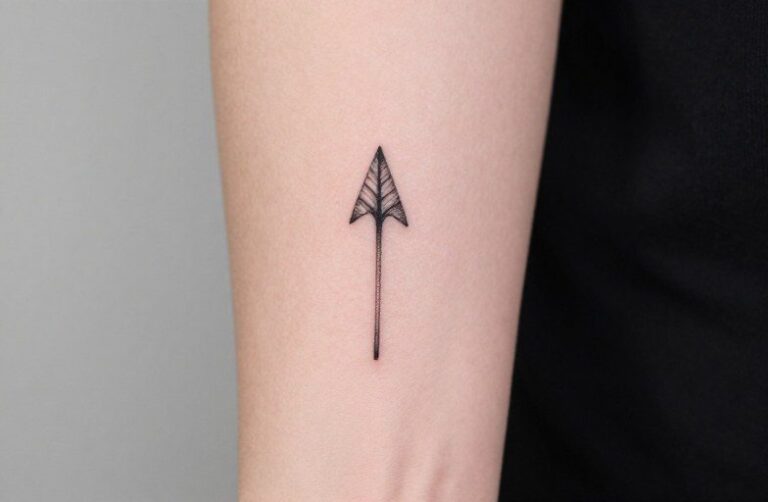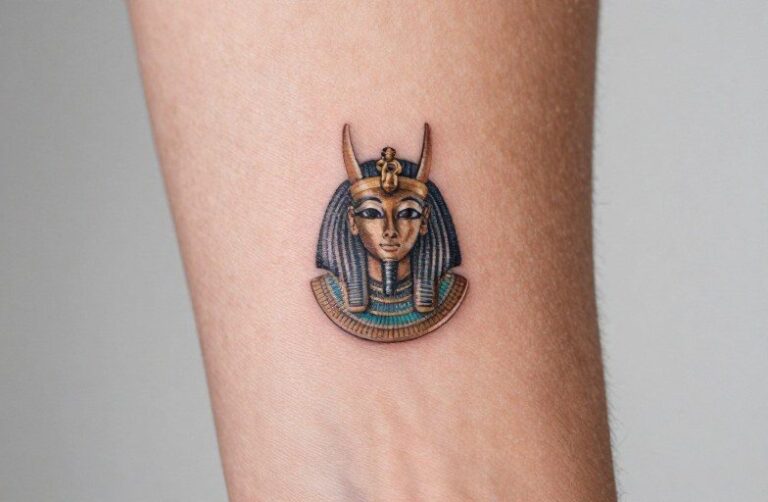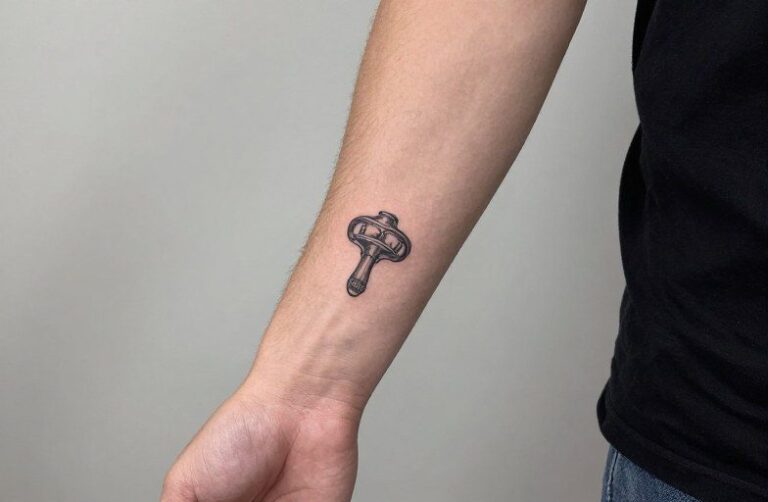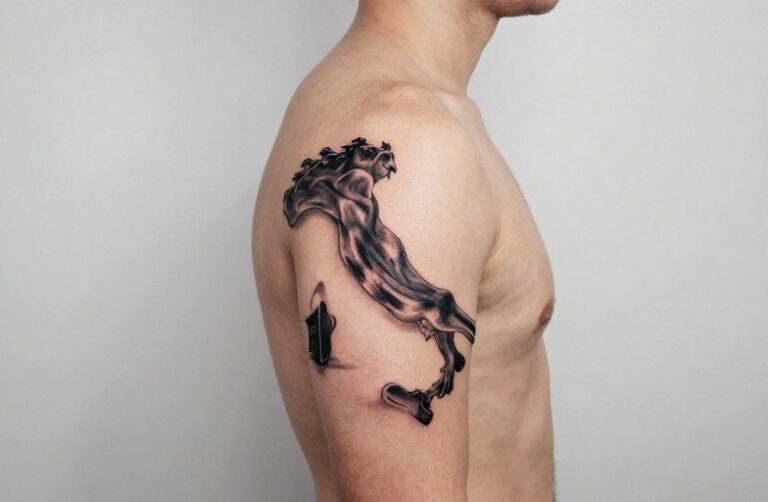
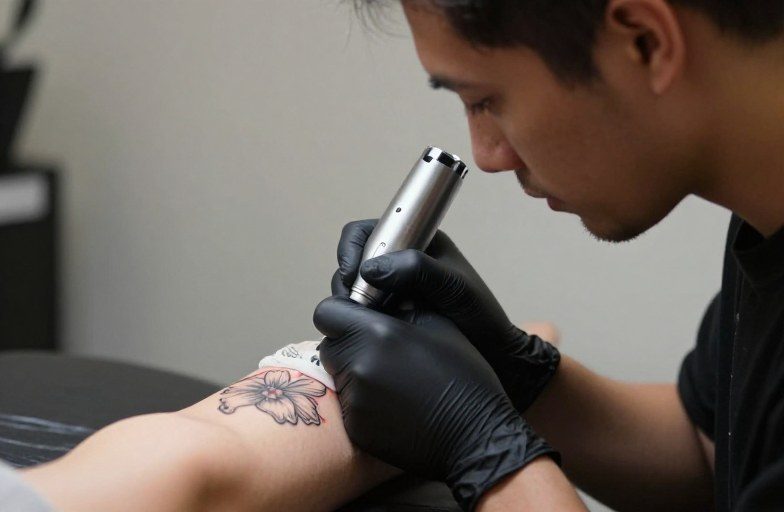
A sleeve artist tattoo pays tribute to the craft and culture of tattooing itself. It typically depicts the tools of the trade, tattoo machines, needles, ink caps, flash sheets, or the artist’s own hands at work, often rendered as a full sleeve that mirrors the medium it celebrates. For the wearer, it signals deep respect for the discipline, the long hours of apprenticeship, and the permanent relationship between artist and client.
Mythology & Folklore
The Artisan as Archetype
Across cultures, the figure of the skilled craftsperson carries mythic weight. Hephaestus forged weapons for gods; Daedalus built wings of wax and feather. The tattoo artist inherits this lineage, someone who transforms raw material into lasting human significance. Sleeve designs that incorporate these classical references, like a machine replacing the hammer or coils echoing Prometheus’s chains, draw on that older reverence for makers who operate at the edge of acceptable society.
Modern Shop Lore
Contemporary tattooing has generated its own folklore. The apprentice who spent years scrubbing tubes before touching skin. The artist who traveled convention circuits sleeping in cars. The machine built from spare parts that still runs perfectly. Sleeve tattoos depicting these narratives, beat-up travel cases, handwritten appointment books, the specific brand of green soap, serve as visual folklore, preserving stories that rarely get written down. They function like sailor tattoos once did: insider marks that identify membership in a working community with its own codes and hierarchies.
Symbolism & Core Meaning
The Machine as Extension
The tattoo machine dominates most sleeve artist designs, and for good reason. Its symbolism operates on multiple levels. Mechanically, it represents precision engineering, coils, capacitors, and armature bars tuned to personal preference. Professionally, it stands for the tool that converts intention into permanence. Psychologically, it can suggest the wearer feels “built” for this work, or that the work has rebuilt them. Machine renderings range from photorealistic coil machines with every screw accounted for, to stylized rotary designs simplified to their essential silhouette.
Hands, Gloves, and the Touch of Work
Some of the most striking sleeve artist tattoos focus on gloved hands holding a machine mid-motion. This emphasizes the physicality of tattooing, the braced fingers, the stretched skin, the angle of attack. Unlike the romantic image of the artist as visionary, these designs acknowledge the repetitive strain, the carpal tunnel, the back pain. The meaning here is unglamorous dedication: this is labor, not just inspiration. The blue nitrile glove, now ubiquitous in the industry, has become a recognizable symbol in itself, distinguishing modern tattooing from its less hygienic past.
Similar & Related Symbols
Artists seeking related imagery often incorporate elements that share thematic DNA with the tattoo craft:
- Printmaking tools: Etching needles, lithography stones, and woodcut gouges parallel tattoo needles in their direct, irreversible mark-making. Cross-hatching techniques translate directly between mediums.
- Surgical instruments: Scalpels, hemostats, and sutures reference the invasive nature of tattooing and its historical overlap with medical practice, particularly in naval and prison contexts.
- Writing implements: Fountain pens, quills, and typewriter keys connect to the idea of permanent record, of words made physical. The tattoo as unerasable text.
- Photography equipment: Vintage cameras and darkroom gear share tattooing’s chemical processes and its capture of fleeting moments into fixed form.
- Traditional trade emblems: Carpenter’s squares, mason’s levels, and blacksmith’s anvils place tattooing within the broader brotherhood of skilled manual trades.
Combinations matter. A machine crossed with a quill suggests historical continuity; a machine dissolving into pixels might comment on digital design’s role in contemporary tattooing.
History & Cultural Roots
From Stigma to Professional Pride
Tattooing in the United States spent decades in marginal legal and social territory. New York City’s ban from 1961 to 1997 forced artists underground; many states lacked licensing requirements until the 1990s or later. The sleeve artist tattoo emerged as visible professional pride only after this period, when shops became legitimate businesses, when artists gained gallery recognition, when television programming normalized the craft. Wearing tattoo imagery on your skin once marked you as an outsider; now it can signify career status, like a chef’s knife tattoo or a barber’s pole.
Japanese and Polynesian Precedents
While the specific imagery is modern, the concept of tattooing about tattooing has deeper roots. Japanese tebori practitioners historically received tattoos from their mentors as both technical training and initiation. Polynesian tattooists in Samoa and elsewhere bore marks indicating their rank and specialty within the ritual hierarchy. The sleeve artist tattoo participates in this older tradition of using skin to record one’s relationship to the craft itself, though the specific iconography, machines, power supplies, disposable tubes, is entirely contemporary.
Best Placements
The Full Sleeve as Statement
The full arm sleeve remains the definitive placement for this subject, for obvious reasons. The form mirrors the content: a tattoo about tattooing that occupies the same space a working artist fills daily. The cylindrical canvas allows the machine to be rendered at actual size, with realistic proportions. Wrapping elements, needle groupings on the inner bicep, ink bottles on the forearm, power supply cables trailing toward the wrist, create narrative flow around the arm’s natural movement. The downside: this is a major commitment, typically requiring 20-40 hours of chair time and significant expense.
Alternative Locations
Not everyone has the canvas or the budget. The outer thigh offers similar continuous space with less visibility, suitable for artists in conservative secondary professions. The calf allows vertical composition, machine standing upright, needle descending toward the ankle. For smaller pieces, the upper arm or shoulder cap concentrates detail in a single viewing area. The hand and fingers, increasingly acceptable in professional contexts, can carry miniature machine outlines or the specific needle configuration an artist favors. These smaller placements work best for actual tattooers marking their trade; on non-artists, they risk appearing as costume rather than credential.
Color vs Black and Grey
Black and Grey Realism
The majority of sleeve artist tattoos execute in black and grey, and this choice carries meaning beyond aesthetics. The limited palette references tattooing’s documentary history, most 20th-century shop photos and flash sheets were black and white. The metallic surfaces of machines (chrome, steel, brass) render naturally in greyscale, with careful attention to reflective highlights suggesting polished maintenance. Shading techniques here favor smooth gradients over heavy blacks, preserving the machine’s mechanical precision rather than its weight. Aging considerations favor this approach: black and grey holds its value longer, with less risk of the muddiness that can afflict color work over decades.
Color Applications
When color appears, it typically serves specific purposes. Traditional American influences bring bold reds, yellows, and greens in limited, flat areas, think Sailor Jerry machine flash. Photorealistic approaches might include the actual brand colors of a favored machine manufacturer, or the specific ink colors an artist mixes daily. Some designs incorporate the full spectrum of a completed tattoo palette, suggesting the transition from tool to finished work. Color demands more frequent touch-ups and risks faster aging, particularly on areas with high sun exposure. For a sleeve, the inner arm preserves color better than the outer forearm.
Key Takeaways
The sleeve artist tattoo occupies a specific niche: it celebrates a craft by using that craft’s own vocabulary. Its meaning centers on respect for technical mastery, acknowledgment of physical labor, and identification with a professional community that has only recently achieved mainstream legitimacy. The machine itself, rendered in careful detail or bold simplification, serves as the primary symbol, simultaneously tool, weapon, and pen.
Placement decisions should account for the design’s scale requirements and the wearer’s actual relationship to the trade. Color choices balance historical reference against longevity. Related symbols from printmaking, surgery, and traditional trades expand the visual vocabulary without diluting the core message. Most importantly, this tattoo type rewards authenticity: it speaks clearest when worn by someone who has actually spent hours in the position it depicts, needle in hand, building permanence one pass at a time.
Frequently Asked Questions
Do you have to be a tattoo artist to get a sleeve artist tattoo?
No, but the meaning lands differently. For actual tattooers, it reads as professional identification. For outsiders, it can appear as appreciation or appropriation depending on execution and context. If you’re not in the trade, consider whether the imagery genuinely connects to your own creative practice rather than borrowing tattoo-culture cool.
How detailed should the machine be in the design?
Specificity signals authenticity. A coil machine with correct anatomy, binding post, armature bar, contact screw, reads as knowledgeable. Generic or incorrectly assembled machines look like clip art. Work with an artist who understands machine mechanics, or provide detailed reference photos of your actual equipment.
Will a black and grey sleeve artist tattoo look dated?
Black and grey ages more gracefully than most color approaches for this subject. The documentary aesthetic connects to tattooing’s actual history rather than trend cycles. Avoid overly stylized effects that reference current Instagram filters; clean realism or bold traditional approaches have longer visual shelf lives.
How do you incorporate personal shop elements without making the design too busy?
Select one or two specific details, a particular brand of machine, a handwritten appointment notation, a shop’s actual neon sign, and render them small, tucked into negative space. The overall composition should read clearly from distance; personal Easter eggs reward closer inspection without cluttering the primary image.