A name tattooed on your finger is a statement you can’t tuck away. Unlike a bicep or back piece, this sits at eye level during every handshake, every text, every moment of daily life. The meaning is usually direct: a partner, a child, a parent, or your own name as a declaration of self. But the symbolism runs deeper than the obvious, it’s about visibility, permanence, and the willingness to make something private into something public.
History & Cultural Roots
Sailor and Prison Traditions
Finger tattoos have long occupied the margins of tattoo culture. Sailors in the early 20th century often got small finger pieces, names of sweethearts, ships, or simple letters, as tokens of identity in a transient life. The placement made sense: easily hidden by a work glove, immediately visible when desired. Prison tattooing later adopted finger placement for similar reasons of concealment and display, with names of gang affiliations, loved ones, or coded messages written across knuckles and sides of fingers. These origins give finger name tattoos a working-class authenticity that flashier placements sometimes lack.
Contemporary Mainstream Adoption
What began at society’s edges gradually moved center. Celebrity visibility in the 2000s and 2010s normalized finger tattoos, including name pieces, for mainstream audiences. The aesthetic shifted from purely functional to deliberately stylized, delicate script replaced crude block letters, and placement became more considered. Yet the core appeal remained: fingers offer a canvas that’s simultaneously intimate and exposed, a combination no other placement quite replicates.
Religious & Spiritual Angles
Names as Sacred Markers
Many religious traditions treat names as vessels of power. Judaism avoids casually writing the full divine name; some Christian traditions emphasize naming ceremonies as spiritual thresholds. A finger name tattoo can echo this reverence, carrying a loved one’s name as a kind of portable prayer, a physical reminder of connection that transcends distance or circumstance. For some, it’s the secular equivalent of a saint medal: a tactile, visible anchor to something larger than oneself.
Memorial and Grief Functions
Finger placement holds particular weight for memorial tattoos. The hand’s role in touch, reaching, holding, comforting, makes it a poignant site for a lost loved one’s name. Unlike a memorial on the chest or back, the finger name remains in your field of vision during ordinary acts: stirring coffee, typing, driving. This constant, low-grade presence can feel like ongoing conversation rather than static commemoration. Some find this comforting; others discover it’s more exposure than they anticipated.
Design Tips & Pairings
Script Selection and Scale
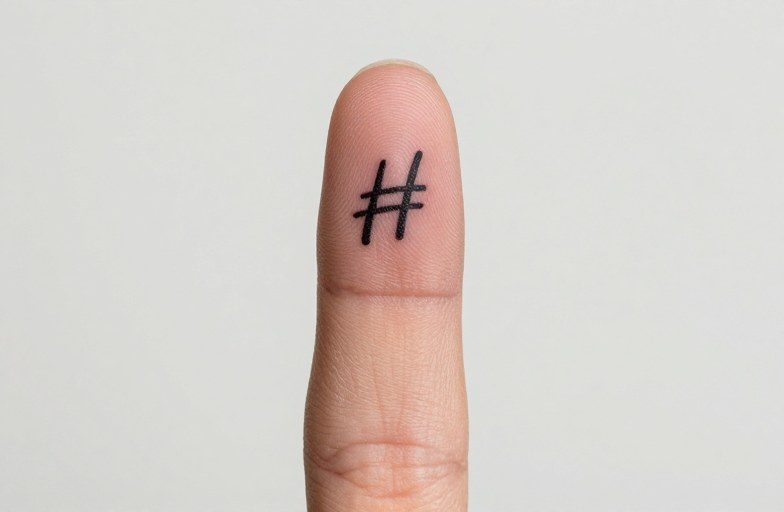
Finger skin is unforgiving. The space between knuckles measures roughly 2-3 centimeters vertically, with constant movement and some of the body’s thickest stratum corneum. This demands specific script choices:
- Thick, clean lines outperform hairline detail that will blur within months
- Lettering 6mm or taller remains legible longer; smaller text degenerates faster
- Serif fonts often age better than elaborate cursive, whose loops can merge
- All-caps block offers maximum readability in minimal space
Single names work best. Attempting two names stacked, or a name plus date, typically crowds the canvas and accelerates illegibility.
Complementary Elements
Simple additions can frame a finger name without overwhelming it. A thin horizontal line above or below the text creates deliberate structure. Small symbols, a heart, infinity loop, or cross, can flank the name on adjacent fingers. Some opt for the name across one finger’s side, with a tiny matching motif on the finger’s top or neighboring digit. The key restraint: finger real estate punishes complexity. Every element must earn its place.
Color vs Black and Grey
Black and grey dominates finger name tattoos for practical reasons. Color pigments, especially reds and yellows, fade faster on hands due to sun exposure and rapid cell turnover. Black carbon-based ink simply holds longer. That said, deliberate color choices carry specific weight: red for passion or blood-tie, blue for calm fidelity, white (which yellows to cream) for subtlety on darker skin tones. The trade-off is maintenance, colored finger pieces typically need refresh sessions every 2-4 years versus 5-7 for solid black work. Most artists recommend black for longevity, with color reserved for small accent points if desired.
Common Variations & Styles
Placement Specifics
Not all finger positions read equally. The finger’s side (radial or ulnar) offers the flattest, most stable canvas and shows when hands rest naturally on tables or steering wheels. The top/dorsal surface faces the world more aggressively, visible in every wave, every raised hand. Between-finger webbing provides hidden placement but heals poorly and stretches unpredictably. Knuckles demand bold, simple lettering; the skin’s constant flexing and thinner quality here causes faster degradation. The ring finger’s inner surface, facing the palm, offers semi-private placement, visible to you when hands are clasped, hidden in standard handshake position.
Stylistic Approaches
- Traditional Americana: bold blackletter or simple serif, often with minimal ornament
- Fine-line minimalist: single-needle script, requires exceptional artist skill and accepts faster fading
- Decorative/ornamental: name integrated with filigree, small florals, or geometric frames
- Typewriter/utility: deliberately plain, almost bureaucratic lettering that emphasizes function over flourish
Symbolism & Core Meaning
At its foundation, a finger name tattoo declares: this relationship matters enough to wear permanently, publicly, and without retreat. The hand’s role in human connection, touching, gesturing, creating, amplifies this. Unlike a hidden name over the heart, the finger name says this bond shapes how I engage with the world.
There’s vulnerability too. Names are mutable. Relationships end. People change names. The finger’s visibility means you can’t easily avoid the tattoo’s implications, unlike a back piece that requires mirror-checking. This exposure can symbolize courage or naivety depending on outcome, though the original intent is almost always earnest commitment.
Self-name tattoos on fingers invert the typical dynamic. Rather than external devotion, this asserts identity as self-determined, unerasable, primary. It can mark survival, transformation, or simply self-possession in a world that tries to name you otherwise.
Key Takeaways
- Finger name tattoos merge intimacy with exposure, meaning is amplified by unavoidable visibility
- Historical roots in sailor and prison culture give the placement authentic grit despite mainstream adoption
- Design constraints are severe: thick lines, larger letters, and simplicity outlast elaborate detail
- Black and grey offers superior longevity; color requires committed maintenance schedule
- Placement choice (side, top, inner finger, knuckle) significantly affects visibility and aging
- Core symbolism centers on public commitment, with memorial and self-identity as significant secondary meanings
- The finger’s role in touch and communication makes this placement symbolically distinct from more hidden alternatives
Frequently Asked Questions
Do finger name tattoos fade faster than other placements?
Yes, significantly. Hands experience constant friction, sun exposure, and rapid skin cell turnover. Most finger tattoos need touch-ups every 1-3 years to maintain clarity, compared to 5-10 years for upper arm or back pieces.
What’s the most painful finger area for a name tattoo?
The fingers and knuckles rank among the most painful tattoo locations due to thin skin directly over bone and nerve-rich areas. The sides of fingers tend to hurt slightly less than knuckles or fingertips, though individual pain tolerance varies substantially.
Can you cover up a finger name tattoo if the relationship ends?
Cover-ups on fingers are challenging due to limited space and poor ink retention. Small names can sometimes be incorporated into larger designs like ornamental bands or flowers, but complete removal via laser is often more practical for finger tattoos than arm or leg pieces.
How much should a finger name tattoo cost?
Most reputable artists charge $80-150 for a simple finger name, though some shop minimums run higher. Beware unusually cheap offers, finger work demands precision, and poor execution here is highly visible and difficult to fix.