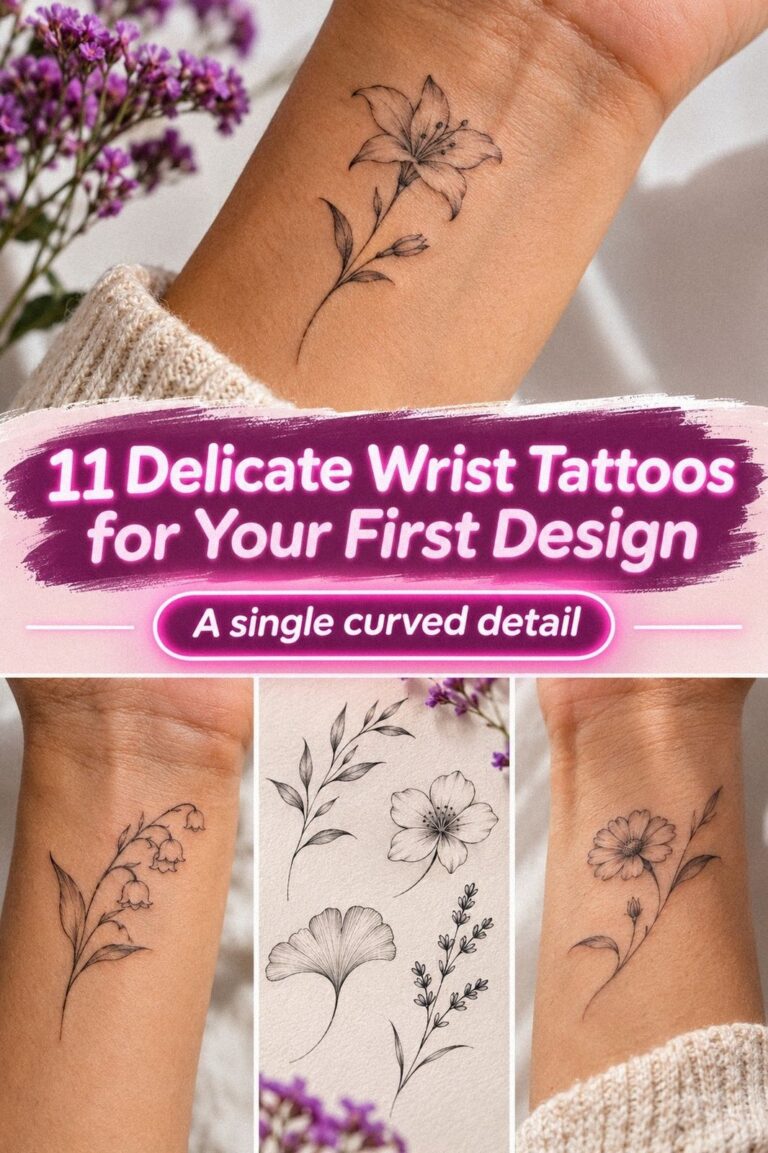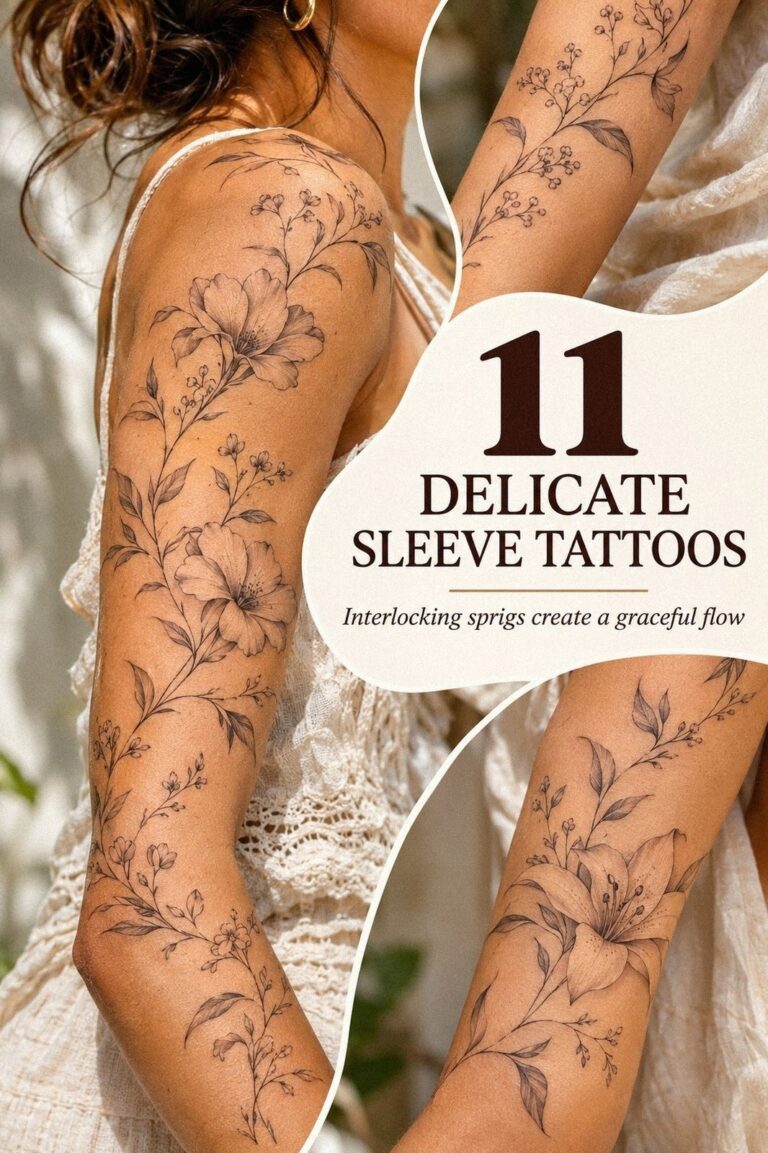
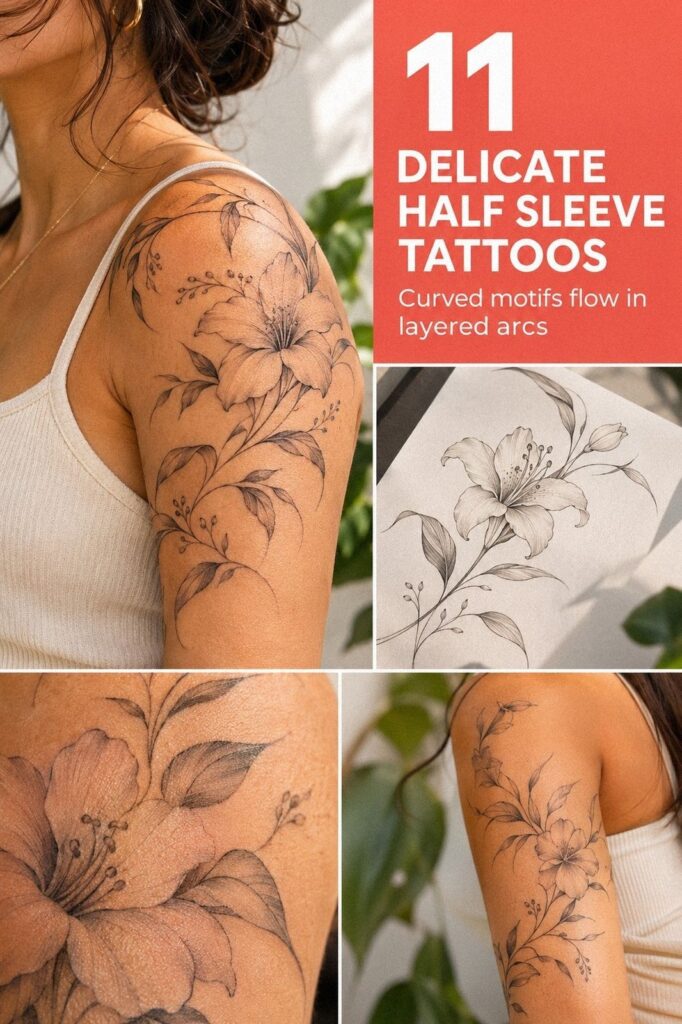
Delicate half sleeve tattoos can stay discreet, readable, and easy to cover when placement and line weight work together. I once chose a design that looked elegant on paper but crowded my forearm in real life. Now I look at skin flow first, then symbolism. These ideas will help you choose with confidence!
Editor’s note: Start with one strong idea. Your design doesn’t need every symbol, flower, or detail you love.
Short version: A coverable tattoo still needs skin space to breathe. Compare more small half sleeve tattoo ideas before you commit to a final stencil.
- Why Fine-Line Florals Stay Discreet
- Can Celestial Symbols Carry Meaning?
- Botanical Linework: Build a Flowing Trail
- Let the Animal Motif Lead
- Minimal Black Ink, Maximum Clarity
- Which Personal Symbols Belong?
- Dotwork or Open Skin?
- Upper Arm vs. Forearm: Choose Your Cover
- A Moonlit Direction
- Script and Florals: Keep Both Readable
- Make Geometry the Bold Accent
1Why Fine-Line Florals Stay Discreet
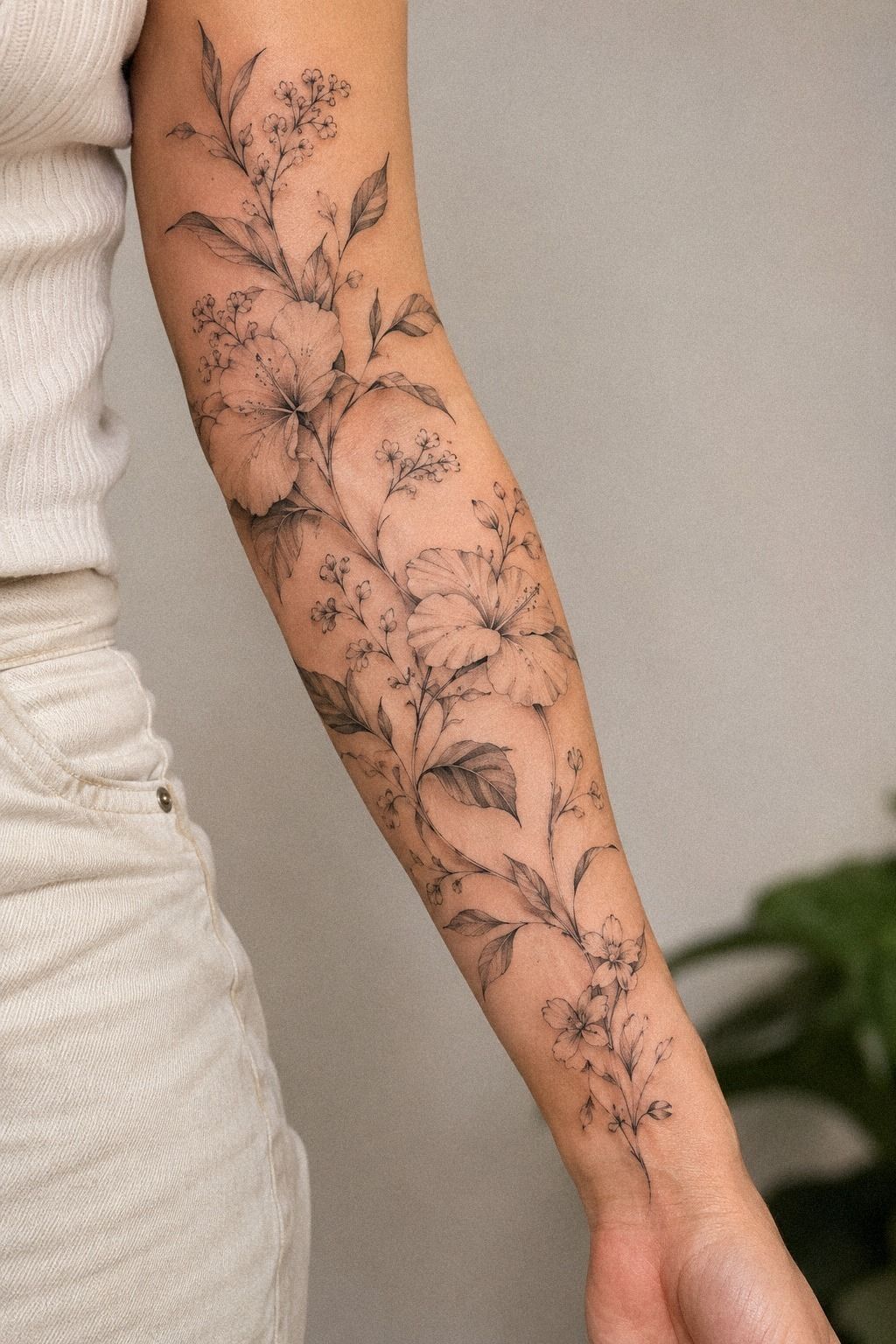
A fine-line floral sleeve suits you if you want something personal without filling every inch of skin. You can use one flower, a narrow stem, or a small botanical cluster. The result can feel delicate without looking unfinished.
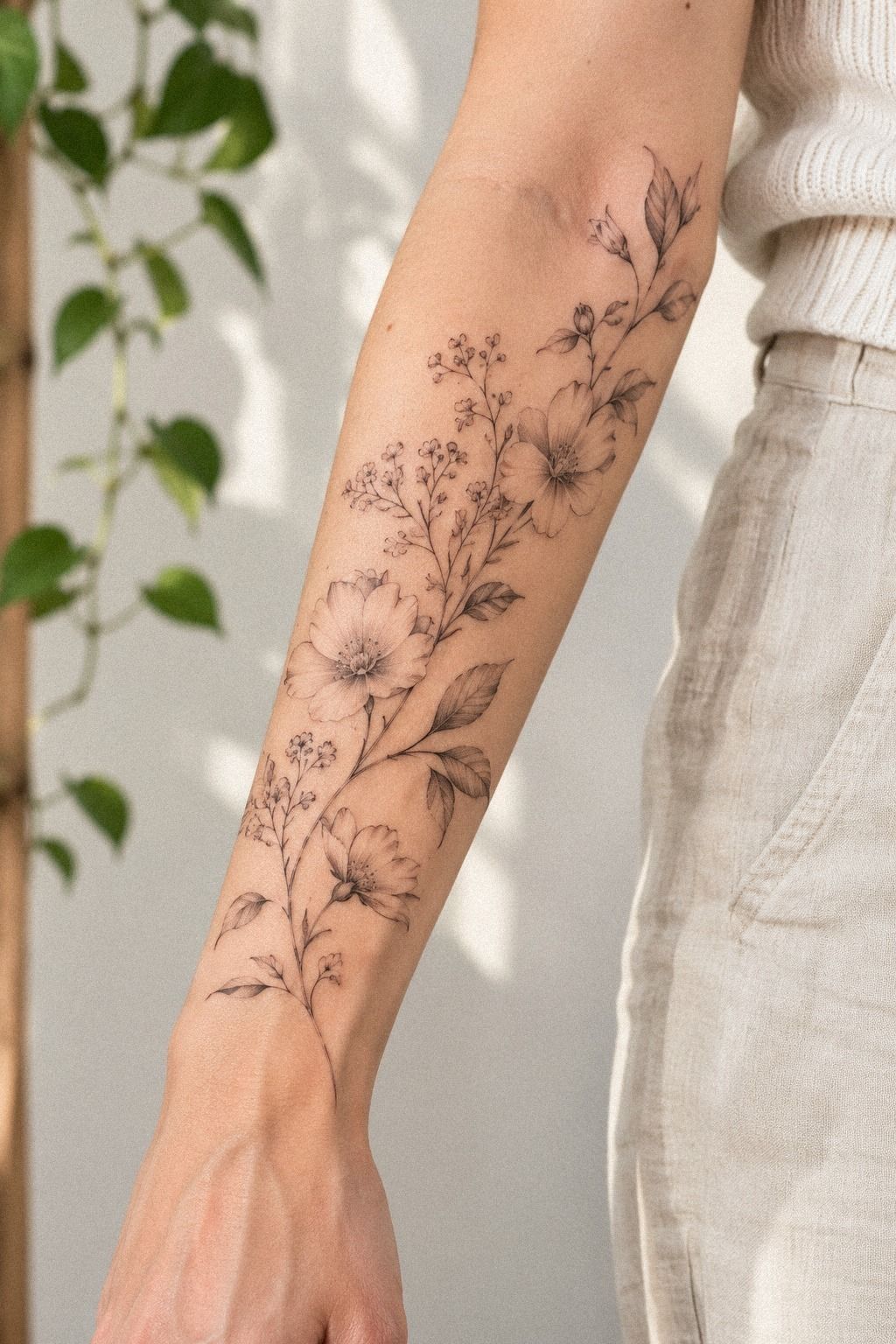
A wildflower stem gives your artist a natural vertical path. Daisies, poppies, and forget-me-nots can move from the lower forearm toward the elbow. That direction makes the sleeve look longer without adding heavy coverage.
I’d keep enough skin around each bloom. This is my Wildflower Margin Rule. The empty space protects the graceful shape and keeps small petals readable.
It also makes the design easier to cover under a work shirt.
Your artist can use cool black ink with restrained detail. Heavy shading may look bold when fresh, but it can overpower a minimal concept. A lighter approach keeps the tattoo understated and crisp.
For a discreet result, think about forearm flow before choosing individual flowers. Rotate your arm.
Check the front, side, and inner edge. A stem that works from one angle may look broken from another.
A single flower can carry a meaningful memory. It might mark a birthday, a friendship, or a personal turning point. If you want more visual length, add two leaves or a tiny seed head.
You don’t need another large bloom!
2Can Celestial Symbols Carry Meaning?
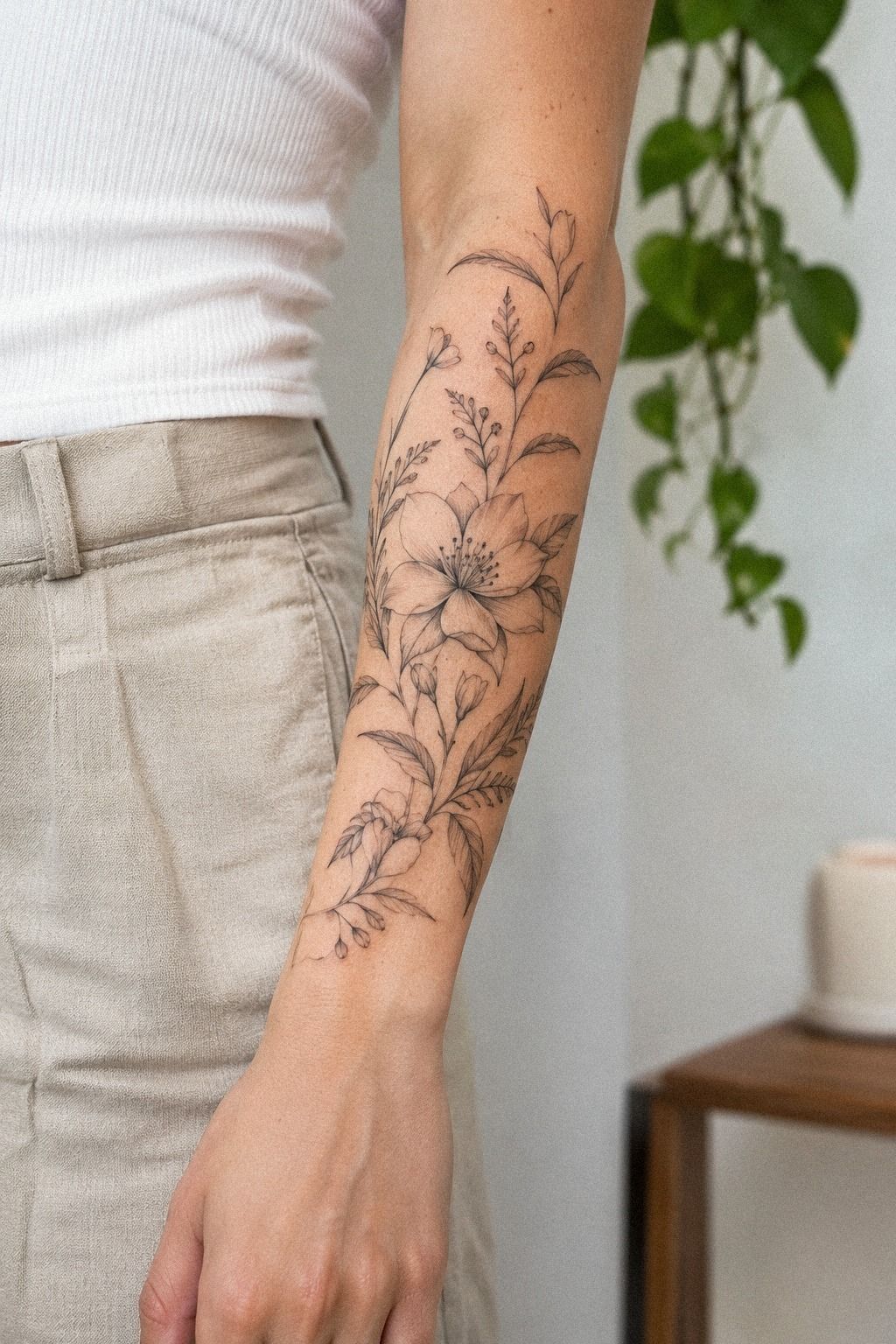
Yes, celestial symbols can give your half sleeve a symbolic direction without demanding a large image.
3Botanical Linework: Build a Flowing Trail
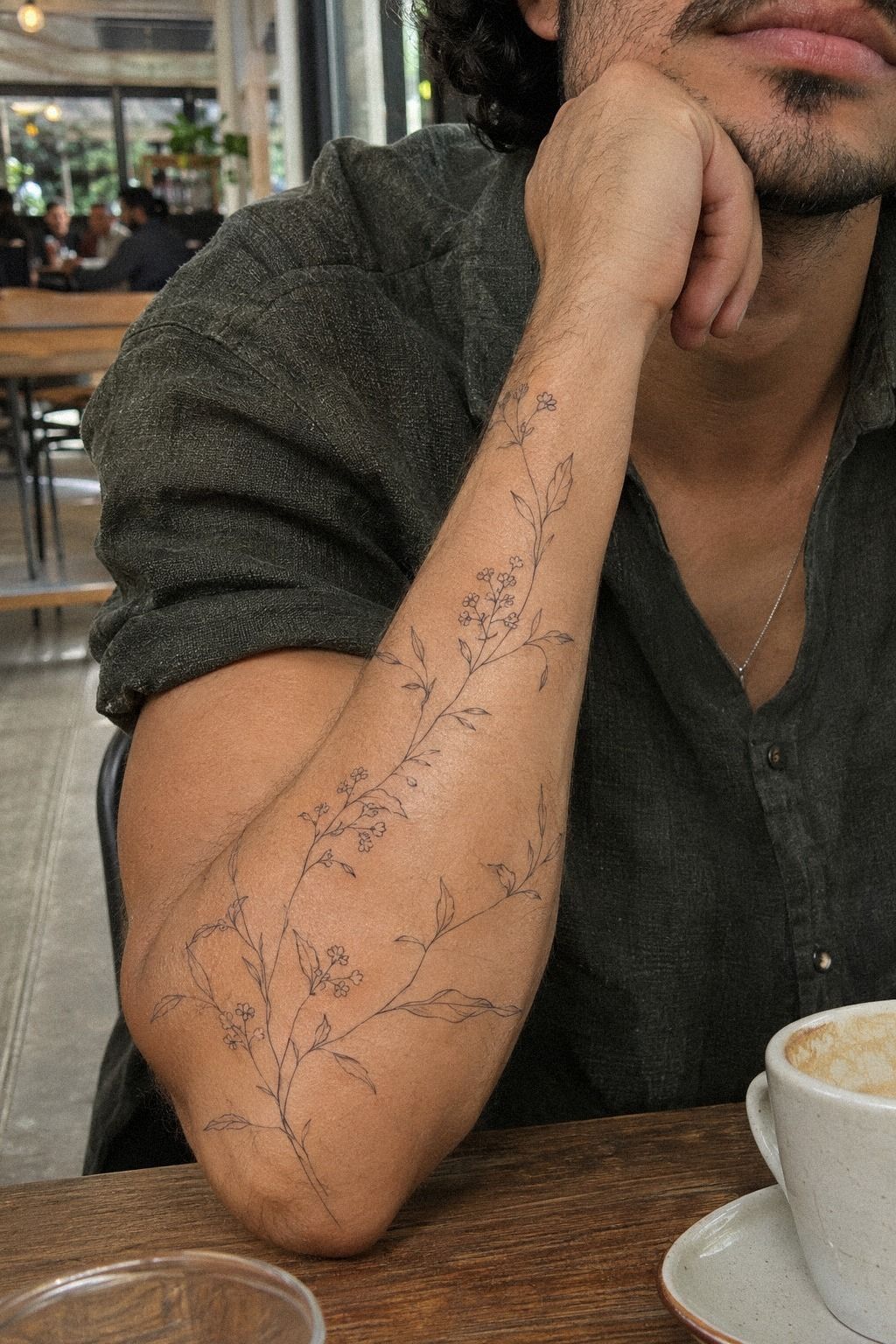
Botanical linework gives you texture without requiring broad coverage. One plant can lead the eye.
Two smaller stems can support it. The result can feel intricate, sleek, and personal.
Use botanical linework to create a clear path along the arm. Ferns, olive branches, eucalyptus, and wild grasses each create a different mood. Pick one dominant plant before adding supporting leaves.
An olive branch can feel classic and symbolic. Ferns may feel more expressive.
Wild grasses can create a playful, flowing edge. You don’t need to combine every plant you like.
I’d choose one main stem and two quieter companions. This creates visual hierarchy. Your eye knows where to land.
The rest of the tattoo supports that first decision.
My Ink Weight Ladder starts with the main stem. Add medium leaves next.
Finish with the smallest marks. This order keeps the design readable and helps your artist protect the strongest lines.
Ask your artist to check how the pattern bends when you rotate your arm. A leaf may look sharp from the front but disappear along the side. That small arm rotation check can improve the long-term value of your design.
If you want a restrained comparison, browse these minimalist finger tattoos. The scale is different, but the lesson is useful. Small designs need clear shapes and fewer competing details.
Protect open skin around the plants. Don’t confuse intricate with crowded.
A striking sleeve can come from three leaves, one overlap, and a meaningful stem. Solid background work isn’t necessary.
A Small Test Before You Commit
Ask yourself whether the tattoo still works when you remove half the supporting marks. If the answer is yes, the main idea is probably strong.
I’d also trace the proposed path with a washable marker. Bend your elbow.
Turn your wrist. If the movement feels awkward before the appointment, it won’t become graceful through extra detail.
4Let the Animal Motif Lead
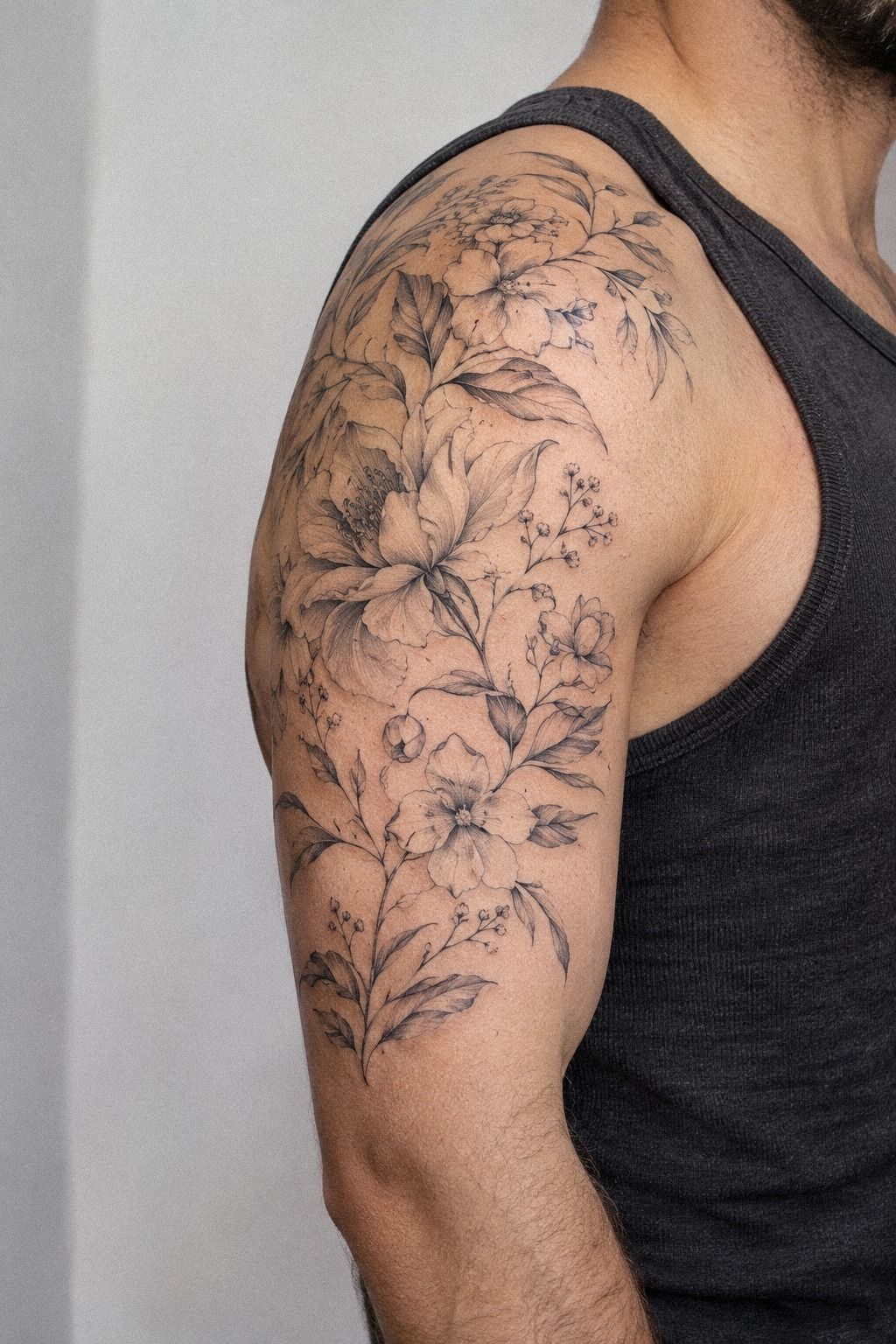
Animal motifs can feel powerful without becoming oversized. The key is a clear silhouette. Your design should read quickly, even when the details stay minimal.
Choose one animal motif with an emotional reason behind it. A moth may represent transformation.
A bird may suggest movement. A fox may carry a clever, personal association.
A fox profile can fit beautifully into a delicate half sleeve. Keep one eye, one ear line, and a few fur marks. Trying to draw every strand may make the face gritty at a small scale.
You could also choose a swallow, deer, snake, or butterfly. The best choice isn’t always the most realistic one.
It’s the one that still feels meaningful after the trend has passed. Protect the animal silhouette above all else.
A moth symbol can sit beside a small moon or a narrow branch. This gives it context without burying the wings in decoration. Your artist can simplify the body and protect the main shape.
Think about the placement before you add surrounding marks. The outer forearm gives you strong visibility and easier covering. The hand and wrist can be more demanding for delicate details.
If you want more references, review these delicate sleeve tattoo ideas. Look for silhouettes that remain readable.
Don’t copy the exact tattoo. Borrow the balance.
I’d rather see one expressive animal with skin around it than three tiny figures fighting for attention. That choice can feel bold and understated at the same time. It’s also better value when you’re paying for clarity instead of clutter.
The Rule I Use for Symbol Mix
Every symbol should answer one question: why does it belong here? Think of this as your symbol mix test.
A meaningful animal can lead the sleeve. A flower can support its movement.
A geometric mark can add contrast. When every element has a job, the design feels polished instead of accidental.
If you can’t explain a symbol in one sentence, set it aside for now. You can always add it later. You can’t easily create more open skin after the sleeve has become dense.
5Minimal Black Ink, Maximum Clarity
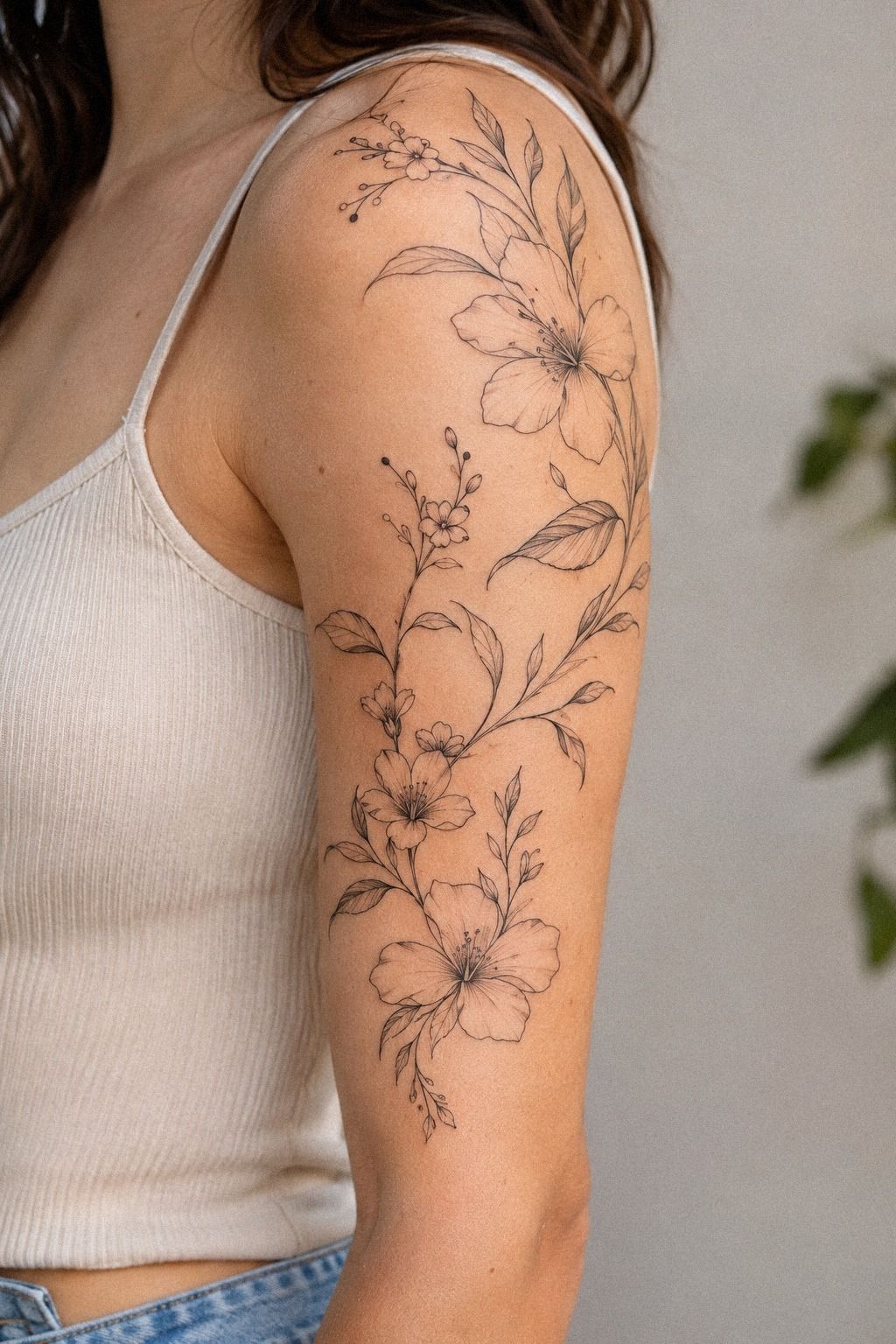
A black-ink flash sheet can be the smartest starting point when you’re still deciding. It lets you compare symbols, scale, and placement before you build a larger composition.
A flash sheet can include moons, leaves, initials, animals, and simple geometric marks. Choose the flash pieces that still interest you after several days. If you only like a symbol for one afternoon, it may not be worth it.
A minimal composition usually needs stronger editing than a larger tattoo. Pick one focal mark.
Add two supporting pieces. Leave the rest as possible future work.
This approach can protect your budget. You’re paying for a design that reads well, not for a crowded collection of tiny details. A smaller first stage may offer better design value than rushing into a full appointment.
Use negative space as an active design choice. It gives each mark room and helps your sleeve stay easy to cover. It also creates a polished break between different ideas.
Ask your artist whether the details need to be enlarged. A crisp mark on a phone screen may need more space on your arm. That conversation can prevent an expensive correction later.
A good artist consultation should cover scale, placement, line weight, and healed examples. Bring references, but ask for an original composition. Your artist should explain what they’d simplify and why.
If you’re comparing smaller concepts, review these small tattoos with meaning. The designs may not all be half sleeves. Their editing choices can still help you build one.
Minimal doesn’t mean plain. A sharp crescent, a dainty branch, or one fierce animal can create an iconic result. The best version feels intentional from every angle!
6Which Personal Symbols Belong?
Personal symbols work best when you know why each one belongs.
7Dotwork or Open Skin?
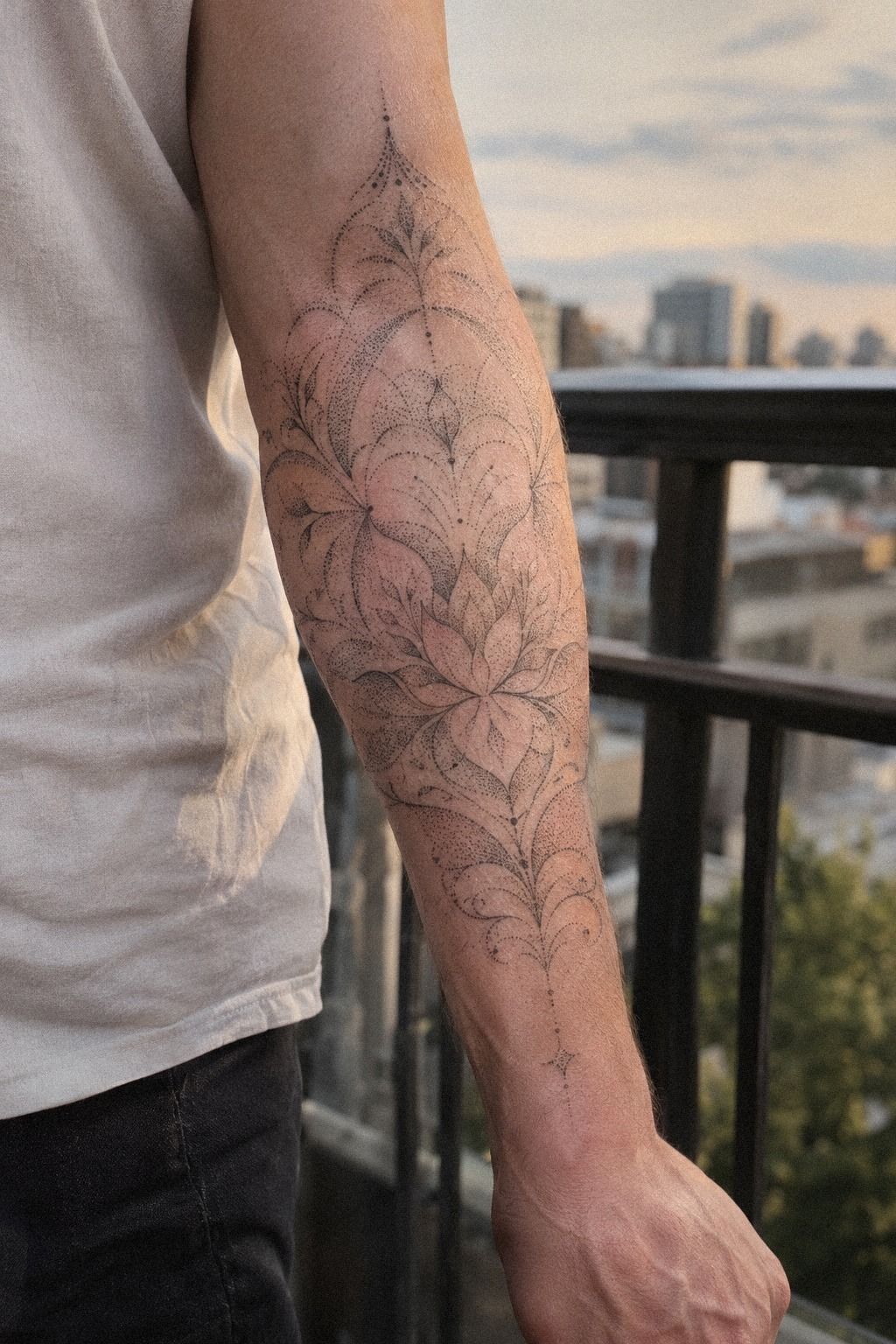
Dotwork gives you a graceful way to add depth without broad blocks of shading. It can make a minimal sleeve feel ornate while keeping the skin visible.
Use dotwork shading around a moon, flower, animal, or geometric mark. The dots should support the focal image. They shouldn’t become a dark cloud around it.
A light ornate border can surround one symbol without turning the entire sleeve heavy. Keep the border narrow. Let its rhythm follow the arm instead of cutting across it.
A stippling pattern can create a soft gradient with many small points. Ask your artist how dense the dots need to be. Too much density may compete with your main linework.
This is where budget and design value meet. A detailed dotwork effect takes time. Decide whether the added depth is worth the cost before the appointment starts.
Your artist may recommend a specific fine needle grouping for tiny points and controlled texture. The final choice depends on the design, your skin, and the artist’s method. Listen to the explanation rather than choosing by label alone.
Don’t assume more detail means more sophistication. A few dots near a crescent may feel more polished than a full field of stippling. The open areas keep the tattoo crisp.
If you’re researching artists, these tattoo artist meaning guides can help you compare different approaches. Focus on healed clarity and consistency.
I’d choose dotwork when it adds meaning or depth. I wouldn’t add it only because an empty patch feels uncomfortable. Skin can be part of the design.
Placement Check: Relaxed and Moving
Your artist should evaluate the stencil placement while your arm is relaxed, bent, and rotated. A design can look perfect with your elbow straight and shift once you move naturally.
Check the outer, inner, front, and back views. You don’t need every angle to match. You do need the major symbols to remain recognizable.
This small step protects the flowing quality of the sleeve. It also helps you avoid a sharp line ending in an awkward place.
8Upper Arm vs. Forearm: Choose Your Cover
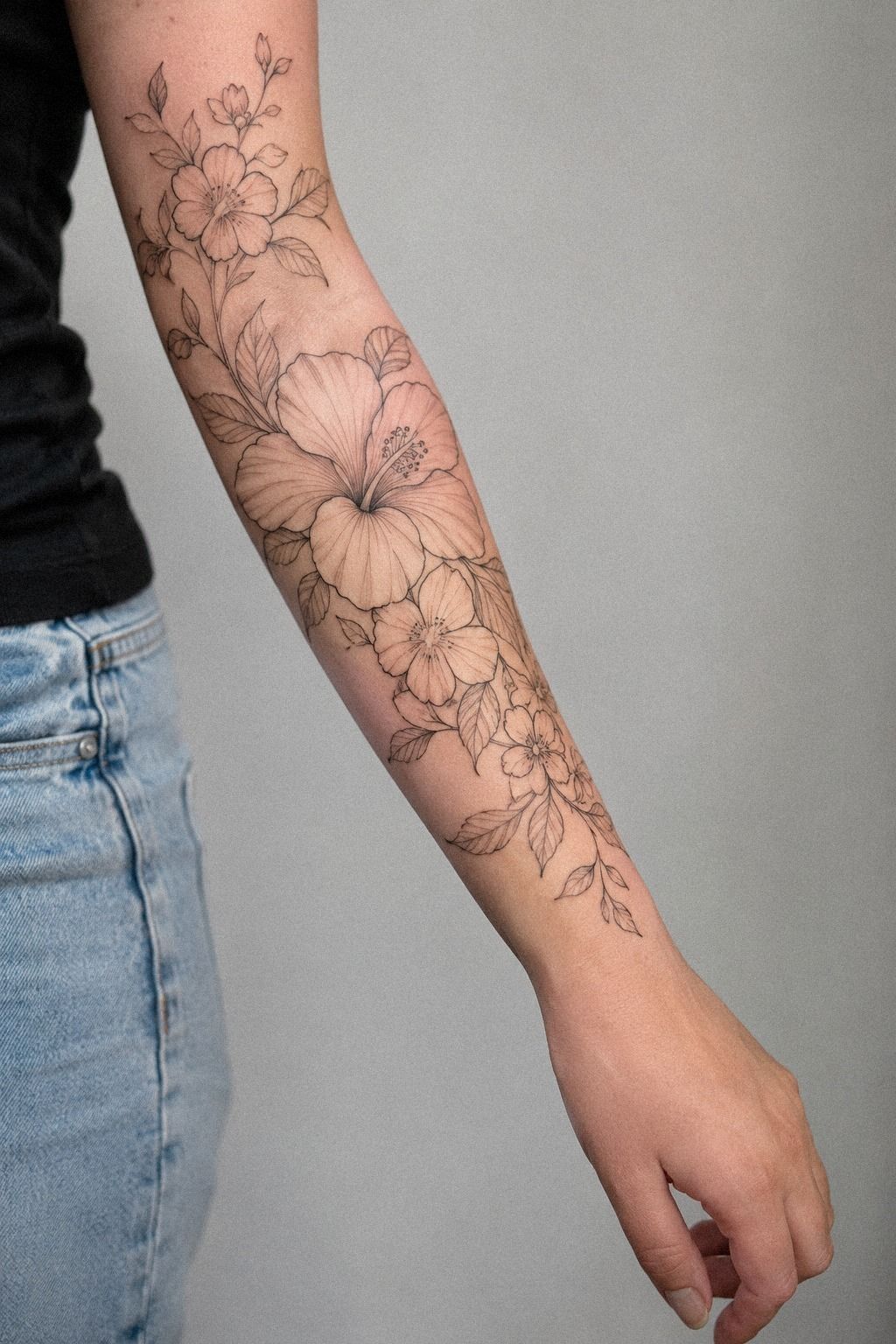
An upper-arm placement gives you privacy without forcing your design to disappear. It can stay discreet beneath a short sleeve while still offering enough space for clear forms.
An upper-arm placement works well when workplace coverage matters. Your clothing can hide most of the tattoo. You can still reveal it when you choose.
The short-sleeve coverage line depends on your clothing and arm movement. Try on the shirts you actually wear.
Raise your arm. Sit down.
Check where the edge appears.
Map the tattoo while your arm is relaxed and slightly bent. Skin shifts when you move. A symbol that looks centered while standing can tilt when your elbow bends.
Place the strongest motif on the outer upper arm if you want visibility and privacy. This area can support a larger focal mark without forcing every detail into a narrow strip.
A fierce image doesn’t need thick lines to feel powerful. A slender serpent, graceful branch, or edgy geometric mark can create impact without overwhelming the placement.
Pay attention to the elbow crease. It can distort a delicate line and may be more sensitive during the session. Your artist can taper leaves, stars, or dots before that area.
If you’re weighing upper-arm privacy against forearm visibility, compare these small half sleeve tattoos. Think about your real work clothes, not an imaginary dress code.
Coverability has practical value. You’ll spend less time worrying about visibility, and you won’t need to redesign the tattoo around every workday. That makes the placement worth it for many people.
How I’d Edit the Final Stencil
I’d remove anything that competes with the main mark. Then I’d check whether the remaining shapes follow the natural direction of the arm.
The final stencil should include a clear focal point, a few supporting marks, and enough skin between them. That combination can feel bold without losing its discreet character.
Ask to see the stencil from several angles before the process begins. You don’t have to approve it instantly. A thoughtful pause can save you from a rushed decision.
9A Moonlit Direction
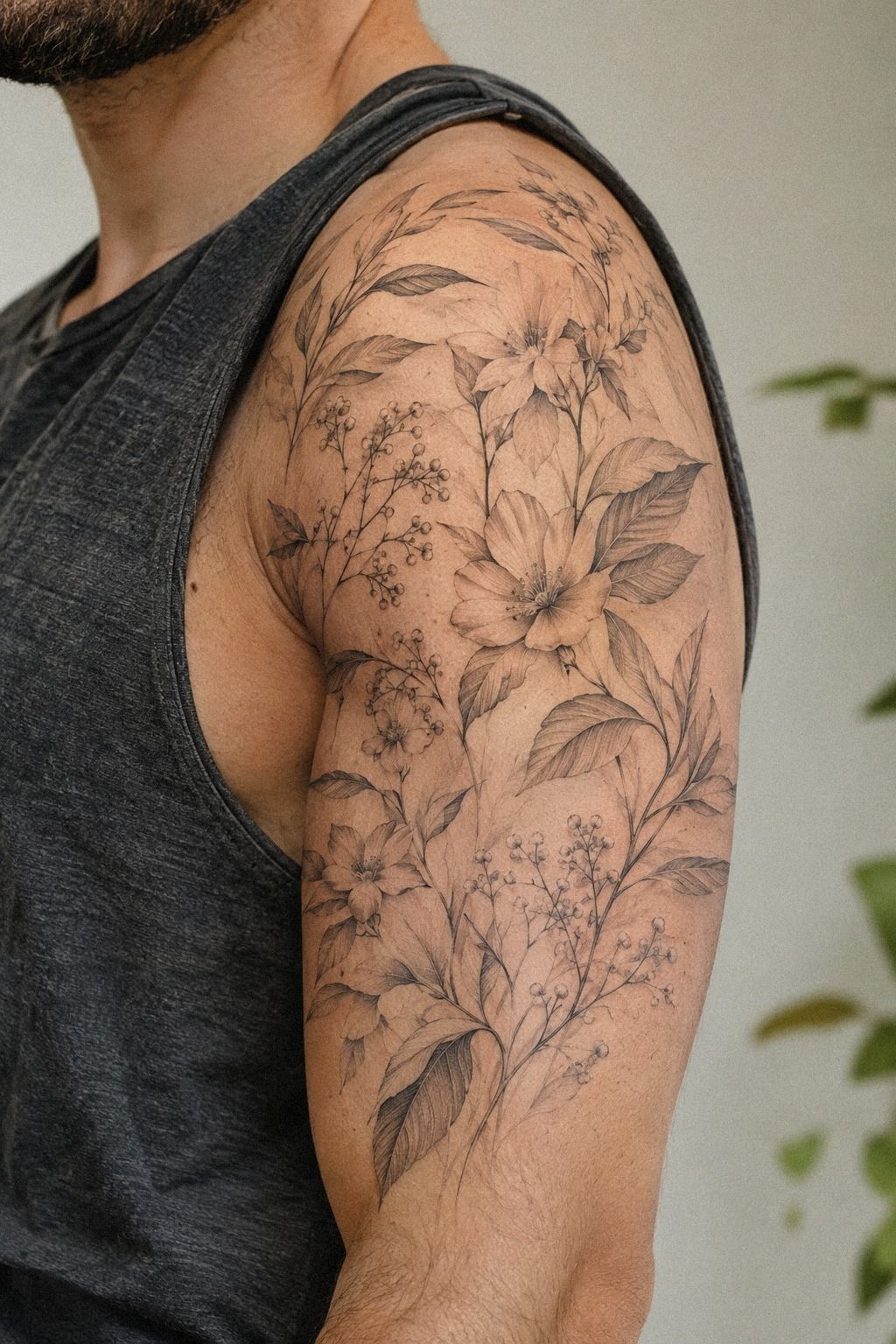
A crescent moon gives you an instantly recognizable anchor. It can feel haunting, romantic, or timeless without requiring a large scene.
Build around moonlit imagery that matches your personal story. A moon may represent cycles. Stars may mark people.
A thin cloud line may suggest movement.
An orbit line can connect a moon to a small star or planet. Keep the curve open. It shouldn’t turn into a dense surround around the main symbol.
A star cluster gives you a chance to vary scale. Use one larger star, two medium marks, and several tiny points. This creates rhythm without filling the sleeve.
You could place the moon near the outer forearm and let smaller marks travel upward. Or you could make it a shoulder anchor with fine stars moving toward the elbow. Your arm’s natural curve should decide.
A celestial anchor helps the whole sleeve feel intentional. Without one, moons and stars can look scattered. With one, even a minimal group can feel complete.
If your theme leans meaningful, revisit these half sleeve tattoos with meaning. Choose symbols that still matter beyond the current aesthetic.
Don’t make every detail equally bright or equally dark. Contrast gives the eye somewhere to rest. A simple crescent can carry more impact than a crowded galaxy.
The Meaning Needs a Hierarchy
Your most important symbol should be the easiest one to notice. Supporting marks can guide the eye, but they shouldn’t compete with the emotional center.
I like a design that reveals itself gradually. First, you see the bold anchor.
Then you notice the delicate details. Finally, you understand why the symbols sit together.
That layered reading keeps the tattoo expressive.
That layered reading can make a half sleeve feel personal without making it loud. It also gives you more flexibility when workplace coverage matters.
10Script and Florals: Keep Both Readable
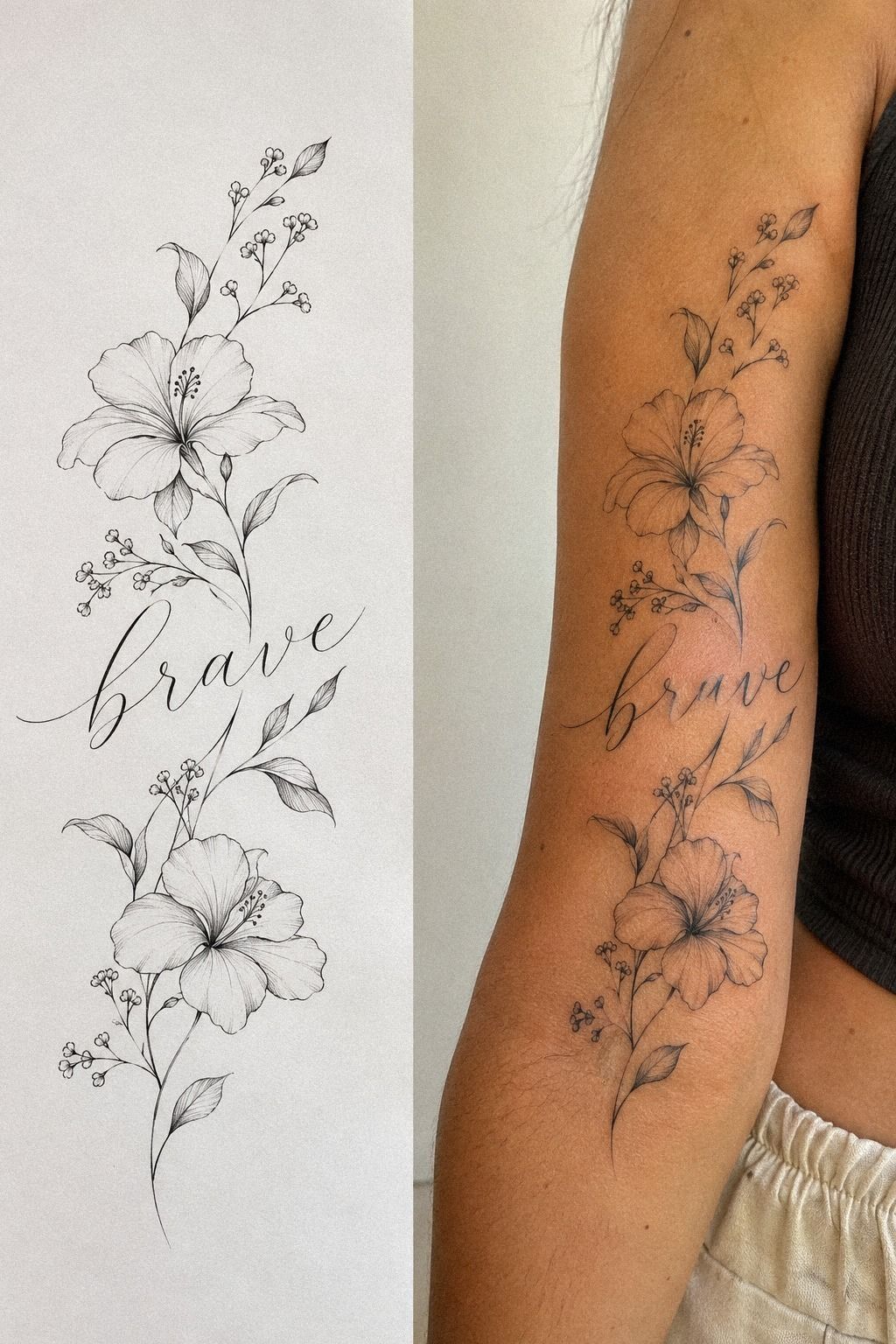
Script and florals can work together when the words remain short and the flowers carry the movement.
A Practical Artist Conversation
Bring your references, but explain the feeling behind them. Your artist conversation should clarify whether you want a raw moth, an elegant botanical trail, or a playful celestial accent.
Ask what they’d simplify, where they’d leave skin open, and how they’d protect readability. Their answers can tell you whether their style matches your plan.
You should also ask for healed work. Fresh tattoos often look vibrant and crisp. Healed examples show how the artist’s lines settle and whether small details remain clear.
11Make Geometry the Bold Accent
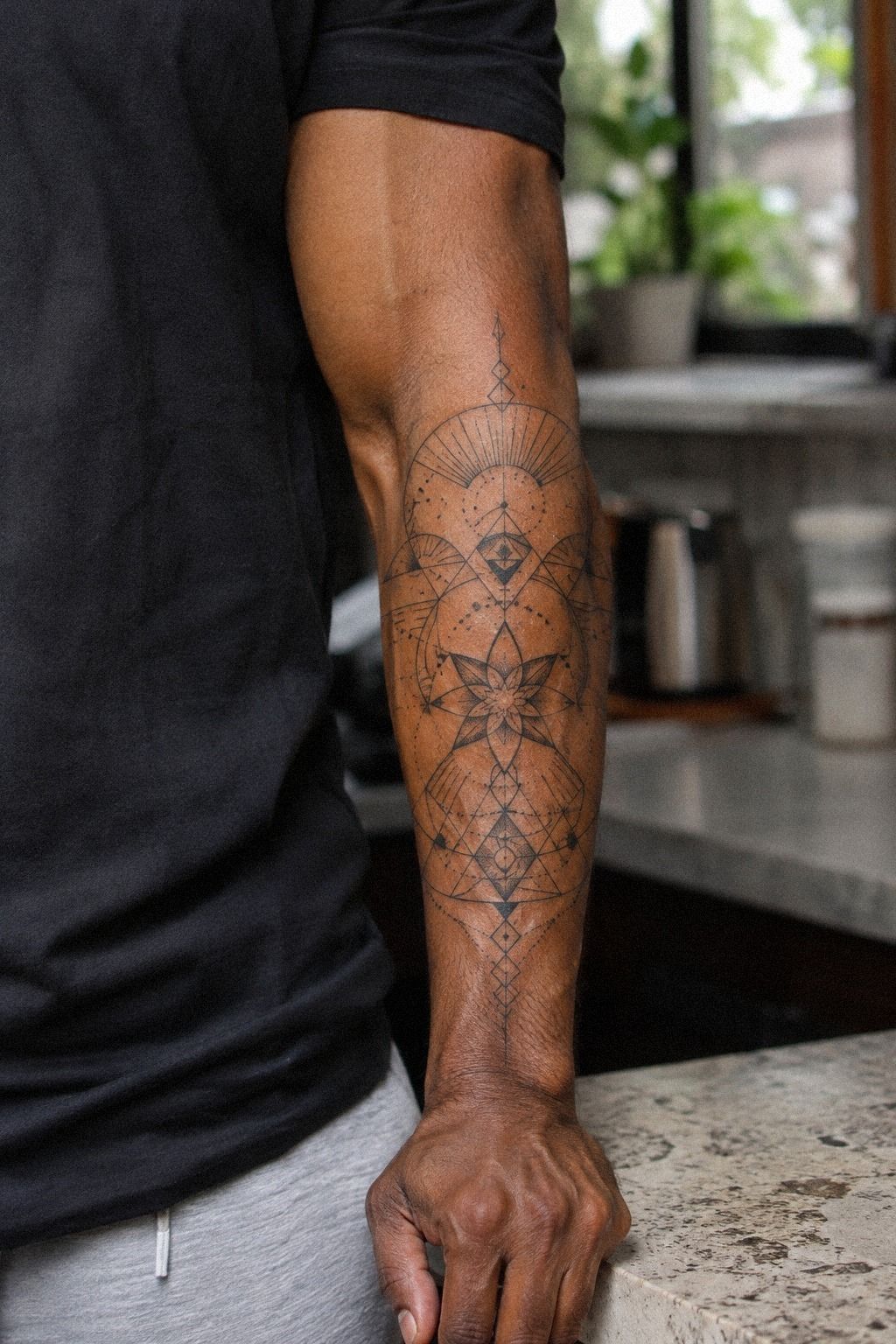
Geometric details can make a delicate sleeve feel bold without covering the whole arm. One clean shape can give softer florals, moons, or animals a sharper counterpoint.
Use geometric details as a visual anchor. A circle can suggest wholeness. A triangle can suggest direction.
A narrow line can divide two related ideas.
A triangle accent works well beside a botanical stem or crescent. Keep its scale connected to the other marks. A shape that’s too large may dominate the entire sleeve.
You can add sharp angles near flowing elements for contrast. This makes the design feel daring and expressive. The contrast should look intentional, not accidental.
A small square, compass point, or arc can create a classic structure. You don’t need a full geometric sleeve. One or two shapes may be enough.
A bold focal mark gives your artist a clear hierarchy. Everything else can remain delicate around it. This lets the tattoo feel powerful without losing its discreet character.
Ask your artist to check the geometry while your arm is relaxed and moving. A perfect circle can look distorted when it crosses a curved area. Placement matters as much as the shape itself.
For a broader comparison, browse these minimalist sleeve tattoo ideas. Notice how the strongest designs use fewer marks. That restraint can make your own sleeve more iconic.
Geometry is also useful when you want a masculine, feminine, or neutral direction without relying on a trend. Keep the symbols personal. Let the lines sharpen the story.
The Editorial Choice I’d Make From Experience
I’ve learned that a delicate half sleeve succeeds before the tattoo session begins. The artist matters, but the first decision is whether your idea respects the movement of your arm.
I’ve seen striking references fail because every symbol was treated as equally important. The result was intricate, yet it had no visual pause.
Skin is part of the design. Your open space needs a job.
I’d be careful with the word “delicate.” It shouldn’t mean fragile, tiny, or endlessly thin. A crisp black anchor can make lighter marks feel more graceful.
My preference is a personal image with one bold detail. I don’t want a sleeve made from dozens of whisper-thin marks. I want one clear idea, a few expressive supports, and enough skin to keep the tattoo readable.
Look for healed tattoo work in your artist’s portfolio. Fresh work can look vibrant and sharp. Healed examples reveal how lines settle, how black remains readable, and how small details hold up.
Ask how the artist approaches your skin tone, friction, movement, and sun exposure. Those questions are practical. They can also help you decide whether the artist’s style is worth the cost.
The long-term value comes from planning. A cheaper appointment may not be good value if the design needs early correction. A thoughtful consultation can protect your budget.
Think about skin movement before approving the stencil. Bend your elbow. Rotate your wrist.
Let the artist see how the design shifts instead of judging it only while you stand still.
Healing deserves attention too. Follow your artist’s aftercare instructions.
Wash gently. Moisturize as directed.
Avoid picking at peeling skin.
The surface often settles in about 2 to 3 weeks. Surface healing can look uneven during that stage. Complete settling may take roughly 2 to 3 months.
Avoid strong sun exposure while the tattoo is vulnerable. Follow the instructions you receive about swimming, friction, and products. I wouldn’t rush a touch-up or second appointment.
Costs vary by artist, region, placement, design density, and appointment length. Ask how the artist calculates the hourly rate. Get a written estimate when possible.
A half sleeve may need more than one session. Discuss the design in hours instead of accepting a vague promise. You’ll also want to discuss sizing before the stencil is placed.
The Questions Worth Answering First
How much does a delicate half sleeve tattoo usually cost?
A delicate half sleeve tattoo may start around $50 to $100 for a shop minimum. Many artists charge roughly $100 to $250 per hour. Your final cost depends on the artist, region, detail, and session length.
Ask for a written estimate before booking. Compare healed portfolios instead of choosing only by price. You can also review these delicate sleeve tattoo ideas while deciding how much design you want.
Are delicate half sleeve tattoos a good idea for a first tattoo?
Yes, a delicate half sleeve can be a meaningful first tattoo when you choose a tolerable placement and a design that feels personal. The forearm placement is often easier to manage than ribs, feet, hands, or sternum.
You’ll still want a consultation, especially if you’re uncertain about scale. A first tattoo doesn’t need to be tiny. It should be planned carefully and sized so the design stays readable.
How do I choose a tattoo artist for delicate half sleeve tattoos?
Choose an artist with clean linework, healed examples, strong hygiene standards, and experience with the style you want. A portfolio with healed examples will tell you more than a collection of fresh work.
Ask how the artist handles your skin tone, movement, and long-term line spread. If your idea includes small details, ask whether they’d simplify anything before the stencil is applied.
How much do delicate half sleeve tattoos hurt?
Pain varies by person, but the forearm, thigh, and shoulder are often more tolerable than the ribs, feet, hands, or sternum. Your forearm may feel easier than a bony area, though sensitivity changes across the arm.
You can ask your artist about breaks and appointment timing. I wouldn’t choose a painful placement only because it looks fashionable. A graceful design in a manageable location is the better long-term decision.
How long does a delicate half sleeve tattoo take to heal?
The surface usually heals in about 2 to 3 weeks. Complete healing can take approximately 2 to 3 months. Follow your artist’s instructions for gentle washing, moisturizing, and protection from sun and swimming.
Don’t judge the final color while the tattoo is still settling. Your skin may look dry or uneven during the early stage. Picking at it can interfere with healing.
What’s the best placement for delicate half sleeve tattoos?
The forearm and upper arm are strong choices because they offer visibility, easier covering, and generally more tolerable sessions. A curved upper-arm placement can stay discreet beneath clothing while giving your artist enough space for clear linework.
Your artist should place the stencil while your arm is relaxed and moving naturally. If you want a smaller companion design, compare these delicate side finger tattoos before adding another placement.
Where can I buy delicate half sleeve tattoos, and is there an affiliate disclosure?
You don’t buy a tattoo from a product listing. You choose an artist, approve a design, and book a session. This guide uses artist-created tattoo work as inspiration, and there are no affiliate product recommendations here.
You can save references from this article, bring them to your artist, and ask for an original composition. These delicate side hand tattoos may help you compare smaller supporting motifs without copying another person’s exact tattoo.
Where I’d Start First
If I had to pick one, I’d start with the fine-line wildflower forearm. It stays personal, readable, and easy to cover beneath a sleeve without losing its delicate shape.
I’d choose one meaningful flower, one crisp supporting mark, and enough open skin to keep the composition polished. That balance gives you strong visual value without making the tattoo feel overworked.
Save these minimalist half sleeve tattoo ideas for comparison. Then bring your favorite references to an artist who can turn the concept into an original, coverable design!