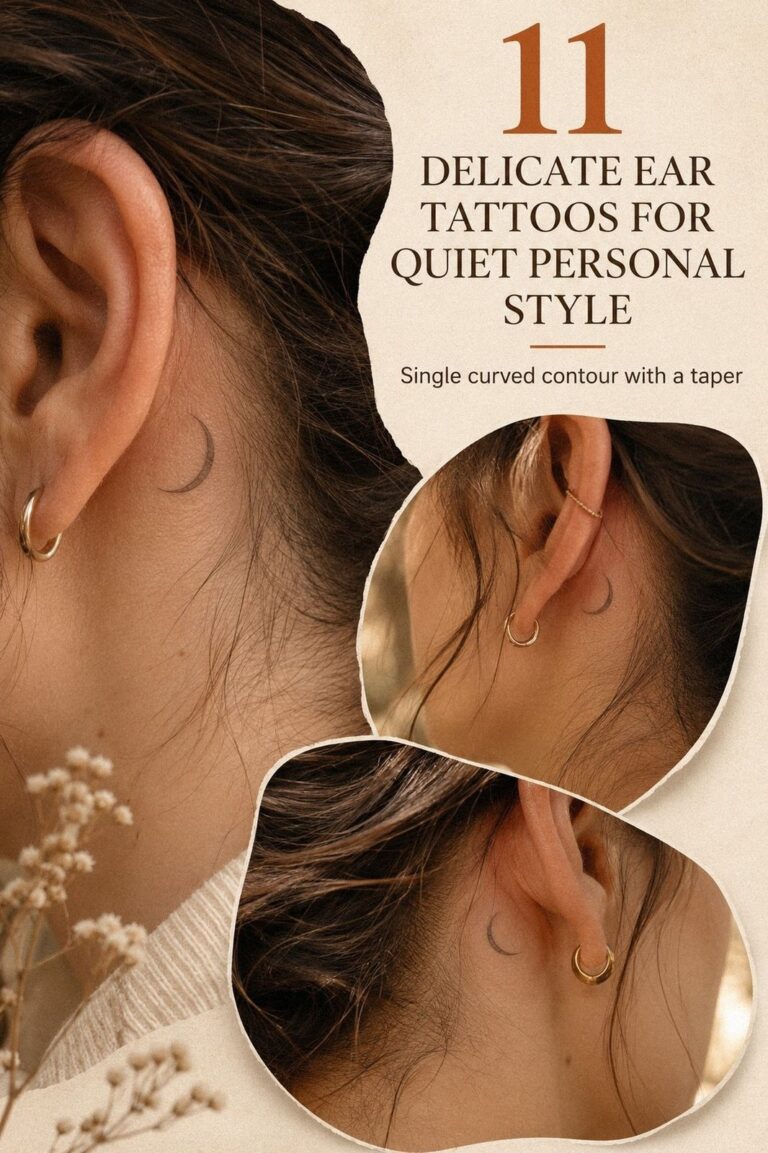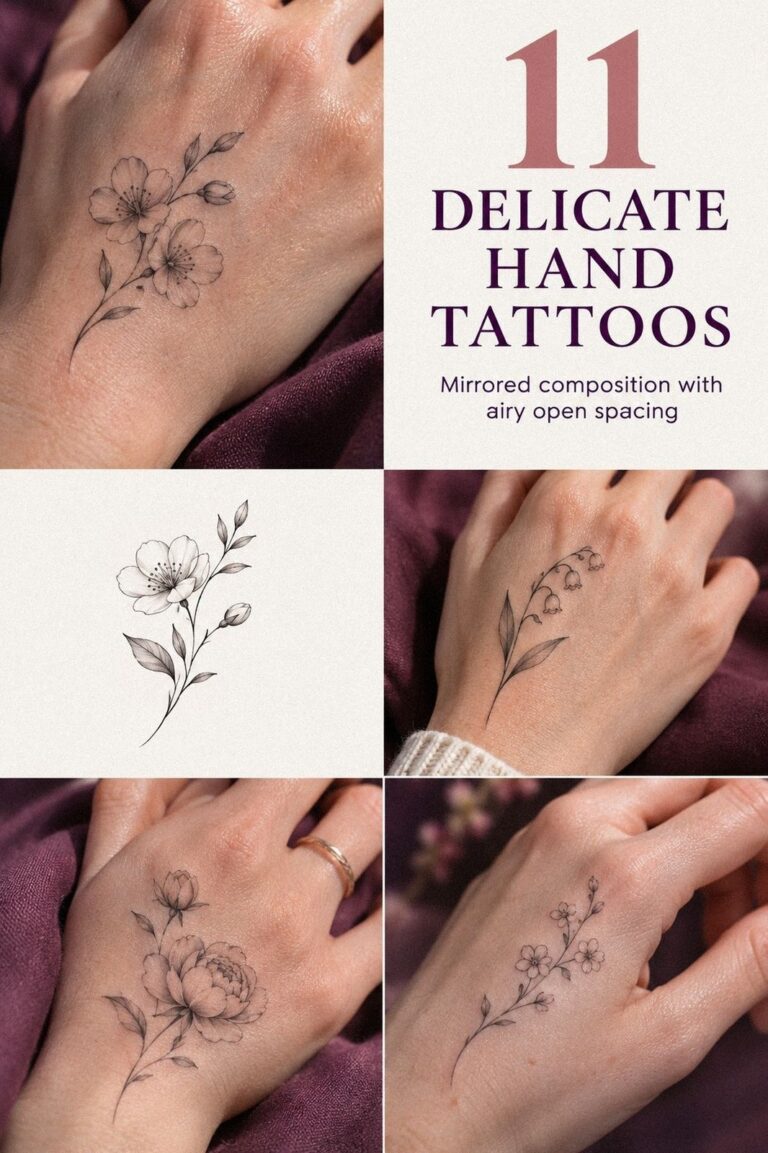

Black finger tats work best for a first tattoo when you plan the size, knuckle movement, and healing before choosing the symbol. I learned that after a tiny star drifted toward a crease and needed smarter placement.
This guide walks you through 11 deliberate steps, from sterile stencil paper to careful touchups. Start small. Stay specific.
- Start with Small Black Finger Tats for Subtle Ink
- Which Black Finger Tats Ideas Stay Legible?
- The Meaning Anchor for Unique Black Finger Tats
- Minimal or Ornate? Keep Black Finger Tats Wearable
- Plan Symbolic Black Finger Tats Around Finger Movement
- Intricate Black Finger Tats Need Sharp Restraint
- Can Dainty Black Finger Tats Pass a Trial Placement?
- Match Black Finger Tats to Your Personal Style
- Protect Fresh Black Finger Tats During Healing
- Faded Black Finger Tats: Refresh or Redraw?
- Balance Bold Black Finger Tats Across Both Hands
1Start with Small Black Finger Tats for Subtle Ink

Small black finger tats give you a controlled first step, especially when the design uses a few stars in different sizes. On fair, cool-pink skin, those tiny marks can look delicate and striking without taking over your hand. Ask your artist to space the stars so each one keeps its own shape when your finger bends.
Use a temporary stencil first. Black tattoo ink may look crisp when fresh, but the finger moves, rubs against objects, and sees plenty of sunlight. You’ll want enough breathing room between the stars for each point to remain readable as the tattoo settles.
I’d skip a crowded constellation on your first appointment. It can seem ornate on paper, yet the smallest gaps may close visually over time. A minimal group of three or four stars feels more personal, and it’s easier for you to assess before adding anything later.
Before you book, compare a few small finger tats, then save examples with clear spacing. Check the artist’s healed work, minimum price, and portfolio before you decide whether the appointment is worth it. If you’re nervous, tell your artist exactly which star matters most.
That detail should get the strongest placement!
Let the Smallest Mark Carry the Idea
A small symbol doesn’t need to be timid. A sharp crescent, crisp dot, or flowing spark can feel powerful when the silhouette is intentional. The goal isn’t to fit as much meaning as possible into one finger.
Your budget should include the consultation, stencil changes, and possible touchup. A studio minimum isn’t always the best value if the placement is rushed or the design needs repeated correction.
2Which Black Finger Tats Ideas Stay Legible?

For black finger tats ideas with crisp linework, begin with the actual shape rather than the meaning. A sleek symbol with one clear gesture usually reads better than a complicated drawing packed with tiny details.
Ask to see healed examples, not only fresh work. Single-needle linework can look refined immediately after a session, but healed skin tells you whether the artist controls spacing, pressure, and curves.
You don’t need the thinnest possible line. You need one that remains expressive after the initial redness fades.
The best linework usually has one dominant gesture. Maybe it’s a slim crescent, a narrow branch, or a simple symbol with one sharp turn. I’d avoid mixing five unrelated motifs just because each one is meaningful.
Your finger has limited room, and a single graceful idea will read better than a miniature collage.
Save the strongest references from this fine line finger tats guide, but don’t ask an artist to reproduce another person’s tattoo exactly. Your anatomy, skin tone, and crease pattern are different. A polished artist will redraw the concept for your hand.
Choose the Outer Shape Before the Detail
The outer contour should work from a short distance. Healed linework is more useful than fresh ink because it reveals whether the design stays sharp, expressive, and readable.
A bold outer edge can support a delicate interior. A fragile outline paired with intricate details may lose its authority after friction and fading. When in doubt, remove one interior line before shrinking the whole piece.
3The Meaning Anchor for Unique Black Finger Tats
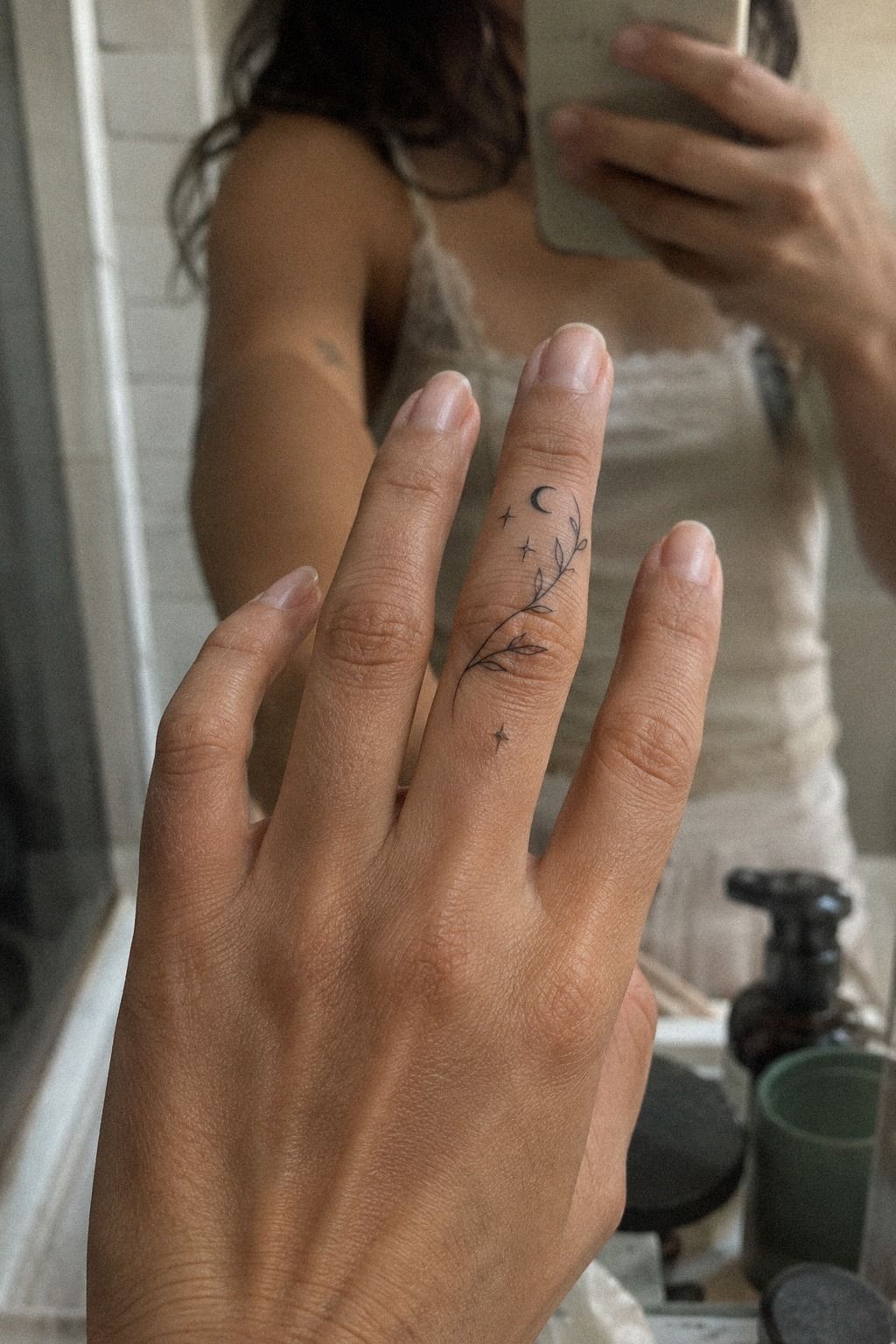
Unique black finger tats should follow a reason you can explain in one sentence. On medium olive skin, a small symbol near a knuckle can feel bold and understated at the same time, especially when the shape follows the natural fold instead of fighting it.
The Meaning Anchor Rule
Choose one anchor point before you choose the final design. Carbon transfer paper lets your artist shift the stencil across the finger while you flex and relax your hand. Watch the symbol from the palm side, back of the hand, and with your hand relaxed before you approve it.
But don’t assume the most visible knuckle is the most meaningful location. A tiny mark near the side of the finger may carry more emotional weight because only you notice it during ordinary moments. That’s where a symbolic tattoo can become personal rather than merely decorative.
I’d place a sacred or empowering symbol where your hand naturally pauses, not where a reference happens to show it. Ask yourself, “Will I still want to see this every day?” If the answer is uncertain, move the stencil and live with it for a few minutes.
For more placement ideas, browse these small side finger tattoos. You’ll notice that the strongest examples respect the finger’s movement. And that matters more than squeezing a larger, more intricate drawing into a narrow space.
Give the Symbol One Private Layer
Your symbol can be meaningful without looking obvious. A tiny opening in a moon, an uneven point on a star, or a narrow line beside a circle may hold the personal detail that makes the design yours.
Consider the long-term value of that private detail. If it still matters when nobody else recognizes it, the tattoo is more likely to feel empowering rather than performative.
4Minimal or Ornate? Keep Black Finger Tats Wearable
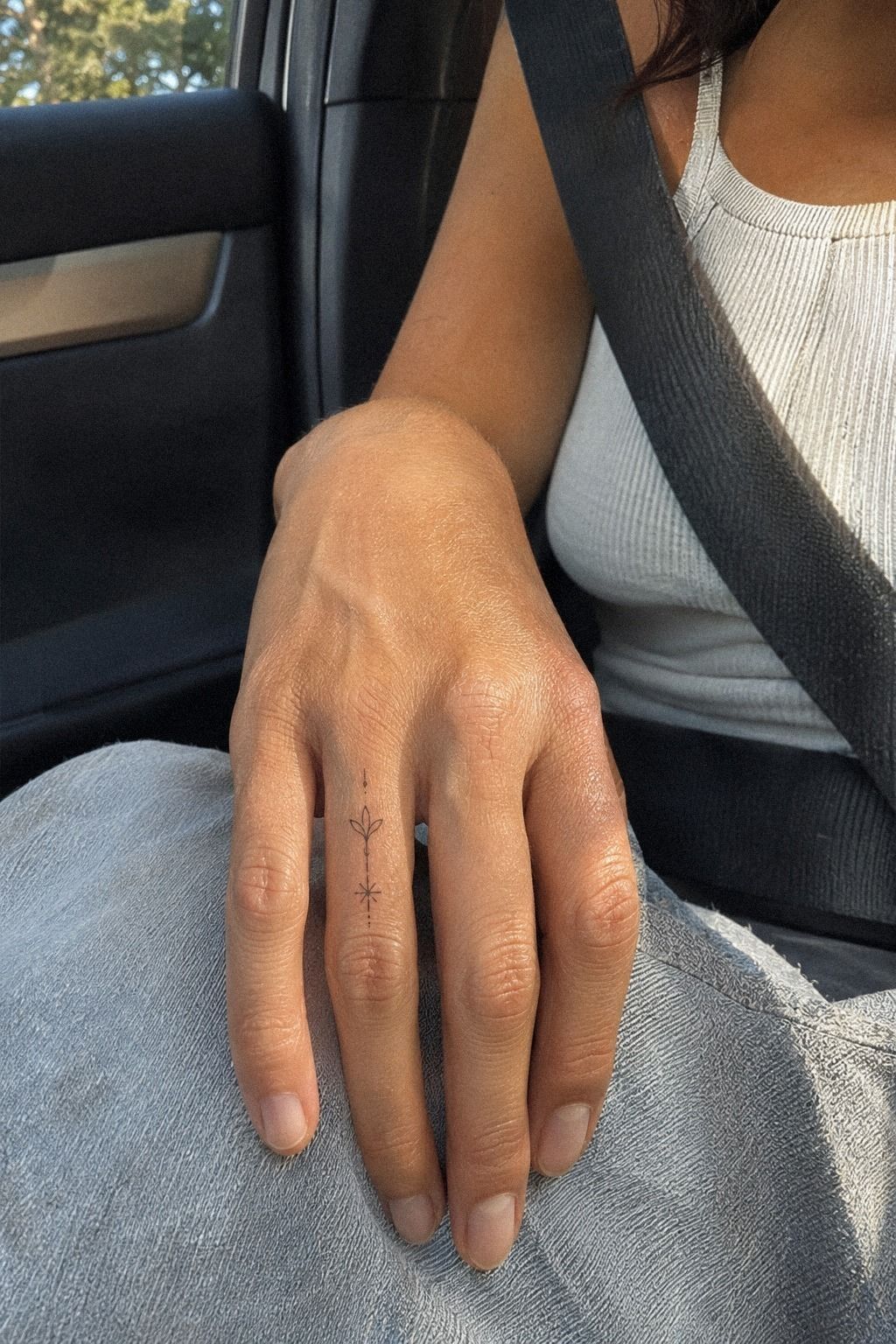
Minimal black finger tats suit a first tattoo because they give you a clear visual test. On golden tan skin, a single hair-thin line or compact symbol can look elegant, polished, and personal without needing extra shading or a large commitment.
Start with one visual language. Stencil transfer film can show whether your mark sits straight when your hand is relaxed and whether it twists when you curl your finger. You’ll want to inspect both positions because the line may look balanced open and slightly crowded closed.
A minimal design isn’t automatically safe from aging. Very fine lines can soften or spread, especially when the tattoo sits near constant friction. I’d choose a crisp symbol with enough open skin around it instead of a whisper-thin phrase that loses clarity after a few years.
If you’re choosing between a tiny word and a tiny emblem, I’d pick the emblem. Words need consistent letter spacing, while a simple shape can stay expressive even if one edge becomes less sharp. See these minimalist finger tats for women for references that keep the idea restrained.
Use Contrast Instead of Clutter
A minimal design can still feel fierce. Pair one dark shape with open skin, or use a graceful curve beside a crisp point. That contrast creates visual energy without forcing extra decoration into a narrow area.
Ask whether an ornate version is worth the added cost and future maintenance. Future touchup time matters because more detail may look impressive in a drawing but become difficult to preserve on a high-friction placement.
5Plan Symbolic Black Finger Tats Around Finger Movement

Symbolic black finger tats need to move with you. Begin with aged off-white flash paper or a clean digital sketch, then ask your artist to redraw the symbol at the actual curve of your finger.
A flowing design may need a slight bend. A geometric mark may need more space than you expected once the skin wraps toward the side. The stencil should be tested with your hand open, relaxed, curled, and gripping something light.
Look for symbols that remain readable from more than one position. An expressive eye, a small flame, a narrow arrow, or a simple celestial mark can work when its outer contour is clear.
I’d avoid ornate interior detail if the whole symbol is smaller than your artist recommends for long-term clarity. A daring idea can become muddy when reduced too far, while a sharp silhouette may remain iconic.
The Flash-to-Skin Method
Your meaning can stay subtle. Maybe the flash design has a moon, but your version includes one small opening that represents a specific person or turning point. That personal adjustment makes the tattoo meaningful without requiring a long explanation whenever someone asks about it.
You don’t have to choose the most dramatic drawing on the sheet. A quiet, understated symbol may fit your hand better than a fierce motif you’ll tire of seeing. The right design should feel intentional before the needle ever touches your skin.
Read through spiritual symbol finger tattoo meanings before you settle on a symbol. Use the ideas as prompts, not rules. Your interpretation still matters more than a fixed definition!

6Intricate Black Finger Tats Need Sharp Restraint

Intricate black finger tats can work on deep ebony skin when the artist understands contrast, spacing, and healed visibility. The design needs enough separation for each line to remain expressive instead of merging into a dark patch.
The Black-to-Skin Ratio
Ask how much solid black the design needs to stay readable. Solid blackwork ink can give a small symbol a powerful outline, while too many delicate interior marks may disappear into visual noise.
Your artist should explain the tradeoff clearly and show you a stencil before the session starts. A professional consultation has real value because it can prevent an expensive redesign later.
Sharp details need room. A tiny point, loop, or corner can look intricate in a large drawing and become muddy when reduced. I’d remove one interior line before I’d shrink the whole design further.
That choice keeps the outer shape crisp and protects the idea. It also gives the tattoo a more polished appearance as the skin settles.
Skin tones don’t determine whether a tattoo can be elegant or expressive. Technique does. Look for healed work, consistent line placement, and an artist who talks about your specific skin rather than making broad promises.
A black finger tattoo can be bold without being oversized. Compare the fine details in this small inside finger tattoo collection, then ask which parts still read clearly at a normal conversational distance.
That’s a better test than studying a design enlarged on your phone. If it only works when enlarged, it may not offer good value for a first tattoo.
7Can Dainty Black Finger Tats Pass a Trial Placement?

Dainty black finger tats deserve a trial placement, especially for a first tattoo. On fair cool-pink skin, a small stencil can reveal whether the symbol feels delicate or merely too faint.
Leave it on while you move your hand, type, wash, and look at it during ordinary tasks. Water-transfer stencil paper can answer practical questions without pretending to imitate a tattoo session.
You’re testing placement and emotional response, not trying to recreate the appointment. Never use a household needle or homemade tattoo method.
Here are useful US planning references:
You’ll want to ask whether the consultation, stencil changes, and any later touchup are included in the artist’s policy. Prices vary by region and artist, so don’t treat the table as a quote.
A careful consultation is usually worth the budget. The cheapest appointment may not offer the best value if the artist rushes placement or lacks healed work.
For more temporary-placement inspiration, compare small finger tats for women. If the stencil feels wrong after a full day, believe that reaction. A dainty design should feel quietly right, not like something you’re trying to talk yourself into!
Ask Three Practical Questions
Ask how the artist handles finger movement, what their minimum cost is, and whether touchups are included. Studio aftercare policy should be clear before you pay a deposit.
Also ask how the artist evaluates healed work. A confident answer usually includes a portfolio, realistic expectations, and a willingness to simplify the design when needed.
8Match Black Finger Tats to Your Personal Style
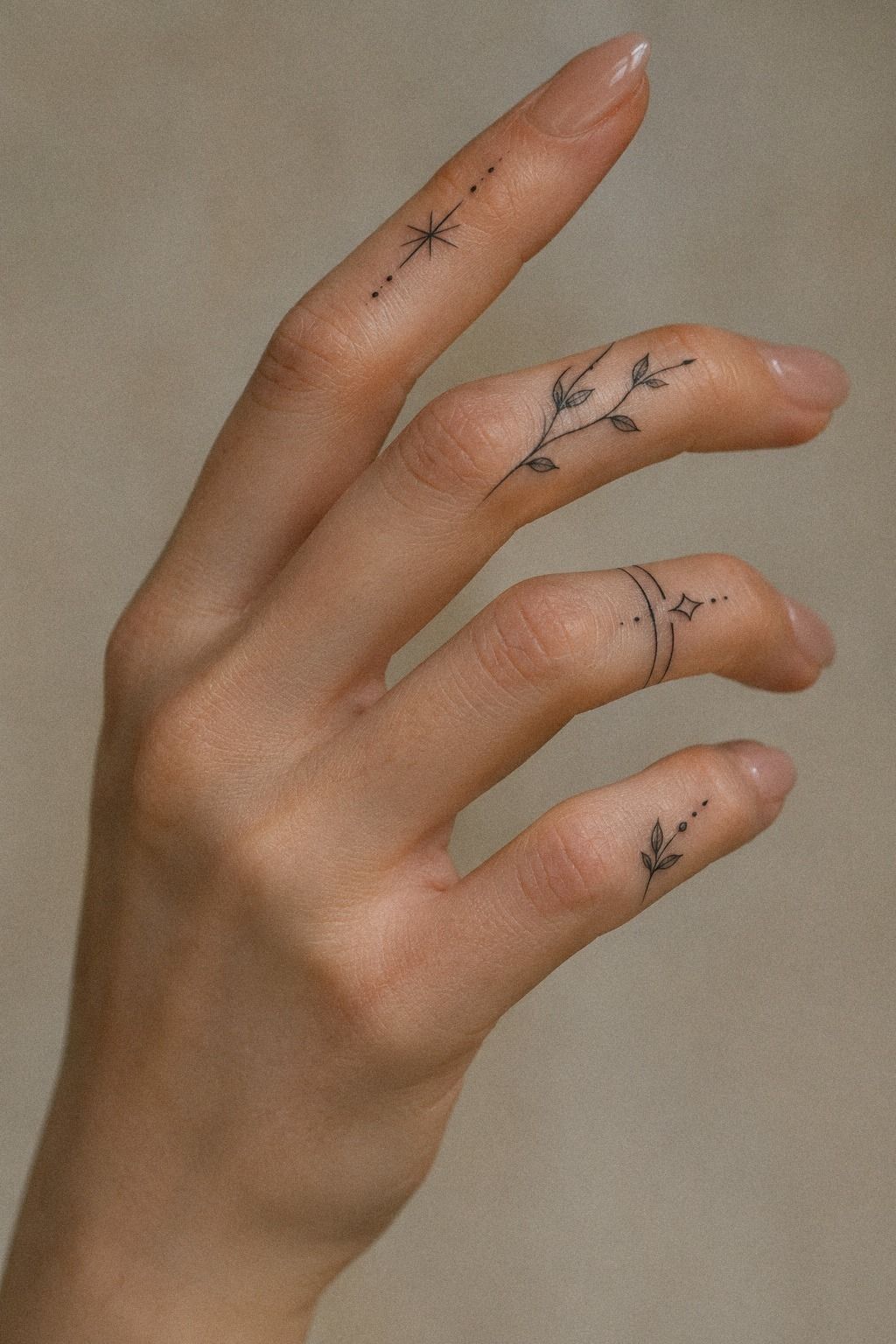
Black finger tats should look like they belong to your taste, not like a random symbol saved during a late-night scroll.
Let Your Style Change the Silhouette
A feminine idea doesn’t have to be dainty, and a masculine idea doesn’t have to be heavy. A clean stencil can reveal whether the symbol feels sleek, playful, haunting, or simply unlike you.
I’d rather see a personal mark with one memorable gesture than an intricate piece assembled from unrelated trends. That decision usually produces a more timeless result.
9Protect Fresh Black Finger Tats During Healing

Fresh black finger tats need careful aftercare because your hands touch almost everything. On medium olive skin, a narrow design may look crisp at first, but redness, swelling, or light flaking can change its appearance during the early days.
Follow your artist’s instructions for second-skin film or the covering they apply. Once you’re cleared to wash, use a gentle, fragrance-free cleanser and clean hands.
Pat the area dry instead of rubbing it with a towel, then apply only the aftercare product your artist recommends. Fragrance-free cleanser is often easier on freshly tattooed skin than heavily scented formulas.
The surface usually heals in about 2 to 3 weeks, while complete healing can take about 2 to 3 months. You’ll want to avoid swimming and direct sun during the healing period.
Don’t pick flakes, even when the tattoo looks uneven for a day or two. Recommended healing ointment should be used sparingly and only according to the instructions you were given.
The Healing Patience Rule
A tattoo can look softer before it looks settled. That doesn’t mean you need an immediate touchup. I’d wait until the full healing window has passed before deciding whether a line needs attention.
Protect the area from unnecessary friction and keep an eye on unusual irritation. If something seems outside the aftercare guidance you received, contact your artist or a qualified medical professional.
These fine line finger tats show why a clean healing phase matters for delicate results. Don’t judge the final value of the tattoo while the skin is still changing.
10Faded Black Finger Tats: Refresh or Redraw?

Refreshing black finger tats starts with comparison, not panic. Keep the original stencil or sketch so you can see which lines changed during healing and which ones were always subtle.
The Two-Stage Refresh Rule
Wait through complete healing before you judge the final result. Fresh black tattoo ink can look darker and sharper than settled ink, while some lines may soften as the skin calms.
Your artist should inspect the healed tattoo in normal light before recommending any adjustment. A touchup should solve a specific issue, not become an automatic second appointment.
Maybe one section faded from friction, or a small curve needs stronger definition. I’d avoid automatically making every line thicker. That can change a delicate tattoo into a heavier design you didn’t request.
UV exposure can contribute to fading, and finger tattoos also deal with frequent washing and rubbing. Use the sun protection your artist recommends once the skin has healed.
You’ll preserve the contrast better by protecting the tattoo than by chasing repeated corrections. Broad-spectrum sunscreen can support the result once the area is fully healed.
If your original design is very small, ask whether a slightly clearer redraw would serve you better than another pass over the same hair-thin mark. Compare these small finger tats before you decide.
A careful artist will explain what can be improved and what should remain untouched. That honesty is part of the tattoo’s value.
Know When a Touchup Isn’t Enough
If the design has blurred because too many details were packed into too little space, repeating the same lines may not solve the problem. A sharper, simpler redraw can be more worthwhile.
Ask for the total touchup cost before booking. Healed tattoo assessment should come before any promise about the final result.
11Balance Bold Black Finger Tats Across Both Hands

Bold black finger tats across both hands don’t need to match perfectly. On deep brown skin with a warm undertone, a fine-line design can stay sharp while still feeling personal.
You can repeat a shape, mirror a gesture, or let each hand carry a different part of the story. Black stencil transfer lets you compare both hands side by side before committing.
Check whether the designs compete when your hands rest together, then check whether they still make sense separately. A mirrored pair can look iconic, but a strict mirror may feel too formal if your style is more playful or raw.
I’d choose balance over symmetry. One hand might carry a symbolic star while the other holds a narrow line or small mark that answers it.
That contrast can feel more meaningful than two identical tattoos, especially when each design relates to a different memory. A personal pairing can be bold without being loud.
Your artist should also consider visibility, friction, and how your fingers bend. A tattoo that looks sharp with both hands flat may shift when you grip a cup or clasp your hands.
The most graceful placement works in motion. Compare small side finger tattoos before choosing whether the design belongs on the top, side, or inner finger.
If you’re adding a second hand later, let the first tattoo settle before you commit to the companion piece. That pause can save money and prevent an impulsive match!
A paired design can share one symbolic element while keeping different proportions. One mark might be dainty and flowing; the other might be crisp and sharp.
That approach feels expressive because the tattoos speak to each other without becoming identical. It also gives your artist more room to respect each finger’s unique creases.
For another comparison, look at these small finger tattoos. Notice how a tiny change in placement can make the same symbol feel more personal, more visible, or more discreet.
What I Think Makes Finger Tattoos Last
I’ve changed my mind about finger tattoos more than once. At first, I thought the smallest possible line would be the most elegant choice. Then I saw how a hair-thin mark can lose authority when it sits directly in a crease, especially after constant washing, gripping, and sunlight.
Now I’d rather see a slightly clearer symbol with deliberate spacing than a fragile drawing that needs defending. Deliberate negative space often gives a small tattoo more presence than extra detail.
The best first tattoo isn’t necessarily the most intricate one. It’s the one you can explain to your artist, place on your hand, and still recognize when the skin has settled.
Healed tattoo work matters because fresh ink is persuasive. It’s dark, crisp, and temporarily dramatic. You need to know what remains after the first impression passes.
I also think people underestimate how much movement affects meaning. A symbol that faces outward may feel public and expressive. The same symbol tucked along the side of a finger can feel intimate and personal.
Neither choice is better for everyone, but I’d choose based on how you want to live with the mark, not how it performs in a single glance. That’s the difference between a stylish impulse and a lasting personal decision.
My own biggest mistake was treating placement as the last decision. I had the symbol ready, the reference saved, and the appointment nearly booked. Then I flexed my hand and saw the design break across the crease.
That small test changed everything. Flexible stencil film gave me the chance to move it before the needle made the decision permanent.
Finger tattoos also ask for humility. Lines can soften. Touchups can help, but they can’t reverse every design problem.
That’s why I prefer a striking outer shape, enough breathing room, and a tattoo artist who will tell you when a detail is too small. Your first tattoo should feel empowering, not like a negotiation you lost.
The Questions I Get Asked Most
How much does a black finger tattoo usually cost?
A black finger tattoo usually costs about $50 to $100 at a shop minimum or about $100 to $250 per hour, depending on the artist, region, and design. The final price varies, so ask for the studio’s current minimum before booking.
Are black finger tats a good idea for a first tattoo?
Yes, black finger tats can suit a first tattoo when you choose a clear design and realistic placement. Simple linework is easier to assess, and a meaningful symbol can feel personal without requiring a large session. You’ll still need to accept frequent hand friction and possible fading.
How do I choose a tattoo artist for black finger tats?
Choose an artist with clean linework, healed work, and strong hygiene practices. A healed portfolio is essential, especially for finger tattoos. Ask whether they regularly tattoo your preferred style and whether they’ll redraw the stencil for your exact finger movement.
How much do black finger tats hurt?
Pain varies, but hands and fingers can feel more intense than areas with more padding. Your tolerance is personal, while ribs, feet, hands, and sternum are commonly described as more painful than the forearm, thigh, or shoulder. Tell your artist if you need a pause.
How long does a black finger tattoo take to heal?
The surface usually heals in about 2 to 3 weeks, while complete healing can take about 2 to 3 months. Gentle aftercare protects the result: wash as directed, moisturize only as recommended, and avoid swimming and direct sun while healing.
Where I’d Start First
If I had to pick one step, I’d start with the stencil test. It catches crease movement before the needle does, and that single check can save a delicate symbol from awkward placement.
Keep the design small, let your artist adjust the curve, and save the idea for later if the placement still feels uncertain. A striking first tattoo doesn’t need to be huge. It needs to remain meaningful, readable, and personal after the excitement fades.