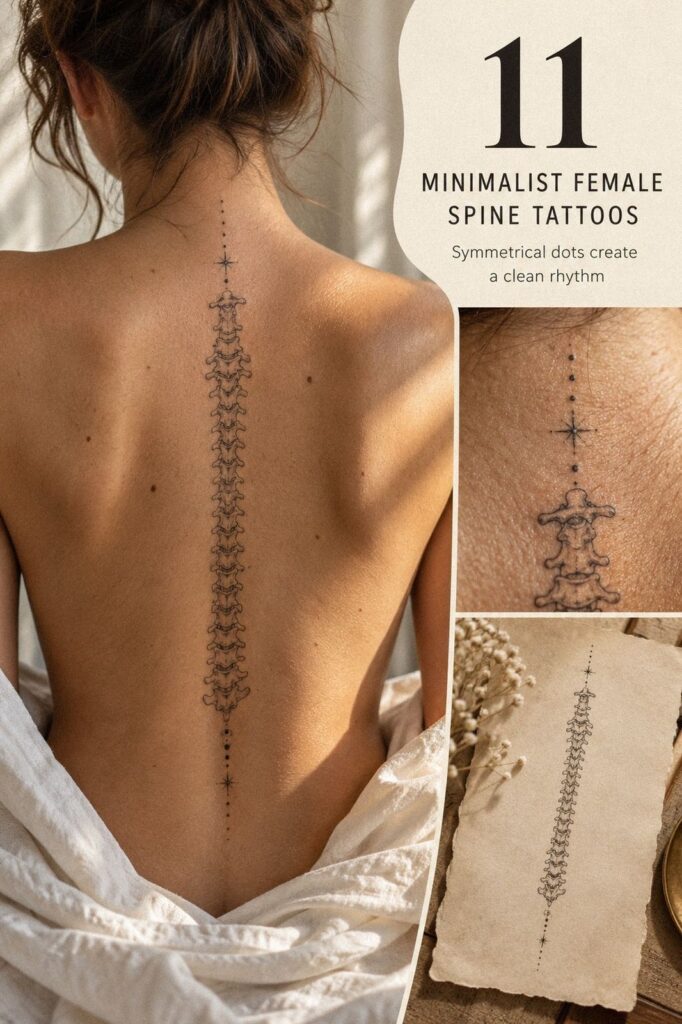
Minimalist spine tattoo ideas for women work best when the design is small enough to read clearly, yet personal enough to matter after the novelty fades. I’ve seen delicate ink lose its shape because placement came first and meaning came second. Start with the motif, then test scale, spacing, and healing. That order saves regret!
- Start With A Fine-Line Vertebrae Motif
- Pick A Tiny Celestial Spine Symbol
- Which Botanical Shape Belongs Along Your Spine?
- Keep Negative Space Around Minimal Spine Art
- Plan A Graceful Vertical Script Tattoo
- Choose A Meaningful Feminine Spine Emblem
- Trace A Flowing Floral Spine Design
- What Should Geometric Symbols Do?
Editor’s note: the most meaningful first tattoo usually isn’t the busiest one. It’s the mark you can still explain in one honest sentence years later.
- Start With A Fine-Line Vertebrae Motif
- Pick A Tiny Celestial Spine Symbol
- Which Botanical Shape Belongs Along Your Spine?
- Keep Negative Space Around Minimal Spine Art
- Plan A Graceful Vertical Script Tattoo
- Choose A Meaningful Feminine Spine Emblem
- Trace A Flowing Floral Spine Design
- What Should Geometric Symbols Do?
- Add A Personal Constellation To Your Spine
- Frame A Sacred Minimalist Centerline Tattoo
- Refine Your Unique Spine Tattoo Sketch
1Start With A Fine-Line Vertebrae Motif
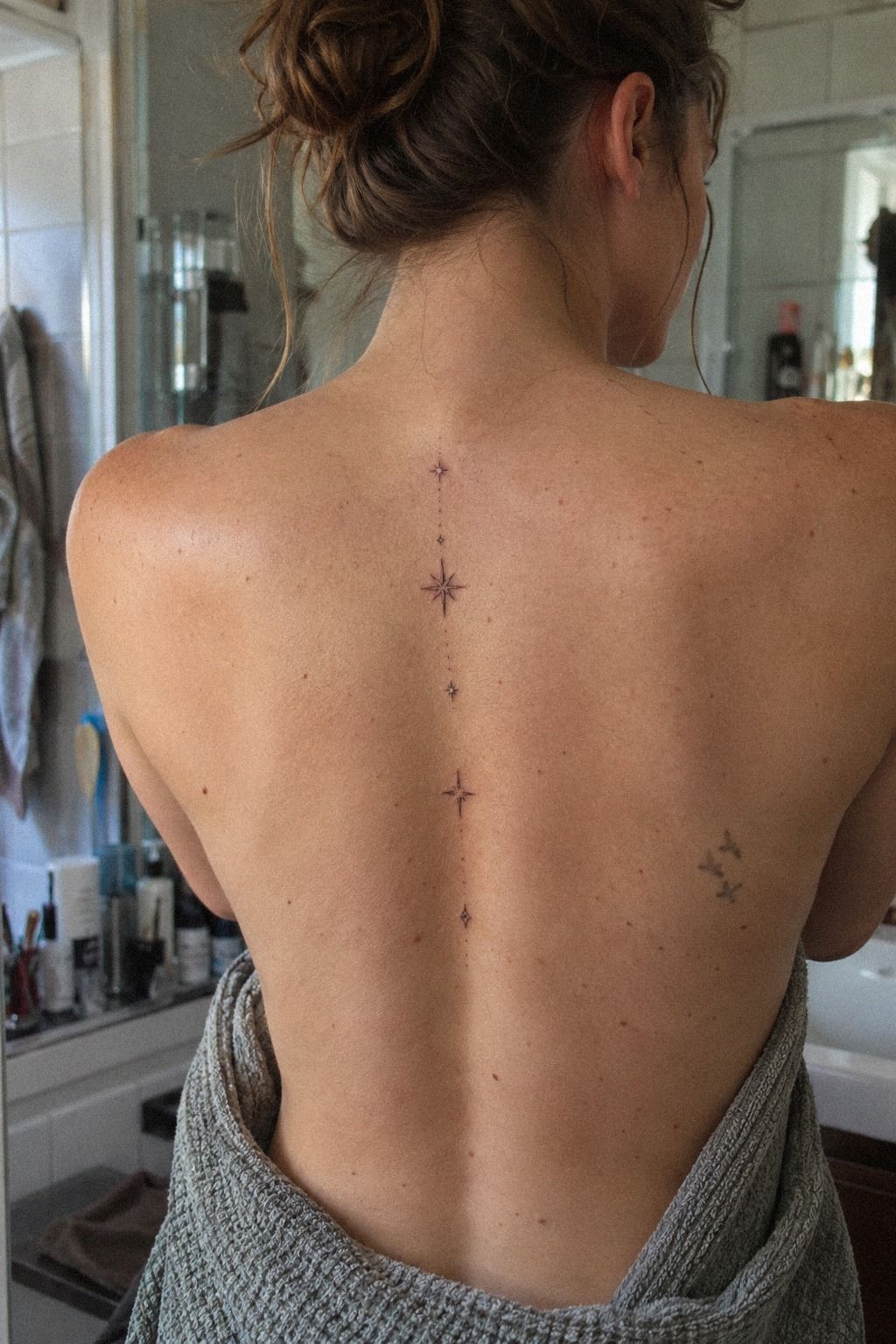
Begin by tracing the natural rhythm of your spine instead of dropping a symbol wherever a reference looks attractive. A few terracotta and olive fine-line stars can follow the vertebrae with a crisp, striking effect. You’ll want the largest star near the upper back, with smaller points descending gently.
I call this the Vertebra Rhythm Rule: one visual pause for every major change in the body’s curve. Your artist can stencil the design while you stand, sit, and bend. The stencil test matters because skin shifts.
A motif that looks sleek while upright may feel crowded when you move.
Keep the ink sparse. Three stars with different sizes can feel more expressive than ten identical marks, and you don’t need every inch of the spine filled. If you’re comparing options, this minimalist fine-line spine tattoo guide shows how open spacing can protect a delicate design.
The wrong move is choosing a fine-line reference because it looks dainty on a screen. Ask your artist how the line may soften over time, especially near areas that receive sun. I’d choose a slightly bolder line weight over an ultra-thin line that disappears into your skin.
Your first tattoo should give you enough space to live with it. A small cluster of deep olive ink can look personal, polished, and timeless without shouting for attention. If you want more references before booking, save these small spine tattoo ideas for women and compare the spacing, not just the symbol.
2Pick A Tiny Celestial Spine Symbol
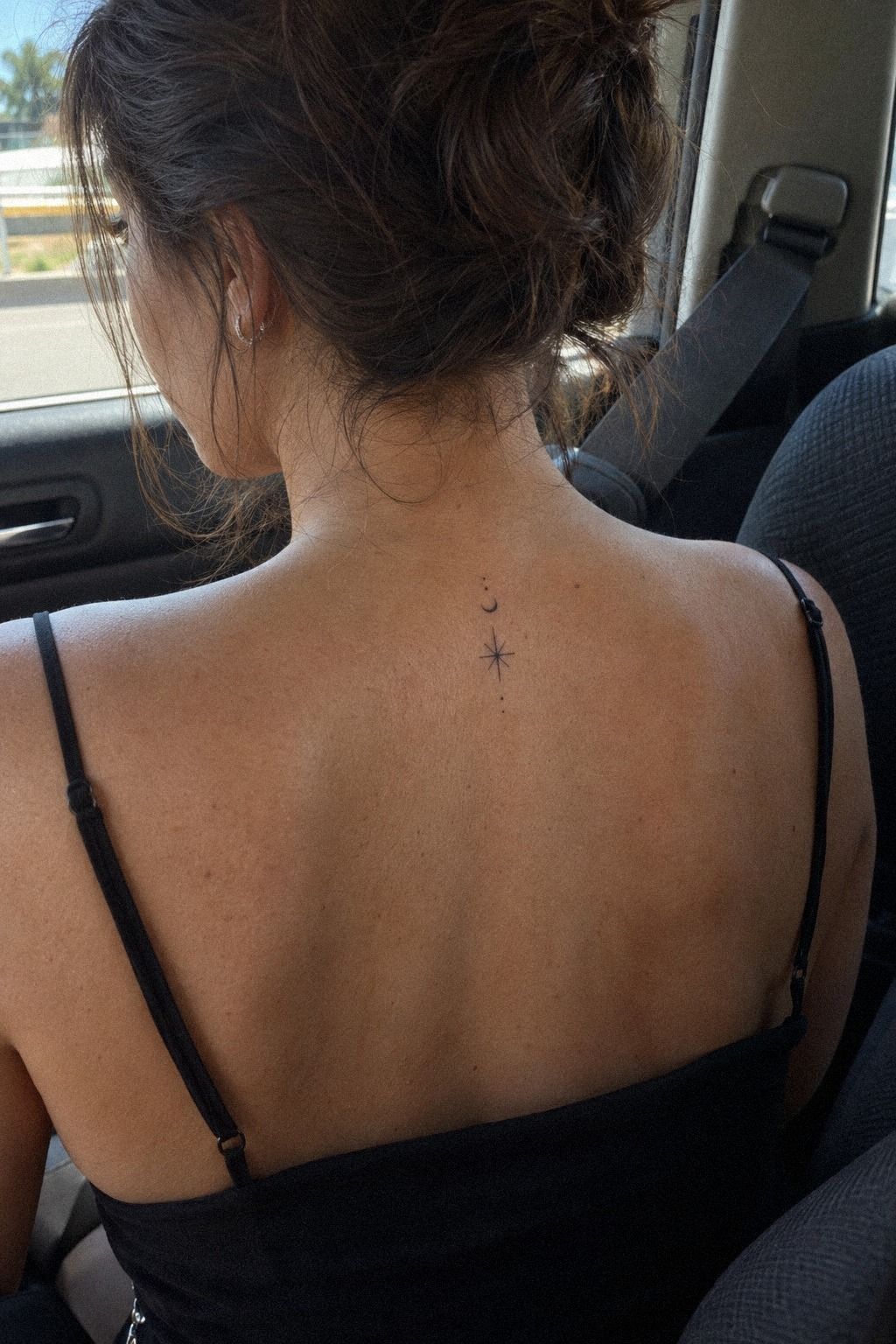
Choose one celestial shape before you collect a whole sky. A tiny moon, star, or sun can sit at the center of your back with a symbolic, understated quality. A few deliberate strokes in warm clay ink can look elegant without becoming fussy.
Your symbol needs a clear silhouette. You’ll want the artist to show you the stencil from several feet away, because a design that reads beautifully nearby can turn into a dark speck at normal distance. I’d skip tiny internal decorations if they don’t survive the silhouette test.
The Three-Anchor Method helps here: meaning, silhouette, and placement must all agree. Maybe your moon represents a private reset, while the spine position marks steadiness. If the meaning feels vague, these meaningful minimalist tattoo ideas can help you narrow the emotional center.
And don’t let the word feminine force you toward flowers or bows. A sharp crescent can feel bold and empowering; a small sun can feel bright and playful. Your choice should sound like you when you explain it, even if you never explain it aloud!
Bring one reference and one sentence about what you want the mark to carry. That’s enough. A clean crescent moon stencil gives your artist useful direction while leaving room for their judgment about line weight and skin movement.
3Which Botanical Shape Belongs Along Your Spine?
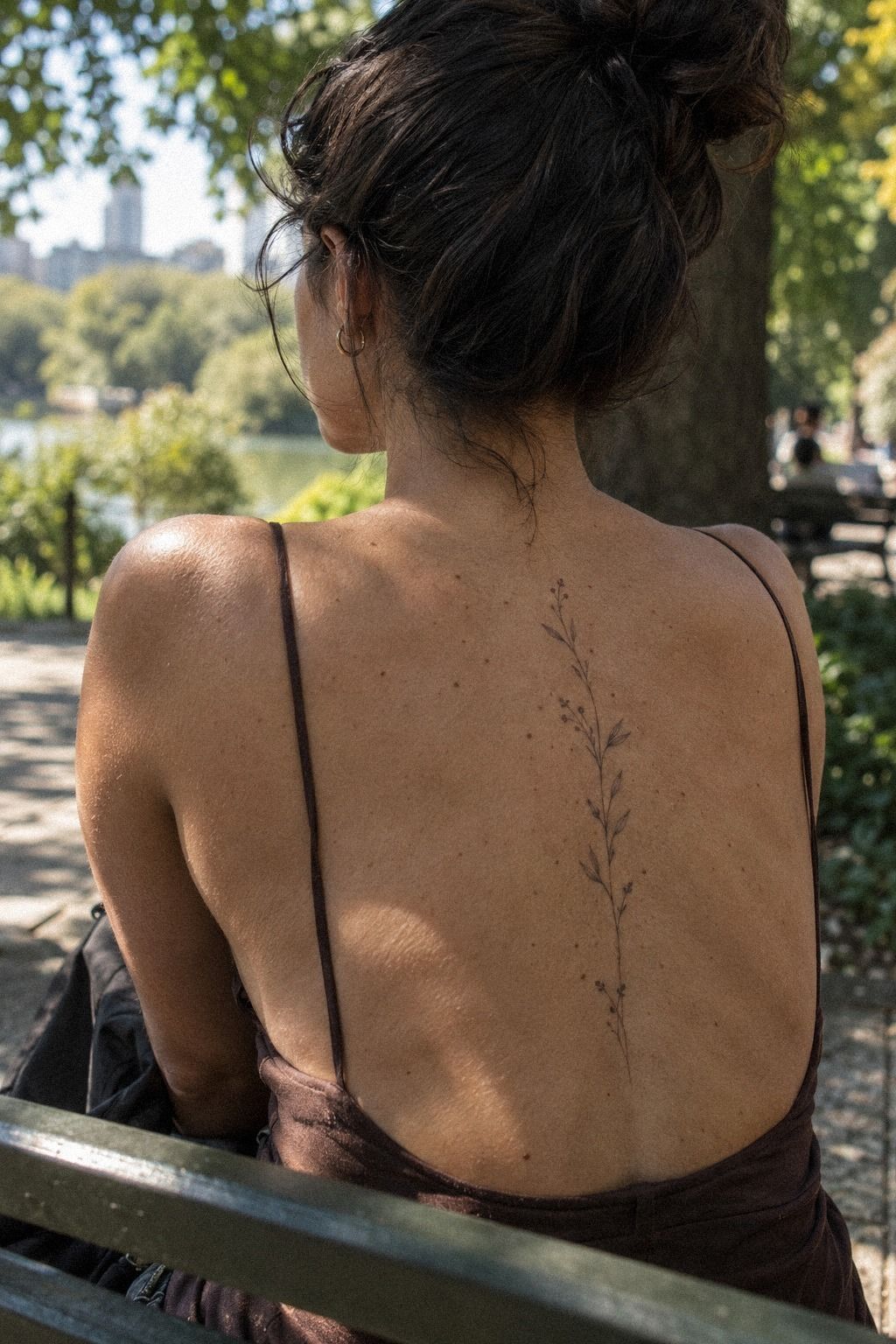
Use the spine as a stem when you’re drawn to plum botanical imagery. A single branch, fern, olive sprig, or unusual bud can feel more graceful and meaningful than a dense bouquet. The best choice depends on the emotional tone you want the tattoo to carry.
A custom botanical stencil should follow your body rather than forcing a perfectly straight vertical line. Ask whether the leaves need to alternate, mirror one another, or become smaller near the waist. Those decisions can make the design feel flowing instead of rigid.
Think about the plant’s visual language. A thorn can feel fierce and edgy. A small bud can feel dainty and romantic.
A fern can look intricate while keeping the overall tattoo minimal. You’re choosing symbolism, not simply filling a narrow strip of skin.
If you’re comparing motifs, browse unique female tattoo designs for ideas, then strip the reference back to its strongest line. The final piece doesn’t need every leaf from the original.
A botanical spine tattoo can be worth it when the plant has a reason to be there. Maybe it marks resilience, a place, a person, or a private season of change. If you can name that reason, the design already has an emotional center.
4Keep Negative Space Around Minimal Spine Art
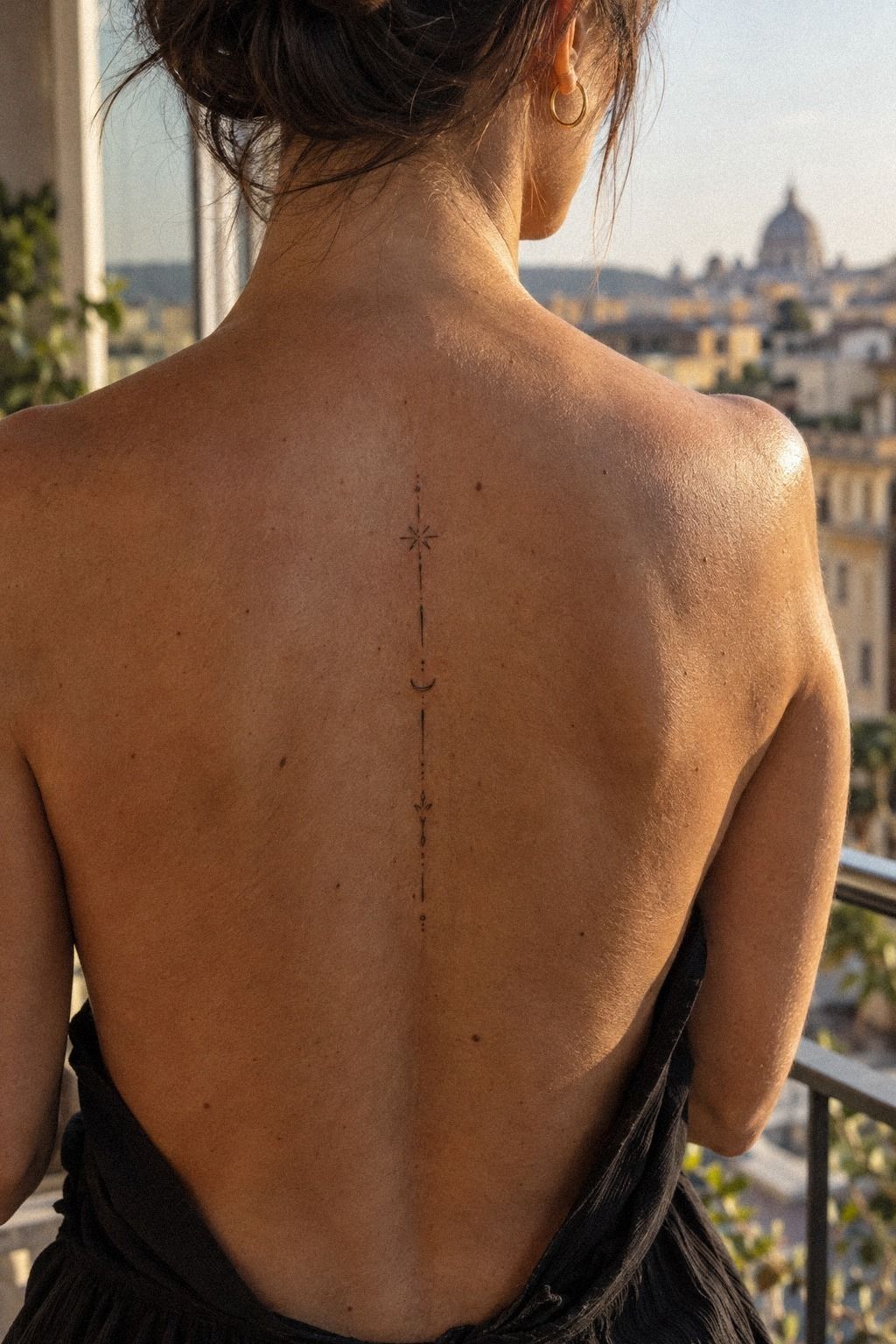
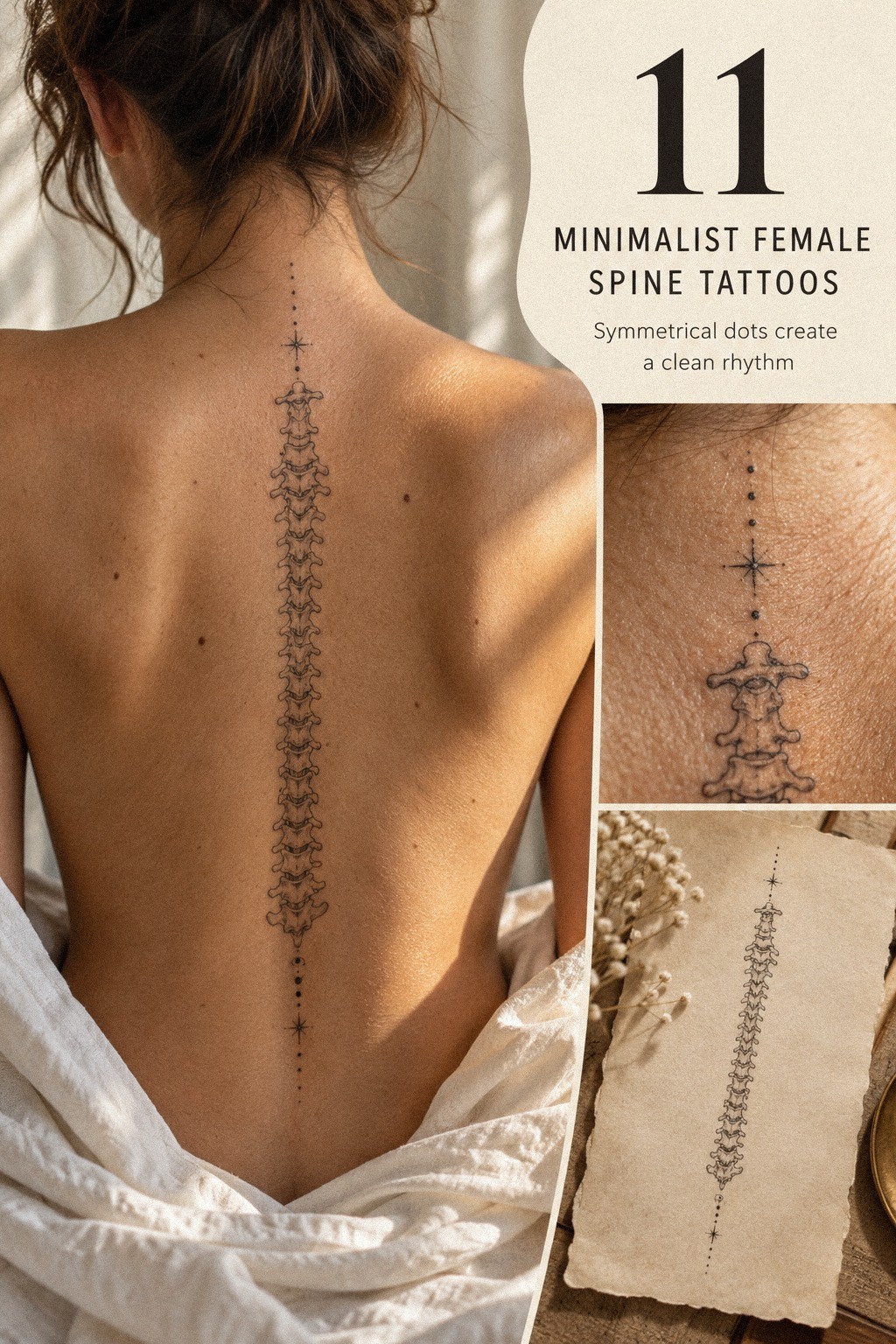
Protect open skin as carefully as you protect the ink. A small navy symbol on skin can look more vibrant when it has breathing space above and below, rather than touching another mark. The result feels sharp, delicate, and intentional.
I call this the Quiet Margin Principle. Leave enough visual distance for each shape to register on its own.
You’ll want to see the design nearby, but your friend across the space should also recognize whether it’s a star, branch, or abstract line. That negative space is doing real design work.
Ask your artist to print the stencil at the planned size and place it on your back. Sit down.
Twist. Raise your arms.
If your transfer stencil folds across a curve, the final design may need a slight adjustment. That isn’t a failure.
It’s good planning.
I’d skip the impulse to fill every gap because an open design looks too simple in the moment. Minimal ink often needs restraint to stay graceful.
Your eye needs a pause, and the skin itself becomes part of the composition. Skin movement should remain visible.
The small spine tattoo designs page can help when you’re deciding how much space a compact piece really needs. Save examples with visible skin around them. Those references will give your artist a better idea of the crisp, understated balance you want.
The value of negative space becomes obvious when you compare two stencils at the same size. The less crowded version often feels more polished, more readable, and more timeless after the first excitement passes. That visual breathing room protects the design’s clarity.
5Plan A Graceful Vertical Script Tattoo
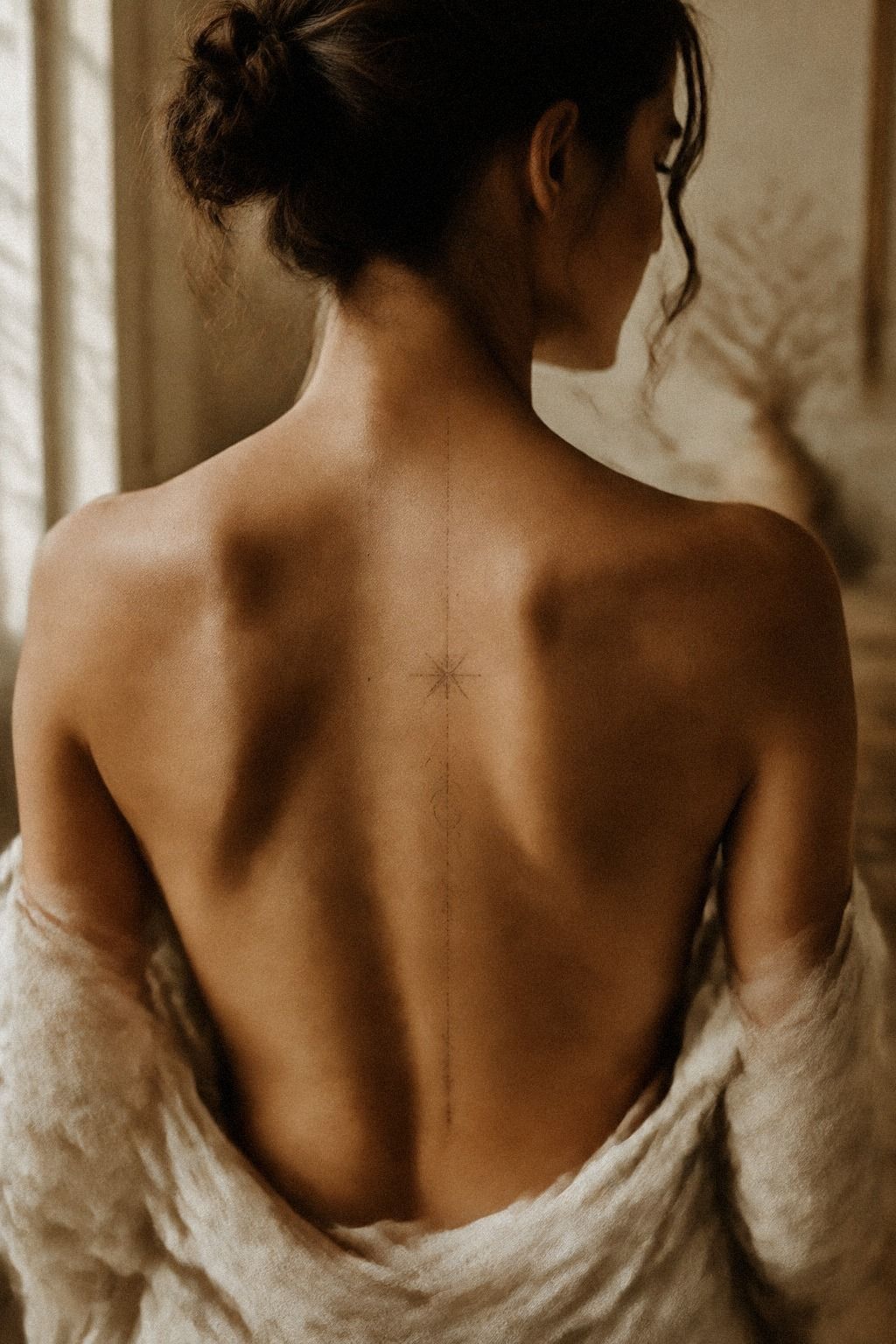
Treat vertical script as a drawing, not a sentence typed into a favorite font. A short word running vertically down the spine can feel romantic, personal, and expressive, but every letter needs enough room to remain legible. A flash sheet with hand-drawn options can help you compare the difference.
Your artist should redraw the phrase for your body. The hand-lettered script stencil needs a clear start and finish, with spacing that follows the spine instead of forcing the letters into a rigid column. I’d avoid an overly ornate style if this is your first tattoo.
Read the word upside down and in a mirror. You’ll catch awkward joins that your first glance missed.
If the phrase has an accent mark, repeated letter, or unusual spelling, check it twice. You don’t want a meaningful idea undermined by poor letter spacing.
The Vertical Letter Ladder is a useful test: each letter should remain readable alone, yet the whole phrase should flow as one mark. Your artist can show you a paper version at full size. Check it while standing naturally, not posed.
And remember that script can soften as it ages. Ask whether the spacing is generous enough for that possibility. Your unique female tattoo designs references may inspire a phrase, but your final lettering should be redrawn for your anatomy rather than copied blindly.
A short phrase can be worth the cost when it has staying power. If you’re choosing words only because they’re trending, wait.
If the sentence still feels true after a few quiet weeks, it deserves a serious conversation with your artist. That’s a lasting phrase.
6Choose A Meaningful Feminine Spine Emblem
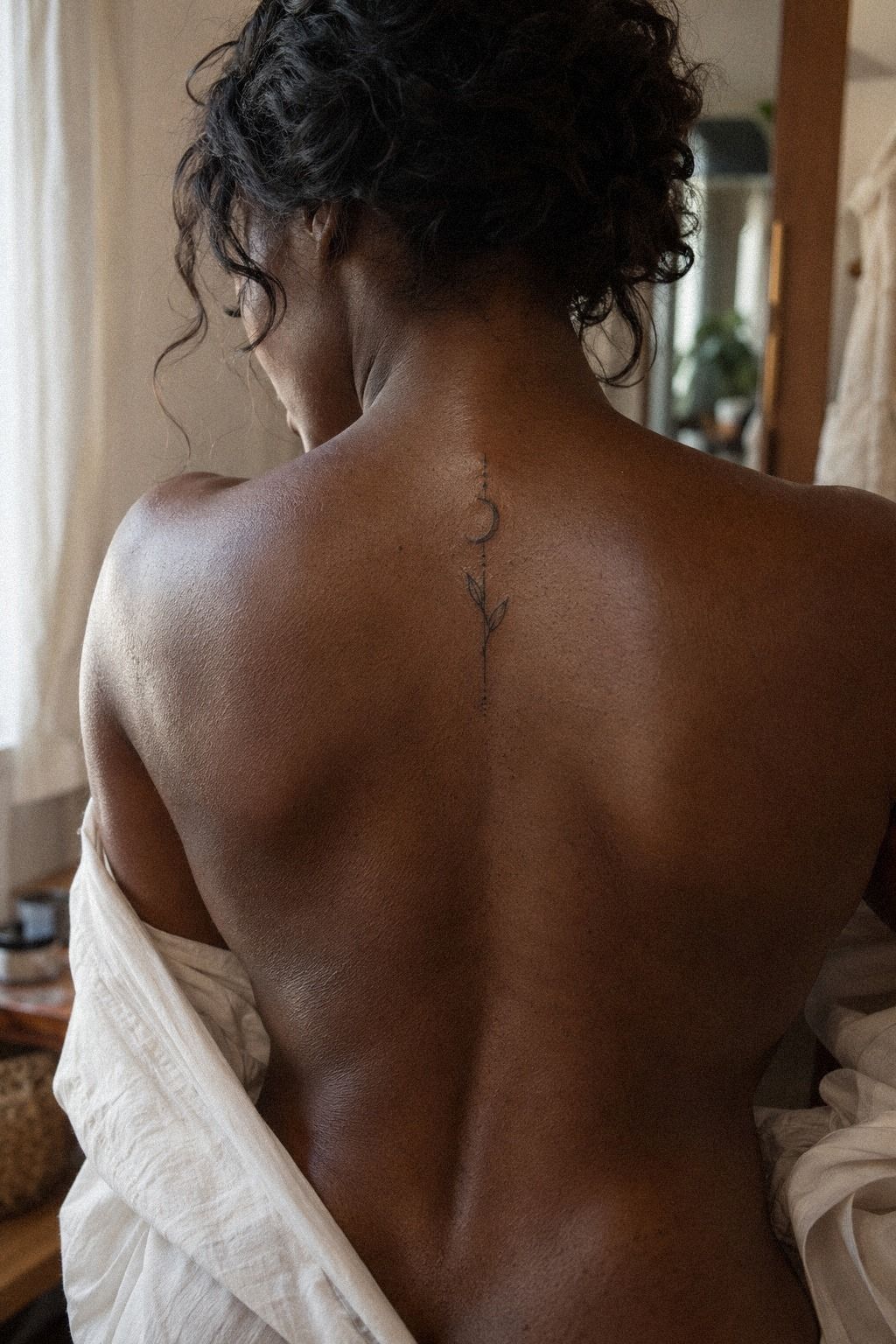
Pick a forest-green and rust personal emblem that still means something when nobody else knows its story.
7Trace A Flowing Floral Spine Design
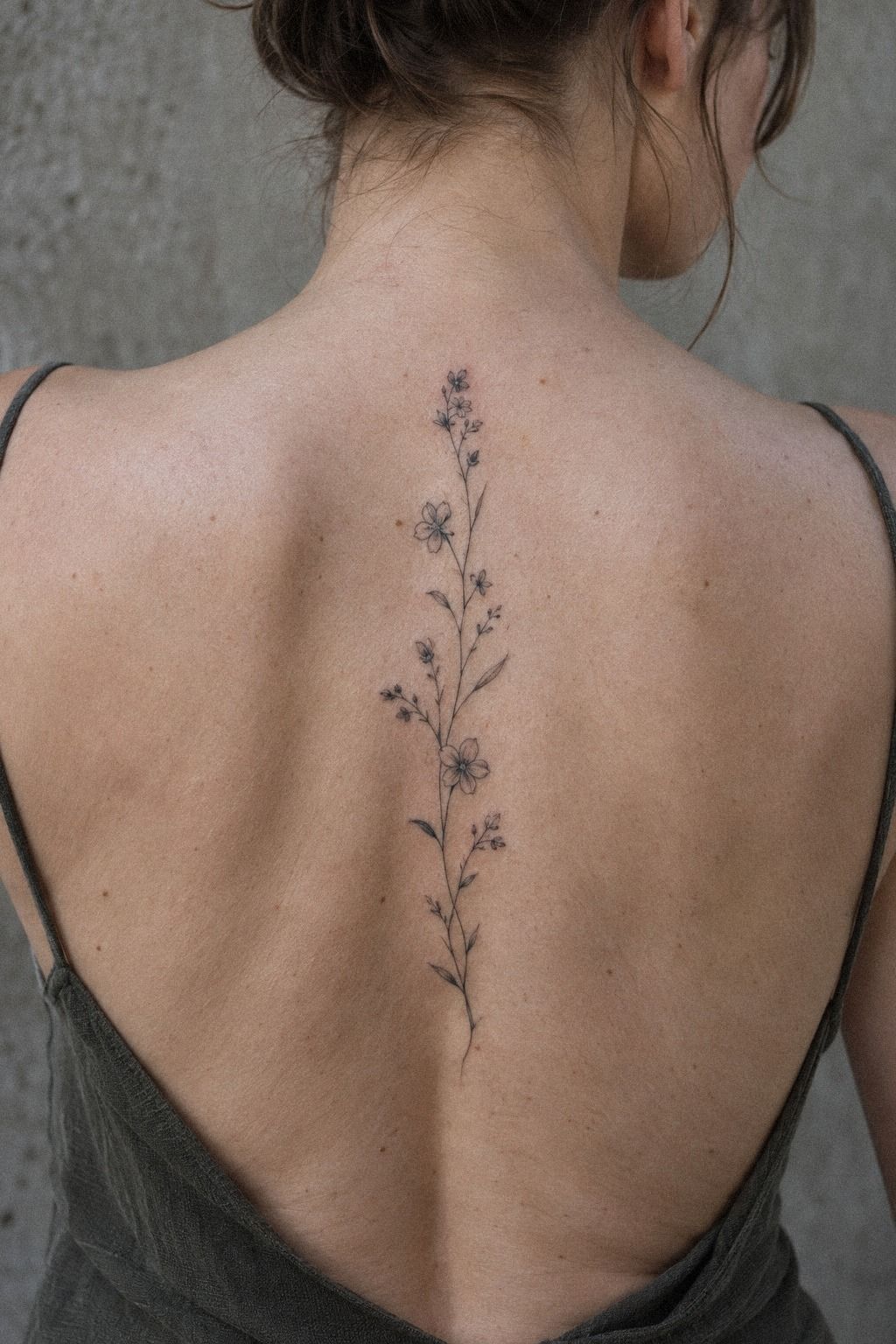
Trace the stem first, then decide where the flowers belong. A dusty-rose wildflower sprig works because the thin stems travel naturally while small blooms interrupt the line at measured points. That structure can feel graceful, feminine, and quietly iconic.
Your artist can curve the branch a little so it follows your spine without looking like a ruler line. Ask to see the wildflower sprig stencil from the side and from a relaxed standing position. I’d rather see one strong curve than several tiny flowers packed into a straight strip.
Use the flower type to shape the mood. A small daisy can feel playful; a thorned stem can feel edgy; a simple bud can feel delicate and personal. You’re choosing flower language, not decorating a template.
If the design reaches from the upper back toward the waist, discuss how clothing and sun exposure may affect it. A longer tattoo may need more session planning than a compact emblem. These minimalist spine tattoo designs can help you compare short and extended compositions.
And don’t confuse more flowers with more meaning. I’ve seen a single open bloom carry more emotional weight than a full bouquet. Your best version may be the one with fewer petals, sharper spacing, and enough skin left visible to keep the line flowing.
The value of a floral design comes from its specific connection to you. A birth month flower, a family garden, or a plant linked to recovery will usually age better emotionally than a random bloom chosen only because it looks attractive at first glance.
8What Should Geometric Symbols Do?
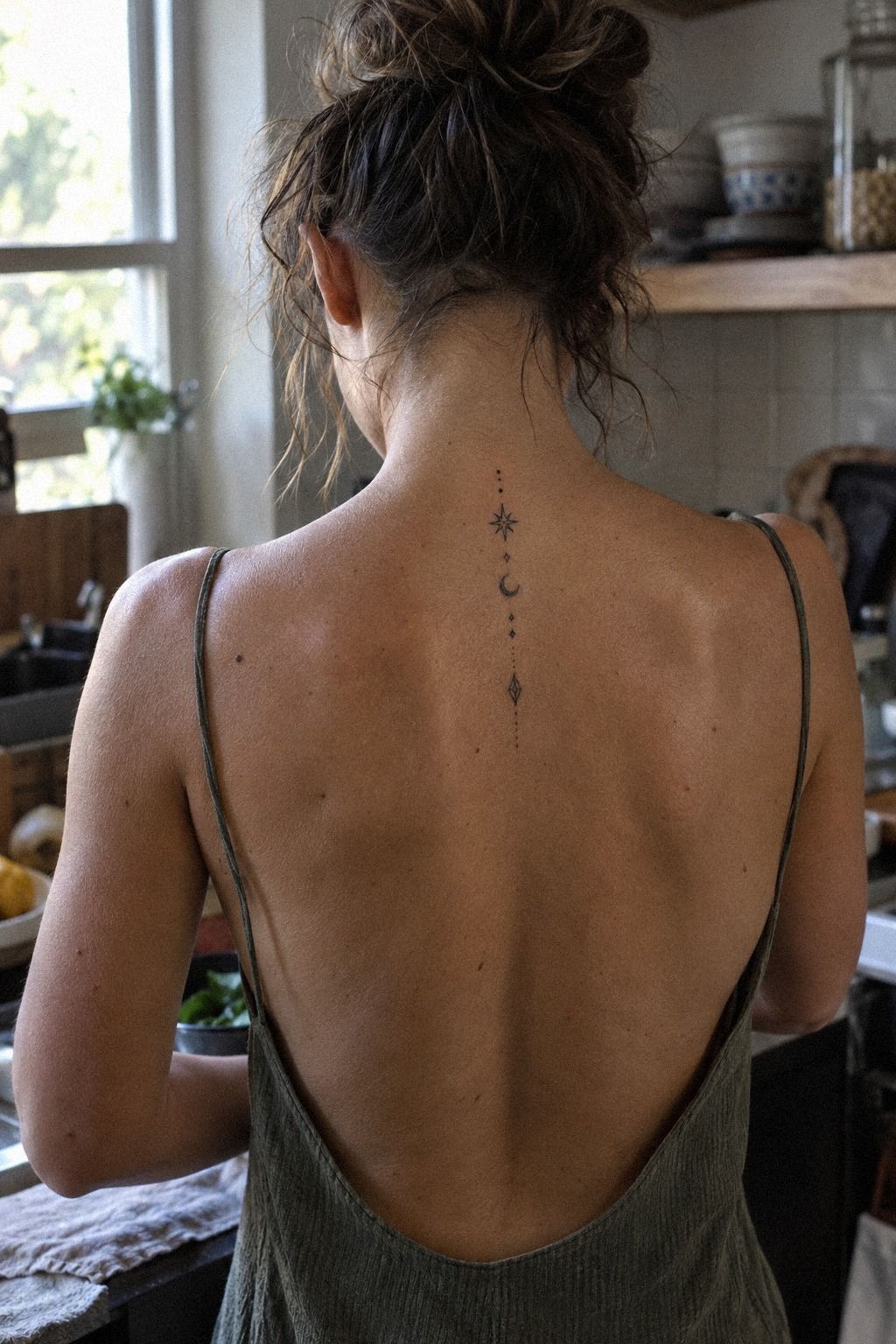
Arrange black geometric marks by visual weight, not by identical repetition. A narrow diamond, tiny triangle, or interrupted circle can create a sharp, expressive rhythm down the spine without needing elaborate detail.
The geometric tattoo stencil should show how each mark relates to the next. You’ll want a clear anchor near the upper back, then smaller shapes that guide the eye downward. Repetition can look classic, but perfect duplication may feel mechanical.
Ask yourself whether the pattern represents balance, protection, movement, or another idea. A meaningful visual system gives the marks a reason to exist. Without that reason, even a polished arrangement can start to feel empty.
A good geometric design doesn’t have to be masculine or severe. Rounded corners can feel feminine and graceful, while angular points can feel daring and fierce. The important thing is that the visual language matches your personality.
Compare the planned pattern with references from minimalist tattoo ideas for women, then remove any symbol that doesn’t improve the sequence. Fewer marks often create a cleaner, more powerful result.
9Add A Personal Constellation To Your Spine
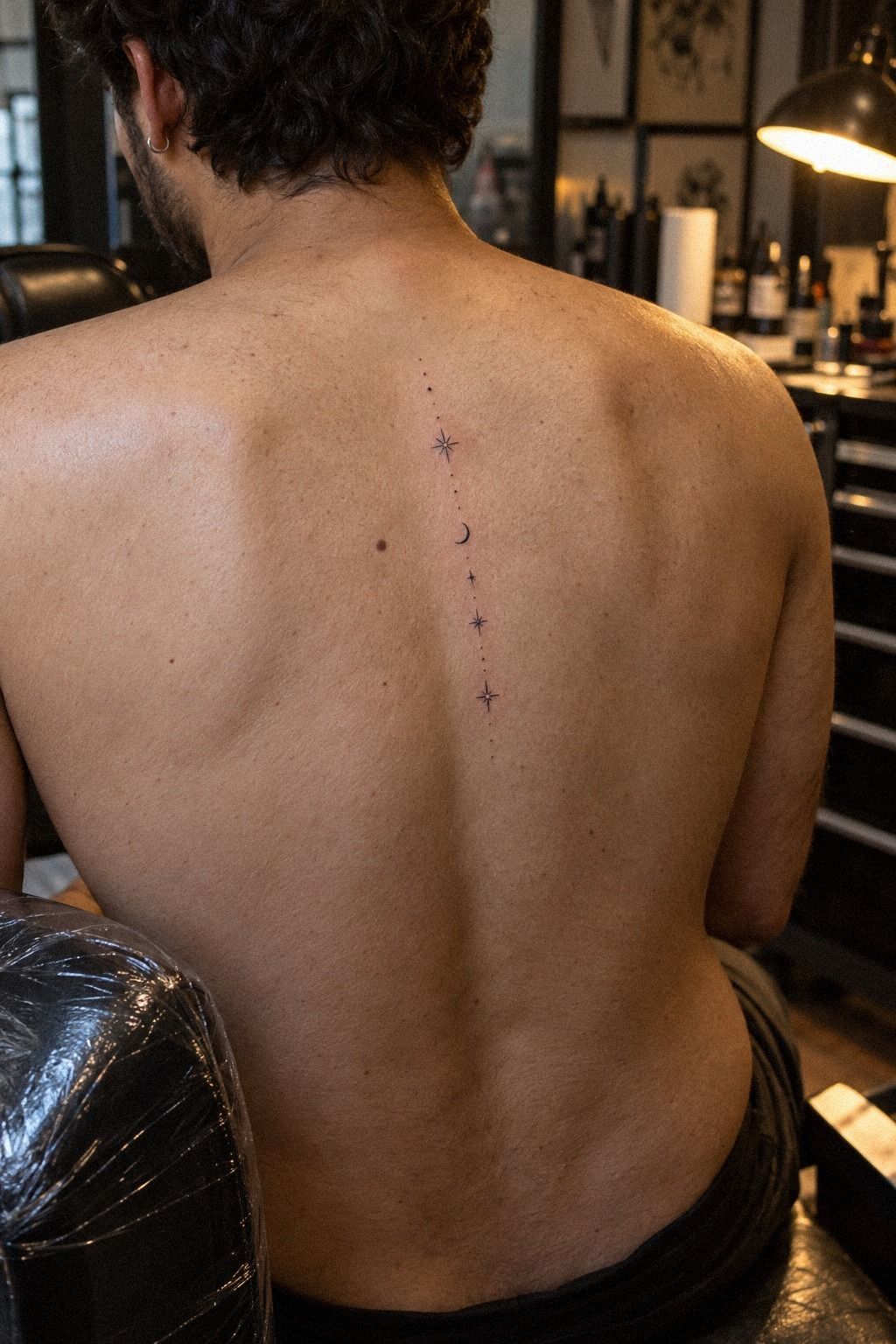
Build your constellation map from real points of meaning rather than random stars. The design can work for anyone, including men, because the idea is personal rather than tied to one gender. Use birth stars, places, initials, or dates translated into a simple pattern.
Your constellation should have a visual hierarchy. One midnight-blue star and copper dots can act as the anchor while lighter points lead the eye along the spine. You’ll want the marks to vary slightly in size, but not so much that the design becomes a crowded galaxy.
Ask your artist whether the smallest points should be dots or tiny four-point stars. Dotwork can age more quietly; star shapes make a bolder statement. I’d avoid mixing too many shapes unless each one has a clear reason to exist.
The Personal Sky Map gives your design a story without requiring text. These unique minimalist spine tattoo ideas can offer visual references, but the final arrangement should belong to your memories.
A constellation becomes meaningful when you can explain why one point matters more than another. That hierarchy also helps your artist decide which marks deserve more visual weight in the sky map.
Take your time with the order. Place paper dots along your back and live with the pattern for a few days. If you’re still drawn to it after the first excitement fades, you’ve found something personal, expressive, and worth refining.
10Frame A Sacred Minimalist Centerline Tattoo
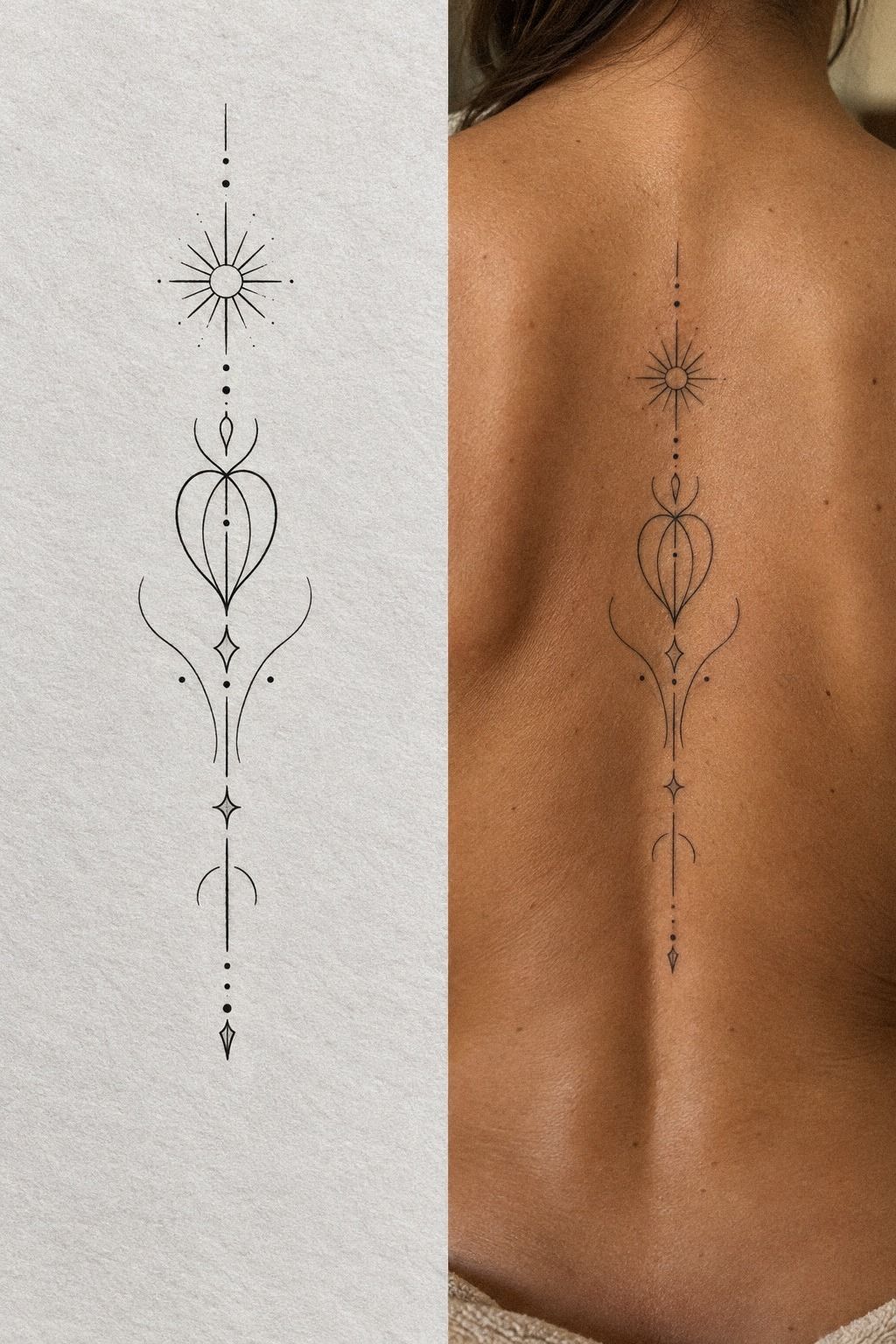
Frame the centerline with symmetry only when the sage-green sacred symbol needs it. A sacred eye, small sun, protective seal, or quiet cross can sit at the upper spine while two fine elements guide attention toward the center.
The centerline placement stencil should be checked while you’re standing naturally. A design can appear perfectly centered on a flat print and shift visually once your shoulders relax or your posture changes.
Symmetry can feel elegant and powerful, but slight asymmetry can feel more raw and personal. Don’t force both sides to match if the design loses its natural body symmetry. The tattoo should follow your body rather than behave like a ruler.
Think about the emotional promise of the emblem. Sacred imagery deserves careful research and respectful treatment. If the symbol belongs to a tradition that isn’t yours, learn its symbol history before borrowing its shape.
A central mark may look iconic, but that doesn’t automatically make it the right choice. The best design still needs personal meaning, readable scale, and a placement plan that feels comfortable before you book.
11Refine Your Unique Spine Tattoo Sketch
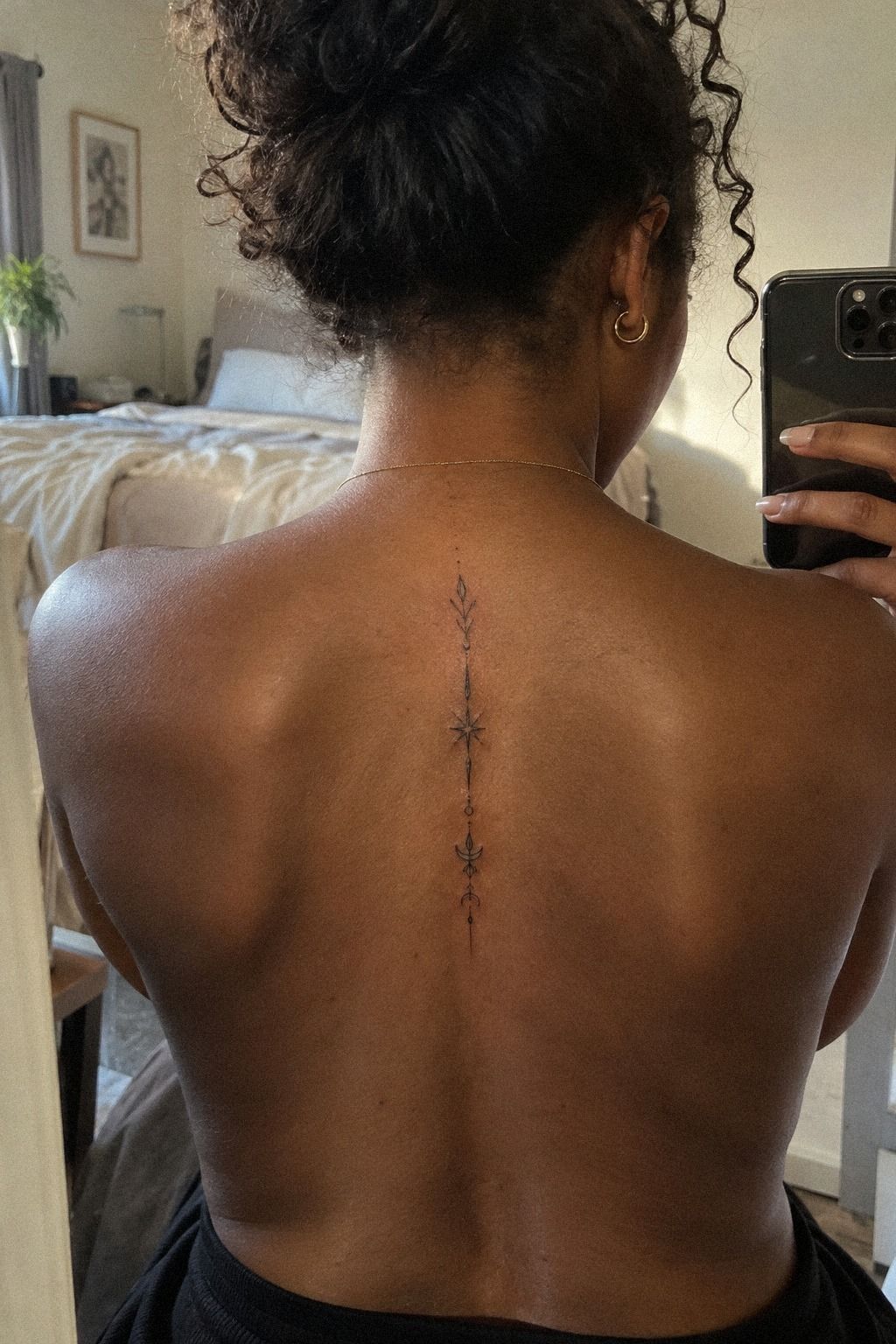
Refine the sketch on your own body, not only on a tablet. On deep brown skin with warm undertones, a minimalist design can look powerful and elegant when the artist chooses a clear line weight and leaves enough skin visible around it. Your anatomy should guide the final drawing.
Bring the artist one main reference and two details you like from other designs. The custom tattoo sketch should combine those ideas without becoming a collage. I’d remove anything that exists only because it looked impressive on someone else.
Use a paper stencil to test position, size, and movement. Stand naturally, bend forward, and check whether the design sits where you expected.
If you’re unsure, ask for a second stencil slightly higher or lower. That small pause can prevent a permanent placement mistake.
Here are typical US reference points to discuss with your artist:
These are broad guides, not a quote. Your artist, region, placement, design density, and studio minimum all matter. You’ll want to ask for the expected session length and total estimate before booking, especially if the design travels farther down your spine.
Fine lines can widen over time, while solid ink and sensible placement tend to age more reliably. Protect healed work from UV protection concerns by covering it and following your artist’s guidance. This small spine tattoo ideas collection can help you compare designs, but your final sketch should feel personal, sharp, and wearable.
Before you commit, compare the full cost with the design value of a piece you won’t need to alter later. The cheapest appointment isn’t always the best budget decision if the stencil, line weight, or placement feels uncertain.
What I Would Keep After Designing My Own
I’d keep the design scale smaller than my first impulse, but not so small that the artist has to compress every detail. Minimalism isn’t about making the tattoo disappear. It’s about choosing one idea and giving it enough space to speak clearly.
I’ve changed my mind about placement more than once. A design can feel intimate on paper and surprisingly visible when you move, dress, or reach upward.
That’s why I trust the stencil stage. You can test the emotional reaction before the permanent part begins.
I’d also choose the artist before I choose the final symbol. Their healed portfolio tells you more than a polished social post. Look for consistent lines, thoughtful spacing, and work shown under ordinary conditions.
The practical details matter, too. You’ll need gentle washing, suitable moisturizer, and patience during the first 2 to 3 weeks. Don’t judge the tattoo while it’s peeling.
And don’t expose it to strong sun or swimming until your artist says the surface has recovered. A reliable aftercare routine helps.
My strongest opinion is simple: choose a motif you can describe in one sentence, then let the artist make it fit your spine. That approach leaves room for a striking, meaningful, and timeless result without forcing your body to imitate somebody else’s design. The result should feel like a personal mark.
Before You Book: Is the Design Worth It?
Ask whether you’d still choose the tattoo if nobody else could see it. That question cuts through trends quickly. A private meaning may have more lasting value than a dramatic design chosen for attention.
Review your booking consultation notes before paying a deposit. Confirm the artist, placement, approximate size, line weight, session length, aftercare, and cancellation policy. Clear details make the cost easier to evaluate.
The design is probably worth it when you’re excited about the meaning and comfortable with the practical tradeoffs. It may not be worth it when you’re rushing because of a birthday, copying a stranger’s tattoo, or choosing an artist only because their rate is low. That’s a better booking decision to make slowly.
You can save more references from meaningful tattoo ideas while you wait. Notice which motifs keep returning. Repetition in your own taste is useful evidence.
How to Judge A Healed Portfolio
Fresh tattoos can look vibrant and crisp, but healed work reveals how an artist’s decisions hold up. Ask for examples several months old, especially when you’re considering fine lines, small lettering, or dense black shapes. A healed portfolio is essential evidence.
Look closely at healed tattoo examples for spacing, edge clarity, and whether tiny details have merged. Skin tone, placement, aftercare, and sun exposure all affect results, so compare thoughtfully rather than searching for perfection.
An artist who works confidently across different skin tones should be able to explain how they adjust contrast, scale, and line weight. Their answer should feel specific, respectful, and practical.
The right portfolio can be more valuable than a lower quote. You’re paying for the artist’s ability to translate a symbolic idea into a durable mark on your body. That judgment is part of the artist’s skill.
A Budget Conversation Worth Having
Ask for a written estimate before the appointment. A tattoo cost estimate should clarify whether the price is based on a shop minimum, hourly rate, or a flat quote.
Your budget should include possible touch-ups, travel, aftercare supplies, and a deposit. That doesn’t mean a touch-up will definitely be needed. It means you’re planning honestly instead of treating the first number as the entire cost.
A small tattoo may take less time than expected, while a long spine design can require more than one appointment. Placement, detail, skin response, and appointment length all affect the final price.
The best value is a design and experience you feel comfortable recommending later. If the quote is outside your budget, ask whether reducing length or simplifying detail would preserve the idea. A flat quote can make that conversation clearer.
Your First Two Weeks Matter
The first days are about patience, not judgment. Follow your artist’s instructions for tattoo aftercare and avoid adding products they haven’t recommended.
Wash gently, keep the area clean, and don’t scratch peeling skin. Normal healing can look less dramatic than the final result, so give the surface time to settle during the peeling stage.
Avoid swimming, intense sun, and unnecessary friction until the skin has recovered. Clothing can rub against the spine, so choose what feels soft and non-irritating while the healing skin is vulnerable.
Healing well protects the crisp, delicate, and polished qualities you wanted in the first place. If something looks unusually painful or concerning, contact your artist or seek qualified medical advice.
A Few Things Worth Answering
How much does a minimalist spine tattoo for women usually cost?
A minimalist spine tattoo usually costs about $100 to $300 in the US, though shop minimums may run about $50 to $100 and hourly rates about $100 to $250. Artist experience, region, placement, and design length all affect the quote.
Is a minimalist spine tattoo a good idea for a first tattoo?
Yes, a minimalist spine tattoo can suit a first tattoo when you choose a clear design and realistic placement. The clean linework can feel personal without covering a large area, but you should discuss movement, sensitivity, and healing before booking.
How do I choose an artist for a minimalist spine tattoo?
Choose an artist with healed examples of fine-line work, clean spacing, and strong hygiene practices. Review their portfolio, ask about their preferred line weight, and confirm that they’re comfortable placing vertical designs along the spine.
How painful is a minimalist spine tattoo?
Pain varies by person and placement. Areas close to bone may feel sharper, while surrounding muscle can feel more tolerable. Your artist can help you plan breaks, hydration, and a shorter first session if you’re nervous about pain tolerance.
How long does a minimalist spine tattoo take to heal?
The surface usually heals in about 2 to 3 weeks, while complete healing can take about 2 to 3 months. Wash gently, moisturize as directed, avoid swimming, and protect the tattoo from sun until the skin has recovered.
What’s the best placement for a minimalist spine tattoo?
The upper spine works well for a compact emblem, while a longer centerline design can travel from the upper back toward the waist. Your best placement depends on visibility, pain tolerance, line longevity, and how the design follows your natural curves.
Where I’d Start First
If I had to pick one step, I’d start with the stencil test. You’ll catch awkward curves, crowded spacing, and a wrong placement before the needle begins. Save the reference, live with the paper version, and let your artist refine the mark for your body!
If you’re still unsure, revisit minimalist fine-line spine tattoo ideas and compare the choices that feel personal rather than merely stylish. The right first tattoo doesn’t need to be loud. It needs to remain yours.