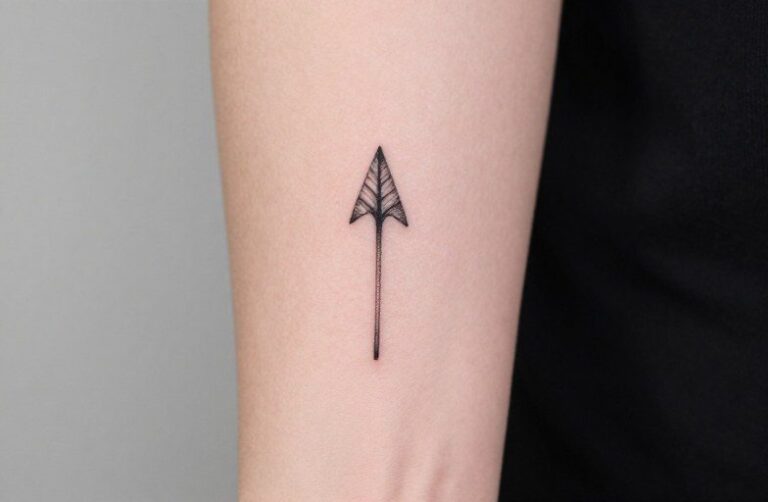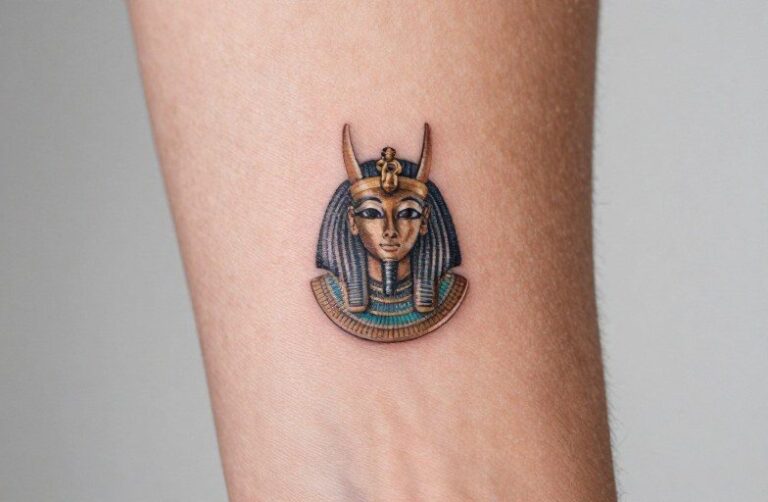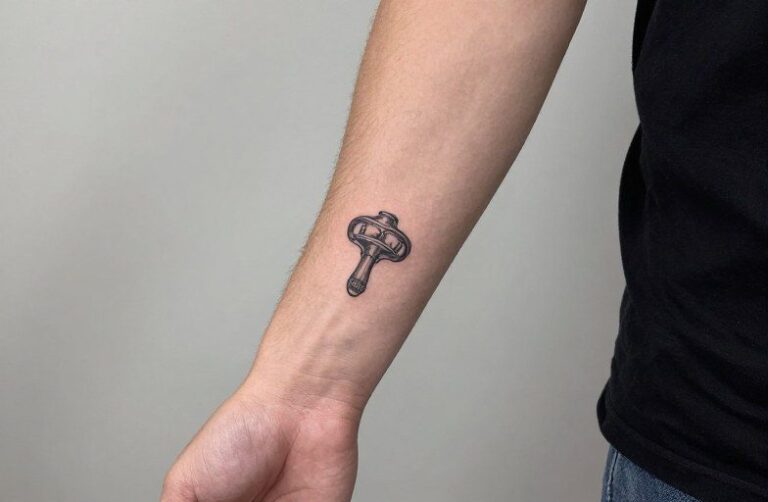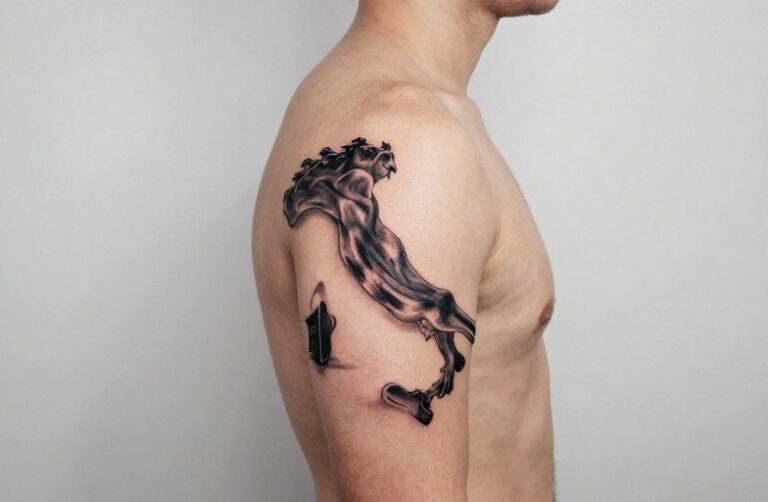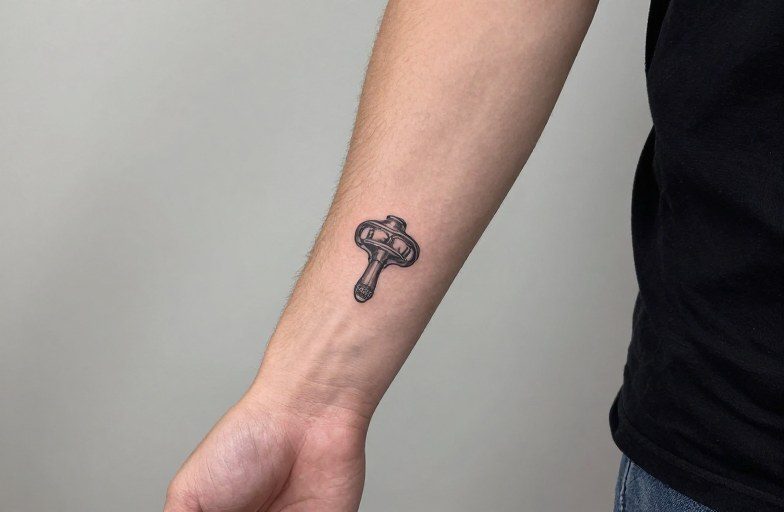
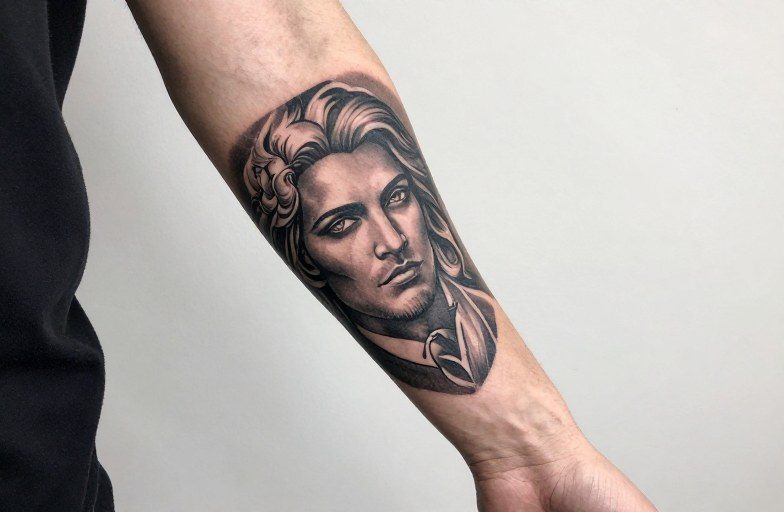
A forearm tattoo for men isn’t simply a design choice; it’s a deliberate statement of visibility and intent. The forearm occupies a unique space, always within the wearer’s sight, easily shown or concealed with a sleeve roll, and directly connected to the hands that build, create, and gesture. This placement signals readiness to own one’s story, whatever imagery fills the space.
Symbolism & Core Meaning
The Forearm as Declaration
Unlike the back or chest, hidden except by intention, the forearm lives in the social sphere. Shaking hands, lifting a drink, gesturing while speaking, these daily motions put the tattoo into circulation. The meaning here isn’t buried; it’s offered. Men who choose this placement often gravitate toward symbols they want to integrate into their presented self: family markers, philosophical emblems, or reminders of transformation they don’t wish to forget.
Strength and Labor Associations
The forearm carries cultural weight as the site of grip, leverage, and manual capability. Traditional maritime and military tattoos favored this location partly for practical display, visible to peers, legible at a distance. A compass, ship, or anchor here reads differently than on the ankle. The body itself collaborates in the symbolism.
Personal & Modern Meanings
Biography and Milestone Marking
Contemporary forearm work frequently documents specific passages: sobriety dates rendered in Roman numerals, coordinates of meaningful places, children’s names in careful script. The forearm’s proximity to the face during conversation makes these tattoos part of interpersonal exchange. They’re not private meditations but conversational anchors, points from which stories launch.
Identity and Belonging
Cultural heritage tattoos, Celtic knots, Polynesian-inspired bands, Nordic runes, find particular resonance here. The visible assertion of lineage or spiritual affiliation matters. Modern practitioners also use the forearm for subcultural signaling: punk iconography, skate references, music imagery that identifies tribal belonging to those who recognize the code.
- Coordinates or dates: specific, unambiguous personal history
- Script or lettering: direct communication, sometimes protective (names of loved ones)
- Geometric or sacred geometry: order, mathematical beauty, spiritual seeking
- Nature elements: wolves for loyalty, bears for solitude and strength, trees for growth
- Skulls or memento mori: mortality awareness, carpe diem philosophy
Similar & Related Symbols
Upper Arm and Sleeve Continuity
Forearm pieces often extend from or connect to upper arm work. A half-sleeve stopping at the elbow creates a different statement than full coverage. The partial sleeve suggests deliberation, a chosen boundary. Related placements, the wrist for subtlety, the hand for ultimate visibility, offer gradations of the same impulse toward externalized meaning.
Counterparts in Other Placements
calf tattoos share the forearm’s cylindrical canvas and comparable visibility in shorts weather. Chest pieces offer the inverse: intimate, revealed only by choice. The forearm sits between these poles, socially available without demanding attention.
History & Cultural Roots
Maritime and Military Lineage
Forearm tattooing carries deep connections to working-class traditions. Sailors favored the forearm for practical reasons: shipboard conditions made elaborate back work difficult, and the arm’s visibility served identification purposes. A pig and rooster on the feet, a ship on the chest, but the forearm held navigational tools, sweetheart names, and marks of voyages completed. Military traditions followed similar logic, with unit insignia and service records worn where brothers-in-arms could read them.
Revival and Democratization
The 1990s and 2000s saw forearm tattooing expand dramatically beyond these subcultures. No longer confined to specific professions, the placement became available for any symbolic purpose. This democratization shifted meaning from group identification to individual narrative, though the visual vocabulary, anchors, roses, eagles, often retained historical echoes.
Common Variations & Styles
Black and Gray Realism
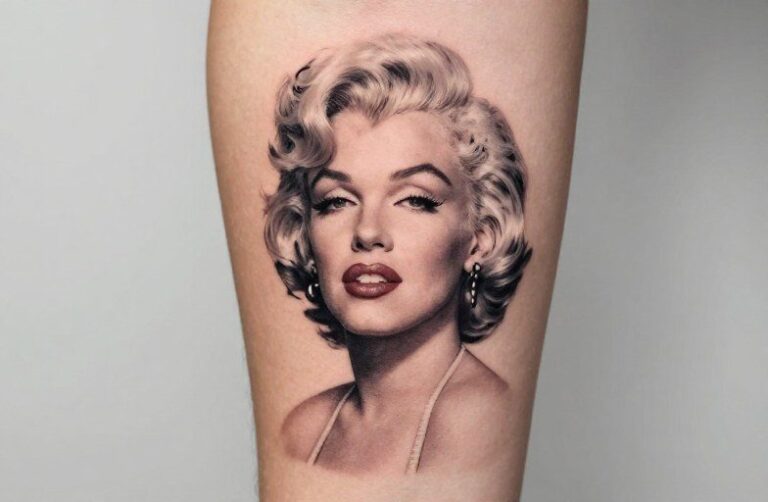
Portraits of family members, photorealistic animals, and dramatic religious imagery dominate this approach. The forearm’s relatively flat planes suit detailed rendering, though the inner arm’s softer skin presents challenges for fine lines. Healing tends to produce more scabbing here than on denser body areas; artists often adjust saturation knowing some ink loss occurs.
Traditional and Neo-Traditional
Bold lines, limited color palettes, and immediate readability define these styles. Traditional forearm work ages exceptionally well, the thick outlines resist the blur that degrades fine detail over decades. A traditional eagle or dagger remains legible at fifty years, where a delicate single-needle piece may soften into indistinct gray.
Geometric and Ornamental
Mandala-inspired designs, dotwork, and pattern-based tattoos suit the forearm’s natural geometry. These often wrap partially, creating movement with the arm’s rotation. The style’s precision demands steady skin; artists typically avoid tattooing the inner forearm’s crease areas where flexion distorts healing patterns.
- Script and lettering: highly legible fonts recommended; avoid excessive ornament that clouds readability at distance
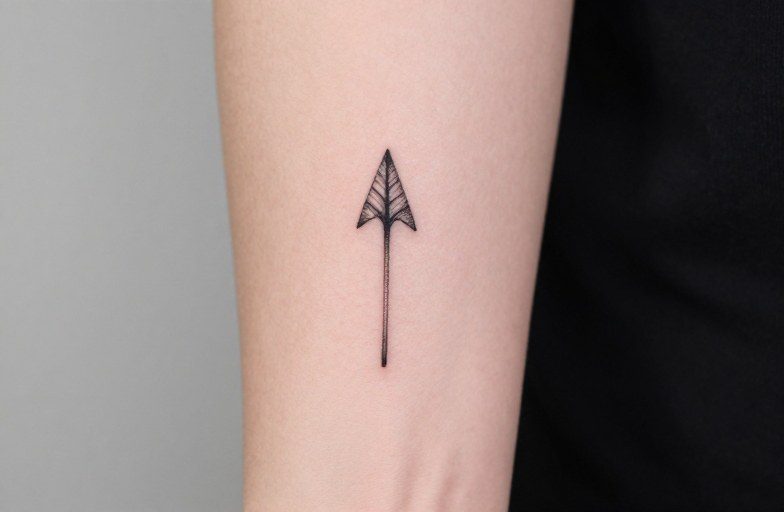
- Minimalist line work: deceptively difficult; requires perfect execution as errors remain uncorrected by shading
- Biomechanical: machinery and organic fusion, often extending toward the wrist for illusion of integration
- Japanese-inspired: koi, dragons, or waves, frequently flowing toward the hand or elbow for directional movement
Best Placements
Outer Forearm: The Showcase
The extensor side offers the most stable skin, minimal hair disruption, and maximum visibility. Tattoos here face outward during natural stance, hands at sides, arms relaxed. This is the default “presentation” surface, ideal for imagery meant to be seen and recognized.
Inner Forearm: The Intimate
The flexor side, softer and more sensitive, carries different weight. Visible during eating, writing, phone use, activities directed toward the self. Tattoos here often hold private significance, meant for the wearer’s own frequent sighting rather than public display. The inner forearm also presents more technical challenges: thinner skin, greater movement during healing, and tendency toward more pronounced fading.
Wrist and Elbow Integration
Forearm tattoos frequently negotiate boundaries at these joints. A piece stopping cleanly at the wrist reads as contained; one flowing onto the hand commits to full visibility. Elbow transitions similarly define whether work extends toward a full sleeve or maintains forearm focus. These decisions affect daily life more than many anticipate, hand and finger tattoos carry professional implications that forearm work largely avoids.
Before You Decide
Consider the long arc. The forearm sees sun, friction from desks and sleeves, and decades of exposure. Colors fade toward blue or green; blacks soften to charcoal. A design that reads powerfully at twenty-five may require refreshment by forty-five. Choose imagery that sustains meaning through life changes, avoid trend-bound references that date quickly.
Consult specifically about line weight and spacing. Tattoos here exist in a social viewing distance; they should communicate without requiring someone to lean close. The best forearm work holds clarity from three feet away, then rewards closer inspection with detail.
Finally, respect the placement’s visibility. This isn’t a hidden experiment or easily covered mistake. The forearm announces intention. Make sure the meaning you carry deserves that broadcast.
Frequently Asked Questions
Do forearm tattoos hurt more than other arm placements?
The outer forearm rates moderate on pain scales, bone proximity near the wrist increases sensation, but the meaty middle section tolerates well. Inner forearm skin is thinner and more sensitive, particularly near the elbow crease.
How well do forearm tattoos age over time?
Forearm skin moves frequently and receives sun exposure, accelerating fade. Bold lines and adequate spacing between elements age significantly better than dense fine-line work. Plan for potential touch-ups after ten to fifteen years.
Can forearm tattoos be covered professionally?
Long sleeves cover completely; quarter-zip or rolled sleeves partially reveal. The forearm offers more concealment flexibility than hand, neck, or face tattoos, though short-sleeve environments leave outer forearm work fully exposed.
Should I get a forearm tattoo facing me or facing others?
This choice shapes daily experience. Outward-facing tattoos display to the world; inward-facing tattoos greet you personally. Many split the difference with wraparound designs or place private meanings on the inner arm and public declarations on the outer.