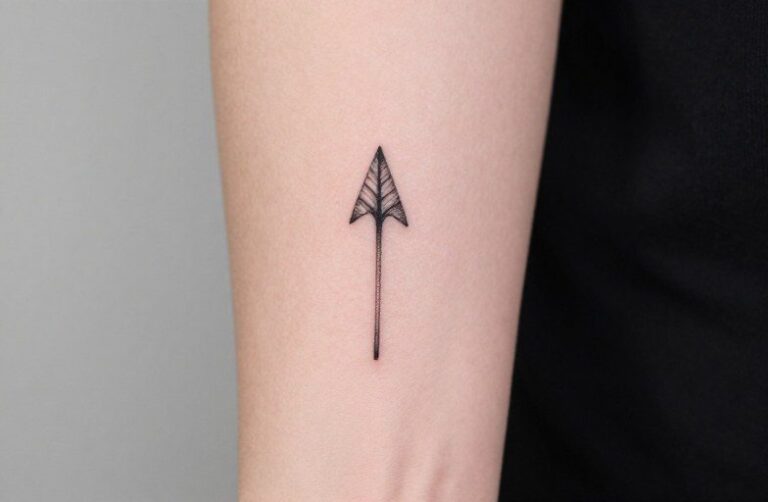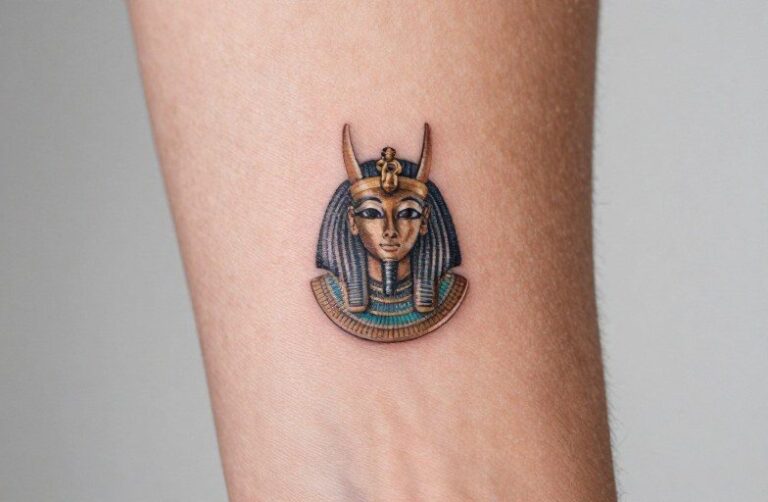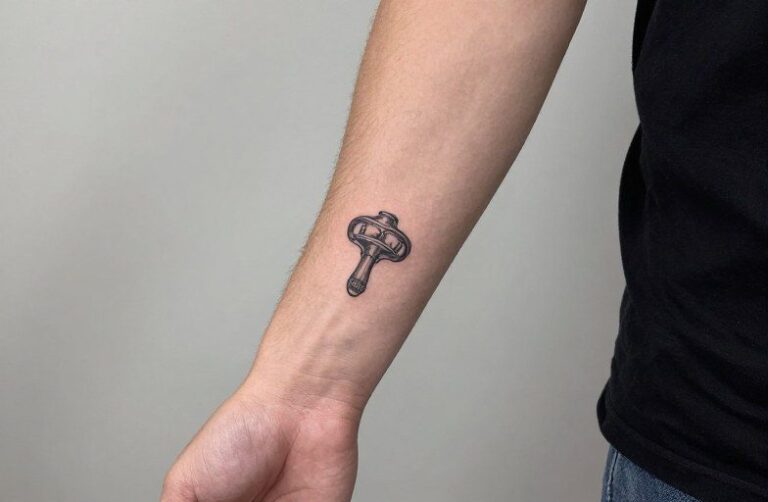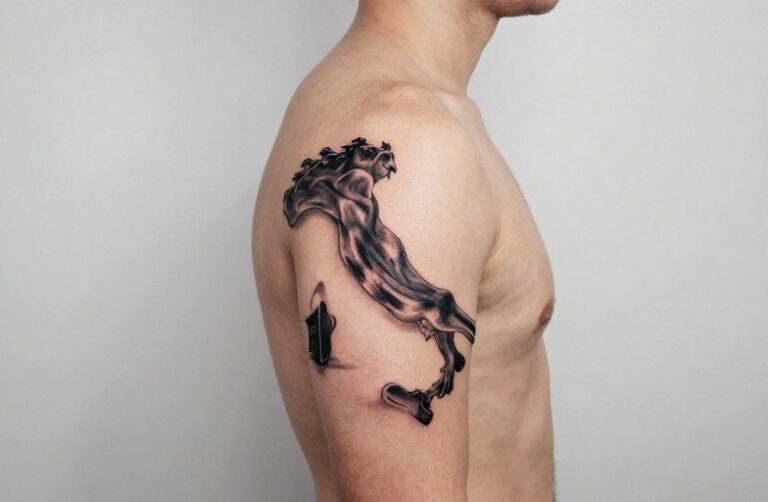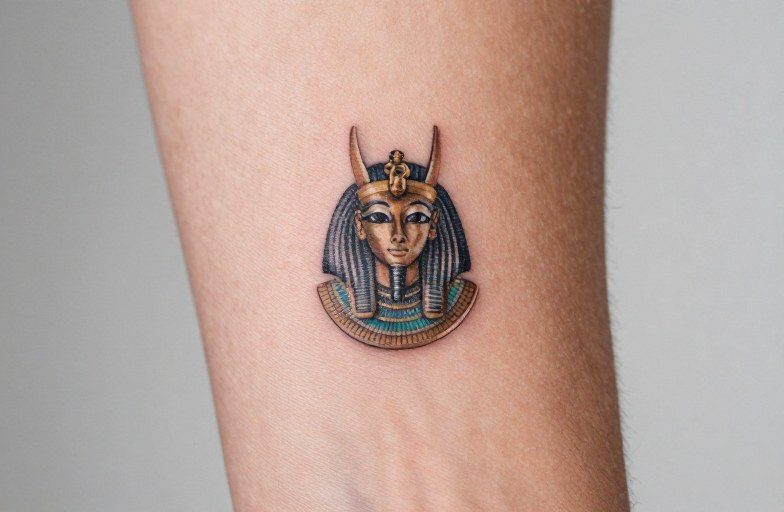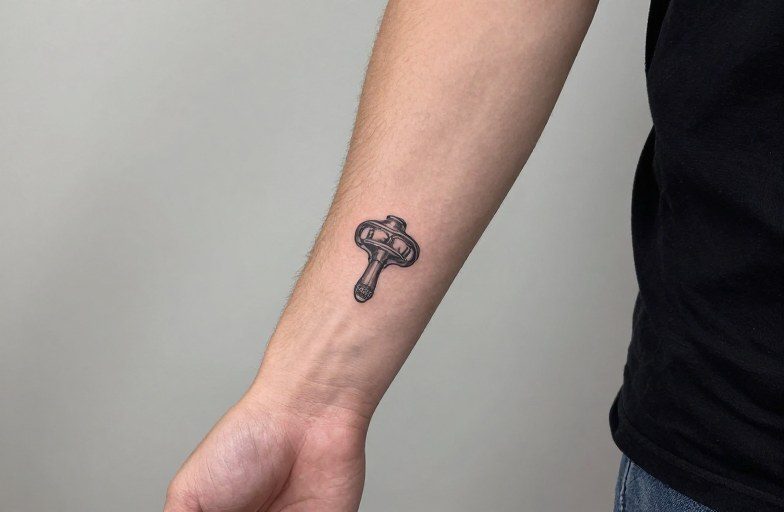
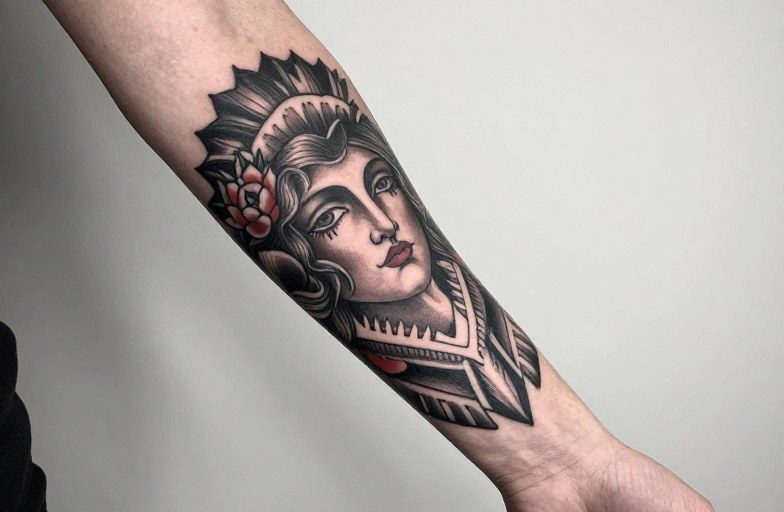
A trad forearm tattoo is a declaration of selfhood worn where everyone sees it. The meaning centers on identity, resilience, and belonging to a lineage of working-class artistry that prizes boldness over subtlety. Forearm placement amplifies everything: the commitment to the image, the willingness to carry it through job interviews and family dinners, the pride in something permanent and unapologetic.
Symbolism & Core Meaning
The traditional American tattoo vocabulary carries specific weight. A dagger through a rose on the forearm speaks to beauty and danger intertwined, love that cuts. A swallow marks miles traveled, originally nautical but now signaling personal passage through hardship. Anchors ground the wearer to stability, often dedicated to a person or place. Skulls confront mortality directly, stripped of sentimentality.
What unifies these images is their graphic immediacy. Trad work was designed to be readable from across a barroom or ship deck. The forearm extends that legibility into daily life. You’re not hiding; you’re choosing to be read.
Placement as Statement
The outer forearm offers the broadest canvas and the most visibility. Inner forearm tattoos face the wearer, creating a more private dialogue, though still exposed with rolled sleeves. Many people choose the forearm specifically because it cannot be easily concealed, making the commitment itself part of the meaning.
Common Motifs and Their Roots
- Swallows and sparrows: often linked to sailors marking distance from home, now generalized to any significant journey
- Snakes: renewal, danger, temptation, depending on accompanying elements
- Panthers or big cats: strength, ferocity, protection
- Hearts with banners: names, dates, dedications rendered in classic script
- Ships and lighthouses: guidance through trouble, frequently adapted by those with no maritime connection
History & Cultural Roots
American traditional tattooing crystallized in the early 20th century, though some trace its bold outlines and limited color palettes to older maritime practices. Sailors returning from Pacific voyages brought techniques and motifs that merged with circus and sideshow culture. The forearm became a natural showcase because it was easily displayed and quickly tattooed during shore leave.
Norman Collins, known as Sailor Jerry, standardized much of this vocabulary in Honolulu during the mid-20th century. His flash sheets, pre-drawn designs hung in shops, established the visual grammar still used today: thick black outlines, saturated reds and greens, minimal shading, maximum clarity. The forearm was prime real estate on these sheets, sized for visibility and speed.
From Counterculture to Mainstream
By the 1970s and 1980s, trad forearm tattoos signaled rebellion in most professional settings. That stigma has largely dissolved, though visibility still carries social weight. The meaning shifted from transgression to deliberate self-definition, a choice to participate in a visual tradition rather than reject it.
How It Ages on Skin
Forearm skin sees constant sun, friction, and movement. This affects how trad work ages, sometimes dramatically. The good news: traditional designs were engineered for durability. Thick outlines hold their structure longer than fine-line work. Solid color packing resists the patchy fading that plagues watercolor or gradient styles.
The outer forearm, especially near the wrist, catches more UV exposure than the inner arm. Sunscreen matters enormously here. Without protection, bright reds mute to dusty rose within five to ten years. Blacks may soften to charcoal but rarely disappear entirely, thanks to the density of trad application.
Line Weight and Longevity
Traditional outlines typically run 7-14 needle groupings, substantially heavier than modern minimalist work. This mass of ink creates a buffer against the natural spreading that occurs as skin regenerates. A trad forearm tattoo at twenty years often remains more legible than a delicate blackwork piece at five.
Healing Realities
- Forearm movement during healing can crack scabs; limit rotation and heavy lifting for the first week
- Inner forearm tends to heal slightly faster due to less sun damage and typically thinner callousing
- Elbow proximity complicates aftercare for pieces extending toward the joint; expect longer peeling phases
- Clothing friction from long sleeves can irritate fresh work; loose cotton helps
Color vs Black and Grey
Classic trad demands color: cadmium red, cobalt green, butter yellow, navy blue. These pigments were selected for visibility against weathered skin and for the limited palettes available to early practitioners. A color trad forearm tattoo announces its lineage loudly.
Black and grey trad, sometimes called “blackwork traditional,” strips that heritage to its structural bones. The meaning shifts slightly toward severity, memorial, or graphic starkness. Some motifs translate better than others. Daggers and skulls thrive in monochrome. Roses lose some of their romantic coding without red. Snakes become more threatening, less carnival.
Skin Tone Considerations
Yellows and light greens can struggle on deeper skin tones without experienced application. Saturation techniques, packing ink more densely, working slower, help, but not all artists adjust their approach. Ask to see healed photos on skin similar to yours. Black and grey trad often ages more predictably across the spectrum of complexions.
Design Tips & Pairings
Forearm trad works best at a certain scale. Too small, and the bold lines blob together; too large, and the graphic punch dissolves into detail that trad wasn’t built for. A palm-sized minimum preserves readability. Many successful pieces cluster multiple flash motifs into a half-sleeve composition, unified by background elements like wind bars, water swirls, or flame.
Pairing disparate images requires thought. A military memorial eagle beside a party-girl pinup creates tonal whiplash unless connected by style alone. The unifying power of traditional technique, those heavy outlines, flat color fields, can hold together images that would clash in other styles.
Adjacent Placements
- Hand or knuckle extensions: historically coded as harder, more committed; now increasingly common
- Upper arm continuation: builds toward a full sleeve while keeping the forearm as focal point
- Chest or opposite forearm: mirror images or paired motifs (swallows facing each other, etc.)
Negative Space and Backgrounds
Traditional backgrounds aren’t empty. Wind bars, dotwork shading, and cloud forms fill gaps and make the main image pop. Without them, forearm pieces can feel like stickers applied to skin rather than integrated tattoos. A good trad artist builds the background into the initial design, not as afterthought.
Religious & Spiritual Angles
Crosses, praying hands, and angel imagery have long populated trad flash. Their meaning ranges from genuine devotion to cultural inheritance, many wearers grew up seeing these images on fathers and grandfathers. The forearm placement makes spiritual commitment visible testimony, not private meditation.
Some trace religious trad imagery to the same working-class Catholic communities that produced much of early American tattoo culture. Crosses with banners, hearts pierced by arrows, the Sacred Heart rendered in bold lines: these merge folk piety with graphic necessity. The style’s directness suits spiritual content that rejects ambiguity.
Secular Adaptations
Modern wearers often choose these motifs for aesthetic or familial reasons rather than belief. The meaning becomes ancestral connection, tradition carried forward without doctrinal attachment. This doesn’t diminish the tattoo; it shifts its function toward heritage and continuity.
Final Word
A trad forearm tattoo means you’re willing to be seen, to have your choices read by strangers, to participate in a visual language older than your grandparents. The specific image matters, but the placement and style matter equally. This is tattooing that refuses to whisper. It shouts in a vocabulary refined by decades of sailors, soldiers, carnival workers, and street artists who needed their marks to last, to be understood, to endure. The meaning lives in that continuity as much as any individual symbol.
Frequently Asked Questions
Does a trad forearm tattoo hurt more than other placements?
The forearm sits on bone with thin skin, especially the outer surface, so it ranks moderate to moderately-high on the pain scale. Inner forearm flesh is softer and generally less intense. Most people find it manageable, and the session usually finishes faster than back or thigh work due to accessible positioning.
Can I get a trad forearm tattoo if I need to hide it for work?
Long sleeves cover it completely, but the forearm is inherently visible in most casual and business-casual settings. If concealment is a regular necessity, consider upper arm placement instead. Forearm trad is specifically chosen for its visibility, not its discretion.
How much does a trad forearm tattoo typically cost?
Pricing varies enormously by city, artist reputation, and design complexity. A single palm-sized trad piece might run $200-500; a half-sleeve composition could reach $800-1500 or more. Highly sought-after specialists often charge hourly rates of $150-300. Always prioritize portfolio quality over bargain pricing.
Will a trad forearm tattoo stretch if I build muscle?
Moderate muscle gain causes minimal distortion on the outer forearm, where skin is relatively stable. Dramatic size changes or significant weight fluctuation can affect any tattoo. The inner forearm is slightly more prone to stretching. Traditional bold lines withstand distortion better than fine detail work.