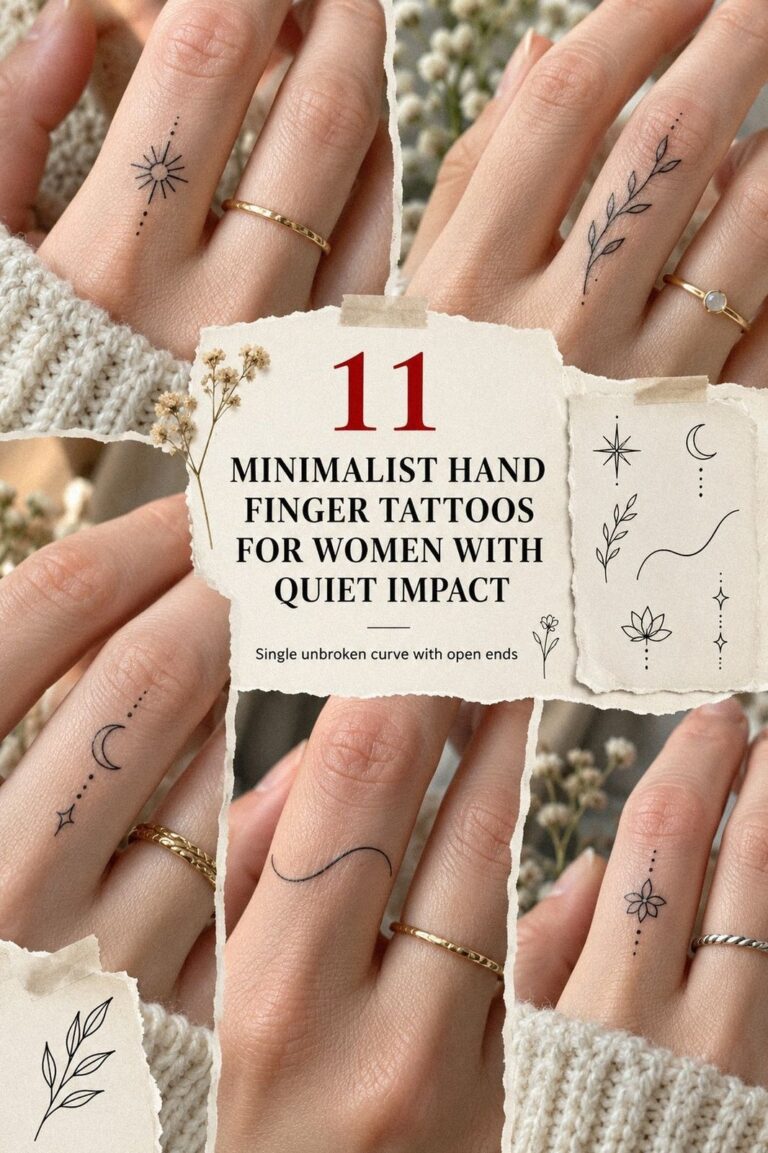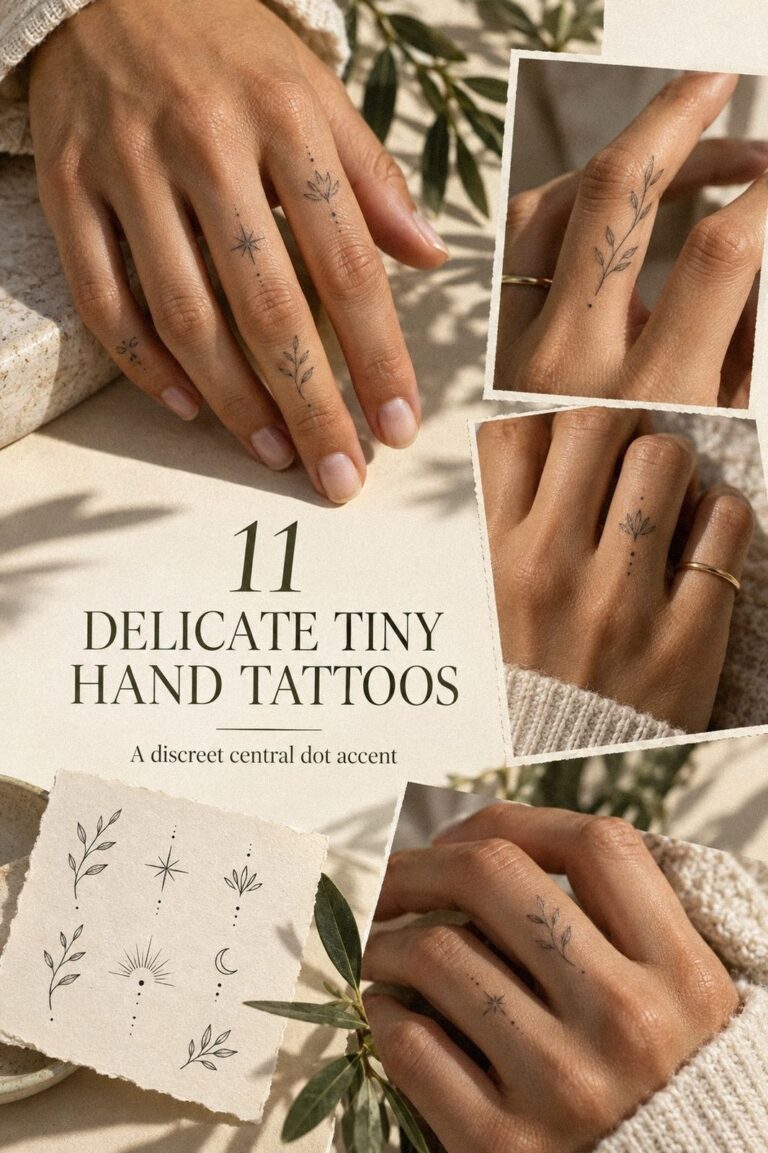
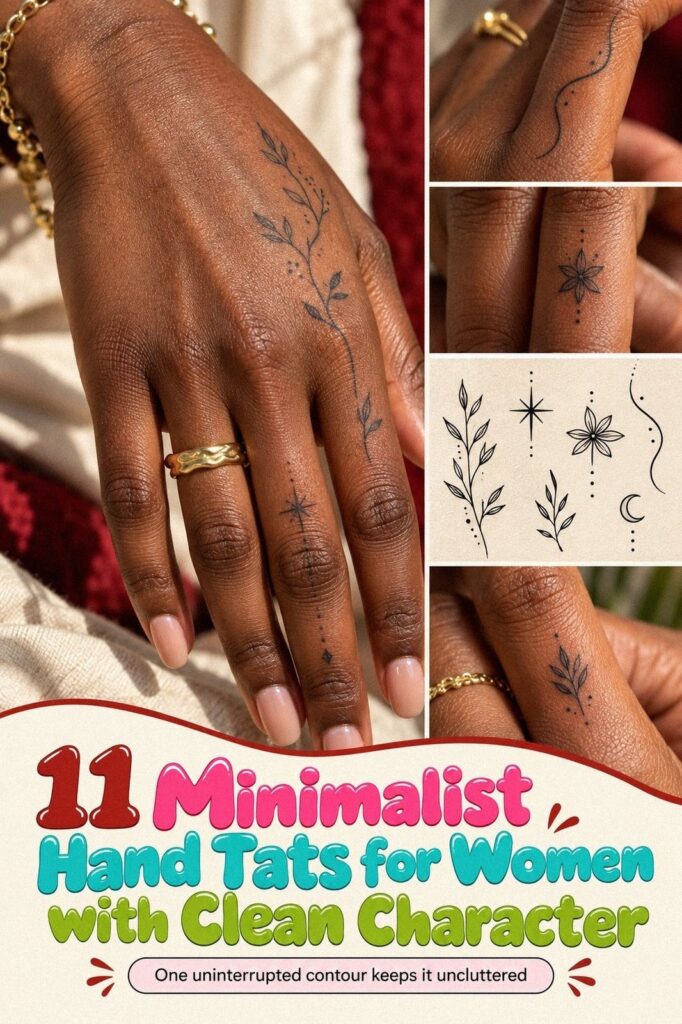
Minimalist hand tats for women can stay quiet and still feel personal. Start with a small black symbol, test its placement, and choose an artist who shows healed work. Your hand gets sun, friction, and attention, so the design needs more thought than its tiny size suggests. Here’s the order I’d use.
Editor’s note: The best discreet hand tattoos don’t disappear completely. They give people a glimpse, then leave the meaning with you. Start with this guide to small hand tats for women before you save dozens of competing references.
- Start With Small Minimalist Hand Tats
- Which Delicate Linework Feels Personal?
- Trace Tiny Symbols Along Your Fingers
- Crisp, Feminine Ink or Something Softer?
- Build a Unique Reference Sheet
- The Meaning Behind a Visible Shape
- Match Fine Lines to Your Skin
- Between Finger Joints: What Actually Works?
- Bold Symbols, Minimal Detail
- Protect Fresh Ink Through Hand Healing
- Wear Striking Hand Tats With Confidence
1Start With Small Minimalist Hand Tats
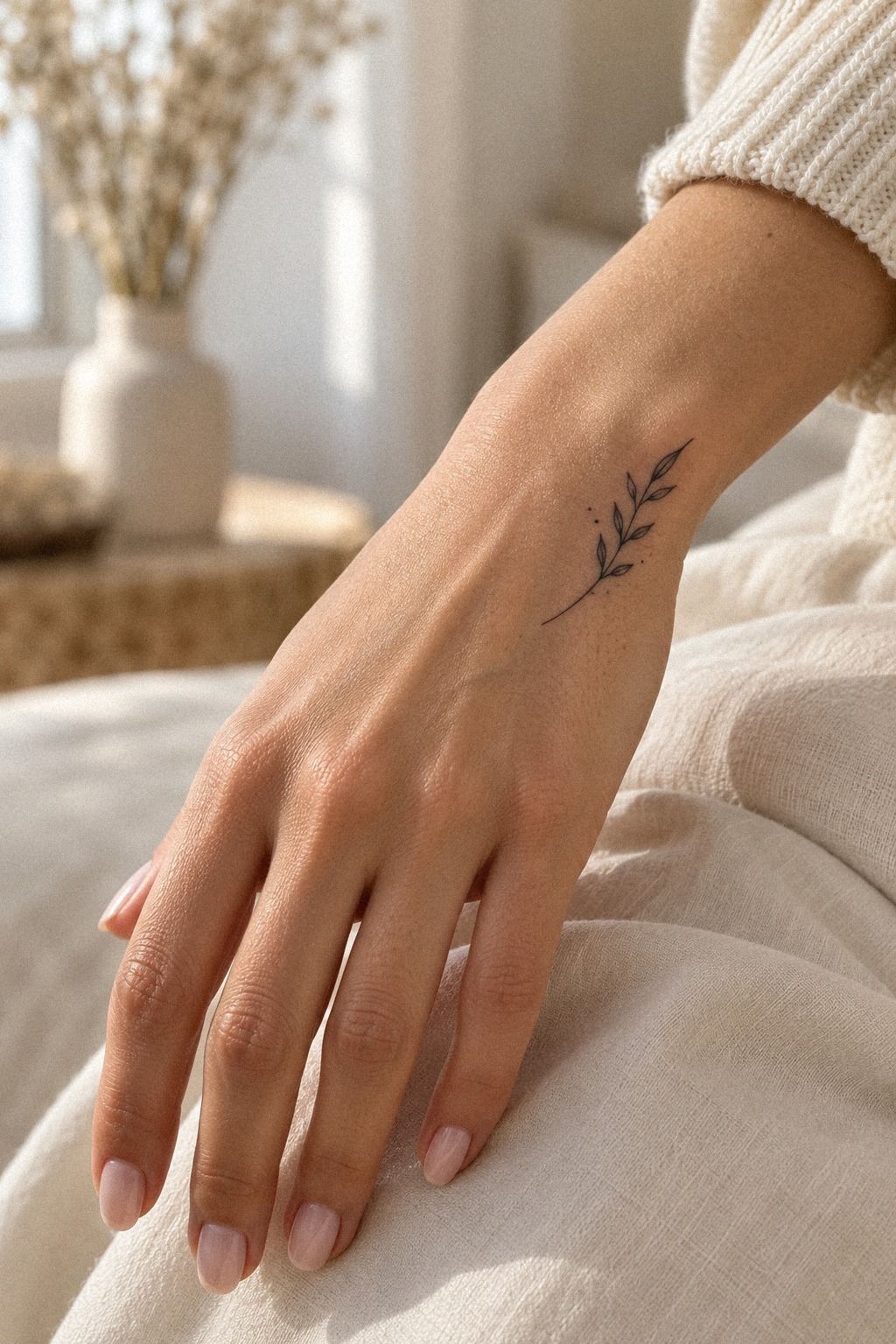
Begin with a design that has room to breathe. A few small stars in different sizes can look delicate on fair cool-pink skin, especially when the marks don’t crowd the knuckles. I’d keep the largest star near 1/4 inch and let the smaller points fade into the composition.
You’ll get a personal constellation without making your hand feel busy.
I call this the Three-Size Star Rule: one main mark, one medium mark, and one tiny mark. Your eye can read that hierarchy quickly.
If every star is the same size, the result can look stamped on rather than expressive. See these minimalist finger tattoos and small finger tats for women before you choose your own scale.
Keep the black ink crisp, but don’t ask for heavy filling on the first pass. I’ve seen tiny stars turn muddy when their points are packed too close together, especially near a finger crease. A simple design gives your artist more control and tends to look sharper than a crowded mini-scene.
Remember that visible doesn’t mean loud. Your small stars can feel stylish and understated while still carrying a private meaning, such as family members, travel dates, or a personal map.
If you’re unsure, print the design at several sizes and hold each one over your hand for a day. Small can still be memorable!
2Which Delicate Linework Feels Personal?
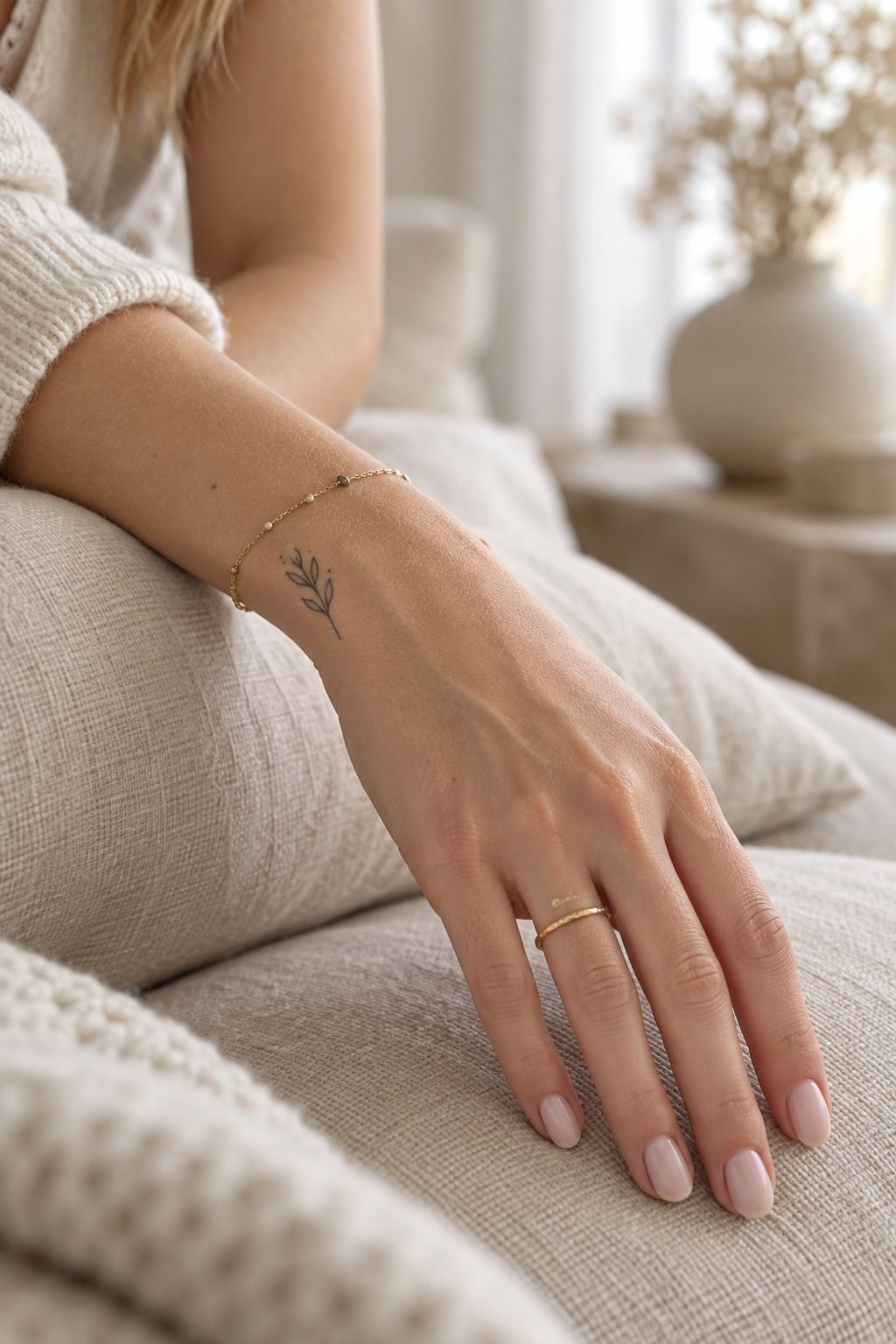
Choose one idea before you choose the drawing.
Design Direction: One Idea, One Mark
A personal symbol gives the design a clear center. Maybe it represents a sibling, a protective phrase, a favorite place, or a private turning point. You don’t need to show every layer of the story on your skin.
Write three words beside each reference you save. “Romantic,” “sacred,” and “playful” will lead you toward different shapes. If the words conflict, your reference sheet probably needs editing.
I’d choose the mark that still feels meaningful when reduced to a simple outline. A tattoo that depends on ornate detail may lose its identity once the design becomes small. One idea can be enough.
3Trace Tiny Symbols Along Your Fingers
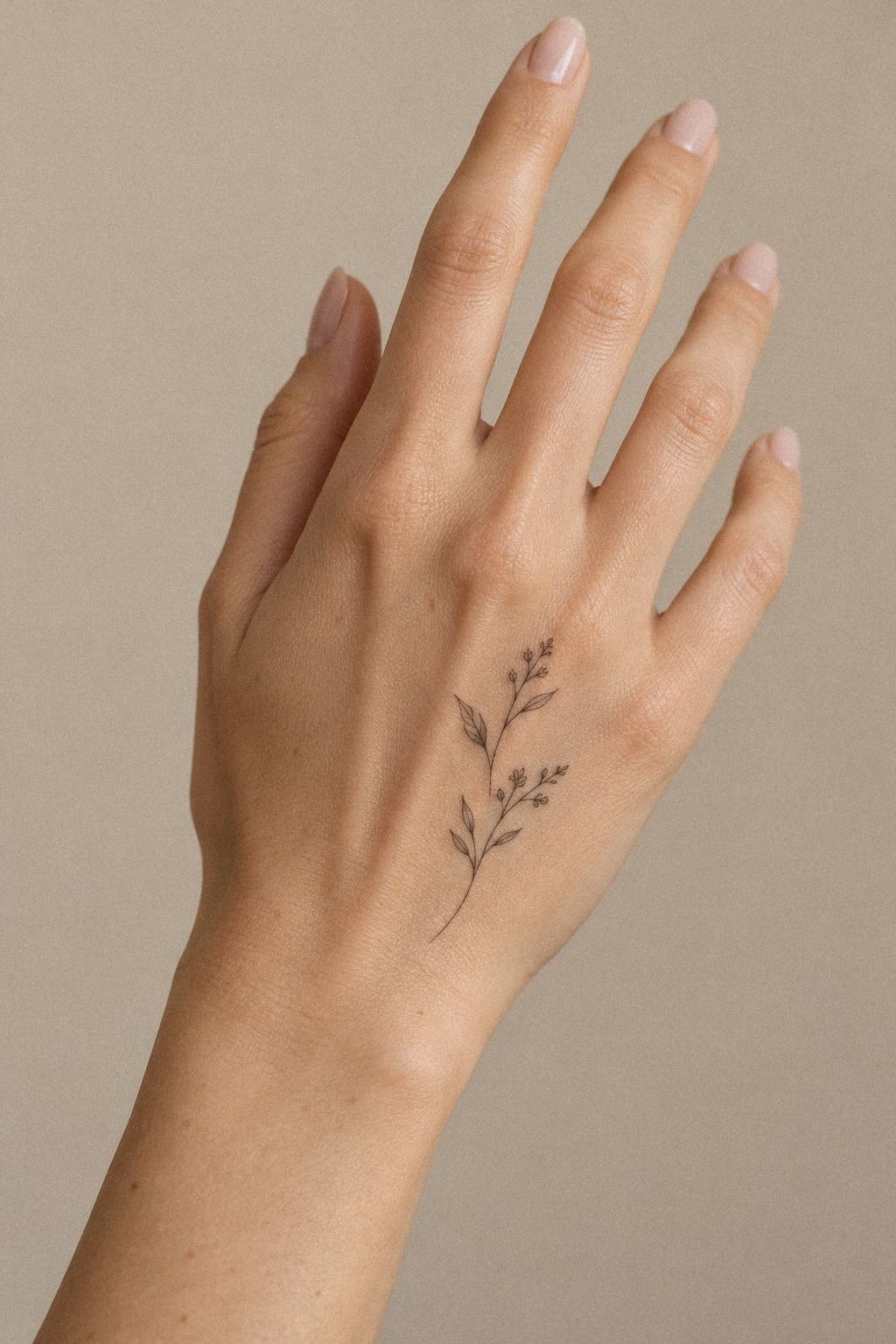
Finger placement should follow movement. Tiny dots, short stars, or narrow symbols can sit along the side of a finger, above a joint, or near the base where your hand bends less. On medium olive skin, a fine black symbol can look dainty and symbolic when the spacing follows the natural rhythm of your fingers.
Start by marking three possible placements with a cosmetic pencil. Wear the marks for a full day.
Your hands will bend, wash, type, and grip objects, so you’ll notice quickly if a symbol feels distracting. You may like the side of your index finger in the morning and dislike it after several hours of movement.
I’d avoid placing a detailed design directly across a deep joint crease. That area gets repeated friction and can make a graceful image harder to preserve.
Instead, ask your artist whether the mark can sit slightly above or beside the crease. Your design can still read as connected without fighting the way your hand moves.
For more placement references, browse minimalist hand finger tattoos for women and minimalist finger tats for women. Bring screenshots, but let your artist adjust the position to your anatomy. What works on one hand may look crowded on yours!
4Crisp, Feminine Ink or Something Softer?
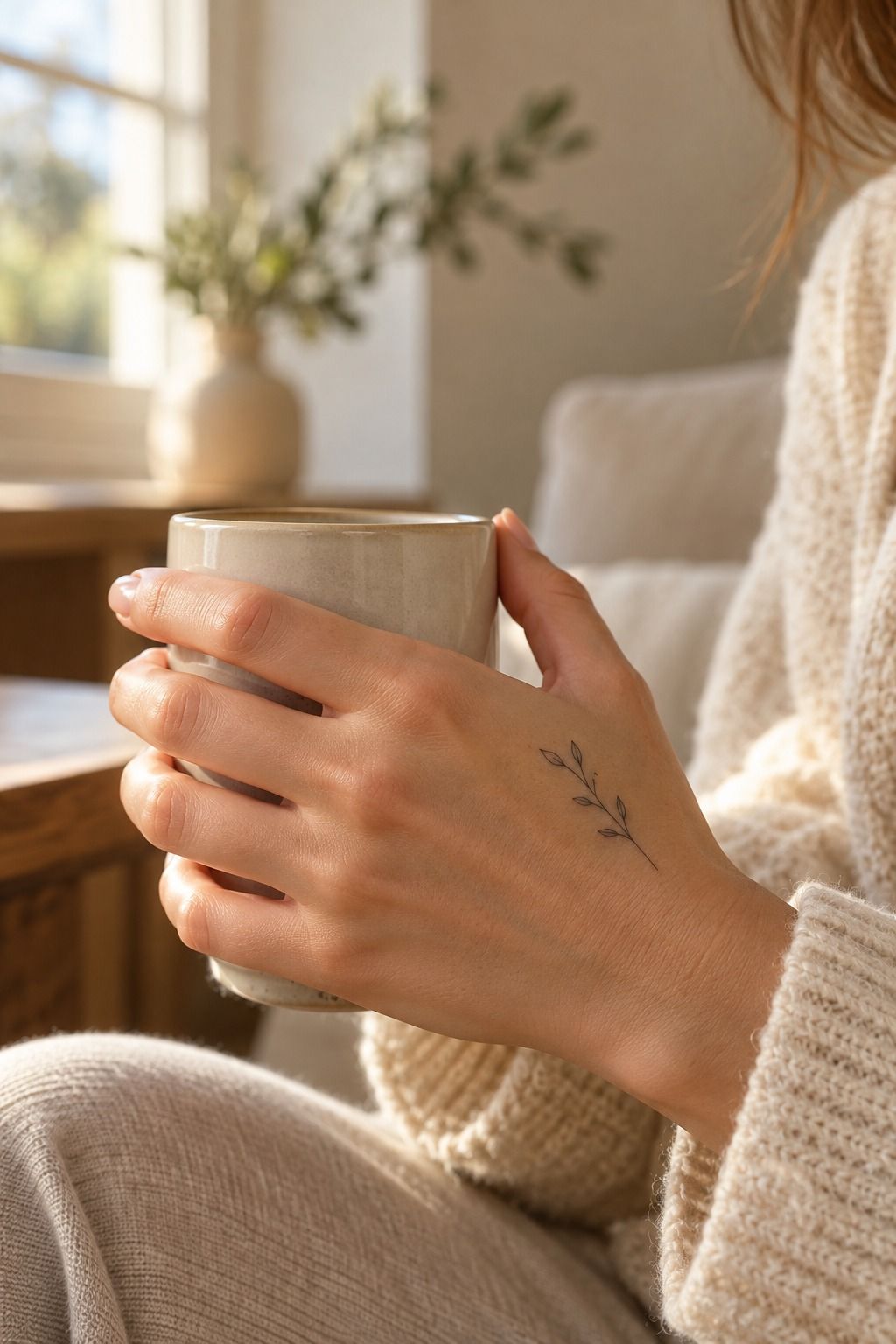
Think about contrast before you decide on softness. On golden tan skin, a thin black line can look crisp and feminine when the shape is open, with enough untouched skin around it.
Tiny bows, clean arches, and narrow botanical marks can feel polished without becoming overly sweet. Your hand doesn’t need a decorative border.
I’d choose understated linework over pale gray ink for a first hand piece. Gray can look gentle when fresh, but the artist needs to judge how it’ll settle on your skin.
Ask for a healed example with similar undertones. The goal isn’t maximum darkness; it’s a readable mark that still feels like you.
Use one focal shape and let the surrounding skin do some of the work. A tiny heart with a single break in the outline may look more elegant than a heart filled with dots, leaves, and initials. You’re not trying to prove how much detail can fit into a small space.
If you prefer a softer reference set, look through small hand tattoos for women. Then remove one element from your favorite design.
I’ve learned that subtraction usually makes a hand tattoo feel more intentional, especially when you want it to stay under the radar. That restraint matters!
Placement Check Before You Commit
Your hand anatomy should decide the final position, not a saved reference. Finger length, knuckle shape, skin texture, and daily movement all change how a mark will read.
Try the design on the back of your hand, along the thumb area, and near the side of a finger. Check it while your hand is relaxed, gripping a cup, and resting at your side. You’ll see which placement feels natural.
A wrist alternative can preserve the same idea if the hand feels too exposed. It may also give a delicate design more room to breathe. You’re allowed to change location without abandoning the concept.
5Build a Unique Reference Sheet
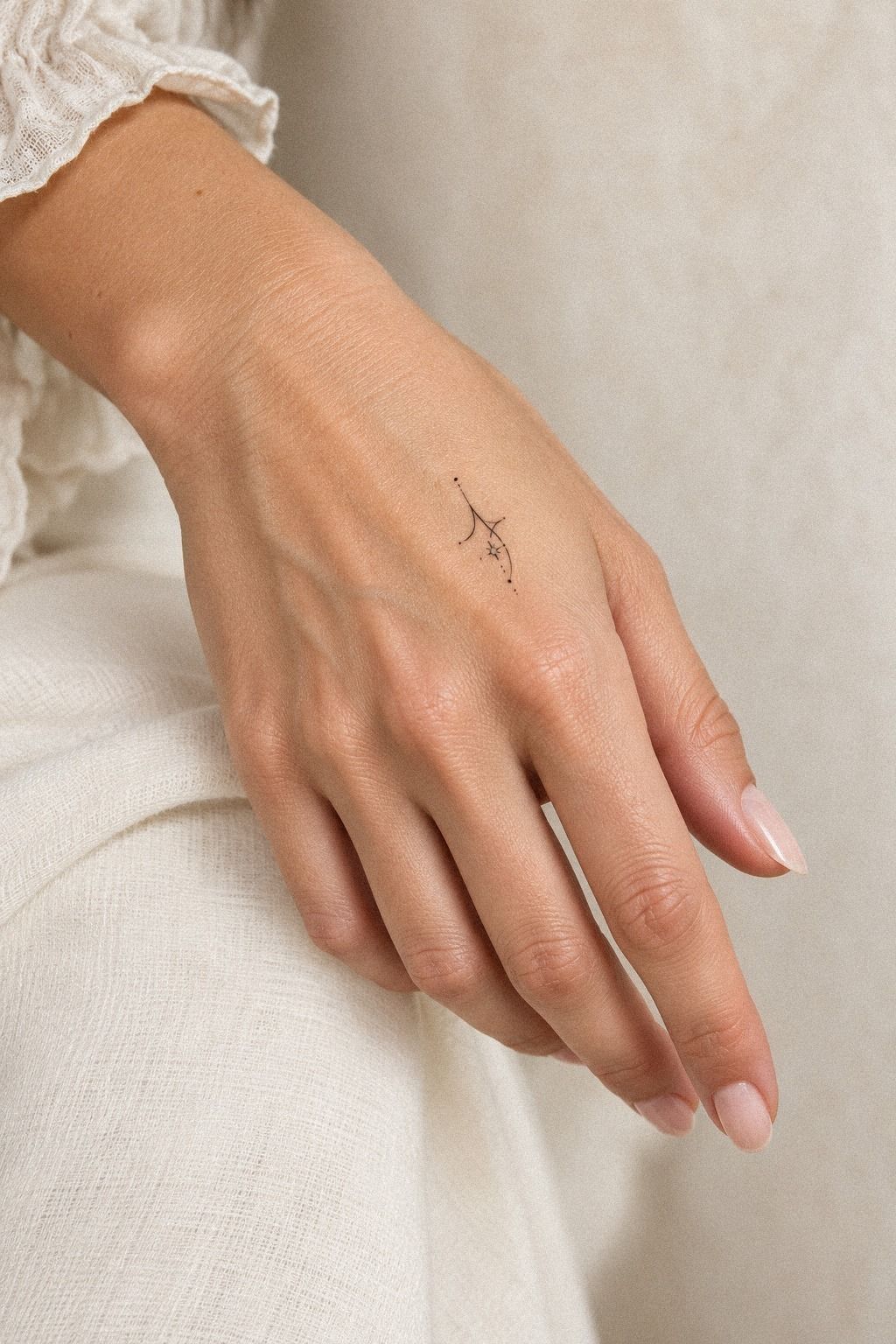
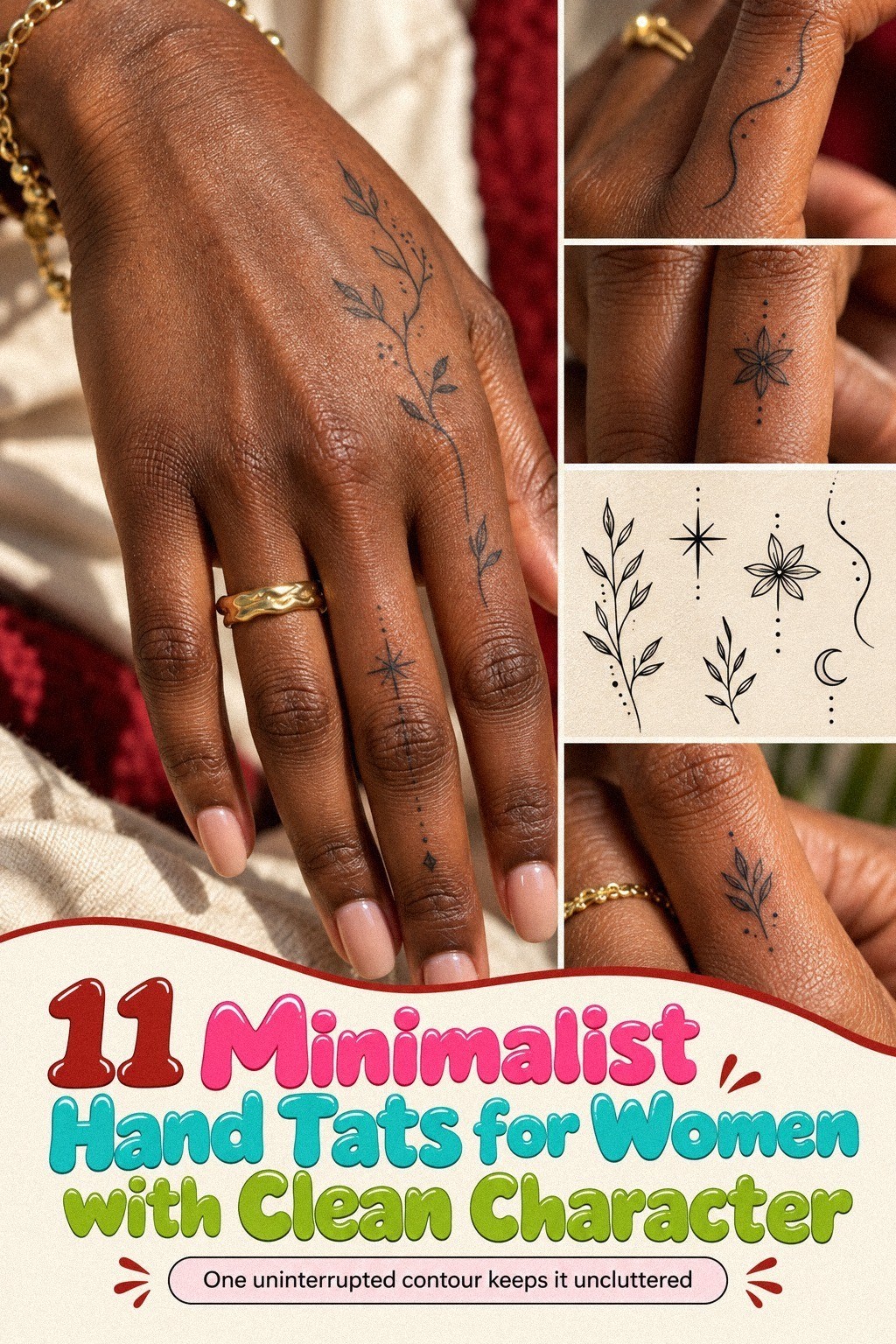
Before you book, make a reference sheet. Give each idea a short label: “protective,” “playful,” “romantic,” or “quiet.” Those words help you notice whether your collection has a consistent point of view. A black flash sheet keeps your decision focused.
You may find that three different drawings all express the same feeling. If so, you don’t need to combine them into one ornate piece. Pick the strongest shape and let it stand alone.
A playful symbol can remain light without becoming childish.
I’d ask your artist to redraw the chosen design for your hand rather than copying a reference exactly. Your skin, knuckles, and finger length will change how the lines sit. A stylish design on paper may need a wider curve or fewer interior marks once it reaches your hand.
There’s no prize for rushing the appointment. Save your references, review them after a week, and make sure you still want the same symbol.
Compare small hand tattoo ideas with the flash options you’ve collected. If the design only works in one position, it probably needs editing.
6The Meaning Behind a Visible Shape
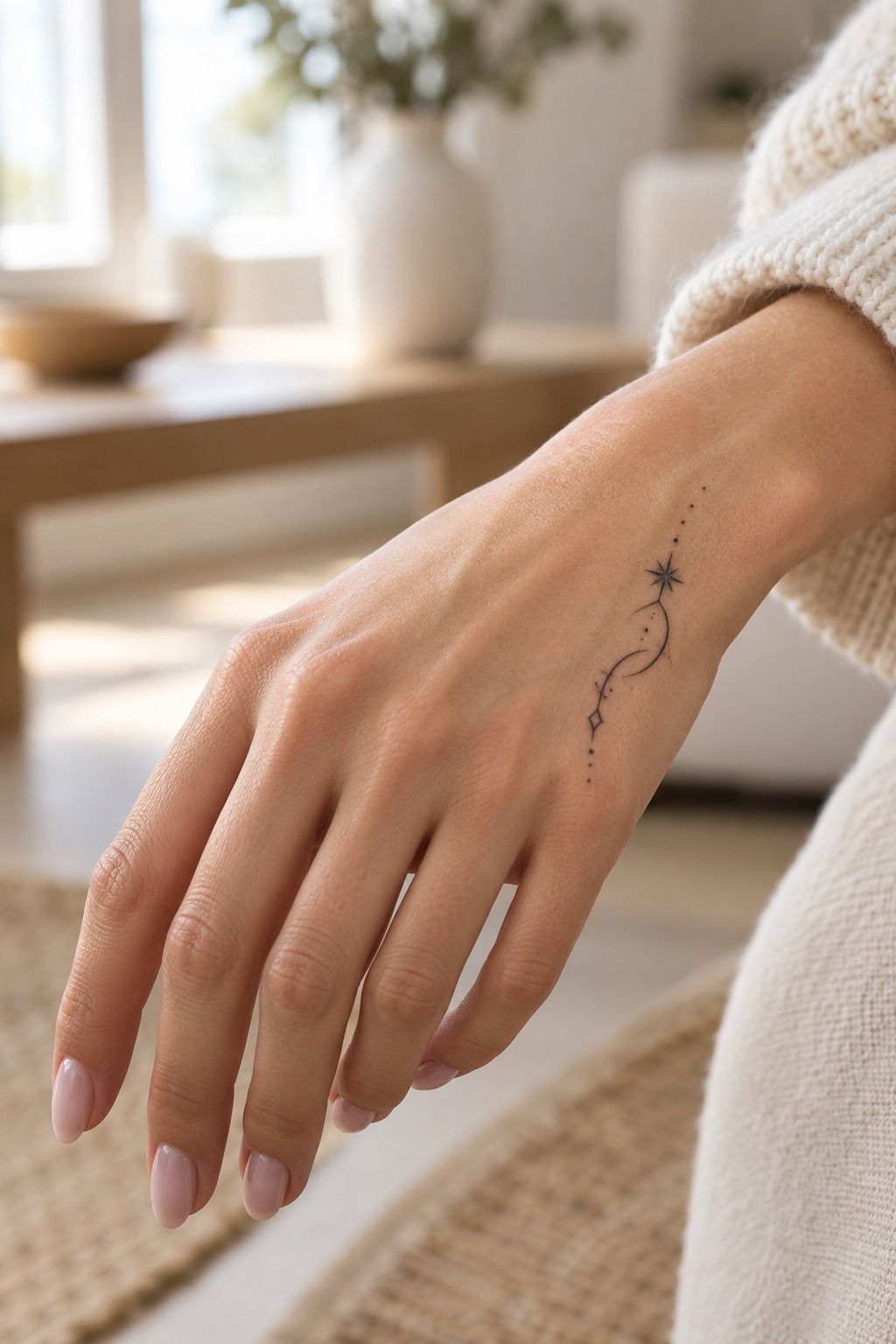
Visible placement deserves an honest conversation. On deep ebony skin, a solid black shape can create a powerful and bold silhouette when the artist understands contrast and leaves enough open skin around it. Circles, moons, arrows, and small geometric forms can look sacred or meaningful without needing a long explanation.
Ask to see healed tattoos on skin close to your own tone. Fresh tattoos can hide how fine lines settle and how contrast changes with time. Your artist should be comfortable discussing saturation, spacing, and how much detail will remain readable after the surface has completed its healing cycle.
I’d choose a shape with a strong outer contour before adding interior decoration. A filled crescent or simple four-point star usually has more staying power than a tiny paragraph or portrait. You’re asking a very small canvas to remain legible through daily washing, sun, and hand movement.
If you want more examples of compact symbols, browse small hand finger tattoos for women. Tell your artist why the symbol matters, too. That context can lead to better placement, because your favorite mark may need to face you rather than everyone else.
7Match Fine Lines to Your Skin
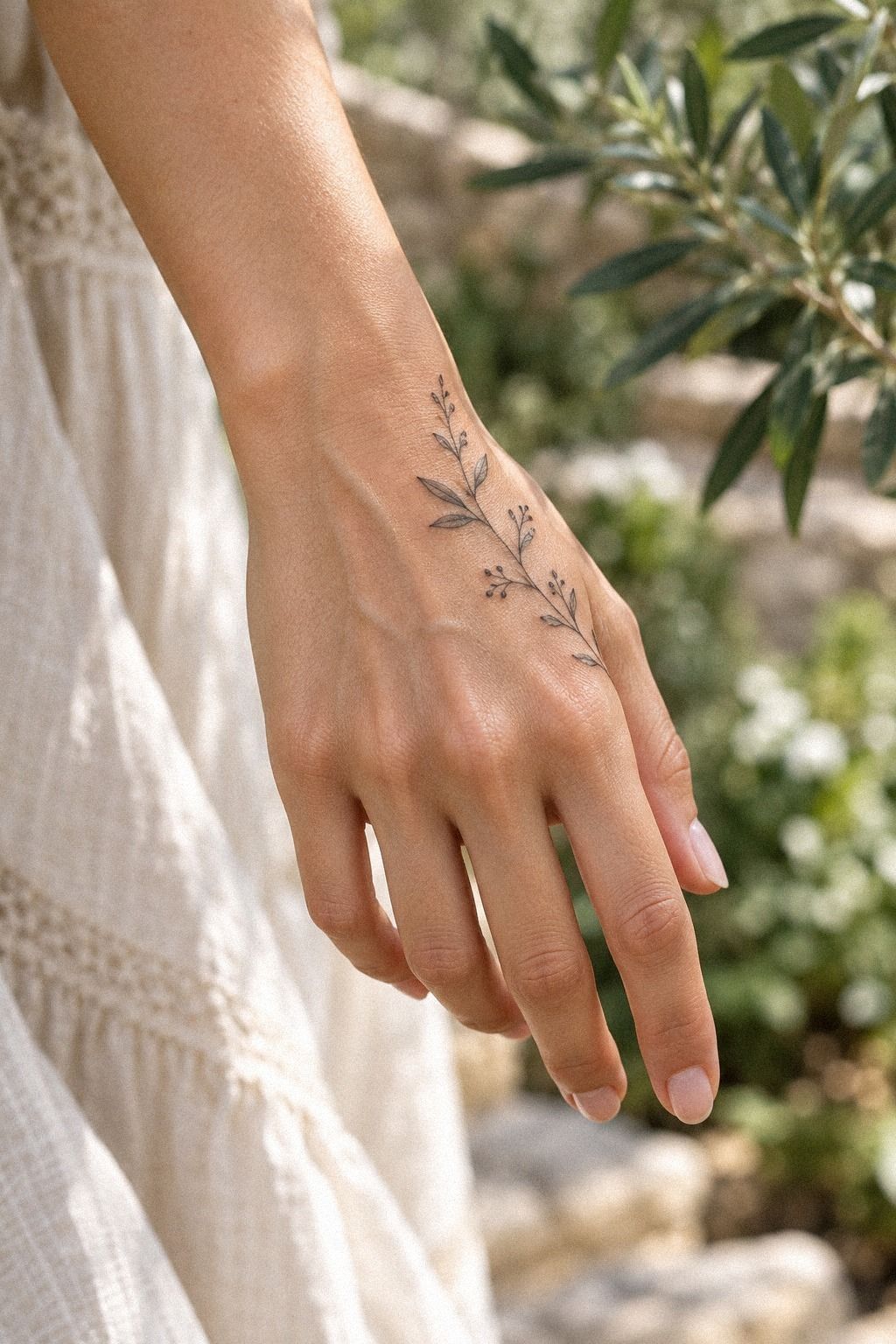
Fine-line work needs restraint. A design with hair-thin single-needle lines can look sleek and elegant, but your artist still needs to choose a line weight that won’t disappear too quickly. The most delicate option isn’t automatically the smartest one.
Ask how the artist handles hand tattoos specifically. A hand tattoo portfolio full of forearm work doesn’t automatically prove they understand fingers, palms, or knuckle movement. Your search should include healed hand examples, detailed linework, and references viewed in ordinary light rather than only filtered studio examples.
I’d be cautious with ultra-fine lines packed into a space smaller than a postage stamp. They may look refined on the stencil and blurred once the design settles. A slightly stronger outline can feel timeless, especially if you want your tattoo to remain readable from a normal conversational distance.
Use minimalist hand tattoos for women to compare line density, then ask your artist what they’d change for your skin. You’re allowed to say that you want the most durable version of the idea. The daintiest possible line isn’t always the smartest line.
A Tattoo Artist’s Eye
Look for an artist whose healed work feels clear, balanced, and consistent. The strongest healed portfolio won’t only show fresh tattoos under dramatic lighting. It’ll show ordinary skin, settled lines, and designs that still have a readable silhouette.
Ask about the studio’s hygiene protocol before you book. You should understand how the station is prepared, how fresh supplies are handled, and what aftercare information you’ll receive. A polished portfolio doesn’t replace safe practice.
Bring your reference, but stay open to a better stencil. Your artist may shift the angle, widen a curve, or remove a small accent.
That isn’t a failure of the original idea. It’s part of fitting the mark to your actual hand.
8Between Finger Joints: What Actually Works?
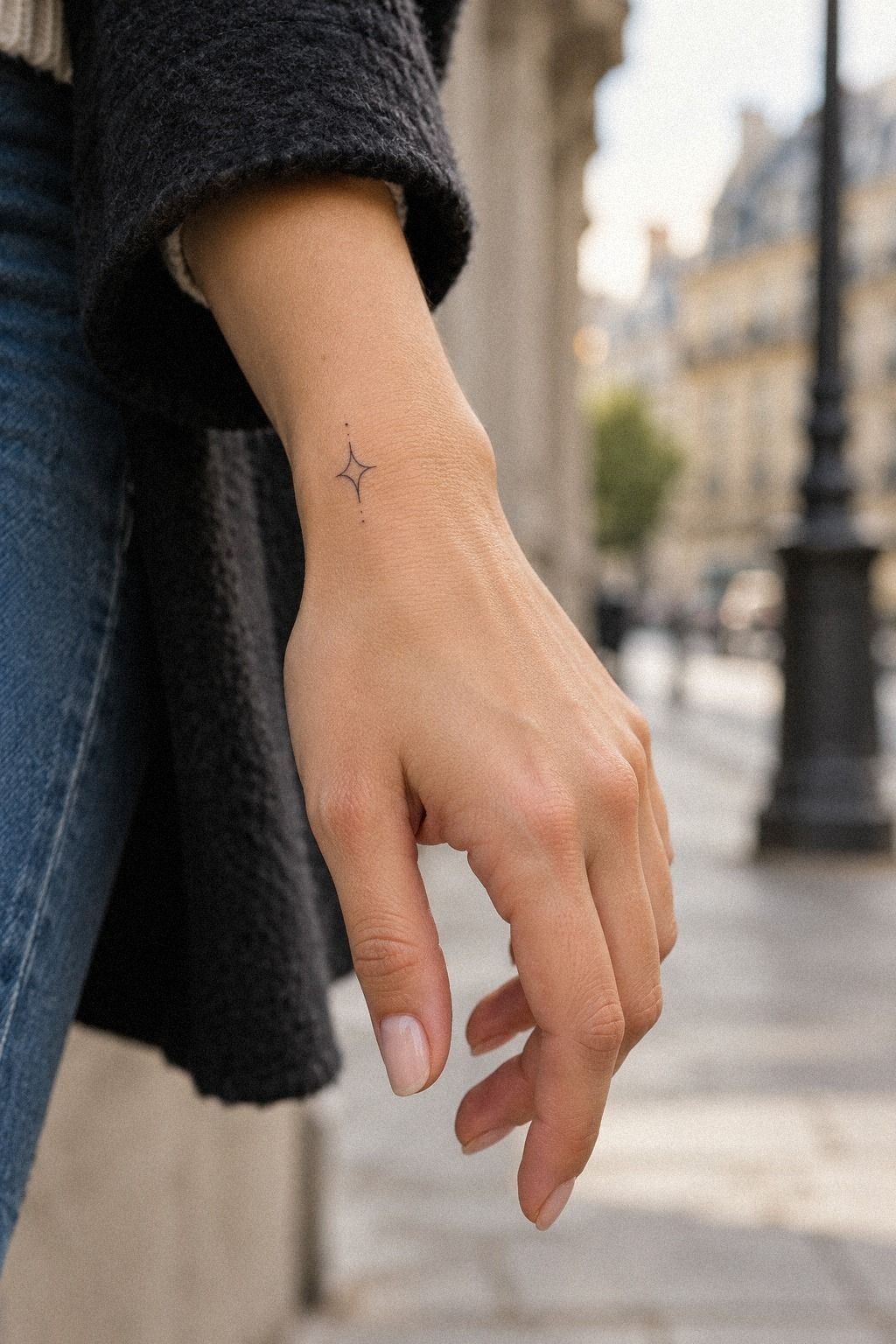
The spaces between finger joints can suit tiny marks, but they’re not passive areas.
A joint placement should account for bending, friction, and frequent washing. Small dots, short lines, and compact symbols may work better than intricate designs that depend on every tiny detail staying sharp.
Ask your artist to test the placement while your fingers are relaxed and curled. A mark that looks balanced with your hand flat may stretch or disappear when you grip something. That practical check can prevent a frustrating result.
I’d keep the design minimal and graceful in this zone. A single crescent, dot sequence, or tiny initial may feel more intentional than a miniature illustration. If the skin moves constantly, simplicity becomes a strength.
9Bold Symbols, Minimal Detail
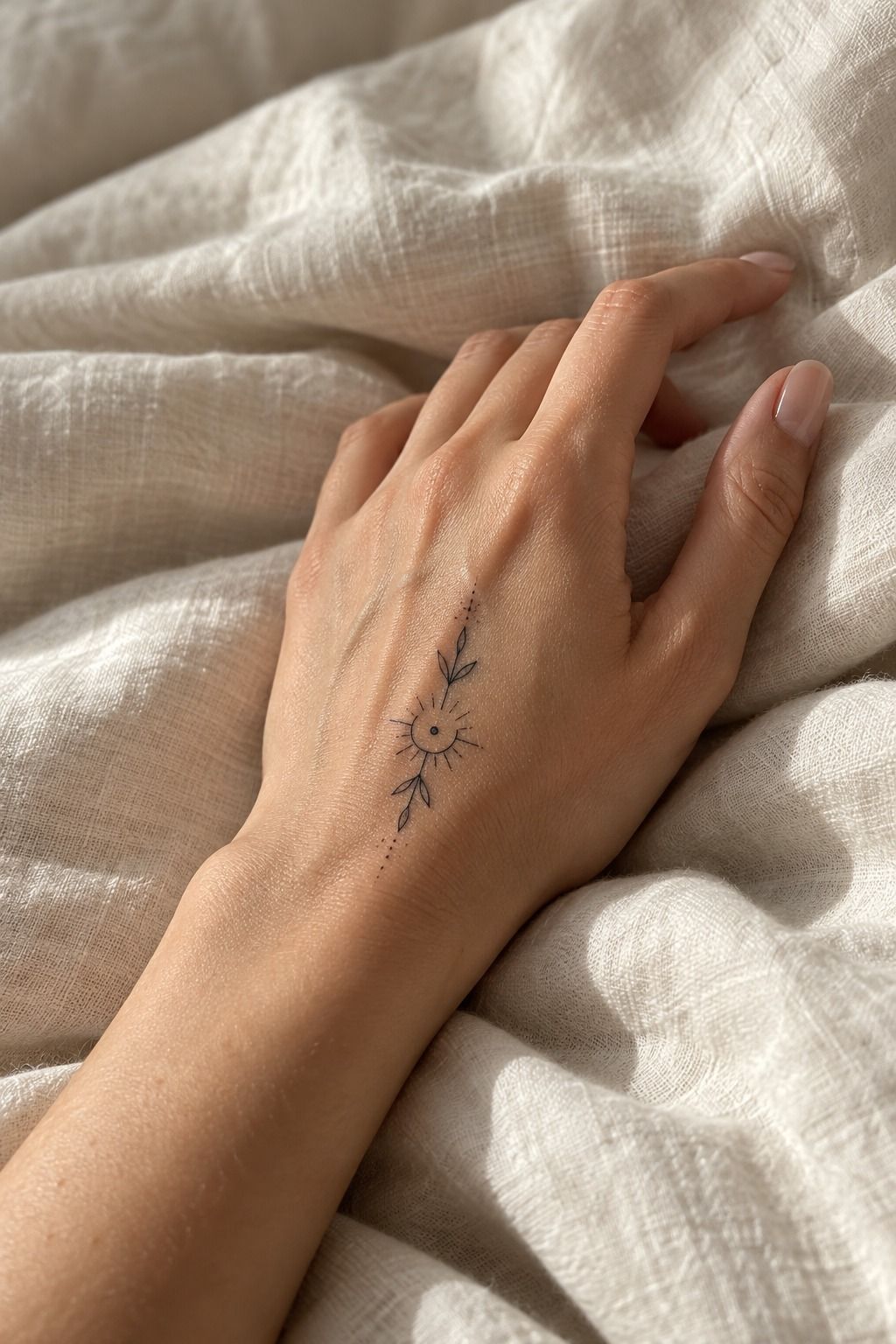
Bold doesn’t require a large tattoo. On medium olive skin, one dark moon, narrow arrow, or compact star can look fierce and edgy when the surrounding skin stays open. A blackwork symbol gives your design a clear silhouette, while a few untouched gaps keep it vibrant instead of heavy.
Use the outer shape as your anchor. If the symbol reads from a few feet away, you can consider one or two interior marks. If it only makes sense when someone presses their face close to your hand, remove detail.
Your tattoo should communicate its main idea without becoming a puzzle.
I’d skip the popular urge to add every meaningful date, initial, and tiny accent. One bold mark can be more empowering than a crowded cluster. You’re creating a visible decision, and a little restraint makes the design feel intentional rather than unfinished.
Check small finger tats for examples of compact shapes. Then make a daylight check of your own hand and another in low light.
If the symbol loses its structure in both conditions, your artist may need to increase spacing or simplify the interior. Let the symbol do the work!
10Protect Fresh Ink Through Hand Healing
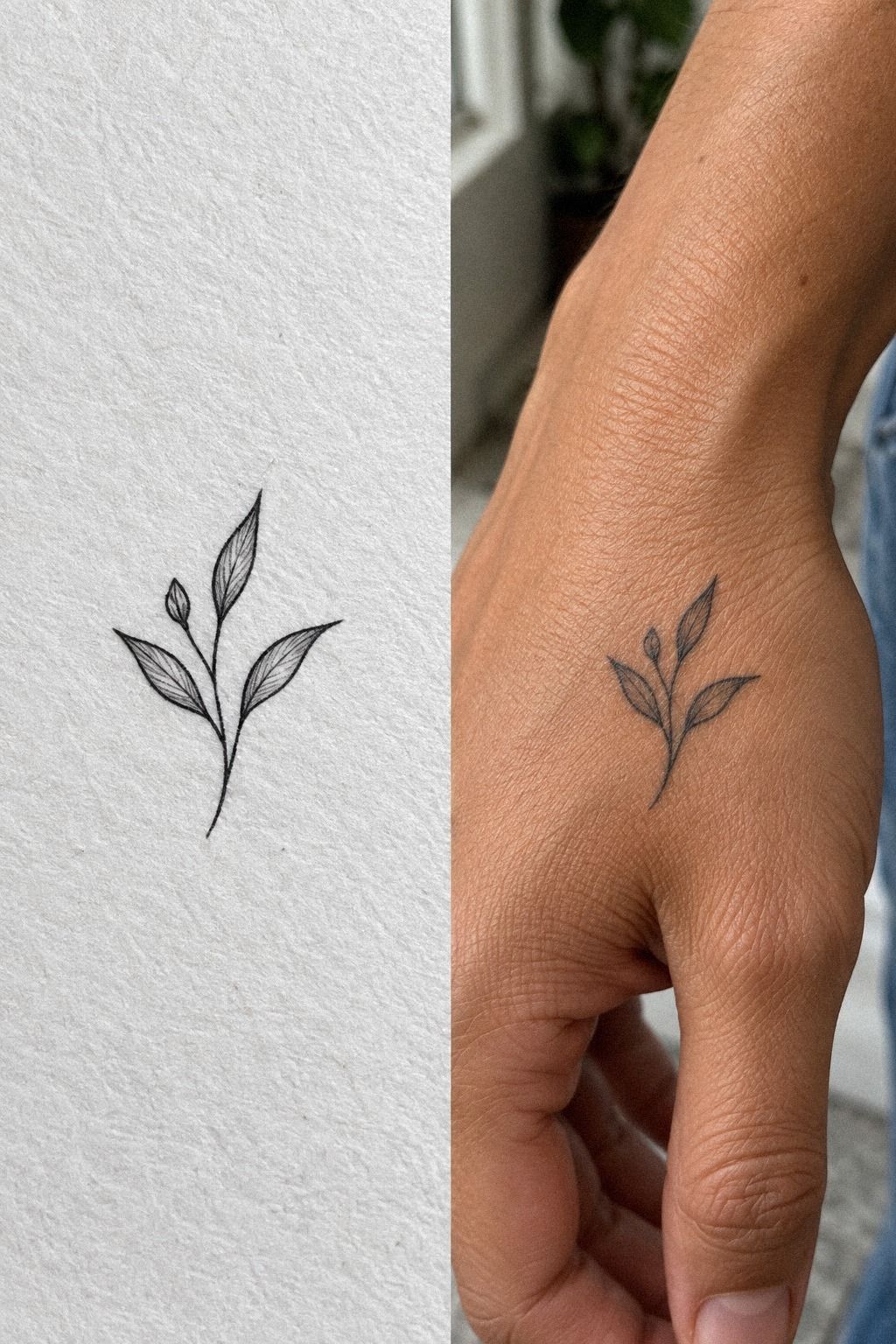
Plan aftercare before your appointment, not when your hand is already tender. The result you’re planning for is healed black ink, not the fresh stencil. Ask for written aftercare and make sure you understand what to do during the first evening.
A hand tattoo’s surface commonly takes about 2 to 3 weeks to heal, while complete settling can take roughly 2 to 3 months. Follow your artist’s instructions, wash gently, moisturize as directed, and avoid soaking the area in pools while it heals. You’ll want to limit direct sun exposure afterward, too.
Typical US tattoo pricing varies by artist and region. A shop minimum may run about $50 to $100, while hourly rates often fall around $100 to $250. Your final price depends on the artist, design, placement, and session length, so ask for a quote before committing.
Your first few days matter. Don’t pick at flakes, don’t soak the tattoo, and don’t treat a quick healing surface as permission to judge the final result. For more placement guidance, compare minimalist hand finger tattoos for women with your artist’s aftercare notes.
Aftercare Reality, Without the Drama
Daily friction is the part people underestimate. Phones, handles, keyboards, cleaning, sports, and repeated handwashing can all make the first days more complicated. Plan around the tasks you can realistically pause.
Keep direct sun away from fresh ink while the skin heals. Once the tattoo has settled, sun protection can help preserve the clarity of the design. Your artist can recommend products that suit your skin and the tattoo’s condition.
Swimming deserves its own conversation. Pools, hot tubs, lakes, and the ocean can expose fresh skin to irritation and bacteria. Wait until the surface is fully closed and follow the specific timing your artist gives you.
11Wear Striking Hand Tats With Confidence
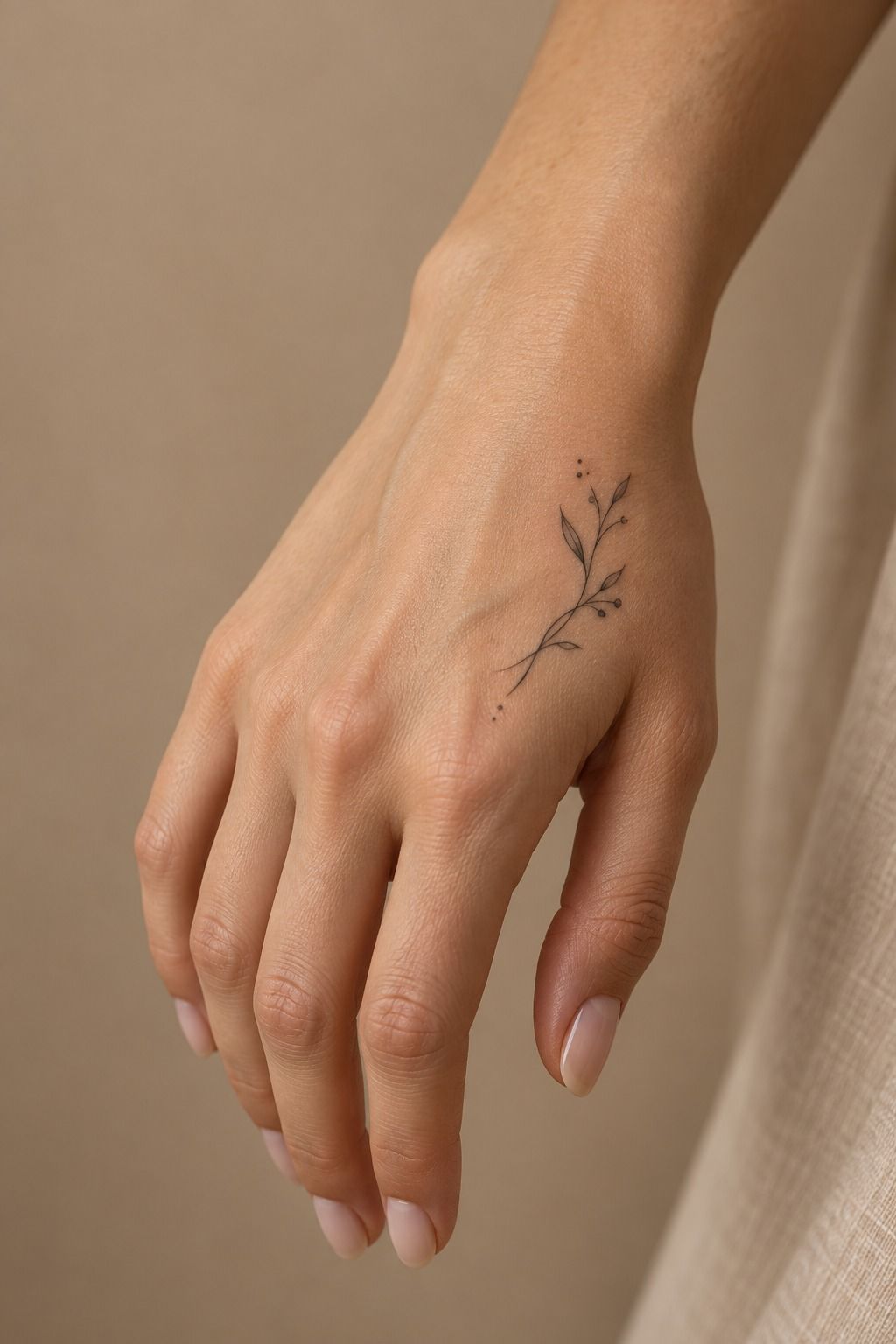
Style the tattoo around your real life, not around a single reference. On deep brown skin with a warm undertone, a black design can look striking, daring, and iconic when your jewelry, sleeves, and gestures don’t compete with it. Your tattoo can be visible without becoming the only thing people notice.
I’d keep the first styling choice simple. Wear one ring, leave one finger bare, and see how the design reads when your hands are moving naturally. A polished symbol can feel more confident when it isn’t surrounded by a full stack of accessories.
Think about work, family events, and the occasions when you may want your hand to look quieter. A personal tattoo doesn’t need constant explanation. You can choose an inward-facing placement, a small mark near the thumb, or a position that disappears when your hand rests at your side.
If you’re ready to compare complete collections, browse small hand tattoos for women and minimalist hand tats. I’d rather see you choose one expressive mark you’ll enjoy for years than several trendy symbols you’ll need to explain. Confidence comes from knowing why the design is yours!
What I Learned About Keeping Hand Tattoos Quiet
I used to think a small tattoo was automatically a low-stakes tattoo. It isn’t.
Your hand is always moving, exposed to sunlight, washed often, and seen by people who may never notice your other tattoos. That makes scale, placement, and line weight unusually important.
A tiny mistake can feel louder there than it would on your upper arm.
The first lesson is to respect negative space. When I’ve seen minimalist hand tattoos go wrong, the problem usually wasn’t the symbol itself.
It was the extra dot, second outline, or cramped detail added because the design looked too simple on paper. Simple isn’t unfinished.
It’s a decision to let one shape carry the meaning.
The second lesson is to choose an artist for healed evidence. A fresh tattoo can look crisp, delicate, and ethereal under bright studio lighting.
Your better question is whether the same artist produces readable lines after the skin has settled. Ask for detailed references, ask about hand placements, and ask what they’d remove from your idea.
A thoughtful artist won’t just agree with everything.
The third lesson is practical: hand tattoos need realistic aftercare. You’ll use your hands constantly, so you may need to plan around work, sports, cleaning, travel, or swimming.
I wouldn’t schedule a fresh hand tattoo right before a beach holiday. Give your skin time to close, settle, and recover from daily friction.
That’s why I prefer a meaningful symbol with a clear silhouette over a tiny illustration overloaded with detail. Fine lines can soften, and black ink can age differently depending on placement, sun exposure, and your skin.
Your design doesn’t need to remain frozen in its first-day appearance to stay meaningful. It needs enough structure to keep speaking as it changes.
The Questions Worth Answering First
How much does a minimalist hand tats for women usually cost?
A minimalist hand tattoo in the US often costs about $50 to $100 at a shop minimum or $100 to $250 per hour, depending on the artist and region. A clear quote should include placement, size, design complexity, and whether the studio charges by piece or time.
Ask for the total before booking. Bring one reference and one backup option, because your artist may recommend a slightly larger or simpler design for better aging. You’ll make a stronger choice when the price and the design are both clear.
Are minimalist hand tats for women a good idea for a first tattoo?
Yes, they can be a good first tattoo if you understand the visibility and aftercare. A small design may take less time, but hands can be more sensitive than areas with more padding, and they’re exposed to daily friction.
Your first tattoo should feel personal enough that you won’t resent seeing it every day. If you’re uncertain about a hand placement, test the symbol temporarily and consider a nearby forearm or wrist location first.
How do I choose a tattoo artist for minimalist hand tats for women?
Choose an artist with clean healed linework, hand-specific examples, and strong hygiene practices. A healed portfolio tells you more than a fresh example, because you can see whether fine lines remain readable after the skin settles.
Ask who performs the tattoo, how the studio prepares the station, and what aftercare they provide. You’re allowed to leave if the artist dismisses your questions or can’t show work similar to the style you want.
How much do minimalist hand tats for women hurt?
Hands can feel sharper than more padded areas, while ribs, feet, and sternum are also commonly more painful. Pain variation depends on the zone, your sensitivity, the session length, and how close the design sits to bone.
Forearms, thighs, and shoulders are often more tolerable for many people. Your artist can explain what to expect for the exact placement, and you can ask for a short break if your hand feels overwhelmed.
How long does a minimalist hand tats for women take to heal?
The surface usually heals in about 2 to 3 weeks, while complete settling can take roughly 2 to 3 months. Gentle aftercare means washing as directed, moisturizing appropriately, avoiding pools during healing, and protecting the tattoo from strong sun.
Don’t pick flakes or judge the final line quality during the first few days. Your artist’s instructions take priority because products, skin responses, and techniques can differ.
What’s the best placement for minimalist hand tats for women?
The best placement depends on visibility, movement, pain, and how much friction the area gets. A side finger mark can feel discreet, while the back of the hand gives a clearer viewing surface but is more visible.
Avoid forcing intricate designs into deep creases. Your artist can help you choose between a finger, hand edge, thumb area, or nearby wrist placement based on your anatomy and daily routine.
Where I’d Start First
If I had to pick one step, I’d start with a small black symbol and test it on your hand for a week. You’ll notice movement, visibility, and meaning before ink makes the choice permanent. Pin this guide for later, then ask an artist to simplify the design once more.
A permanent choice deserves patience. If the mark still feels personal after the test, the placement works during ordinary movement, and the artist’s healed work gives you confidence, you’re probably close. That’s enough.