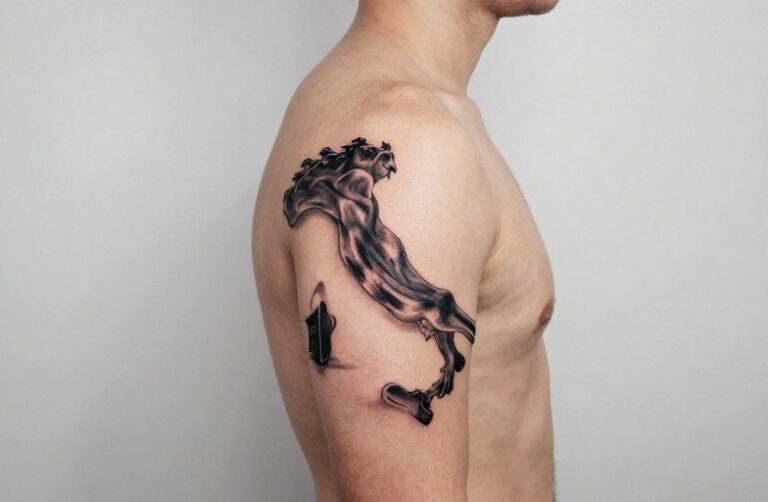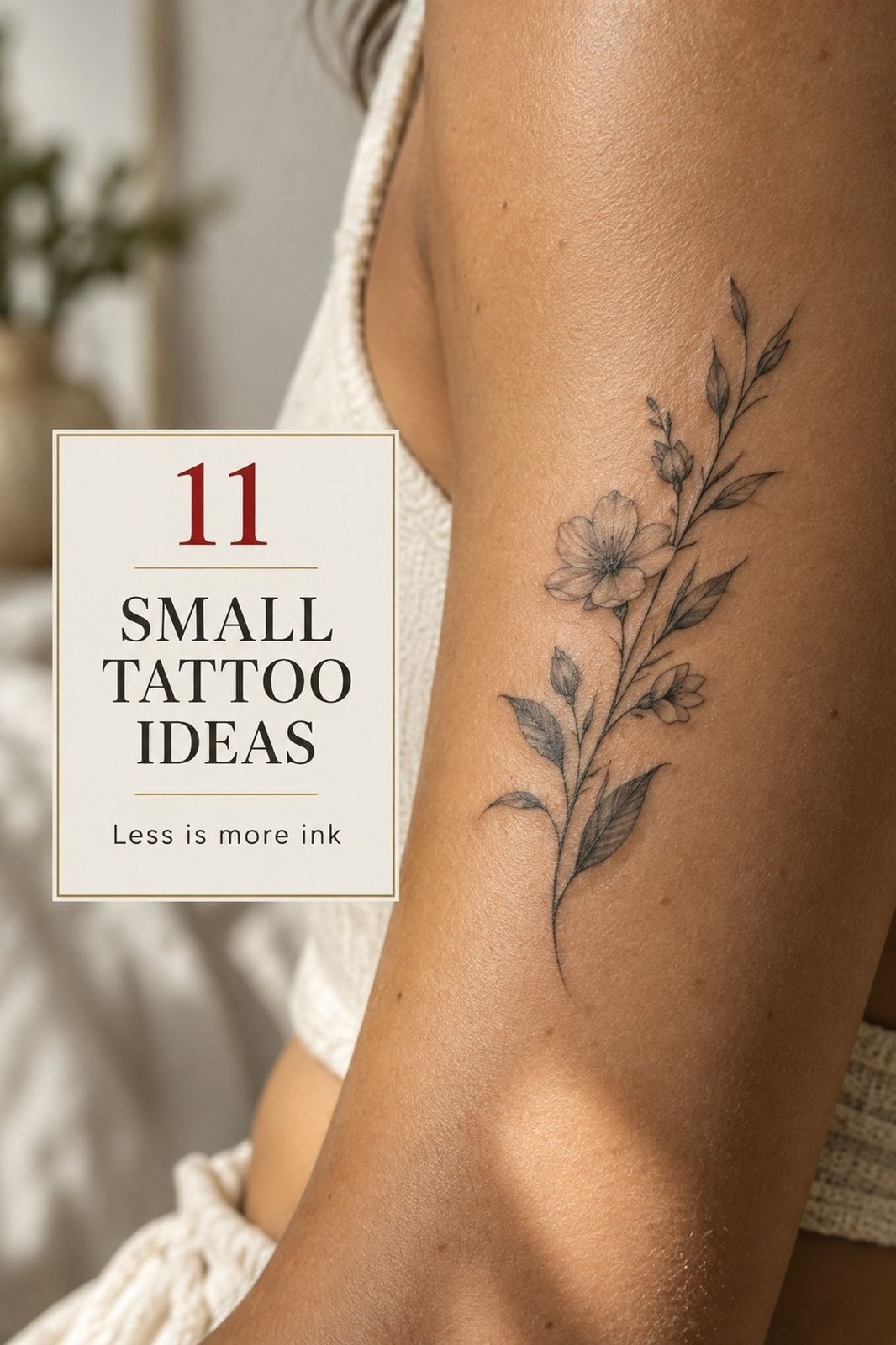
Hawaiian tattooing carries weight. The practice of kakau, hand-tapped or hand-poked, predates Western contact by centuries, serving as genealogy marker, status indicator, and spiritual protection. Today’s designs range from strict traditional revival to thoughtful contemporary adaptations. Knowing what you’re actually putting on your skin matters, both for visual integrity and for respecting a living culture that has fought to preserve this practice through colonization and suppression.
Popular Styles
Not everything with a turtle or wave pattern qualifies as Hawaiian. The visual language splits into distinct categories with different rules and histories.
Traditional Kakau
Authentic kakau uses bold black lines, geometric patterns, and specific motifs tied to genealogy and social rank. The malu (women’s thigh tattoo) and peʻa (men’s full back and leg tattoo) follow strict compositional rules. Lines are thick, spacing is deliberate, and negative space carries as much meaning as ink. Traditional application uses bone or boar-tusk combs and mallets, though most practitioners today use machines for non-ceremonial work while maintaining visual fidelity.
Key traditional motifs include:
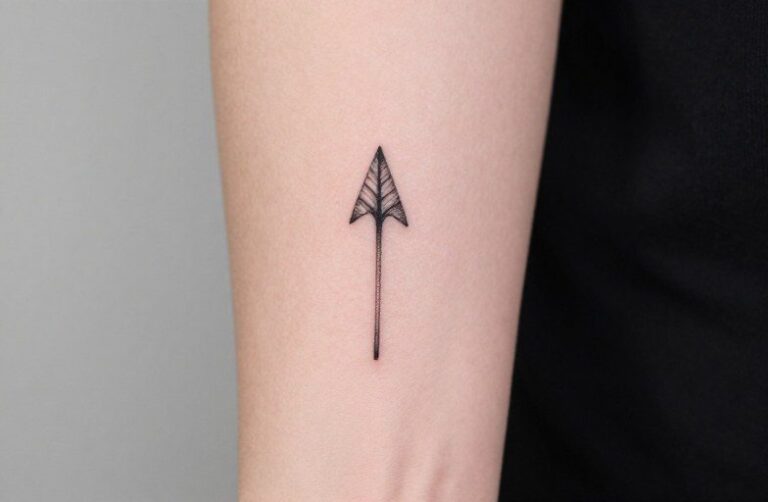
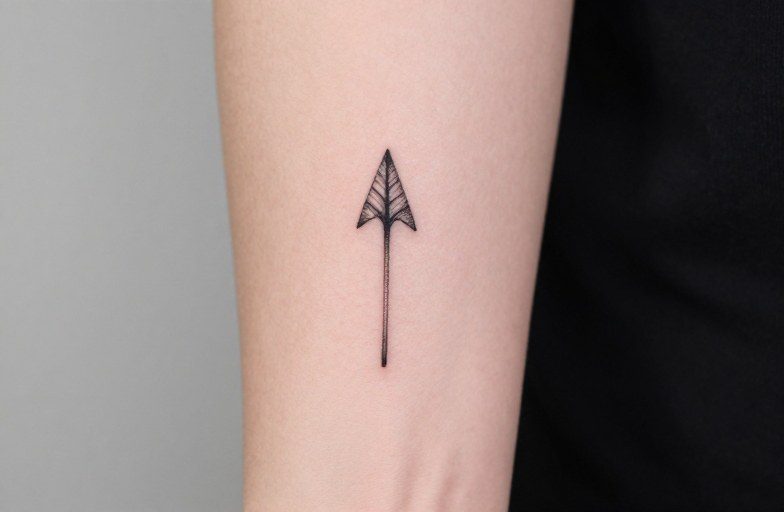
- Triangles and spearheads (niho mano): Often linked to shark teeth, representing strength and adaptability
- Chevrons and bands: Commonly associated with woven mats, symbolizing family and community
- Enata figures: Human forms indicating ancestors or specific family lineage
- Sea creatures: Turtles, rays, and fish with specific regional associations
Contemporary Hawaiian-Inspired
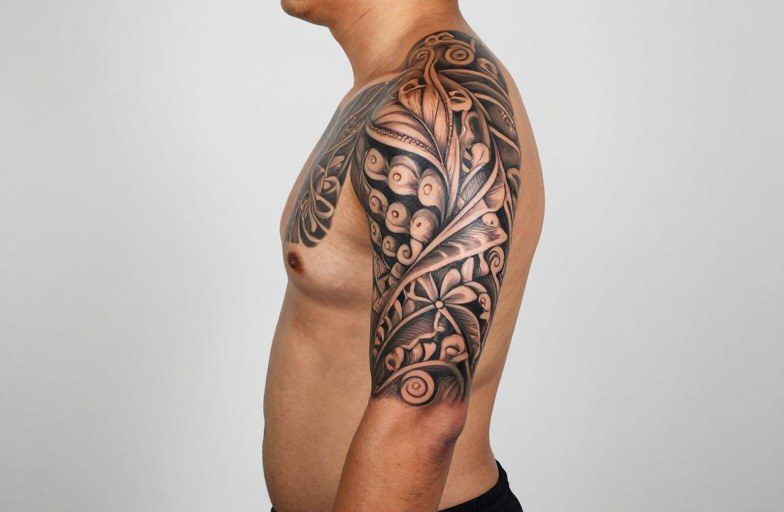
Modern adaptations incorporate softer shading, color, and mixed cultural elements. Some artists blend Polynesian geometric precision with Japanese water backgrounds or American traditional color palettes. The risk here is dilution, too much fusion and the Hawaiian identity dissolves into generic “tribal.” Strong contemporary work maintains recognizable kakau structure even when introducing new techniques.
Matching & Pairing Ideas
Hawaiian designs pair well when the visual grammar matches. Mixing heavy black kakau with delicate fine-line florals usually fights itself. Better combinations include:
- Multiple band tattoos: Stacked armbands or leg bands with consistent line weight and spacing
- Central motif with supporting patterns: A turtle or ray as focal point, surrounded by traditional geometric fill
- Split compositions: Two limbs carrying related patterns that read as connected when the body is positioned certain ways
Couples or family members sometimes choose complementary rather than identical designs, matching line styles but different motifs representing individual roles within the family structure. This honors the original function of kakau as identity marker rather than decorative matching set.
How to Personalize It
Personalization in Hawaiian tattooing requires cultural literacy, not just aesthetic preference. The original practice encoded specific information, genealogy, achievements, spiritual protection, into standardized visual forms. Randomly assembling motifs strips away meaning and produces visual gibberish to knowledgeable viewers.
Working With Real Reference
Study actual kakau from museum collections, books by Hawaiian practitioners, or documented work from established artists like Suluʻape Keone Nunes or practitioners trained in his lineage. Notice how motifs repeat, how bands interlock, how space breathes between elements. Copying a specific historical piece wholesale is generally inappropriate unless you have genealogical connection, but understanding the logic lets you commission work that respects the tradition.
Meaningful Adaptation
Some contemporary Hawaiian artists offer consultation on motifs appropriate for non-Hawaiian clients. Common adaptations include:
- Ocean themes (universal connection, not specific clan affiliation)
- General protection symbols rather than ranked status markers
- Regional flora like taro or ti leaf without claiming specific family association
The honest approach: acknowledge you’re an outsider engaging with the tradition, choose appropriate symbols, and compensate Hawaiian or Polynesian-trained artists for their cultural knowledge.
Standout Design Ideas
Certain placements and compositions carry particular impact with Hawaiian patterns.
Full sleeve with negative space breaks: Dense black patterning interrupted by deliberate skin gaps creates rhythm and prevents the “black arm” blur that ages poorly. The negative space shapes should be intentional, triangles, crescents, or stepped forms, not random holes.
Pectoral spread to shoulder: The chest offers broad canvas for symmetrical compositions. Traditional peʻa-inspired work here reads powerfully, though full traditional coverage extends to knees and is a serious commitment.
Lower leg band with foot extension: Bands above the ankle, with pattern continuing onto the foot’s dorsal surface, create visual continuity when barefoot. The foot’s thin skin and tendency to blow out requires experienced hand, lines here must be simple, not detailed.
Back piece with central spine channel: Symmetrical patterns flanking the spine, with a narrower band running the vertebral line, references traditional peʻa structure without requiring full coverage.
Tips for Choosing
Selecting Hawaiian work demands more research than picking flash off a wall.
Artist Vetting
Look for artists who specifically study Polynesian tattooing, not general “tribal” specialists. Ask directly: who trained you in Hawaiian pattern logic? Can you explain the difference between Samoan, Marquesan, and Hawaiian visual conventions? Artists with legitimate training welcome these questions. Those who dismiss them or claim all “tribal” is interchangeable are revealing ignorance.
Examine healed photos, not just fresh work. Heavy black kakau spreads and blurs differently than greywash. Lines that look crisp at day three may have thickened substantially at year three. Experienced artists account for this in their spacing.
Placement and Aging
- Inner arm, inner thigh: High friction, moisture, and movement cause faster fading and blur
- Outer arm, calf, back: More stable, better long-term clarity for intricate pattern work
- Hands, feet, neck: Socially and professionally loaded placements; pattern work here ages fastest due to skin turnover and sun exposure
Black-only kakau actually ages better than color-heavy work in many cases, but the dense saturation means any blowout or spread is highly visible. Precision matters more than with softer styles.
For First-Timers
Starting with Hawaiian tattooing requires humility. This isn’t a style you walk into randomly.
Begin with smaller, simpler pieces to understand how your skin takes the work. A single band or limited motif lets you assess an artist’s precision before committing to larger coverage. Many people find the dense blackwork more painful than anticipated, the repeated lining and filling creates cumulative trauma that greywash or color packing doesn’t match.
Budget for quality. Kakau specialists command premium rates because the knowledge is specialized and the work is slow. Rushing dense geometric patterning produces wobbly lines that ruin the entire composition. Expect to pay for consultation time separate from tattoo time, especially for custom pattern development.
Healing requires discipline. Heavy blackwork scabs thickly. Picking or premature sun exposure destroys crisp edges. Plan your timing, no beach vacations, no swimming, no tight clothing rubbing fresh work for several weeks.
The Takeaway
Hawaiian tattooing offers some of tattoo culture’s most visually striking and culturally significant work. The geometric precision, the historical weight, the ongoing revival of hand-tap practice, all of this makes it compelling. But that same significance demands more from the wearer than aesthetic appreciation. Learn the difference between respectful engagement and careless appropriation. Find artists with real training. Understand what the patterns actually do, not just what they look like. The result, done right, is a tattoo that holds up visually and ethically for decades.
Frequently Asked Questions
Can non-Hawaiians get traditional Hawaiian tattoos?
Yes, but with boundaries. Many Hawaiian artists will tattoo non-Hawaiians using appropriate motifs, ocean themes, general protection symbols, regional flora, while avoiding specific clan or status markers tied to genealogy. The key is finding a knowledgeable practitioner who can guide appropriate symbol selection rather than treating the culture as free visual resource.
How painful is heavy blackwork compared to other tattoo styles?
Dense black filling and repeated lining create more cumulative skin trauma than greywash or light color work. The sensation is often described as more intense and longer-lasting per session. Areas over bone or with thin skin, ribs, ankles, collarbones, feel it most. Plan shorter sessions and longer breaks than you might for softer styles.
Do Hawaiian tattoos have to be all black?
Traditional kakau is black-only, but contemporary Hawaiian-inspired work sometimes incorporates color. Purists maintain black preserves the cultural form most authentically. If adding color, many artists use it sparingly, as accent rather than fill, to maintain the graphic strength that defines the style. Discuss this thoroughly with your artist before committing.
How do I tell if an artist actually knows Hawaiian patterning versus generic tribal?
Ask specific questions: Can they explain the difference between Hawaiian, Samoan, and Marquesan visual conventions? Who trained them in Polynesian pattern logic? Do they know what a malu or peʻa is structurally? Look for portfolios showing consistent, knowledgeable use of specific Hawaiian motifs rather than random geometric assembly. Genuine practitioners welcome educated clients.