Minimalist cute finger tattoos can be finished in one sitting, but placement decides how intense the session feels. I once chose a side-finger design without checking how the line would meet my knuckle. It healed smaller than expected. Now I check finger placement against movement, skin, and longevity first. That shift makes planning much easier!
Editor’s note: Start with the symbol you’d still love when the reference photo is forgotten. Then check whether its shape can survive your actual hand movements.
- Tiny Heart Outline Finger Tattoo Ideas
- Dainty Floral Linework Along The Finger
- Playful Miniature Star Finger Tattoos
- Unique Crescent Moon Knuckle Ink
- Minimalist Tiny Animal Finger Tattoos
- Elegant Initials On The Side Finger
- Delicate Birth Flower Finger Tattoo Designs
- Symbolic Matching Minimalist Finger Tattoos
- Cute Micro Rainbow Finger Tattoo Ideas
- Bold Black Dot Finger Tattoo Accents
- Whimsical Tiny Charm Finger Tattoos
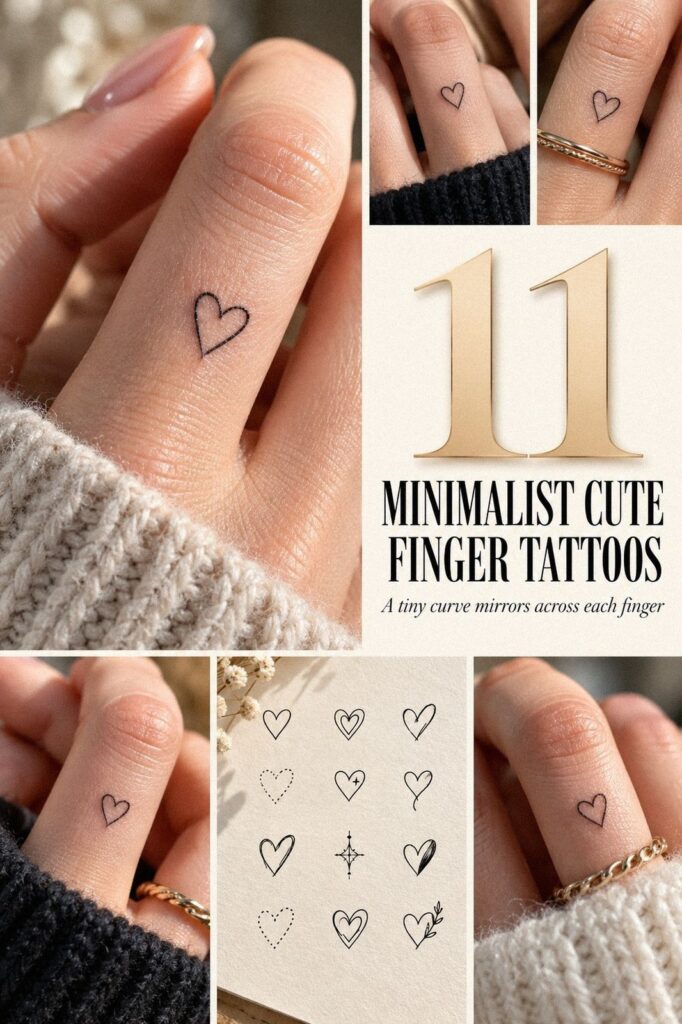
1Tiny Heart Outline Finger Tattoo Ideas
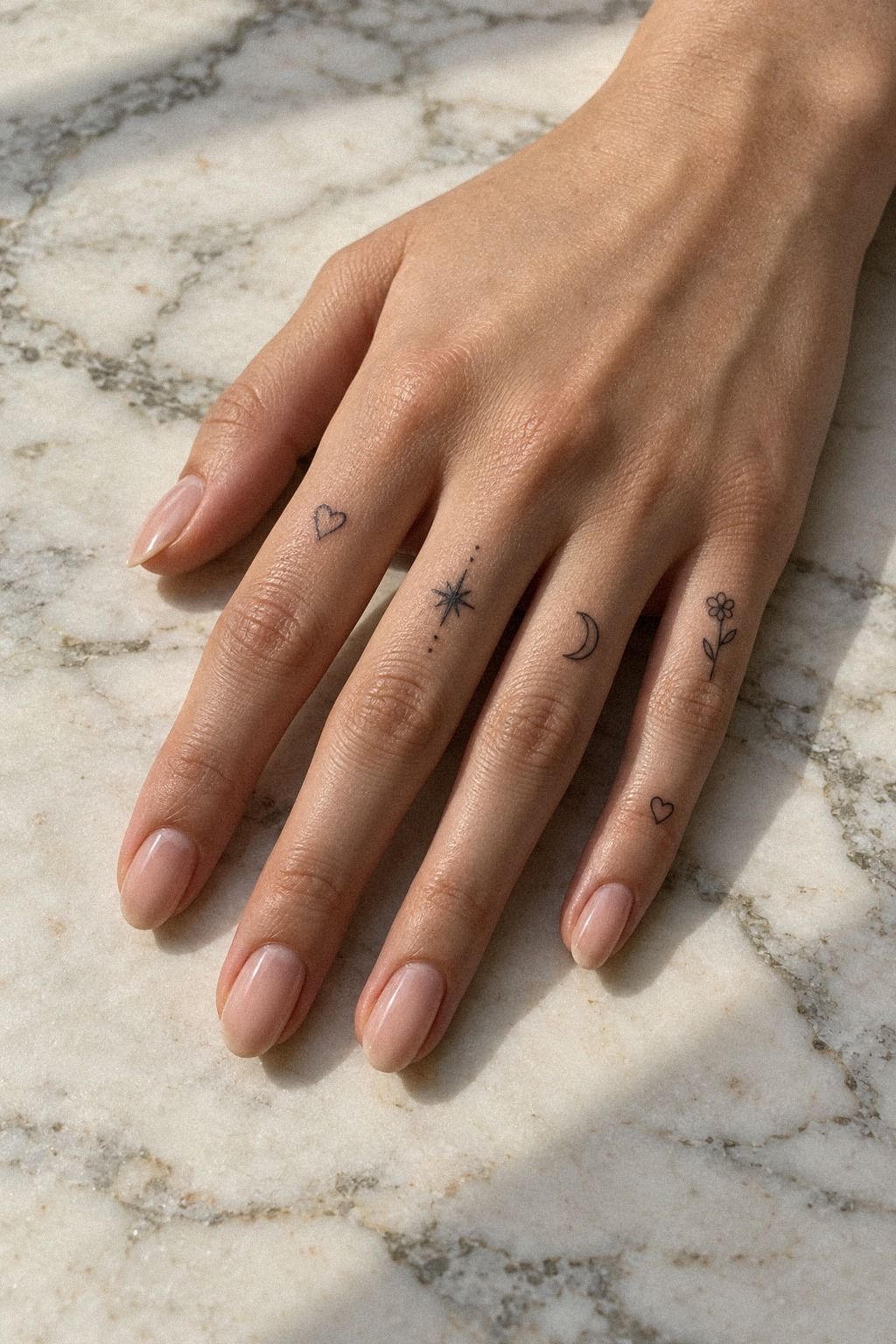
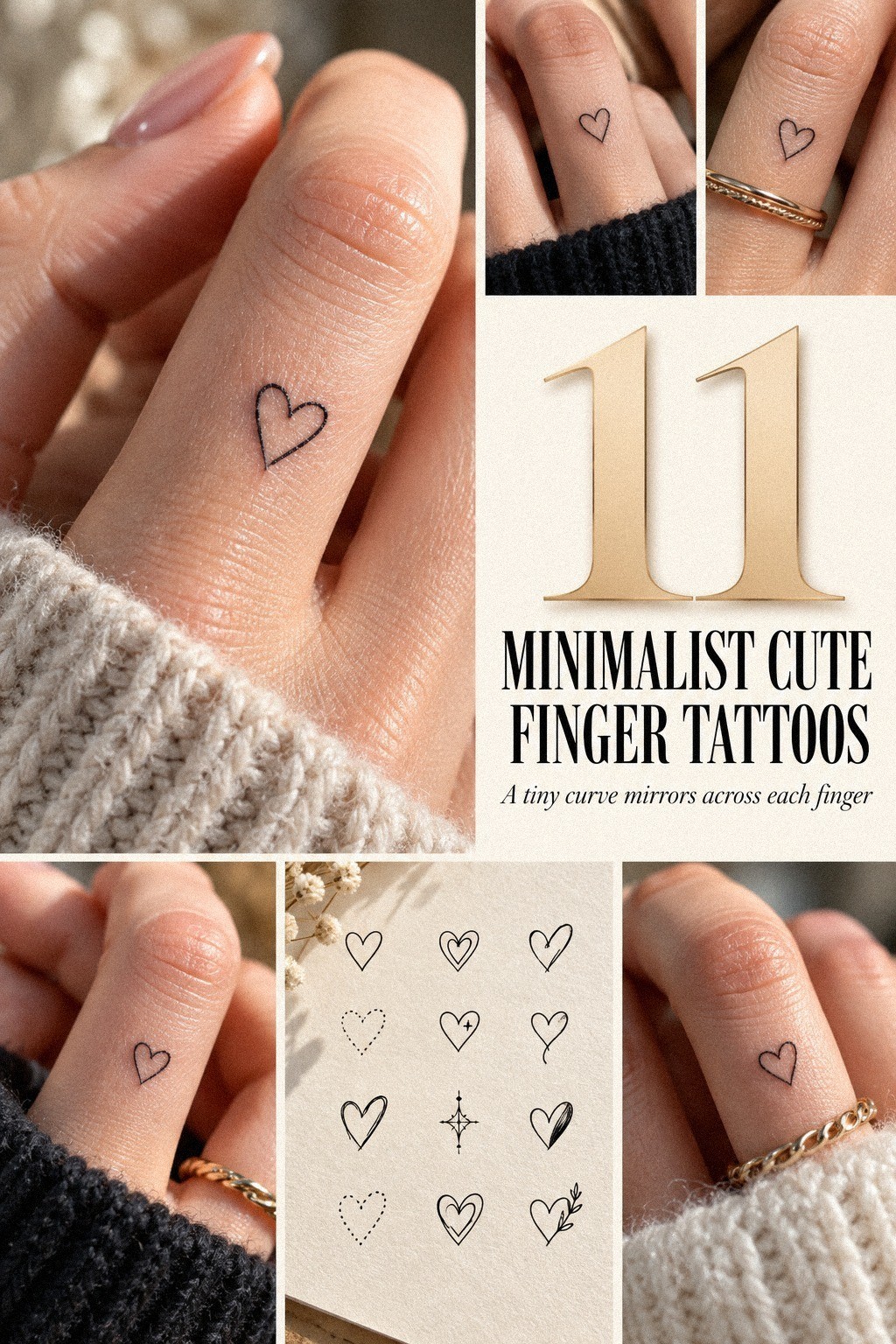
A tiny heart outline gives you a fine-line heart with personal meaning, without filling the finger with heavy ink. You’ll want the point aimed toward the fingertip or knuckle, depending on whether you prefer a romantic or understated result. I’d choose the side of the finger if you want the shape to stay discreet.
Ask your artist to leave breathing room inside the heart rather than closing the shape too tightly. That negative space keeps the mark delicate instead of muddy. A crisp heart can look striking, but it still needs enough room to remain readable after the skin settles.
Stencil placement matters more than most people expect. Bend your finger, relax it, and look at the outline from both sides.
If the point disappears into a crease, move it slightly before the session begins. That small adjustment can improve the finished piece.
Single-needle linework may look dainty on the first day, but you shouldn’t judge the result while the skin is swollen. Give your eye time to settle. If you’re comparing placements, my guide to small cute finger tattoos shows how small shapes read across different fingers.
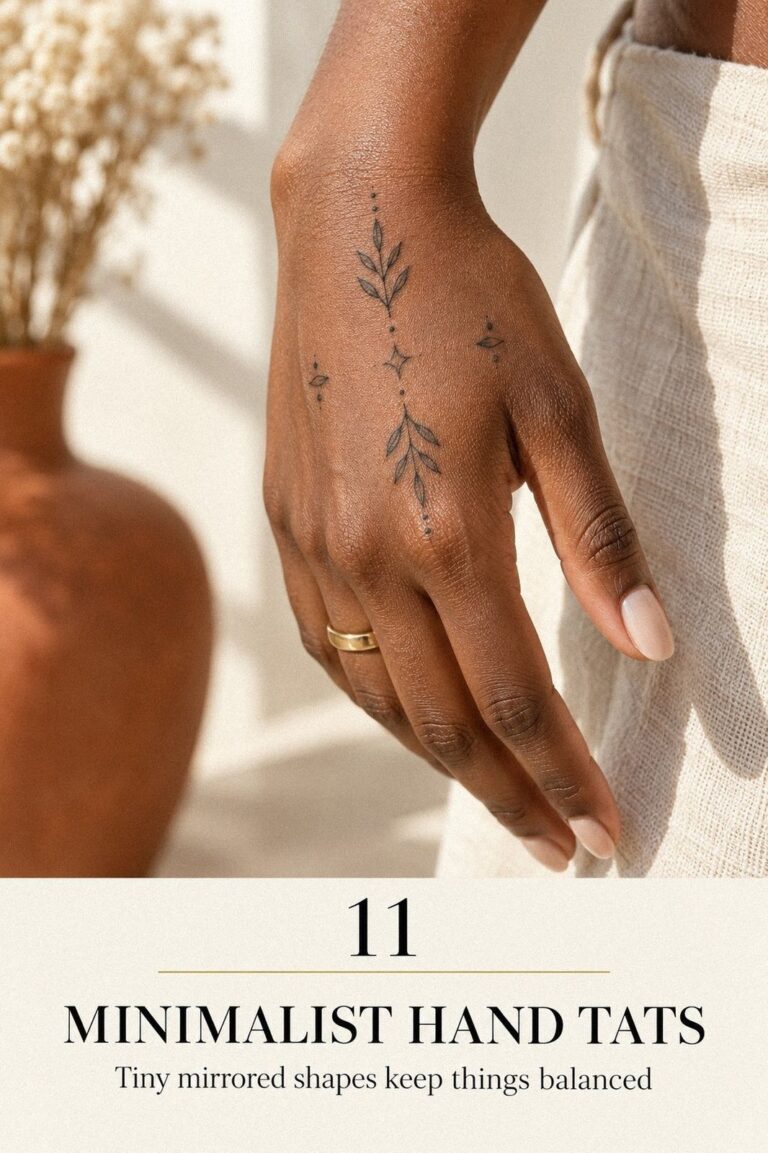
2Dainty Floral Linework Along The Finger
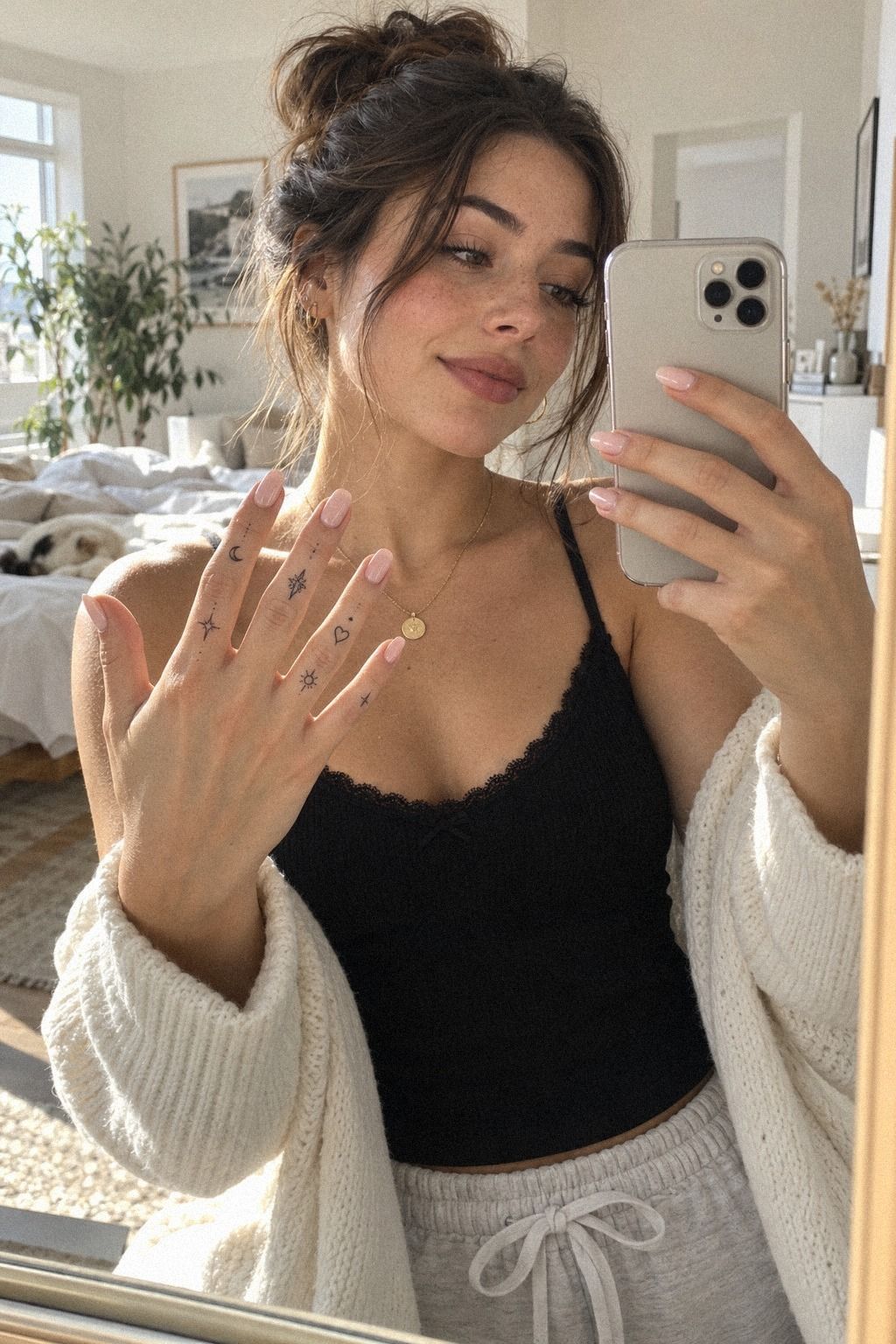
A narrow wildflower sprig works beautifully as delicate floral linework along the finger.
3Playful Miniature Star Finger Tattoos
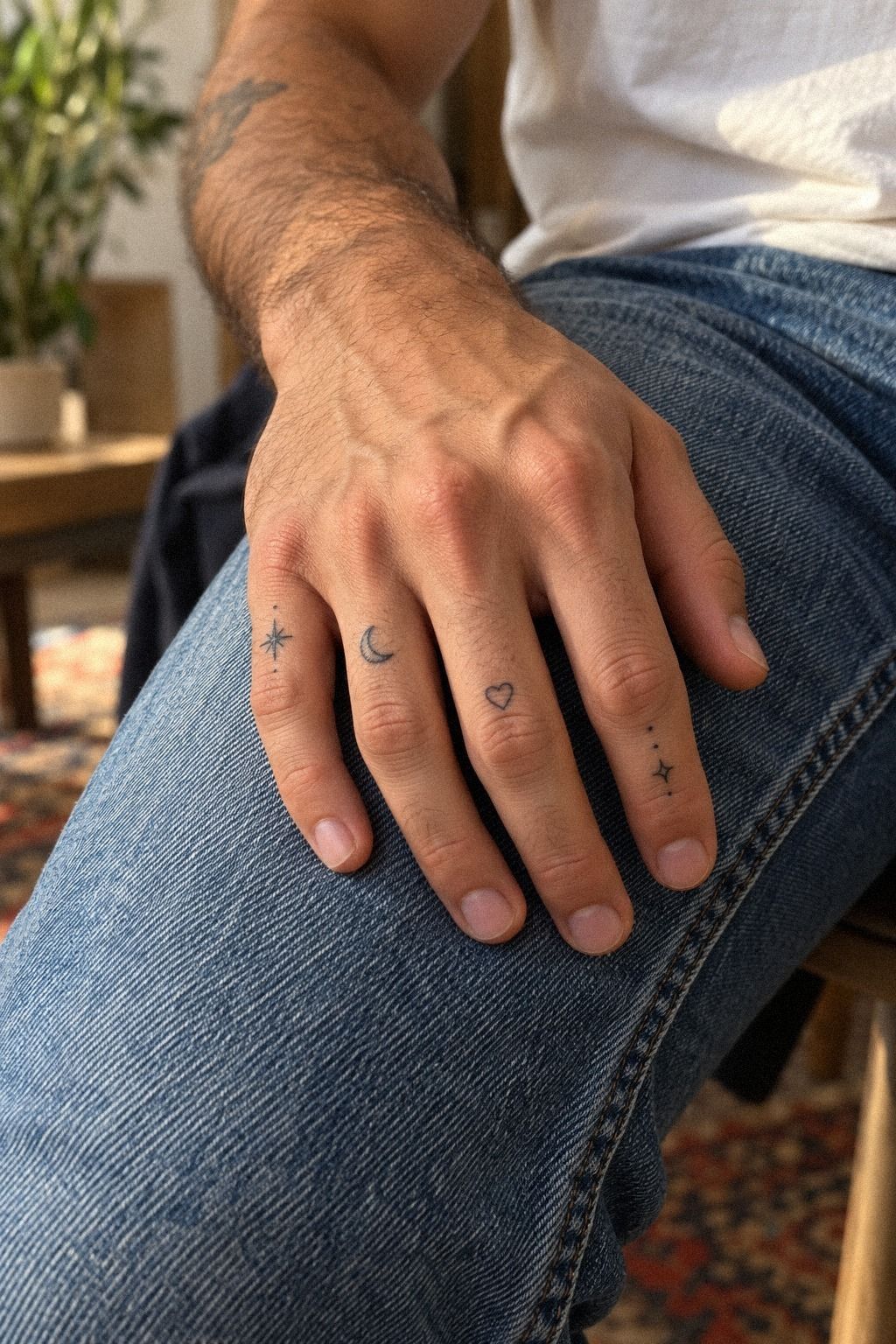
A few small stars create a playful constellation without making the hand look busy. You’ll want different sizes, but keep the shapes related. One sharp four-point star, one tiny dot, and one open sparkle can feel more expressive than five identical marks.
The strongest version uses a clear star silhouette rather than tiny interior decoration. That keeps the design crisp and iconic. An asymmetric arrangement can also make the tattoo feel edgy without losing its whimsical charm.
Ask your artist for a spacing sketch before the needle touches skin. You’ll notice immediately if one star sits too close to the crease or if the group leans awkwardly when your finger bends. That small difference matters!
Plum-and-grey star ink usually gives this idea its strongest contrast, while a rose-gold accent can soften the smallest mark. I’d skip a crowded mix for a first version if your budget is tight. Save a few examples from small finger tattoos so you can show the exact amount of open space you prefer.
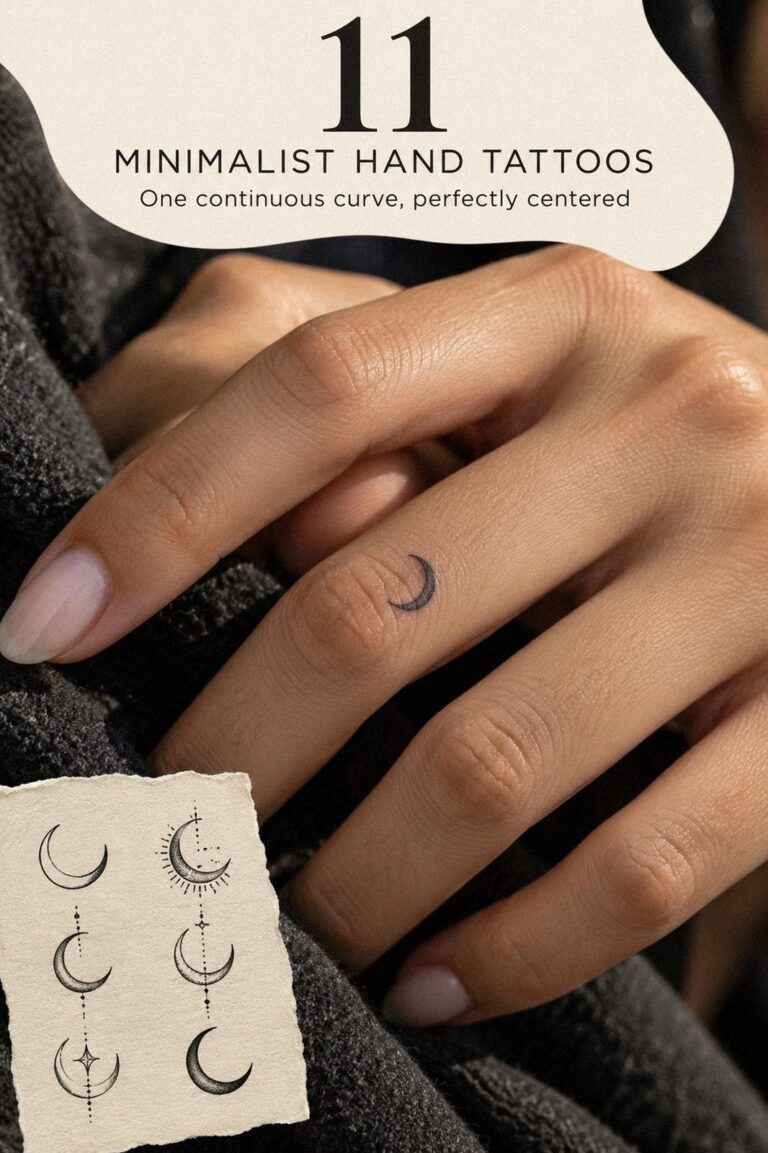
4Unique Crescent Moon Knuckle Ink
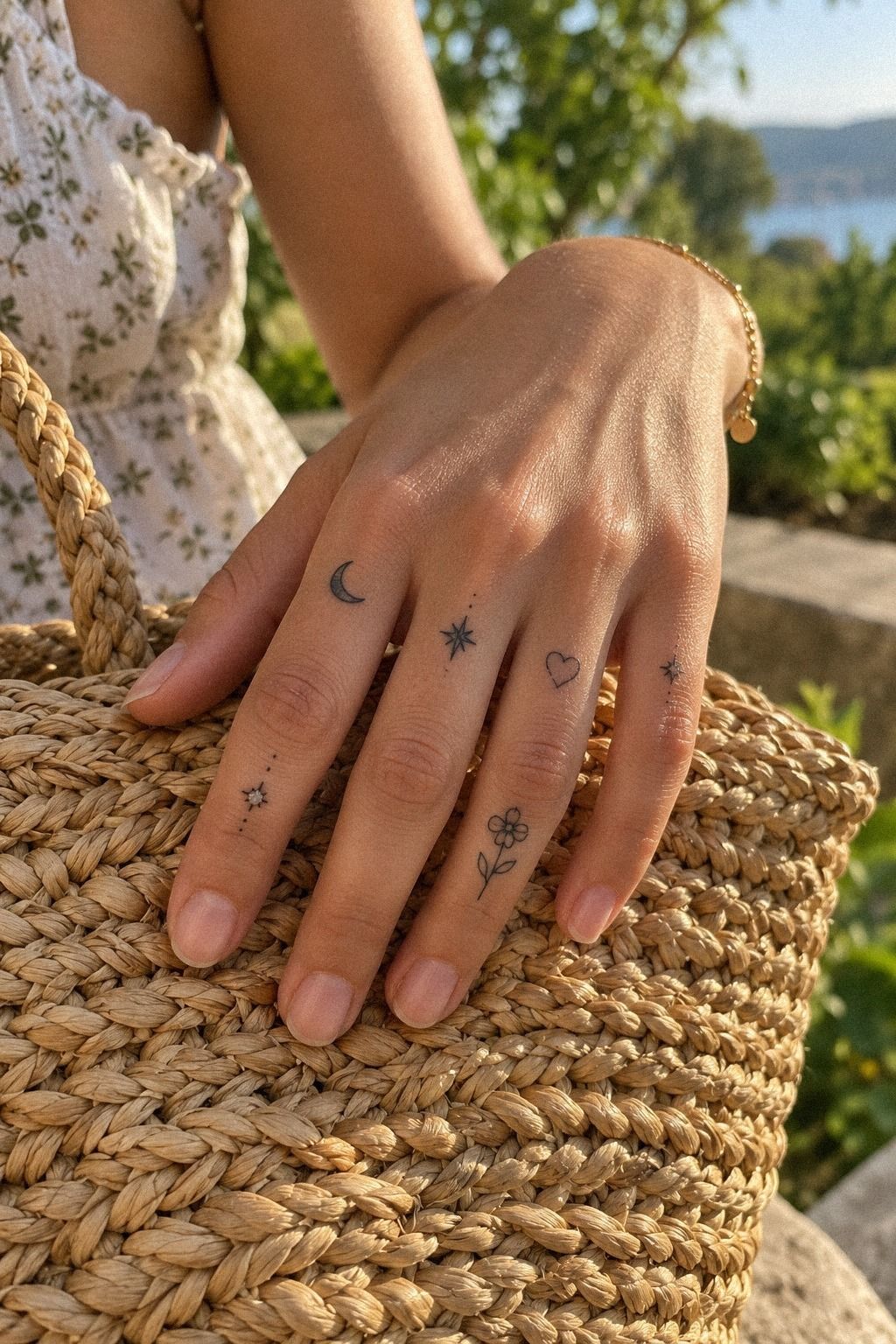
A crescent moon with small stars feels symbolic, sacred, and slightly haunting on the knuckle. You’ll want the crescent’s open side facing toward the joint or fingertip, depending on whether you want the design to feel like it’s opening or closing.
On warm skin, navy crescent ink can give the moon strong contrast, especially when the outer curve is clean and the inner edge is thinner. I’d keep the stars sparse. Two tiny marks can look intentional, while six can make the knuckle feel crowded.
The knuckle moves constantly, so check the design with your hand relaxed and curled. Knuckle placement may look powerful from one position and compressed from another. I’ve had designs seem perfect with a straight finger, then feel strangely tilted when I made a fist.
Negative-space crescent work is more forgiving than a heavily shaded moon. It stays sleek, and the open center gives the design lighter visual weight.
A filled crescent is more striking, but I’d choose the outline if this is your first finger piece. You can find more references in these small side finger tattoos.
5Minimalist Tiny Animal Finger Tattoos
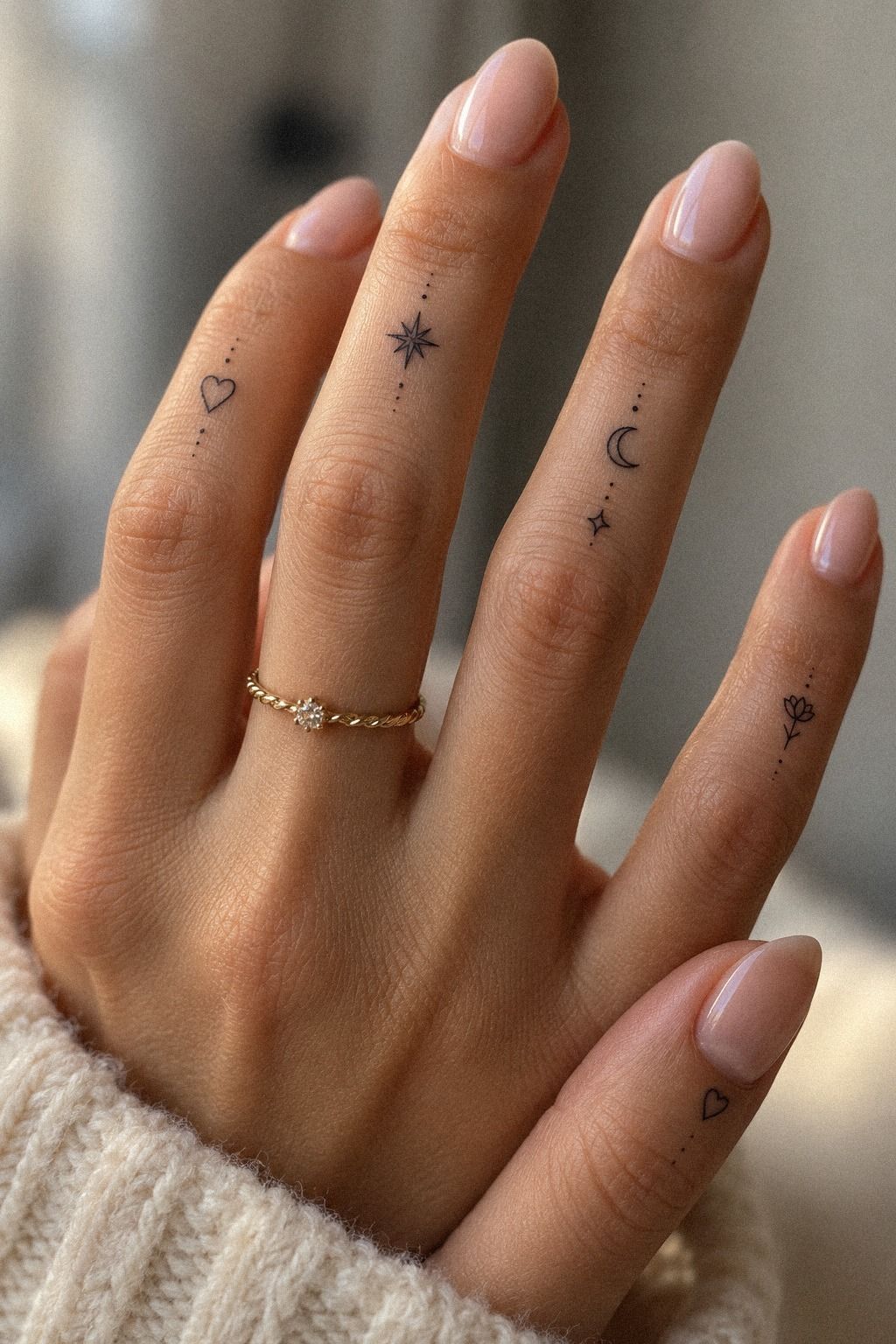
A tiny animal can carry a whole personality in a few deliberate marks. Think of a curled cat, small rabbit profile, fox face, or simplified bird.
You’ll want one clear gesture rather than a miniature portrait. The result can be raw, personal, and surprisingly expressive.
For the strongest result, preserve the animal’s main silhouette and remove anything that won’t survive the small scale. A curved back, pointed ear, or simple tail can say more than a cluster of fragile details.
A tiny cat can be meaningful, but a tiny face with too many whiskers may blur. Emerald-and-gold animal ink works well when the design stays compact and slightly raw.
I’d skip soft grey shading if the placement gets frequent friction. One crisp ear or tail will give you more personality than delicate texture.
You don’t need to choose an animal only because it’s cute. Pick the one that matches your temperament, whether that’s fierce, playful, or quietly independent. Browse cute small tattoos with meaning before settling on a symbol that feels personal.
6Elegant Initials On The Side Finger
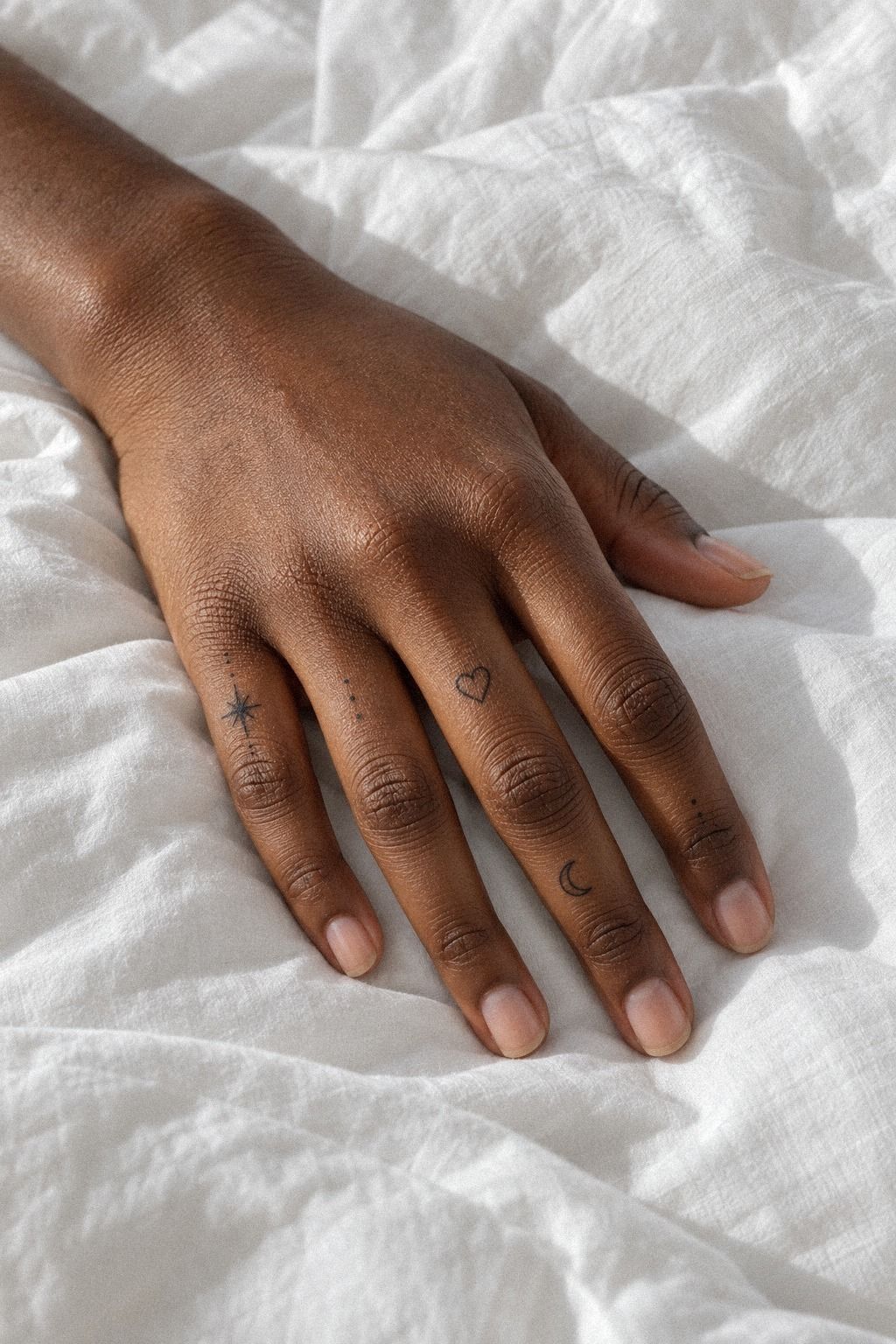
A single initial on the side finger is understated, personal, and easy to keep private. You’ll want the letter sized so it can be read without crowding the crease. A clean serif, narrow script, or simple block form can work, but each creates a different mood.
A forest-green initial can look classic, while a narrow script feels more romantic. A rust accent can produce a powerful result, but the letter still needs open counters and deliberate spacing. A design that’s too ornate may lose its identity.
Forest-green ink can give the initial a crisp finish, but your artist should test the stencil in more than one position. A letter that looks elegant near the base may feel cramped closer to the nail. Comparing each option first helps you judge whether the cost matches the result you want.
Stencil transfer paper lets you inspect the letter before the session begins. Bend your finger, turn your hand, and decide whether the placement still feels right. For more discreet ideas, compare small inside finger tattoos.
7Delicate Birth Flower Finger Tattoo Designs
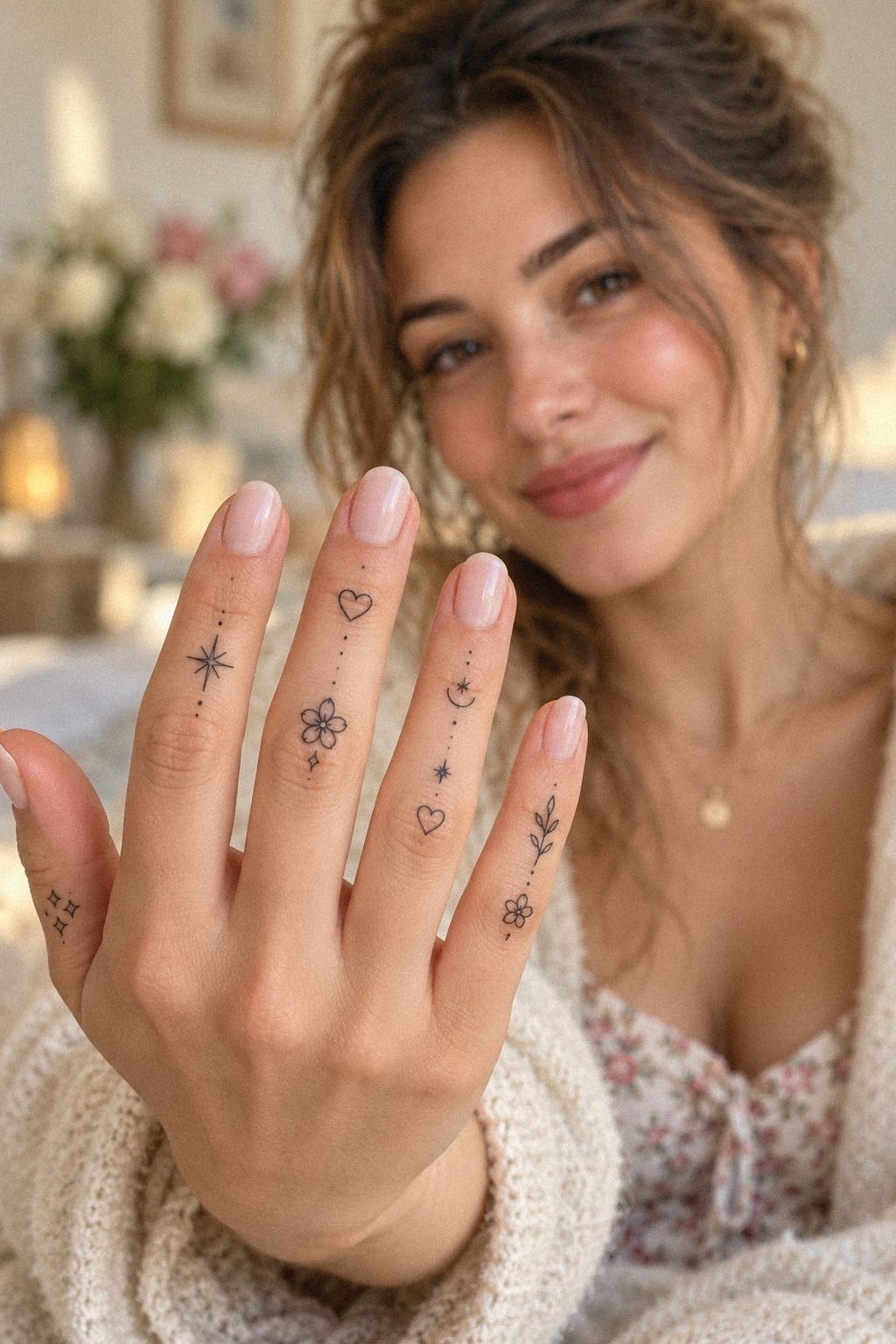
A birth flower gives you a meaningful image without relying on initials or dates. You’ll want one stemmed flower with layered petals, not a full bouquet compressed into a narrow space. The result can feel graceful, feminine, and quietly personal.
The strongest version uses dusty-rose and charcoal floral ink, especially when the stem is slightly stronger than the petals. Choose the flower’s most recognizable feature and remove secondary details that would turn into visual noise.
A single flower can sit along the side of the finger or angle across the top near the knuckle. Side placement feels more intimate, while top placement makes the symbol easier for others to notice. Ask your artist which position suits your hand rather than copying someone else’s placement.
Layered petal linework should have generous spacing. I once saw a flower designed beautifully on paper, but its petals were too close once transferred to skin.
The artist opened the spaces, and the healed version looked far more crisp. The small hand finger tattoos for women gallery can help you compare feminine and neutral interpretations.
8Symbolic Matching Minimalist Finger Tattoos
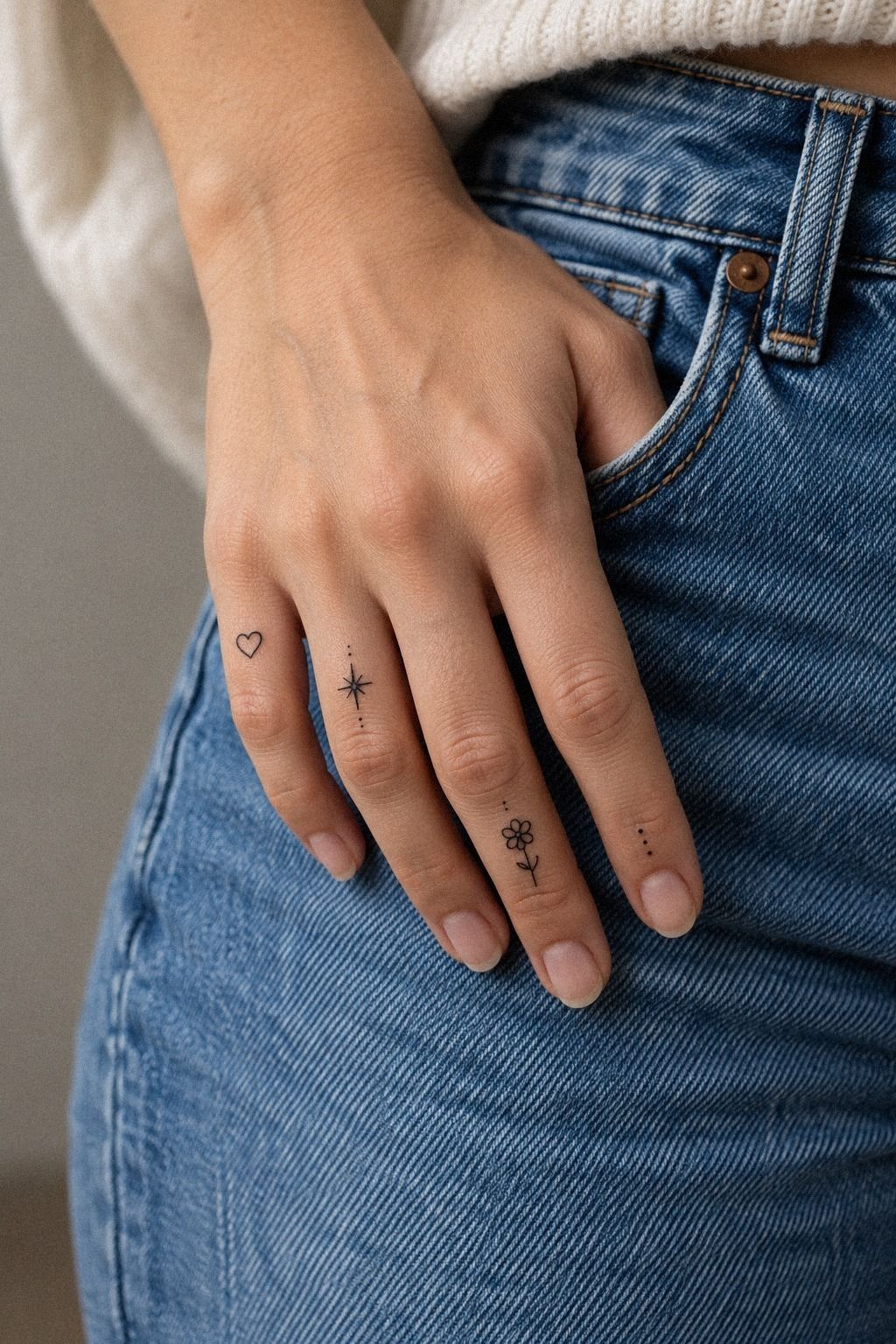
Matching finger tattoos work best when each person gets a complete symbol, not half of an image that only makes sense when hands touch.
9Cute Micro Rainbow Finger Tattoo Ideas
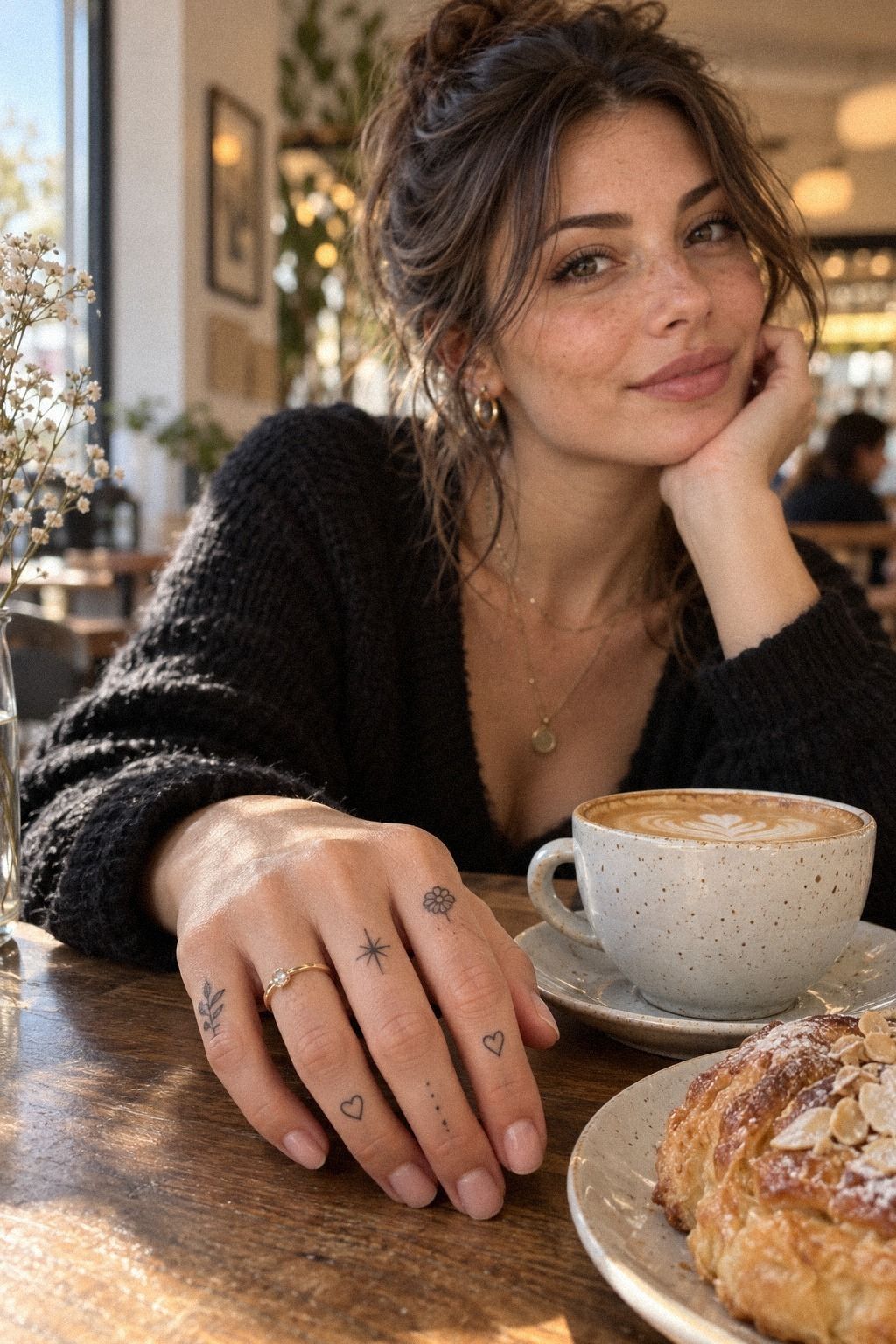
A micro rainbow can feel cheerful without requiring a broad band of color. You’ll want three or four curved strokes, each separated enough to remain visible after healing. The design can sit on top of the finger or follow the side.
On many skin tones, midnight-blue, copper, and ivory colorwork needs careful pigment selection and spacing. Ask your artist whether the chosen colors will contrast clearly with your skin tone. If two shades are too similar, one may disappear into the other.
I’d avoid squeezing a full spectrum into a tiny mark. A midnight-blue, copper, and ivory set can be more readable than six pale tones. Your rainbow will look playful and vibrant when the colors have room to breathe.
Three strong shades may offer better value than a crowded palette!
Color tattoo ink may need more thoughtful aftercare than a simple black design. Keep the area clean, moisturized, and protected from direct sun while it heals.
The surface commonly settles in about two to three weeks, but the full result can take two to three months. The small cute finger tattoos page has more tiny symbols to compare.
10Bold Black Dot Finger Tattoo Accents
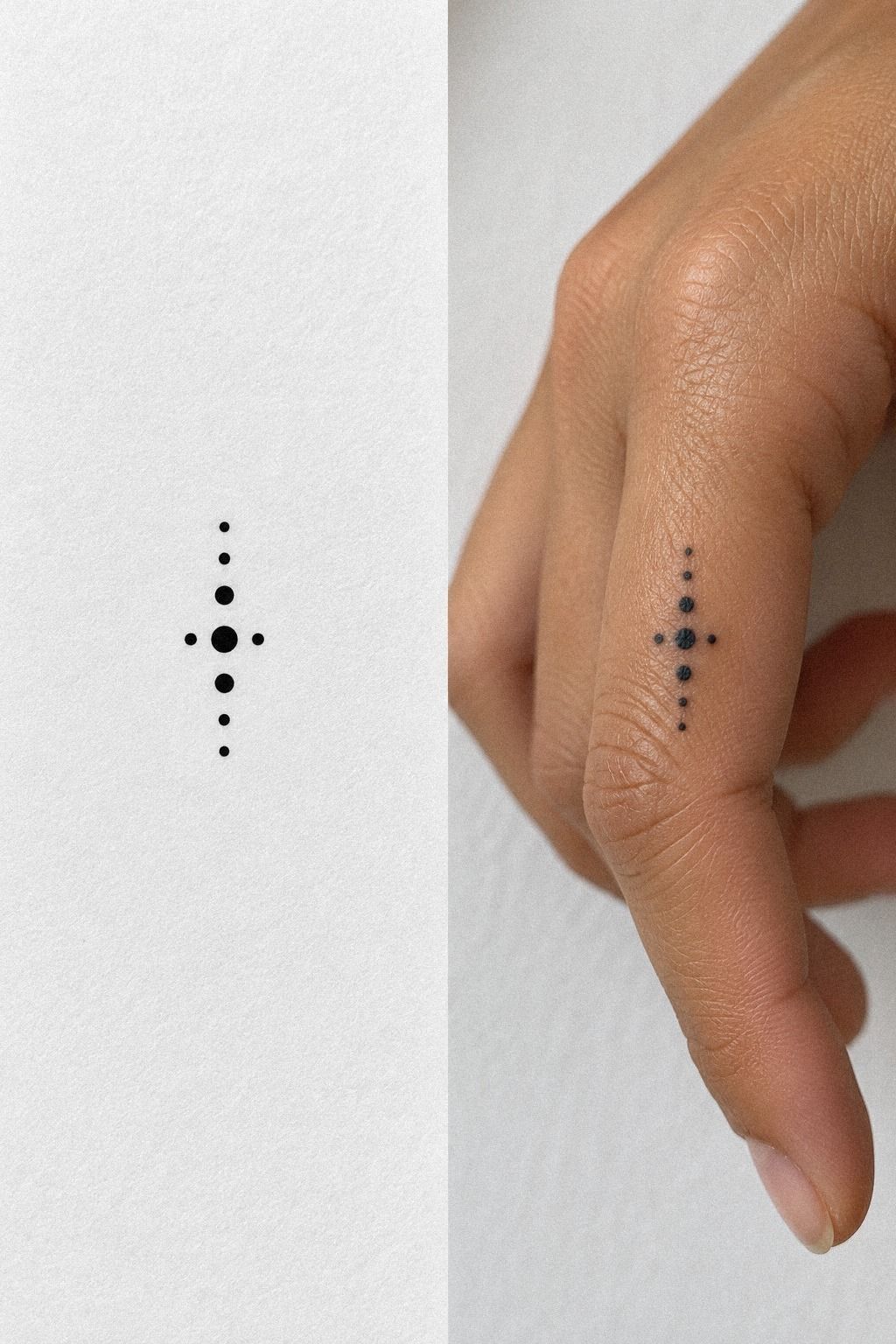
A single black dot looks simple, but placement gives it character. You’ll want the dot centered carefully, especially if it sits on the side of the finger or near a joint. A slightly uneven dot can read organic, but accidental placement usually looks unfinished.
The stencil mark should be checked from every angle before the session begins. A dot that looks centered from above may drift toward the crease when your finger bends. That tiny adjustment can be the difference between a deliberate accent and a mark you’ll question later.
The split between fresh and settled work matters because healed black dot ink often looks softer than the first-day version. Don’t panic when it appears darker at first. Your artist can explain what the settled result should look like and whether the placement is worth the cost.
Solid black pigment generally gives this idea strong longevity, but your artist should still consider friction and sun exposure. Fingers get washed, rubbed, and bumped constantly.
Ask to see the stencil from every angle, then compare it with small finger tattoo pricing references. That pause is worth it!
11Whimsical Tiny Charm Finger Tattoos
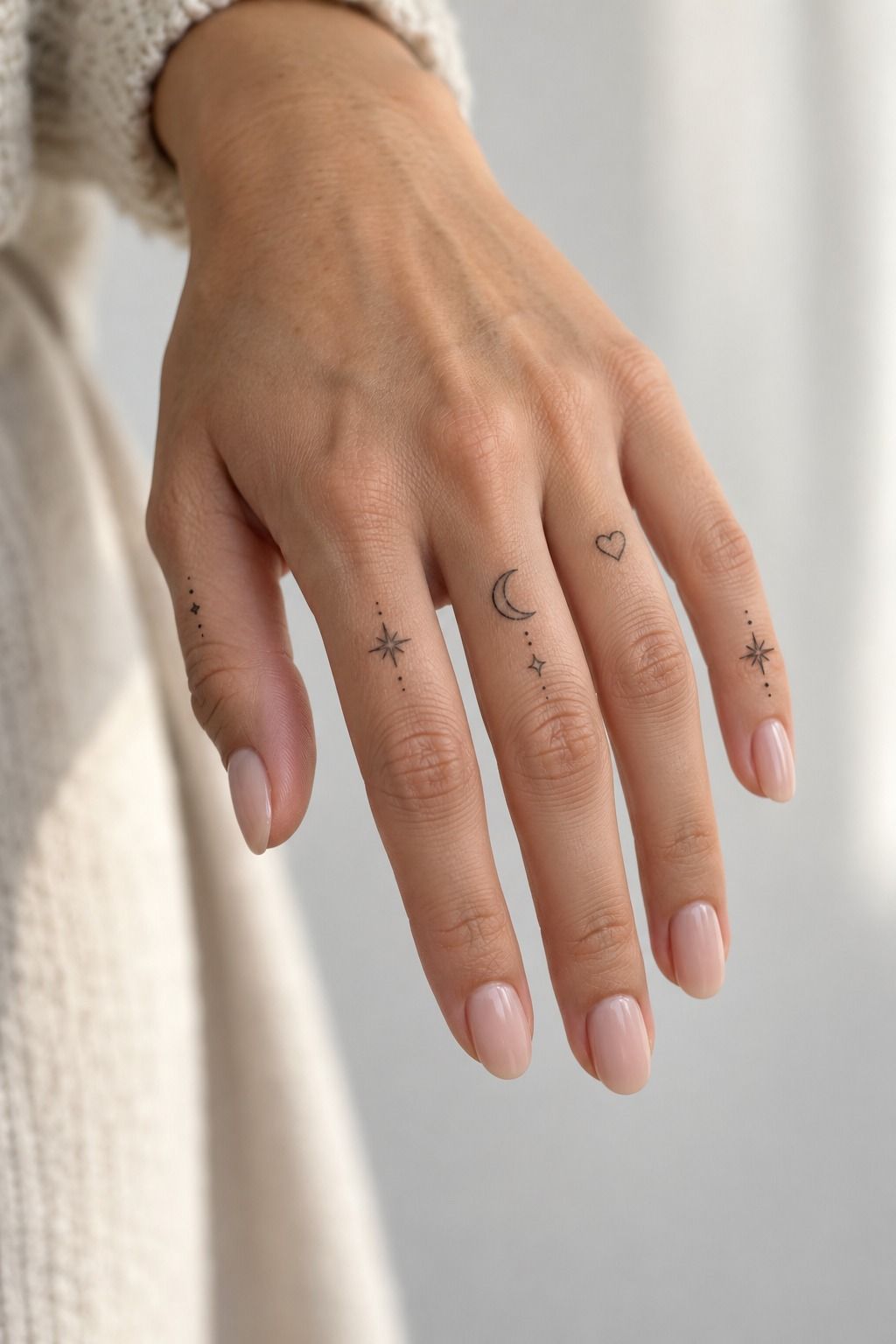
A tiny charm can be a key, bow, lock, pendant, or miniature talisman. You’ll want one recognizable object with a strong outline, not a crowded collection of decorative details. The design should look intentional even from a short distance.
Terracotta and olive tones suit terracotta-and-olive charm linework with a few deliberate strokes. I’d ask for a slightly heavier outer contour and fewer interior marks. That contrast keeps the charm crisp and expressive without making the mark feel heavy.
A small bow can feel romantic, while a key can feel symbolic and vintage. Your choice should come from the meaning you’ll still like later, not only from current popularity. I’d skip overly ornate designs because the smallest loops can lose definition.
Tiny pendant ink looks especially polished on the side finger, where the shape can hang vertically along the natural line. If you prefer visibility, place it on top near the knuckle, but remember that exposed placement can face more friction. For personal options, look through small side finger tattoos before choosing your final shape.
Start With the Finger You Actually Use
Before choosing a symbol, notice which finger you use most during the day. If you type, lift weights, wash your hands, or handle tools often, daily hand movement may affect both comfort and longevity. A design that works beautifully on a rarely used finger may need more planning on your dominant hand.
I’d also consider whether rings, gloves, or frequent handwashing will rub the area. Placement friction can matter more than the design itself. If a side finger takes constant contact, a compact, readable mark may offer better long-term value than fragile details.
Your dominant hand may need extra thought because it handles more friction. A dominant-hand check can reveal whether the tattoo sits beneath a ring, beside a grip, or directly against a work surface. These small details can change the best placement.
What Will This Look Like After Healing?
Fresh tattoos often look darker and sharper than healed work. Ask for healed tattoo photographs from similar finger placements, not only studio pictures taken immediately after the session. That gives you a more honest idea of line softness, pigment retention, and spacing.
I’d also ask how the artist handles a touch-up if the mark fades unevenly. Some finger tattoos need maintenance because the skin moves and receives constant friction. Touch-up planning helps you decide whether the design is worth the expected cost.
A fine-line heart, initial, or flower may soften into a more understated result. That isn’t automatically a problem. Pigment retention depends on placement, skin, sun exposure, friction, and the artist’s technique.
Black Ink vs. Color: The Small-Scale Tradeoff
Black ink usually gives you the strongest contrast in a tiny design. Black pigment can make a heart, star, or initial easier to read, while color gives you a more vibrant and playful result. Neither choice is automatically better; it depends on your skin tone, palette, and desired mood.
If you’re comparing options on a tight budget, ask whether color changes the price or session length. I’d choose fewer strong colors over a crowded rainbow. Color saturation should support the shape instead of hiding it.
A crisp, expressive mark often delivers more value than a detailed design that loses definition. Check whether the artist has created readable contrast on skin tones similar to yours before you commit.
Pinterest Is Not Your Healed Portfolio
Pinterest can help you collect references, but Pinterest inspiration rarely shows the full story. The image may be fresh, filtered, or shown in perfect lighting. Use it to explain your preferred shape, then ask your artist for healed examples from real clients.
I’d bring two or three references instead of one exact image. That gives your artist room to create a personal version that suits your finger, skin, and movement. A small geometric finger tattoo can inspire the structure without dictating every line.
Ask to see healed examples with similar scale and placement. You’ll learn more from settled linework than from a flawless reference taken immediately after the appointment.
The Three-Anchor Rule I Use Before Any Finger Tattoo
I use three anchors before approving a finger design: the symbol, the placement, and the healed scale. The symbol has to carry personal meaning, even if nobody else understands it.
The placement has to suit how you use your hand. The scale has to leave enough room for the lines to remain readable.
That sounds obvious, but I’ve made the opposite choice before. I picked a design because it looked striking in a polished reference image, then realized the image depended on perfect lighting and a completely straight finger. In ordinary movement, it looked less elegant.
Your hand isn’t a display card, so the design has to work while you’re holding a phone, washing your hands, or reaching for keys. A placement test with a temporary stencil can expose problems before the needle touches skin.
The third anchor is the one people skip. Healed tattoo photographs are more useful than fresh studio pictures because they show what you’ll live with. Ask your artist for healed examples of similar placements, especially if your design uses fine lines, pale color, or intricate spacing.
Finally, I ask myself one blunt question: would I still want this mark if nobody saved the reference image? If the answer is yes, I’m closer to a personal choice. If you’re still comparing styles, this guide to small finger tattoos can help narrow your direction.
A Few Things Worth Answering
How much does a minimalist cute finger tattoo usually cost?
A minimalist cute finger tattoo usually costs about $100 to $300 in the United States, depending on the artist, region, placement, and design detail. I’d also check the shop minimum, which may be about $50 to $100. The shop minimum matters because tiny work can still require a full booking.
Are minimalist cute finger tattoos a good idea for a first tattoo?
Yes, they can be a good first tattoo if you understand the visibility, friction, and healing needs. I’d choose a simple readable symbol instead of crowded detail. Fingers can feel more intense than the forearm, thigh, or shoulder, so a short session doesn’t automatically mean no discomfort.
How do I choose a tattoo artist for minimalist cute finger tattoos?
I’d look for healed photographs, clean linework, and a portfolio with actual finger placements. Ask about hygiene, single-use supplies, and how the artist handles designs that may soften over time. A healed portfolio tells me more than fresh references, especially when I’m deciding whether the artist’s cost matches the expected value.
How much do minimalist cute finger tattoos hurt?
Pain varies, but fingers, hands, feet, ribs, and sternum can feel more intense because they have less cushioning and more bone or sensitivity. I’d expect a short session, though my own sensitivity would still matter. Short session time can help, but it doesn’t make every placement equally comfortable.
How long does a minimalist cute finger tattoo take to heal?
The surface usually heals in about two to three weeks, while complete healing can take about two to three months. I’d wash gently, moisturize as directed, and avoid swimming and direct sun during early healing. Consistent aftercare matters more than trying to rush the process.
What’s the best placement for minimalist cute finger tattoos?
The side finger gives me a discreet, intimate placement, while the top of the finger is easier for others to see. Knuckle designs can look powerful, but movement may affect how the lines read. Side placement is my preference for initials, hearts, and narrow floral marks.
Where should I find reference images before booking?
I’d use Pinterest for ideas, then move to an artist’s own portfolio for healed examples and placement details. Don’t rely on an online template as the final plan. A personal consultation is where scale, skin tone, line weight, and budget get adjusted for you.
Where I’d Start First
If I had to pick one, I’d start with the tiny heart outline. Its open center gives the skin room to move, and the shape still reads after fine lines soften. It’s personal, romantic, and understated without feeling ordinary.
Pin the heart idea for later and compare it with this guide to small inside finger tattoos before booking. The final choice can be worth it when the symbol, placement, and healed scale all make sense to you!