Louisiana imagery carries weight. Fleur-de-lis, crawfish boils, live oak silhouettes, shotgun houses, second-line umbrellas, the shape of the boot itself, there’s no shortage of material, but not every concept translates cleanly to skin. Some ideas age gracefully; others blur into muddy shapes within a few years. The trick is matching the right symbol to the right technique, scale, and placement so it still reads as Louisiana ten years down the line.
Size & Scale
Detail density determines whether your Louisiana reference lands or disappears. The state’s outline, for instance, works at palm-sized or larger, any smaller and the boot’s heel collapses into a blob, the Mississippi border becomes indistinguishable from a smudge. Coastal marsh scenes need room for layered reeds, water gradients, and negative space; cram that onto a wrist and you get a green-grey wash with no readable depth.
Micro Louisiana Details
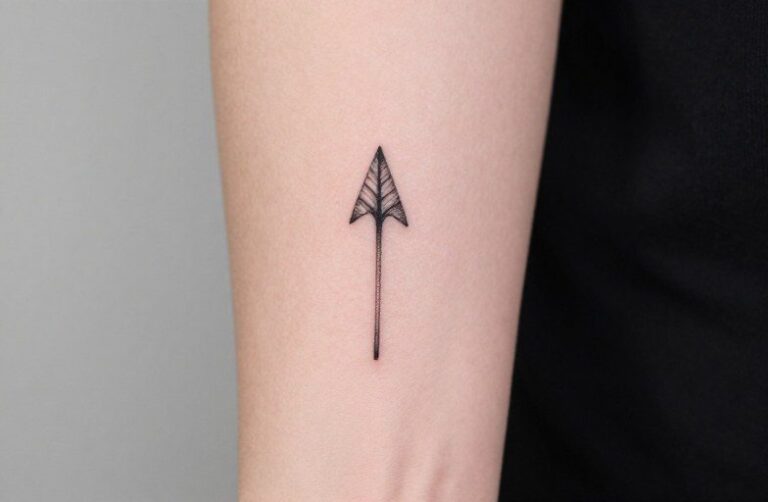
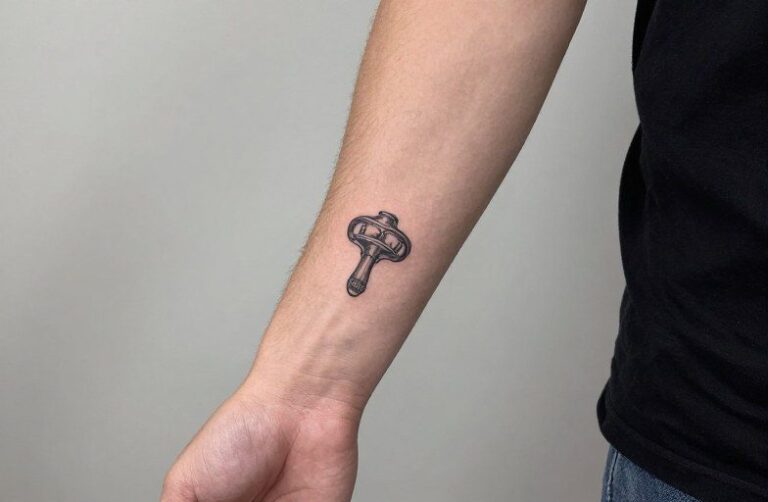
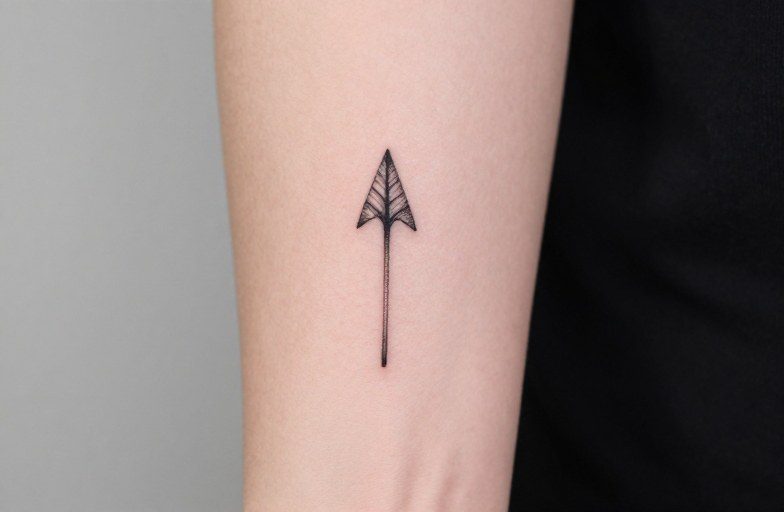
Tiny tattoos can work when you choose bold, simple icons: a single crawfish claw, a tiny trumpet silhouette, a miniature fleur-de-lis with thick black outlines. Avoid fine-line script of parish names or coordinates at sub-two-inch scale. That delicate lettering spreads and fades fast on high-movement areas like inner wrists or collarbone edges.
Statement Pieces
Full sleeves or back panels allow for compositional storytelling, moss-draped oak framing a bayou scene, or a New Orleans streetcar cutting through French Quarter architecture. At this scale, shading becomes the priority. Solid black silhouettes against grey-wash sky read better than attempts at photorealistic color that will muddy over time.
Trending Variations
What’s actually being requested in shops right now differs from the generic Pinterest spread. Current momentum favors specific hyper-local references over generic “southern” tropes.
- Parish-specific imagery: St. Bernard’s Isleños heritage, Acadiana crawfish traps, North Louisiana pine forests rather than one-size-fits-all state symbols
- Food culture with edge: crawfish in trap geometry rather than cartoon boils; oyster shells rendered as negative-space linework
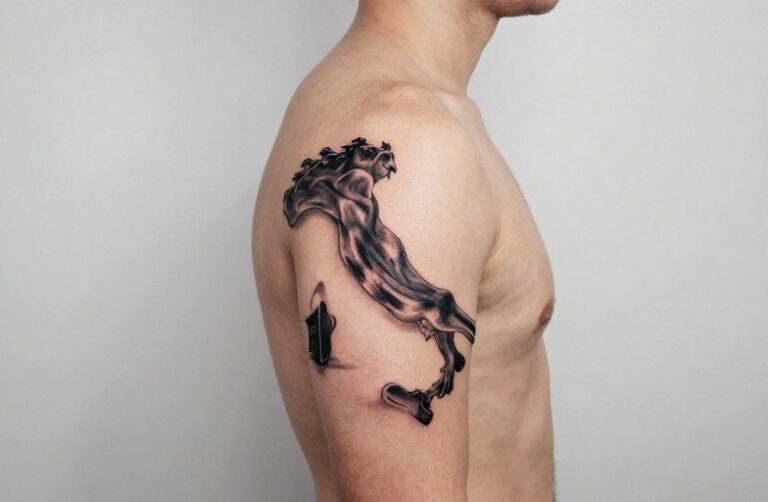
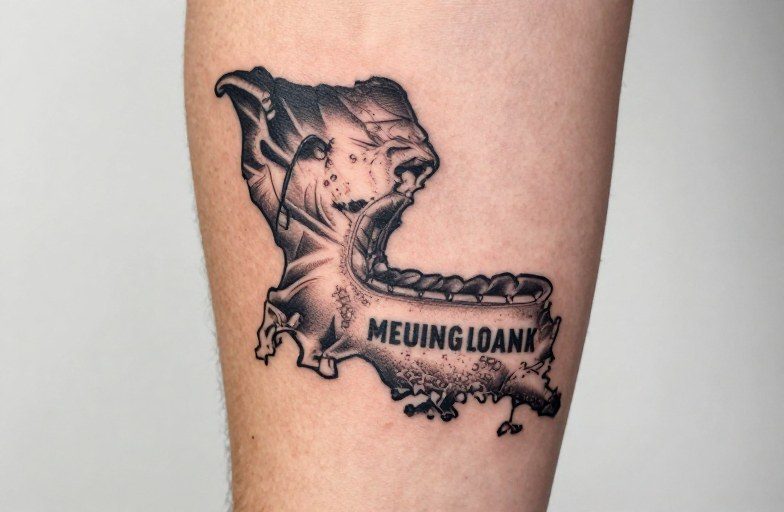
- Environmental commentary: disappearing coastline depicted through broken boot outlines, or marsh reclamation imagery
- Music lineage: brass instrument anatomy diagrams, jazz funeral procession silhouettes, zydeco washboard texture patterns
One trend worth resisting: the “gumbo pot” as metaphor. It sounds meaningful but visually devolves into a lumpy bowl with no recognizable Louisiana specificity. Better to reference actual ingredients, okra pods, filé powder sachets, andouille links, in scattered flash-style arrangements.
Tips for Choosing
Selection should be driven by longevity mechanics, not just emotional attachment. Your favorite fishing spot photograph might not survive translation to tattoo form.
Reference Quality
Bring photos with strong contrast and clear focal points. A sunset over Lake Pontchartrain with seventeen colors and soft gradients will frustrate any artist attempting to distill it into lasting ink. Simplify to two or three dominant elements: the lake’s horizon line, a single sailboat silhouette, the gradient reduced to three values (dark water, mid-tone sky, bright sun).
Artist Specialization
Not every skilled tattooer handles illustrative landscape or architectural detail. Louisiana-specific imagery often demands both, cypress knees have organic irregularity, shotgun houses require straight-line precision. Review portfolios for healed work (not just fresh photos) in both categories. Healed bayou scenes reveal whether green washes stayed distinct or settled into uniform olive.
Popular Styles
Certain approaches consistently produce better Louisiana-themed results than others.
American traditional handles fleur-de-lis, crawfish, and pelicans with natural authority. The bold lines and limited color palette (red, black, green, yellow) suit these subjects’ graphic potential. Traditional oak trees read as iconic rather than botanical; that’s the point.
Black and grey realism excels for architectural subjects, above-ground cemeteries, ironwork balconies, the Cathedral-Basilica. The technique captures stone texture and shadow depth. Color realism struggles here; attempts at bright St. Louis Cemetery tombs often heal to pinkish concrete that looks sun-bleached rather than sunlit.
Etching/woodcut style translates surprisingly well to bayou and swamp imagery. The cross-hatching suggests Spanish moss texture and water ripples without requiring smooth gradients that age poorly. This style also accommodates negative space effectively, important for subjects where “absence” matters, like disappearing wetlands.
Lettering and script demands particular caution. Louisiana French phrases, Creole proclamations, or parish names carry personal significance but require fluency from the artist. Misspelled Cajun French or awkwardly kerned parish names are permanent embarrassments. Verify spelling with native speakers, not Google Translate.
Best Placements
Where you put it changes what works.
High-Visibility Areas
Forearms and calves offer flat, stable surfaces ideal for the Louisiana boot outline or parish map coordinates. These areas also allow for easy self-viewing, which matters if the tattoo functions as identity marker rather than private reference. Fleur-de-lis on the forearm has become almost standard-issue; consider offset placement (outer forearm rather than inner wrist) or pairing with less common companion imagery.
Contoured and Hidden Placements
Ribs and thighs accommodate larger landscape scenes that wrap slightly around the body’s curve. A bayou horizon line following the rib cage’s natural angle creates dynamic composition impossible on flat back panels. Upper arms and shoulders suit circular or shield-shaped designs, Mardi Gras Indian suit patterns, for instance, or carnival mask geometry that mirrors the deltoid’s rounded form.
Hands and fingers remain problematic for detailed Louisiana references. The fleur-de-lis on a finger blurs within months; the state’s boot shape becomes unrecognizable. Stick to single bold elements, maybe a tiny crawfish claw or simplified trumpet bell, if you must go small and exposed.
For First-Timers
Initial tattoos carrying regional pride often suffer from overambition. The instinct to cram maximum Louisiana into minimum skin leads to cluttered, unreadable results.
Start with one dominant element in a manageable size: a single live oak with visible root structure, a magnolia blossom at four inches or larger, a crawfish in profile rather than full environmental scene. These build confidence and establish how your skin takes ink before you commit to larger compositions.
Pain reality for common placements: the boot outline on the calf is moderate and brief; ribs with bayou scene shading are genuinely demanding. First-timers often underestimate how long detailed linework takes, four hours of needle time transforms “tolerable” into genuinely uncomfortable. Plan sessions accordingly, especially for larger Louisiana landscape pieces.
Healing in Louisiana’s actual climate presents specific challenges. High humidity and heat during summer months increase infection risk if aftercare isn’t disciplined. Fresh tattoos and swamp fishing trips don’t mix; plan your timing or accept temporary lifestyle modification.
The Bottom Line
Louisiana tattoo ideas succeed when they resist the temptation toward cluttered sentimentality. The state’s visual culture is already dense, oak trees, ironwork, music, food, water, loss. Your tattoo doesn’t need to carry all of it. Choose one element rendered with technical appropriateness for its scale and placement, executed by an artist whose healed work proves they can handle both the subject and the skin. The best Louisiana tattoos read immediately to those who know the state, and still hold visual interest for those who don’t. That’s the balance worth aiming for.
Frequently Asked Questions
How much detail can a small Louisiana boot outline actually hold?
Less than most people expect. Under three inches, the boot’s heel and toe blur together, and parish lines disappear entirely. At small sizes, stick to the outer silhouette with thick, clean lines rather than interior detail.
Do color tattoos of Louisiana scenes age worse than black and grey?
Greens and blues in bayou scenes are particularly prone to fading and muddying over time. Black and grey holds definition longer, especially for water and foliage where color variation is subtle to begin with.
What’s the most commonly misspelled element in Louisiana French tattoos?
Cajun French phrases and parish names with French origins get butchered regularly. “Laissez les bon temps rouler” alone has dozens of incorrect variants floating around. Always verify with a native speaker, never trust online generators.
Can you combine multiple Louisiana symbols into one cohesive tattoo?
Yes, but it requires compositional hierarchy. A dominant oak or fleur-de-lis with secondary elements (crawfish, musical notes, water lines) integrated as background texture works. Equal-sized competing symbols create visual chaos that ages poorly.