Nautical tattoos carry weight. Not symbolic weight, physical, visual weight. A ship on your forearm reads differently than a ship on your ribs. A compass the size of a quarter loses its detail in five years; one the size of your palm holds. This guide breaks down what actually matters when you’re choosing a maritime design, from how blue ink fades to where a rope bracelet will sit comfortably for decades.
For First-Timers
Start With What Holds Up
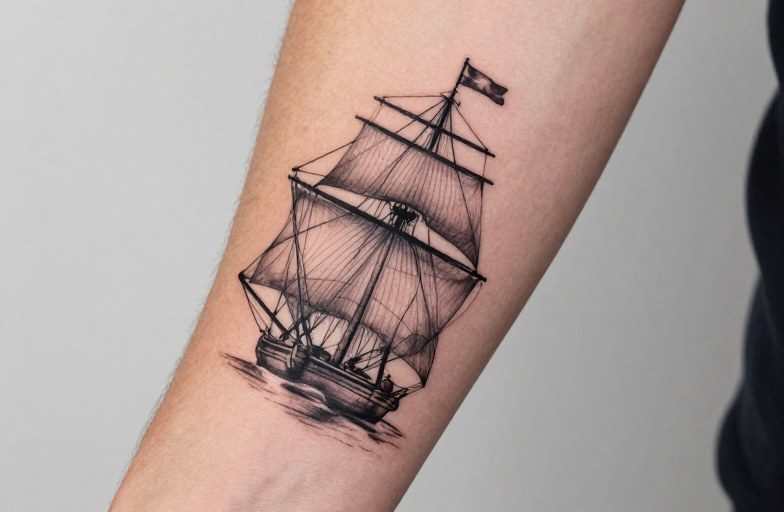
Anchor tattoos are the classic entry point for good reason. The shape is simple, the lines are bold, and the design ages cleanly. A traditional anchor with rope, black line work, limited shading, still reads clearly at ten years. Compare that to a photorealistic ship with twenty sails and rigging; the fine lines blur, the detail muddies, and you’re left with a gray blob that needs rework.
For a first piece, consider these durable options:
- Single anchor with rope wrap
- Compass rose with bold cardinal points
- Swallow or sparrow in traditional style
- Ship wheel with thick spokes
- Simple lighthouse silhouette
Know What You’re Signing Up For
A ship on your thigh is a three-hour sit minimum. A full-rigged vessel with background waves and a sunset can stretch to eight. First-timers often underestimate the physical toll. Choose placement you can endure, outer arm, calf, shoulder, before committing ribs or sternum. The pain isn’t the issue; the twitching is. Uncontrollable muscle movement ruins line work.
Tips for Choosing
Reference material matters more than most people think. Bring your artist actual imagery: 19th-century clipper ships, naval insignia, vintage compass faces. Pinterest boards full of other people’s tattoos give your artist less to work with. Original source material lets them interpret rather than copy.
Style alignment is critical. A Japanese-influenced ship with crashing waves and cherry blossoms requires an artist who specializes in that tradition. Traditional American flash-style anchors need someone fluent in bold lines and limited color palettes. Don’t ask a realism specialist to fake traditional; the line weight will be wrong, the proportions slightly off in a way you can’t name but will always see.
- Research artists by healed work, not fresh photos
- Ask to see nautical pieces they’ve done specifically
- Bring 3-5 reference images, not fifty
- Be open to their redesign for your specific body shape
Color Choices
What Lasts in Maritime Palettes
Traditional nautical tattoos lean on a specific palette: deep navy, blood red, mustard yellow, black, and limited green. These pigments are stable. Navy blue, ironically, does not stay navy. It cools toward a gray-blue within three to five years. Red holds better than people expect, especially in traditional formulations. Yellow fades fastest; use it for highlights, not primary elements.
Black and Gray Alternatives
Black and gray nautical work has its own history, often linked to naval and prison traditions where color wasn’t available. A ship rendered in smooth black and gray shading can be stunning, but requires an artist with strong whip-shading technique. Solid black sails with gray wash waves create contrast without color. This approach ages exceptionally well, no pigment to shift, just black settling into skin tone.
Consider your skin tone when planning color. Deep navy on very dark skin requires heavier saturation; the same design on pale skin reads as almost black immediately. A good artist adjusts pigment load for your specific tone, not just the reference image.
Standout Design Ideas
Move beyond the obvious symbols and you find richer territory. A sextant, an instrument for measuring angular distances, makes for intricate, beautiful line work. The circular frame and delicate arm offer geometric precision that stands out from the usual compass circle. A diving helmet, the heavy brass kind from early 20th-century salvage operations, translates to incredible tattoo sculpture: rivets, glass ports, corrugated hose.
Less common maritime imagery that works well:
- Knotwork: bowline, figure-eight, or Turk’s head rendered actual size
- Sea monsters from old maps, tentacles, serpents, hybrid creatures
- Signal flags spelling initials or short words
- Lobster buoys in traditional color schemes
- Half-submerged objects: clocks, lanterns, bottles with messages
Combining elements creates narrative without literal storytelling. A ship partially obscured by a compass border. An anchor wrapped in kelp instead of rope. These twists keep familiar symbols fresh.
Size & Scale
Minimums for Specific Elements
Rope detail has a physical limit. At under two inches diameter, individual strands become indistinguishable; you get texture, not structure. A ship with visible rigging needs at least four inches of height to read as anything other than a generic vessel. Compass roses with degree markings require three inches minimum for the numbers to hold.
When Bigger Actually Works Better
Ships on backs, thighs, or full sleeves gain power from scale. A small ship looks cute; a large ship looks imposing. The same design at different sizes carries different emotional weight. Consider what you’re actually after. A memorial piece for a sailor grandfather might suit a smaller, more personal scale. A declaration of identity as someone who lives by currents and tides might need the full back.
Scale also affects session planning. A palm-sized anchor is one sitting. A ship with full background is three to five sittings, healing time between each. Budget and schedule accordingly; rushing a large piece into fewer sessions compromises the work.
Best Placements
Where Nautical Imagery Sits Naturally
The forearm remains the classic placement for anchors and compasses. Visible, flat, easy to heal. The curve of the outer bicep suits ship wheels and circular designs. Calf muscle offers a flat plane for larger ships, and the vertical orientation matches a vessel’s natural proportions.
Placements That Interact With the Design
A rope bracelet around the wrist or ankle actually wraps the body part, making the tattoo three-dimensional in a way flat placements can’t match. An anchor on the side of the hand, with the ring passing through the actual finger space, plays with anatomy. These interactive placements require experienced artists; the design must distort correctly when the body moves.
Some placements to approach carefully:
- Foot: heavy fading from friction and sun exposure
- Inner arm near elbow: frequent movement distorts healing
- Side of ribs: beautiful but painful, hard to sit still for
- Neck: highly visible, limits professional contexts
What to Remember
Nautical tattoos carry history, naval, merchant marine, counterculture, but that history doesn’t obligate your design to any specific tradition. The anchor means stability because heavy metal in water resists drift. The compass means direction because it literally provides direction. These are concrete, physical origins, not mystical ones. You don’t need to have sailed to wear them; the imagery has long since moved beyond its origins into broader visual culture.
What matters is the quality of the work and your comfort living with it. A simple, well-executed anchor beats a complex, poorly rendered ship every time. Prioritize artist skill over design complexity. Prioritize healed results over fresh photos. Prioritize your actual daily life, how you dress, how you work, how you move, over idealized placement ideas.
The ocean is indifferent to our symbols. The tattoo is for you, on your specific skin, aging in real time. Choose accordingly.
Frequently Asked Questions
How long does a traditional ship tattoo take to complete?
A palm-sized ship with basic rigging runs 2-3 hours. A full back piece with waves, sky, and detailed hull can stretch across 15-20 hours in multiple sessions. The complexity of sails and rigging drives time more than overall size.
Do compass tattoos have to point true north on the body?
No, though some people request it for personal significance. Most artists orient the compass for visual balance on the specific body part, not geographic accuracy. The needle can point any direction; what matters is the design’s flow with your muscle structure.
Why do rope tattoos sometimes look blurry after healing?
Rope consists of many thin parallel lines packed tightly. If the artist works too shallow or uses inconsistent pressure, some lines drop out while others hold, creating uneven texture. The twist and overlap of strands also create natural spots where ink pools or misses.
Can nautical tattoos work with other styles like geometric or floral?
Yes, but the combination needs deliberate design. A ship’s hull framed in geometric lines works; random mandala patterns floating behind a traditional anchor usually don’t. The most successful hybrids keep one style dominant and use the other as accent, not equal partnership.