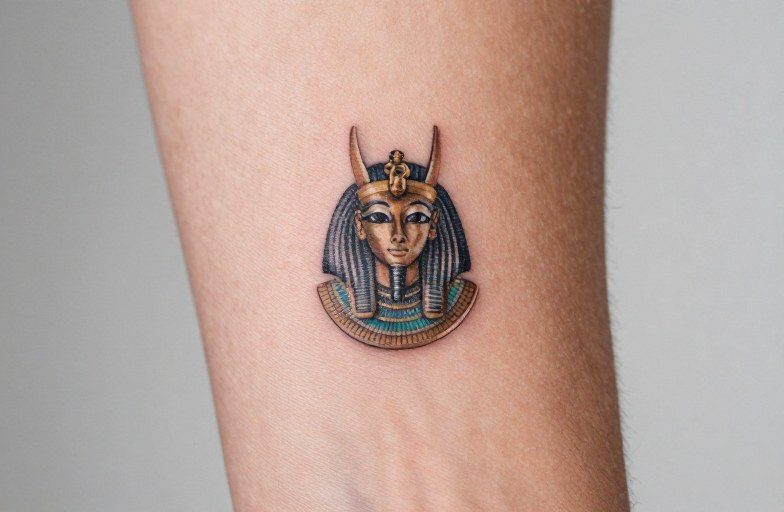
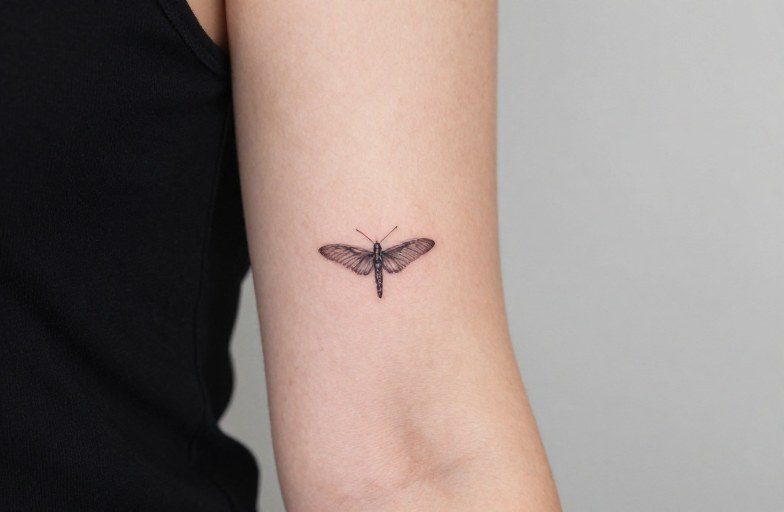
Small arm tattoos hit a sweet spot. They’re visible enough to enjoy daily, easy to cover when needed, and the arm’s natural lines give you endless placement options. For women especially, the upper arm, forearm, and wrist offer distinct canvases that change how a design reads. What works as a delicate wrist accent falls apart blown up across a bicep, and vice versa. This guide breaks down real designs, real placements, and what actually happens to small tattoos as they settle in.
Standout Design Ideas
Small doesn’t mean generic. The best tiny arm tattoos exploit the body’s architecture rather than fighting it.
Botanicals and Natural Forms
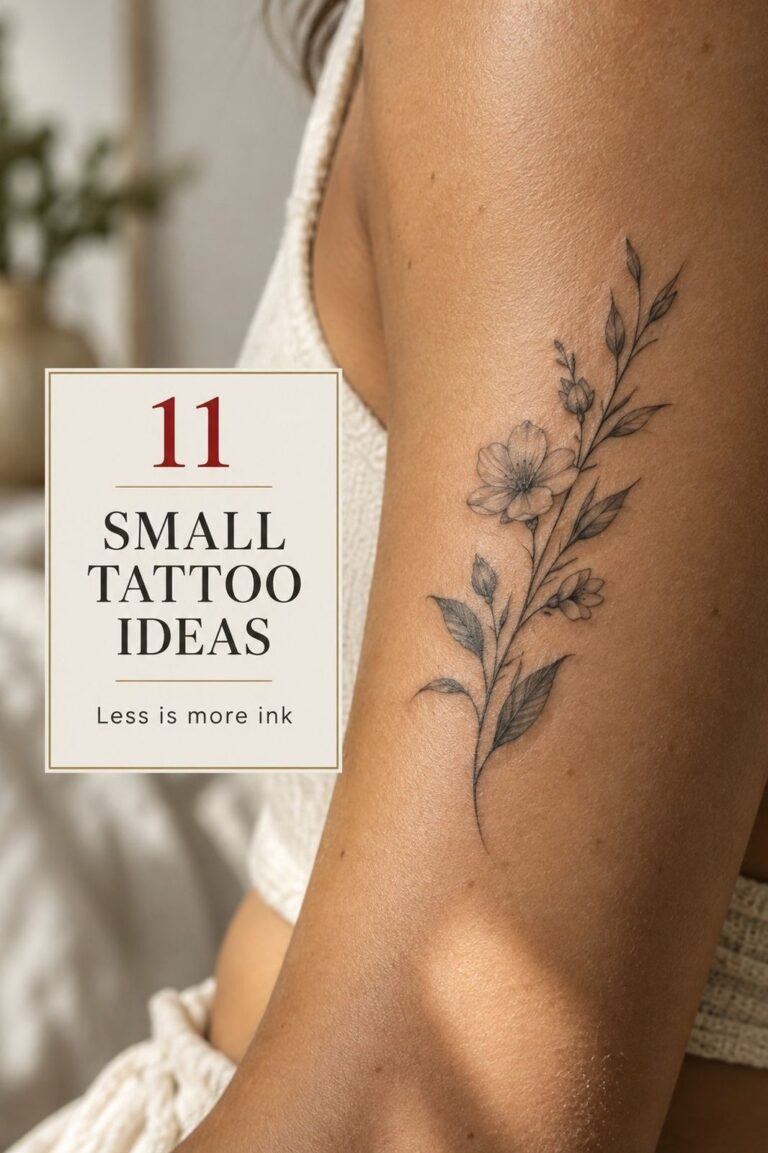
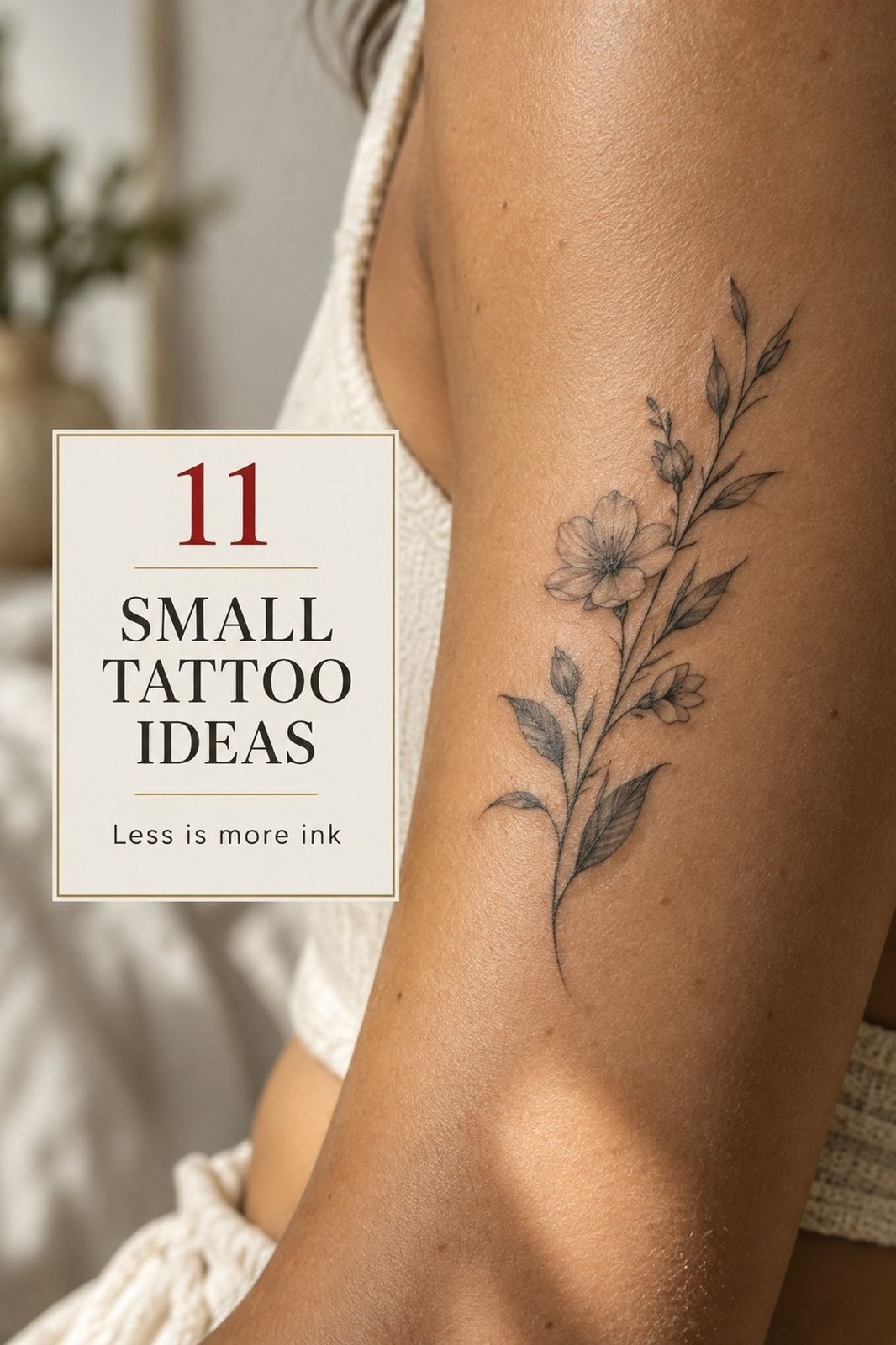
Single-stem flowers, pressed-fern silhouettes, and scattered seed heads translate beautifully to narrow arm spaces. A wildflower running vertically along the outer forearm follows the bone structure and elongates the arm. Clusters of tiny lavender sprigs or a single peony bud on the inner bicep sit naturally in the soft tissue there.
Line weight matters enormously with botanicals. Hair-thin lines blur faster on areas that see sun and friction. A slightly bolder outline, think 0.5mm rather than 0.3mm, holds definition for years without looking heavy. Solid black leaves age more gracefully than heavy color saturation in small spaces.
Minimalist Symbols and Letterforms
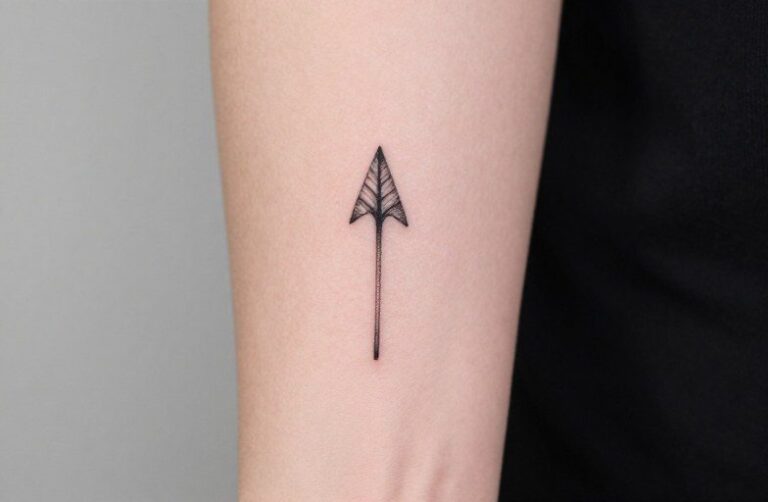
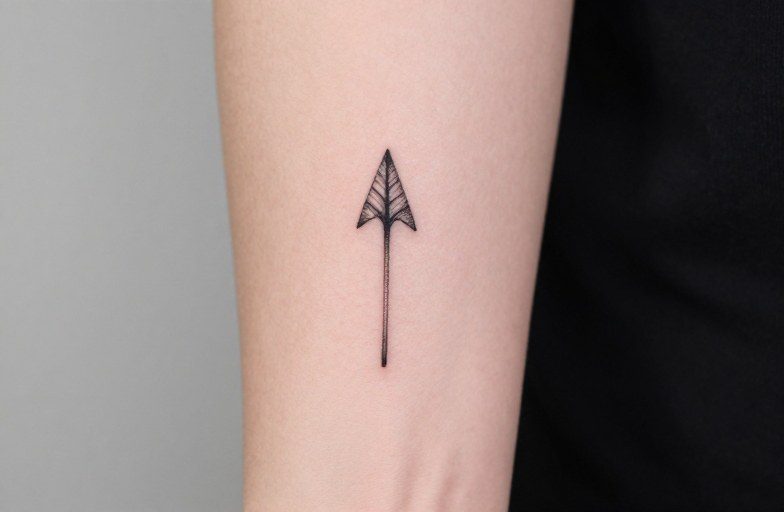
Single words in delicate script, roman numerals, or tiny geometric anchors (triangles, crescents, simple arrows) work when the negative space is treated as actively as the ink. A crescent moon tucked behind the elbow, a single word following the radial bone on the inner forearm, or three tiny dots ascending the wrist, each placement changes the rhythm.
Avoid cramming too much text into under two inches. Letters merge. Single initials or dates under four characters fare best.
Popular Styles
Certain technical approaches suit small arm work better than others. Knowing the difference saves you from a design that looks muddy in three years.
Single Needle and Fine Line
Single needle work uses a single round liner to create extremely fine detail. On a small inner forearm piece, perhaps a tiny portrait of a pet or an intricate mandala section, it produces ethereal, almost pencil-drawn results. The tradeoff: these lines spread. Areas with frequent movement, like the wrist or elbow ditch, degrade single needle faster. Keep this style to the upper outer arm or inner bicep where skin is more stable.
Blackwork and Dotwork
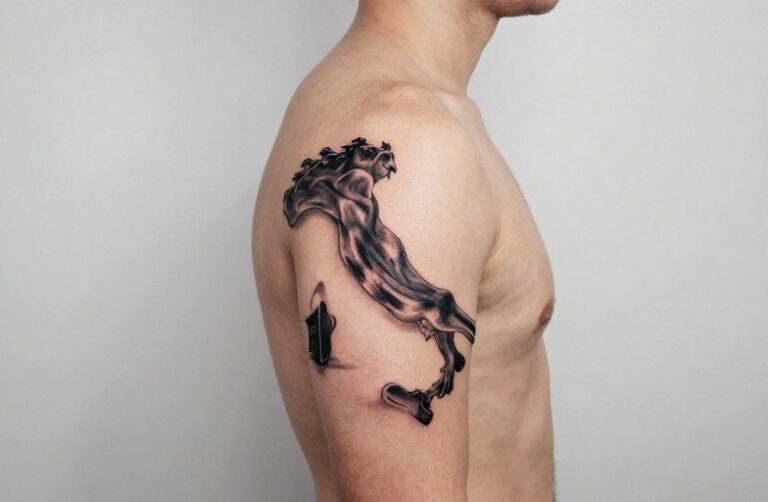
Solid black shapes and stippled gradients hold up remarkably well at small sizes. A solid black silhouette of a bird in flight, dotwork mandala sections wrapping the wrist like a cuff, or a tiny black cat in profile, these read clearly from across a room and barely blur over a decade. The density of black also means touch-ups are simpler and less frequent than with color work.
- Blackwork: best for bold silhouettes, small animals, celestial bodies
- Dotwork: excellent for texture, shading, and organic patterns that need soft gradients
- Line-only: risks blowout on wrist and elbow areas; better suited to upper arm
Matching & Pairing Ideas
Dual arm tattoos create intentional asymmetry or mirror balance depending on placement.
Split designs work across both forearms: a single vine that appears to grow from one wrist to the other when arms are held together, or a quote divided between inner biceps. The visual payoff only lands when the arms are positioned specifically, consider whether that moment matters to you.
More practical: matching small tattoos in identical placements. Two sisters might each carry a tiny lavender sprig on the left outer wrist, or best friends place identical crescent moons on the inner bicep. The placement itself becomes the bond, not just the image.
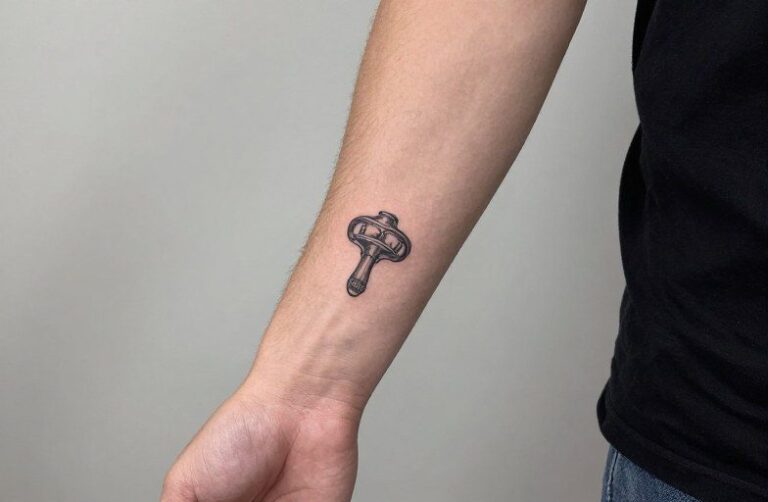
Complementary rather than matching pairs also read well: a sun on one inner forearm, moon on the other; a tiny key on one wrist, its corresponding lock shape on the other. These allow each person to choose their preferred symbol while maintaining connection.
Trending Variations
Trends in small arm work shift toward specific technical and conceptual approaches rather than just image motifs.
Micro-Realism
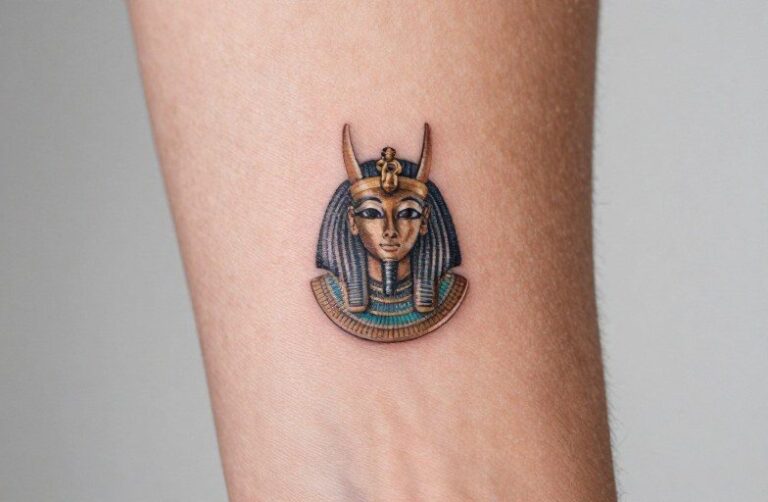
Extremely small photorealistic portraits, often of pets or loved ones, now appear on inner forearms and wrists. The technical achievement is genuine, artists working at 1.5 inches or smaller with multiple needle configurations. The reality: these fade faster than larger realism. Expect to need refresh sessions every 3-5 years, and understand that wrist placement accelerates this timeline. Upper arm micro-realism lasts longer but still requires maintenance commitment.
Ornamental and Decorative
Bracelet-style bands, delicate chains with tiny pendants, and lace-inspired patterns wrapping the wrist or upper arm have moved beyond their earlier trend peak into established territory. The key to avoiding datedness is specificity: a band incorporating actual handwriting, a chain with a pendant referencing a real object, rather than generic Pinterest patterns. These work best when they follow the arm’s circumference rather than fighting it with straight geometric bands that distort on curved skin.
For First-Timers
Small arm tattoos are common entry points for good reason. The process is brief, the placement is familiar, and you can see the result immediately.
Still, first-timers often make predictable mistakes. Choosing a wrist piece because it’s easy to show off, then discovering it catches on watch straps and laptop edges. Picking a design too detailed for the chosen size, then watching it blur into indistinguishable gray within two years. Going too small out of fear, some imagery simply doesn’t function under an inch.
Practical first-timer guidelines:
- Start with black ink; color decisions can come later with comfort
- Choose a spot you can easily examine during healing, upper arm is simpler than back-of-arm
- Allow 45 minutes to 2 hours for most small pieces; don’t schedule tightly after
- Healing takes 2-3 weeks for surface, 2-3 months for full settling; plan around vacations and sun exposure
The sensation on the outer upper arm is generally milder than inner bicep or wrist bone. If anxiety is a factor, outer arm offers a gentler introduction.
Best Placements
The arm isn’t uniform. Skin thickness, sun exposure, movement frequency, and visibility all shift dramatically from wrist to shoulder.
Wrist and Forearm
The wrist offers immediate visibility and a natural framing effect, small tattoos here read like permanent jewelry. Downsides: constant sun exposure, frequent washing, and contact with surfaces. Tattoos here fade 20-30% faster than upper arm equivalents. The inner forearm, by contrast, sees less sun and provides a flatter, more stable canvas. A vertical design running from inner wrist toward the elbow crease follows the arm’s natural lines and ages well.
Upper Arm and Bicep
The outer upper arm (deltoid area) is arguably the most forgiving placement for small tattoos. Stable skin, minimal direct sun if you wear sleeves occasionally, and enough flat surface for detail. Inner bicep offers concealment but more movement during healing; the skin also stretches more with muscle flex, which can distort circular designs slightly over time.
Behind the elbow (the ditch) is technically challenging, skin is thin, heals slowly, and tattoos here often need touch-ups. Small simple shapes fare better than intricate detail in this spot.
Final Word
Small female arm tattoos succeed when placement and design are solved together, not separately. A good tiny tattoo respects the skin it lives on, its movement, its sun exposure, its eventual aging. Choose technical approaches that match your maintenance willingness: single needle if you’ll refresh it, blackwork if you want longevity with minimal fuss. The arm gives you range; use it deliberately. Start with what you’ll still want to see every morning, not just what photographs well today.
Frequently Asked Questions
How small can an arm tattoo be before it becomes unreadable?
Most designs need at least one inch in their smallest dimension to hold detail over time. Text under four characters, simple silhouettes, or solid shapes can go slightly smaller. Intricate imagery with multiple elements needs more space, trying to fit too much detail into under an inch guarantees blurring within a few years.
Do wrist tattoos really fade faster than upper arm tattoos?
Yes. Wrists get more sun, more friction from watches and sleeves, and more frequent washing. Expect wrist tattoos to need touch-ups sooner than identical designs on the upper outer arm. Using solid black rather than fine lines helps slow this fading.
Can I get a small colored tattoo on my arm that will last?
Color is possible but requires more maintenance. Black and gray hold definition longest in small sizes. If you want color, concentrated areas of saturated pigment work better than light washes. Reds and dark blues generally outlast yellows and pastels in small arm tattoos.
Should I avoid certain arm placements if I plan to get more tattoos later?
Plan your negative space. The outer upper arm and full forearm are common expansion zones. A tiny wrist piece won’t block a future sleeve, but a scattered collection of unrelated small tattoos can make cohesive larger work harder. If you might build out, start with placement that allows future connection rather than isolated spots.