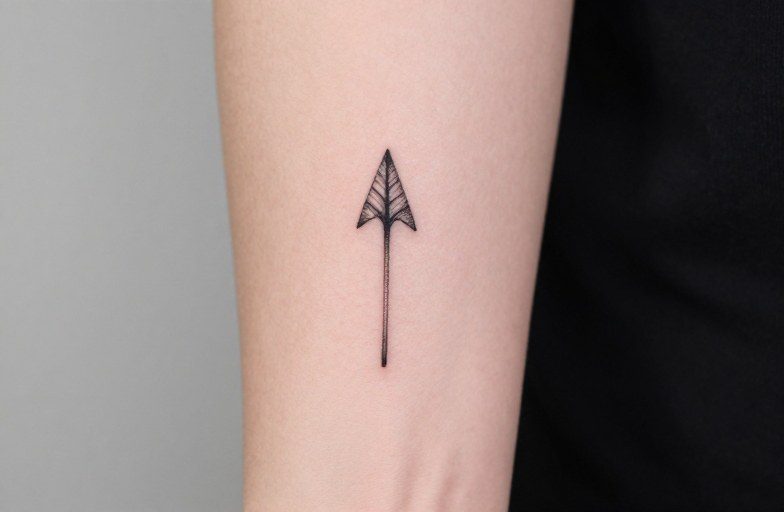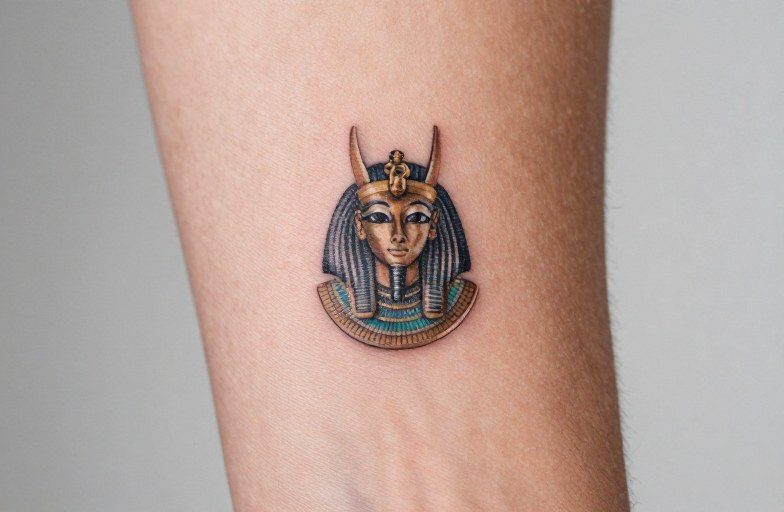
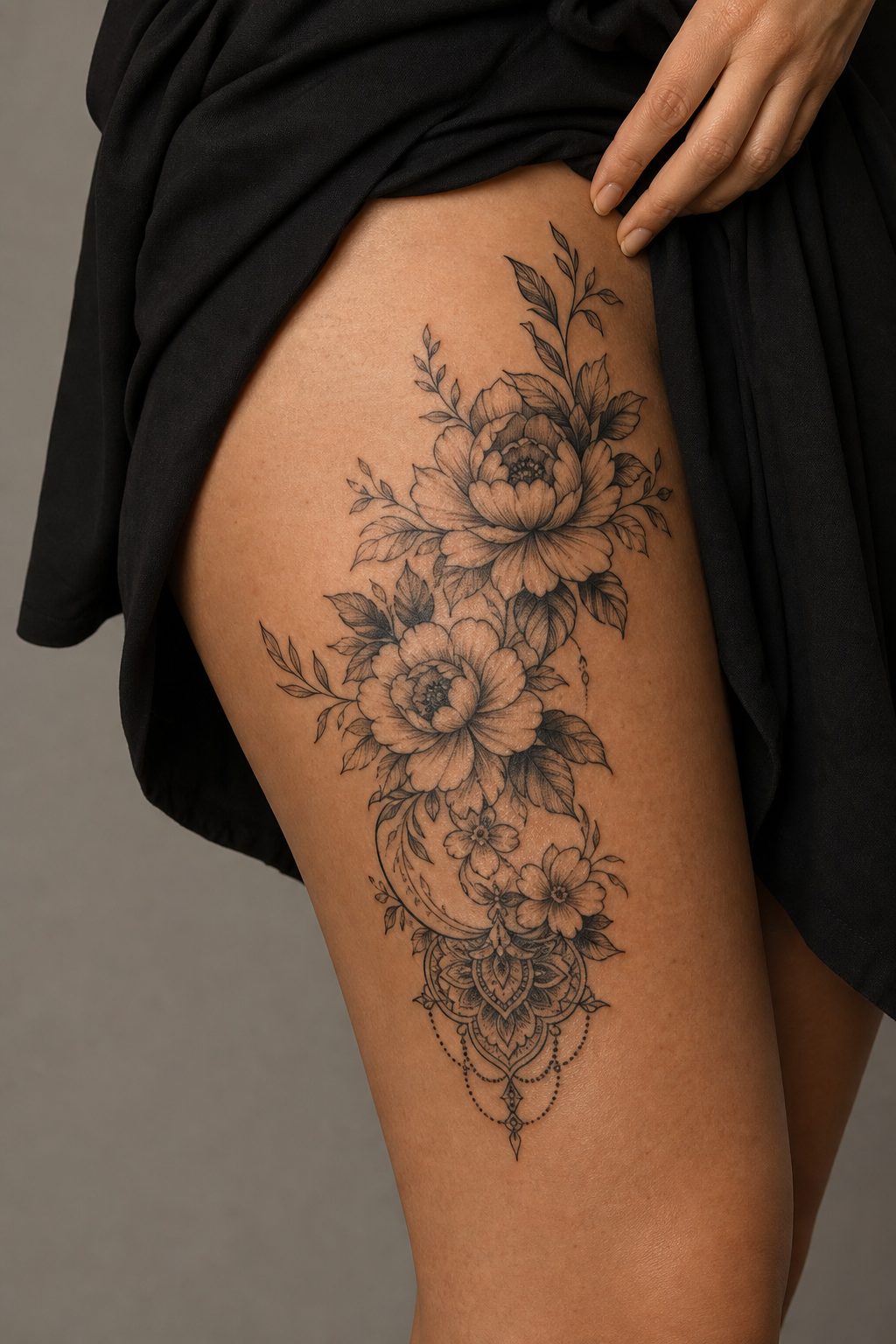
Thigh skin offers some of the most forgiving real estate on the body: thick, relatively slow to age, and easy to cover or reveal. For women considering this placement, the choices range from discreet inner-thigh pieces to dramatic front-of-thigh statements that command attention. The muscle structure here, particularly the quadriceps and the soft inner plane, creates natural contours that either complement flowing designs or challenge geometric ones. Understanding how ink settles into this specific area, how pain varies across the thigh’s landscape, and which designs actually suit the shape will save you from a piece that fights your body instead of working with it.
Color Choices
Thigh skin holds color differently than, say, the forearm or shoulder. The dermis here is thicker, which can mean slightly more muted saturation over time, but also slower fading overall. Your color strategy should account for this.
Black and Gray Longevity
Black and gray work exceptionally well on thighs. The density of the skin allows for smooth gradation in shading, and the lack of sun exposure (compared to arms or chest) means blacks stay crisp longer. For large floral pieces or portrait work, this palette ages gracefully without the patchy breakdown that can plague brighter pigments.
When Bold Color Works
Bold color thrives on the thigh if you’re committed to maintenance. Reds, magentas, and deep teals pop against most skin tones here. Avoid pastel washes unless you’re prepared for touch-ups, they fade to muddy ambiguity faster on thighs than on areas with thinner dermis. One solid approach: a predominantly black-and-gray piece with strategic color accents in focal points, like the center of a flower or the eye of a tiger.
Best Placements
Not all thigh real estate behaves the same under needle or over time. Where you place the tattoo determines visibility, pain level, and how the design moves with you.
- Front of thigh: The flattest, most visible canvas. Ideal for symmetrical designs, mandalas, or portrait-oriented pieces. Pain here is moderate, the quadriceps muscle provides cushioning.
- Outer thigh: Classic placement for larger work. The iliotibial band area can sting, but the muscle bulk makes long sessions tolerable. Wraparound designs often start here.
- Inner thigh: Soft, sensitive skin with more nerve endings. Pain spikes here, but the intimacy of the placement suits private, personal imagery. Ink may blur slightly more over time due to skin friction and moisture.
- Back of thigh/hamstring: Often overlooked, this area works for elongated designs that follow the muscle line. Less painful than inner thigh, more than front.
The Saddle Connection
Where the inner and back thigh meet, the “saddle” area, creates a natural focal point for designs that wrap. Snakes, vines, and ribbon motifs transition smoothly here. Be aware that this zone experiences the most friction from walking and clothing; linework stays sharper here than heavy color packing.
Standout Design Ideas
Certain motifs have earned their popularity on women’s thighs through genuine structural fit, not just trend cycling.
Floral Architecture
Peonies, roses, and chrysanthemums dominate thigh tattooing for good reason. Their layered petals translate beautifully to the rounded surface, and the natural asymmetry of blooms flatters the thigh’s shape. A single large peony spanning the outer thigh, with petals wrapping toward the front, uses the body’s curve as part of the composition. Leaves and stems can trail toward the knee or hip, extending the visual flow.
Serpents and Organic Flow
Snakes coil naturally around the thigh’s cylinder shape. The spine follows the leg’s length while the head can face outward at the hip or downward toward the knee. This motif adapts to any scale, from a small inner-thigh piece to a full wraparound. The scales provide texture that holds detail well, and the sinuous form complements feminine curves without cliché.
Ornamental and Lace Patterns
Filigree, mandala fragments, and lace-inspired patterns suit the front thigh particularly. These designs can frame a central image or stand alone as decorative pieces. The key is ensuring the pattern’s center aligns with the flattest part of the muscle; off-center placement on a curved surface distorts the geometry when viewed straight-on.
Trending Variations
Contemporary thigh tattooing has moved beyond the obvious. These approaches are gaining traction in shops for their technical interest and visual freshness.
- Negative space florals: Heavy black backgrounds with flowers rendered in skin-tone gaps. Dramatic on darker skin, striking on lighter tones. Requires a confident artist with solid whip-shading technique.
- Split-style compositions: One half black and gray, one half color, divided by a central figure or geometric line. The thigh’s width accommodates this duality without feeling cramped.
- Micro-realism clusters: Multiple small, hyper-detailed images arranged across the thigh rather than one large piece. Think: a beetle, a seed pod, a shell, each 2-3 inches, scattered with intentional spacing.
- Textural abstraction: Brushstroke-inspired pieces, ink-wash effects, or marble patterns that read as art first, identifiable image second. These age well because they don’t rely on fine representational detail.
Size & Scale
Thigh tattoos fail most often from scale misjudgment. Too small, and the detail blurs within years; too large without proper structure, and the design looks like a sticker slapped on a curved surface.
Minimum Viable Size
For any design with interior detail, faces, lettering, intricate patterns, 4 inches in the longest dimension is your floor. Below this, thigh skin’s thickness swallows fine lines. Simple silhouettes or solid symbols can go smaller, but expect them to spread slightly over a decade.
Maximum Impact
A full front-thigh piece can span 8-12 inches vertically. The design needs internal hierarchy: a clear focal point (usually upper or central), secondary elements that support without competing, and negative space to let the eye rest. Wraparounds demand even more planning, the image must read from multiple angles, and the “seam” where the design meets itself must be intentional, not accidental.
Matching & Pairing Ideas
Two thighs offer rare bilateral opportunity. The most successful paired pieces relate without mirroring exactly.
Consider these approaches:
- Complementary opposites: Sun and moon motifs, one per thigh, rendered in matching style but distinct imagery. The stylistic unity ties them together; the thematic contrast creates interest.
- Continuous narrative: A single vine, snake, or ribbon that begins on one thigh and ends on the other, completing only when legs are positioned together. Technically challenging but visually arresting.
- Seasonal or temporal pairs: Spring and autumn flora, dawn and dusk scenes. Same location, different moment.
- Asymmetrical balance: One thigh carries a large central piece; the other has smaller satellite images that echo motifs from the main tattoo. Prevents the “matching socks” effect that can feel costume-like.
For those building around an existing thigh tattoo, the second piece should respond to the first’s style, line weight, and color temperature. A heavy blackwork piece on one side won’t harmonize with a delicate single-needle piece on the other unless the connection is deliberately jarring.
Final Thoughts
The thigh rewards patience in design and precision in execution. Skin here ages better than most exposed areas, but that advantage means living with any mistakes longer. Prioritize artists whose healed work you can examine, thighs specifically, not just their portfolio in general. Ask about their approach to wrapping designs, how they handle the color saturation this skin accepts, and whether they’ll draw the piece directly on your body rather than applying a generic stencil.
A well-executed thigh tattoo becomes part of your silhouette, visible in dresses and shorts, concealed for professional settings, intimate in private moments. The placement itself carries that flexibility. Choose imagery that earns the real estate, and work with your body’s architecture rather than against it.
Frequently Asked Questions
How painful is a thigh tattoo compared to other placements?
The front and outer thigh rank among the more tolerable spots due to muscle padding. The inner thigh and saddle area hurt significantly more due to thinner skin and nerve density. Most people find long sessions here manageable, which is why large pieces are common.
Will a thigh tattoo stretch if I gain or lose weight?
Moderate fluctuations rarely ruin a thigh tattoo, but significant changes can affect the inner thigh and saddle areas most. The front and outer thigh skin is relatively stable. Building substantial muscle mass in the quadriceps may slightly distort linear designs over time.
How long does a thigh tattoo take to heal?
Surface healing runs 2-3 weeks, with full dermal settling around 6-8 weeks. Thighs can be tricky to keep clean due to friction from clothing and sweat accumulation, loose, breathable fabrics help. Sleeping on your back initially prevents pressure and sticking.
Can I get a thigh tattoo if I have stretch marks?
Yes, though the approach matters. Fresh, red stretch marks won’t hold ink well; wait until they’ve matured to white or silver. Experienced artists can work around or incorporate older stretch marks into the design, often camouflaging them within shading or texture.