Knuckle tattoos sit at the intersection of commitment and visibility. Every gesture, every handshake, every time you reach for your coffee, they’re right there. That exposure shapes everything about how they age, how they hurt, and how you should think about design. This guide breaks down what actually works on this tricky canvas, from classic eight-letter phrases to single-symbol layouts that read clean from across a room.
Popular Styles
Not every style translates to fingers. The skin here is thin, the bones close to the surface, and the constant movement means some techniques hold up better than others.
Traditional Bold Lettering
Old-school block letters with heavy black outlines remain the most reliable choice. Think “LOVE/HATE” or “HOLD/FAST”, the classics exist because they work. Thick lines resist the blur that comes with age, and the high contrast keeps readability even as ink spreads slightly. Traditional American and bold Chicano script both excel here because they’re built for longevity, not delicacy.
Fine-Line Symbols
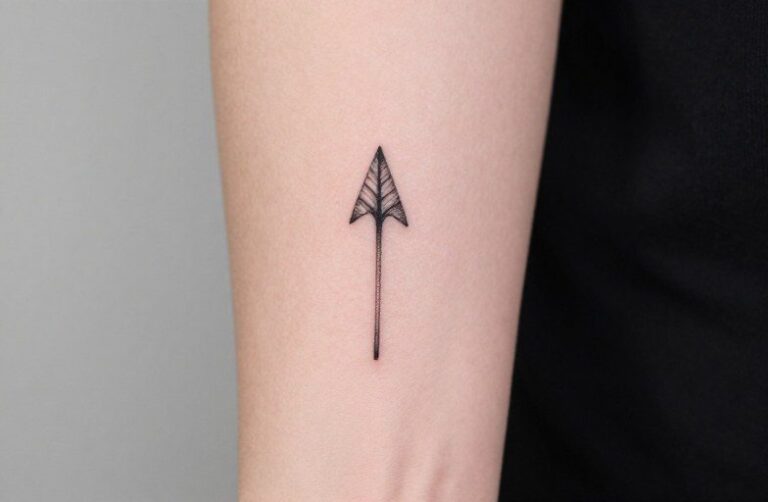
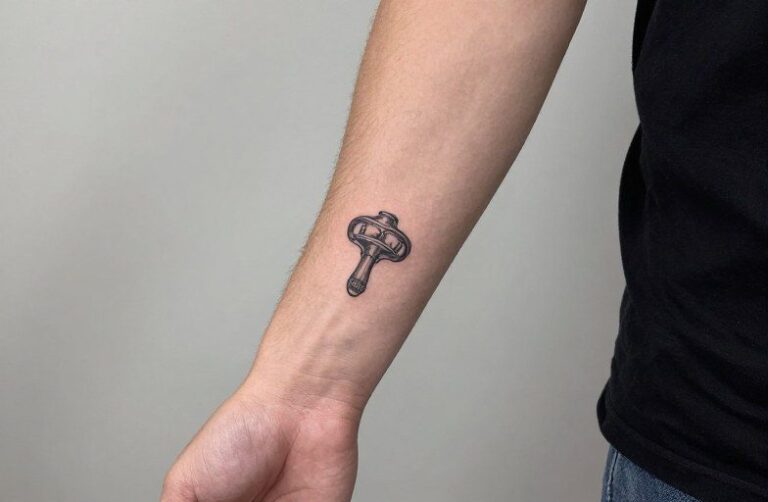
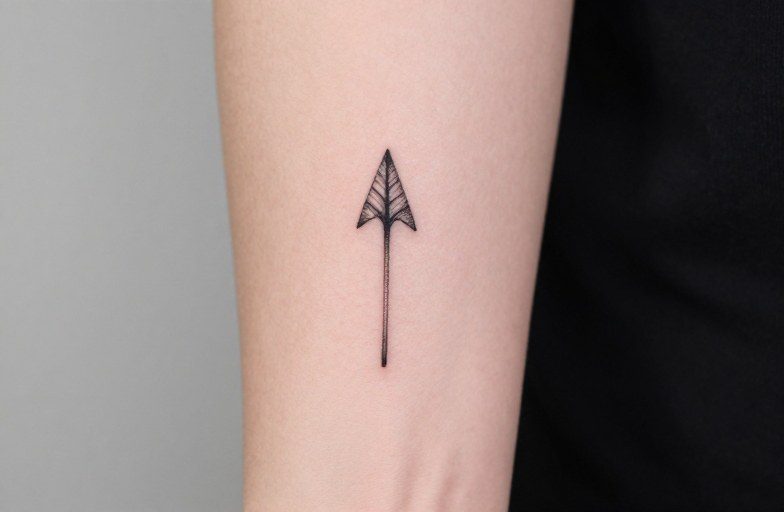
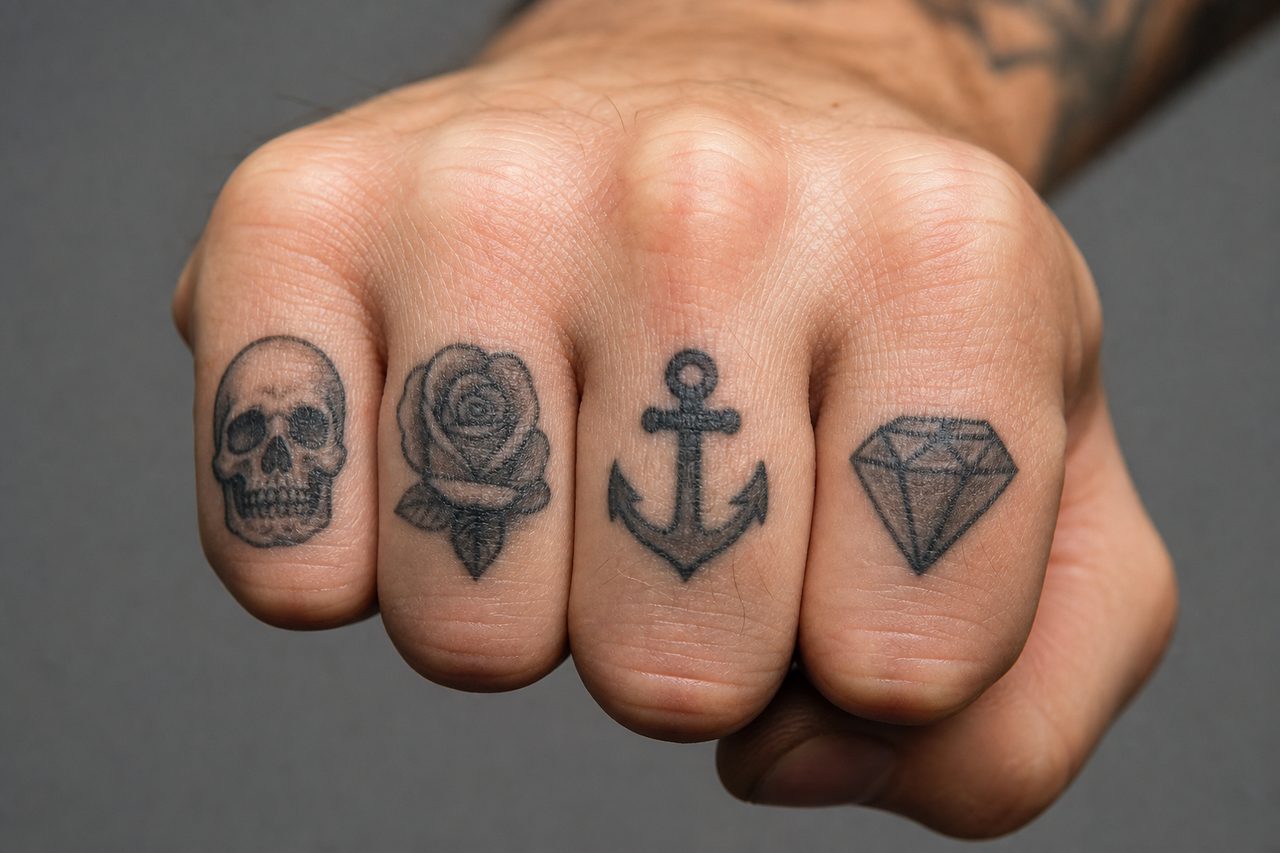
Single small icons, a moon, an eye, a cross, a key, can work if scaled properly. The trick is simplicity. A fine-line rose with layered petals will muddy into a blob within a few years. A fine-line crescent with a single clean curve? That survives. Placement across the knuckle proper (the joint) versus the finger phalanx matters too; the flatter skin between joints holds detail better than the creased peak.
- Blackwork tribal patterns: high durability, strong silhouette
- Dotwork mandalas: risky on knuckles, better on flatter finger segments
- Minimalist geometric shapes: squares, triangles, chevrons age well
- Micro-realism: generally avoid; detail collapses fast here
For First-Timers
Knuckles aren’t where most people start, but if you’re jumping straight in, understand what you’re signing up for. The pain is genuine, not the worst on the body, but sharp and persistent because of thin skin and nerve density. More importantly, this is a highly visible placement that affects employment in ways a shoulder piece never will.
Testing Commitment
Consider starting with a single finger or the sides of the fingers rather than the full knuckle spread. A small symbol on the side of the index finger gives you the experience without the full social weight. Some artists recommend trying hand tattoos only after you have other visible pieces, so you understand how you carry ink in professional and social settings.
Healing Reality
Hands heal differently. You use them constantly, which means more opportunities for irritation, more washing, more sun exposure. Plan for two weeks of genuine inconvenience: no gym, no dishwashing without gloves, no picking at flakes. The knuckles specifically flex thousands of times daily, which can pull at fresh scabs and affect how ink settles.
Color Choices
Black dominates knuckle work for good reason. Color on hands faces a perfect storm: fast cell turnover, constant UV exposure, and mechanical wear from daily use.
Black and Gray
Black ink has the molecular density to stay visible as it ages. Gray wash can create depth for shading, but pure black lines remain the backbone. A design that relies on subtle gray tones will look washed out in half the time of a bold black piece. If you want dimension, build it through line weight variation rather than soft shading.
Strategic Color Accents
Small red details, a rose’s center, a heart, a drop of blood, can work if surrounded by strong black. Yellow, white, and pastel colors fade fastest and often disappear entirely within a few years. One solid red knuckle among black ones? That can hold. A full rainbow spread? Expect significant degradation.
Tips for Choosing
The best knuckle tattoos share a quality: they function as graphic design first, personal meaning second. Because the viewer sees them before they hear the story, visual clarity matters more than symbolism.
Readability at Distance
Hold your design at arm’s length. If it doesn’t read instantly, simplify. Letters need spacing between them, cramped text bleeds together over time. For phrases across both hands, consider how they look together and separately. “STAY/GOLD” reads differently than “STAY GOLD” split across eight fingers.
Flow With Anatomy
The natural curve of knuckles can enhance or fight a design. Straight horizontal lines compete with finger contours; slightly arched text or stacked vertical elements often sit more naturally. Watch how your fingers move, a design that looks perfect flat may distort strangely when you grip something.
- Count your characters: eight letters total (four per hand) is the classic format
- Consider negative space: the skin between letters matters as much as the ink
- Mirror-test: your design will face others, not you
- Plan for touch-ups: budget for a refresh every 5-8 years
Standout Design Ideas
Beyond the obvious letter combinations, certain concepts translate especially well to this format.
Single-Word Transformations
One word across four fingers, repeated on the other hand with a counterpart: “RISE/ABOVE,” “TRUE/NORTH,” “LOST/FOUND.” The slash matters, it creates relationship between the hands. These read as complete thoughts when hands are together, independent statements when apart.
Non-Letter Layouts
Small icons in a row: four playing card suits, four phases of the moon, four elemental symbols. The sequence creates narrative without text. Another approach: matching symbols on corresponding fingers, a key on one index finger, a lock on the other, creating connection when hands meet.
Numbers work surprisingly well for their graphic clarity. Birth years, lucky digits, coordinates reduced to essential numerals. Roman numerals carry historical weight but require careful spacing to prevent bleeding into illegibility.
Size & Scale
The actual printable area on a knuckle is smaller than most people imagine. A typical adult knuckle offers roughly one inch of workable width, often less on smaller hands. Designs need to function within that constraint without crowding.
Working With Limited Real Estate
Letter height of 6-8mm is the practical maximum for readability. Go smaller and the ink spreads beyond legibility within months. Go larger and you risk wrapping onto the finger sides, which ages poorly and complicates the tattoo’s silhouette. Experienced artists will map your specific hand, accounting for hair, veins, and joint creases that affect placement.
Between the Knuckles
The spaces between fingers, the webbing and side panels, offer additional territory. Small symbols here can complement knuckle work without competing for attention. A star on the outer edge of the index finger knuckle, with a matching moon tucked into the adjacent web space, creates depth across the whole hand.
Final Thoughts
Knuckle tattoos demand respect for the format’s limitations. They age fast, they hurt, they announce themselves before you speak. But executed with bold simplicity and proper aftercare, they carry a visual punch that few other placements match. Choose graphic strength over intricate detail, black over color, and clarity over cleverness. The hands you see in fifty years of tattoo archives, the ones that still look intentional, almost always followed these rules. Your design should be able to shrink to a business card and still read clean. If it can’t, keep simplifying.
Frequently Asked Questions
How long do knuckle tattoos typically last before needing a touch-up?
Most knuckle tattoos need refresh work every 5 to 8 years, though bold black lettering can stretch toward a decade. Color fades faster, and fine-line work often blurs within 3 to 5 years. Sun exposure and occupation play a big role in longevity.
Do knuckle tattoos hurt more than other placements?
Yes, generally. The skin is thin with little fat padding, and bones sit directly beneath the needle. The sensation is sharp and persistent rather than deep. Many people find the sides of the fingers slightly more tolerable than the central knuckle joint.
Can knuckle tattoos be removed or covered up effectively?
Laser removal is possible but challenging on hands due to circulation patterns and the density of black ink typically used. Cover-ups require larger, bolder designs since the original ink is so dark and saturated. Plan carefully, as reversing knuckle work is harder than most placements.
Will a knuckle tattoo affect my job prospects?
In many professional settings, visible hand tattoos still carry stigma. Some industries have relaxed standards, but customer-facing roles, corporate environments, and certain trades may view them negatively. Consider your specific career path and if you’re willing to wear gloves or makeup daily.