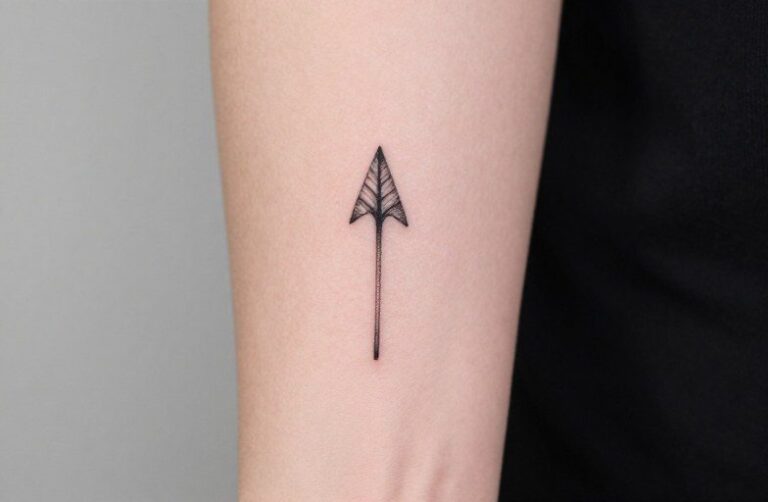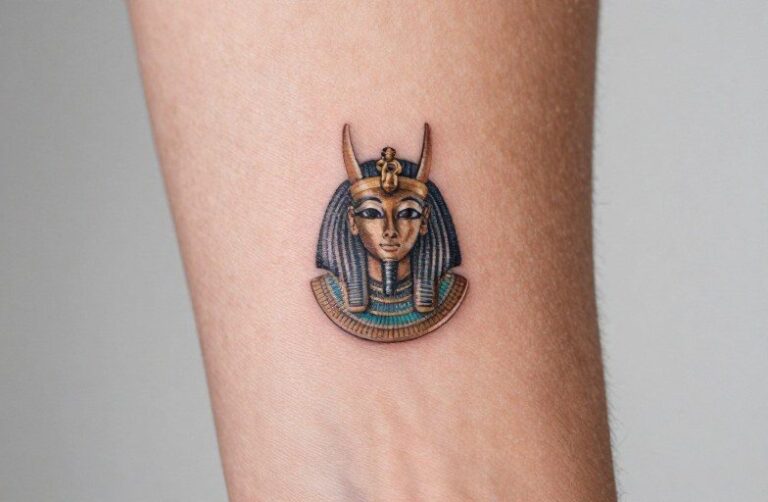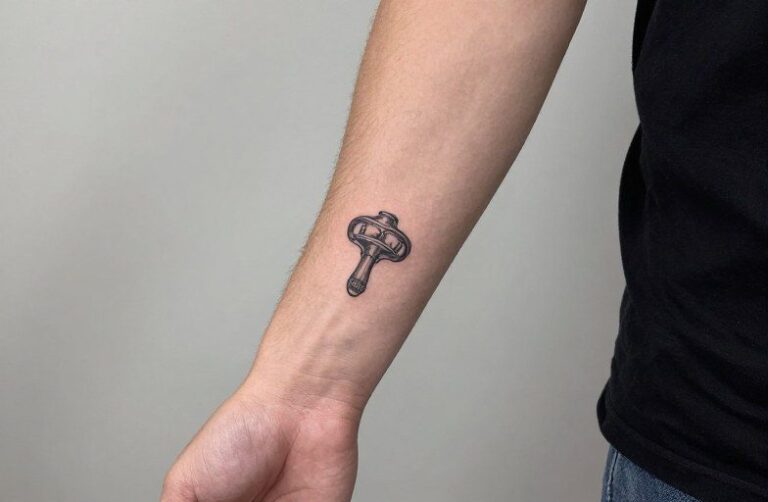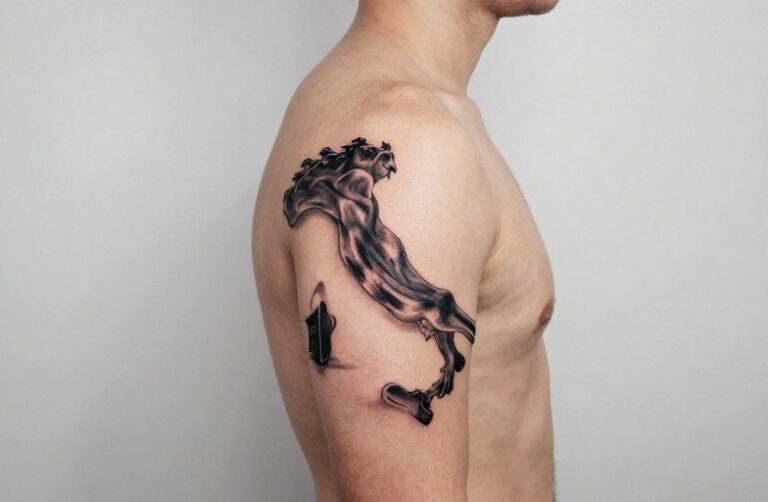
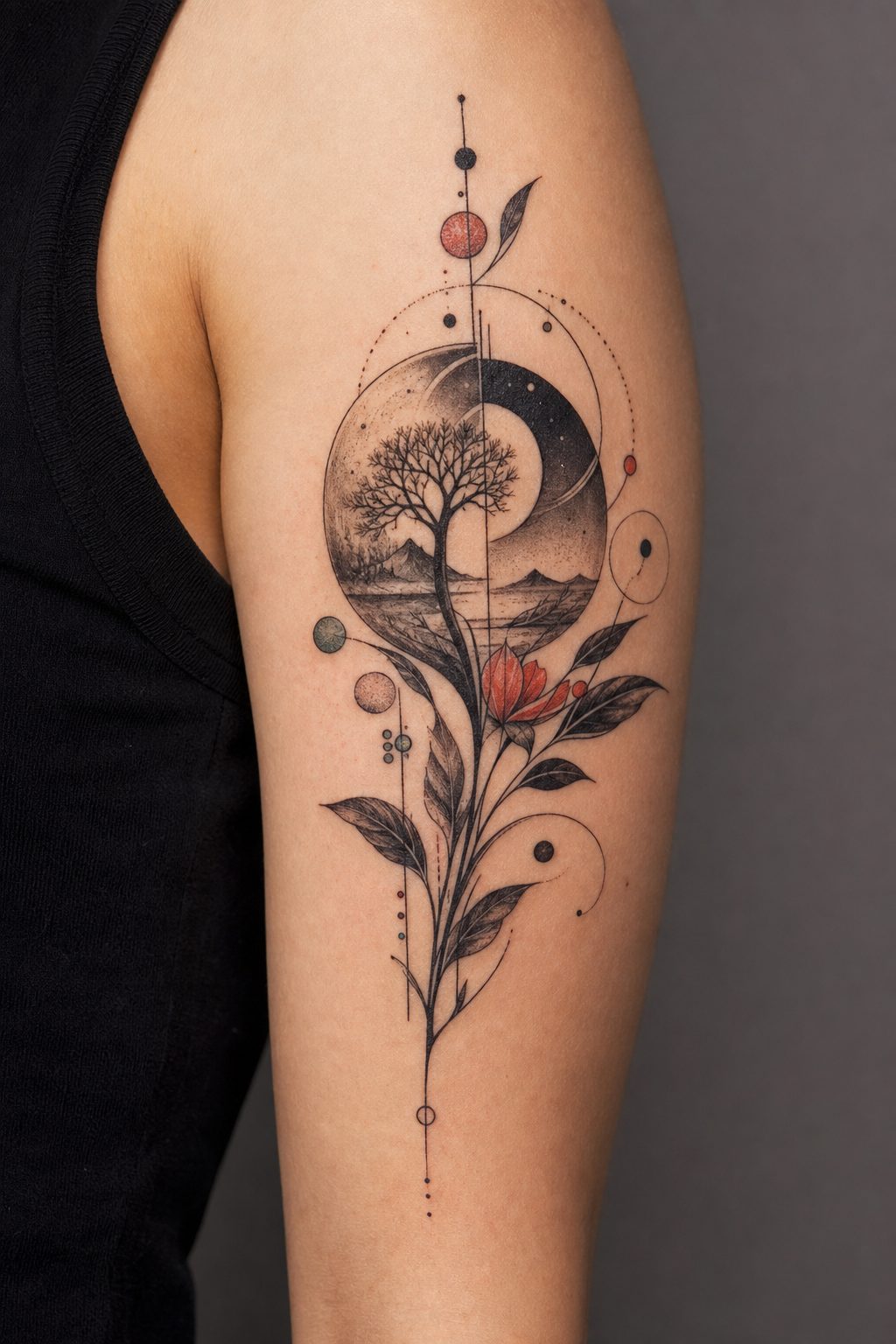
An “interesting” tattoo isn’t a single fixed image, it’s a conceptual approach to body art that celebrates curiosity, intellectual engagement, and the refusal to be easily categorized. People who choose this framing want ink that sparks conversation, rewards closer inspection, or encodes personal meaning in unexpected ways. The tattoo itself becomes a statement about how the wearer moves through the world: attentive, questioning, drawn to complexity over simplicity.
History & Cultural Roots
From Conversation Pieces to Skin
The tradition of wearing intellectually provocative images has deep roots. European aristocrats collected curiosities, natural oddities, foreign artifacts, mechanical wonders, in dedicated cabinets during the 16th through 18th centuries. These displays weren’t merely decorative; they signaled education, worldliness, and a mind active enough to find the unusual compelling rather than threatening. Tattooing that same sensibility onto skin extends that tradition into permanent, embodied form.
Sailors historically carried some of the earliest “interesting” tattoos by Western standards: hybrid creatures, impossible geography, visual puns that made sense only to those who knew the code. A pig on one foot and a rooster on the other supposedly prevented drowning, not because either animal swam well, but because wooden crates of livestock were said to float. The image carried layered meaning: superstition, occupational identity, dark humor, and a wink to those who understood.
Modern Intellectual Tattooing
The 20th century saw academic and countercultural movements embrace body art as deliberate semiotic choice. Certain mid-century literary circles, Beat and post-Beat, treated tattoos as portable manifestos. By the 1990s and 2000s, tattooing had developed sufficient technical range that purely conceptual or visually complex pieces became achievable, photorealism, micro-tattooing, biomimetic design, optical illusions that required genuine artistic sophistication to execute.
Design Tips & Pairings
Placement That Rewards Attention
Interesting tattoos often live where they’re discovered rather than announced. Inner biceps, ribs, behind ears, along the spine’s lower reaches, or tucked against hip bones, places revealed by movement, intimacy, or choice. Forearms and calves work too, but the element of controlled disclosure adds psychological weight. A complex piece fully visible from twenty feet reads as spectacle; the same piece glimpsed accidentally reads as secret.
- Line weight variation: Thin lines (single needle, 3RL) for intricate detail that holds up poorly on high-friction areas like palms or fingers; bolder lines (7RL, 9RL) for longevity on hands, feet, joints
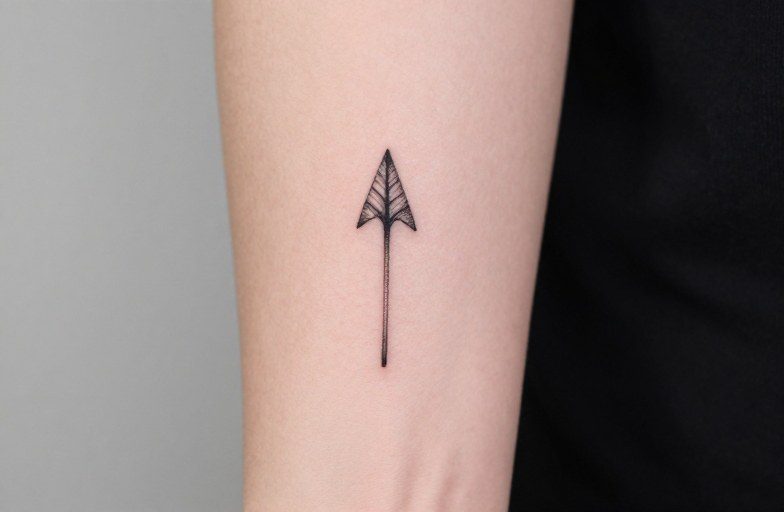
- Shading strategy: Dotwork and stippling age more gracefully in small scales than smooth gradients, which can blur into muddy pools as skin changes
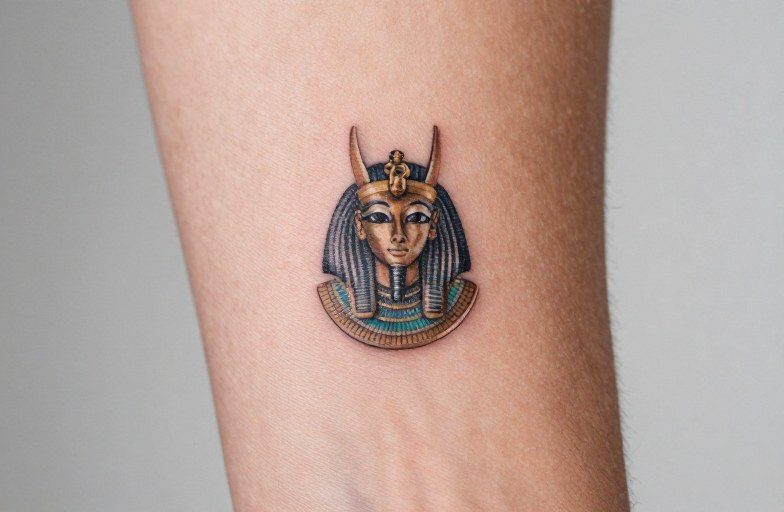
- Color considerations: Saturated jewel tones (deep teal, burnt sienna, ochre) maintain visual interest longer than pastels or neons, which fade unpredictably
- Negative space: Leaving skin untouched creates contrast that keeps complex compositions readable even as ink settles and spreads slightly over decades
Pairing Concepts That Amplify
Visual paradox works well: Escher-inspired impossible objects, anatomic hearts blooming into botanical forms, celestial maps overlaid with subway diagrams. Text integration demands care, quotations in languages the wearer doesn’t read fluently often carry accidental errors; abstract scripts or invented alphabets avoid this while maintaining mystique. Pairing organic and mechanical elements (roots threading through gears, neural networks mapped as river deltas) creates productive tension without requiring explicit explanation.
Mythology & Folklore
Trickster figures across cultures embody the “interesting” sensibility, Loki’s shape-shifting, Anansi’s narrative traps, the Kitsune’s layered deceptions, Coyote’s creative destruction. These aren’t evil figures; they’re agents of productive chaos who reveal truth through misdirection. A tattoo invoking trickster energy signals comfort with ambiguity, with being misunderstood initially, with the long game of meaning-making.
The Labyrinth and the Knot
Celtic knotwork and classical labyrinths share a formal quality: apparent complexity resolving into single continuous paths. The labyrinth isn’t a puzzle to solve but a journey to walk; the knot has no beginning or end. Both resist quick consumption. Tattooed at scale large enough for genuine path-following, they become meditative objects, literally interesting in the root sense of holding attention.
Alchemical and Occult Imagery
Historical alchemical texts were deliberately obscure, using visual codes to protect dangerous knowledge and exclude unworthy readers. The ouroboros, the azoth symbol, the stages of the magnum opus, all reward study. Some trace this tradition to Hellenistic Egypt; others see parallels in Chinese internal alchemy. The imagery carries genuine intellectual history without requiring belief in its literal claims, making it fertile ground for conceptually oriented tattoos.
Common Variations & Styles
Visual Paradox and Optical Play
Ambiguous figures (duck/rabbit, vase/faces), impossible objects, anamorphic designs that resolve only from specific angles, these technically demanding pieces require artists with strong geometric sense. The Necker cube, Penrose triangle, and Schröder stairs all translate to skin with varying degrees of success. Critical limitation: skin moves, stretches, ages. Designs dependent on precise perspective often disappoint as bodies change; simpler ambiguities tend to endure better.
Scientific and Mathematical Beauty
Fractal patterns, cellular automata, protein structures, Feynman diagrams, orbital renderings, these carry objective beauty independent of their technical meaning. The Mandelbrot set’s boundary reveals infinite complexity at any magnification; tattooed, it suggests similar depth in the wearer. DNA helices, when rendered with accurate base-pairing rather than generic spiral, signal genuine engagement with the science rather than surface appropriation.
- Blackwork/dotwork: Best for mathematical precision; stippled gradients create tonal variation without line-blur risk
- Scientific illustration style: Cross-hatching, labeled components, vintage color palette, evokes natural history museums
- Abstracted data: Sonograms, spectrograms, seismograph readings translated to visual pattern, deeply personal yet publicly opaque
Who Chooses This Tattoo
There’s no demographic monopoly. Researchers, artists, programmers, teachers, mechanics, anyone whose work or temperament involves sustained attention to complexity. What unites them isn’t profession but stance: resistance to being fully known immediately, comfort with the effort of interpretation, preference for questions over answers.
Age and Life Stage Considerations
Younger recipients sometimes gravitate toward overtly “deep” imagery that ages into embarrassment; the interesting tattoo concept works better when it carries genuine personal specificity rather than borrowed profundity. Middle-aged first-timers often arrive with decades of accumulated meaning to encode, making complex conceptual pieces feel natural rather than forced. Older collectors frequently have the confidence to choose genuinely obscure references, trusting that their reasons need no external validation.
Social Context and Professional Life
Concealability matters for many. The interesting tattoo’s preference for less visible placement serves practical needs without feeling like compromise. Those in conservative fields, law, medicine, finance, often choose pieces that reward only the closest observers, maintaining professional boundaries while preserving personal expression.
Similar & Related Symbols
The “interesting” concept overlaps with but differs from several established tattoo categories. Geometric sacred geometry (Flower of Life, Metatron’s Cube) shares formal complexity but carries specific spiritual claims many conceptually-oriented collectors find too prescriptive. Biomechanical imagery offers visual surprise but tends toward horror-aesthetic that limits its range. Surrealist tattooing shares the dream-logic and unexpected juxtaposition, often with more explicit psychological narrative.
The Collector’s Tattoo
Some experienced collectors build entire bodies as “interesting” through accumulation rather than single pieces. Japanese irezumi bodysuits, when chosen for iconographic complexity rather than cultural affiliation, function this way, every element carries specific reference, the whole becomes encyclopedic. Similarly, patchwork sleeves built from dozens of small pieces by different artists create emergent complexity no single design could achieve.
Text and Typography
Words themselves can be interesting tattoos when treated as visual material: palindromes, constrained writing (lipograms, univocalics), text in constructed languages, code in obsolete programming languages. The risk is legibility, overly stylized text becomes decorative pattern, losing its linguistic charge. Best results often come from pairing readable primary text with encrypted secondary layers.
The Bottom Line
An interesting tattoo succeeds when it genuinely rewards the attention it demands, not through forced obscurity, but through layered construction that reveals more with familiarity. The worst examples mistake complexity for depth, piling on symbols without coherent relationship. The best function like good poems or well-designed machines: every element earns its place, removing any would diminish the whole.
Technical execution matters enormously. Complex conceptual pieces require artists with specific strengths; a brilliant color realism specialist may fumble fine-line geometric work, and vice versa. Research portfolios, ask healed photos, have preliminary conversations about how the design will adapt to your specific skin and movement patterns. The interesting tattoo is ultimately a collaboration between your intention, the artist’s skill, and the living material of your body, all three deserve respect.
Frequently Asked Questions
How do I explain an ‘interesting’ tattoo to family who don’t get it?
You don’t owe anyone a full explanation. A simple ‘it’s something that matters to me’ usually suffices. The design’s layered nature means you can share as much or as little as feels comfortable in any given conversation.
Will a complex conceptual tattoo age badly compared to simpler designs?
All tattoos age, but certain techniques hold detail better. Bold lines, limited fine detail in high-wear areas, and strategic negative space help complex pieces remain readable. Your artist should design specifically for how the piece will look in ten years, not just fresh.
How much should I expect to pay for technically complex interesting tattoos?
Experienced artists specializing in geometric, scientific, or highly detailed work typically charge $150-$400 hourly, with complex pieces requiring multiple sessions. This isn’t the place to bargain hunt, poor execution on intricate designs is permanently visible.
Can I combine multiple concepts into one interesting tattoo?
Absolutely, but with restraint. Two or three well-integrated concepts usually succeed where five or six create visual noise. A skilled artist will help you identify which elements genuinely serve the design and which are included from fear of leaving something out.