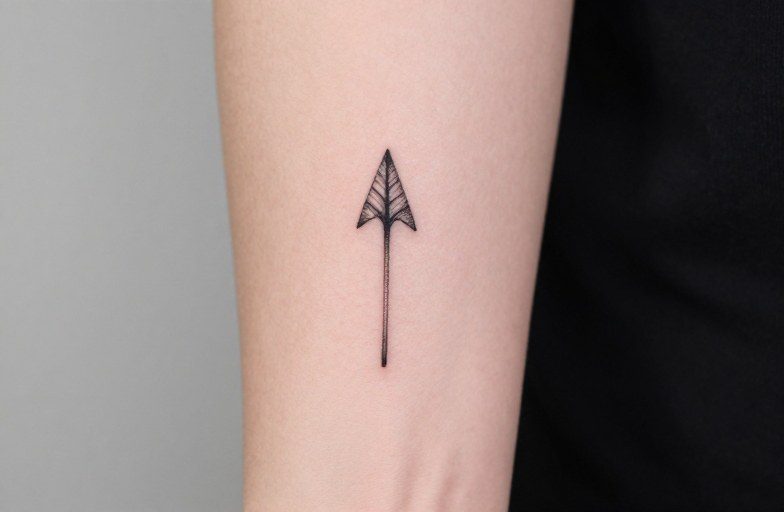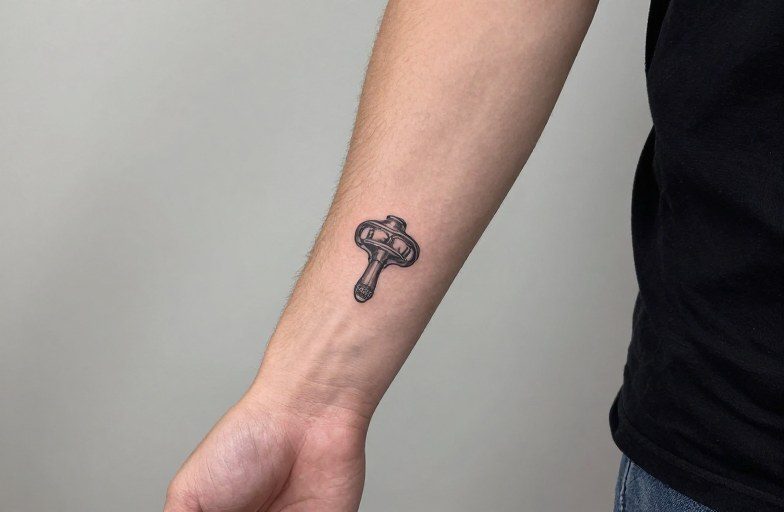
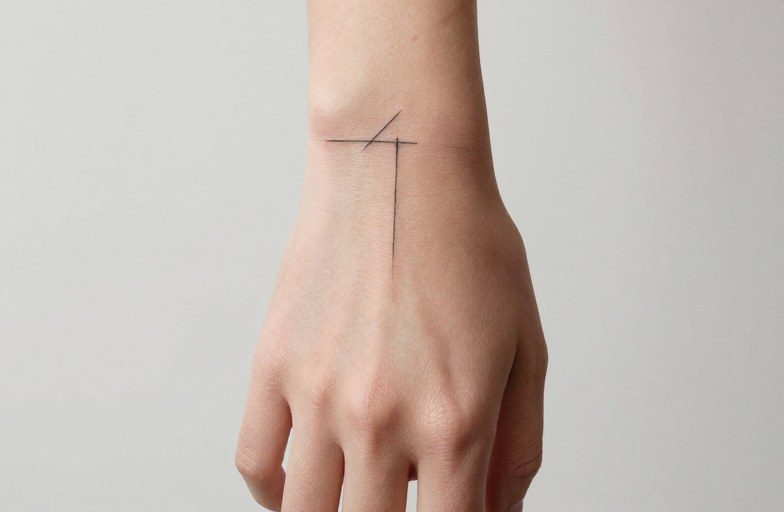
Hand tattoos carry instant visibility. There’s no hiding them under a sleeve, no forgetting they exist. That permanence demands intention, and the minimalist approach answers it with restraint: thin lines, negative space, and symbols stripped to their essence. The hand’s anatomy, knuckles, fingers, the webbing between thumb and index, the side of the palm, offers discrete zones where even a quarter-inch mark reads clearly. This article breaks down what actually works, what heals poorly, and how to make a small hand piece feel like yours.
For First-Timers
Why the Hand Heals Differently
Finger and hand skin turns over faster than almost anywhere else on the body. The epidermis is thick, callused in places, and in constant motion. That means blowouts happen more easily here, and ink drops out during healing at higher rates than a bicep or thigh piece. A minimalist design, single needle, no heavy fill, actually copes better with this biology because there’s less ink to lose and less trauma to the skin. Expect to need a touch-up. Most artists build one into the initial price or offer it discounted within a few months.
The Commitment Beyond the Needle
Even a tiny line on a finger changes how you’re perceived in job interviews, at family gatherings, by airport security. Some first-timers chase the aesthetic without sitting with that reality. A minimalist hand tattoo lets you test the waters: small enough to feel manageable, visible enough to teach you what daily tattoo life actually means. If you’re uncertain, start on the side of the hand rather than the finger itself. Easier to angle away from view, harder to regret.
- Side of the palm: heals better than knuckles, less direct friction
- Single needle or 3RL: the standard for clean minimalist work
- Black ink only: color fades unpredictably on hands
- Touch-up plan: ask before you book
How to Personalize It
Abstract Over Literal
A hand tattoo gets seen constantly, by you, more than anyone. The most enduring minimalist pieces often read as gesture rather than narrative. A short horizontal line across two knuckles. A tiny crescent tucked at the base of the thumb. A dot pattern following the finger’s crease. These resist the obvious question “what does it mean?” and instead occupy space like jewelry you can’t remove. The personalization lives in placement choice, not in cramming biography into three millimeters.
Working With Your Hand’s Shape
Long fingers carry vertical marks well; short, wide palms suit horizontal elements. The webbing between thumb and index finger (the thenar space) offers a small triangle of skin where a micro design sits almost hidden until you gesture. Some people choose coordinates of a specific place, rendered in hair-thin numerals. Others opt for a single character from a language they read, placed where only they see it in full. The hand’s asymmetry is your tool, not your obstacle.
Tips for Choosing
Artist Selection Criteria
Not every tattooer who does beautiful large work can execute a clean 2mm line. Hand skin requires specific needle knowledge: how to ride the tube to prevent blowout, when to stretch versus let the skin relax, how to account for the thin fat layer over bone. Ask to see healed photos specifically of hand or finger tattoos from their portfolio. Fresh photos lie; healed ones tell you whether the line held. An artist who specializes in fine line minimalist work will often have stricter criteria for what they’ll tattoo on hands, respect that. It means they understand the risks.
Design Elements That Age Well
Thin lines spread. It’s physics, not failure. Choose designs with built-in tolerance: slightly thicker outlines than you think you want, negative space that gives the ink room to soften without becoming a blur. Avoid parallel lines closer than 2mm apart, they’ll merge. Text smaller than 6pt equivalent rarely ages legibly. A single bold symbol outlasts a cluster of tiny details every time.
- One strong mark beats five weak ones
- Negative space is your friend; let the skin breathe
- Avoid fine parallel lines and tiny text
- Consider how the design moves when you grip, flex, or type
Matching & Pairing Ideas
Minimalist hand tattoos pair naturally with existing work or stand alone as deliberate solo statements. The key is visual rhythm, not matching content. A small line tattoo on the left ring finger doesn’t need a twin on the right; it needs to relate to whatever else occupies your skin. Someone with heavy blackwork sleeves might choose a single unbroken line across a knuckle as counterweight. Someone with no other tattoos might place two identical dots, one on each hand, creating a private symmetry that only fully exists when palms meet.
Complementary Placements
A finger tattoo paired with a wrist piece on the same arm creates vertical flow. A palm-side mark paired with a forearm design invites the eye to travel. The most sophisticated pairing often involves mismatch: a moon phase on one hand’s knuckle, a single star on the other’s wrist. They don’t illustrate each other; they correspond.
Relationship & Friendship Markers
The minimalist approach suits shared tattoos because restraint prevents sentiment from becoming kitsch. Matching coordinates in different handwriting styles. Identical symbols in different scales. One person carries the line, the other carries the gap it implies. These age better than names and feel less like branded ownership.
Color Choices
Why Black Dominates
Hand skin’s rapid turnover and sun exposure punish color. Red fades to pink that looks like irritation. Blue and green often heal muddy. Yellow and white disappear entirely within months, leaving raised scars where pigment used to be. Black carbon ink sits most stably in this environment, and the minimalist aesthetic, thin lines, sparse marks, relies on contrast that only black reliably provides against all skin tones.
When Color Works
On darker skin, black still offers the sharpest contrast, but some artists use diluted black (graywash) to create tonal variation without introducing color chemistry. A single dot of red, placed precisely, can function as an accent that fades gracefully to skin tone rather than to an ugly intermediate. If you want color, commit to maintenance: sun protection, moisturizing, and likely earlier touch-ups than a black piece would need.
Size & Scale
The Finger’s Real Estate
A finger’s visible surface, between the knuckle and first joint, measures roughly 15-20mm wide. That’s your canvas. A design that looks appropriately small on paper often needs to shrink further to read correctly on the body. The most successful finger tattoos occupy less than half that space, leaving clear skin around them so the mark doesn’t bleed into a smudge as it ages. A 3mm symbol with 5mm of clear space on all sides will look deliberate in ten years. A 10mm symbol with 1mm margins will not.
Scaling for the Whole Hand
The side of the palm (the hypothenar area) accepts slightly larger work, up to 2-3 inches, while still reading as minimalist if the design itself stays simple. The back of the hand, between knuckles and wrist, offers the largest continuous plane but also the most movement and sun exposure. Scale your ambition to your willingness to maintain: larger visible pieces demand more care, more touch-ups, more acceptance of gradual change.
- Finger: under 8mm for single elements
- Knuckle: horizontal bands work better than vertical stacks
- Side of palm: best for slightly larger single symbols
- Back of hand: reserve for pieces you’re prepared to maintain long-term
Final Thoughts
Minimalist hand tattoos succeed through subtraction, not addition. Every millimeter of ink earns its place. The hand’s visibility demands that confidence, you’re not hiding this, you’re choosing to carry it forward. Start with placement that respects the anatomy: areas that heal, that age, that won’t punish your ambition with a blown-out blur. Choose an artist who shows you healed work, not just fresh photos. Accept the touch-up as part of the process, not a failure of the first pass. The best minimalist hand tattoos feel discovered rather than applied, as if the mark always belonged at that specific coordinate of your specific skin. That’s the goal: not a statement loud enough for others to hear, but one precise enough that you keep finding new reasons it belongs.
Frequently Asked Questions
Do finger tattoos hurt more than other placements?
Yes, generally. The skin is thin over bone and nerve-dense, so the sensation is sharper with less padding. Most people describe it as intense but brief, finger tattoos are small, so the session ends quickly.
How long does a minimalist hand tattoo take to heal?
Surface healing runs about two weeks, but hand tattoos settle for six to eight weeks. Expect peeling, possible ink dropout, and the need to keep the area dry and protected from friction during that window.
Will my hand tattoo fade completely over time?
Some fading is guaranteed, especially on fingers and palms where skin regenerates fastest. A well-done minimalist piece with proper aftercare and touch-ups can remain readable for years, but it won’t look identical to day one.
Can I get a hand tattoo if I work with my hands constantly?
You can, but timing matters. Book when you can take several days off from heavy friction, moisture, or chemical exposure. Healing requires keeping the tattoo clean and relatively undisturbed, difficult if you’re gripping tools, washing frequently, or wearing tight gloves.