A sleeve tattoo design starts with mapping your arm’s natural geography, elbow ditch, forearm curve, shoulder cap, and building imagery that moves with those shapes rather than fighting them. Most successful sleeves grow from a central theme or visual mood, not a rigid blueprint, with enough flexibility for the artist to adapt as the work progresses. Here’s how to plan one that holds together for decades.
Common Mistakes
Sleeves fail in predictable ways. The good news: most are avoidable if you catch them early.
Designing on a Flat Screen
Arms are cylinders, not billboards. A design that looks stunning on a tablet often wraps awkwardly, with key elements disappearing into the inner arm or getting swallowed by the elbow’s natural shadow. Always view mockups wrapped around a 3D form, or better, drawn directly on your skin during consultation. Elements meant to read as a single image need to sit where the eye naturally rests, the outer upper arm, the top forearm, while supporting detail can flow into the transitional zones.
Overstuffing the Canvas
Negative space is not wasted space. Cramming every inch with competing imagery creates visual noise and doesn’t age well. Ink spreads slightly over time; tight detail packed edge-to-edge blurs into muddy soup. Strong sleeves breathe. They use skin breaks, background shifts, or consistent filler patterns to let the eye rest. Plan for the gaps as deliberately as you plan the main events.
- Matching exact existing tattoos without accounting for style differences, traditional next to photorealism rarely harmonizes without a skilled transition
- Ignoring the wrist and hand connection; a sleeve that ends abruptly at the wrist bone looks like a shirt sleeve, not a body piece
- Choosing imagery for meaning alone without considering how it physically fits the arm’s movement
Pain & Comfort
Full sleeves mean hours, often 20 to 40+ across multiple sessions. Pain tolerance varies, but placement matters more than mystique.
The Rough Spots
Inner bicep, elbow ditch, and wrist bone sit near nerves and lack the muscle padding that cushions the outer arm. The ditch specifically, where forearm meets upper arm, makes most people clench. Antecubital fossa, that soft inner elbow, tends to swell quickly, which can limit how long an artist works there in one go. Shoulder cap and outer forearm, by contrast, allow longer sits with relative comfort.
Session Strategy
Break the work into manageable chunks. Four-hour sessions are standard; beyond six, skin trauma and your own exhaustion degrade results. Many artists prefer to knock out the most painful spots early in a session when adrenaline helps, or save them for days when you’re mentally fresh. Eat beforehand. Bring headphones. The chair becomes psychological after hour two.
Healing Timeline
Sleeves heal in overlapping waves, not one clean finish. Understanding this prevents the panic that ruins ink.
The Peeling Phase
Days three through ten bring flaking, itching, and that dull film over fresh lines. This is normal. The danger is impatience, picking, scratching, or over-moisturizing. A sleeve wraps a limb, so friction from clothing is constant. Loose, clean long sleeves work better than bare skin rubbing against couch arms or desk edges. Sleep with the tattooed arm on top, not crushed under your body weight.
Settling In
Month two to three is when the true color and line weight reveal themselves. Fresh tattoos look bolder and darker than they will settle. Reds and yellows especially can seem to drop back during this phase. Plan touch-ups no earlier than three months out; rushing back in disturbs still-settling layers.
Aftercare Essentials
Aftercare for sleeves differs from small pieces because of sheer surface area and the impossibility of “just keeping it clean” in daily life.
The First 48 Hours
Your artist’s wrap stays on per their instruction, usually overnight to two days. Remove in clean conditions, wash gently with fragrance-free soap, pat dry. Apply a thin layer of recommended ointment or lotion. Thin is operative: suffocating the skin under thick grease traps plasma and breeds problems. Re-wrap only if sleeping in conditions where the tattoo will contact dirty fabric, and never with plastic that seals moisture.
Living With It
Sleeves encounter everything, gym equipment, sun through car windows, pet hair, dish soap. For the first month, avoid submerging in pools, hot tubs, or baths. Showers are fine; soaking is not. Sun exposure fades and damages fresh ink faster than healed work, so long sleeves or SPF become non-negotiable. The commitment to a sleeve extends well beyond the studio.
- Wear clean, soft fabrics; avoid wool or rough denim directly on healing skin
- Don’t let healing arms rest on shared surfaces, gym benches, public transit seats
- Monitor for signs of genuine concern: spreading redness, heat, or pus, and contact your artist or a clinic if these appear
Tips From the Chair
Artists who’ve built hundreds of sleeves notice patterns most clients miss.
Build Around Movement
Your arm rotates, flexes, extends. The best sleeve designs account for this kinematics. A face split by the elbow crease looks distorted when the arm bends. Flowing elements, water, smoke, wind, vines, transition naturally across joints because their logic accommodates distortion. Structural elements like architecture or geometric patterns need precise placement to avoid the “broken when bent” effect. Ask your artist to have you move through ranges during the stencil phase.
Think in Layers, Not Borders
Backgrounds unify. Whether it’s black fill, gray wash, color saturation, or ornamental pattern, a consistent background treatment ties disparate foreground elements into one sleeve. The alternative, each piece floating on bare skin with its own distinct backdrop, reads as collected flash rather than intentional composition. Decide early: atmospheric depth or graphic flatness? Either works, but mixing them without purpose looks accidental.
The Direct Answer
Here’s the practical sequence for creating your sleeve design.
Start with reference gathering, not Pinterest boards of finished tattoos. Collect photography, art, nature, textures, visual material that resonates without being someone else’s ink. Bring this to a consultation with an artist whose healed sleeves you admire, not just their fresh photos. Discuss theme loosely: Japanese, botanical, biomechanical, religious iconography, black-and-gray realism. The artist translates mood into visual language better than you can dictate specific images.
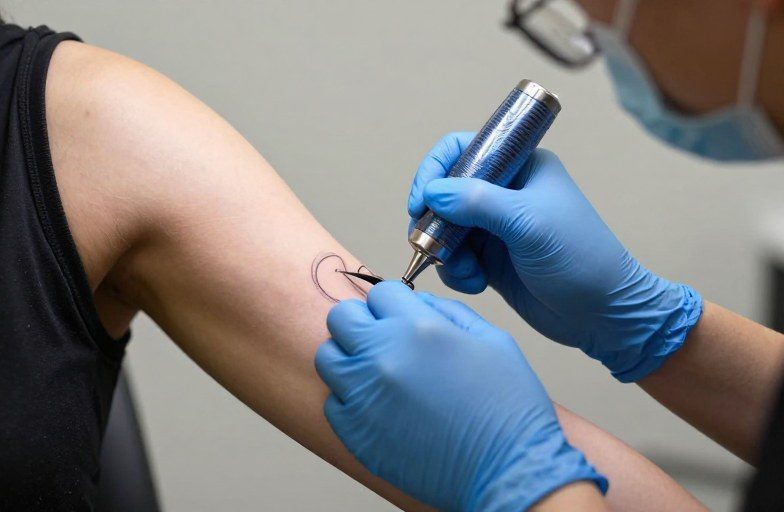
Next comes the drawing phase. Expect to pay for this time; good design work isn’t free consultation. The artist will likely create a rough composition showing major elements and flow, then refine with your feedback. Stencil placement on your actual arm follows, with adjustments for how the design wraps and moves. Only then does needle touch skin.
Commit to the process. Sleeves built piecemeal over years without initial planning often show the seams, style shifts, gap-filler desperation, the telltale “collection” look versus cohesive vision. That doesn’t mean rigid adherence to a day-one plan; the best sleeves evolve with the artist’s growing understanding of your skin and shape. But they evolve from a coherent foundation, not from random accumulation.
The Bottom Line
A sleeve tattoo design succeeds when it respects the arm’s anatomy, leaves room for ink to age, and flows as a unified visual experience rather than a collage of favorite images. The planning matters as much as the execution, more, actually, because planning prevents the expensive and painful process of trying to fix foundational mistakes later. Find an artist who builds sleeves regularly, whose healed work you can examine in person, and trust the collaborative process. Your skin is the canvas, but it’s also living tissue that moves, ages, and tells its own truth. Design with that reality, not against it.
Frequently Asked Questions
How far in advance should I start planning a sleeve design?
Begin collecting visual references and researching artists at least three to six months before your first appointment. Complex sleeve designs often require multiple consultation and drawing sessions, and sought-after artists book months out.
Can I add to an existing tattoo to make it a sleeve?
Yes, but the existing piece dictates constraints. Your artist needs to work with or around its style, size, and placement. Sometimes surrounding it with complementary pieces works; other times, the original needs modification to integrate cohesively.
How do I choose between color and black-and-gray for a sleeve?
Consider your skin tone, lifestyle, and the imagery itself. Black-and-gray ages more predictably and requires less maintenance. Color pops but fades faster, especially yellows and pastels, and needs more touch-up commitment over decades.
What should I budget for a full sleeve?
In most US markets, quality sleeves run from $2,000 to $8,000+ depending on artist rates, complexity, and geographic location. Large-scale work is usually priced by the session or project, not by the hour, with established artists commanding higher rates for their design time and expertise.