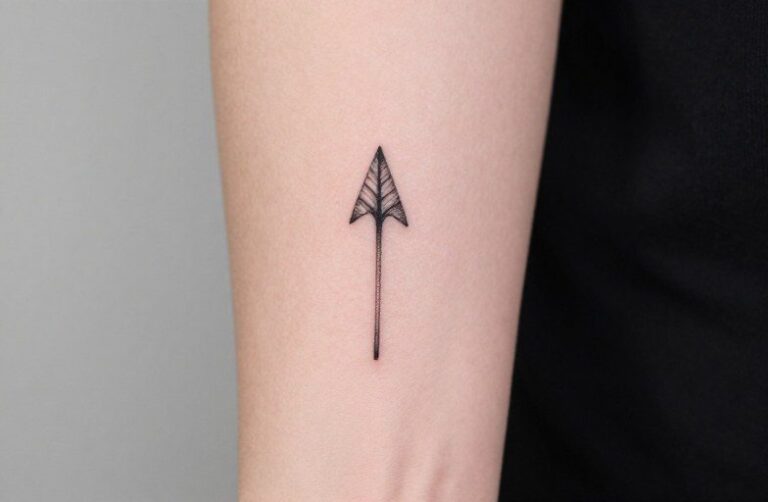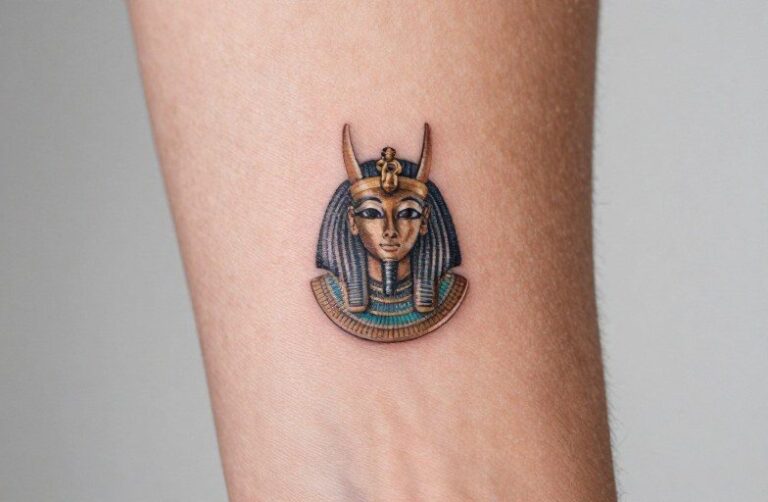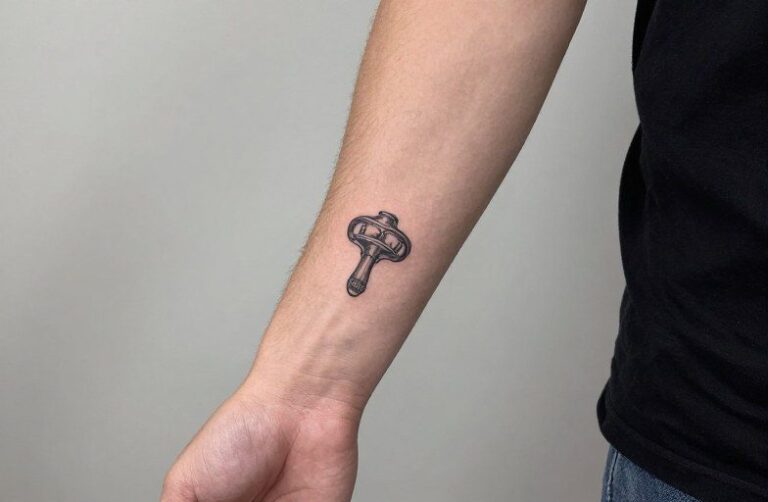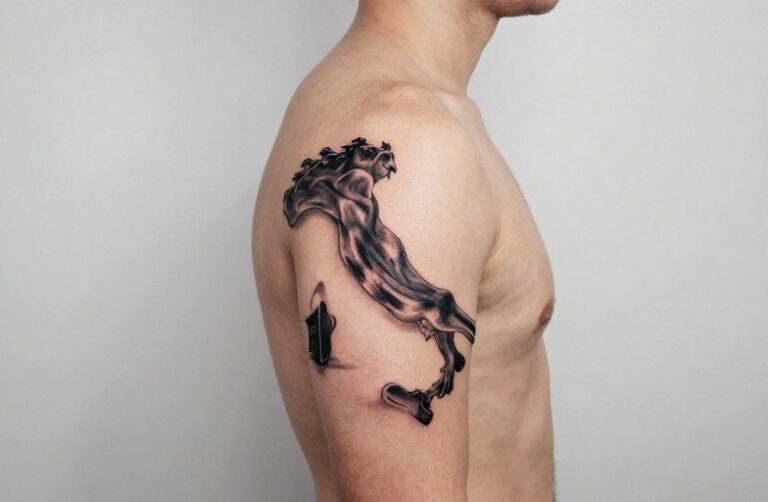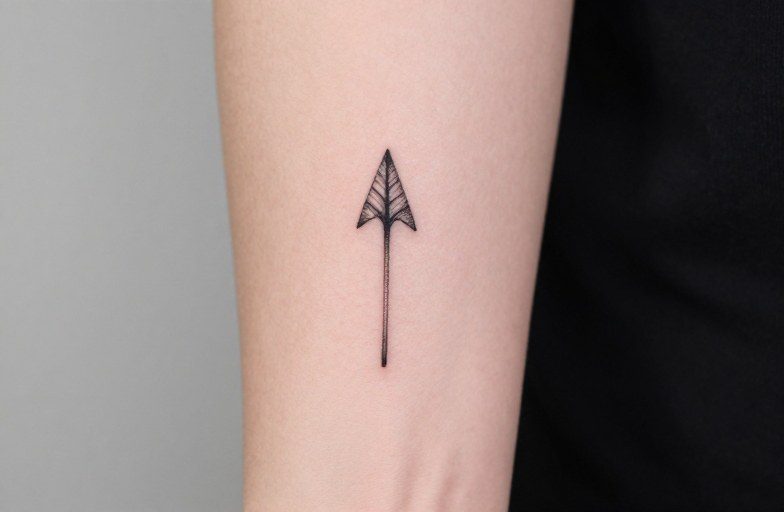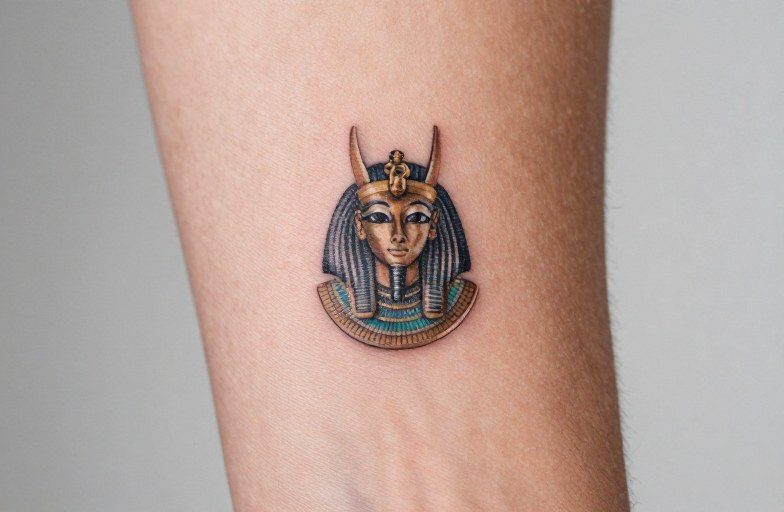
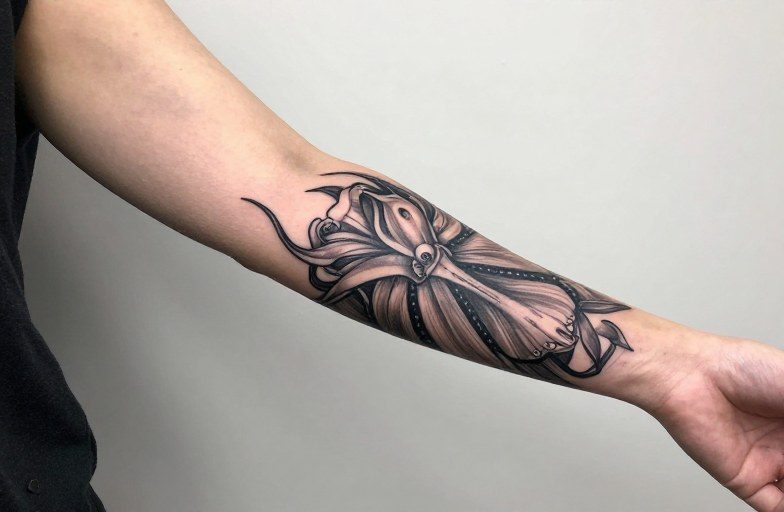
A lower arm sleeve tattoo for females typically signals intentional self-definition, art chosen for a highly visible yet manageable canvas. Unlike full sleeves that demand total commitment, the forearm-to-wrist zone offers a contained narrative space: seen daily by others, easily observed by the wearer herself, and modifiable over time. The meaning hinges on what occupies that space, but the placement itself speaks to confidence in personal display and a preference for art that moves through professional and social spaces without hiding.
Symbolism & Core Meaning
The lower arm occupies a liminal zone, neither fully private like the ribcage nor aggressively public like the neck. Historically, forearm marking appeared across seafaring cultures, often linked to protective symbols visible during labor. For contemporary female wearers, this placement frequently carries dual resonance: the art faces outward to the world, yet rotates inward for personal contemplation. That physical duality shapes much of the tattoo’s psychological weight.
Visibility as Vulnerability
Choosing an unhideable location requires reckoning with permanence in a way that hidden placements avoid. The lower arm sleeve becomes a daily practice in owning one’s choices, there’s no seasonal concealment, no interview-day cover-up without deliberate effort. Many wearers describe this as a symbolic boundary: the tattoo marks where personal authority begins and external judgment gets acknowledged but not obeyed.
The Half-Sleeve as Transition
Stopping at the elbow rather than extending to the shoulder creates a deliberate frame. This truncation often symbolizes ongoing becoming rather than completed identity. The elbow joint becomes a horizon line, art above suggests history and foundation; art below, the active present. Some designs exploit this by placing rooted imagery (trees, anchors, architectural elements) proximal to the body and flowing or kinetic elements toward the hand.
Design Tips & Pairings
Successful lower arm sleeves for female anatomy typically account for three structural realities: the forearm’s tapering circumference, the prominent radius bone near the wrist, and the soft inner arm’s different ink retention.
Working With Forearm Anatomy
- Outer forearm: Flat, stable surface ideal for geometric precision, mandala centers, or text. Ink holds crisply here; line work ages predictably.
- Inner forearm: Softer tissue with more movement. Best for organic flow, watercolor effects, or imagery meant to feel intimate rather than display-oriented. Expect slightly faster fading on the inner wrist where friction and sun exposure concentrate.
- The wrist transition: Designs that terminate at the wrist bone rather than wrapping it tend to read as more “finished.” Wrap-around wrist elements require careful scaling, too small, they blur; too large, they dominate disproportionately.
Complementary Placements
Lower arm sleeves pair effectively with hand tattoos (extending the narrative outward), upper arm pieces (creating a full sleeve with negative space at the elbow), or chest/shoulder work that peeks from sleeveless tops. The key is maintaining visual breathing room, crowding the forearm with adjacent heavy coverage can feel suffocating rather than curated.
Color vs Black and Grey
The color choice fundamentally alters both aesthetic impact and symbolic register, not merely visual preference.
Black and Grey Symbolism
Monochromatic lower arm sleeves often read as timeless, serious, or architecturally grounded. The restricted palette forces emphasis on structure, flow, negative space, contrast. Symbolically, this restraint frequently correlates with themes of endurance, memory, or stripped-down essential identity. Healing tends to be more predictable; black ink saturates reliably and touch-ups remain straightforward.
Color Dynamics
Color sleeves on the lower arm command attention more aggressively. Saturated pieces here function as deliberate social signaling, confidence in occupying space. However, the forearm’s sun exposure means color fading accelerates compared to torso placements. Yellows and light pinks often shift toward peach or disappear entirely within five to seven years without diligent sun protection. Symbolically, color choices carry specific weight: reds for vitality or warning, blues for depth or melancholy, greens for growth or decay depending on saturation.
Common Variations & Styles
Certain stylistic approaches have become particularly associated with female lower arm sleeves, each carrying distinct connotations.
Floral and Botanical
Flowers on the forearm rarely carry generic “femininity” meaning anymore. Instead, specific species dominate: peonies (often linked to prosperity and honor in Japanese tradition, though Western adoption has broadened interpretation), wildflowers (resistance to cultivation, regional identity), and decaying blooms (memento mori adapted for contemporary wear). The wrapping vine or stem creates natural forearm flow, following the muscle’s length rather than fighting it.
Script and Typography
Text sleeves require particular care at this scale. The lower arm’s visibility means readability matters, overly ornate fonts blur faster than anticipated. Meaning here often hinges on language choice: untranslated scripts (Arabic, Sanskrit, Tibetan) carry exoticism and potential appropriation concerns; ancestral languages connect to heritage; invented or coded text creates private meaning. Placement along the inner forearm keeps words personally legible; outer placement makes them public declaration.
Geometric and Sacred Geometry
Dotwork mandalas, platonic solids, and pattern work suit the forearm’s flat planes. These designs often symbolize order, cosmic connection, or meditative practice. The repetition can induce trance during application, and the visual result reads as both ancient and contemporary. Aging concerns center on dot spread, individual points may blur together over decades, softening precision into texture.
Similar & Related Symbols
Understanding adjacent tattoo traditions clarifies what lower arm sleeves specifically offer.
Full sleeves carry more total commitment and often signify complete identity immersion in a theme, less curated, more totalizing. Single forearm pieces (non-sleeve) read as specific commemoration rather than ongoing narrative. Hand tattoos extend the sleeve’s visibility but cross into territory with heavier professional and social consequences; the lower arm sleeve stops short of that threshold deliberately.
Japanese irezumi tradition often links the forearm to specific protective imagery, dragons, koi, certain floral combinations, though Western adoption has loosened these associations. Polynesian and Maori forearm bands carry specific genealogical meaning in original context; contemporary geometric bands often reference this without replicating it, a distinction worth maintaining for respectful wear.
Personal & Modern Meanings
Beyond traditional symbolism, contemporary female wearers frequently assign meanings that resist categorization.
Reclamation Narratives
For many, the lower arm sleeve marks post-trauma reclamation of bodily autonomy, visible proof of self-determination. The permanence becomes asset rather than risk: something that cannot be taken, only chosen. This meaning layer has grown more explicit in recent years as tattoo culture has normalized across professional demographics.
Professional Identity Integration
As workplace visibility increases, the lower arm sleeve has become a site of negotiated identity, present but not confrontational, artistic but not chaotic. Some wearers deliberately design pieces that read as “intentional art” rather than “spontaneous rebellion,” using this aesthetic framing to manage perception. The meaning becomes: I contain multitudes, and I curate which you see.
The Bottom Line
The lower arm sleeve for females ultimately means what the wearer loads it with, but the placement itself insists on certain qualities: deliberation over impulse, display over concealment, ongoing narrative over fixed statement. The forearm’s visibility makes it a daily practice in integrated identity, not hidden symbolism. Whether rendered in saturated color or disciplined black and grey, botanical or geometric, the form succeeds when the wearer understands that this particular canvas ages in full view of everyone, including herself. Choose accordingly, protect from sun, and expect the meaning to accumulate rather than diminish with time.
Frequently Asked Questions
Do lower arm sleeves hurt more than upper arm tattoos?
The outer forearm ranks moderate on pain scales, bone proximity near the wrist increases sensation, but the inner forearm’s softer tissue hurts less than elbow ditch or ribs. Most people find it manageable, with the wrist bone itself being the sharpest point.
How much does a lower arm sleeve typically cost?
Quality work ranges widely by artist reputation and geography, but expect multiple sessions at several hundred dollars minimum per sitting. A complete forearm sleeve from wrist to elbow usually requires 8-15 hours of tattooing, sometimes more for dense color or intricate detail.
Can I start with a forearm piece and expand it later?
Absolutely, and many artists prefer this approach. Planning negative space and flow direction from the beginning allows seamless extension into a full sleeve. The key is establishing compositional logic early, random additions read as exactly that.
How do lower arm sleeves age compared to other placements?
Forearm ink sees heavy sun and movement, causing moderate fading over years. The outer arm ages better than the inner wrist, which experiences friction from desks, keyboards, and clothing. Consistent SPF application and moisturizing significantly extend clarity.