A delicate wrist tattoo usually costs about $100 to $300 in the US, but the quote depends on size, placement, artist, and region. I’d treat the design as only half the decision. The other half is choosing linework, timing, and aftercare you won’t regret later. Start here!
The short version: choose the meaning first, compare healed work second, and ask for a clear price before you book. Your tattoo can be dainty without feeling disposable, and a higher quote isn’t automatically better value.
A Fast Price Check
A realistic delicate wrist tattoo cost usually includes the artist’s minimum, consultation time, drawing time, and the appointment itself. A tiny mark may still meet a shop minimum, while an intricate custom piece can take longer than its size suggests.
Ask whether the quoted price covers revisions, stencil adjustments, and aftercare instructions. You don’t need to sound difficult. You’re simply making sure the final value matches what you’ll receive.
If your budget is firm, say so before the artist sketches. A good artist can suggest a simpler silhouette, shorter appointment, or smaller detail set without stripping away the meaningful part. That conversation can save you money and disappointment later!
For an early placement comparison, review wrist tattoo placement meaning before you send a deposit. You’ll want the design’s orientation, visibility, and daily friction considered together.
Read the Quote Line by Line
A quote is easier to judge when each part has a clear reason. Ask whether the artist minimum covers the consultation, custom drawing, stencil changes, and the tattoo appointment.
Some artists price tiny work by a minimum rather than by minutes. That isn’t automatically a problem. A dainty design still requires preparation, sterilization, setup, and technical judgment.
If the quote includes several revisions, ask how many are included before an additional drawing fee begins. You’re allowed to want a precise answer. You’re also allowed to choose a simpler concept if the revisions start pushing the total beyond your limit.
A polished quote should mention the deposit policy, cancellation policy, estimated duration, and aftercare guidance. If important details remain vague, pause before booking. Clear communication is part of the value.
When a Quote Is Too Vague
A vague price usually sounds like “it depends” without any follow-up explanation. I’d ask which variables matter most: the design complexity, the placement, the artist’s minimum, or the expected session length.
Send the artist the actual reference, approximate dimensions, wrist side, and whether you want black-only work or restrained shading. The more useful information you provide, the less guesswork the artist has to do. A clear reference drawing helps.
You don’t need to demand an exact number before the design exists. You do need a realistic price range and a clear explanation of what could move the price higher.
A daring idea may become more affordable after one detail is removed. That doesn’t make the finished tattoo less meaningful. It can make the focal point stronger, more readable, and easier to protect during healing.
- Start With a Fine-Line Botanical Wrist Tattoo
- Pick A Tiny Moon And Stars Design
- Where Should You Place An Initial Inside A Delicate Heart?
- Keep The Linework Crisp And Minimal
- Plan A Symbolic Matching Wrist Tattoo
- Which Flowing Script Wrist Tattoo Feels Most Like You?
- Add Intricate Details To A Small Charm
- Explore A Unique Celestial Wrist Tattoo
- Match Ink Style To Your Meaning
- Can Wrist Placement Change Comfort And Price?
- Protect Your Delicate Tattoo During Healing
1Start With a Fine-Line Botanical Wrist Tattoo
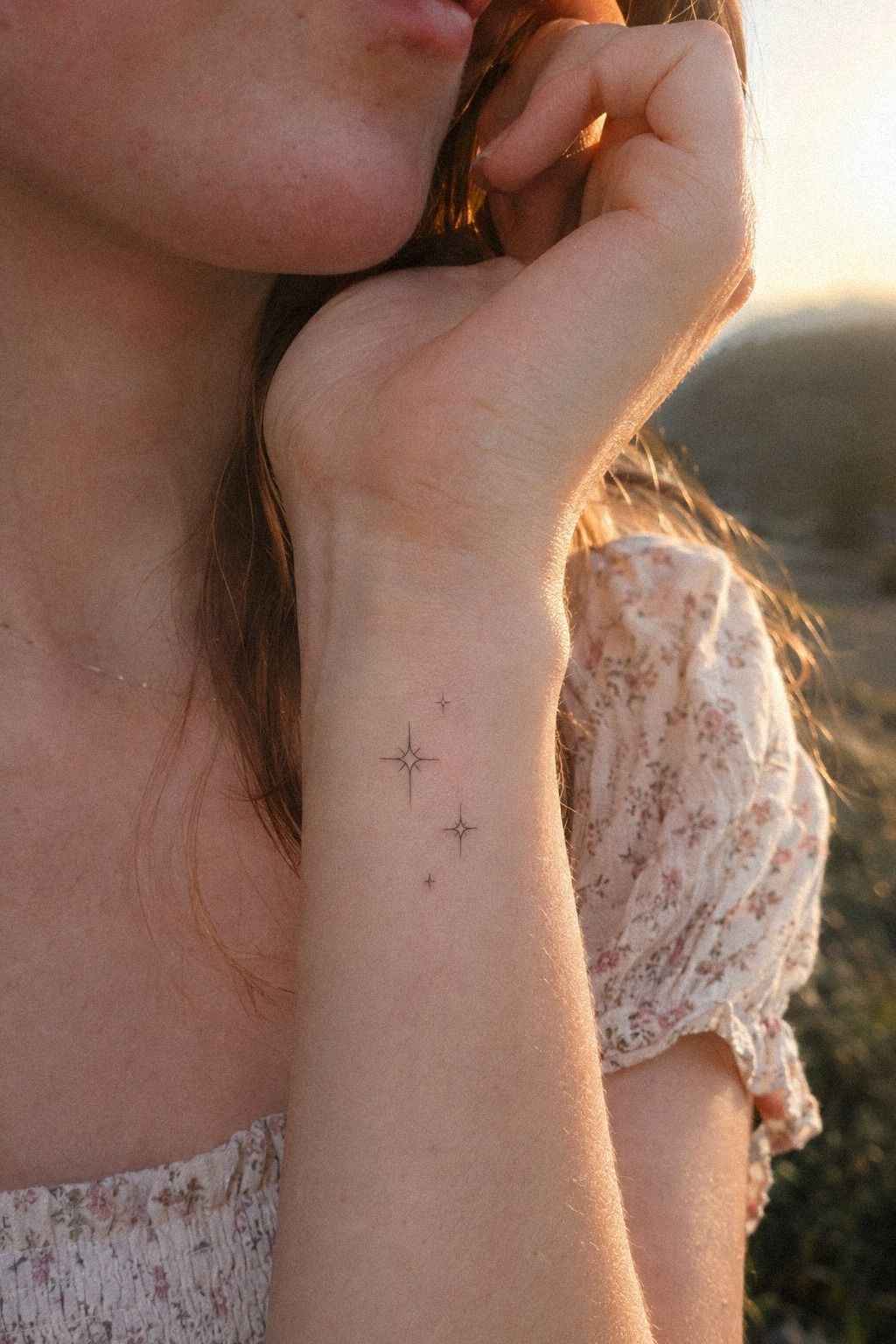
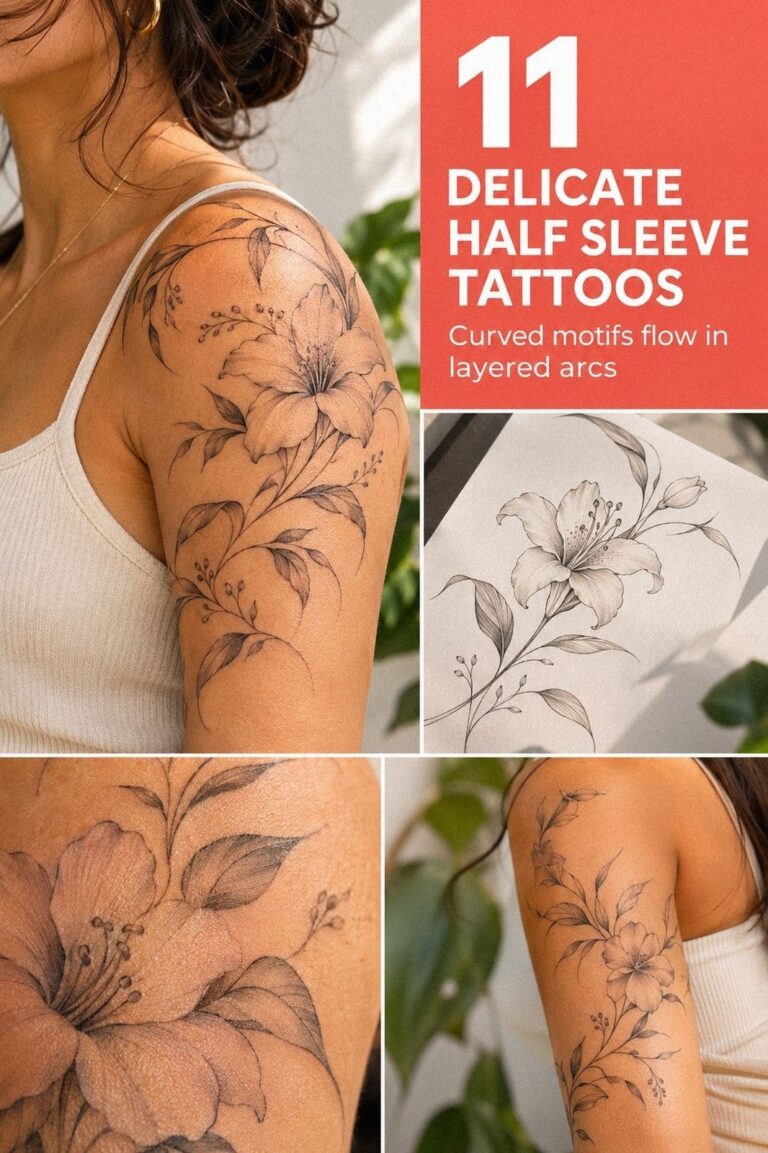
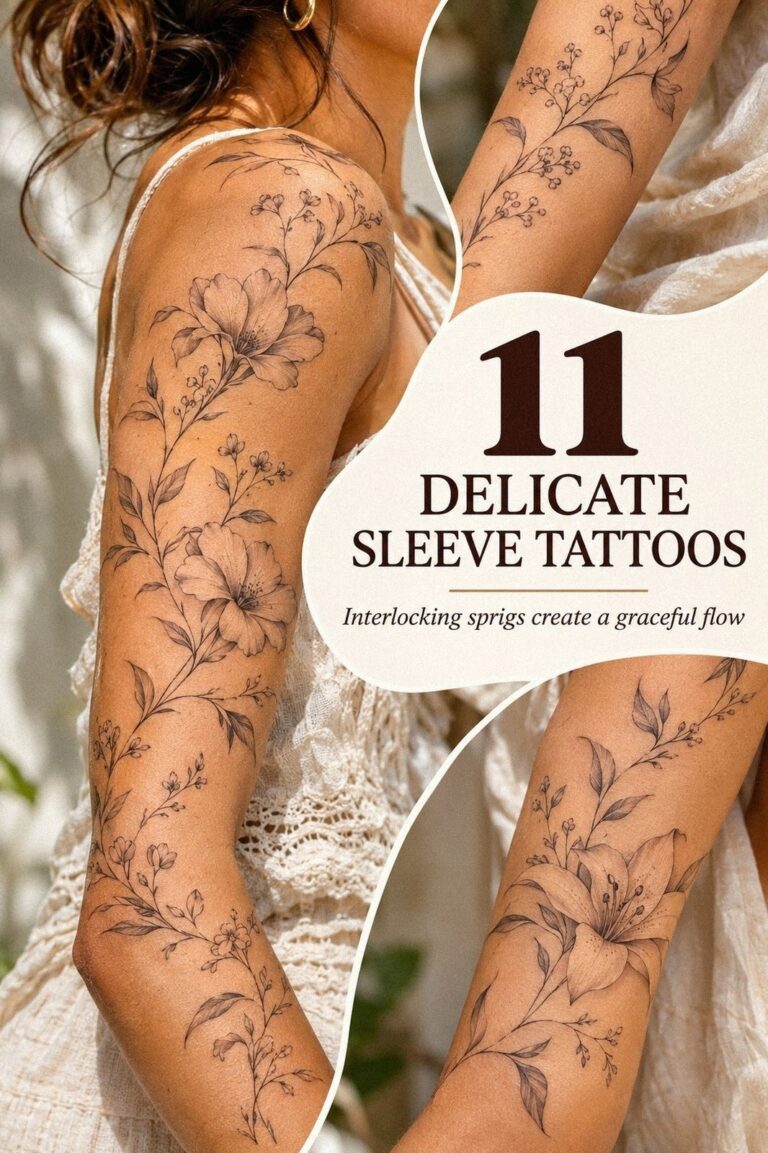
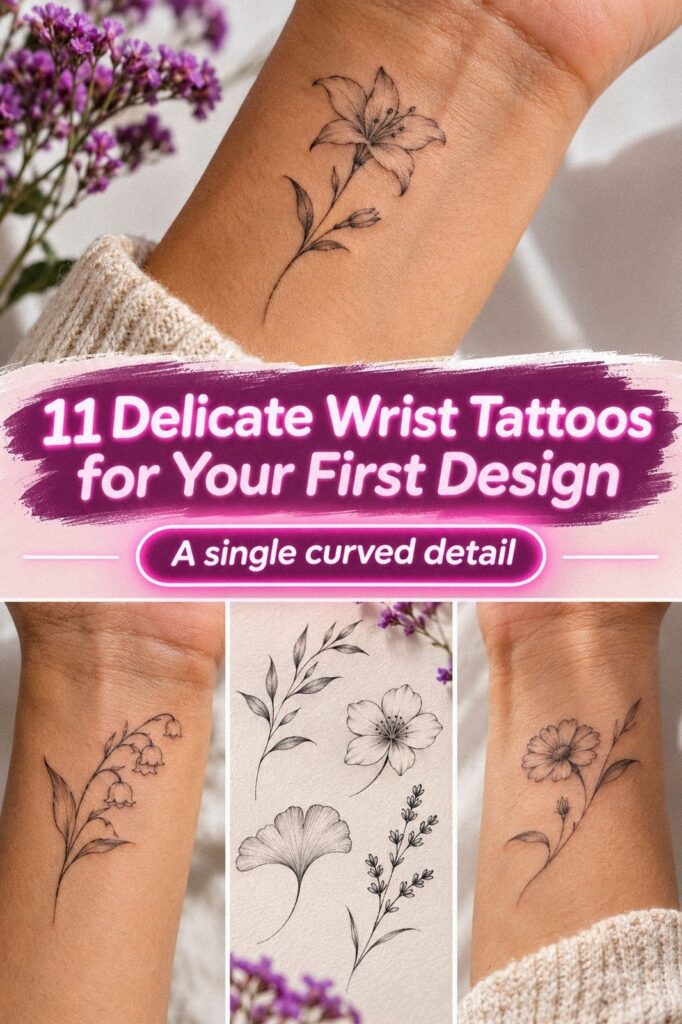
Begin with the design’s emotional center. For a botanical wrist tattoo, I’d keep the composition minimal, delicate, and personal rather than forcing literal leaves or flowers into the idea. I call this the Star-Scale Rule: one dominant stem, two supporting leaves, and enough skin left open for the botanical wrist tattoo to breathe.
Ask yourself whether you want the leaves to feel symbolic or simply expressive. A few uneven stems can look more meaningful than a perfectly mirrored cluster because your wrist moves constantly. This guide to wrist tattoo placement meaning can help you think through visibility and orientation before you book.
For the artist, request crisp black ink, hair-thin lines, and a reference drawing that shows the actual wrist angle. A fine-line botanical design should still read when your hand is relaxed, not only when your wrist is held in one particular position.
I’d skip a dense botanical border here. It would compete with the open skin and make the symbolic leaves feel crowded.
Bring a screenshot, your preferred wrist side, and one sentence explaining why the design matters. You don’t need a grand explanation.
You’re giving the artist a direction, and they’ll turn that direction into something graceful, understated, and sharp. Check the actual wrist position before approving the stencil.
The Star-Scale Rule
The Star-Scale Rule works because it gives your tattoo a clear focal point. One dominant botanical mark can feel iconic, while two smaller leaves create rhythm without making the design ornate.
Before you approve the stencil, check the design at your actual wrist size. A drawing can look bold on a screen and become surprisingly faint when reduced. That comparison is worth your time and your money.
Save references from these minimalist wrist tattoo ideas and compare spacing, line weight, and proportion rather than copying one exact arrangement.
2Pick A Tiny Moon And Stars Design
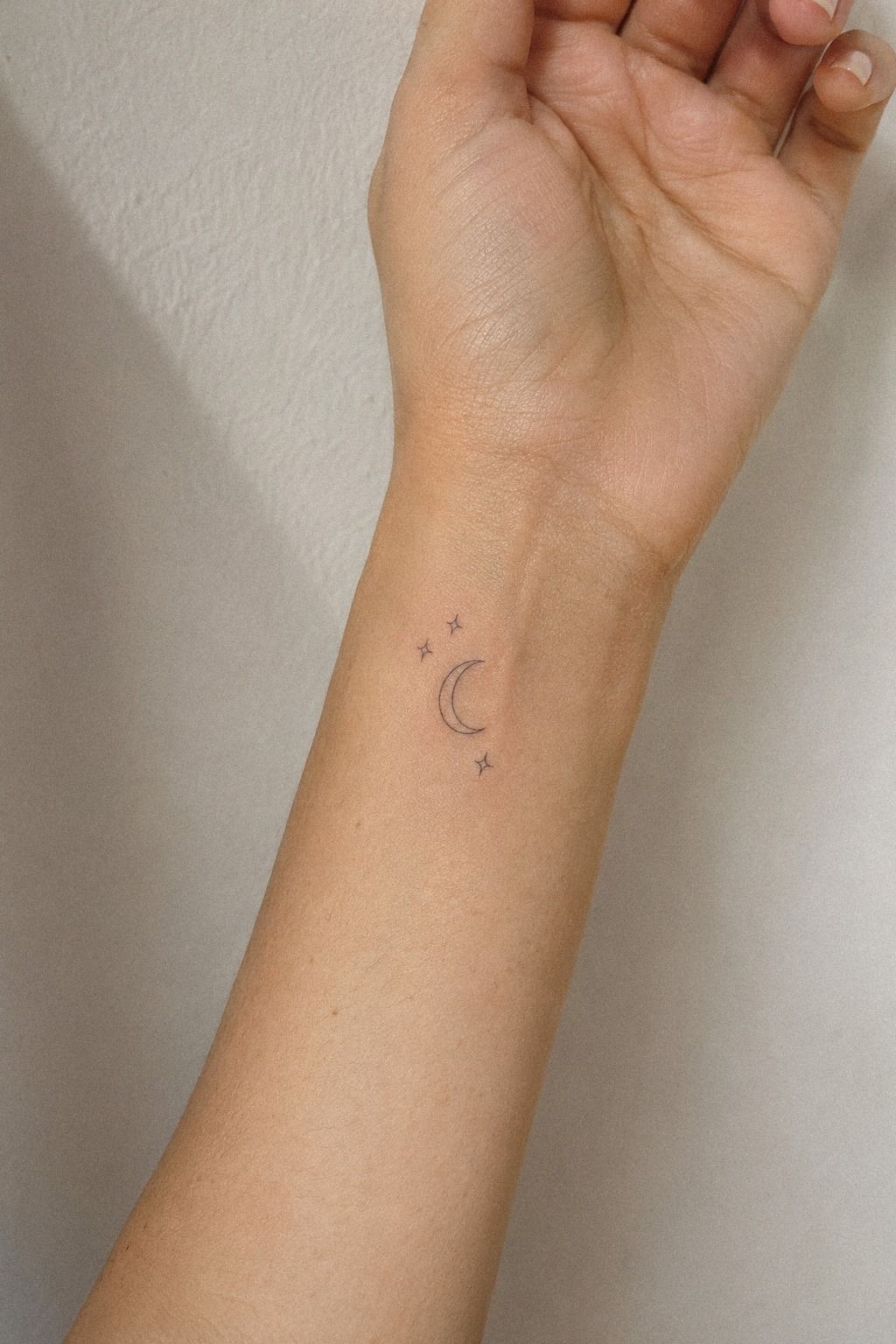
A crescent moon with a few small stars gives you a bold silhouette without needing heavy shading. On medium warm ivory skin, the contrast can look elegant and crisp, especially when the crescent stays open instead of being filled with solid black. I’d place the moon slightly off-center so your wrist still feels natural when you turn it.
Think about the moon orientation before you approve the stencil. Do you want the crescent opening toward your hand, toward your elbow, or toward the viewer? There isn’t one correct choice, but you should choose deliberately.
You’ll look at that direction more often than you expect.
For a truly dainty result, ask for black tattoo ink with restrained dot details rather than gray wash. Gray can soften quickly, while clean black marks tend to remain more readable. A compact moon can feel ethereal and timeless, but I’d avoid adding a long constellation trail if you’re trying to keep the budget and appointment shorter.
Save a few examples from these minimalist wrist tattoo ideas and compare the spacing, not just the subject. Don’t copy the exact moon from someone else’s wrist. Your artist should adapt the moon curve to your anatomy so it won’t look stiff when your hand bends.
Take that orientation seriously! A small crescent may look playful from one direction and unexpectedly sharp from another. Ask for the stencil position in more than one position before you commit.
3Where Should You Place An Initial Inside A Delicate Heart?
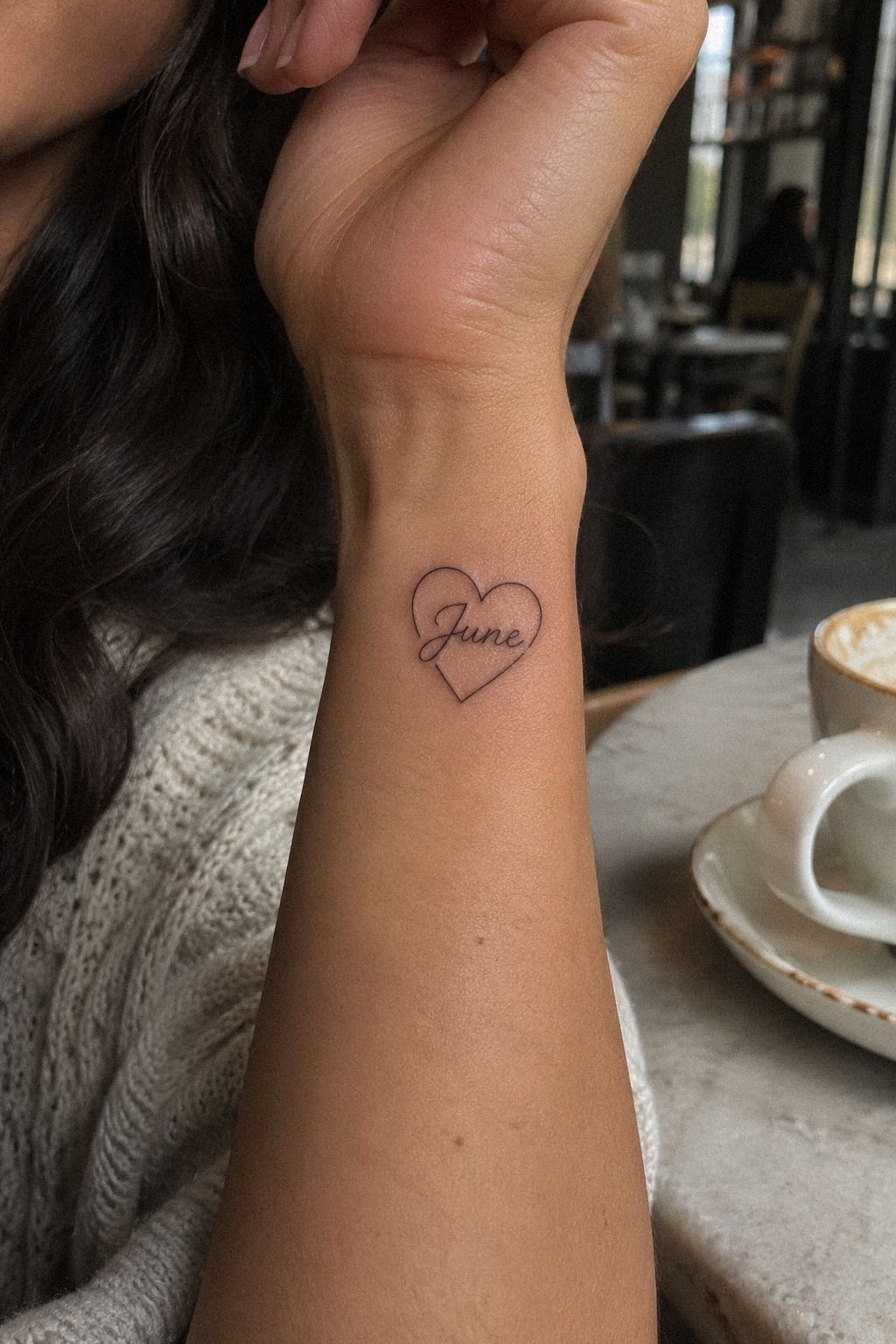
An initial inside a heart can be romantic, symbolic, or quietly personal. The strongest version usually has enough open skin around the lettering for the shape to remain readable.
Ask whether the custom lettering needs a slightly larger heart to prevent the initial from merging with the outline. A dainty design can still be powerful when its proportions are intentional.
You might place the initial in the center, near the point, or outside the heart as a tiny companion mark. I’d choose the heart placement that feels personal without making the meaning too obvious to everyone who sees it.
Review delicate tattoo ideas unique to fine-line styles for spacing references. You’re comparing how much skin remains open, not searching for a design to reproduce.
4Keep The Linework Crisp And Minimal
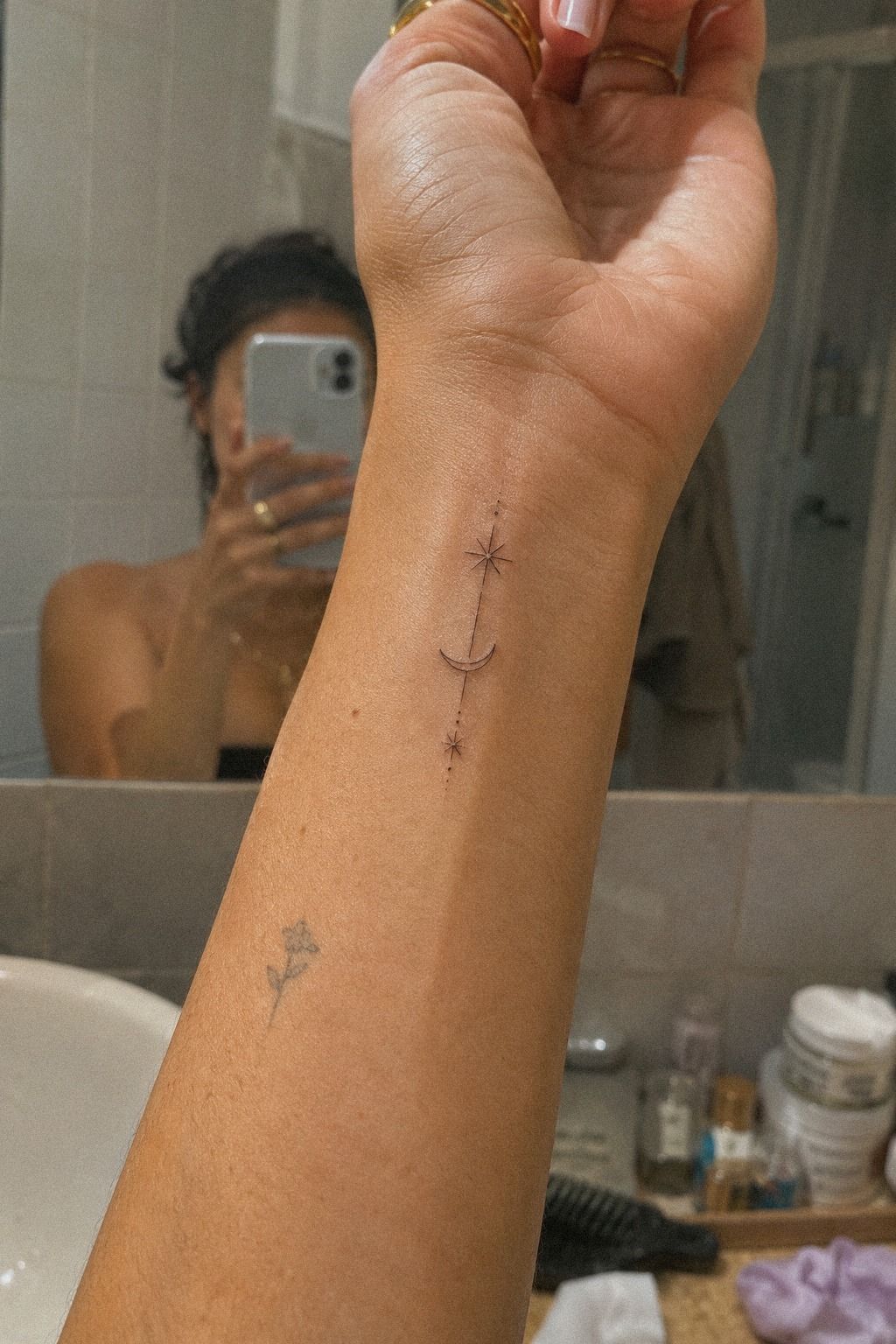
The golden-tan wrist carries hair-thin, single-needle lines with no heavy fill. That restraint is the whole point.
A crisp, minimal tattoo can feel polished and expressive when the artist leaves enough negative space between marks. It shouldn’t look faint by accident; it should look intentional.
Ask to see healed tattoo examples, not only fresh results. Fresh ink often looks darker, sharper, and more dramatic than it will after the surface settles. I’d rather choose an artist with quiet, consistent work than someone whose portfolio is full of dramatic fresh pieces but no healed results.
Bring up single-needle linework during the consultation, then ask how the artist handles wrist movement and everyday friction. Your wrist touches sleeves, desks, bags, and sunlight. A delicate design can remain stylish, but it needs a sensible scale and a line weight that matches your skin and the subject.
Don’t treat “minimal” as permission to remove every useful detail. One tiny accent can make a piece more striking.
A short stem, a small dot, or one clean point may give your tattoo a recognizable center without making it ornate. For more references, compare these delicate tattoo ideas unique to fine-line styles and notice the line weight.
Fresh Ink Versus Healed Lines
Fresh ink can look darker than healed linework, so don’t judge the artist from a single appointment result. Ask how the same style looks several weeks later, especially on wrists that experience regular bending and friction.
This is also where price and value meet. A low quote may seem appealing, but it isn’t worth it if the design depends on lines that were too fine for the placement. Clear technical advice is part of what you’re paying for.
5Plan A Symbolic Matching Wrist Tattoo
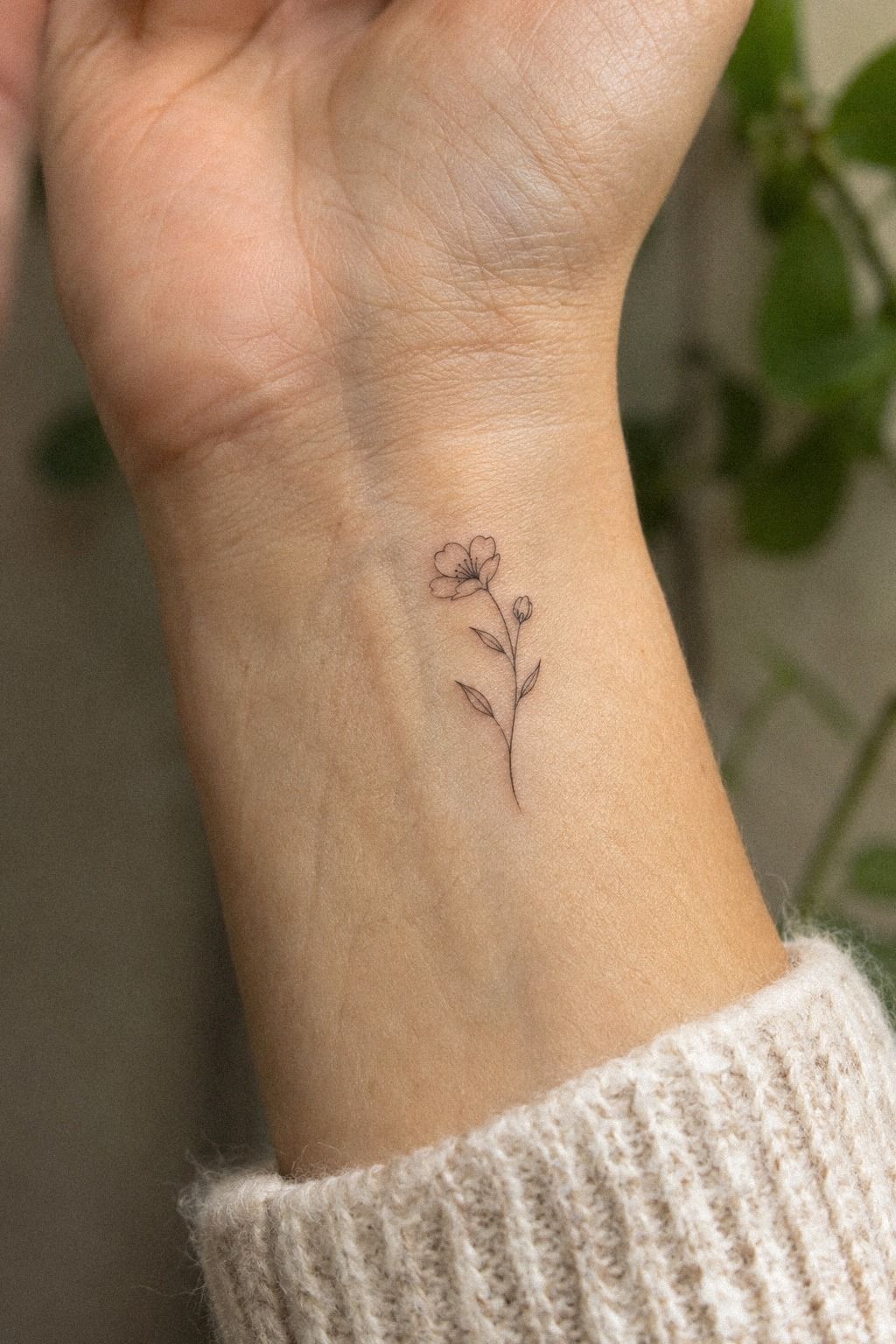
Matching doesn’t have to mean identical. You and your tattoo partner might choose two halves of one symbol, two different stars, or the same small mark in separate placements.
I prefer related symbols because they give each person room to feel individual. A mirrored pair can be iconic, but it can also feel too locked together if the relationship changes.
Ask the artist to show the proposed matching tattoo designs at their intended size. A drawing that looks readable on paper may lose its charm when reduced. Check whether the thinnest lines remain visible and whether the design still feels meaningful without the other piece beside it.
Before you book, agree on orientation, wrist side, and whether both tattoos should use the same line weight. You don’t have to choose the appointment on the same day, but you should compare the stencils. These small wrist tattoo ideas can help you find symbols that are personal without becoming overly literal.
If you’re splitting the cost, ask whether the artist charges per person or per session. That small detail can change the total price, especially when both designs require separate drawing time. Get the session fee in writing so neither of you feels surprised later!
6Which Flowing Script Wrist Tattoo Feels Most Like You?
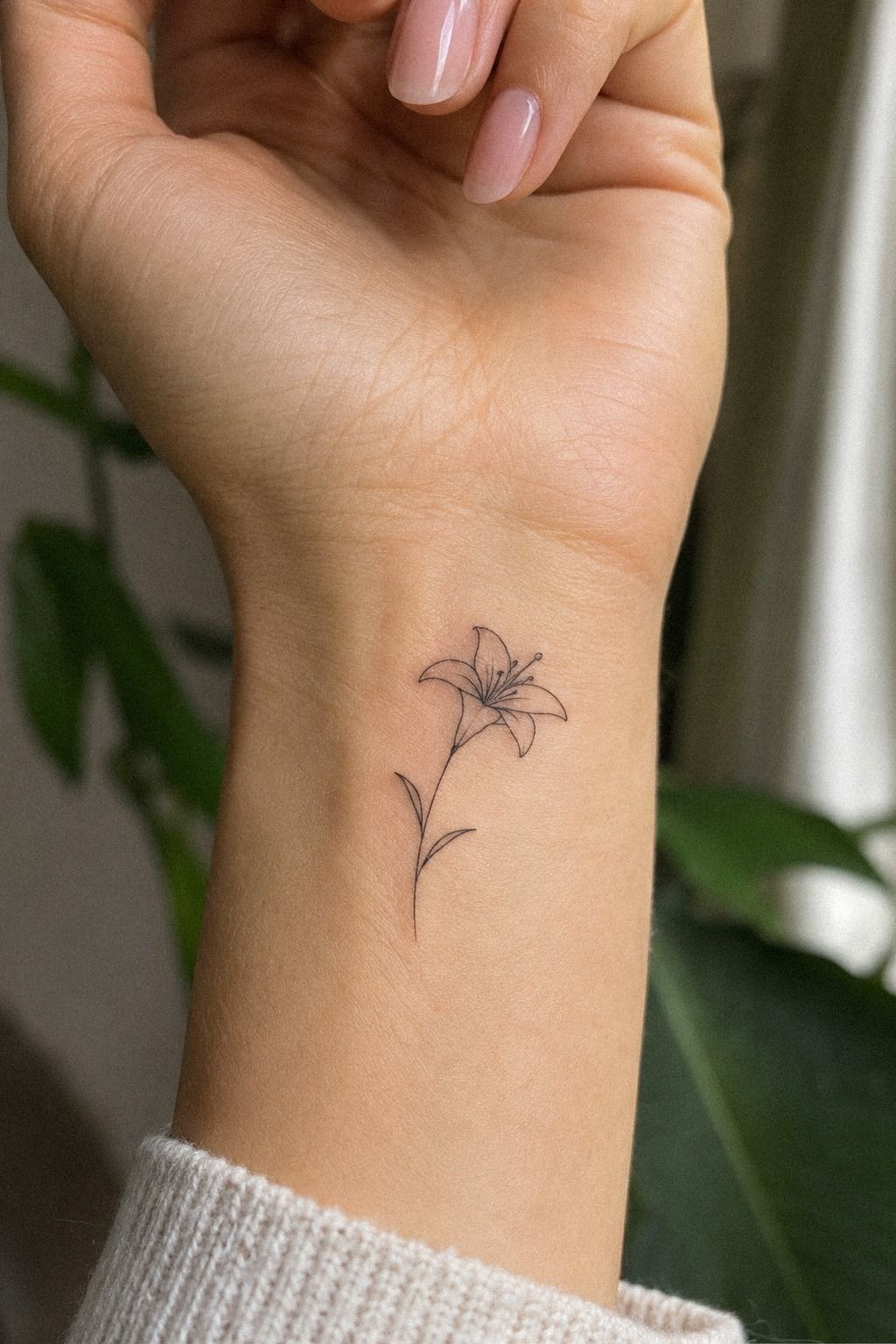
The word “enough” can feel empowering, sacred, or quietly fierce when it’s written in flowing script. Before choosing the lettering, decide whether you want the phrase to read clearly to others or remain a personal message you notice first.
A custom script tattoo should follow the natural direction of your wrist. Ask the artist to show the word in several widths, then view each option with your hand relaxed, turned inward, and extended. A graceful curve can look awkward if it fights your movement.
Keep the phrase short if you want a delicate result. Longer wording increases the chance that letters will merge, especially when the script includes loops and narrow joins. If a shorter word carries the same meaning, it may offer stronger value and better long-term letter spacing.
Bring a printed version of your favorite lettering and one backup option. You’re not trying to control every stroke. You’re giving your artist a clear emotional brief so the final mark feels expressive, polished, and personal.
For additional lettering comparisons, browse minimalist wrist tattoo ideas and notice how script width changes the mood. A narrow script can feel understated, while a slightly wider form may read as more powerful.
7Add Intricate Details To A Small Charm
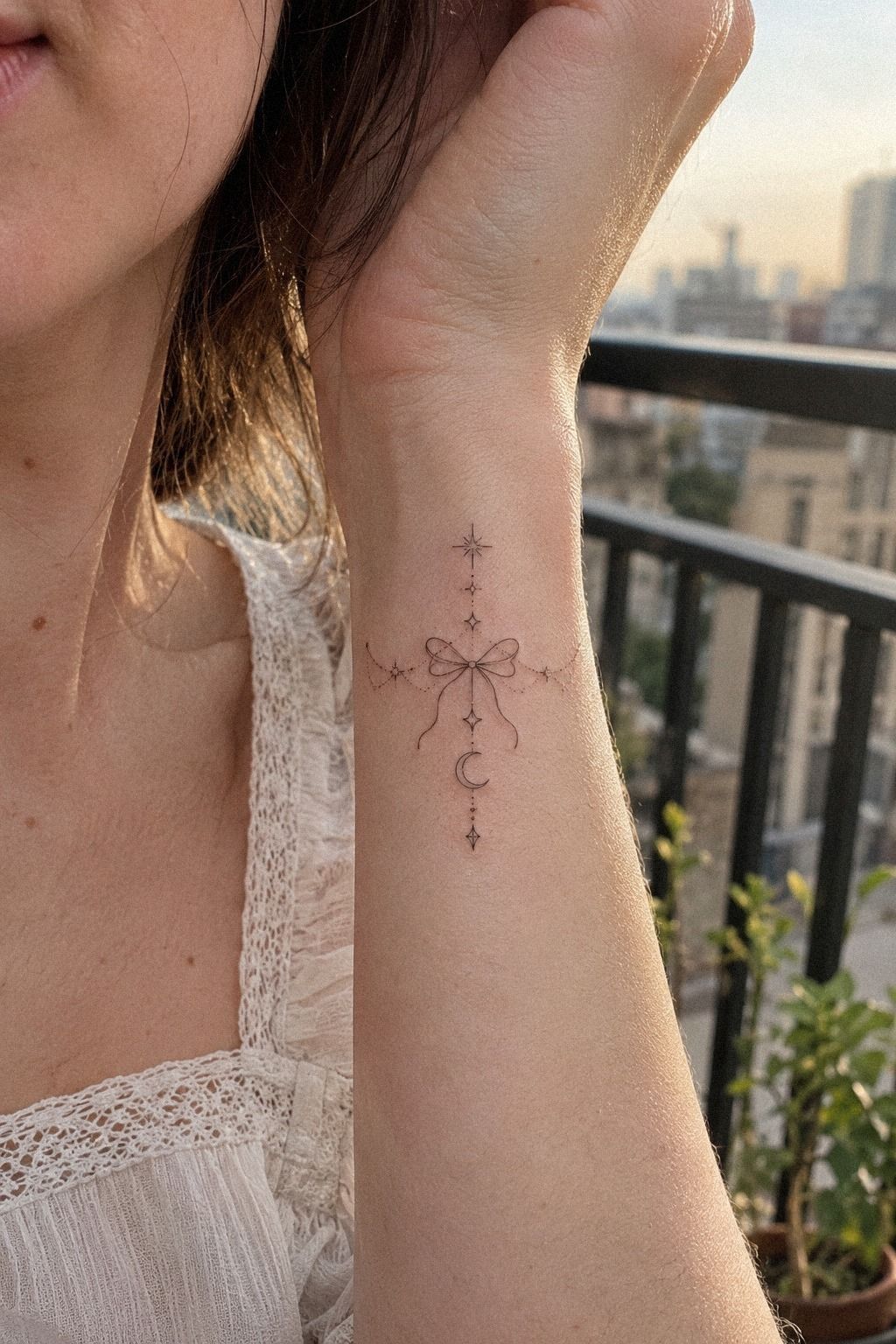
A small charm works best when it has one readable silhouette. If you add a star, dot, gemstone shape, or tiny initial, decide which mark should lead and which marks should support it.
Ask for the charm silhouette at the final tattoo size. A detail that looks delicate on a large reference may disappear when reduced to the wrist.
I’d choose one intricate feature rather than several competing ones. A single pointed edge, curved cutout, or symbolic notch can feel more expressive than a cluster of fragile details.
A dainty charm also needs skin margin around its edges. Compare small wrist tattoo ideas for proportion, then ask whether the smallest detail will remain clear after the skin settles.
8Explore A Unique Celestial Wrist Tattoo
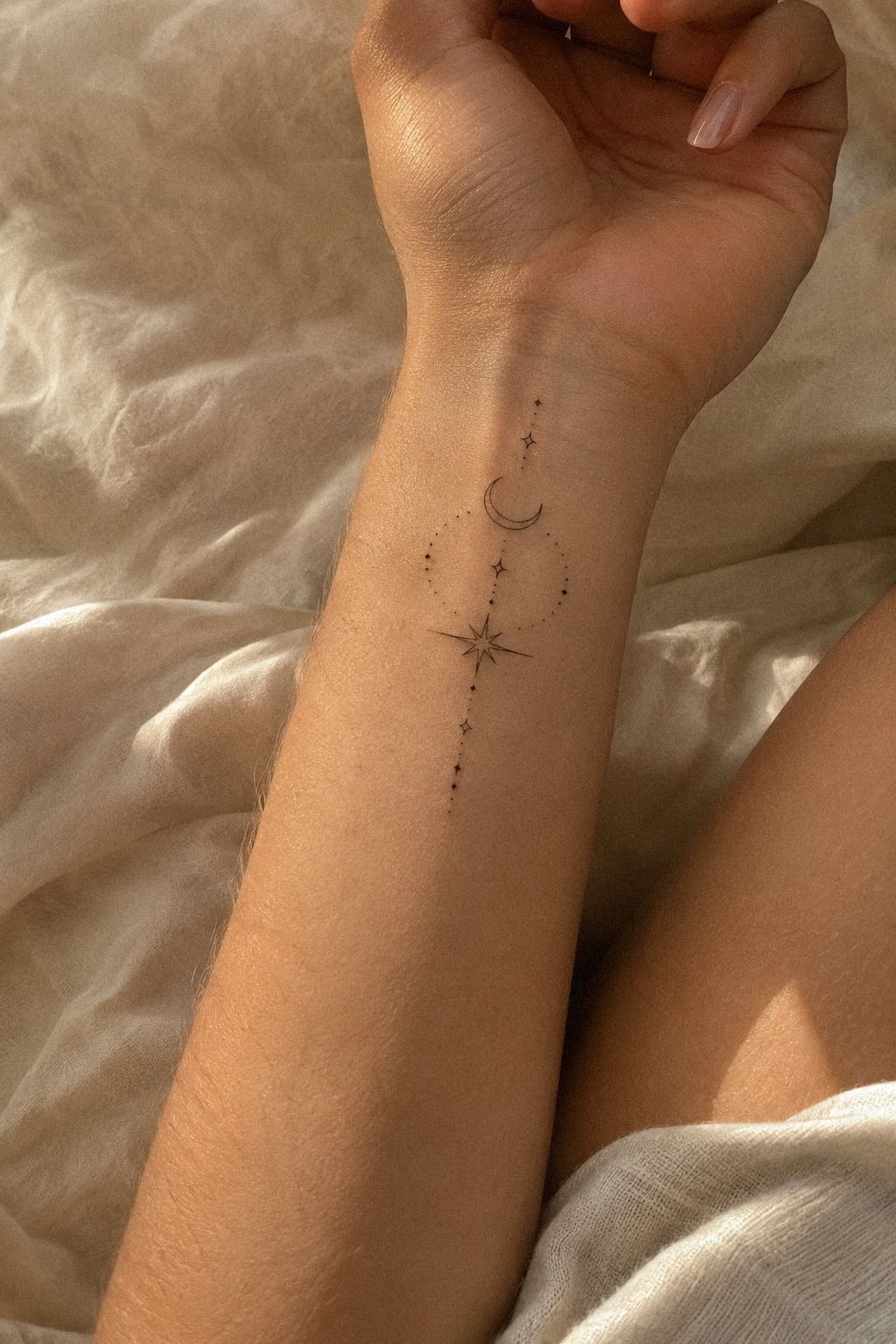
A celestial wrist tattoo can be subtle without looking generic. Start with the feeling you want: sacred, ethereal, daring, or playful.
Then choose a moon, star, sun, or constellation that supports that feeling instead of carrying the entire design by itself. Begin with the celestial wrist tattoo meaning you want to keep.
A celestial wrist motif can use dots, tiny arcs, and one strong point of contrast. The most successful versions usually have a clear focal shape rather than every possible symbol. Your artist can help you decide which details deserve to stay.
Compare the design from several angles before you commit. Your wrist turns, bends, and changes orientation throughout the day.
A flowing constellation may look balanced from one direction and crowded from another. Check the wrist orientation carefully.
For more restrained references, browse minimalist wrist tattoo ideas and delicate tattoo ideas unique to fine-line styles. Save examples for their reference spacing and line decisions, not just their subject.
Celestial Symbols With Personal Weight
A moon can represent change, a star can represent direction, and a tiny sun can feel vibrant or empowering. Those meanings aren’t fixed.
Your own story matters more than a universal symbol list. Start with the personal meaning.
Ask yourself whether you’ll still want the symbol if the current trend disappears. That question protects your budget and your skin at the same time. A lasting meaning is usually worth more than a fashionable one you’ll quickly outgrow.
9Match Ink Style To Your Meaning
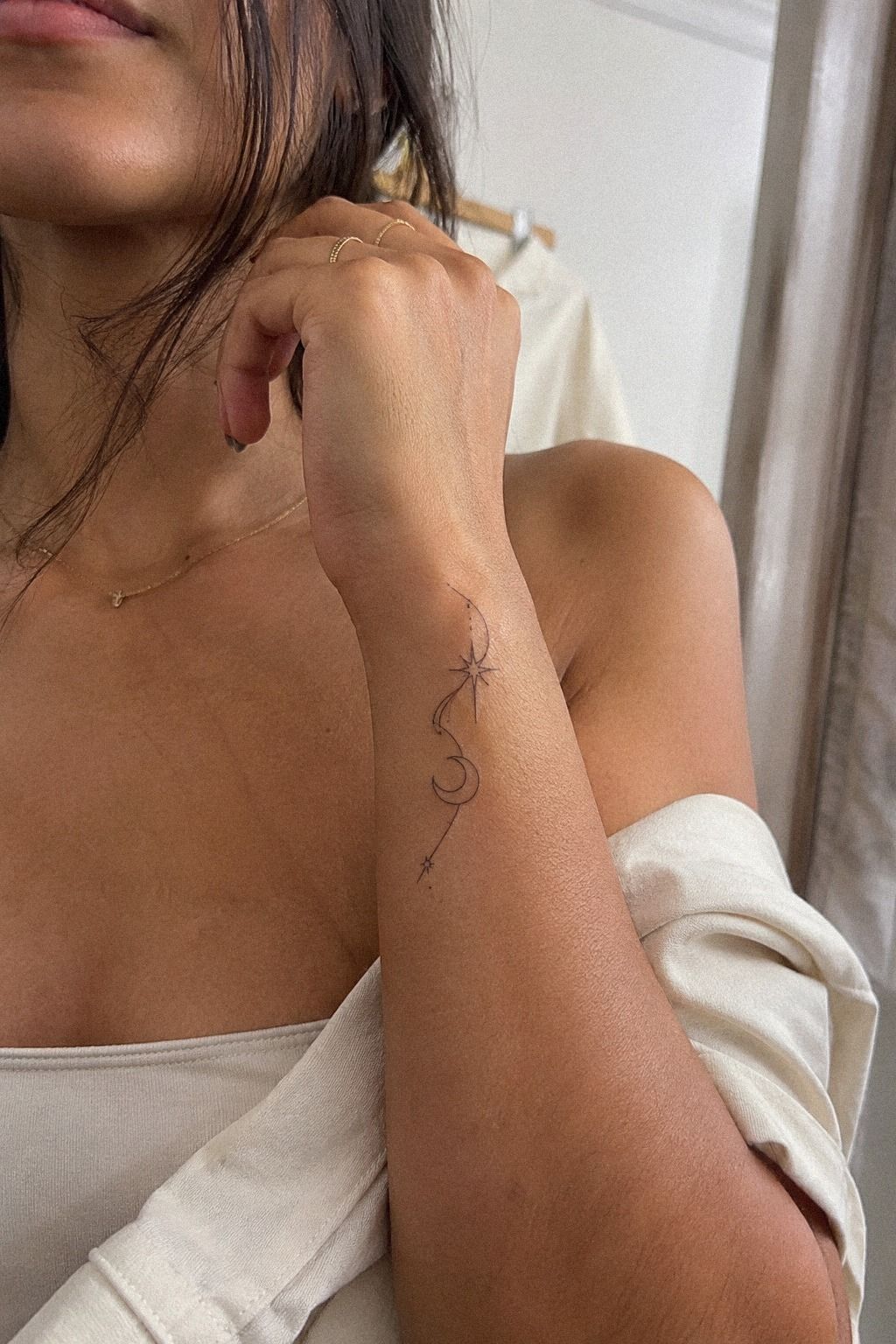
A delicate design with single-needle lines and no heavy fill works well when your meaning is private, gentle, or understated. If your message is fierce or protective, though, a slightly stronger outline may communicate more clearly than the thinnest possible line.
Start by naming the feeling before naming the object. Do you want the tattoo to feel sacred, raw, playful, or empowering?
Once you know that, choose a symbol and line style that support the feeling. A sharp geometric mark won’t carry the same mood as a flowing botanical curve.
Bring one sentence to the consultation, such as “I want this to feel personal but not loud.” Then show solid black accent ink and ask where the artist would place it. You’re not dictating every technical choice. You’re giving them the emotional brief they need to make a confident recommendation.
For longevity, remember that very fine lines can widen over time, while solid black and sensible placement tend to age more clearly. Protect your skin from UV exposure once it has healed. If you’re comparing restrained styles, these minimalist tattoo artist references can help you see how meaning can come from proportion rather than extra decoration.
A style consultation is also a value check. You’re paying for judgment, not just minutes under the needle. If the artist explains why one line weight suits your skin and placement better, that style consultation may be worth the added cost.
Read the Artist’s Style Before the Price
Start with healed work that resembles your intended tattoo. A portfolio can be polished, vibrant, and impressive while still being a poor match for a tiny wrist design.
Look for repeated evidence of fine-line consistency. Do the marks remain crisp? Does the artist use restraint?
Are the smallest symbols still readable after healing?
You don’t need an artist whose every piece is identical to your idea. You need someone whose technical fit feels compatible with your desired scale, mood, and line weight.
Compare minimalist tattoo artist references before you ask for a final quote. Your decision should include artist references, communication, and healed results.
10Can Wrist Placement Change Comfort And Price?
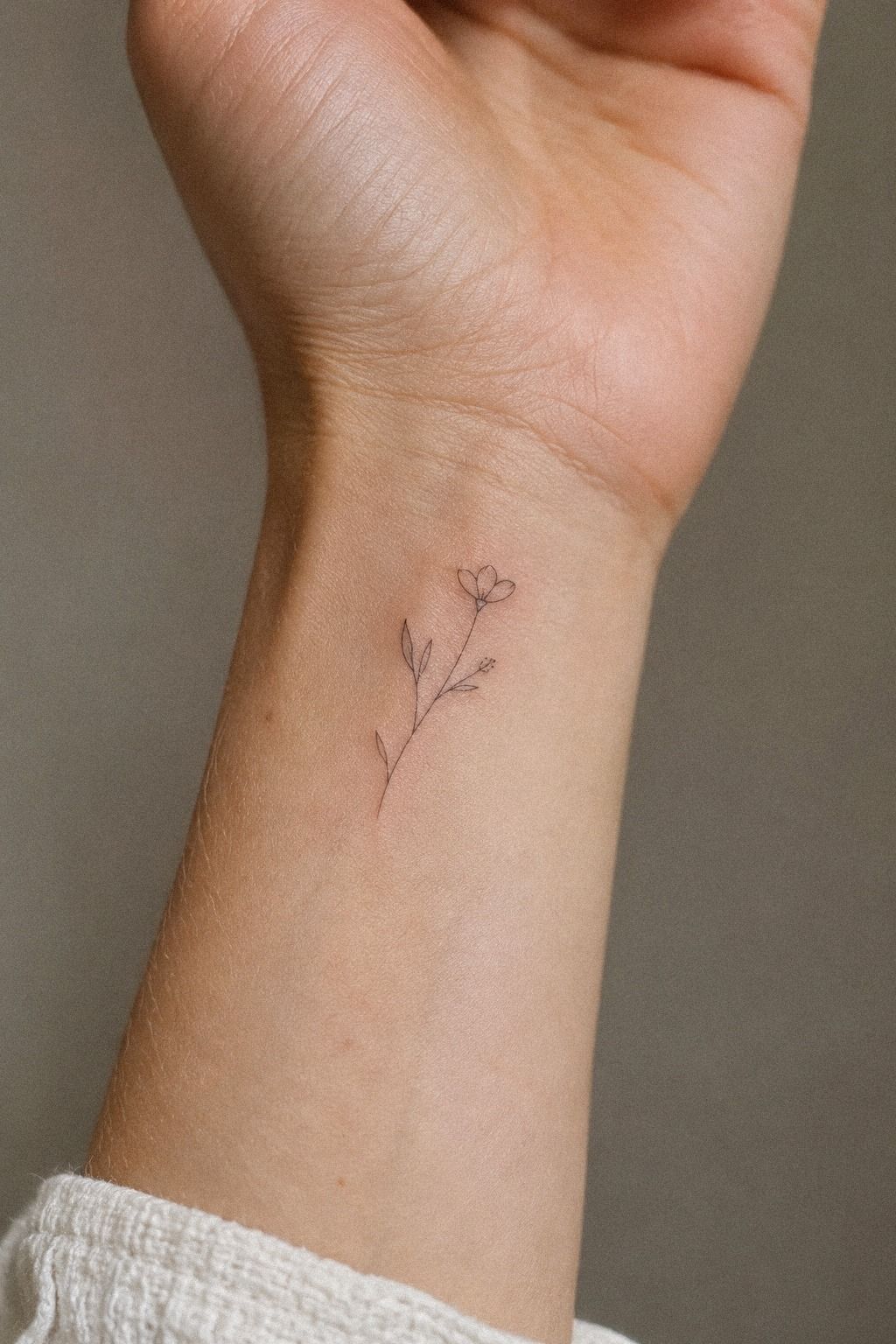
The wrist can be sensitive, especially close to bone and on areas with less padding, but pain varies from person to person. The most useful question isn’t whether the wrist is painful in general. It’s which exact wrist placement works for your anatomy and daily habits.
For a practical comparison, ribs, feet, hands, and sternum are commonly described as more painful areas. The forearm, thigh, and shoulder are often more tolerable.
Your wrist sits somewhere that can feel sharp or tender, so ask the artist where the design will sit rather than assuming every part feels identical. This pain comparison is only a starting point.
Discuss healed wrist ink and placement during the consultation. You can ask for the stencil to be moved slightly toward a more padded area, turned inward, or shifted away from a crease. That small adjustment may change comfort, visibility, and how the lines move when you bend your hand.
I wouldn’t choose placement based only on a pain chart. You’ll also need to think about work, watches, sleeves, sports, and sun exposure.
Review wrist tattoo placement meaning before your appointment, then tell the artist about your daily habits. That information is more useful than bravado.
If changing placement adds drawing time, ask whether the quote changes. Usually, the biggest price drivers are the artist’s minimum, complexity, and appointment length, but you deserve a direct answer before you agree. Ask about the drawing time.
Choose Scale Before Detail
Size changes both the visual impact and the practical price. A tiny tattoo may meet the artist’s minimum, while a slightly larger version can make the linework clearer and the appointment more predictable. Confirm the tattoo size first.
Ask to see the final stencil scale on your actual wrist. Hold your hand naturally.
Turn it. Bend it.
A design should remain balanced when your wrist isn’t posed.
If you want an intricate symbol, consider giving it more room rather than compressing every detail into a tiny mark. That choice can make the tattoo more striking and may reduce the need for later correction. It also improves line clarity.
Use small wrist tattoo ideas to compare scale, but remember that reference images can distort size. Ask for measurements in inches or centimeters before you approve the drawing.
11Protect Your Delicate Tattoo During Healing
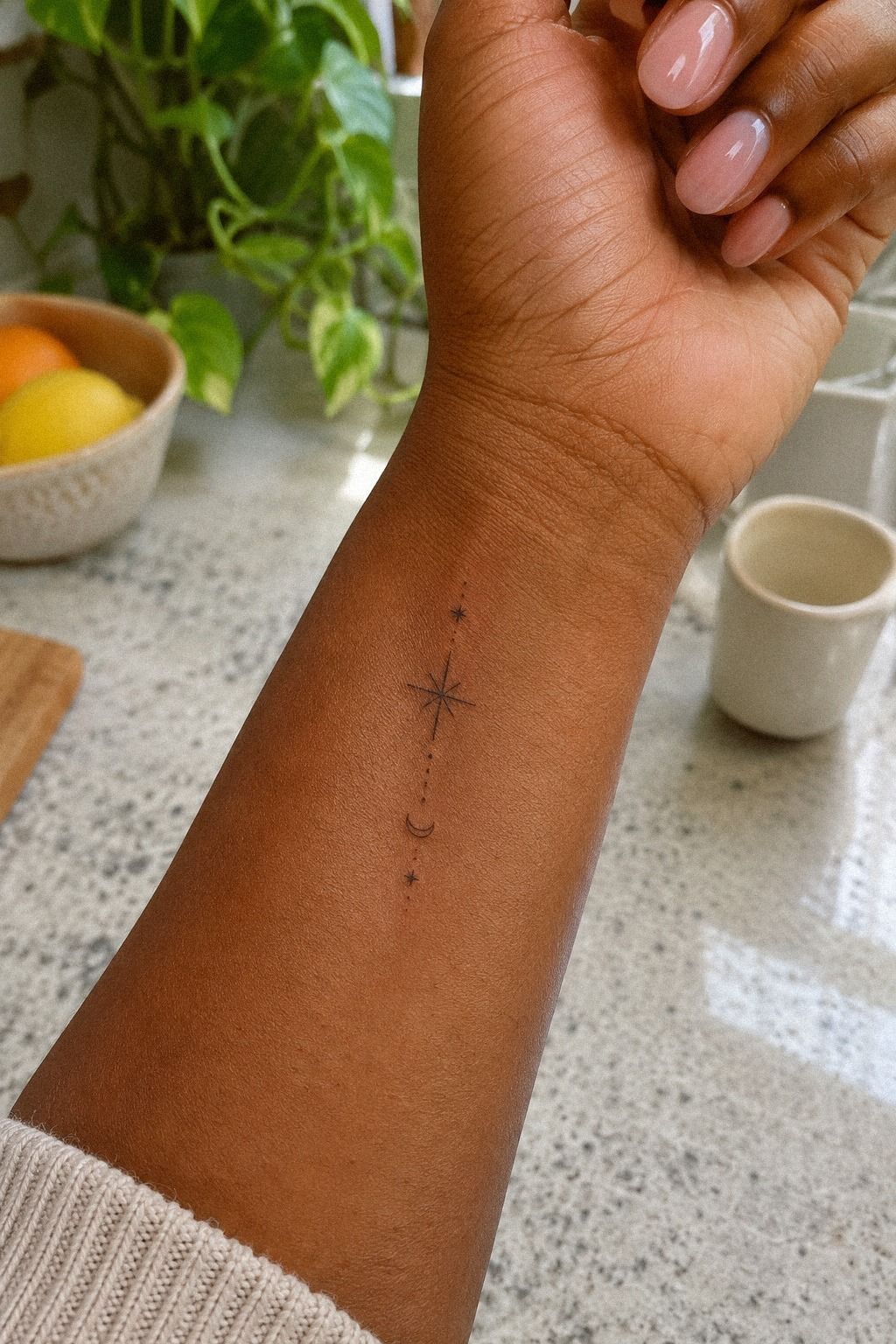
After your appointment, follow the artist’s written aftercare instructions rather than mixing advice from several sources.
The Two-Filter Rule I Use Before Booking
I use two filters before I book any delicate wrist tattoo: does the design still mean something without the trend around it, and will the linework remain readable at the size I want? If either answer feels uncertain, I wait.
Waiting isn’t timid. It’s how you avoid paying for a design that looked persuasive only because the reference was unusually flattering.
The first filter is emotional. A dainty heart may look sweet, while a symbolic mark may feel more meaningful or edgy.
Your wrist is visible, movable, and personal. The design has to survive your changing taste.
Trust the emotional filter.
The second filter is technical. Ask for healed examples, clear pricing, and a direct explanation of how the artist works with your skin tone and the wrist’s movement. I’d choose a calm, honest consultation over a flashy portfolio every time.
A polished artist who can explain limitations is giving you useful technical guidance.
And price should sit inside that decision, not control it. A $100 to $300 typical US range can shift with the artist, region, shop minimum, design complexity, and session length.
If a quote feels high, ask what you’re paying for. If it feels suspiciously low, ask more questions.
Your goal is a meaningful, crisp, timeless tattoo that you’ll still recognize as yours years from now.
Questions Worth Asking Before You Book
Ask who will draw the design, how many revisions are included, and whether the artist has healed portfolio examples in a similar style. You’re not demanding perfection. You’re checking whether the artist’s process matches your expectations.
Ask whether the price is a flat rate or an hourly estimate. Confirm the shop minimum, deposit policy, appointment length, and aftercare support. These details make the final cost easier to understand.
Ask how the artist adapts line weight to your skin tone, wrist movement, and chosen placement. A line-weight consultation can prevent you from choosing a style that looks beautiful in a reference image but doesn’t suit your anatomy.
Finally, ask what would make the artist simplify the design. A confident artist should be able to explain when a detail is too small, too close to another mark, or unlikely to heal clearly. That kind of artist simplification is valuable.
For another placement check, compare wrist tattoo placement meaning with the artist’s stencil recommendation. You want the symbolism and the physical position to agree.
Worth The Price? My Honest Take
A delicate wrist tattoo is worth the price when the design feels personal, the artist shows healed work, and the quote reflects thoughtful planning. The cheapest appointment isn’t always the best value, but the most expensive appointment isn’t automatically the strongest choice. Look for healed results.
Compare the artist’s style, communication, healed results, and technical recommendations together. If all four feel consistent, you’re probably looking at a more reliable purchase.
If one element feels evasive, pause before sending a deposit. Check the technical recommendations.
You can also protect your budget by removing details instead of lowering quality. A simplified custom design may be more striking, easier to heal, and less expensive than a crowded version with fragile marks.
If you’re still comparing concepts, browse delicate tattoo ideas unique to fine-line styles and minimalist tattoo artist references. Look for proportion, restraint, and healed clarity.
The Questions I Get Asked Most
How much does a delicate wrist tattoo usually cost?
I’d budget about $100 to $300 in the US, while remembering that a shop minimum may run about $50 to $100. Artist experience, region, design size, detail, and session length can all change the final quote, so I’d request a range before paying a deposit.
Are delicate wrist tattoos a good idea for a first tattoo?
I think a wrist tattoo can be a thoughtful first choice if you’re comfortable with visibility and regular aftercare. A simple symbolic design gives you clear placement and manageable detail, but I’d still choose an artist with healed fine-line work.
How do I choose a tattoo artist for delicate wrist tattoos?
I’d review healed portfolio examples, ask whether the artist specializes in delicate linework, and confirm the studio follows strong hygiene practices. Healed examples matter because fresh ink can look darker and sharper than the settled result.
How much do delicate wrist tattoos hurt?
I’d expect wrist sensation to vary, with areas near bone often feeling sharper than padded skin. Ribs, feet, hands, and sternum are often described as more painful, while forearm, thigh, and shoulder placements may feel more tolerable. Pay attention to wrist sensation.
How long does a delicate wrist tattoo take to heal?
I’d allow about 2 to 3 weeks for surface healing and roughly 2 to 3 months for complete healing. I’d wash gently, moisturize as directed, and avoid sun and swimming during the early stage. That is the usual surface healing window.
What’s the best placement for delicate wrist tattoos?
I’d choose placement based on visibility, movement, comfort, and your daily habits. An inner wrist feels more private, while an outer wrist reads more clearly to others. A slightly padded placement may also feel easier than a spot directly over bone.
Where I’d Start First
If I had to pick one step, I’d start with the healed portfolio check. A delicate wrist tattoo can look crisp in a fresh result and lose clarity later if the line choice was wrong for the placement. Ask for healed work, then book the artist whose restraint feels trustworthy.
Before the consultation, save your preferred reference, note the approximate size, and review minimalist wrist tattoo ideas. You’ll have a clearer conversation when you know which parts are essential and which details you can release. Bring that reference with you.
If your concept includes a small charm or symbolic pair, compare small wrist tattoo ideas for scale. If it includes lettering or botanical marks, review delicate tattoo ideas unique to fine-line styles before you book. Pay attention to the small charm or lettering proportions.
That preparation makes the quote easier to understand, the design more personal, and the final choice more confident. Save this guide before your consultation preparation!