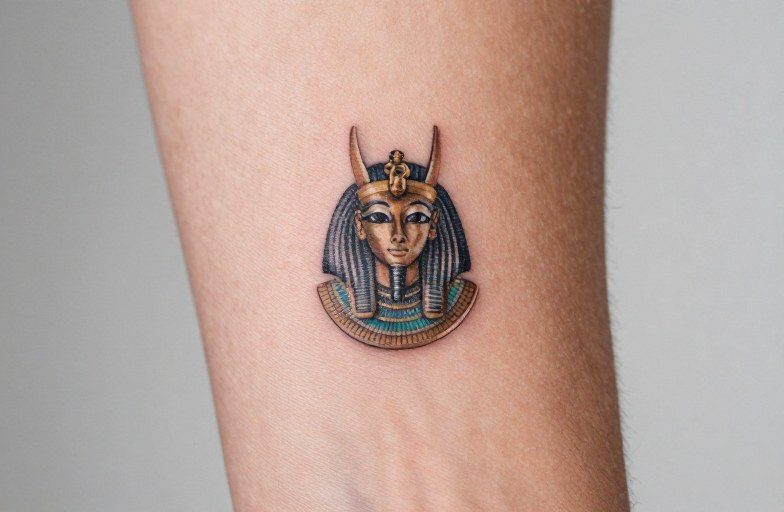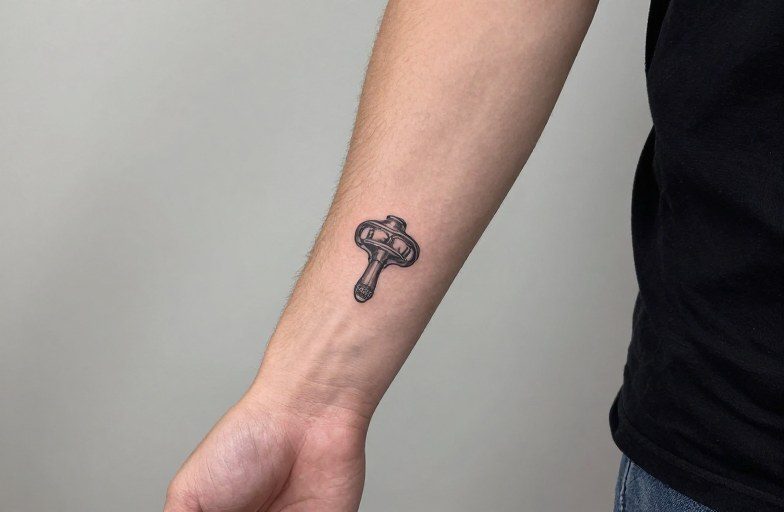
Small arm tattoos hit a sweet spot: visible enough to matter, easy to cover when needed, and the arm’s muscle structure gives even simple designs natural structure. For guys wanting meaning without billboard-sized statements, the arm offers dozens of placement options that change how a design reads. The trick is matching size, style, and spot to something that won’t feel like a whim in ten years.
Color Choices
Black and Gray Longevity
Black ink ages cleaner than color on the arm. The outer arm catches sun daily, walking, driving, short sleeves, so UV exposure breaks down red and yellow faster than carbon black. A solid black silhouette, fine-line blackwork, or graywash shading holds crisp edges for years. Blues and greens fade slower than warm tones but still soften faster than black. If meaning matters, you want the image readable in decade three, not just month three.
Strategic Color Accents
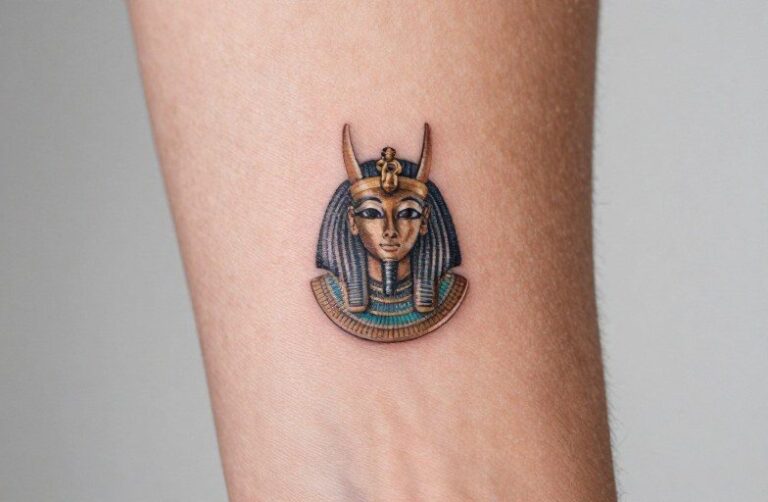
Small size limits color complexity. One accent color, blood red for a poppy, deep blue for a nautical star, reads stronger than a miniature rainbow. On the inner bicep, where sun hits less, color lasts longer. On the forearm top, stick to black with maybe a single highlight. White ink? It yellows and disappears; skip it for anything meaningful you want to keep visible.
Trending Variations
Minimalist Line Work
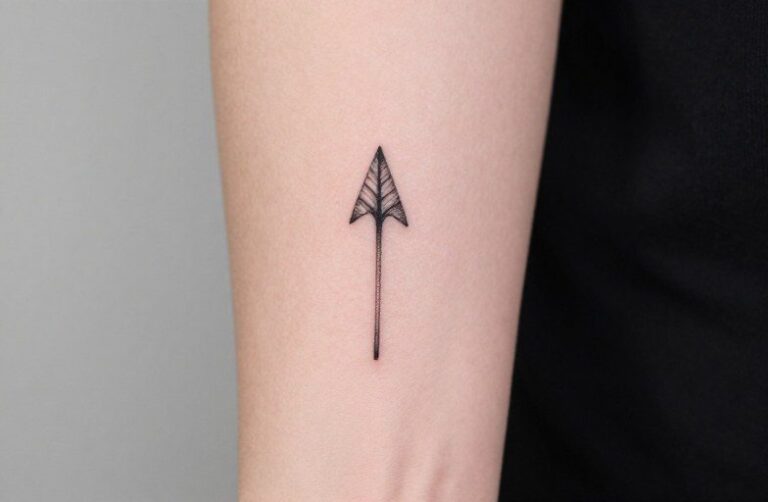
Single-needle and fine-line tattoos dominate right now for good reason. A mountain range in three clean lines, a constellation mapped exactly, a geometric animal built from triangles, these carry personal meaning without clutter. The catch: fine lines blur faster than bold ones. On the arm’s moving skin, choose placement with less flex (outer forearm, upper arm) if you want delicate work to last. A compass rose in 1mm lines on the wrist will look like a bruise in five years.
Text and Number Integration
Coordinates, dates in Roman numerals, short words in typewriter font, these work small but need careful font choice. Script under 1cm tall becomes illegible as ink spreads. Block letters hold better. Meaningful numbers (a parent’s birth year, a squad number) in clean sans-serif above the elbow or on the inner forearm stay readable and personal.
Best Placements
The arm isn’t one surface. Each zone behaves differently for ink, pain, and visibility.
- Outer forearm: Flat, visible, moderate pain. Great for designs you want to see and show. Sun exposure means faster fading, choose bold blacks.
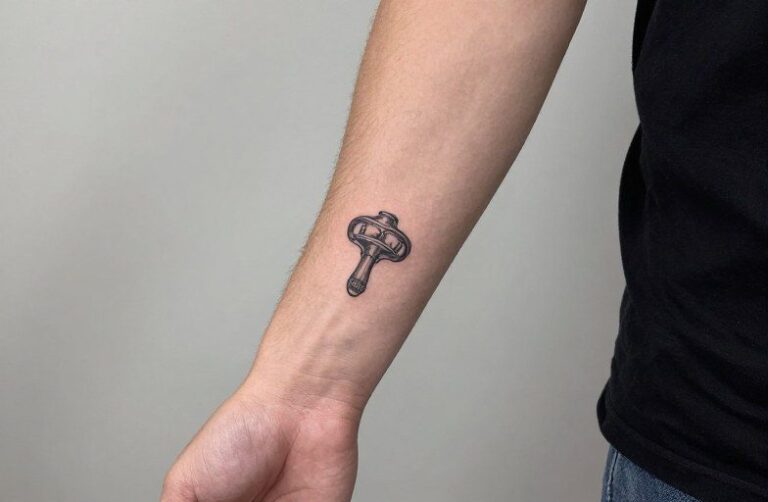
- Inner forearm: Softer skin, more pain, less sun. Perfect for personal meaning you don’t flash constantly. Ink stays darker longer.
- Inner bicep: Hidden by most shirts, some movement stretch. Ideal for private significance, family initials, memorial dates. Pain spikes near the armpit.
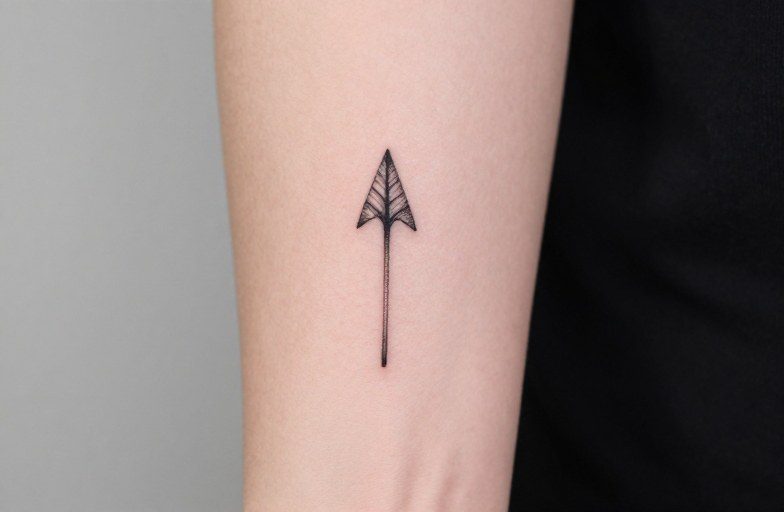
- Back of arm (tricep area): Curved surface, less common. Wraps small designs nicely, snakes, arrows, script following the muscle line.
- Wrist cuff area: High visibility, high wear. Rings, bands, and small symbols here age poorly due to constant movement and sun. Meaningful? Yes. Permanent-looking? Rarely.
How Movement Affects Design
Forearm rotation changes how a tattoo faces. A small arrow on the inner forearm points one way palm-up, another palm-down. Consider the default position, arms at your sides, slightly turned inward. That’s how most people see your ink. Design for that angle, not the flash photo on the artist’s tablet.
For First-Timers
Small arm tattoos are the standard entry point. The pain is manageable, healing is straightforward, and you learn how your body handles ink without committing to a full sleeve.
- Start with black ink, easier touch-ups, cheaper sessions, less risk of reaction.
- Avoid the wrist for your first; it’s bony, painful, and the skin moves constantly.
- Plan for 2-3 weeks of visible healing: redness, peeling, then settling. Don’t schedule before beach vacations or job interviews where you can’t cover it.
- Meaning helps you sit still. Pick something that matters enough to endure the needle buzz for an hour.
Reality of Healing on the Arm
You’ll bump it. Doorframes, gym equipment, pulling shirts over your head, arm tattoos get disturbed. Sleep on your back for a week if it’s the inner bicep. Don’t let gym partners slap it. The scabbing phase looks ugly; don’t pick, don’t over-moisturize, don’t panic when it flakes. Color often looks dull for a month before it settles to true tone.
Tips for Choosing
Matching Meaning to Visual Language
A meaningful concept needs the right visual form. “Strength” as a word is generic; a bent nail (something that endured pressure without breaking) is specific. “Family” as text is common; a dogwood branch (where you grew up, your grandfather’s yard) carries layered meaning. Think in symbols that require explanation, conversation starters, not billboards.
Size vs. Detail
A quarter-sized tattoo can’t hold twenty elements. Choose one clear image. A wolf howling works small. A wolf in a forest under a moon with your family as constellations does not. Simplify until the meaning remains but the clutter disappears. Your artist can help reduce, bring reference images, not finished designs, and collaborate.
- Lines need space between them; don’t crowd.
- Negative space (skin showing through) is part of the design, not empty area to fill.
- Meaning deepens with restraint. A single wave line for a surfer dad hits harder than a photorealistic pipeline.
Matching & Pairing Ideas
Small arm tattoos can connect without being identical. Brothers might share coordinates of their childhood home, one in Roman numerals on the inner forearm, the other in Arabic numerals on the outer. Military buddies get matching unit numbers in different fonts. Father and son: the same animal silhouette, dad’s on the left arm (closer to heart, traditionally), son’s on the right.
Building Toward Future Work
Plan negative space if you might add later. A small ship on the outer forearm leaves room for waves below, a compass above, a banner with text. Don’t box yourself in with scattered tiny pieces. Meaningful small tattoos work best as intentional anchors in a larger story you may or may not continue.
- Keep similar styles if you plan multiple pieces, mixing photorealism and tribal looks disjointed.
- Leave gaps for breathing room; skin needs rest between images.
- Consider the “social arm” (left, for right-handers) for public meaning and the private arm for personal.
Final Word
Small arm tattoos for guys carry weight when chosen with patience, not impulse. The arm’s visibility is a feature and a burden, meaningful ink there becomes part of how people read you. Prioritize longevity over trend: bold enough to age, personal enough to keep, placed where your life won’t destroy it. The best small tattoos don’t explain themselves; they invite the question, and the answer is yours.
Frequently Asked Questions
How small can an arm tattoo be before it blurs beyond recognition?
Below 2-3 square inches, fine detail becomes risky. Lines need room to spread slightly as skin ages. Stick to bold, simple shapes for anything under a business card’s size.
Do inner forearm tattoos hurt more than outer forearm?
Generally yes, the inner skin is thinner and more sensitive. But it’s manageable, and the tradeoff is better ink longevity with less sun exposure.
Can I add to a small arm tattoo later without it looking patched together?
Yes, if you plan from the start. Leave intentional negative space, keep style consistent, and work with one artist or shop when possible for cohesive flow.
How do I know if my meaningful idea translates visually to a small tattoo?
Test it: describe the image without using words. If you can’t draw it in three lines or recognize it from across a room, simplify further. Your artist can help refine abstract concepts into visual symbols.