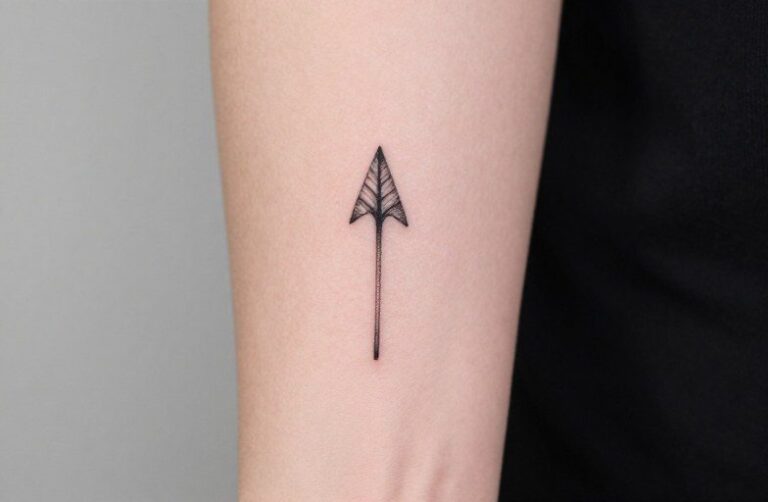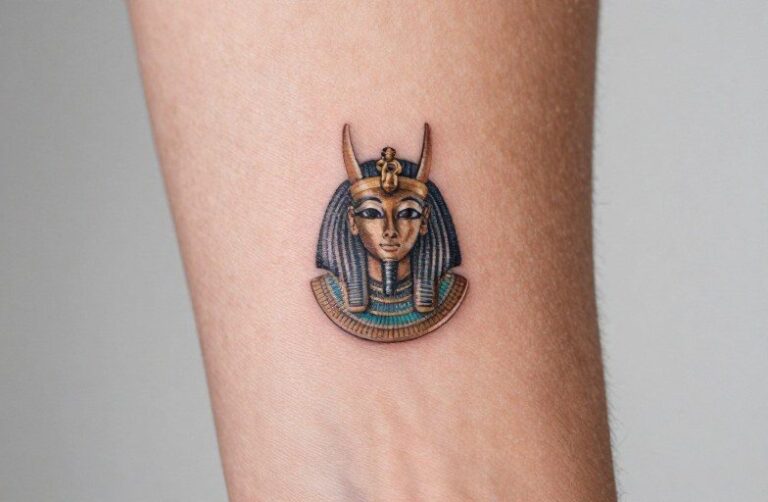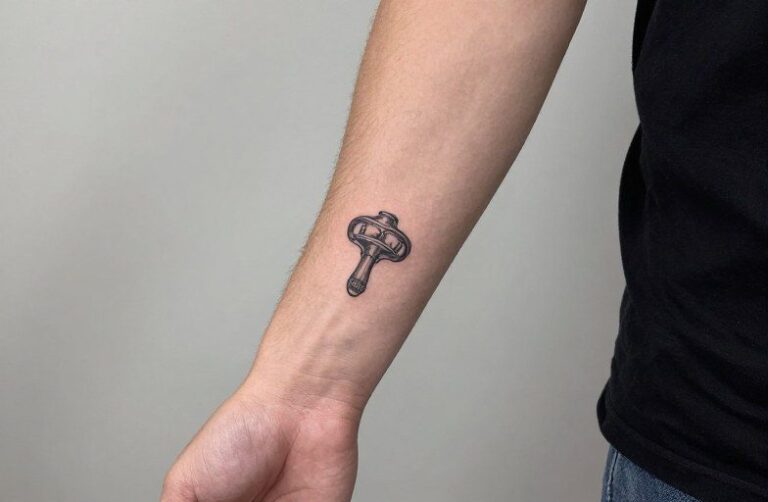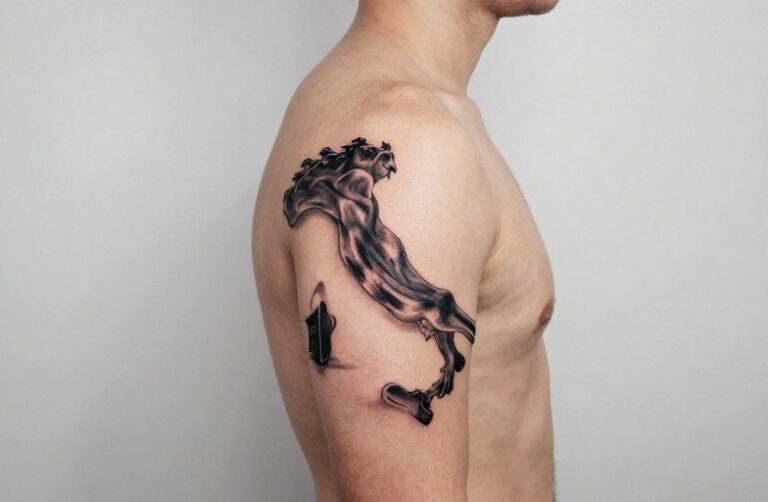
A men’s forearm tattoo with meaning is ink that carries deliberate symbolism beyond pure decoration. The forearm’s visibility makes it a statement of values, identity, or protection the wearer wants acknowledged. Meanings range from ancient guardianship and strength to modern markers of personal transformation or loyalty.
Mythology & Folklore
Forearm tattoos with symbolic weight have roots in cultures that used visible arm markings for protection, status, or spiritual power. The placement itself held significance, arms are tools of action, so ink there connected symbol to deed.
Norse and Celtic Warrior Marks
Viking and Celtic traditions often linked forearm symbols to battle readiness and divine favor. The Helm of Awe, Vegvísir, and various knotwork patterns were commonly associated with warding harm and finding one’s way. These weren’t random decorations; they functioned as compact spiritual armor. For modern wearers, these designs channel resilience and ancestral connection without requiring full Nordic heritage, though cultural respect matters in execution.
Japanese Protective Imagery
Japanese tattoo tradition placed powerful figures like Fudō Myōō or koi fish on forearms, positions where the imagery could “watch” and guard. The koi’s upstream struggle, often rendered on the outer forearm, symbolized perseverance through visible difficulty. Dragon forearm pieces drew from the same well, creatures of strength and transformation positioned where the wearer and others would see them constantly.
Personal & Modern Meanings
Contemporary forearm tattoos with meaning have expanded far beyond cultural mythology into intensely personal territory. The forearm’s canvas size, roughly 8-12 inches of workable length depending on build, accommodates complex narrative imagery while remaining concealable with long sleeves.
Transformation and Recovery Symbols
Phoenixes, lotus flowers emerging from mud, and butterflies rank among the most requested meaningful forearm designs. These aren’t clichés when executed with personal specificity, a phoenix incorporating actual dates, a lotus with particular color choices tied to someone’s recovery journey. The forearm placement matters here: the wearer sees it during daily tasks, a private reinforcement that happens to be public.
Memorial and Relationship Markers
Coordinates, handwriting reproductions, and symbolic objects (a father’s watch, a child’s drawing) translate powerfully to forearm skin. The inner forearm, softer and more protected, often houses these intimate pieces. Outer forearm memorial work tends toward bolder imagery, portraits, symbolic animals, or dates in strong typography that withstands sun exposure and aging better than fine detail.
Who Chooses This Tattoo
The demographic for meaningful forearm ink spans wider than stereotype suggests. Younger men often gravitate toward first tattoos here for the controlled visibility, showable, hideable, discussable. Professionals in creative fields increasingly use forearm pieces as intentional self-presentation. Military and first responders frequently choose protective or commemorative forearm work, continuing the placement’s historical association with service and brotherhood.
What’s shifted is the acceptance threshold. Fifteen years ago, many corporate environments required full coverage. Now, meaningful forearm tattoos face less blanket prohibition, though industry-specific norms still vary. The “meaningful” aspect matters in these contexts, abstract tribal bands read differently than a clearly symbolic piece with explainable significance.
Common Variations & Styles
Style choice dramatically affects how meaning reads on forearm skin. A wolf rendered in American traditional bold lines communicates differently than the same wolf in fine-line blackwork or photorealistic greywash.
Script and Lettering
- Typography selection: Serif fonts (Times, Garamond derivatives) carry gravitas and age well; script fonts blur faster and require more frequent touch-ups
- Language choices: Latin, Greek, Hebrew, or Arabic phrases demand accurate translation verification, botched foreign script is common cover-up fodder
- Placement nuance: Inner forearm script flows with arm movement; outer forearm text reads clearly to others when arms are relaxed
Figurative and Animal Symbolism
Lions, wolves, bears, and eagles dominate meaningful forearm animal tattoos, each carrying established symbolic weight. Lions: courage and leadership. Wolves: loyalty and pack mentality. Bears: strength and introspection. Eagles: vision and freedom. The specific pose matters, a roaring lion versus a contemplative seated one shifts meaning significantly. Pairing animals with elements (mountains, storms, geometric frames) adds interpretive layers without cluttering the composition.
Design Tips & Pairings
Forearm anatomy dictates smart design choices. The radius and ulna create a natural canvas with the wrist bone and elbow as framing landmarks. Ignoring these structural boundaries produces awkward, distorted healed results.
Working With Forearm Contours
The outer forearm (extensor side) has tighter skin and more prominent bone proximity. Designs here need bolder lines and stronger contrast to age gracefully. The inner forearm (flexor side) offers softer, more forgiving skin that holds fine detail longer but wrinkles more with age, something to consider for portrait or delicate symbolic work.
Wraparound designs that curve from outer to inner forearm create dynamic movement but require skilled composition. A snake coiling the arm, or a rope/chain motif, uses this naturally. Flat, frontal imagery (portraits, mandalas) works best on single planes, outer or inner, not straining across both.
Meaningful Pairings and Combinations
- Compass + coordinates: navigation and specific place-memory combined
- Clock + roses: time and beauty’s fragility, common memorial structures
- Geometric frame + animal: modern structure containing traditional symbolism
- Hands + symbolic object: creation, prayer, or relationship (two hands clasping, hand holding a flower)
Color vs Black and Grey
The color question fundamentally affects how meaning reads over decades. Black and grey forearm tattoos maintain clarity longer, with less risk of color migration or uneven fading. The tonal range of greywash can achieve remarkable emotional depth, somber memorial pieces, serious spiritual imagery, or gritty realism all benefit from this restraint.
When Color Serves Meaning
Specific symbolic palettes demand color for accuracy. Military unit colors, national flags, sports team memorials, or particular flower species (red poppies for remembrance, specific birth month flowers) require chromatic accuracy. Japanese traditional work, koi, dragons, cherry blossoms, relies on established color conventions that carry meaning. A black and grey koi technically works but loses the specific symbolism of color direction: red for mother, black for father, blue for son.
Watercolor-style forearm tattoos, while visually striking, age poorly on high-movement areas. The bleeding, splashy edges blur within five to seven years, turning meaningful imagery into indistinct smears. If the meaning matters long-term, structural linework underneath color is essential insurance.
The Bottom Line
A men’s forearm tattoo with meaning succeeds when symbolism, placement, and execution align. The forearm offers unique visibility, daily self-reminder and public statement simultaneously. Choose imagery that sustains personal significance, not trend momentum. Prioritize technical execution that respects the area’s movement and sun exposure. The best meaningful forearm work still reads clearly at twenty years, its symbolism intact because the design was built for permanence, not immediate impact.
Frequently Asked Questions
Do meaningful forearm tattoos hurt more than other placements?
The forearm sits at moderate pain levels, outer forearm near bone can sting, inner forearm is fleshier and generally more tolerable. Most people handle it well, and the session length is usually manageable for detailed meaningful work.
How do I make sure my symbolic forearm tattoo doesn’t look generic?
Customize standard imagery with personal elements: specific dates, meaningful locations, unique compositional angles, or combining multiple symbols that tell your particular story rather than using stock flash.
Will a meaningful forearm tattoo affect job prospects?
Coverage varies by industry, creative fields, trades, and many service jobs accept visible forearm ink. Conservative sectors like finance or law may still require long sleeves; research your specific field’s norms before committing to placement.
How should I plan for a forearm tattoo that might extend into a sleeve later?
Start with composition that leaves logical connection points, avoid isolated circular designs that don’t integrate. Work with an artist who can map potential future expansion, keeping initial pieces positioned for cohesive growth rather than stranded islands.