Fantasy tattoos pull from the same well as Tolkien, D&D manuals, and the concept art you studied as a kid. The difference between a piece that holds up and one that turns muddy in five years comes down to specific choices: how fine the linework is, whether the design accounts for skin movement, and if the subject has enough structural weight to read at a distance. What follows covers what actually works on skin, not what looks good on a screen.
Color Choices That Survive
Color in fantasy work ranges from near-blackwork to full illustrative saturation. The decision shapes everything else.
Muted vs. Saturated Palettes
Desaturated greens, oxidized coppers, and dusty rose-golds age better than jewel tones on lighter skin. On medium to deep skin, high saturation becomes necessary for visibility: emerald against umber, violet against ebony, true vermillion. The trap is assuming fantasy means rainbow. Some of the most striking pieces use two colors plus black, letting the subject matter carry the wonder.
Skin tone also affects subject choice itself. Pale fae skin rendered in pink-white on a fair-complexioned client disappears into the background; on deeper skin, that same fae becomes luminous and intentional. Dragon scales in silver-grey can look muddy on some tones, electric on others. Your artist should adjust value ranges, not just hue.
Black and Grey with Selective Color
A fully rendered dragon in greywash with a single eye picked out in sulfur yellow. A spellbook rendered in charcoal tones with one illuminated letter in gold-tone pigment. This approach solves two problems: it keeps the tattoo readable as it ages, and it creates a focal point without competing elements. Gold and white ink deserve caution. White can shift to gray or disappear entirely depending on placement depth and your skin’s chemistry. Metallic effects come from yellow-ochre with heavy white highlight, not from actual metal content in the ink. If you want that illuminated look, plan for touch-ups and ask your artist how they’ve stabilized similar effects on healed work.
Subjects with Staying Power
Move past the obvious symbols and you find subjects with more room for personal interpretation.
Architectural Fantasy
Floating towers, impossible staircases, doors that open onto starfields. These designs work exceptionally well on vertical placements: ribs, spine, outer forearm, where the architecture can follow the body’s natural lines. The key is giving the structure real weight: shadow beneath floating elements, weathering on stone, a figure small enough to establish scale. Without scale reference, a tower becomes a vague rectangle.
Architectural pieces also age well because buildings do not require facial expressions or proportional accuracy to read correctly. A slightly softened archway still reads as architecture. A softened dragon face reads as damage.
Creature Interactions
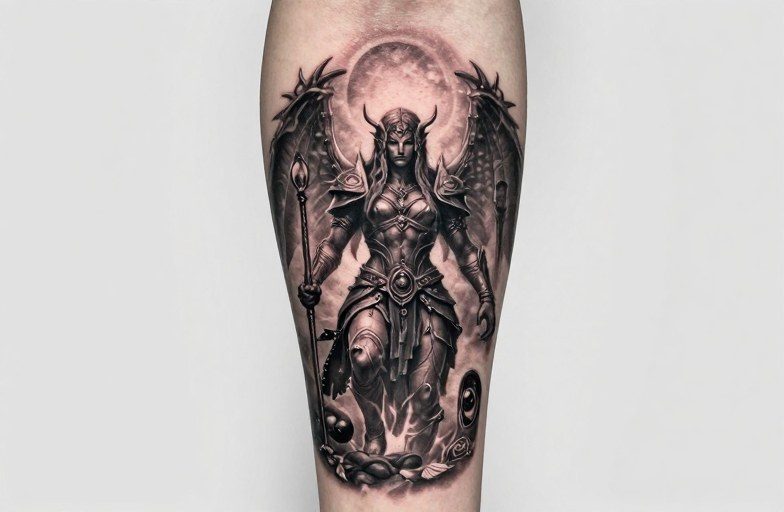
A dragon sleeping curled around a human figure. A fae court with actual perspective, some figures receding, some looming. These compositions demand space. Thumbnail-size dragons with full wing spreads collapse into noise within two years. If you want detail, commit to at least palm-sized for the primary subject. The human element also grounds the fantasy; a wand alone is generic, a hand gripping it with visible tension becomes specific.
Consider the emotional register. A dragon coiled protectively carries different weight than one mid-roar. Fantasy imagery often defaults to aggression or power; tenderness or exhaustion in a mythical creature tends to be more memorable because it is less common.
First-Timers and Fantasy Work
Fantasy imagery often tempts newcomers toward maximum complexity. Resist this.
Start with a single, readable subject rather than a full scene. A well-rendered crystal, a coiled serpent, a moon with actual crater texture: these build confidence and heal predictably. Avoid heavy color packing on your first piece; your skin’s reaction to saturation is unknown until tested. Black and grey with one accent color teaches you how your body holds ink without the commitment of a full sleeve.
Placement matters for longevity more than most first-timers expect. Inner bicep, ribs, and feet experience more friction and moisture than outer arm or thigh. A first fantasy piece on the outer forearm or calf gives you a stable canvas to learn from, with easy aftercare access and less movement during healing. You also learn how you scar, how you peel, how color settles in your particular skin. That knowledge becomes invaluable when you plan larger work.
Fantasy pieces are often first tattoos because they carry personal meaning. Be aware that meaning does not guarantee good design. A symbol from your favorite childhood novel may need significant adaptation to function as tattoo imagery. The book cover was printed; your skin is not paper.
Where to Place What
Where fantasy tattoos live determines how their detail survives.
Flowing with Anatomy
- Spine and back center: Ideal for symmetrical compositions, twin dragons, mirrored wings, portal imagery. The flat plane preserves fine detail.
- Outer thigh: Large, stable canvas with minimal daily flexing. Perfect for landscape-scale fantasy environments.
- Forearm to hand: Visible, but the hand itself blurs quickly. Keep the fantasy element above the wrist; decorative elements on fingers require constant maintenance.
- Ribcage: Painful and prone to weight fluctuation distortion, but unmatched for vertical subjects like ascending figures or falling scenes.
Avoiding the Stretch Zones
Stomach, inner thigh, and upper arm near the armpit shift dramatically with body changes. A perfectly rendered dragon face across the belly becomes unrecognizable after significant weight change or pregnancy. If these areas are your only option, choose subjects that can distort gracefully: water, clouds, abstract magical energy, rather than precise portraiture.
Plan for the body you have, not an idealized version. Fantasy imagery often depicts perfected forms; your tattoo lives on actual skin that changes. This is not pessimism. It is the reason water and cloud motifs have remained popular across centuries of tattooing: they accommodate change without breaking.
Style and Longevity
Fantasy subjects adapt to multiple technical approaches, but not all combinations age equally.
Neo-Traditional and Illustrative
Bold outlines, limited but saturated color palettes, stylized forms. This style forgives aging better than photorealism because the line weight carries the design even as color softens. Dragons in this style read as dragons at twenty feet. The trade-off is less subtle texture; scales become pattern rather than individual plates.
Fine Line and Etching
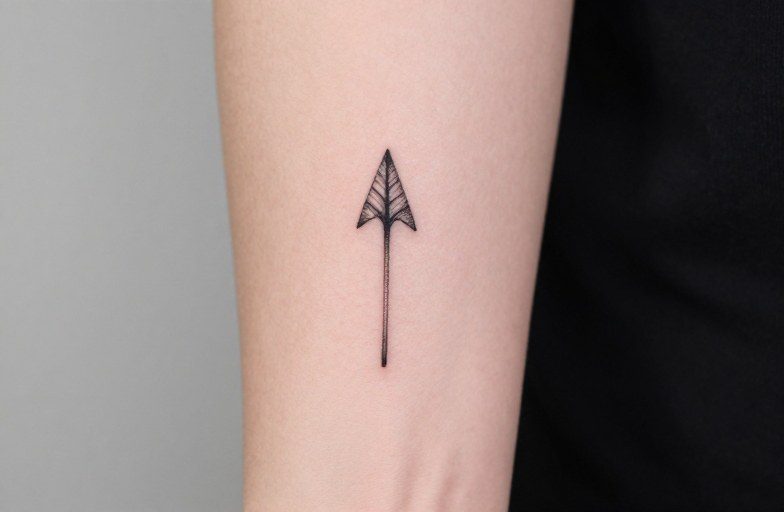
Crosshatched wands, stippled spell effects, hair-thin constellations. Stunning when fresh, demanding of aftercare, and prone to softening within five years. Best reserved for areas with minimal sun exposure and owners committed to sunscreen. The technique suits subjects with inherent line quality: tree roots, woven spells, astronomical charts, rather than creatures requiring solid form.
If you are drawn to this style, ask your artist to show you healed work from five-plus years ago, not just fresh photos. Many fine-line fantasy pieces look exquisite on Instagram and disappointing in person after healing.
Blackwork and Ornamental Fusion
Thorn frames containing portal imagery. Sacred geometry merging into dragon wings. The heavy black provides permanent structure; the fantasy element provides content. This hybrid ages exceptionally well because the ornamental framework maintains readability even if interior detail softens.
This approach also solves the “what comes next” problem. A blackwork-framed portal on your upper arm can anchor a sleeve that extends into other fantasy subjects. The frame provides continuity; the contents can vary.
Matching and Pairing Work
Fantasy matching tattoos work when they share a system, not just a subject.
Consider complementary roles rather than identical images: a key and a lock, both fantastically ornamented. A map half on one partner’s arm, half on the other’s, joining at the center. A spell scroll whose text continues across two bodies. These designs reward proximity: when standing together, the piece completes; when apart, each holds a coherent fragment.
For non-romantic pairings, siblings or close friends might share a creature type with opposing elements: ice phoenix and fire phoenix, moon stag and sun stag. The connection is recognizable to those who know to look, not advertised to strangers.
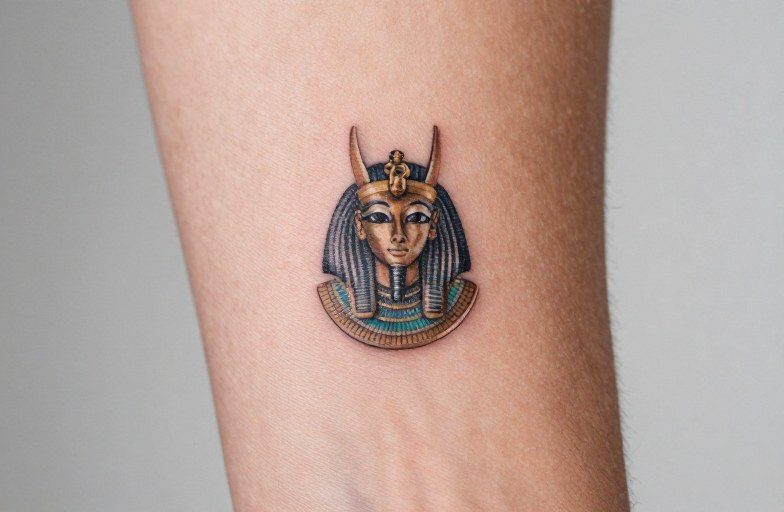
Avoid tiny matching symbols unless you are prepared for annual touch-ups. A pair of one-inch matching runes on the wrist sounds meaningful; in practice, they blur into matching smudges within three years. If you want discreet, choose placement that conceals rather than shrinking the design past readability.
Finding the Right Artist
Not every skilled tattooer can build fantasy work that lasts. Portfolio evaluation matters.
Look for healed photos, not just fresh work. Ask specifically about pieces from two or more years prior. Fantasy subjects with heavy saturation often require longer sessions; ask how the artist paces multi-session work and how they handle swelling in dense areas. An artist who only shows fresh color packing may not have data on how their saturation heals.
Ask about their reference process. Artists who build fantasy well usually collect visual material beyond tattooing: illustration, film concept art, historical manuscripts. They understand that a dragon wing references bat anatomy and pterosaur structure, not just other dragon tattoos. This matters because anatomical awareness produces creatures that sit correctly on the body. A wing attached at the wrong angle looks wrong immediately and worse with age.
Be cautious of artists who agree to every request without pushback. Good fantasy tattooing involves saying no: that scale density will not hold, that color combination will muddy, that composition fights the placement. Collaboration includes disagreement.
What to Remember
Fantasy tattoos succeed when they respect both the source material and the medium. Skin is not paper or digital canvas. It moves, ages, and changes. The best pieces choose subjects with enough structural clarity to survive that reality, then detail them with precision appropriate to their placement.
A dragon that reads as a dragon at fifty, slightly weathered, beats a hyper-detailed hatchling that becomes a green blob by thirty. Choose your scale, commit to your placement, and work with an artist who has built fantasy pieces before, not just sketched them. Ask to see healed work. Ask how they have handled your specific skin tone with similar subjects. Ask what they would refuse to do, and why.
The result stays with you for decades. The planning is worth the patience it requires.
Frequently Asked Questions
How much detail can a small fantasy tattoo actually hold?
Less than most people expect. A design under two inches loses fine elements like individual scales, facial features, or script within a few years. For palm-sized or smaller pieces, choose bold silhouettes and readable shapes over intricate linework.
Do fantasy tattoos with lots of color need more touch-ups than blackwork?
Saturated color does fade faster than solid black, especially reds and yellows. However, a well-saturated initial application with proper aftercare and sun protection can hold for years. The bigger issue is color bleeding: fine color transitions blur more than distinct color blocks.
What’s the best way to make a common fantasy subject feel personal?
Modify one specific element: the dragon’s posture, the wand’s grip wear, the constellation’s actual star positions from a meaningful date. Generic subjects become specific through singular details, not through adding more elements.
Can realistic and stylized fantasy elements mix in one tattoo?
They can, but the contrast needs intention. A photorealistic eye within a neo-traditional dragon face usually looks like a mistake rather than a fusion. If mixing approaches, use a unifying element: consistent lighting, shared color temperature, or a transitional zone where one style literally dissolves into the other. The blend should look designed, not accidental.
How do I plan for future tattoos around a fantasy piece?
Leave negative space strategically. Dense blackwork fantasy subjects can anchor a larger composition, but they become visual dead ends if surrounded by equal density on all sides. Plan your first major fantasy piece with an eye toward what might connect to it: ornamental frames, landscape continuations, or creature pairings that share directional flow. Talk to your artist about long-term placement strategy, not just the immediate design.